What Is the Life Expectancy of a Toyota Catalytic Converter?

Contents
- 1 Key Takeaways
- 2 📑 Table of Contents
- 3 Your Toyota’s Unsung Hero: Understanding the Catalytic Converter
- 4 How a Catalytic Converter Works: The Chemistry Under Your Car
- 5 The Average Lifespan: What Mileage Can You Realistically Expect?
- 6 What Kills a Catalytic Converter? The Top Threats to Longevity
- 7 Warning Signs Your Toyota’s Converter is on Its Last Legs
- 8 How to Maximize Your Catalytic Converter’s Life: Practical Tips
- 9 The Big Question: Replacement Cost and Options
- 10 Conclusion: Your Toyota’s Longevity is in Your Hands
- 11 Frequently Asked Questions


A Toyota catalytic converter typically lasts between 100,000 and 150,000 miles under normal driving conditions. Its lifespan is heavily influenced by driving habits, vehicle maintenance, and fuel quality. Regular engine tune-ups and avoiding short trips can significantly extend its life. When it fails, you’ll face a costly replacement, often exceeding $1,000. Understanding these factors helps you prevent premature failure and save money.
Key Takeaways
- Typical Lifespan: A well-maintained Toyota catalytic converter lasts 100,000-150,000 miles, but many last the vehicle’s lifetime with proper care.
- Warranty Coverage: Federal law mandates an 8-year/80,000-mile warranty for the converter, but Toyota may offer extended coverage in some states.
- Failure Signs: Common symptoms include a check engine light, poor acceleration, rotten egg smell, and failed emissions tests.
- Maintenance is Key: Regular oil changes, spark plug replacement, and fixing exhaust leaks promptly are the best ways to protect your converter.
- Driving Habits Matter: Frequent short trips and stop-and-go traffic prevent the converter from reaching optimal temperature, leading to clogs.
- Replacement Cost: Expect to pay $1,000-$2,500+ for a genuine Toyota converter, making prevention far more economical.
- Theft Risk: Catalytic converters are targeted for their precious metals; installing a theft-deterrent plate is a wise investment.
📑 Table of Contents
- Your Toyota’s Unsung Hero: Understanding the Catalytic Converter
- How a Catalytic Converter Works: The Chemistry Under Your Car
- The Average Lifespan: What Mileage Can You Realistically Expect?
- What Kills a Catalytic Converter? The Top Threats to Longevity
- Warning Signs Your Toyota’s Converter is on Its Last Legs
- How to Maximize Your Catalytic Converter’s Life: Practical Tips
- The Big Question: Replacement Cost and Options
- Conclusion: Your Toyota’s Longevity is in Your Hands
Your Toyota’s Unsung Hero: Understanding the Catalytic Converter
Pop the hood of your Toyota Camry, RAV4, or Tacoma, and you’ll find one of the most critical—and costly—components hidden somewhere in the exhaust system. It’s not the engine, the transmission, or even the muffler. It’s the catalytic converter, a device that works tirelessly to clean your car’s harmful emissions before they hit the atmosphere. But have you ever wondered, “What is the life expectancy of a Toyota catalytic converter?”
This isn’t just a question for car enthusiasts; it’s a practical concern for every Toyota owner. A failing converter can mean a failed smog test, poor performance, and a repair bill that makes your wallet weep. Unlike an oil filter or brake pads, it’s not a routine wear item you expect to swap out every year. So, what determines how long this vital part will serve you? Let’s break it down in simple terms, from how it works to how you can make it last as long as your beloved Toyota.
How a Catalytic Converter Works: The Chemistry Under Your Car
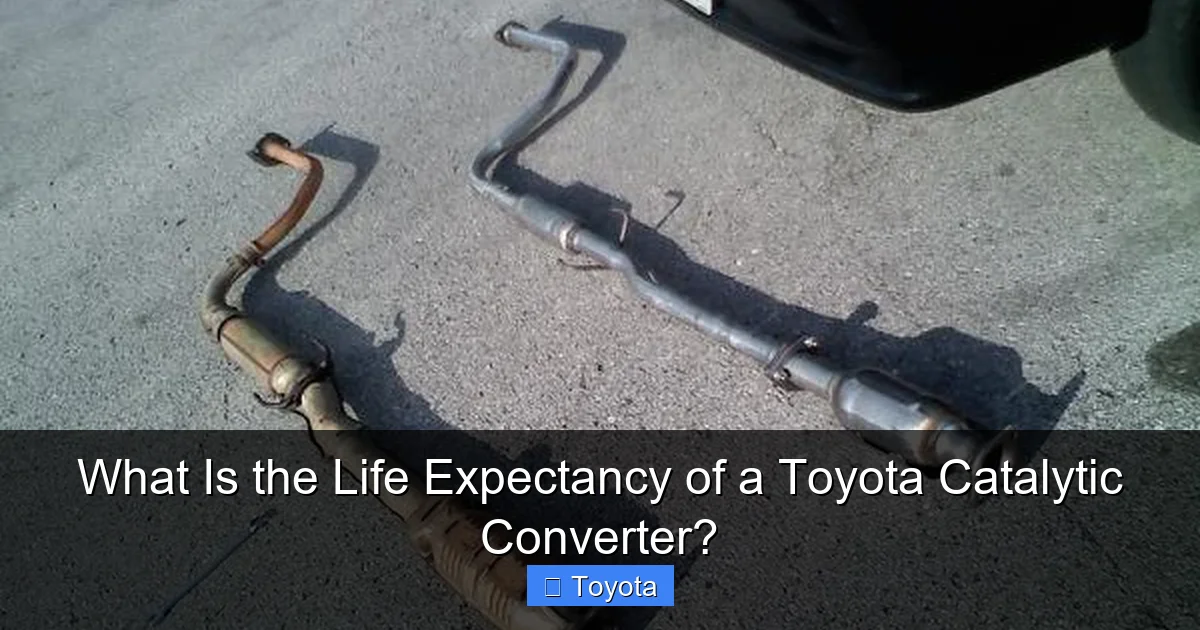
Before we talk lifespan, we need to understand the job. Your engine burns fuel to create power, but that combustion process also creates three main pollutants: hydrocarbons (unburned fuel), carbon monoxide (a deadly gas), and nitrogen oxides (which cause smog). The catalytic converter’s sole purpose is to transform these toxins into much safer gases: carbon dioxide, nitrogen, and water vapor.
Visual guide about What Is the Life Expectancy of a Toyota Catalytic Converter?
Image source: thesupercarkids.com
The Magic Inside: A Catalyst at Work
Inside the stainless steel shell is a ceramic or metallic honeycomb structure coated with precious metals—platinum, palladium, and rhodium. These metals act as catalysts. They speed up chemical reactions without being consumed themselves. As hot exhaust gases pass over this coated substrate, the harmful molecules are broken apart and recombined into harmless ones. This process requires the converter to reach a specific “light-off” temperature, usually between 400°F and 600°F, to work efficiently.
Two-Stage and Three-Stage Designs
Modern Toyota vehicles use advanced “three-way” converters that handle all three pollutants simultaneously. Older or some diesel models might use a two-stage system (an oxidation catalyst followed by a reduction catalyst). The complexity and precious metal load of these systems directly influence their cost and, sometimes, their durability. A well-designed converter, like those engineered by Toyota, is built to withstand extreme heat cycles and corrosive exhaust gases for hundreds of thousands of miles.
The Average Lifespan: What Mileage Can You Realistically Expect?
So, how many miles can you expect? The often-cited industry average is 100,000 to 150,000 miles. However, this is a broad estimate. The reality is a spectrum. We see three distinct categories:

Visual guide about What Is the Life Expectancy of a Toyota Catalytic Converter?
Image source: thesupercarkids.com
- The Premature Failure (Before 100k miles): This is usually a symptom of another problem. A neglected engine, contaminated fuel, or physical damage will kill a converter quickly.
- The Average Failure (100k-150k miles): This is the most common range. The converter’s internal substrate can begin to break down or become clogged with carbon deposits over time and heat cycles.
- The “Lifetime” Converter (200k+ miles): Yes, they exist! Many Toyota owners see their original converter last 200,000 miles or more, effectively the “lifetime” of the vehicle. This is the result of meticulous maintenance and gentle driving conditions.
It’s crucial to note that federal emissions warranty rules require manufacturers to warrant the catalytic converter for 8 years or 80,000 miles (whichever comes first). In California and states adopting its stricter standards, the warranty extends to 8 years or 100,000 miles. If your converter fails within this period and the failure isn’t due to neglect or accident, Toyota should cover the replacement. Always check your warranty booklet for your specific model year and state.
What Kills a Catalytic Converter? The Top Threats to Longevity
A catalytic converter doesn’t just wear out like a tire. It fails due to external stressors or internal contamination. Understanding these threats is the first step to protecting your investment.
Visual guide about What Is the Life Expectancy of a Toyota Catalytic Converter?
Image source: thesupercarkids.com
1. Poor Engine Performance & Combustion Issues
This is the number one culprit. If your engine isn’t running perfectly, it sends unburned fuel or oil into the exhaust. This is like pouring syrup into a finely tuned machine.
- Fouled Spark Plugs or Wires: Misfires cause raw fuel to ignite in the converter, melting the internal substrate. A melted converter is a dead converter.
- Faulty Oxygen (O2) Sensors: These sensors tell the engine computer how much fuel to inject. A bad sensor leads to a “rich” fuel mixture (too much fuel), dumping unburned gasoline into the exhaust.
- Leaking Fuel Injectors: Similar to a rich mixture, this directly floods the converter with liquid fuel.
- Burning Oil: Worn valve seals or piston rings allowing oil into the combustion chamber will coat the converter’s catalyst with ash, poisoning it and reducing efficiency.
If your Toyota’s check engine light is on for a misfire code (P0300-P0304) or O2 sensor code, address it immediately. Driving even a short distance in this condition can destroy the converter.
2. Short Trips and Cold Starts
Catalytic converters need heat to work. On a cold start, they are largely ineffective until they reach operating temperature. If your daily driving consists of 2-mile trips to the store and back, the converter may never get hot enough to burn off accumulated carbon and sulfur deposits. Over time, this leads to a clogged converter, restricting exhaust flow and causing power loss. This is a common issue for cars used primarily for city commuting. For comparison, a vehicle regularly driven on highway trips (like those possible with the Toyota RAV4’s towing capacity for longer hauls) keeps the converter at optimal temperature, helping to keep it clean.
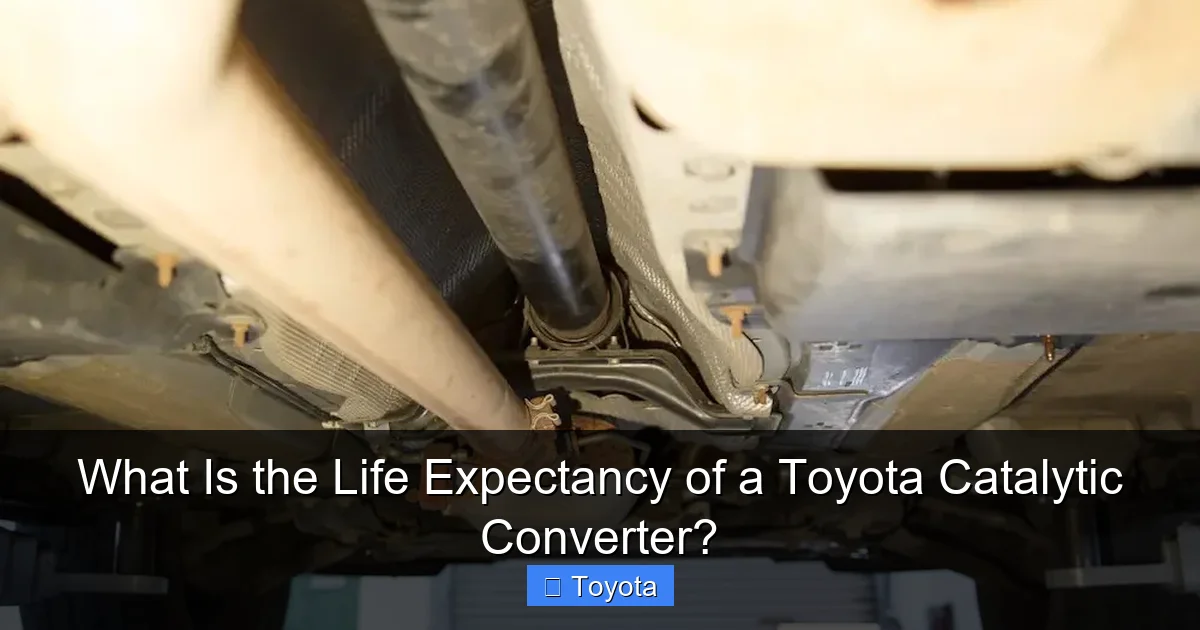
3. Physical Damage and Impact
The converter is part of the undercarriage. It’s vulnerable to:
- Road Debris: Hitting a pothole, curb, or large rock can crack the ceramic substrate inside.
- Rust and Corrosion: In regions that use road salt, severe rust can cause the converter shell or internal components to deteriorate.
- Improper Jacking: Lifting the vehicle incorrectly can put stress on the exhaust system and damage the converter’s connections.
4. Contaminated Fuel or Fuel Additives
Using low-quality gasoline with high sulfur content or questionable “fuel system cleaners” can deposit harmful substances on the catalyst. Always use top-tier fuel from reputable stations. Be wary of cheap, unknown additives.
5. Theft
This is an external but devastating threat. Catalytic converters contain valuable precious metals (platinum, palladium, rhodium). Thieves target them for quick cash. A stolen converter is not just an expensive replacement; it can cause loud, dangerous exhaust leaks and trigger check engine lights. If you park on the street, consider a catalytic converter anti-theft plate or cage. This is especially relevant for popular models like the 2010 Toyota Corolla, which is a common target due to its high volume and relatively accessible converter.
Warning Signs Your Toyota’s Converter is on Its Last Legs
Catching a problem early can sometimes save the converter. Don’t ignore these symptoms:
The Check Engine Light (CEL)
This is your first and most important alert. The O2 sensors monitor the converter’s efficiency. If it’s not cleaning exhaust properly, the computer will log a code, typically P0420 (Catalyst System Efficiency Below Threshold). Get the codes read immediately. It could be a sensor issue, but if the converter is the root cause, you need to know now.
Poor Performance and Fuel Economy
A clogged converter acts like a kinked hose, creating backpressure in the exhaust. Your engine has to work harder to push gases out. You might notice:
- Reduced power, especially when accelerating or climbing hills.
- A feeling of the car “lugging” or struggling.
- A noticeable drop in miles per gallon (MPG).
Unusual Noises and Smells
- Rattling: A broken ceramic substrate inside will rattle, especially when you tap the converter shell. You might hear this from underneath the car.
- Sulfur or “Rotten Egg” Smell: A failing converter can’t properly process sulfur, leading to this distinct odor from the exhaust.
- Exhaust Leak Sound: If theft or damage occurred, you’ll hear a loud, deep rumble from underneath.
Failed Emissions Test
This is the final, official confirmation. If your Toyota can’t pass a state smog check due to high hydrocarbon or carbon monoxide readings, the converter is almost certainly the problem.
How to Maximize Your Catalytic Converter’s Life: Practical Tips
You can’t control every factor, but you can adopt habits that give your converter the best chance at a long life.
Adhere to a Strict Maintenance Schedule
This is non-negotiable. Follow Toyota’s recommended service intervals for:
- Engine Oil & Filter: Clean oil reduces engine wear and prevents oil consumption.
- Air Filter: A clogged air filter makes the engine run rich, dumping fuel into the exhaust.
- Spark Plugs & Wires: Replace them on schedule to prevent misfires. For a Toyota Tacoma used for heavy-duty hauling in its bed, this is even more critical.
- O2 Sensors: These are the “eyes” of the fuel system. A failing O2 sensor leads to a bad fuel mixture. Replace them as recommended.
Drive Smart: Combine Trips and Warm Up the Engine
Try to combine errands so your engine and exhaust system have a chance to fully warm up. A fully heated converter is an effective, self-cleaning converter. While modern cars don’t need long idling, a minute or two of gentle driving after a cold start is better than revving it hard immediately.
Address Problems Immediately
That check engine light for a “misfire detected” code? Don’t just clear it and hope for the best. Diagnose and fix the cause—likely a coil, plug, or injector—before it turns a $200 repair into a $2,000 converter replacement.
Choose Quality Fuel and Avoid “Miracle” Additives
Stick to reputable gas stations. If you suspect fuel system deposits, use a quality, OEM-approved fuel system cleaner occasionally, not every fill-up. Avoid products that claim to clean converters; they often do more harm than good.
Protect It from Theft and Impact
Park in well-lit, secure areas. For added security, have a professional install a stainless steel theft-deterrent plate or cage. Be mindful when driving over rough terrain or deep potholes.
The Big Question: Replacement Cost and Options
If your converter has truly reached the end of its life, you’re facing a significant expense. For a Toyota, the cost is high because of the precious metals and the precision engineering required.
OEM vs. Aftermarket: What’s the Difference?
- OEM (Original Equipment Manufacturer): This is the exact part Toyota installed at the factory. It’s guaranteed to meet all emission standards and is often covered by a longer warranty (e.g., 5 years/50,000 miles). It’s the most expensive option, typically $1,200 – $2,500+ for the part alone, plus labor.
- Aftermarket / Direct Fit: Companies like MagnaFlow, Bosal, or Eastern Catalytic make converters designed to fit specific models. Quality varies widely. A high-quality, CARB-compliant (for California) direct-fit converter can be a good value at $800 – $1,800. A cheap, generic converter may fail quickly and is illegal in many states.
- Universal Converter: These require welding and fabrication. They are less expensive but must be installed by a skilled exhaust shop and must meet your local emissions standards.
The Labor Factor
Replacement is labor-intensive. The converter is often welded or clamped in place, and other exhaust components may need to be removed. Labor costs can easily add $300 – $800 to the bill. Always get a full quote that includes parts, labor, and any necessary additional components (gaskets, pipes).
Is a Used Converter an Option?
Generally, no. A used converter’s internal condition is unknown. Its catalyst may be depleted or contaminated. For an emissions-related part, buying used is a gamble that will likely fail a smog test and cost you more in the long run.
Conclusion: Your Toyota’s Longevity is in Your Hands
So, what is the life expectancy of a Toyota catalytic converter? The honest answer is: it depends entirely on you. While the engineering is robust and the potential for 150,000+ miles is real, that potential is only realized through proactive ownership. Think of the catalytic converter as a canary in the coal mine for your engine’s health. It fails first when other problems arise.
By treating your Toyota to regular, manufacturer-recommended maintenance, addressing check engine lights with urgency, and driving habits that allow the exhaust system to work properly, you are directly investing in the life of this expensive component. It’s not just about avoiding a repair bill; it’s about keeping your Toyota running cleanly, efficiently, and legally for as long as you own it. Remember, a healthy engine breathes easily, and a healthy catalytic converter lasts for the long haul. Treat your Toyota well, and it will reward you with years of reliable, clean-running service.
Frequently Asked Questions
What exactly does a catalytic converter do?
A catalytic converter is an emissions control device that uses a catalyst to convert harmful exhaust pollutants like carbon monoxide, hydrocarbons, and nitrogen oxides into less harmful gases like carbon dioxide, nitrogen, and water vapor before they exit the tailpipe.
Can I drive with a bad catalytic converter?
You can drive for a short time, but it’s not advisable. A severely clogged converter can cause engine overheating, stalling, and extensive damage. A failing converter will also cause your vehicle to fail emissions tests and can trigger the check engine light. It’s best to diagnose and repair the issue immediately.
How much does it cost to replace a Toyota catalytic converter?
For a genuine Toyota (OEM) part, expect to pay between $1,200 and $2,500 or more for the part itself, plus $300 to $800 for labor. High-quality aftermarket direct-fit converters can lower the parts cost to the $800-$1,800 range. The final price depends heavily on your specific Toyota model and year.
Will a fuel additive clean my catalytic converter?
Most fuel additives are not designed to clean a clogged or failed catalytic converter. They may help keep the engine clean, which indirectly helps the converter, but they cannot restore a depleted or physically damaged catalyst substrate. Prevention through proper maintenance is the only reliable strategy.
Is catalytic converter theft covered by insurance?
Yes, comprehensive auto insurance typically covers the theft of a catalytic converter as a named peril. You would be responsible for your deductible. Always file a police report first, then contact your insurance agent to file a claim for the replacement cost.
What triggers a P0420 code on a Toyota?
The P0420 code (“Catalyst System Efficiency Below Threshold”) means the O2 sensors have detected that the catalytic converter is not cleaning the exhaust as efficiently as it should. The cause is often the converter itself, but it can also be caused by a faulty O2 sensor, an exhaust leak ahead of the converter, or an engine performance issue like a misfire that is poisoning the catalyst.