
What Is the Life Expectancy of a 2018 Toyota Highlander Xle

The 2018 Toyota Highlander XLE is built on Toyota’s legendary reputation for reliability, with its 3.5L V6 engine and 6-speed automatic transmission known to routinely surpass 200,000 miles with proper care. Its life expectancy is not a fixed number but a direct result of consistent, manufacturer-recommended maintenance, driving habits, and climate. Real-world owner reports show many reaching 250,000-300,000+ miles, making it one of the most durable three-row SUVs of its era. The XLE trim’s added features do not compromise this core mechanical longevity.
Key Takeaways
- Proven Powertrain: The 3.5L V6 (2GR-FKS) and 6-speed automatic are exceptionally durable, with no widespread catastrophic failure points reported when serviced.
- Maintenance is Everything: Strict adherence to the service schedule, especially oil changes, transmission fluid, and coolant, is the single biggest factor in reaching high mileage.
- Real-World Benchmark: Numerous examples of 2018 Highlanders (all trims) are already on the road with 200,000-300,000+ miles, confirming their long-term potential.
- XLE Features Don’t Shorten Life: The XLE’s premium interior, tech, and suspension components are of high quality and do not inherently reduce the chassis or powertrain lifespan.
- Rust is the Primary Threat: In snowy/road-salt regions, underbody and panel rust can become the end-of-life factor long before the engine or transmission fails.
- Cost of Ownership: While exceptionally reliable, major services (timing chain, water pump, transmission rebuild) at very high miles can be costly, but are often cheaper than a new vehicle payment.
- Competitive Standing: It consistently ranks at or near the top of its class for predicted reliability and long-term ownership satisfaction versus rivals like the Honda Pilot and Ford Explorer.
📑 Table of Contents
- Introduction: A Family Hauler Built for the Long Haul
- The Toyota Legend: Why Brand Reputation Matters for Longevity
- The 2018 Highlander XLE: Powertrain and Core Mechanicals
- The Other 90%: Chassis, Suspension, and Interior Longevity
- The Golden Rule: Maintenance is the Ultimate Life Expectancy Variable
- Real-World Evidence: What Are Owners Actually Seeing?
- How It Stacks Up: Highlander XLE vs. The Competition
- Maximizing Your Highlander’s Life: A Proactive Owner’s Guide
- Conclusion: A Benchmark for a Reason
Introduction: A Family Hauler Built for the Long Haul
You’re in the market for a used, three-row SUV. You want space, reliability, and value. The 2018 Toyota Highlander XLE keeps popping up. It’s comfortable, has a great reputation, and looks the part. But the big question, the one that keeps you up at night, is: “How long will this thing actually last?” It’s a smart question. You’re not just buying a car; you’re investing in years of family trips, school runs, and grocery hauls. You need to know if this 2018 model year will be a faithful companion for 150,000 miles or 300,000 miles.
Let’s be clear: there is no magic odometer reading where a Highlander XLE suddenly turns into a pumpkin. Life expectancy isn’t a predetermined expiration date stamped on the VIN plate. It’s a conversation between the machine and its owner. It’s about engineering quality, material choice, and—most critically—the relentless, faithful execution of maintenance. The 2018 Highlander XLE sits in a sweet spot. It’s post-2014 redesign, meaning it has the refined, powerful 3.5-liter V6 engine and a proven 6-speed automatic transmission. It’s pre-hybrid (for the most part), avoiding the complexity concerns of newer systems. It’s a known quantity, and what we know is very promising.
This article will be your deep dive. We’ll crack open the engine bay, look at the transmission, examine the chassis, and sift through thousands of owner reports. We’ll separate the marketing hype from the mechanical reality. By the end, you’ll have a crystal-clear picture of what to expect from a 2018 Toyota Highlander XLE and, more importantly, what you must do to help it reach its full potential.
The Toyota Legend: Why Brand Reputation Matters for Longevity
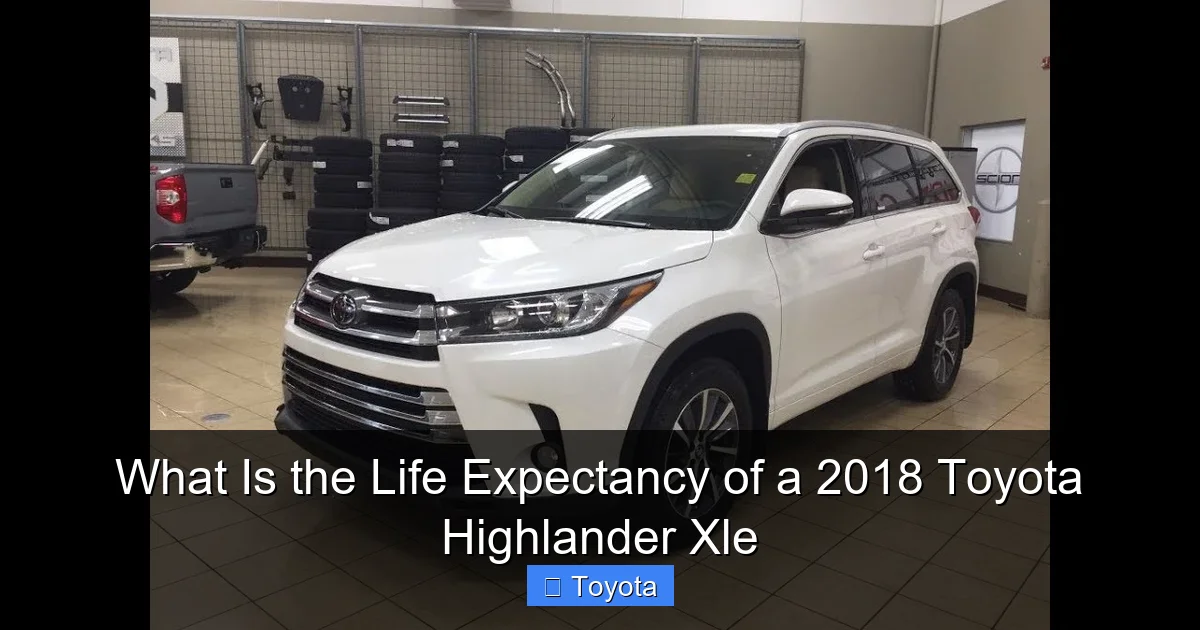
Before we talk about the specific 2018 Highlander, we have to talk about Toyota. The company’s entire brand identity for decades has been built on two pillars: quality and reliability. This isn’t just clever advertising. It’s a corporate philosophy ingrained from the top down, famously documented in stories like the “Toyota Way” and the relentless pursuit of kaizen (continuous improvement). This philosophy manifests in rigorous testing, conservative engineering (they often use proven technology rather than the newest, untested gadget), and an almost obsessive focus on reducing manufacturing defects.
Visual guide about What Is the Life Expectancy of a 2018 Toyota Highlander Xle
Image source: i.ytimg.com
What the Data Says: J.D. Power, Consumer Reports, and More
Independent studies consistently back up the Toyota mythos with hard data. J.D. Power’s Vehicle Dependability Study (VDS), which measures problems reported by original owners after three years of ownership, has historically placed Toyota and its luxury division Lexus at or near the top. For the 2018 model year, Toyota as a brand scored very well. Consumer Reports, which uses owner survey data and its own testing, has long given the Highlander model line high predicted reliability ratings. The 2018 model earned a solid predicted reliability score, often a 4 or 5 out of 5. These aren’t feelings; they are aggregates of hundreds of thousands of data points showing fewer major component failures over time.
This brand-wide excellence is the foundation the 2018 Highlander XLE is built upon. You’re not getting a unique, bespoke vehicle. You’re getting a product from a system designed to minimize variation and maximize durability. The engine block, the transmission case, the suspension components—they are all engineered to tolerances and with materials chosen for a long service life. This is your first and most important advantage.
The 2018 Highlander XLE: Powertrain and Core Mechanicals
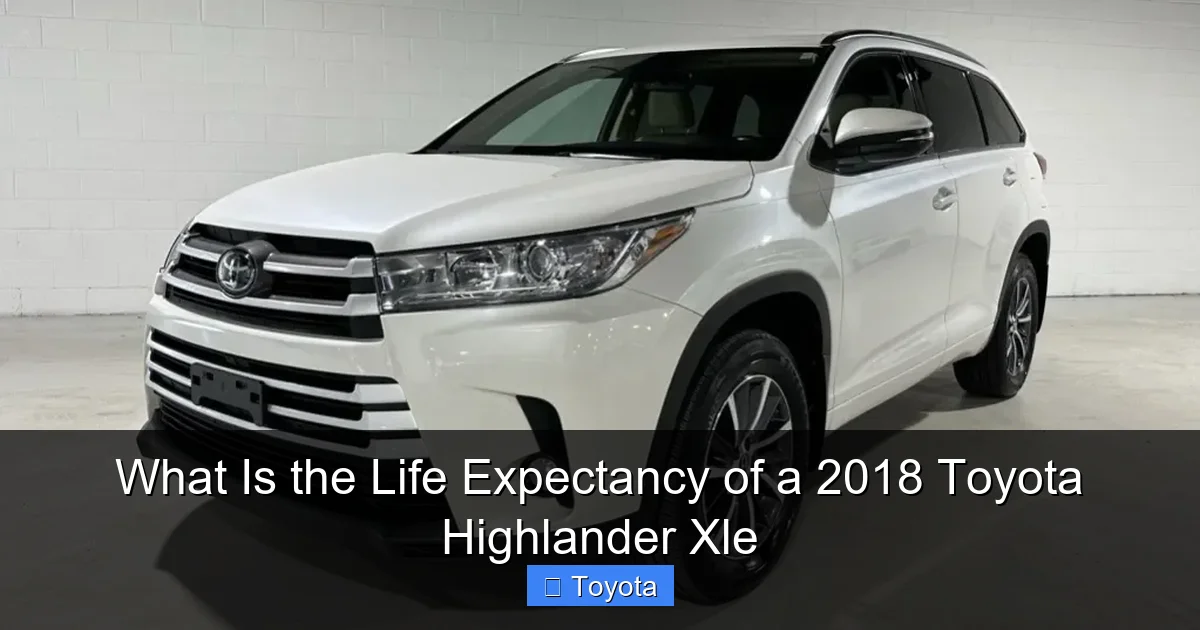
Now, let’s get specific. What makes the 2018 Highlander XLE, in particular, a candidate for high mileage? The answer lies almost entirely in its powertrain and chassis construction. For 2018, the XLE trim came standard with one engine: the 3.5-liter V6, code-named 2GR-FKS. This is a critical point. The base L and LE trims also got this V6. The only other option was the hybrid system in the Limited and Platinum trims. So, the XLE’s powertrain is the mainstream, non-hybrid heart of the lineup.
Visual guide about What Is the Life Expectancy of a 2018 Toyota Highlander Xle
Image source: static.overfuel.com
The Workhorse: 2GR-FKS 3.5L V6 Engine
The 2GR-FKS is not a new engine in 2018. It’s the latest evolution of a family of engines that debuted in the mid-2000s. This is a very good thing. It means any early “teething” issues were identified and resolved in previous model years. This engine is an all-aluminum, 24-valve, dual VVT-i (variable valve timing) powerplant. It’s known for:
- Smooth, robust power delivery: 295 horsepower and 263 lb.-ft. of torque are plenty for a fully loaded Highlander.
- Proven durability: The core architecture has been used in everything from the Toyota Camry to the Lexus RX, accumulating hundreds of thousands of real-world miles with minimal catastrophic failures.
- Timing Chain, Not Belt: This is a massive factor for longevity. A timing chain, housed in the front of the engine and lubricated by engine oil, is designed to last the life of the engine. There is no scheduled replacement interval like there is for a rubber timing belt (typically every 60k-100k miles). This eliminates a major, expensive, and potentially engine-destroying maintenance item. The chain tensioners and guides can wear over extreme miles (250k+), but it’s a rare failure point.
The main reliability concerns with this engine, when they exist, are peripheral: oil consumption (some earlier variants had issues, but 2018 is generally fine), and the water pump. The water pump is driven by the timing chain. On some V6 engines, this can be a problem because if the water pump fails, it can leak coolant into the oil, causing catastrophic damage. However, reports of this specific failure on the 2018 2GR-FKS are very low. It’s a known part to inspect at very high miles, but not a common failure.
The Steady Partner: 6-Speed Automatic Transmission
Paired with the V6 is Toyota’s well-regarded 6-speed automatic transmission (the U660E). This is not a cutting-edge, 8- or 10-speed unit. It’s a workhorse. Its simplicity is its strength. It has fewer complex clutch packs and solenoids than newer multi-speed transmissions, which theoretically means fewer things to go wrong. It’s known for:
- Smooth shifting and reliability: It’s not the quickest shifting unit, but it’s incredibly robust. Major failure rates are extremely low.
- Known Weakness – Solenoids: The most common issue with this transmission family is the failure of one or more shift solenoids. These are relatively inexpensive electronic valves that control fluid pressure for gear changes. A failure might cause harsh shifts, a stuck gear (like 4th gear), or a check engine light. The fix is usually a solenoid replacement, which is a straightforward (though labor-intensive) repair, not a full transmission rebuild.
- Transmission Fluid: This is the most critical maintenance item for this transmission. Toyota’s “lifetime” fluid claim is misleading. The fluid degrades, loses its frictional properties, and its ability to cool and lubricate diminishes over time and heat cycles. For maximum longevity, a fluid and filter change every 60,000-80,000 miles is highly recommended. This is non-negotiable for anyone aiming for 250,000+ miles. It’s cheap insurance against a $3,000+ rebuild.
The Other 90%: Chassis, Suspension, and Interior Longevity
Engine and transmission are the headline acts, but a car is a system. The 2018 Highlander XLE’s body-on-frame-like unibody construction (it’s a unibody, but very robust) and suspension are also designed for longevity. The XLE trim adds features like a power liftgate, LED headlights, a premium JBL audio system, and heated/ventilated front seats. These are comfort and convenience items. While they can fail (e.g., liftgate struts, audio amp, seat motor), their failure does not render the vehicle inoperable. They are repairs, not catastrophes. The core structure—frame rails, mounting points, bulkhead—is overbuilt for its intended purpose and resists fatigue for hundreds of thousands of miles in most conditions.
Visual guide about What Is the Life Expectancy of a 2018 Toyota Highlander Xle
Image source: metrowestmotorcars.com
Suspension and Brakes: Wear Items, Not Failure Points
The Highlander’s suspension is straightforward: MacPherson struts up front, a multi-link rear setup. Components like control arm bushings, strut mounts, and rear axle seals are known wear items. You will replace these. At 150,000 miles, a comprehensive suspension refresh (bushings, struts, links) is a normal and expected cost of ownership. This is not a sign of poor engineering; it’s physics. Rubber and metal under constant stress degrade. Brake pads and rotors are the same. Budget for these; they are the price of a long life.
The Rust Factor: The Silent Killer
Here is the most significant non-mechanical threat to a 2018 Highlander’s life, especially in the “Salt Belt” (Northeast, Midwest, etc.). While Toyota’s anti-rust treatments are good, they are not magic. Road salt and brine are brutally corrosive. Over 10-15 years, you will see rust on:
- Undercarriage components (subframe, brake lines, exhaust)
- Lower door panels and rocker panels
- Wheel arches and fender liners
Surface rust is cosmetic. But if it penetrates structural components (subframe, floor pans), it can compromise safety and ultimately lead to the car being scrapped. This is often the end of life for many well-running vehicles in harsh climates. Regular washing (especially undercarriage rinses in winter) and applying a rust inhibitor can help, but it’s a constant battle. In dry, warm states (Sun Belt), this is a much smaller concern, and the vehicle’s metal body can easily outlast the powertrain.
The Golden Rule: Maintenance is the Ultimate Life Expectancy Variable
We cannot say this enough. A 2018 Highlander XLE with a complete, documented service history will far outlive an identical one with spotty or missing records. Toyota’s maintenance schedule is not a suggestion; it’s a blueprint for longevity. Let’s break down the non-negotiables:
Engine Oil & Filter: The #1 Priority
Change it every 5,000-7,500 miles. Use the recommended weight (0W-20 for this engine). Synthetic oil is a must for longevity. It handles high temperatures better, reduces sludge, and allows for longer intervals (though we still recommend 7,500 max). An engine that has had regular oil changes will have clean internals, minimal wear on bearings and camshafts, and a healthy breathing system. An engine with neglected oil changes will suffer from sludge buildup, increased wear, and eventual failure. This is the single most important thing you can do.
Fluids, Fluids, Fluids
Beyond oil, other fluids have finite lifespans:
- Engine Coolant (Antifreeze): Toyota’s pink “Super Long Life Coolant” is rated for 150,000 miles/10 years. Do not exceed this. After that, it loses its corrosion inhibitors and pH balance, leading to radiator, water pump, and heater core corrosion. Flush and replace at the interval.
- Transmission Fluid: As stated, ignore the “lifetime” label. Change it every 60k-80k miles. Heat is the enemy. Fresh fluid keeps shifting crisp and protects the valve body and clutches.
- Differential Fluid: The rear differential (if equipped, AWD models) needs fluid changes. Toyota’s schedule is often 60k miles. This is cheap insurance for the rear gears.
- Brake Fluid: This is hygroscopic—it absorbs water from the air. Water lowers boiling point, leading to brake fade and internal corrosion of ABS modules. Change every 3 years.
Timing Chain & Related Components
While the chain itself is “lifetime,” the tensioner and guides are not. They are plastic and metal parts that wear. At 200,000+ miles, it’s wise to have a mechanic inspect them during a major service. Listen for rattling on cold start (a “cold start chain rattle” can indicate tensioner wear). Preemptive replacement of these parts at 200k miles is a smart, cost-effective move to avoid a chain failure that destroys the engine.
Filters and Plugs
Don’t forget the cabin air filter (affects HVAC health, change yearly), engine air filter (change every 15k-30k miles), and spark plugs. The 2018 V6 uses iridium plugs with a 120,000-mile interval. Change them on schedule for optimal combustion and fuel economy.
Real-World Evidence: What Are Owners Actually Seeing?
Forums like Toyota Nation, Reddit’s r/Toyota, and Consumer Reports owner surveys are goldmines. What are people with 200,000, 250,000, and even 300,000-mile 2014-2018 Highlanders reporting? The consensus is overwhelmingly positive. The most common themes:
- “Still on original engine and transmission.” This is the most frequent statement from high-mileage owners. They attribute it to diligent fluid changes and addressing small issues (like solenoids) before they become big ones.
- “Wear items replaced.” Lists include: control arm bushings, struts, shocks, ball joints, rear axle seal, water pump (at 220k miles), and various sensors (oxygen, MAF). These are all expected repairs on any vehicle at that age. The key is that the core powertrain remains intact.
- “No rust in [Texas/Arizona].” Owners in dry states frequently post pictures of their 250k-mile Highlanders with pristine undercarriages and minimal body rust.
- “Rust is the reason I sold it.” Conversely, owners from upstate New York, Michigan, etc., often say the body and frame rust became so severe (around 10-12 years) that it was no longer economically or safely repairable, even though the engine ran perfectly.
A specific example: A 2015 Highlander Limited (same powertrain) with 312,000 miles was for sale in 2023. The owner’s description: “Original engine and transmission. Regular maintenance. New timing chain/water pump at 280k. New transmission filter/fluid at 150k, 220k, and 290k. New suspension bushings and rear axle seal at 250k. Runs like new.” This is the blueprint. It’s not luck; it’s a maintenance ledger.
How It Stacks Up: Highlander XLE vs. The Competition
Context is key. How does the 2018 Highlander XLE’s expected life compare to its closest rivals from the same era? The main competitors were the Honda Pilot, Ford Explorer, and Nissan Pathfinder.
- Honda Pilot (2016-2022 Gen): Honda’s 3.5L V6 (J35 series) is also a legendary, durable engine with a timing chain. The 6-speed automatic (or 9-speed in later years) is generally robust. The Pilot is a very close second to the Highlander in predicted reliability and real-world longevity. It’s a toss-up. Both require identical disciplined maintenance. Some argue Honda’s V6 has slightly fewer transmission solenoid issues.
- Ford Explorer (2016-2019 Gen): This is where the gap widens. The base 3.5L V6 (also a good engine) and especially the twin-turbo EcoBoost engines have more complex systems (turbochargers, direct injection) that can introduce more potential failure points over extreme miles. The 6-speed automatic is adequate but not as bulletproof as Toyota’s. Consumer Reports and long-term owner data generally give the Explorer a lower predicted reliability score than the Highlander and Pilot. It can still reach high miles, but the probability and cost of major repairs are statistically higher.
- Nissan Pathfinder (2017-2020 Gen): Shares its platform with the Ford Explorer (co-developed). Uses a 3.5L V6 (similar to the Infiniti QX60) and a CVT. The CVT is the major red flag. While Nissan’s CVTs have improved, they are still complex, belt-driven units that have a history of failure, especially under heavy load or with neglected fluid changes. For someone prioritizing 250k+ mile life, the Pathfinder’s CVT is a significant risk factor compared to the Highlander’s traditional automatic.
Practical Takeaway: The 2018 Highlander XLE sits at the top of its class for long-term durability potential. The Pilot is its equal. The Explorer is a step behind, and the Pathfinder (due to the CVT) is a bigger question mark. If your primary goal is “I want this vehicle to run reliably for 15+ years with major repairs being the exception, not the rule,” the Highlander and Pilot are your safest bets.
Maximizing Your Highlander’s Life: A Proactive Owner’s Guide
So you’ve bought a used 2018 Highlander XLE. What’s your plan? Here is a actionable, mileage-based checklist to maximize its lifespan.
The First 30 Days: The “Ownership Audit”
Even if it has a Carfax, treat your new-to-you Highlander as a mystery. Do this immediately:
- Full Fluid Audit: Have a trusted mechanic check the transmission fluid condition (smell, color, particles), differential fluid, coolant pH and protection level, and brake fluid moisture content. Change anything that is suspect. This is your baseline.
- Comprehensive Inspection: Have the entire suspension, brakes, and undercarriage inspected for wear and rust. Create a prioritized repair list (e.g., “must fix now,” “plan for next year”).
- Obtain Complete History: Track down all service records from the previous owner(s). If they are missing, assume the worst and plan your own schedule from zero.
The Ongoing Regimen: Discipline Over Dollars
- Oil Changes: Set a calendar reminder. Every 7,500 miles max, regardless of driving. Use a high-quality synthetic (Toyota 0W-20 is fine, or brands like Mobil 1, Pennzoil Platinum).
- Transmission Service: Schedule the first fluid/filter change at 60,000 miles if the history is unknown. Then every 60k-80k thereafter. This is the single most important non-oil service.
- Cooling System: At 100,000 miles, do a full coolant system flush. Replace the thermostat at the same time (it’s cheap and often located near the water pump).
- Inspect the Timing Chain Area: At 150,000 and 200,000 miles, have a mechanic listen for cold-start rattle and consider a preemptive replacement of the tensioner and guides. It’s a $1,000-$1,500 job that prevents a $5,000+ engine replacement.
- Address Wear Items Immediately: Don’t drive on worn ball joints, struts, or axles. The vibration and stress will kill other components (wheel bearings, CV joints, bushings). Fix them as they wear.
- Wash, Especially in Winter: If you live where they salt roads, wash the undercarriage every 2-3 weeks during winter. A $10-$15 undercarriage rinse at a car wash can add a decade to the body’s life.
Conclusion: A Benchmark for a Reason
The 2018 Toyota Highlander XLE is not some mythical, unbreakable machine. It is, however, a product of one of the world’s most disciplined automotive manufacturing philosophies, paired with a powertrain that has been refined over a decade. Its potential life expectancy of 250,000 to 300,000 miles is not a guarantee—it’s an achievement. It’s the reward for an owner who views maintenance not as an expense, but as an investment. It’s the difference between a vehicle that simply transports you and one that becomes a trusted, multi-generational member of the family.
When you look at a used 2018 Highlander XLE, look past the clean CARFAX and the nice leather seats. Look for the evidence of care: service records with consistent oil changes, a transmission fluid change at 100k miles, a clean undercarriage. That is the true indicator of its remaining life. If that history is absent, budget for it immediately. The mechanicals are there, waiting to prove their worth. The engine block will not crack. The transmission case will not shatter. The weak points are the small, wearable, serviceable parts—the fluids, the filters, the rubber bushings, the solenoids. Tend to them with the same dedication Toyota used to build the engine, and your 2018 Highlander XLE will very likely outlive your initial expectations, providing safe, comfortable, and reliable transportation for a decade or more to come. It’s a testament to the fact that in the world of automobiles, longevity is rarely an accident; it’s always a choice.
Frequently Asked Questions
What is the typical mileage before major engine or transmission repairs on a 2018 Highlander XLE?
With proper maintenance, many owners see the original engine and transmission last well beyond 200,000 miles. The most common transmission issue is a shift solenoid failure, which can occur around 150k-200k miles and costs $300-$800 to replace. Major engine failures (like timing chain or internal components) are very rare before 250k miles if oil changes have been consistent.
Is the 6-speed automatic transmission in the 2018 Highlander reliable?
Yes, it is considered very reliable overall. It’s a robust, proven unit. Its most common weak point is the electronic shift solenoids, which can cause harsh shifting or get a vehicle stuck in one gear. These are relatively inexpensive and straightforward to replace. The transmission itself, with regular fluid changes every 60k-80k miles, has a very low failure rate.
How much does it cost to maintain a high-mileage 2018 Highlander XLE?
Costs increase with age. At 150k miles, budget $1,500-$2,500 for a major service: transmission fluid/filter, differential fluid, spark plugs, coolant flush, and a full suspension inspection/bushing replacement. At 200k+ miles, add potential timing chain tensioner/guide replacement ($1,000-$1,500) and possibly a water pump. These are “major service” costs, not monthly expenses, and are far less than a new car payment.
Should I be worried about rust on a 2018 Highlander?
Yes, if you live in an area that uses road salt. Rust is the most likely reason a mechanically sound Highlander is retired. Inspect the undercarriage, rocker panels, and wheel arches thoroughly. In dry climates, rust is minimal. In snowy climates, regular undercarriage washes and rust-proofing treatments (like oil-based sprays) are highly recommended to extend the body’s life.
Does the XLE trim have any unique reliability issues compared to other 2018 Highlander trims?
No. The XLE’s added features (power liftgate, premium audio, heated seats) are comfort and convenience items. They can develop issues (e.g., liftgate struts fail, audio amp problems), but these are repairs, not threats to the vehicle’s core drivability. The mechanical heart—the engine, transmission, and chassis—is identical to the LE and Limited non-hybrid trims.
How can I find a 2018 Highlander XLE that will last the longest?
Prioritize a vehicle with a complete, consistent service history from a single owner or dealer. Get a pre-purchase inspection by a Toyota specialist who can check transmission fluid condition, look for signs of neglected maintenance, and assess rust. Avoid vehicles with missing records, accident history, or from extremely salty regions without proof of rust prevention. The best candidate is a well-maintained, non-smoker, garaged vehicle from a dry state with full records.