
What Is the Exclamation Point in Parentheses on a Toyota Sienna?

That exclamation point in parentheses (!) on your Toyota Sienna’s dashboard is the Tire Pressure Monitoring System (TPMS) warning light. It illuminates when one or more tires are significantly underinflated. You should check your tire pressures immediately, inflate them to the manufacturer’s specified level, and then reset the system. Ignoring this warning can lead to unsafe driving conditions, poor fuel economy, and premature tire wear.
Key Takeaways
- It’s a TPMS Warning: The symbol (!) is your Sienna’s Tire Pressure Monitoring System alerting you to low tire pressure.
- Safety First: Driving with significantly underinflated tires is dangerous, affecting handling, braking, and increasing blowout risk.
- Check & Inflate: The first step is to manually check all tires (including the spare) with a gauge and inflate them to the pressure listed on your door jamb sticker.
- Reset is Required: After correcting pressure, you must reset the TPMS system via the vehicle’s menu for the light to turn off.
- Multiple Causes: The light can come on due to temperature changes, a slow leak, a flat tire, or a faulty sensor.
- Professional Help: If the light persists after inflation, or flashes, you likely have a bad sensor or system issue needing a technician.
- Preventative Maintenance: Regularly check pressures monthly and before long trips to avoid the warning and maintain optimal performance.
📑 Table of Contents
- What Is That Mysterious (!) Symbol on My Toyota Sienna Dashboard?
- Demystifying the Symbol: It’s All About TPMS
- The “Why”: Common Reasons Your Sienna’s (!) Light Comes On
- Your Action Plan: What to Do When You See (!)
- When DIY Isn’t Enough: Knowing When to Call a Pro
- Prevention is Key: Maintaining Your TPMS and Tires
- Conclusion: Your Partner in Safe, Efficient Family Travel
What Is That Mysterious (!) Symbol on My Toyota Sienna Dashboard?
You’re cruising down the road in your trusty Toyota Sienna, the kids are entertained in the back, and everything feels normal. Then, your eye catches a small, new icon on the instrument cluster: an exclamation point inside a set of parentheses, often resembling (!). A wave of confusion and maybe a little concern hits you. What in the world does that mean? Is it serious? Don’t worry, you’re not alone. This is one of the most common dashboard symbols that causes drivers to scratch their heads, and in a vehicle as family-focused as the Sienna, understanding it is crucial for safety and peace of mind.
That cryptic (!) is not a generic “something’s wrong” light. It’s a very specific and important warning from your car’s Tire Pressure Monitoring System, or TPMS. Its sole job is to monitor the air pressure inside your pneumatic tires and warn you when the pressure falls below a safe threshold. In your Toyota Sienna, this system is a critical safety feature, mandated by law in all vehicles sold in the United States since 2007. It’s your car’s way of saying, “Hey, my feet feel a little flat, and I don’t like it!” This article will be your complete guide to decoding that symbol. We’ll break down exactly what it means, why it comes on, the step-by-step process to address it, and how to prevent it from becoming a recurring nuisance. By the end, you’ll be a TPMS expert, ready to handle this common situation with confidence.
Demystifying the Symbol: It’s All About TPMS
Let’s get technical for just a moment, but in the simplest way possible. The exclamation point in parentheses ((!)) on your Sienna’s multi-information display is the universal symbol for the Tire Pressure Monitoring System warning. It’s not to be confused with the separate “TPMS” text that might also appear. This system is a network of small sensors, one mounted inside each wheel (on the valve stem), that constantly measures the air pressure and temperature of your tires. These sensors transmit that data wirelessly to your Sienna’s onboard computer.
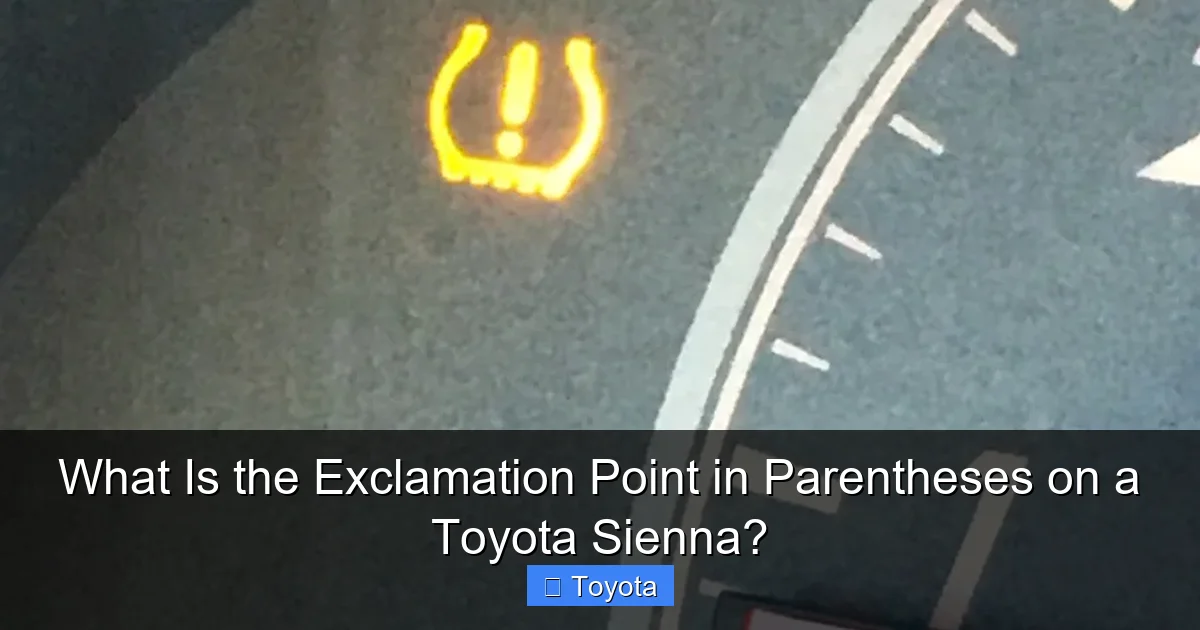
Visual guide about What Is the Exclamation Point in Parentheses on a Toyota Sienna?
Image source: static.cargurus.com
How Does the TPMS Sensor Actually Work?
Each TPMS sensor has a tiny battery and a pressure transducer. As you drive, the sensor is activated by the wheel’s rotation. It takes readings and sends a radio frequency signal to the vehicle’s receiver. The computer compares the pressure from each wheel to its programmed “ideal” pressure. When the pressure in any tire drops 25% or more below that recommended level, the system triggers the warning light on your dashboard. Some systems, including Toyota’s, can also tell you which specific tire is low, often by showing a diagram of the vehicle with the offending tire highlighted. The exclamation point is the master alert that something is amiss in that system.
Direct vs. Indirect TPMS: What Does My Sienna Have?
There are two types of TPMS. Direct TPMS, which your Toyota Sienna uses, employs the physical sensors in each wheel. It’s the most accurate method because it measures pressure directly. Indirect TPMS uses the existing ABS wheel speed sensors to detect differences in rotational speed; an underinflated tire rolls slightly slower. Your Sienna’s system is direct, meaning it relies on those small, delicate electronic sensors. This is important to know because these sensors can fail, get damaged during tire service, or have their batteries die (they typically last 7-10 years). If the system itself malfunctions, the light may flash for a few seconds when you start the car and then stay on solid, indicating a system fault rather than just low pressure.
The “Why”: Common Reasons Your Sienna’s (!) Light Comes On
So the light is on. Now what? Before you run to the air pump, it helps to understand the most common culprits. Knowing the cause can save you time and help you explain the issue to a professional if needed.
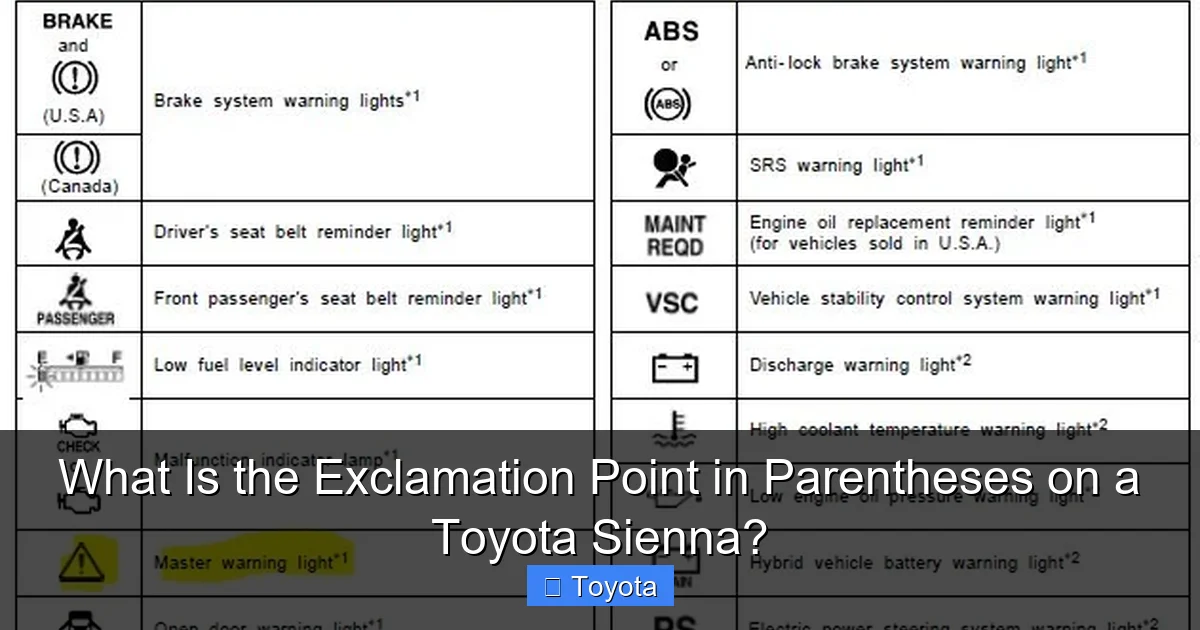
Visual guide about What Is the Exclamation Point in Parentheses on a Toyota Sienna?
Image source: i.pinimg.com
The Obvious Culprit: Normal Air Loss & Temperature Changes
Tires naturally lose about 1 PSI (pound per square inch) of air per month. This is normal permeation. Additionally, air pressure is directly tied to temperature. For every 10°F drop in outside temperature, your tire pressure decreases by about 1-2 PSI. This is why you often see the TPMS light come on on a cold morning after the car has been parked overnight. The air inside the tires contracts. Conversely, pressure increases in hot weather. This is the most frequent and benign reason for the warning. The solution is simply to check and adjust the pressures to the manufacturer’s specification, which you can find on a sticker on the driver’s side door jamb or in your owner’s manual. Never use the pressure printed on the tire’s sidewall as your target; that’s the maximum pressure, not the recommended one for your Sienna.
The Unwelcome Guest: Punctures and Slow Leaks
This is a more serious cause. You may have picked up a nail, screw, or piece of debris that has slowly punctured the tire, causing a gradual loss of air. Sometimes the puncture is in the tread and can be repaired. Other times, it’s in the sidewall, which is not repairable and requires a tire replacement. A slow leak can also come from a faulty valve stem (where the TPMS sensor is often mounted), a damaged wheel rim (a bend or crack), or a poor seal between the tire and the rim after a tire change. If you find a visible object in the tire, do not remove it; drive carefully to a tire shop. If there’s no visible object but the pressure drops again quickly after filling, you have a slow leak that needs diagnosis.
The Aftermath: Recent Tire Service
Did you just have your tires rotated, balanced, or a flat repaired? This is a prime time for the TPMS light to come on. During these services, the tire is removed from the wheel, which can disturb the TPMS sensor’s seal or even damage the sensor itself. Sometimes, the sensor’s valve core (the tiny pin that controls air flow) can be nudged, causing a leak. Other times, after a rotation, the system simply needs to be relearned or reset to recognize the new wheel positions. It’s always a good idea to mention any TPMS light activity to the technicians at the shop. They have tools to check sensor function and reset the system. For more on common Toyota service questions, you might read about what a Toyota Multi-Point Inspection covers, as TPMS checks are often part of it.
The Technical Glitch: Faulty TPMS Sensor or System
Like any electronic component, TPMS sensors can fail. The tiny internal battery can die (though this usually takes many years). The sensor can be physically damaged from curbing, potholes, or during an aggressive tire change. Corrosion can build up on the sensor’s threads or valve stem. If you’ve ruled out low pressure and leaks, a faulty sensor is the likely suspect. A failing sensor might cause the light to flash intermittently. Diagnosing this requires a special TPMS scan tool that can read the sensor’s ID and battery life. Replacing a TPMS sensor is a job for a professional, as it requires dismounting the tire and often programming the new sensor’s ID into the vehicle’s computer.
Your Action Plan: What to Do When You See (!)
Okay, the light is on. Don’t panic, but do act promptly. Here is your clear, step-by-step guide to diagnosing and addressing the problem safely.
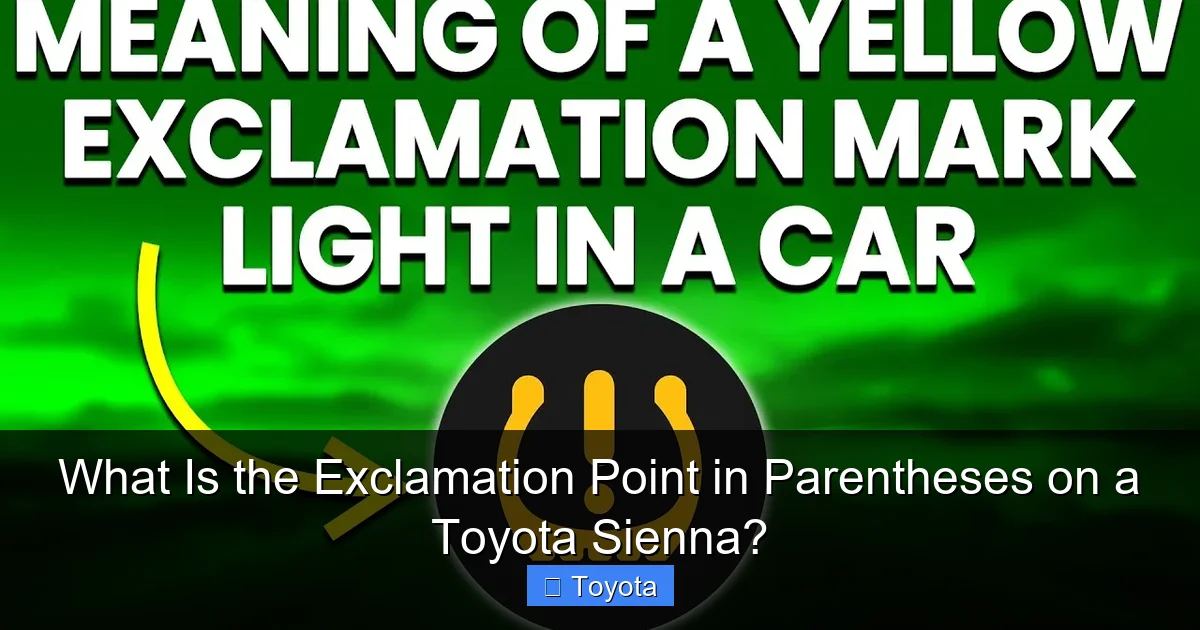
Visual guide about What Is the Exclamation Point in Parentheses on a Toyota Sienna?
Image source: i.ytimg.com
Step 1: Immediate Safety Assessment
First, assess the situation. Is the light solid yellow/amber, or is it flashing? A solid light almost always means low pressure in one or more tires. A flashing light (usually for a few seconds after startup and then solid, or continuously) typically indicates a system malfunction, like a dead sensor or a communication error. If the light is solid, you can usually drive cautiously to a safe location to check pressures. If it’s flashing, treat it as a system fault and get it checked by a professional soon, though driving a short distance is generally safe.
Safety Tip: Before you even check pressures, visually inspect your tires. Look for any obvious flatness, a tire that’s clearly lower than the others, or any visible damage like a bulge, cut, or object protruding from the tread. If a tire is completely flat or severely damaged, do not drive. Call for roadside assistance.
Step 2: The Gold Standard – Check Pressures with a Gauge
Never trust your eyes to judge tire pressure. A tire can look fine but be 10 PSI low. You need a reliable digital or high-quality analog tire pressure gauge. Check the pressures when the tires are cold—meaning the car hasn’t been driven for at least three hours or has been driven less than a mile. Driving heats the tires and air inside them, giving a falsely high reading.
Remove the valve cap, press the gauge on firmly until you hear a hiss, and read the pressure. Do this for all four tires and the spare (if your Sienna has one, as some models do). Compare the readings to the recommended cold inflation pressure on your door jamb sticker. This is usually something like “32 PSI” but will be specific to your model year and trim. If any tire is 25% or more below that number (e.g., 24 PSI or lower if spec is 32 PSI), it will trigger the light. Inflate any low tires to exactly the specified pressure using an air compressor (at a gas station, home compressor, or portable unit).
Step 3: Reset the TPMS System
After you’ve inflated all tires to the correct pressure, the light should turn off on its own after a few minutes of driving. However, sometimes it needs a manual reset. Your Toyota Sienna has a specific procedure for this. The exact steps can vary slightly by model year, so consulting your owner’s manual is best. The general process is:
- Ensure all tires are inflated to the correct pressure.
- Turn the ignition to the “ON” position (do not start the engine).
- Use the steering wheel buttons or the dash display menu to navigate to the Vehicle Settings or Tire Pressure menu.
- Look for an option like “TPMS” or “Set Pressure” or “Initialize”.
- Select it and confirm. You may see a message like “TPMS initialization completed” or a series of beeps.
- Start the engine and drive. The light should go off within a few minutes.
If the light comes back on immediately after resetting, you have a persistent problem—most likely a slow leak or a faulty sensor.
When DIY Isn’t Enough: Knowing When to Call a Pro
Not all TPMS issues are simple fixes. Here are clear signs it’s time to take your Sienna to a qualified tire technician or your Toyota dealer.
The Light Returns Immediately or Won’t Reset
You filled the tires, reset the system, drove a few miles, and the (!) is back on. This strongly suggests a leak. A technician will perform a soapy water test on the tire, rim, and valve stem to find bubbles indicating escaping air. They can also submerge the wheel in a dunk tank to find the leak source. If the valve stem itself is leaking (common after years of exposure), the entire TPMS sensor assembly must be replaced.
Flashing Light or System Malfunction Message
As mentioned, a flashing light usually points to a sensor or system communication error. A professional will use a TPMS diagnostic scan tool to communicate with each sensor individually. This tool can read the sensor’s unique ID, battery life, and pressure/temperature data. If a sensor isn’t responding or reports a dead battery, it needs replacement. Sometimes, the vehicle’s computer may need a software update, or a sensor may have been damaged during a recent service and needs to be replaced and programmed. Replacing a sensor is more complex than just changing a valve stem; the new sensor’s ID must be programmed into the Sienna’s computer so it knows which wheel position it’s in. This is not a typical DIY job.
After Tire Replacement or Major Service
If you get new tires and the TPMS light comes on, it could be that the sensors were damaged during installation or weren’t properly remounted and sealed. Bring it back to the shop that did the work. Reputable shops will check sensor function and reset the system as part of the service. If they didn’t, they should do it now at no extra charge. Understanding what happens during a tire service can be helpful; you might also want to know what other buttons in your Toyota do to become more familiar with your vehicle.
Prevention is Key: Maintaining Your TPMS and Tires
The best way to deal with a TPMS light is to avoid it altogether. A little proactive care goes a long way.
Make Monthly Pressure Checks a Habit
Don’t wait for the light. Check your Sienna’s tire pressures at least once a month and before any long family trip. This is the single most important thing you can do. Proper inflation improves fuel efficiency (you can get better mileage, similar to how ECT Power mode affects your Sienna’s performance), ensures even tire wear, provides optimal handling and braking, and enhances ride comfort. Keep a good gauge in your glove compartment.
Understand the Seasonal Rhythm
Be extra vigilant during major temperature swings. When fall turns to winter, check pressures more frequently as cold air causes a drop. In spring, pressure will rise naturally. Adjust accordingly. A good rule: if the light comes on during a cold snap, it’s very likely just temperature-related. But you must still check and adjust, because the pressure is still technically low compared to the spec.
Protect Your Sensors During Service
When you take your Sienna for tire work, choose a reputable shop that understands TPMS. Ask them if they will check the sensors and reset the system. For older sensors, the battery will eventually die. When replacing tires, it’s often recommended to replace the TPMS sensor kit (sensor, valve core, and seal) if the sensor is more than 5-7 years old to avoid future failure. This is a small added cost for big reliability.
Don’t Ignore the Light, Even if It Feels Fine
Driving on underinflated tires is a silent killer of fuel economy and tire life. You might not notice a 5 PSI drop, but your tires are wearing out faster and your Sienna is working harder to move. The TPMS light is a helpful reminder, not an annoyance to be disabled. Addressing it promptly saves you money on gas and new tires in the long run.
Conclusion: Your Partner in Safe, Efficient Family Travel
That little exclamation point in parentheses is more than just a dashboard icon; it’s a vital communication tool from your Toyota Sienna, designed to keep you and your family safe. Understanding that it’s your TPMS warning light demystifies it completely. It’s a call to action: check your tire pressures. This simple, two-minute task is one of the most important maintenance items you can perform as a vehicle owner. It directly impacts safety, fuel costs, tire longevity, and driving comfort. By making regular pressure checks a habit and knowing when to seek professional help for persistent lights or flashing warnings, you take control of your Sienna’s health. You ensure your minivan continues to be the reliable, safe, and efficient family hauler it was built to be. So next time you see that (!), you’ll know exactly what to do, turning a moment of confusion into a quick, confident pit stop on your journey.
Frequently Asked Questions
Can I drive my Toyota Sienna with the (!) TPMS light on?
You can drive cautiously for a short distance to get to a safe location or a service station to check the pressure. However, you should not drive long distances or at high speeds with significantly underinflated tires, as it’s unsafe and can cause permanent tire damage. The light is a warning, not a “stop immediately” signal, but prompt attention is required.
How much does it cost to fix or reset a TPMS light?
If the issue is simply low air, it costs nothing to inflate the tires (often free at gas stations or tire shops). If a sensor needs to be replaced, the total cost for a new TPMS sensor and professional installation/programming typically ranges from $100 to $250 per wheel, depending on the model year and shop. A diagnostic fee may apply if the system is malfunctioning.
How long do TPMS sensors last in a Toyota Sienna?
TPMS sensors are powered by internal, non-replaceable batteries. They are designed to last approximately 7 to 10 years, or 80,000 to 100,000 miles. When the battery dies, the entire sensor assembly must be replaced. Factors like harsh winters and road salt can shorten their lifespan.
Why does the TPMS light come on in cold weather?
Cold temperatures cause the air inside your tires to contract, lowering the pressure. If the pressure drops below the 25% threshold, the light will activate. This is very common. You simply need to check the cold inflation pressure and add air to bring it back to the specification listed on your door jamb sticker.
Can I reset the TPMS light myself?
Yes, you can reset it yourself after correcting tire pressures. The procedure is in your owner’s manual under the TPMS section. It typically involves turning the ignition on and using the vehicle settings menu to select a “TPMS Initialize” or “Set Pressure” option. If the light returns immediately after a successful reset, there is an underlying problem like a leak or bad sensor that needs professional diagnosis.
Why would the TPMS light come on after getting new tires?
This can happen if the TPMS sensors were damaged during mounting/dismounting, if the valve stems weren’t properly sealed, or if the system simply wasn’t reset after the tire rotation. Bring the vehicle back to the tire shop; they should diagnose and fix the issue, as sensor damage during service is often their responsibility. It’s also a good time to consider verifying your exact correct tire pressure for your specific Sienna model.
