What Is the Exclamation Mark on a 2013 Toyota Highlander

Contents
- 1 Key Takeaways
- 2 📑 Table of Contents
- 3 Decoding the Dash: Your 2013 Highlander’s Exclamation Mark
- 4 The Usual Suspects: Most Common Causes for the Master Warning Light
- 5 Beyond the Basics: More Serious System Warnings
- 6 Other Noteworthy Triggers: Less Common but Important
- 7 Your Action Plan: What to Do When the Light Comes On
- 8 Resetting the Light: A Final Step After Repair
- 9 Frequently Asked Questions


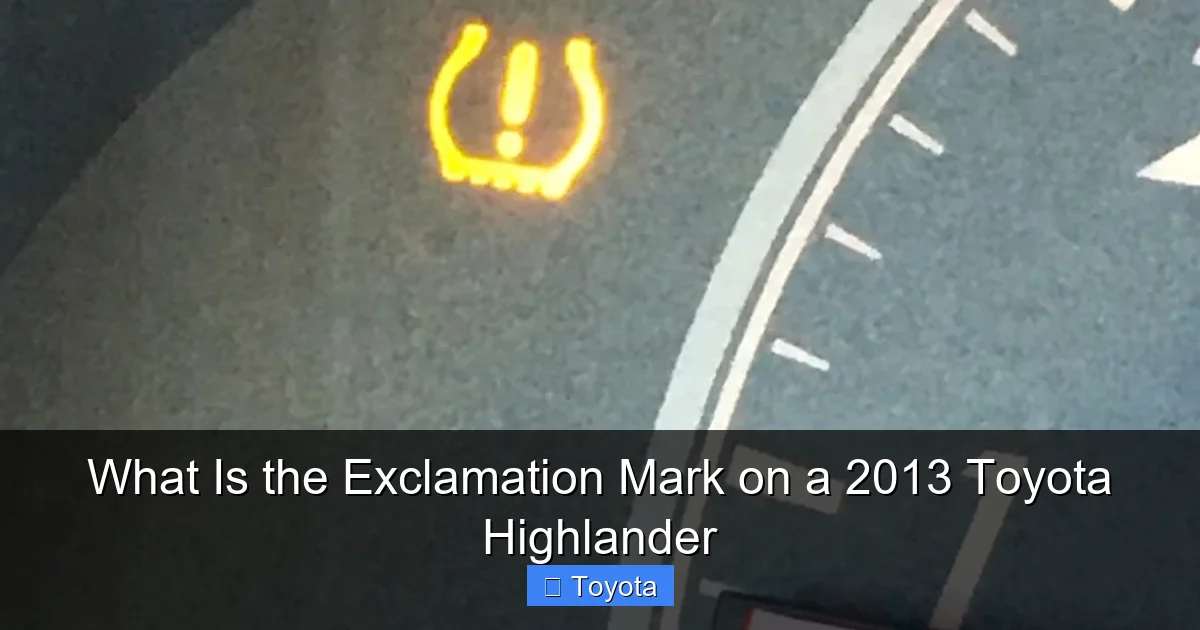
The exclamation mark symbol on your 2013 Toyota Highlander’s dashboard is the critical Master Warning Light. It’s not a single issue indicator but a catch-all warning that something requires your immediate attention, ranging from simple reminders like low fuel or an unfastened seat belt to serious problems with the engine, brakes, or other vital systems. When this light comes on, either steady or flashing, you must safely check your vehicle’s status and consult the owner’s manual or a professional mechanic to diagnose the specific cause, as ignoring it can lead to damage or unsafe driving conditions.
Key Takeaways
- It’s the Master Warning Light: The orange triangle with an exclamation point is your Highlander’s primary alert system, signaling a variety of issues from minor to severe.
- Common Causes: Frequent triggers include low fuel, an unfastened seat belt, a loose or damaged fuel cap, or a problem with the Tire Pressure Monitoring System (TPMS).
- Steady vs. Flashing: A steady light often indicates a system reminder or less urgent fault, while a flashing light usually signifies a critical, immediate problem requiring you to stop driving safely.
- Check the Multi-Information Display: The specific warning message will appear on the small screen between the gauges, which is essential for identifying the exact problem.
- Do Not Ignore It: Regardless of the perceived severity, the light should be investigated promptly to prevent potential safety risks or costly mechanical damage.
- Reset Procedures Vary: Once the underlying issue is fixed, the light may reset itself. Some issues, like a loose gas cap or low tire pressure, can be manually reset after correction.
[FEATURED_IMAGE_PLACEHOLDER]
📑 Table of Contents
- Decoding the Dash: Your 2013 Highlander’s Exclamation Mark
- The Usual Suspects: Most Common Causes for the Master Warning Light
- Beyond the Basics: More Serious System Warnings
- Other Noteworthy Triggers: Less Common but Important
- Your Action Plan: What to Do When the Light Comes On
- Resetting the Light: A Final Step After Repair
Decoding the Dash: Your 2013 Highlander’s Exclamation Mark
You’re driving your trusty 2013 Toyota Highlander, maybe on a family trip or just running errands, when suddenly an ominous orange triangle with an exclamation point lights up on your dashboard. Your heart might skip a beat. What does it mean? Is everything okay? Don’t panic. This symbol is your vehicle’s most通用 (general) warning light, officially called the Master Warning Light. Its purpose is simple and vital: to get your attention that something, somewhere in your Highlander’s complex network of systems, needs your attention. Unlike a check engine light that points to the engine specifically, or an oil can icon for oil pressure, the exclamation mark is a catch-all. It’s your car’s way of saying, “Hey, look at this!” but it relies on you to figure out what “this” is by checking the accompanying message on your instrument panel’s multi-information display.
Understanding this light is a cornerstone of responsible vehicle ownership. For the 2013 Highlander, this warning system was a key part of its safety and diagnostic architecture. It bridges the gap between simple reminder lights and specific component failures. The light itself is just the starting siren; the real clue is the text that appears with it. Your immediate reaction should be to safely glance at that small screen. Is it saying “LOW FUEL”? “CHECK TIRE PRESSURE”? Or something more cryptic like “CHECK AWD SYSTEM”? The answer dictates your next move. In this guide, we’ll become detectives together, exploring every common reason this light might appear on your 2013 Highlander, what each message means, and the practical steps you should take. From the simplest fix you can do yourself to the scenarios that require a tow truck, we’ve got you covered.
The Usual Suspects: Most Common Causes for the Master Warning Light
While the Master Warning Light can herald a wide array of issues, experience and repair data show a clear pattern of frequent offenders. Many of these are things an average owner can check and often fix in minutes. Let’s start with the most common, and least alarming, reasons that little exclamation point might appear.

Visual guide about What Is the Exclamation Mark on a 2013 Toyota Highlander
Image source: diycarexpert.com
Low Fuel: The Simplest Explanation
This is arguably the number one reason the Master Warning Light comes on, often accompanied by the text “REFUEL” or a gas pump icon on your display. Your Highlander’s fuel level sensor tells the computer when you’re running low. The system doesn’t just want to remind you; it wants to warn you before you’re completely stranded. Typically, the warning activates when you have about 2-3 gallons (or 7-11 liters) of fuel remaining, giving you roughly 30-50 miles of range depending on driving conditions. If you see this, your action is straightforward: find a gas station and fill up. After adding a few gallons, the light and message should extinguish on their own. If it persists after refueling, there could be an issue with the fuel level sensor itself.
Tire Pressure Monitoring System (TPMS) Alerts
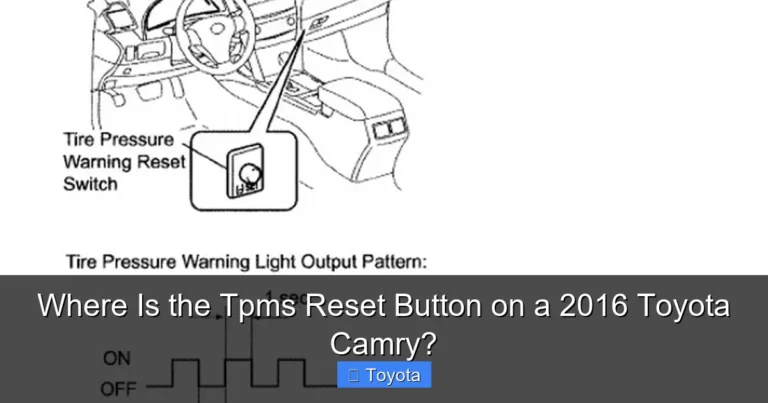
The 2013 Highlander is equipped with a direct TPMS, meaning each wheel has a sensor that monitors air pressure. If the pressure in any tire drops significantly below the recommended level (usually by 25% or more), the system triggers a Master Warning Light along with a “CHECK TIRE PRESSURE” message. Sometimes, it will even indicate which specific tire is low. Causes range from a simple puncture or a slow leak to seasonal temperature changes affecting air pressure. The fix is to check all four tires (and the spare, if equipped) with a gauge, inflate them to the pressure listed on the driver’s door jamb sticker, and then you may need to perform a reset procedure. On many 2013 Highlanders, once the correct pressure is restored, the light will turn off after a few minutes of driving. If it doesn’t, a manual reset might be needed, which often involves a button located under the dash or in the glove box—consult your owner’s manual for the exact procedure for your trim.
Seat Belt Reminders
This is another frequent and non-threatening cause. If a front occupant is not wearing their seat belt when the vehicle is in motion, a chime will sound and the Master Warning Light will illuminate, often with the text “FASTEN SEAT BELT.” The light will also come on if a front door is opened while the vehicle is moving. This is a critical safety feature. Simply buckle up or close the door, and the warning will cease. It’s a habit-forming system designed to protect you and your passengers.
Loose or Missing Fuel Cap
You might not think a small plastic cap could trigger a master warning, but it can. The Highlander’s evaporative emission (EVAP) system is sealed to prevent fuel vapors from escaping. If the fuel cap is not tightened properly after refueling, or if it’s missing or damaged, the system detects a leak. The computer then triggers a Master Warning Light, often with a message like “TIGHTEN FUEL CAP” or a small icon of a gas cap. The solution is simple: turn the cap until you hear several clicks, ensuring a tight seal. Drive for a few minutes; the system will run a self-test. If the leak is fixed, the light should go out. If it remains on, the cap itself may be faulty and need replacement, or there could be a larger leak in the EVAP system.
Beyond the Basics: More Serious System Warnings
When the simple fixes above don’t apply, the Master Warning Light is signaling a more significant issue with one of your Highlander’s complex systems. These warnings require immediate and serious attention. Ignoring them is not an option.

Visual guide about What Is the Exclamation Mark on a 2013 Toyota Highlander
Image source: shunspirit.com
Brake System Warnings
If the Master Warning Light illuminates alongside a dedicated brake warning light (usually red and shaped like an exclamation mark inside a circle or parentheses), you have a serious brake system problem. Possible causes include critically low brake fluid, a problem with the brake booster, or a failure in the anti-lock braking system (ABS). You might also see messages like “BRAKE FLUID LOW” or “CHECK BRAKE SYSTEM.” If this happens, you should safely pull over as soon as possible and have your vehicle towed to a qualified mechanic. Driving with compromised brakes is extremely dangerous. Check your brake fluid reservoir under the hood first; if it’s very low, there is likely a leak that needs immediate repair.
Charging System/Alternator Failure
If the Master Warning Light comes on in conjunction with a battery-shaped icon, your Highlander is telling you the charging system is failing. The alternator, which generates electricity to run the car and recharge the battery, has likely stopped working or is outputting insufficient voltage. You’ll notice electrical symptoms: dimming headlights, slow power windows, or the radio cutting out. The car will continue to run on battery power alone, but once that battery is depleted (which could be minutes or an hour), the engine will stall, leaving you stranded. If this light appears, turn off all non-essential electrical accessories (radio, AC, lights) and drive directly to a repair shop or service center to replace the alternator.
All-Wheel Drive (AWD) System Faults
The 2013 Highlander’s AWD system is sophisticated. If its computer detects a fault—such as a malfunctioning transfer case, a problem with the rear differential clutch, or a broken sensor—it will activate the Master Warning Light, often with the message “CHECK AWD SYSTEM” or “AWD SYSTEM OFF.” When this happens, the system may default to front-wheel drive only to protect itself. While you can usually continue driving in front-wheel drive mode, you have lost the added traction and stability of AWD, which is a significant safety and capability reduction, especially in poor weather or on slippery surfaces. This needs diagnostic attention from a technician familiar with Toyota AWD systems. For more on how your Highlander’s AWD works, resources on checking the AWD system on a Toyota Highlander can be helpful.
Engine Misfire or Severe Engine Problems
While a dedicated check engine light (MIL) usually handles engine issues, a severe or multi-cylinder misfire can be so critical that it also triggers the Master Warning Light. You might feel the car shaking violently at idle or under acceleration, notice a loss of power, or see smoke from the exhaust. If the Master Warning Light is flashing in this scenario, it’s a dire warning: continued driving can cause catastrophic damage to the catalytic converter or engine internals. You must stop driving immediately and have the vehicle towed. A steady light with a “CHECK ENGINE” message on the display also requires prompt diagnosis to prevent further damage.
Other Noteworthy Triggers: Less Common but Important
Your Highlander has dozens of sensors and modules. Here are a few other specific instances that might light up that exclamation point.

Visual guide about What Is the Exclamation Mark on a 2013 Toyota Highlander
Image source: dash-lights.com
Security/Immobilizer System
If there’s a fault with the vehicle’s immobilizer system (the anti-theft system that prevents the engine from starting without the correct key), a Master Warning Light may appear with a key or car-and-key icon. This can sometimes prevent the engine from starting. It might be caused by a dead key fob battery, a damaged key, or a fault in the antenna ring around the ignition.
Smart Key System
For Highlanders equipped with the keyless entry and push-button start, issues with the smart key system—like a low key battery or the key being out of range—can trigger warnings. You might see “KEY NOT DETECTED” or similar. The solution is often to replace the key fob battery or ensure you’re physically near the vehicle with the key.
Automatic Transmission Warnings
Transmission problems, such as overheating, low fluid, or solenoid failures, can illuminate the Master Warning Light. Look for messages like “CHECK TRANSMISSION” or “TRANSMISSION OIL HOT.” Symptoms include harsh shifting, slipping gears, or failure to shift. This is a serious issue that requires immediate professional service to avoid a complete transmission failure.
Hybrid System Warnings (If Applicable)
For the 2013 Highlander Hybrid, a Master Warning Light could indicate a problem with the high-voltage hybrid battery, inverter, or motor systems. These warnings are complex and require specialized hybrid-certified technicians. Do not attempt to diagnose or repair hybrid system components yourself.
Your Action Plan: What to Do When the Light Comes On
So, the exclamation point is lit. Now what? Follow this logical, safety-first sequence of steps.
- Stay Calm and Assess: Don’t swerve or panic. Safely reduce speed and find a secure place to pull over if the light is flashing or you feel something is seriously wrong (loss of power, strange noises, smoke).
- Read the Message: Immediately look at the multi-information display between your speedometer and tachometer. The text message is your most important clue. Write it down or take a photo with your phone.
- Perform Quick Visual Checks: If you can do so safely, check for obvious issues:
- Is the fuel door open or the cap loose?
- Are all tires visibly flat?
- Are all seat belts fastened?
- Check engine oil level with the dipstick.
- Check coolant level in the reservoir (when engine is cool).
- Check brake fluid level.
- Consult the Owner’s Manual: This is your definitive guide. It has a complete list of all possible warning messages and their meanings specific to your 2013 Highlander’s trim level. Find the “Warning Lights and Indicators” section.
- Decide: Drive or Tow? Use the information gathered. If the message is “LOW FUEL,” “CHECK TIRE PRESSURE,” or “TIGHTEN FUEL CAP,” and the car is driving normally, you can cautiously drive to address it (a gas station, home to check tires). For any message related to BRAKES, ENGINE, TRANSMISSION, AWD, CHARGING SYSTEM, or if the light is flashing, the safe choice is to stop driving and call for a tow. When in doubt, err on the side of caution.
- Seek Professional Diagnosis: Take the vehicle to a trusted mechanic or a Toyota dealership. Give them the exact message you saw. They will use a diagnostic scan tool to read the computer’s stored trouble codes, which pinpoint the source of the problem. This is the only reliable way to fix the issue correctly.
Resetting the Light: A Final Step After Repair
Once a mechanic has diagnosed and repaired the underlying problem, the Master Warning Light should turn off on its own after a few drive cycles as the computer verifies the fix. However, for some simple, user-corrected issues, you may need to perform a manual reset. The method varies by issue:
- For TPMS (Tire Pressure): After inflating tires to the correct pressure, you may need to press and hold the TPMS reset button (usually located under the dash, in the glove box, or near the fuse panel) until the TPMS indicator blinks three times. Refer to your manual for the exact location and procedure.
- For Maintenance Reminders: If the light was on for an oil change or other scheduled service, you’ll need to follow the specific reset procedure for your 2013 Highlander’s odometer display. This typically involves turning the ignition on, setting the trip meter to “ODO,” and holding the trip/reset button until the light blinks. Detailed steps for resetting the maintenance light on a 2013 Toyota Highlander are available in dedicated guides.
- For Other Issues: Most other system faults (engine, brakes, AWD) will not have a user-reset button. The light will only turn off when the onboard diagnostic system confirms the fault is no longer present after the repair. Forcing a reset without fixing the problem is dangerous and will cause the light to return.
Important: Never use a scanner tool to simply “turn off” the light without addressing the root cause. This is like turning off a fire alarm while the fire is still burning. It masks the problem and can lead to catastrophic failure.
Frequently Asked Questions
What does a flashing exclamation mark on my 2013 Highlander mean?
A flashing Master Warning Light is a critical alert, often indicating a severe engine misfire, complete charging system failure, or a major safety system fault like brake failure. You should safely stop driving as soon as possible and have the vehicle towed for diagnosis to prevent serious damage or unsafe conditions.
Can I keep driving if the exclamation mark is on but the car seems fine?
It depends entirely on the message. If it says “LOW FUEL” or “CHECK TIRE PRESSURE” and the car handles normally, you can drive a short distance to address it. However, if the message relates to the engine, brakes, transmission, or AWD, even if the car feels okay, you should minimize driving and seek professional help immediately, as internal damage could be occurring.
Why did the exclamation mark come on after I got gas?
>The most likely cause is a loose or improperly sealed fuel cap. The EVAP system detects the vapor leak and triggers the warning. Tighten the cap until it clicks several times and drive for about 15-20 minutes. If the light doesn’t go off, the cap may be damaged or there could be another leak in the system.
Is the exclamation mark the same as the check engine light?
No. They are separate indicators. The check engine light (usually yellow and shaped like an engine) is specifically for engine and emissions system faults. The Master Warning Light (exclamation point in a triangle) is a broader warning that can include engine issues but also covers tire pressure, seat belts, low fluid levels, and other non-engine systems. They can sometimes illuminate together for severe problems.
My tires are inflated correctly, but the light is still on. What now?
After confirming all tires (including the spare) are at the exact pressure listed on your door jamb sticker, the system may need a manual reset. Locate the TPMS reset button in your owner’s manual and follow the procedure. If the light persists after a reset and a short drive, one of the tire pressure sensors may be faulty or have a dead battery and will need to be replaced.
Will the light turn off by itself after I fix the problem?
Often, yes. For issues like low fuel or a tightened gas cap, the light will extinguish once the sensor reads normal conditions. For more complex repairs (like brake or AWD work), the mechanic’s repair should clear the fault code, and the light will turn off after the vehicle completes a successful self-test cycle. If it doesn’t, a manual reset or further diagnosis is needed.