What Is the Date on a Car Battery
Understanding what is the date on a car battery is crucial for maintaining your vehicle’s reliability and avoiding unexpected breakdowns. The date code tells you when the battery was manufactured, helping you assess its age and remaining lifespan—key factors in performance and safety.
In This Article
- 1 Key Takeaways
- 2 📑 Table of Contents
- 3 Why the Date on a Car Battery Matters
- 4 How to Locate the Date Code on a Car Battery
- 5 Decoding the Date: Understanding the Format
- 6 Why Battery Age Affects Performance
- 7 How to Use the Date to Make Smart Purchases
- 8 Maintaining Your Battery and Monitoring Age
- 9 Common Myths About Car Battery Dates
- 10 Conclusion
- 11 Frequently Asked Questions
- 11.1 How do I find the manufacture date on a car battery?
- 11.2 What does the letter in the battery date code mean?
- 11.3 How old is too old for a car battery?
- 11.4 Does the warranty start on the purchase date or manufacture date?
- 11.5 Can I recharge an old battery to make it like new?
- 11.6 Why do some batteries have different date code formats?
Key Takeaways
- Date codes reveal manufacturing age: Every car battery has a date code that indicates when it was made, not when it was installed.
- Batteries degrade over time: Even unused batteries lose capacity after 3–5 years due to chemical aging.
- Location varies by brand: Date codes are found on labels, stamps, or embossed markings—check the top or side of the battery.
- Format differs by manufacturer: Some use letters for months (A=January), others use numbers or Julian dates.
- Old batteries risk failure: Installing a battery older than 6 months can lead to poor starting, especially in cold weather.
- Warranty starts at manufacture: Most warranties begin on the production date, not purchase date—knowing this helps with claims.
- Regular checks prevent issues: Inspecting the date during routine maintenance helps you plan timely replacements.
📑 Table of Contents
Why the Date on a Car Battery Matters
When you pop the hood of your car, you might glance at the battery and think, “It looks fine—must be working.” But appearances can be deceiving. One of the most overlooked yet critical pieces of information on a car battery is the date code. Understanding what is the date on a car battery isn’t just a detail for mechanics—it’s essential knowledge for every driver who wants to avoid being stranded on a cold morning or dealing with a sluggish engine.
Car batteries are not immortal. They have a finite lifespan, typically ranging from three to five years, depending on usage, climate, and maintenance. But here’s the catch: that lifespan starts ticking the moment the battery leaves the factory, not when you install it in your vehicle. A battery sitting on a store shelf for a year is already a year older in terms of performance potential. That’s why knowing how to read the date code can save you from buying a “new” battery that’s actually past its prime.
Think of it like buying milk. You check the expiration date to make sure it’s fresh. The same logic applies to car batteries. A battery manufactured more than six months ago may still work, but it’s already losing its peak power. In extreme temperatures—whether scorching summer heat or freezing winter cold—an older battery is far more likely to fail. By learning what is the date on a car battery and how to interpret it, you take control of your vehicle’s reliability and safety.
How to Locate the Date Code on a Car Battery
Visual guide about What Is the Date on a Car Battery
Image source: batteryglobe.com
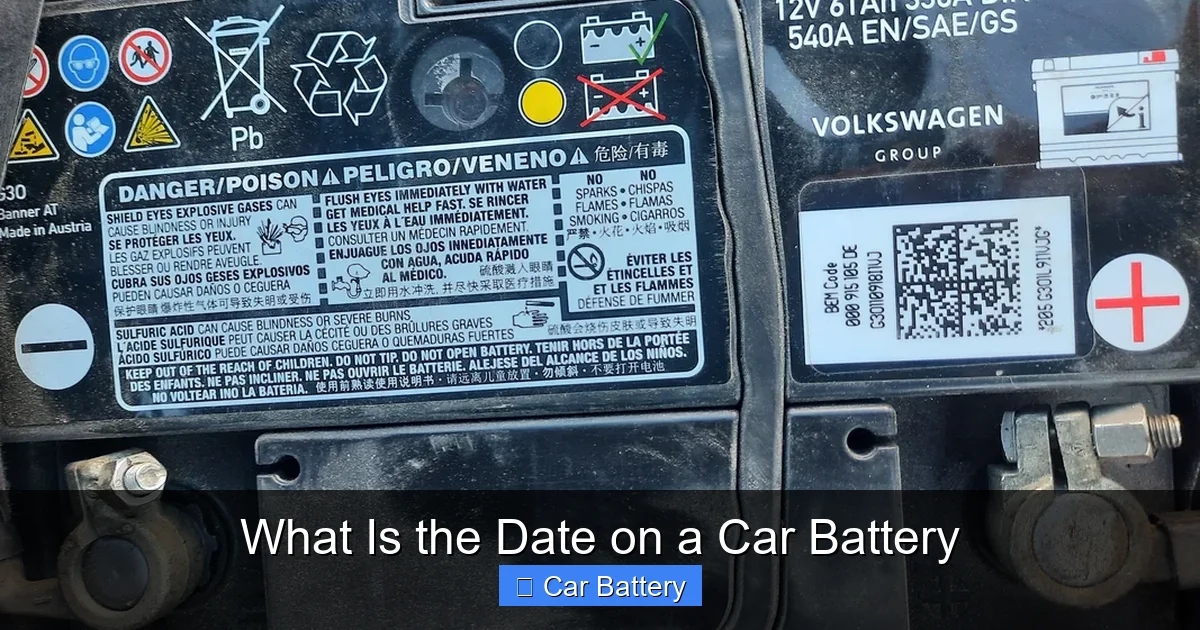
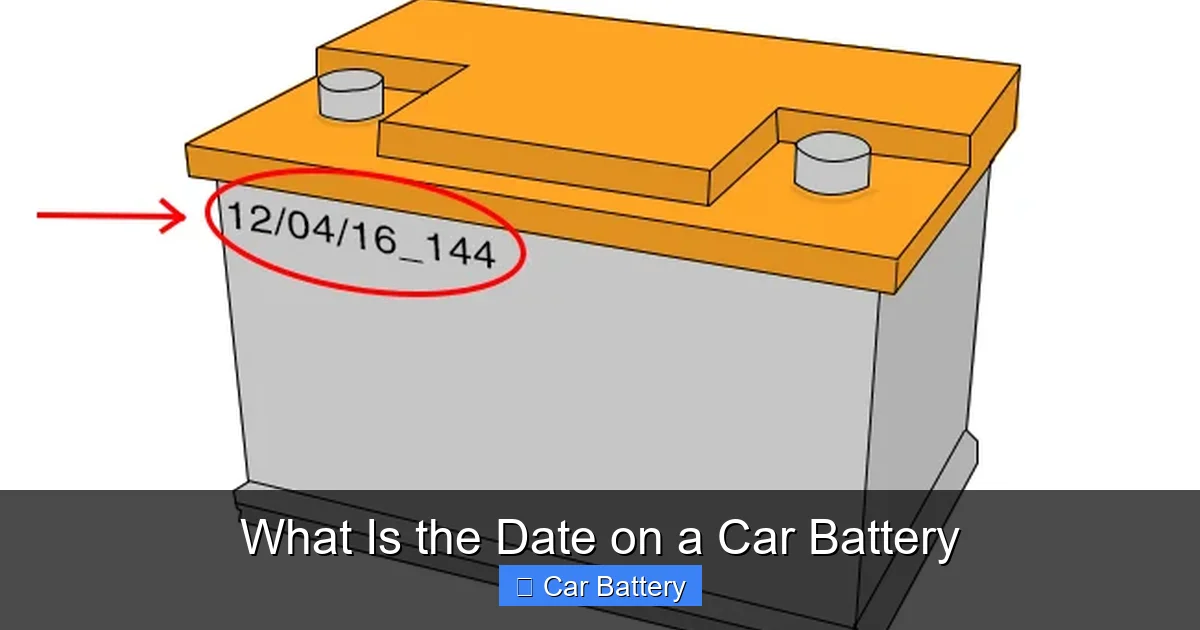
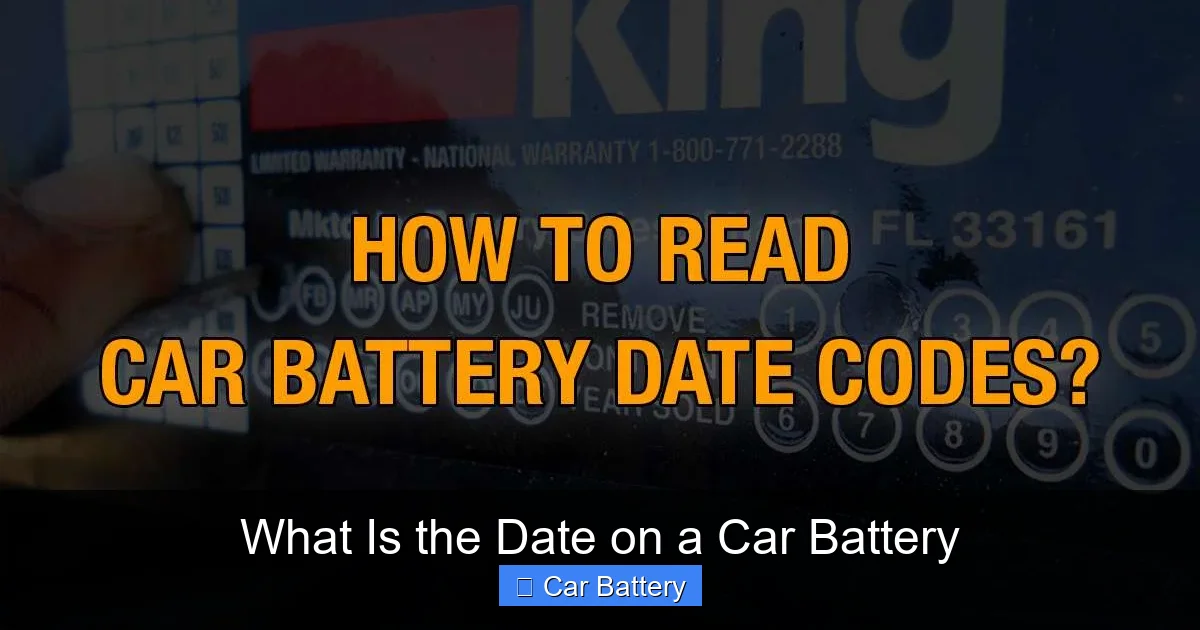
Finding the date code on a car battery might seem tricky at first, but it’s usually straightforward once you know where to look. The date is typically printed, stamped, or embossed on the battery case, often near the top or along the side. It’s commonly found on a label that also includes the brand name, model number, and voltage information. However, the exact location and format can vary significantly between manufacturers.
For example, on a Delphi or AC Delco battery, the date code is often on a sticker near the positive terminal. On Optima batteries, you might find it stamped into the plastic casing near the bottom. Some brands, like Interstate or DieHard, place the code on a raised section of the battery top. If you’re having trouble spotting it, look for a series of letters and numbers that stand out from the rest of the labeling. It’s usually a four- or five-character code, such as “H5” or “C21.”
One helpful tip is to clean the battery surface gently with a dry cloth. Dust, grease, or corrosion can obscure the date code, making it hard to read. If the label is damaged or faded, you might need to check the manufacturer’s website or contact customer service with the battery’s serial number for clarification. Remember, even if the battery looks brand new, the date code tells the real story of its age.
Decoding the Date: Understanding the Format
Visual guide about What Is the Date on a Car Battery
Image source: batteryglobe.com
Once you’ve located the date code, the next step is understanding what it means. Unfortunately, there’s no universal standard for battery date codes—each manufacturer uses its own system. But most follow a similar pattern: a letter representing the month and a number for the year. This is where knowing what is the date on a car battery gets a little more technical, but don’t worry—it’s easier than it sounds.
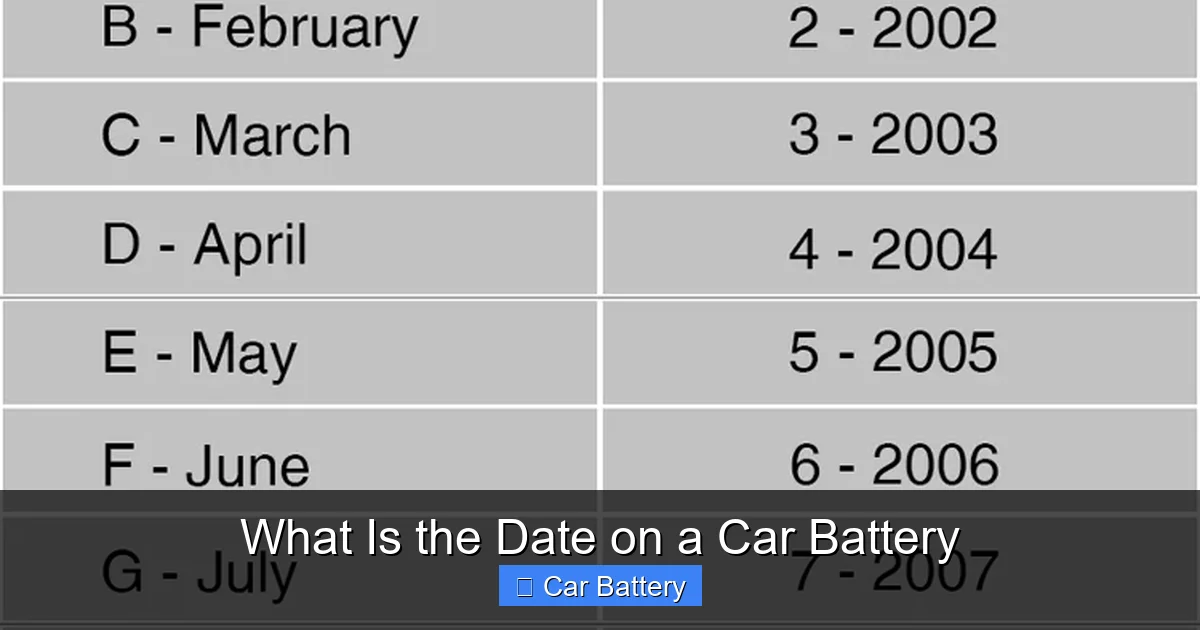
Let’s break it down. The letter typically corresponds to the month of manufacture, with “A” standing for January, “B” for February, and so on, up to “L” for December. The number that follows usually indicates the year. For example, a code like “H5” would mean the battery was made in August (H) of 2015 or 2025, depending on the context. Some manufacturers use a two-digit year (e.g., “23” for 2023), while others use a single digit that cycles every ten years.
Here’s a quick reference:
– A = January
– B = February
– C = March
– D = April
– E = May
– F = June
– G = July
– H = August
– I = September (Note: “I” is sometimes skipped to avoid confusion with the number 1)
– J = October
– K = November
– L = December
For example, a battery with the code “D9” was manufactured in April 2019 or 2029. If you bought the battery in 2023 and the code reads “D9,” it’s likely from 2019—making it four years old already. That’s a red flag.
Some brands, like Bosch or Varta, use a Julian date system, where the first one or two digits represent the day of the year (1–365), followed by the year. For instance, “245-22” would mean the 245th day of 2022—roughly early September. Others, like Exide, might use a simple numeric format like “0323” for March 2023.
It’s also worth noting that some batteries have a “born-on” date, which is essentially the manufacture date. This is the most accurate way to determine age. Always prioritize this over installation or purchase dates when assessing battery health.
Why Battery Age Affects Performance
Visual guide about What Is the Date on a Car Battery
Image source: batteryglobe.com
You might be wondering: “So what if the battery is a few months old? It’s still new, right?” Not exactly. Car batteries begin to degrade the moment they’re manufactured. This process, known as sulfation, occurs when lead sulfate crystals form on the battery plates. Over time, these crystals harden and reduce the battery’s ability to hold a charge. Even if the battery hasn’t been used, this chemical aging happens naturally.
Think of it like a loaf of bread. Fresh bread is soft and delicious, but after a few days, it starts to stale—even if you haven’t eaten it. The same principle applies to batteries. A battery that’s been sitting in a warehouse for a year may look new, but its internal chemistry has already started to decline. This means it won’t deliver the same cold-cranking amps (CCA) as a truly fresh battery, especially in cold weather.
Cold-cranking amps measure how much power a battery can deliver at 0°F for 30 seconds while maintaining a minimum voltage. This is crucial for starting your engine in winter. An older battery may struggle to meet this demand, leading to slow cranking, dim lights, or a complete failure to start. In extreme cases, you might need a jump start or a tow.
Heat also accelerates battery aging. High temperatures increase the rate of chemical reactions inside the battery, which can cause the electrolyte to evaporate and the plates to corrode. This is why batteries in hot climates often fail sooner than those in cooler regions. A battery manufactured in a hot warehouse and then shipped to a desert city may degrade faster than one stored in a climate-controlled facility.
Additionally, older batteries are more prone to internal shorts and plate shedding, which can lead to sudden failure. Unlike other car parts that wear out gradually, batteries often fail without warning. One day your car starts fine; the next, it won’t turn over. Knowing what is the date on a car battery helps you anticipate this risk and replace the battery before it leaves you stranded.
How to Use the Date to Make Smart Purchases
Now that you understand why the date matters, let’s talk about how to use this knowledge when buying a new battery. Whether you’re at an auto parts store, a dealership, or shopping online, checking the manufacture date should be one of your first steps. A fresh battery—ideally less than six months old—will give you the best performance and longest life.
When shopping in person, don’t be afraid to ask the staff to show you the date code. Most reputable retailers will be happy to help. If they can’t or won’t, that’s a red flag. You want a seller who stands behind the quality and freshness of their products. Some stores even rotate their inventory to ensure older batteries are sold first, but this isn’t always the case.
Online purchases require a bit more diligence. Look for product listings that include clear photos of the battery, including the label with the date code. If the photo is blurry or the date isn’t visible, contact the seller before buying. Reputable online retailers often provide the manufacture date in the product description or upon request.
Another smart tip is to compare dates across multiple batteries. If you’re choosing between two identical models, pick the one with the more recent date. Even a difference of a few months can impact performance, especially if you live in a cold climate. For example, a battery made in March 2023 will outperform one made in September 2022, even if both are technically “new.”
Also, consider the warranty. Most battery warranties start on the manufacture date, not the purchase date. A battery with a three-year warranty that’s already six months old only gives you two and a half years of coverage. By choosing a fresher battery, you maximize your warranty period and get more value for your money.
Finally, keep a record of your battery’s install date and manufacture date. This helps you track its age and plan for replacement before it fails. Many drivers use a sticker or marker to write the install date on the battery case. Combine this with the original date code, and you’ll always know how old your battery really is.
Maintaining Your Battery and Monitoring Age
Knowing what is the date on a car battery is only half the battle. The other half is maintaining it properly to extend its life and ensure reliable performance. Regular maintenance can help slow down the natural aging process and keep your battery in top condition for as long as possible.
One of the simplest maintenance tasks is keeping the battery clean. Dirt, grease, and corrosion on the terminals can interfere with electrical connections and reduce efficiency. Use a mixture of baking soda and water to clean the terminals, followed by a rinse with clean water. Dry thoroughly and apply a thin layer of petroleum jelly or terminal protector to prevent future corrosion.
Check the battery’s charge level regularly, especially during extreme weather. A multimeter can help you measure voltage. A fully charged battery should read around 12.6 volts when the engine is off. If it drops below 12.4 volts, it may be time to recharge or replace it. Many modern cars have built-in battery monitoring systems that alert you to low voltage or charging issues.
Avoid deep discharges whenever possible. Frequent short trips, leaving lights on, or using electronics with the engine off can drain the battery and accelerate wear. If you don’t drive often, consider using a battery maintainer or trickle charger to keep it topped up.
Also, protect your battery from extreme temperatures. Park in a garage during winter and avoid direct sunlight in summer if possible. Extreme heat and cold are two of the biggest enemies of battery life. If you live in a harsh climate, consider investing in a battery insulation kit or a thermal blanket.
Finally, schedule regular inspections. Most mechanics include a battery check during routine service. They can test the battery’s health, check the charging system, and verify the date code. If your battery is approaching three years of age, start planning for a replacement—even if it seems to be working fine. Proactive replacement is far better than emergency roadside assistance.
Common Myths About Car Battery Dates
There are several misconceptions about car battery dates that can lead to poor decisions. Let’s clear up some of the most common myths so you can make informed choices.
Myth 1: “As long as it starts, the battery is fine.”
Just because your car starts doesn’t mean the battery is in good health. A weak battery might still crank the engine, but it could fail completely the next day—especially in cold weather. Regular testing and date checks are essential.
Myth 2: “The date doesn’t matter if the battery is under warranty.”
Warranties are important, but they don’t guarantee performance. A battery with a long warranty but an old manufacture date may still fail early. Always check the date, even if the warranty seems generous.
Myth 3: “All batteries are made the same day they’re sold.”
This is rarely true. Batteries can sit in warehouses or on store shelves for months before being purchased. Always verify the date code before buying.
Myth 4: “You can’t tell the age without special tools.”
While some codes are tricky, most can be decoded with a little research. Manufacturer websites and online guides make it easy to interpret date codes without professional equipment.
Myth 5: “Recharging resets the battery’s age.”
Recharging restores power, but it doesn’t reverse chemical aging. A recharged old battery is still an old battery and will continue to degrade.
Conclusion
Understanding what is the date on a car battery is a simple yet powerful way to protect your vehicle and your wallet. That small code on the battery case holds valuable information about its age, performance potential, and remaining lifespan. By learning how to locate and interpret it, you can avoid buying outdated batteries, extend the life of your current one, and prevent unexpected breakdowns.
Remember, a battery’s age starts the day it’s manufactured, not when it’s installed. Even unused batteries lose capacity over time due to natural chemical processes. Whether you’re shopping for a new battery or maintaining your current one, always check the date code and prioritize freshness. Combine this knowledge with regular maintenance, and you’ll enjoy reliable starts, better performance, and peace of mind on the road.
Don’t wait until your car won’t start to think about the battery. Be proactive. Check the date, stay informed, and drive with confidence.
Frequently Asked Questions
How do I find the manufacture date on a car battery?
The date code is usually printed or stamped on the battery case, often near the top or side. Look for a combination of letters and numbers on a label or embossed marking. Clean the surface if needed to improve visibility.
What does the letter in the battery date code mean?
The letter typically represents the month of manufacture, with A=January, B=February, and so on up to L=December. The number that follows usually indicates the year, such as “5” for 2015 or 2025.
How old is too old for a car battery?
A battery older than six months may still work, but it’s already losing peak performance. For best results, choose a battery manufactured within the last six months, especially in cold climates.
Does the warranty start on the purchase date or manufacture date?
Most battery warranties begin on the manufacture date, not the purchase date. This means an older battery may have less warranty coverage, even if it’s brand new to you.
Can I recharge an old battery to make it like new?
Recharging restores power but doesn’t reverse chemical aging. An old battery will still degrade over time and may fail sooner than a fresh one, regardless of how often it’s recharged.
Why do some batteries have different date code formats?
Each manufacturer uses its own system. Some use letter-month codes, others use Julian dates or numeric formats. Check the brand’s website or contact customer service if you’re unsure how to decode it.