What Is the Check Engine Light on a 2017 Toyota Prius?

Contents
- 1 Key Takeaways
- 2 📑 Table of Contents
- 3 Decoding the Light: Steady vs. Flashing
- 4 Common Causes in a 2017 Toyota Prius
- 5 Immediate Steps: What to Do When the Light Comes On
- 6 Diagnosing and Repairing: From DIY to Professional
- 7 Resetting the Check Engine Light
- 8 Costs and What to Expect
- 9 Conclusion: Knowledge is Power (and Savings)
- 10 Frequently Asked Questions




The 2017 Toyota Prius check engine light is a critical dashboard warning indicating the car’s computer has detected an issue, ranging from a loose gas cap to a serious hybrid system problem. It’s not something to ignore, as it signals potential emissions, performance, or efficiency problems. While some causes are simple fixes you can handle, others require a professional mechanic’s expertise, especially with the Prius’s complex hybrid components. Understanding the light’s behavior—steady or flashing—is your first clue to the urgency of the situation.
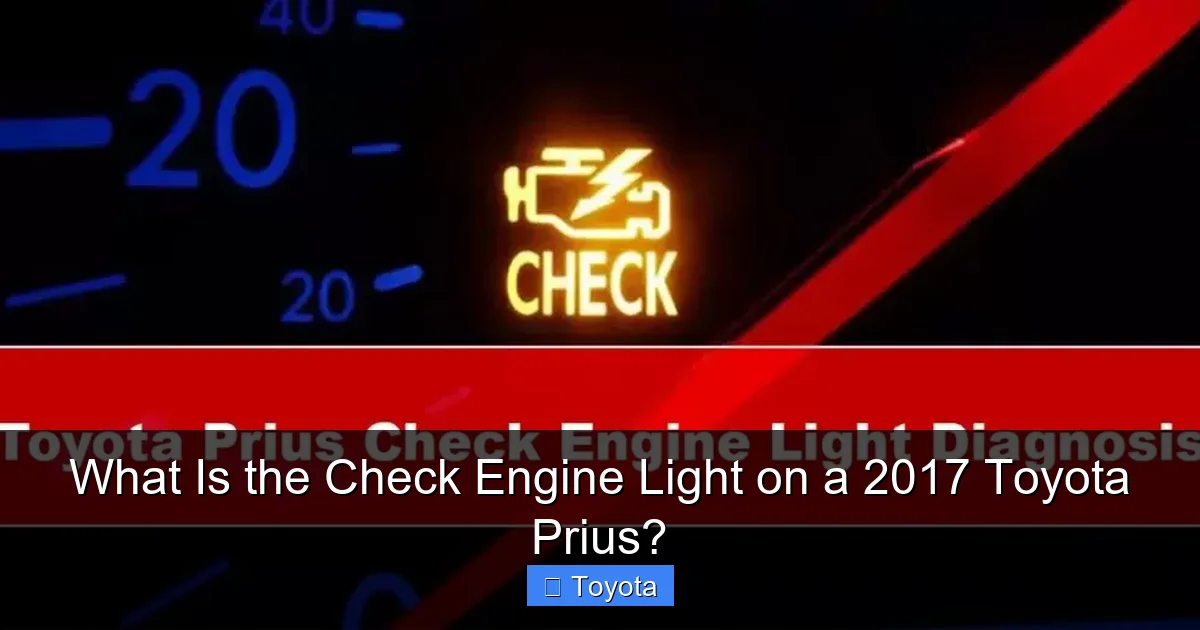
That little yellow engine-shaped icon that has suddenly appeared on your dashboard can be a real source of anxiety. For a 2017 Toyota Prius owner, it carries a special weight. This isn’t just any car; it’s a sophisticated hybrid machine. So, when the check engine light illuminates, what is it really trying to tell you? Let’s pop the hood, both literally and figuratively, and understand everything you need to know about your Prius’s most famous (or infamous) warning light.
First, take a breath. The check engine light, officially called the Malfunction Indicator Lamp (MIL), is your car’s way of saying, “Hey, I ran a self-check and something’s outside the normal parameters.” It’s a general alarm, not a specific diagnosis. Think of it like a fever. It tells you something is wrong, but you need a doctor (or a mechanic with a scan tool) to figure out if it’s the flu or something more serious. Your 2017 Prius’s computer, the Engine Control Unit (ECU) or Hybrid Vehicle Control ECU, is constantly monitoring dozens of sensors and systems. When a sensor reading is too high, too low, or absent entirely, it logs a Diagnostic Trouble Code (DTC) and turns on the light to get your attention.
For a hybrid, this system monitors both the traditional gasoline engine components and the unique hybrid system—the battery pack, power control unit, and electric motor generators. This means the potential causes are a mix of common gasoline car issues and hybrid-specific concerns. The light’s behavior—whether it’s a steady glow or a worrying flash—is your car’s way of grading the severity of the problem. We’ll break it all down, from the simplest fix you can try yourself to the red flags that mean you should park it and call for help.
Key Takeaways
- The light is a general alert: It means the Engine Control Unit (ECU) has stored a diagnostic trouble code (DTC) from one of the car’s many sensors. It does not tell you the specific problem.
- Steady vs. flashing matters: A steady light usually indicates a non-emergency issue. A flashing light signals a severe problem, often misfiring, that can damage the catalytic converter and requires immediate, careful driving to a repair shop.
- Simple fixes are common: A loose, damaged, or missing gas cap is one of the most frequent causes. It breaks the fuel system’s seal, triggering an emissions-related code.
- Prius-specific issues exist: Beyond standard gasoline engine problems, the check engine light can point to issues with the hybrid battery, inverter, or hybrid system coolant.
- Diagnosis requires a scan tool: You cannot know the exact cause without reading the stored DTC(s) using an OBD2 scanner. Many auto parts stores offer this service for free.
- Do not reset without fixing: Clearing the code turns off the light temporarily, but if the underlying problem persists, the light will return. Always diagnose and repair the cause first.
- Your owner’s manual is key: It provides the most accurate information for your specific vehicle and explains other related warning lights, like the red triangle with an exclamation mark for hybrid system emergencies.
📑 Table of Contents
Decoding the Light: Steady vs. Flashing
Before we dive into causes, you must observe how the light is behaving. This is the single most important initial piece of information.
The Steady Glow: “Pay Attention Soon”
A solid, non-flashing check engine light is your car’s way of saying, “I’ve detected a problem that’s affecting emissions or efficiency. It’s not an immediate crisis, but you should get it checked out soon.” In your 2017 Prius, this is the most common presentation. It often points to less severe issues like a loose gas cap, a faulty oxygen sensor, or a minor evaporative emissions (EVAP) system leak. The car is still safe to drive for a limited time, but you should avoid long trips or high speeds and plan to diagnose it within a few days. Driving with a steady light can lead to reduced fuel economy, poor performance, and potentially more expensive damage down the road if the issue is a failing part that affects others.
The Flashing Light: “Stop Driving Now!”
A flashing or blinking check engine light is a true emergency. This indicates a condition that is actively causing severe engine damage, most commonly a cylinder misfire that is dumping unburned fuel into the exhaust system. In a traditional car, this can quickly overheat and destroy the catalytic converter. In a hybrid like the Prius, a severe misfire can also stress the hybrid system and is equally dangerous. If your check engine light is flashing, you should safely pull over as soon as possible, shut off the engine, and arrange for a tow to a trusted mechanic. Do not continue driving. The risk of catastrophic and costly damage is extremely high. Sometimes, a very severe hybrid system fault may also trigger other primary warning lights, like the red triangle with an exclamation point, which is an even more direct hybrid system emergency warning.
Common Causes in a 2017 Toyota Prius
Now, let’s explore the usual suspects. The causes fall into two broad categories: those affecting the gasoline engine and those unique to the hybrid system.
Visual guide about What Is the Check Engine Light on a 2017 Toyota Prius?
Image source: carhowto.com
The Usual Suspects (Gasoline Engine & Emissions)
Many Prius components are similar to those in a conventional Toyota Corolla or Camry. These are the most frequent triggers:
- Loose, Missing, or Faulty Gas Cap: This is the #1 cause across all makes and models. The gas cap seals the fuel system. If it’s not tightened properly, is cracked, or the seal is damaged, it allows fuel vapors to escape, which the EVAP system detects as a leak. The fix is simple: remove the cap, inspect it, and re-tighten it until it clicks. Drive for a few cycles; if the light goes off, that was it. If not, the cap may need replacing.
- Oxygen Sensor (O2 Sensor) Failure: The Prius has multiple oxygen sensors monitoring exhaust gases. A faulty sensor sends incorrect data to the ECU, leading to poor fuel mixture, reduced MPG, and higher emissions. The front (upstream) sensor is critical for engine management. Replacement is a common repair.
- Catalytic Converter Efficiency: The catalytic converter cleans exhaust gases. If it’s failing or contaminated (often from an unresolved misfire), its efficiency drops below a threshold, triggering a code. A Prius’s catalytic converter is part of the exhaust system. A code here often follows another problem, like bad spark plugs or a failing O2 sensor.
- Mass Air Flow (MAF) Sensor Issues: This sensor measures the air entering the engine. If it’s dirty, damaged, or has a bad connection, it miscalculates the air/fuel ratio, causing rough running, hesitation, and poor fuel economy. Cleaning or replacing it is the fix.
- Evaporative Emissions (EVAP) System Leaks: Beyond the gas cap, this system includes hoses, valves, and the charcoal canister that trap fuel vapors. A cracked hose or a failing purge valve can cause a small leak the system detects. These leaks can be tricky to find.
- Spark Plugs and Ignition Coils: Worn spark plugs or failing ignition coils can cause misfires. A single-cylinder misfire might cause a steady light, while a severe multi-cylinder misfire will cause flashing. Replacing spark plugs is a regular maintenance item.
Prius-Specific and Hybrid System Causes
This is where your hybrid’s unique technology comes into play. These issues are less common but often more complex:
- Hybrid Battery (Traction Battery) Issues: The large high-voltage battery pack under the rear seat can develop problems. This could be a weak cell, a cooling system fault, or a sensor issue within the battery pack itself. A code related to the hybrid battery is serious and requires immediate professional diagnosis. You might also notice a significant drop in electric-only driving range or the hybrid system warning light.
- Hybrid System Coolant Temperature: The hybrid system has its own dedicated coolant loop to cool the power control unit (inverter) and motor generators. If the coolant temperature sensor reads too high or the pump fails, it triggers a code. This is critical to address to prevent overheating of expensive hybrid components.
- Inverter or MG (Motor Generator) Issues: The inverter converts the battery’s DC power to AC for the motors. Faults here are complex and serious. You might also experience a loss of power or unusual noises.
- Hybrid System Communication Errors: The various computers in a Prius (ECU, Hybrid Vehicle Control ECU, Battery Management ECU) constantly talk to each other. A lost communication signal between them, often from a wiring harness issue or a failed control module, will set a code.
- Engine-Related Codes Affecting Hybrid Function: Sometimes, a simple engine problem like a severe misfire or a stuck-open thermostat can cause the hybrid system to shut down as a protective measure, illuminating the check engine light as part of that process.
Immediate Steps: What to Do When the Light Comes On
Don’t panic. Follow this logical sequence:
Visual guide about What Is the Check Engine Light on a 2017 Toyota Prius?
Image source: d2n97g4vasjwsk.cloudfront.net
1. Assess the Severity
Is the light steady or flashing? Are there any other warning lights on? Is the red triangle with an exclamation mark (hybrid system warning) also illuminated? Is the car driving normally, or is it shaking, losing power, or making strange noises? If the light is flashing OR if you have the hybrid warning triangle AND a drivability issue, stop driving safely and call for a tow.
2. Perform a Basic Visual Check
If the light is steady and the car drives fine, do a quick once-over. Check the gas cap first—is it loose? Is the “click” feel normal? Look under the hood for any obvious disconnected hoses, wires, or leaks. Listen for any unusual sounds when the engine starts. Check your coolant and oil levels (the Prius has separate coolant reservoirs for the engine and hybrid system; consult your manual). Low fluid levels can sometimes trigger warnings.
3. Try a Simple Reset (Temporarily)
Sometimes, a transient glitch causes the light. You can try a simple reset: ensure the gas cap is tight, then drive the car normally for 3-4 drive cycles (typically, starting the car, driving until it’s warmed up, and turning it off). The ECU may re-check and turn the light off if the condition is gone. Important: If you clear the code with a scan tool before fixing the problem, the light will just come back after a few drive cycles. Resetting is only for verification after a repair.
4. Get the Diagnostic Trouble Code(s)
This is the non-negotiable step. You need to know what code(s) are stored. The best way is to use an OBD2 scanner. You can:
- Buy an inexpensive Bluetooth or USB scanner (like an OBDLink or Autel) and use a free app (Torque, etc.) on your phone.
- Go to a major auto parts store (AutoZone, Advance Auto, O’Reilly) where they often offer free code reading as a customer service.
- Take it to a trusted independent mechanic or dealership.
When you get the code, it will look like “P0171” or “P0A80”. The “P” means it’s a powertrain code. The first number (0 or 1) indicates if it’s generic or manufacturer-specific. The rest identifies the system. Do not rely on internet searches for the code alone to diagnose and replace parts. The code tells you where to look (e.g., “O2 Sensor Circuit Low Voltage Bank 1 Sensor 2”), not necessarily what is broken (it could be the sensor, the wiring, or a leak causing a bad reading). Professional diagnosis is key.
Diagnosing and Repairing: From DIY to Professional
Armed with a code, you can make an informed decision.
Visual guide about What Is the Check Engine Light on a 2017 Toyota Prius?
Image source: dodgecheckenginelight.com
When DIY Might Be Okay
If the code points to a very simple, common issue, you might save money by doing it yourself, provided you have basic mechanical skill and the right tools. Examples include:
- Gas Cap: Simply replacing it with an OEM or high-quality aftermarket cap. After replacement, you may need to drive for a bit for the system to re-check.
- Air Filter: A extremely dirty air filter can sometimes cause MAF-related codes. Replacing it is a simple, inexpensive maintenance task.
- Spark Plugs: If the code indicates a specific cylinder misfire (e.g., P0302 for cylinder 2), and your Prius is due for a spark plug service (typically every 120k miles), replacing all four spark plugs is a manageable DIY for the handy.
However, for a 2017 Prius, accessing some components (like rear spark plugs) can be more complex than in a front-engine car. Always consult a repair manual like Chilton or Haynes for your specific model.
When You Absolutely Need a Professional
For most codes, especially those related to the hybrid system, oxygen sensors, catalytic converter, or complex EVAP leaks, professional help is essential. A good mechanic will:
- Use advanced scan tools: They can access Toyota-specific hybrid system data streams and perform active tests (like cycling EVAP valves) that a basic reader cannot.
- Perform a thorough inspection: They’ll check wiring harnesses, connectors, and related components that a simple code swap might miss.
- Have the expertise: Diagnosing hybrid system issues requires specific training and safety procedures due to the high-voltage system. Tampering with the hybrid battery or inverter without knowledge is dangerous and can void warranties.
- Warranty their work: A proper repair comes with a guarantee.
For a 2017 Prius, check if any related components are still under the original 8-year/100,000-mile hybrid battery warranty or other powertrain warranties. A dealership can run a warranty check.
Resetting the Check Engine Light
Once the underlying problem is confirmed fixed, the check engine light will usually turn off on its own after a few drive cycles as the ECU verifies the repair. However, sometimes it needs to be manually cleared.
The Right Way to Reset
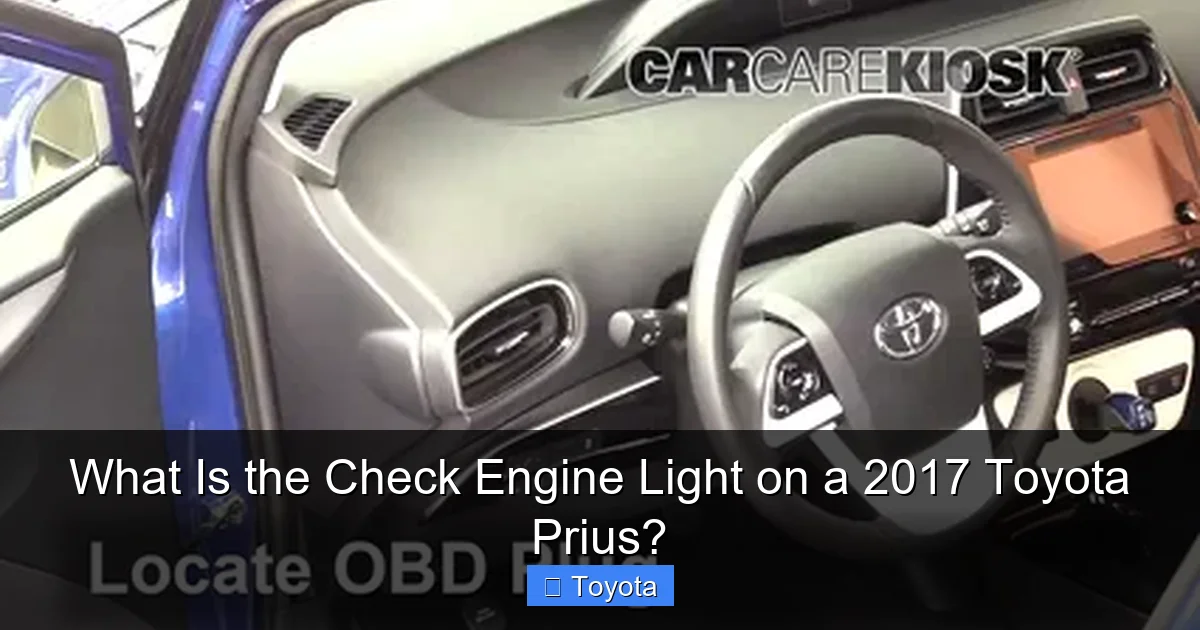
The only proper way to reset the light is with an OBD2 scan tool. Plug the scanner into the OBD2 port (under the dashboard, near the steering column), navigate to the “Erase Codes” or “Clear DTC” function, and execute it. This clears all stored codes and turns off the MIL. Never, ever, disconnect the 12V battery to try and reset the light. On a Prius, this can cause a host of other problems, including requiring a complex re-registration process for the hybrid system and potentially causing the vehicle to not start. It also erases all learned data in other modules, like radio presets and climate control settings. For specific reset procedures on other Toyota models, the process is similar, but always consult the owner’s manual first. You can find guides for models like the Toyota Corolla or Highlander for reference, but the scan tool method is universal and safest.
What If the Light Comes Back Immediately?
If you’ve cleared the code and the light returns within a day or two, it means the repair was either not effective or the problem is intermittent. You must re-scan for codes. A returning code indicates the fault is still present. Do not keep clearing it; this masks a real problem that will likely worsen.
Costs and What to Expect
The cost to fix a check engine light varies wildly, from $0 for a tightened gas cap to thousands for a hybrid battery replacement. Here’s a general range for common 2017 Prius issues:
- Gas Cap: $15-$30 for a new cap.
- Oxygen Sensor: $150-$300 for the part, plus $100-$200 in labor (sensors can be tricky to access).
- Spark Plugs: $60-$100 for a set of four, plus 1-2 hours of labor.
- EVAP System Leak (e.g., Purge Valve): $150-$400 for part and labor.
- Mass Air Flow Sensor: $200-$400 for replacement.
- Hybrid Battery: This is the big one. A full dealer replacement can cost $3,000-$4,000+. Refurbished or aftermarket options are cheaper. Sometimes, a single faulty cell or a battery cooling fan issue is the culprit, which is much less expensive.
- Diagnostic Fee: Most shops charge $80-$150 for diagnosis, which is often waived if you have them do the repair. This fee covers the technician’s time to scan, interpret codes, and perform tests.
Always get a clear estimate and explanation before authorizing repairs. A reputable shop will show you the scan tool readout and explain which code led to which recommended repair.
Conclusion: Knowledge is Power (and Savings)
Your 2017 Toyota Prius check engine light is a vital communication tool from your car’s sophisticated computer network. It’s a warning, not a death sentence. By understanding the difference between a steady glow and a flashing emergency, knowing the common causes—from a $20 gas cap to a complex hybrid system fault—and following the steps of assessment, code reading, and informed repair, you can approach this situation with confidence.
Remember, the goal is never to simply turn off the light. The goal is to diagnose and fix the root cause to keep your Prius running efficiently, reliably, and cleanly. For the vast majority of cases, a steady light means a planned trip to a qualified mechanic. For a flashing light, it means an immediate tow. Treat that little engine icon as your car’s friendly reminder to give it some attention, and it will reward you with many more miles of smooth, efficient, and trouble-free driving. Keep your owner’s manual handy, maintain a relationship with a trusted Toyota specialist, and don’t hesitate to ask questions. Your Prius is a remarkable machine, and understanding its signals is the best way to care for it.
Frequently Asked Questions
Can I keep driving my Prius if the check engine light is on?
If the light is steady and the car drives normally with no strange noises or loss of power, short, cautious trips are generally okay for a few days. However, you should diagnose it promptly. If the light is flashing, or if you have a hybrid system warning light as well, you should stop driving immediately and have the car towed.
Will the check engine light fail my emissions test?
Yes, absolutely. In most states and regions, a vehicle with an illuminated check engine light will automatically fail an official emissions (smog) test. The test equipment reads for the presence of stored codes and a ready status. You must have the problem repaired and the light cleared before the test will pass.
My gas cap is tight. Could it still be the problem?
Yes. The rubber seal on the gas cap can wear out and crack over time, even if the cap clicks into place. A damaged cap will not seal properly. Try removing it and inspecting the seal for cracks or brittleness. Replacing an old gas cap is a very common and inexpensive fix for a check engine light.
How do I know if the problem is with the hybrid system and not the regular engine?
The specific diagnostic trouble code (DTC) will indicate this. Codes starting with “P0” or “P1” are often Toyota-specific and can point to hybrid components (e.g., P0A80 for hybrid battery). A professional scan tool can read these codes and also access hybrid-specific data. Additionally, if you see a separate red triangle warning light with an exclamation mark, that is a direct hybrid system emergency indicator.
Is it safe to reset the check engine light myself?
It is safe to clear the codes with an OBD2 scanner only after you have diagnosed and repaired the underlying problem. Resetting the light without fixing the cause is pointless, as it will simply return. Never disconnect the 12V battery in a Prius to try and reset lights, as this can cause serious electronic system issues.
Could a bad 12V battery cause the check engine light?
Yes, a severely weak or failing 12V auxiliary battery can cause voltage fluctuations that confuse the car’s computers, potentially triggering the check engine light and other warning lights. If your 12V battery is original (2017 model) or over 4-5 years old, it’s a good candidate for testing and replacement, as it powers all the vehicle’s computers and systems.