
What Is the Brake Malfunction Warning on a Toyota Highlander?

The brake malfunction warning on a Toyota Highlander is a critical dashboard alert indicating a potential failure in your braking system. It often appears as a red “BRAKE” icon or an exclamation mark inside a brake symbol. This light can be triggered by simple issues like low brake fluid or worn pads, or by serious problems like a leak or master cylinder failure. You should not ignore this warning; driving with it illuminated is extremely dangerous. The safest immediate action is to pull over carefully, check your fluid level, and have the vehicle towed to a certified technician for a complete diagnostic. Addressing the issue promptly is non-negotiable for your safety and that of others on the road.
Imagine you’re driving your Toyota Highlander, maybe merging onto the highway or navigating a busy shopping center parking lot. Everything feels normal, until your eyes catch a stark, unfamiliar icon glowing on your dashboard. It’s not the check engine light. It’s not the oil pressure light. It’s a bright red circle with an exclamation point inside, or simply the word “BRAKE” in bold letters. Your heart sinks. A wave of questions hits you: What does this mean? Is my Highlander safe to drive? What could be wrong? This is the brake malfunction warning, and in your Toyota Highlander, it is one of the most urgent messages your vehicle can send you. This comprehensive guide will decode exactly what this warning means, explore every possible cause from the mundane to the severe, and provide you with a clear, safe action plan. Your understanding of this light could be the difference between a simple repair and a dangerous, costly situation.
Key Takeaways
- The warning is a serious safety alert: The brake malfunction light indicates a problem with the core braking system, not just a maintenance reminder. It requires immediate attention.
- Stop driving immediately: If the light is solid red, do not continue driving. Pull over to a safe location, turn on your hazards, and assess the situation or call for assistance.
- Common triggers include low fluid and wear: The most frequent causes are critically low brake fluid (often from a leak) and severely worn brake pads that have activated the wear sensor.
- It may interact with other systems: A brake system fault can deactivate related safety features like ABS, Traction Control (TRAC), and Vehicle Stability Control (VSC), causing those lights to illuminate as well.
- A professional diagnosis is essential: Because the cause can range from simple to complex, a certified mechanic must perform a thorough inspection, including checking for leaks, component wear, and electronic sensor faults.
- Do not simply reset the light: Resetting the warning light without fixing the underlying problem is dangerous and will cause the light to return, potentially leaving you with a catastrophic brake failure.
- Regular maintenance prevents surprises: Following your Highlander’s service schedule for brake inspections and fluid changes is the best way to avoid encountering this alarming warning.
📑 Table of Contents
- Understanding the Brake Malfunction Warning Light
- Common Causes of a Brake Malfunction Warning in a Highlander
- Immediate Actions: What to Do When the Light Comes On
- The Diagnostic Process: How a Technician Finds the Problem
- Repair Options and Cost Considerations
- Prevention and Maintenance: Keeping Your Highlander’s Brakes Healthy
Understanding the Brake Malfunction Warning Light
Before we dive into causes and fixes, let’s establish a crystal-clear understanding of what this specific warning light is and, just as importantly, what it is not. In your Toyota Highlander, the brake system is a complex, hydraulically-assisted network with multiple electronic oversight components. The dashboard is your central information hub, using various lights to communicate the status of these systems.
The “BRAKE” Light vs. Other Brake-Related Indicators
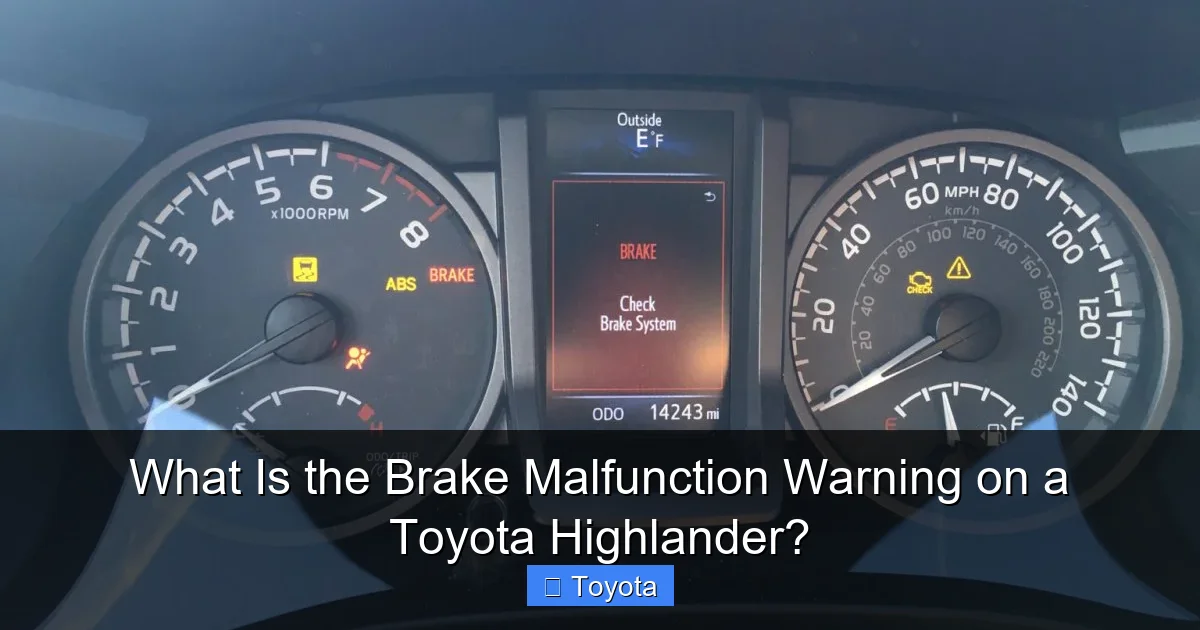
It’s common to confuse the main brake malfunction warning with other, less urgent brake-related illuminations. First, identify your light. In most Highlander model years, the primary brake malfunction warning is a solid red circle containing an exclamation point (!) or the word “BRAKE”. This is distinct from:
- The ABS Light: Usually yellow or amber, labeled “ABS” (Anti-lock Braking System). This indicates a fault in the ABS module or wheel speed sensors, but your standard hydraulic brakes will still function, though without the anti-lock safety feature. You can usually drive cautiously to a repair shop, but it still requires attention.
- The Parking Brake Indicator: Often a simple “P” or a brake symbol with a “P” inside. This is usually white or red and comes on when you engage the electronic parking brake. It should go off when you disengage it. If it stays on while driving, it could mean the parking brake is still partially applied or there’s a fault in that circuit.
- The Brake Wear Indicator: Some vehicles have a separate service reminder light (often yellow) that illuminates when brake pads are worn to a certain thickness. This is a maintenance alert, not an immediate danger signal like the red malfunction light.
The key takeaway: Any red brake-related light, especially the one that looks like a brake symbol with an exclamation point, is a “stop driving” warning. It signifies that the vehicle’s computer (ECU) has detected a condition that could compromise your ability to stop the vehicle safely.
Common Causes of a Brake Malfunction Warning in a Highlander
The brake malfunction warning is a symptom, not the disease itself. The vehicle’s diagnostic systems trigger this light when they sense a parameter outside the normal operating range. The causes can be broadly categorized into hydraulic issues, component wear, and electronic faults. Here’s a detailed breakdown of the most common culprits in Toyota Highlanders.
Visual guide about What Is the Brake Malfunction Warning on a Toyota Highlander?
Image source: carnewsbox.com
1. Critically Low Brake Fluid Level
This is, by far, the most common and often the most straightforward cause. Brake fluid is the lifeblood of your hydraulic brake system. When you press the pedal, fluid pressure is transmitted to the calipers or wheel cylinders, forcing the pads or shoes against the rotors or drums. A low fluid level is detected by a float switch in the master cylinder reservoir.
- Why it happens: The primary reason for a low level is a leak in the system. Leaks can occur at brake lines, hoses, calipers, wheel cylinders, or the master cylinder itself. As fluid escapes, the level drops. A secondary, less common reason is that the brake pads are worn to an extreme degree. As pads wear, the caliper pistons extend further into the caliper bore to compensate, which pushes more fluid out of the master cylinder and into the lines, causing the reservoir level to drop.
- The Danger: Low fluid means you cannot build sufficient hydraulic pressure. Your brake pedal will feel spongy or sink to the floor, and stopping distances will increase dramatically, or you may lose braking entirely.
2. Severely Worn Brake Pads or Shoes
Modern brake pads have a built-in wear sensor—a thin metal tab that makes contact with the rotor when the pad friction material is almost gone (typically at 3mm or less remaining). This contact creates an electrical circuit that triggers a warning light on the dashboard.
- The Sound and Feel: You’ll usually hear a high-pitched squeal or screech when braking, especially at low speeds, for several days or weeks before the light comes on. If you ignore that sound, the metal backing plate of the pad will grind against the rotor, causing a grinding noise and destroying the rotor.
- The Link to Fluid: As mentioned, extreme pad wear can lower fluid levels, which can also trigger the brake warning light. So these two issues are often related.
3. Faulty Brake Fluid Level Sensor
The sensor in the master cylinder reservoir can fail electronically. A stuck or shorted sensor can send a constant “low fluid” signal to the ECU, illuminating the brake light even if the fluid level is perfectly normal.
- Diagnosis: A mechanic will first visually check the fluid level. If it’s correct, they will inspect the sensor’s connection and may test its resistance with a multimeter.
4. Master Cylinder Failure
The master cylinder is the heart of the hydraulic system. It contains pistons and seals that convert your pedal force into fluid pressure. Internal seals can wear out or become damaged, causing internal leaks.
- Symptoms: A failing master cylinder often causes a brake pedal that slowly sinks to the floor as you hold it, or feels exceptionally soft and spongy. It may also leak fluid externally at the rear of the unit where it connects to the brake booster.
5. Issues with the Electronic Brakeforce Distribution (EBD) System
Highlanders are equipped with EBD, a system that automatically adjusts brake force between the front and rear wheels for optimal stopping power based on load. EBD is a sub-system of the ABS and uses wheel speed sensors and a dedicated control module.
- The Trigger: If the ECU detects a fault in the EBD system—such as a failed wheel speed sensor, a wiring issue, or a problem with the EBD control valve—it may illuminate the brake warning light. Often, the ABS and VSC lights will accompany it.
6. Parking Brake (Electronic) System Malfunction
Modern Highlanders use an electronically controlled parking brake. If the motor, switch, or control module for this system fails, or if the system detects the brake is not fully released, it can trigger the main brake warning.
- What to check: Ensure the parking brake switch (often a foot pedal or a button) is fully disengaged. Listen for any unusual whirring or clicking sounds from the rear wheels when you try to release it.
7. Severe Rotor or Drum Damage
While less common, extremely warped, cracked, or deeply grooved rotors can, in rare cases, cause a caliper to stick or affect sensor readings, indirectly triggering a warning. This is usually accompanied by severe vibration during braking.
Immediate Actions: What to Do When the Light Comes On
Seeing that red light is a jolt. Your reaction in the next 60 seconds is critical. Follow this safety-first protocol.

Visual guide about What Is the Brake Malfunction Warning on a Toyota Highlander?
Image source: s1.cdn.autoevolution.com
Step 1: Assess Your Immediate surroundings and Brake Feel
Do not panic. Safely check your surroundings. First and foremost, pay attention to the brake pedal. Press it gently. Does it feel normal, firm, and responsive? Or is it:
- Soft/Spongy: It sinks down easily with little resistance.
- Hard: It’s difficult to press down at all.
- Pulling: The vehicle pulls to one side when you brake.
- Low to the floor: It goes almost to the floor before you feel resistance.
If the pedal feels anything other than firm and responsive, you have a severe hydraulic failure. Do not continue driving.
Step 2: Check Brake Fluid Level (If Safe to Do So)
If the pedal feels reasonably firm and you are in a safe, stationary location (like a parking lot), you can quickly check the brake fluid reservoir. It’s located in the engine bay, near the firewall (back of the engine compartment), usually on the driver’s side. It’s a small, translucent plastic tank with “MIN” and “MAX” lines.
- What to look for: Is the fluid level between the lines? Is the fluid dark brown or black (indicating it’s old and contaminated) or clean and amber/yellow?
- CAUTION: Only remove the cap if the engine is cool and you are in a clean environment. Brake fluid is corrosive to paint. If the level is below “MIN,” you have a leak. Do not just add fluid and drive. The leak must be found and fixed.
Step 3: Decide: Drive or Tow?
This is the most important decision. Here is the rule: If the brake pedal does not feel firm and high (like it normally does), or if you see a visible fluid leak under the vehicle, you MUST have the Highlander towed.
If the pedal feels perfectly normal and the fluid level is correct, the light could be caused by a faulty sensor or a minor electrical issue. In this rare scenario, you might cautiously drive the shortest possible distance (a few blocks) to a trusted mechanic or dealership at very low speeds, with your hazard lights on, and with the understanding that your brakes could fail at any moment. This is a calculated risk. For 99% of drivers, the safest choice is to call for a tow.
Step 4: Contact a Professional
Call your Toyota dealership or a reputable brake specialist. Explain exactly what happened: “My 20XX Toyota Highlander’s brake malfunction warning light came on. The brake pedal feels [describe feel].” This allows them to prepare for your arrival and understand the urgency.
The Diagnostic Process: How a Technician Finds the Problem
When your Highlander arrives at the shop, a certified technician will follow a systematic diagnostic procedure. Understanding this process helps you know what to expect and ensures the problem is fixed correctly.
Visual guide about What Is the Brake Malfunction Warning on a Toyota Highlander?
Image source: autorepairszone.com
1. Preliminary Interview and Road Test (If Safe)
The tech will ask you detailed questions: When did it happen? Was the pedal soft? Did you hear noises? Did other lights come on? If the vehicle is deemed safe for a very brief, controlled road test on the shop’s private road, they may do so to feel the pedal and check for ABS/VSC activation.
2. Visual Inspection
The tech will perform a thorough visual check:
- Open the hood and check the brake fluid level and condition.
- Inspect the master cylinder and power brake booster for leaks or damage.
- Look at all four wheels. They will check brake pad thickness through the caliper (if equipped) and look for signs of fluid leaks around calipers, wheel cylinders, and brake lines/hoses.
- They’ll inspect the rotors for scoring, warping, or cracks.
3. Scan for Diagnostic Trouble Codes (DTCs)
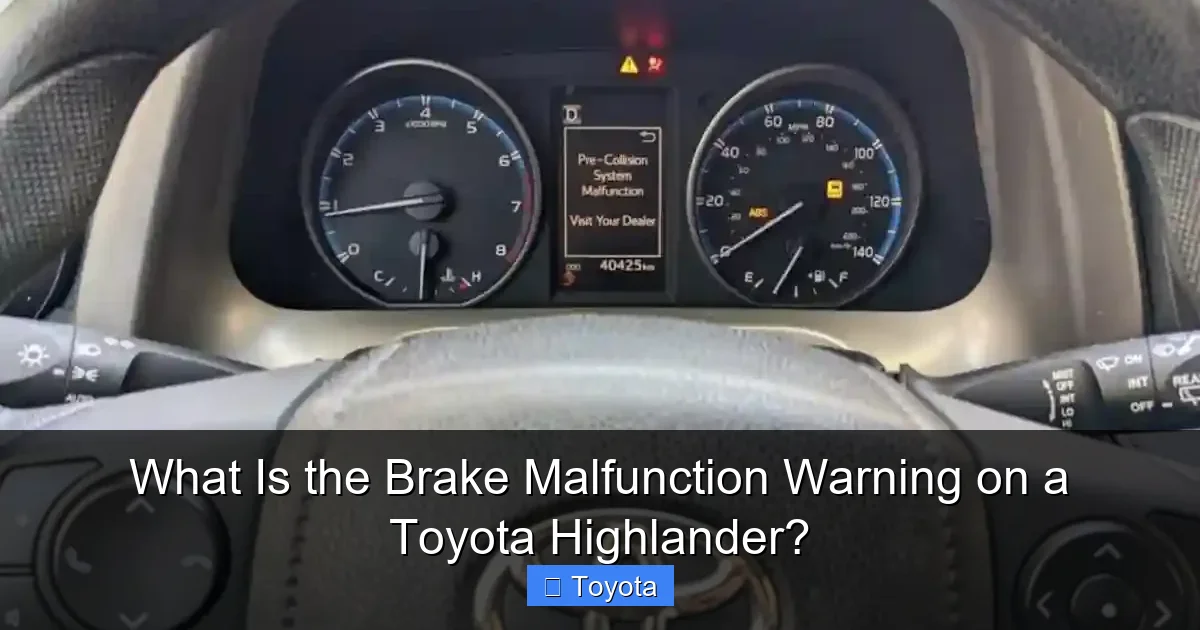
This is the most critical step. The technician will plug a professional-grade scan tool into your Highlander’s OBD-II port (under the dashboard). They will read the codes stored in the ABS, Brake, and Skid Control ECUs. A code like C1241 (Low Brake Fluid Level) or C1249 (Brake Fluid Level Sensor Circuit) points directly to the fluid level. A code like C0200 (Right Front Wheel Speed Sensor Circuit) points to an ABS sensor issue that may be causing the brake light to illuminate. These codes are the roadmap to the fault.
4. Component-Specific Testing
Based on the codes and visual inspection, the tech will perform targeted tests:
- Pressure Test: They may use a brake pressure gauge to test the master cylinder’s output and check for internal leaks.
- Sensor Testing: Checking resistance and voltage signals from wheel speed sensors and the brake fluid level sensor.
- Leak Isolation: If a leak is suspected but not visible, they may pressurize the system and use UV dye or a systematic “divide and conquer” method (capping off sections) to find its source.
Repair Options and Cost Considerations
The repair path is 100% dependent on the diagnosed cause. Here’s a breakdown of common fixes and their general cost ranges for a Toyota Highlander. These are estimates; always get a specific quote.
- Low Brake Fluid (due to leak): The leak must be repaired. This could be a brake line ($150-$400 per line), a flexible hose ($100-$250), a caliper seal/rebuild ($100-$300 per caliper), or a wheel cylinder ($150-$300). Labor is significant. Total: $200 – $1,000+ depending on severity and location of leak.
- Worn Brake Pads (and possibly rotors): A full pad replacement (all four wheels) with new hardware is standard maintenance. If rotors are worn below minimum thickness or are warped, they must be replaced. Cost for a complete pad/rotor job on all wheels: $600 – $1,200+.
- Faulty Brake Fluid Level Sensor: Often requires replacing the master cylinder reservoir cap assembly. Cost: $50 – $150 part + $100-$200 labor.
- Failed Master Cylinder: This is a major component replacement. The system must be bled thoroughly afterward. Cost: $300 – $800+ for the part and labor.
- Faulty Wheel Speed Sensor (for ABS/EBD): A common fix. Sensors can corrode or have broken wires. Cost: $100 – $300 per sensor (parts and labor).
- Electronic Parking Brake Motor/Module: More complex and expensive. Cost: $300 – $1,000+.
Important: Any time brake fluid is opened or the system is opened, it must be properly bled to remove air bubbles. Air in the lines causes a spongy pedal and is dangerous. This is a job for professionals.
Prevention and Maintenance: Keeping Your Highlander’s Brakes Healthy
The best way to deal with a brake malfunction warning is to never see it. Proactive maintenance is key.
Adhere to the Factory Service Schedule
Your Highlander’s owner’s manual outlines brake inspections at specific mileage intervals (often every 12,000-15,000 miles). Have a technician inspect pad thickness, rotor condition, line/hose integrity, and fluid condition at these intervals.
Monitor Brake Fluid Condition
Brake fluid is hygroscopic, meaning it absorbs moisture from the air over time. This lowers its boiling point, which can lead to brake fade or failure under hard use. Toyota typically recommends a brake fluid flush every 2-3 years. This is a critical and often overlooked service. You can check the fluid’s color yourself: it should be clear and light amber. Dark brown or black fluid means it’s time for a flush.
Listen and Feel
Pay attention to your senses. A squealing noise when braking is your first warning that pads are worn. A grinding noise means you’ve waited too long. A pulsating brake pedal or steering wheel shake during braking indicates warped rotors. A soft or sinking pedal is an emergency. Don’t ignore these early signs.
Use Quality Parts
When brakes are repaired, insist on high-quality pads and rotors. While OEM (Toyota) parts are ideal, reputable aftermarket brands like Akebono, Brembo, or Bosch are excellent. Cheap, no-name parts often wear quickly, produce dust, and can cause noise or uneven wear.
By understanding your Highlander’s brake malfunction warning, you empower yourself as a vehicle owner. You move from a state of fear and confusion to one of informed action. Remember, this red light is your car’s most direct plea for help regarding your safety. Heed that plea immediately, trust the diagnostic process, and ensure your family’s protector on the road remains just that—a safe and reliable machine.
Frequently Asked Questions
What is the difference between the brake malfunction light and the ABS light on a Highlander?
The brake malfunction light (usually red) indicates a problem with the core hydraulic braking system and means you should stop driving immediately. The ABS light (usually yellow/amber) indicates a fault in the Anti-lock Braking System only; your standard brakes will still work, but you lose the anti-lock safety feature. Both require professional diagnosis.
Can I reset the brake warning light myself without fixing the problem?
You should never reset the brake warning light without first identifying and repairing the underlying cause. The light is a critical safety alert. Simply resetting it will turn the light off temporarily, but the problem—which could be a dangerous leak or failed component—will persist, and the light will return, potentially leaving you with sudden brake failure.
My Highlander’s brake pedal feels firm, but the light is on. Is it safe to drive?
A firm pedal is a good sign, but it does not guarantee safety. The light could be caused by a faulty sensor or a minor electrical issue, but it could also indicate a developing problem like a small leak or a failing EBD component. The only truly safe course is to have it diagnosed by a professional before driving. If you must move it a very short distance, do so with extreme caution at low speed.
Will the brake malfunction warning turn off by itself if the problem fixes itself?
No. The warning light is stored in the vehicle’s computer memory and will remain illuminated until it is manually cleared with a professional scan tool after the repair is completed and the system verifies the fault is gone. It will not turn off on its own.
How much does it typically cost to fix a brake malfunction warning on a Toyota Highlander?
The cost varies wildly based on the cause. A simple fix like a loose fluid cap or a replaced sensor might cost $150-$300. Replacing brake pads and rotors can range from $600-$1,200. Fixing a fluid leak or replacing a master cylinder can easily exceed $1,000. The only way to get an accurate price is to get a proper diagnosis first.
Could the brake malfunction warning be related to other systems like AWD or traction control?
Yes, absolutely. The brake system is deeply integrated with the Highlander’s AWD system (if equipped), Traction Control (TRAC), and Vehicle Stability Control (VSC). A fault in the brake hydraulic system or an ABS wheel speed sensor will often cause multiple warning lights to illuminate simultaneously. For example, if you’re having AWD issues, checking the brake system is a logical step. You can learn more about your AWD system’s health by reading our guide on how to check the AWD system on a Toyota Highlander.
