
What Is Synthetic Transmission Fluid? Benefits, Lifespan & Guide (2026)

Contents
- 1 Key Takeaways
- 2 What Is Transmission Fluid? (Quick Basics)
- 3 What Is Synthetic Transmission Fluid?
- 4 Synthetic vs Conventional Transmission Fluid
- 5 Benefits of Synthetic Transmission Fluid
- 6 Are There Any Downsides?
- 7 When Should You Use Synthetic Transmission Fluid?
- 8 How Long Does Synthetic Transmission Fluid Last?
- 9 Signs You Need to Change Transmission Fluid
- 10 Can You Mix Synthetic and Regular Transmission Fluid?
- 11 Frequently Asked Questions
- 12 Conclusion
When it comes to keeping a car running smoothly, most drivers think about engine oil—but what about the transmission? That’s where synthetic transmission fluid quietly does its job.
Automotive writer and vehicle maintenance enthusiast Ryan Mitchell often points out that many transmission problems don’t come from major mechanical failures—they start with something simple: poor or outdated fluid.
So, what exactly is synthetic transmission fluid, and why is everyone talking about it?
In simple terms, it’s a high-performance fluid engineered in a lab to protect your transmission better than traditional oil. It helps your car shift gears smoothly, prevents overheating, and extends the life of one of the most expensive components in your vehicle.
In this guide, you’ll learn:
- What synthetic transmission fluid really is
- How it compares to regular fluid
- When you should use it
- And whether it’s worth the extra cost
Key Takeaways
- Synthetic transmission fluid is a chemically engineered fluid designed for better performance and protection than conventional fluid.
- It provides smoother gear shifting, improved heat resistance, and longer lifespan.
- Most modern vehicles perform better with synthetic fluid, especially under extreme driving conditions.
- While it costs more upfront, it can save money long-term by reducing wear and maintenance.
- Signs like rough shifting, dark fluid, or burning smell may indicate it’s time for a change.
- Always check your vehicle manual before switching, as compatibility matters.
👉 Want to dive deeper into this topic? Check out this detailed guide: best synthetic transmission fluid.
What Is Transmission Fluid? (Quick Basics)
Think of transmission fluid like blood for your car’s transmission.
It keeps everything moving smoothly. Without it, parts would grind, overheat, and fail fast.
What does transmission fluid do?
- Lubricates parts → reduces friction
- Cools the system → prevents overheating
- Transfers power → helps gears shift smoothly
Where is it used?
- Automatic transmission
- Manual transmission
- CVT (Continuously Variable Transmission)
Each system needs the right type of fluid to work properly.
👉 Simple truth:
No fluid = no smooth driving.
What Is Synthetic Transmission Fluid?
Synthetic transmission fluid is man-made in a lab.
It is not just refined oil. It is engineered for performance.
Experts like Ryan Mitchell often explain that synthetic fluid is built to handle stress, heat, and long use better than regular fluid.
What makes it different?
- Made with advanced chemical formulas
- Designed for modern vehicles
- Works better in hot and cold temperatures
Why do drivers use it?
Because it gives:
- Smoother gear shifts
- Better protection
- Longer life
In simple words:
Synthetic fluid is the upgraded version of regular transmission fluid.
Synthetic vs Conventional Transmission Fluid
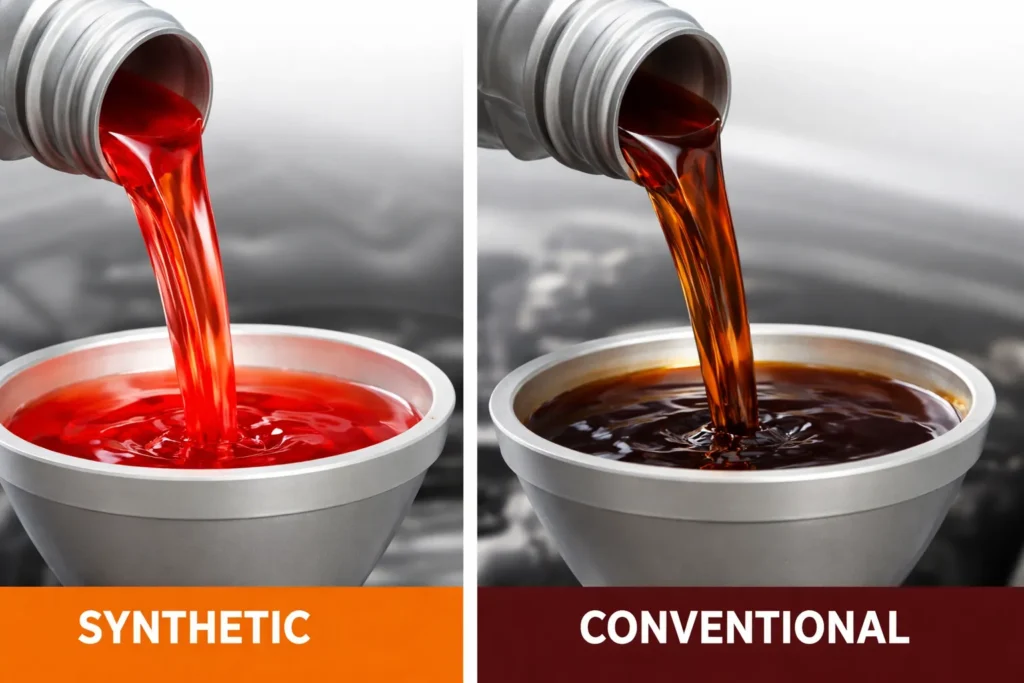
Now let’s compare them side by side
| Feature | Synthetic Fluid | Conventional Fluid |
|---|---|---|
| Lifespan | Long (60k–100k miles) | Short (30k–50k miles) |
| Heat Resistance | Very High | متوسط |
| Performance | Smooth & stable | Basic |
| Protection | Strong | Moderate |
| Cost | Higher | Lower |
Key Difference
- Synthetic = performance + durability
- Conventional = basic + cheaper
Which one is better?
For most drivers today, synthetic is the better choice.
It lasts longer. It protects better. It performs better.
But if you have an older car, regular fluid may still work fine.
Benefits of Synthetic Transmission Fluid
Synthetic transmission fluid gives real improvements in how your car performs.
It is designed to handle stress better than regular fluid.
Key benefits:
- Better heat resistance
It stays stable in high temperatures and protects the transmission from damage. - Smoother gear shifting
Gears change more smoothly with fewer jerks or delays. - Longer lifespan
It lasts longer, so you don’t need to change it as often. - Less wear and tear
Internal parts stay protected, which helps the transmission last longer. - Better cold performance
It flows easily in cold weather, helping your car start and shift smoothly.
Simple takeaway:
Synthetic fluid helps your car run smoother, cooler, and longer.
Are There Any Downsides?
Synthetic transmission fluid is better in many ways, but it also has a few downsides.
Possible drawbacks:
- Higher cost
It costs more than regular fluid, but it also lasts longer. - Not always necessary
Older vehicles may not need synthetic fluid. - Compatibility concerns
Some cars require specific fluid types, so you should always check your manual.
Important tip:
Using the wrong fluid can cause serious problems. Always follow the manufacturer’s recommendation.
When Should You Use Synthetic Transmission Fluid?
Synthetic transmission fluid is not required for every situation, but it is recommended in many cases.
You should use it if:
- You drive a modern vehicle
- You often drive in heavy traffic or long distances
- You live in very hot or very cold climates
- You tow heavy loads or carry extra weight
- You want better long-term protection
It is especially useful for automatic transmissions and daily driving.
According to automotive writer Ryan Mitchell, many transmission issues can be avoided by using the right fluid at the right time.
How Long Does Synthetic Transmission Fluid Last?
Synthetic transmission fluid is designed to last longer than regular fluid.
In most cases, it can last between 60,000 to 100,000 miles. Some vehicles may even go longer.
However, the exact lifespan depends on a few factors.
What affects its lifespan?
- Driving habits (aggressive driving wears it faster)
- Traffic conditions (stop-and-go driving adds stress)
- Climate (extreme heat or cold affects performance)
- Vehicle type (some transmissions are more demanding)
Simple rule:
If you drive in normal conditions, synthetic fluid lasts longer.
If you drive hard or in heavy traffic, you may need to change it sooner.
Best practice:
Always follow your car manufacturer’s recommendation.
Signs You Need to Change Transmission Fluid
Your car will usually give warning signs when the fluid is bad or old.
Ignoring these signs can lead to serious transmission problems.
Common signs to watch for:
- Rough or hard shifting
Gears feel jerky or not smooth. - Delayed gear response
The car takes time to shift after you press the pedal. - Burning smell
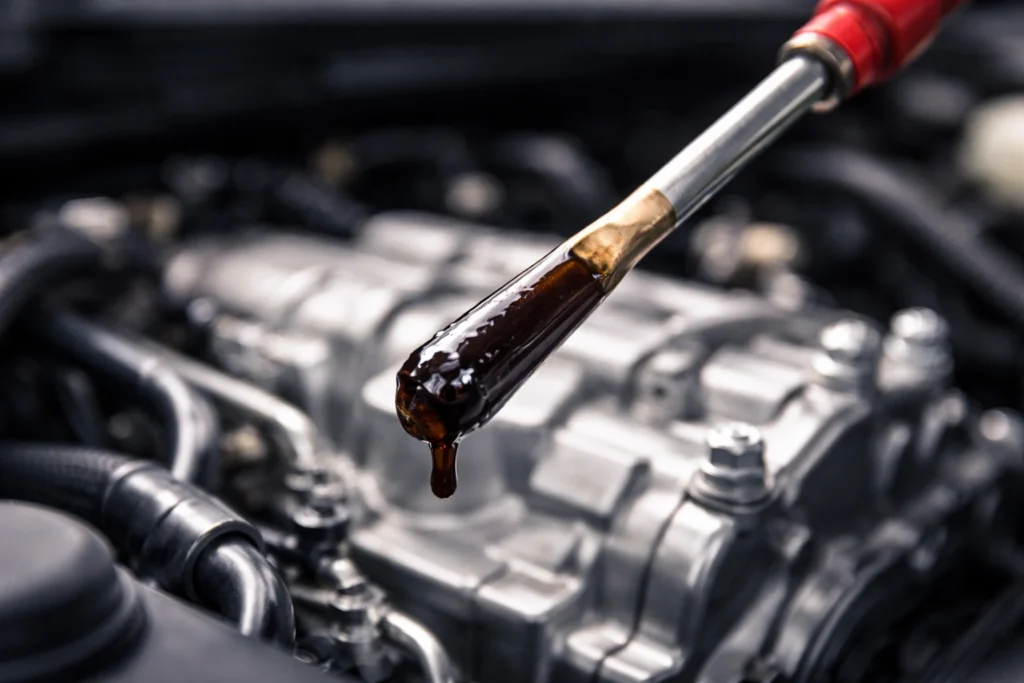
This can mean the fluid is overheating. - Dark or dirty fluid
Healthy fluid is usually red and clean. Dark fluid is a warning. - Strange noises
Grinding or whining sounds during shifting.
Important:
If you notice these signs, check your fluid as soon as possible.
Early action can save you from expensive repairs.
Can You Mix Synthetic and Regular Transmission Fluid?
This is a common question.
The short answer is: sometimes yes, but it is not recommended.
Why mixing is not ideal:
- Different formulas may not work well together
- Performance benefits of synthetic fluid can be reduced
- It may affect shifting quality
When is it okay?
In emergency situations, mixing may be acceptable for a short time.
But it should not be a long-term solution.
Best approach:
- Stick to one type of fluid
- Use the fluid recommended by your vehicle manufacturer
Simple advice:
For best results, do not mix. Use the right fluid consistently.
Frequently Asked Questions
Is synthetic transmission fluid worth it?
Yes, for most drivers it is worth it.
It lasts longer, protects better, and improves shifting performance.
While it costs more at first, it can save money over time by reducing wear and maintenance.
Can synthetic transmission fluid improve shifting?
Yes, it can.
Many drivers notice smoother and faster gear shifts after switching to synthetic fluid.
It helps reduce friction and keeps the system running smoothly.
Can I use synthetic transmission fluid in any car?
Not always.
Some vehicles require specific types of fluid.
You should always check your owner’s manual before using synthetic fluid.
How much does synthetic transmission fluid cost?
The price can vary.
On average, it costs more than regular fluid, but it also lasts longer.
So the overall cost difference is often smaller than it seems.
Can I switch from regular to synthetic transmission fluid?
In most cases, yes.
Most modern vehicles allow switching without problems.
However, it is still best to confirm with your manufacturer’s guidelines.
What happens if I never change transmission fluid?
This can lead to serious problems.
Old fluid loses its ability to lubricate and cool.
Over time, this can cause overheating, rough shifting, and even transmission failure.
Conclusion
Synthetic transmission fluid is a smart upgrade for most vehicles.
It offers better protection, smoother performance, and a longer lifespan compared to regular fluid. While it may cost more upfront, the long-term benefits often make it the better choice.
As automotive writer Ryan Mitchell often emphasizes, small maintenance decisions—like choosing the right transmission fluid—can make a big difference in how long your car lasts and how well it performs.
If you want your transmission to run smoothly and avoid costly repairs, using synthetic fluid is a simple and effective step.
Final takeaway:
Choose the right fluid, follow your maintenance schedule, and your transmission will thank you with better performance and longer life.

