What Is Rab on Subaru?

Contents
- 1 Key Takeaways
- 2 📑 Table of Contents
- 3 What Is RAB on Subaru?
- 4 How Does RAB Work on Subaru Vehicles?
- 5 Why Is RAB Important for Subaru Drivers?
- 6 Common RAB Warning Lights and What They Mean
- 7 How to Maintain and Troubleshoot RAB
- 8 RAB vs. Other Subaru Safety Features: How It Fits In
- 9 Frequently Asked Questions About RAB (Answered)
- 10 Conclusion: RAB Is Your Subaru’s Silent Guardian
- 11 Frequently Asked Questions

Car Dent Repair Kit

Magnetic Car Phone Mount

Car GPS Navigator
Tire Shine Spray
RAB on Subaru stands for Reverse Automatic Braking, a safety feature designed to help prevent collisions when backing up. It automatically applies the brakes if an obstacle is detected behind the vehicle, giving drivers added confidence and peace of mind in tight spaces or low-visibility situations.
Key Takeaways
- RAB stands for Reverse Automatic Braking on Subaru vehicles.
- It detects obstacles behind the vehicle when reversing.
- Automatically applies brakes to help prevent collisions.
- Works at low speeds for maximum safety in tight spaces.
- Enhances parking safety but doesn’t replace driver awareness.
- Can be manually disabled if needed in certain situations.
📑 Table of Contents
- What Is RAB on Subaru?
- How Does RAB Work on Subaru Vehicles?
- Why Is RAB Important for Subaru Drivers?
- Common RAB Warning Lights and What They Mean
- How to Maintain and Troubleshoot RAB
- RAB vs. Other Subaru Safety Features: How It Fits In
- Frequently Asked Questions About RAB (Answered)
- Conclusion: RAB Is Your Subaru’s Silent Guardian
What Is RAB on Subaru?
So, you’re driving your Subaru—maybe it’s a Forester, Outback, or Crosstrek—and suddenly you see a warning light pop up on your dashboard. It says “RAB.” Your first thought? Uh-oh. What does that even mean? Don’t panic. You’re not alone. Many Subaru owners have stared at that little acronym and wondered, “Is my car about to break down?” The good news? In most cases, RAB isn’t a sign of serious trouble. But it is something you should understand—especially if you want to keep your Subaru running smoothly and safely.
RAB stands for Reverse Automatic Braking, and it’s a key part of Subaru’s advanced safety technology suite. Think of it as your car’s extra set of eyes—and brakes—when you’re backing up. Whether you’re pulling out of a tight parking spot, navigating a crowded driveway, or just trying to avoid that invisible trash can behind your car, RAB is designed to help prevent low-speed collisions. It’s one of those features that quietly works in the background until it’s needed most. And when it does kick in, it can be a real lifesaver.
In this guide, we’ll break down everything you need to know about RAB on Subaru vehicles. From how it works and why it matters, to troubleshooting common issues and maximizing its effectiveness, we’ve got you covered. Whether you’re a new Subaru owner or you’ve been driving one for years, understanding RAB can make your driving experience safer, smoother, and more confident. So let’s dive in—no mechanic degree required.
How Does RAB Work on Subaru Vehicles?
At its core, RAB is a smart safety system that uses sensors and cameras to detect obstacles behind your vehicle when you’re in reverse. When it senses something in your path—like a parked car, a shopping cart, or even a child’s bike—it can automatically apply the brakes to help you avoid a collision. It’s like having a co-pilot who’s always watching your back (literally).
Visual guide about What Is Rab on Subaru?
Image source: images.simplepart.com
The Technology Behind RAB
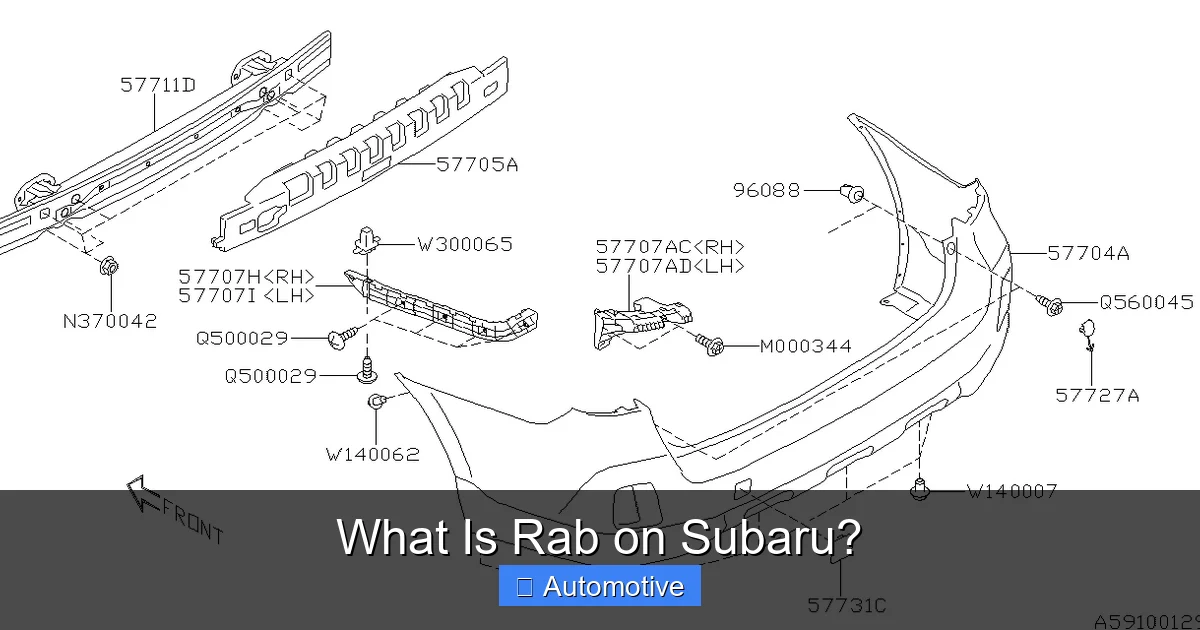
Subaru’s RAB system relies on a combination of ultrasonic sensors and a rearview camera. These sensors are typically located in the rear bumper and are designed to detect objects within a certain range—usually about 1 to 2 feet behind the vehicle. When you shift into reverse, the system activates and begins scanning the area directly behind you.
If an obstacle is detected and you don’t respond in time—say, you’re distracted or didn’t see the object—the system will first issue a visual and audible warning. This usually appears as a flashing light on your dashboard and a beeping sound from the rear of the car. If you still don’t brake, RAB will step in and apply the brakes automatically to slow or stop the vehicle.
Real-World Example: A Close Call in the Parking Lot
Imagine you’re backing out of a grocery store parking spot. You’ve checked your mirrors and started to reverse, but you didn’t notice a shopping cart that rolled into your path. Without RAB, you might have bumped into it—or worse, someone’s car. But with RAB active, your Subaru detects the cart, beeps loudly, and if you don’t react, it gently applies the brakes to prevent impact. That’s RAB in action: quick, quiet, and incredibly helpful.
It’s worth noting that RAB is most effective at low speeds—typically under 9 mph. This makes it ideal for parking maneuvers and tight spaces, but not for highway driving. Also, it’s not designed to replace driver awareness. Think of it as a backup safety net, not a substitute for checking your surroundings.
Integration with Other Subaru Safety Features
RAB doesn’t work in isolation. It’s part of Subaru’s broader EyeSight Driver Assist Technology suite, which includes features like Pre-Collision Braking, Lane Departure Warning, and Adaptive Cruise Control. On many newer models, RAB is integrated with the rear cross-traffic alert (RCTA) system, which warns you of vehicles approaching from the side when you’re backing up.
This integration means that when you’re reversing, your Subaru is using multiple sensors and cameras to give you a 360-degree view of potential hazards. It’s a layered approach to safety—one that’s helped Subaru earn top marks from organizations like the IIHS (Insurance Institute for Highway Safety).
Why Is RAB Important for Subaru Drivers?
You might be thinking, “I’ve been driving for years without RAB. Do I really need it?” The short answer: yes—especially if you drive in urban areas, have kids, or frequently park in tight spaces. RAB isn’t just a fancy tech feature; it’s a practical tool that can prevent costly repairs, injuries, and stress.
Visual guide about What Is Rab on Subaru?
Image source: cararac.com
Preventing Low-Speed Collisions
According to the National Highway Traffic Safety Administration (NHTSA), over 200 people are killed and more than 15,000 are injured each year in backover crashes in the U.S.—many of them children under five. Most of these incidents happen in driveways or parking lots at low speeds. RAB directly addresses this risk by detecting obstacles that might be in your blind spot or too low to see in your mirrors.
For example, a child playing behind a car, a pet running into the driveway, or a parked bicycle can easily go unnoticed. RAB gives you that extra second—or even stops the car entirely—to avoid a tragic accident.
Protecting Your Vehicle (and Wallet)
Even minor fender benders can cost hundreds or thousands of dollars in repairs. A scratch on your bumper, a cracked taillight, or damage to another vehicle can lead to insurance claims, deductibles, and increased premiums. RAB helps you avoid these situations by stopping your car before impact.
Let’s say you’re backing out of your garage and don’t see the garden hose coiled behind your car. Without RAB, you might run over it, potentially damaging your tire or undercarriage. With RAB, the system detects the obstacle and stops you in time. It’s a small moment, but it could save you a big headache.
Peace of Mind for Families
If you have young children or elderly relatives who might not be as aware of moving vehicles, RAB adds an extra layer of protection. It’s especially valuable in residential areas where kids are playing or where visibility is limited. Knowing your car can help prevent accidents gives you confidence—whether you’re dropping off kids at school or visiting grandparents.
And let’s be honest: parenting is stressful enough. The last thing you need is to worry about accidentally backing into something (or someone) while you’re multitasking. RAB helps take that worry off your plate.
Enhancing Confidence for New Drivers
For teens or new drivers, parking and reversing can be nerve-wracking. RAB acts as a training wheel of sorts, helping them learn spatial awareness while providing a safety backup. Over time, they’ll become more confident—and safer—drivers, with RAB there to catch mistakes until they develop better habits.
Common RAB Warning Lights and What They Mean
Now, let’s talk about that “RAB” warning light you might see on your dashboard. It’s not always a cause for alarm, but it is a signal that something needs your attention. Understanding what the light means—and what to do about it—can save you time, money, and stress.

Visual guide about What Is Rab on Subaru?
Image source: cararac.com
The RAB Warning Light: What It Looks Like
The RAB warning light typically appears as the letters “RAB” inside a yellow or orange triangle, often accompanied by an exclamation point. It may flash or stay solid, depending on the issue. On some models, it might also show up as a message on the multi-information display (MID) screen.
If the light comes on while you’re driving, it doesn’t mean your brakes have failed. Instead, it usually indicates that the RAB system is temporarily unavailable or has detected a problem.
Why the RAB Light Might Come On
There are several reasons why the RAB warning light might illuminate. Most are minor and easy to fix, but some require professional attention. Here are the most common causes:
- Dirt or debris on sensors: Snow, mud, ice, or even a buildup of road grime can block the ultrasonic sensors in your rear bumper. This prevents them from detecting obstacles accurately.
- Obstructed camera: The rearview camera lens might be covered by dirt, snow, or a sticker, limiting visibility and affecting RAB’s performance.
- System calibration needed: After a repair, collision, or even a battery replacement, the RAB system may need to be recalibrated to function properly.
- Electrical issues: A faulty sensor, wiring problem, or software glitch could cause the system to malfunction.
- Extreme weather conditions: Heavy rain, snow, or fog can interfere with sensor performance, causing the system to temporarily disable itself.
What to Do When the RAB Light Comes On
If you see the RAB warning light, here’s what you should do:
- Check for obvious obstructions: Look at your rear bumper and camera. Is there snow, mud, or debris? Clean them off with a soft cloth or brush.
- Restart the vehicle: Sometimes, a simple restart can reset the system and clear the warning.
- Test the system: After cleaning, try reversing in a safe area to see if the light goes off and the system works.
- Visit a Subaru dealer: If the light persists, it’s best to have a certified technician diagnose the issue. They can run diagnostics and recalibrate the system if needed.
Remember: a lit RAB light doesn’t mean your brakes are broken. It just means the automatic braking feature is temporarily offline. You can still drive safely—just be extra cautious when reversing.
Example: Snowy Day Troubles
Let’s say it’s winter, and you’ve just driven through a snowstorm. The next morning, you start your Subaru and see the RAB light on. You check the rear bumper and notice a thick layer of snow covering the sensors. After brushing it off and restarting the car, the light disappears. Problem solved! This is a common scenario—and a great reminder to keep your sensors clean, especially in harsh weather.
How to Maintain and Troubleshoot RAB
Like any advanced technology, RAB works best when it’s properly maintained. A little care goes a long way in ensuring it’s ready when you need it. Here’s how to keep your Subaru’s RAB system in top shape—and what to do if something goes wrong.
Regular Cleaning and Inspection
The easiest way to prevent RAB issues is to keep the sensors and camera clean. After driving in rain, snow, or dusty conditions, take a moment to wipe down the rear bumper and camera lens. Use a soft, damp cloth—avoid harsh chemicals or high-pressure washers, which can damage the sensors.
Pro tip: Make it part of your routine. Just like you check your tire pressure or oil level, add “clean RAB sensors” to your maintenance checklist.
Checking for Damage
Inspect the rear bumper regularly for cracks, dents, or loose components. Even a small impact—like bumping into a curb—can misalign or damage the sensors. If you notice any physical damage, have it checked by a professional.
Software Updates
Subaru occasionally releases software updates for its safety systems, including RAB. These updates can improve performance, fix bugs, or add new features. Ask your dealer during routine service if there are any available updates for your vehicle.
Troubleshooting Common Issues
If your RAB system isn’t working as expected, here are some steps to try:
- Restart the car: Turn the ignition off, wait 30 seconds, then restart. This can reset the system.
- Check the settings: Some Subarus allow you to disable RAB temporarily. Make sure it’s turned on in your vehicle settings menu.
- Test in a safe area: Find an empty parking lot and slowly reverse toward a stationary object (like a cone or wall). See if the system detects it and activates the warning or braking.
- Consult the owner’s manual: Your manual has specific instructions for RAB operation and troubleshooting.
When to See a Mechanic
If the RAB light stays on after cleaning and restarting, or if the system fails to detect obstacles during testing, it’s time to visit a Subaru service center. They have the tools and expertise to diagnose electrical issues, recalibrate sensors, or replace faulty components.
Don’t ignore persistent warnings. While RAB isn’t critical for basic driving, it’s an important safety feature—and one that’s worth keeping in working order.
RAB vs. Other Subaru Safety Features: How It Fits In
Subaru is known for its commitment to safety, and RAB is just one piece of a much larger puzzle. To get the full picture, it helps to understand how RAB works alongside other driver-assist technologies in the Subaru lineup.
RAB and EyeSight: A Powerful Combo
EyeSight is Subaru’s flagship safety system, using dual cameras mounted near the rearview mirror to monitor traffic, lane markings, and potential collisions. While EyeSight focuses on forward-facing hazards, RAB handles rearward ones. Together, they provide 360-degree protection.
For example, EyeSight can brake for a car that suddenly stops in front of you, while RAB can stop you from backing into a pole. They complement each other perfectly.
RAB and Rear Cross-Traffic Alert (RCTA)
RCTA warns you of vehicles approaching from the side when you’re reversing—like when you’re backing out of a parking spot and a car is driving down the aisle. On many Subaru models, RAB and RCTA work together. If RCTA detects a car and you don’t stop, RAB may apply the brakes to prevent a collision.
RAB and Blind Spot Detection
While not directly related, blind spot detection helps you change lanes safely, while RAB helps you reverse safely. Both reduce the risk of accidents by addressing common blind spots.
A Real-World Scenario: The Busy Parking Garage
Imagine you’re in a crowded parking garage. You’re backing out of a tight spot, and a car is approaching from your left. RCTA alerts you with a flashing light and beep. At the same time, RAB detects a shopping cart behind you. You stop, avoid both hazards, and drive away safely. That’s the power of integrated safety systems.
Frequently Asked Questions About RAB (Answered)
Even with all this info, you might still have questions. Here are some of the most common ones—answered in plain English.
Can I Turn Off RAB?
Yes, on most Subaru models, you can temporarily disable RAB through the vehicle settings menu. However, it will usually reactivate the next time you start the car. It’s not recommended to leave it off permanently, especially if you frequently drive in areas with pedestrians or tight spaces.
Does RAB Work in the Dark?
Yes. RAB uses ultrasonic sensors, which don’t rely on light. It works just as well at night or in low-visibility conditions like fog or rain.
Will RAB Stop My Car Completely?
In most cases, yes—if an obstacle is detected and you don’t respond, RAB will apply the brakes to slow or stop the vehicle. However, it’s most effective at low speeds. At higher reverse speeds, it may only reduce speed rather than stop completely.
Is RAB Available on All Subaru Models?
RAB is standard or available on most newer Subaru models, including the Outback, Forester, Crosstrek, and Ascent. It’s typically included in higher trim levels or safety packages. Check your owner’s manual or ask your dealer to confirm if your vehicle has it.
Does RAB Require Maintenance?
Not much—just regular cleaning of the sensors and camera. No special tools or procedures are needed. However, after any rear-end collision or repair, the system should be inspected and recalibrated if necessary.
Conclusion: RAB Is Your Subaru’s Silent Guardian
So, what is RAB on Subaru? It’s more than just a warning light or a tech buzzword. It’s a smart, proactive safety system designed to protect you, your passengers, and everyone around your vehicle. Whether you’re navigating a busy parking lot, backing out of your driveway, or just trying to avoid that invisible garden gnome, RAB is there—quietly watching, ready to act.
It’s not perfect. Like any technology, it can be affected by dirt, weather, or electrical issues. But with a little maintenance and awareness, it can be a reliable ally in your daily drives. And when it does kick in—stopping your car just in time—you’ll be glad it’s there.
If you own a Subaru—or are thinking about buying one—take the time to understand RAB. Learn how it works, how to maintain it, and what to do if the warning light comes on. It’s one of those features that you hope you never need, but will be grateful for when you do.
At the end of the day, driving is about more than getting from point A to point B. It’s about safety, confidence, and peace of mind. And RAB? It’s one more way Subaru helps you get there—safely.
Frequently Asked Questions
What is What Is RAB on Subaru??
What Is RAB on Subaru? is an important topic with many practical applications and benefits.
How can What Is RAB on Subaru? help me?
Understanding What Is RAB on Subaru? can improve your knowledge and provide practical solutions.