
What Is No-fault Car Insurance?

No-fault car insurance ensures that your own insurance company pays for your medical expenses and lost wages after an accident, regardless of who caused it. This system speeds up claims and reduces lawsuits, but rules vary by state.
Key Takeaways
- No-fault insurance covers your injuries first: Your insurer pays for medical bills and lost income, no matter who caused the crash.
- It reduces lawsuits: Drivers can’t sue unless injuries meet a certain severity threshold, which cuts down on court cases.
- It’s required in some states: 12 states and Puerto Rico have no-fault laws, including Florida, New York, and Michigan.
- Property damage is not covered under no-fault: Damage to vehicles is handled through traditional liability insurance or collision coverage.
- Personal Injury Protection (PIP) is key: PIP is the core coverage in no-fault states and pays for medical costs, rehabilitation, and sometimes childcare.
- You may still need additional coverage: No-fault doesn’t cover vehicle repairs or third-party injuries beyond your policy limits.
- Understanding your state’s rules is crucial: Each no-fault state has different thresholds, limits, and claim procedures.
📑 Table of Contents
What Is No-Fault Car Insurance?
Imagine you’re driving home from work, stopped at a red light, when suddenly—bam!—you’re rear-ended by another driver. Your neck hurts, your car is damaged, and you’re worried about medical bills and missing work. In a traditional “at-fault” insurance system, you’d have to prove the other driver was responsible before getting compensation. But in a no-fault state, things work differently.
No-fault car insurance is a system designed to streamline the process of getting medical care and financial support after an auto accident. Instead of waiting for fault to be determined—which can take weeks or even months—your own insurance company steps in right away to cover your injuries and related expenses. This approach aims to reduce legal battles, speed up payments, and ensure injured drivers get help quickly, regardless of who caused the crash.
The core idea is simple: “You take care of your own.” Whether you caused the accident or not, your insurer pays for your medical treatment, lost wages, and other out-of-pocket costs up to your policy limits. This system is especially helpful in minor accidents where fault might be unclear or disputed. It also helps keep insurance costs more stable by minimizing costly lawsuits.
But no-fault doesn’t mean “no responsibility.” It only applies to bodily injury claims. If your car is damaged or you cause damage to someone else’s property, that’s handled through standard liability or collision coverage. Also, in most no-fault states, you can still sue the other driver—but only if your injuries meet a certain legal threshold, such as significant disfigurement, permanent injury, or exceeding a set dollar amount in medical expenses.
How No-Fault Insurance Works
Visual guide about What Is No-fault Car Insurance?
Image source: insurancenetworkagency.com
No-fault insurance operates on a principle called “first-party coverage.” That means your own insurance policy—specifically a part of it called Personal Injury Protection (PIP)—pays for your injuries and related costs after an accident. Let’s break this down with a real-world example.
Say you live in Michigan, a no-fault state, and you’re involved in a fender bender. You suffer a sprained wrist and miss three days of work. Under your no-fault policy, your insurer will cover your medical bills, a portion of your lost wages, and possibly even reimbursement for household services you can’t perform (like cleaning or childcare). All of this happens without needing to prove the other driver was at fault.
Here’s how the process typically unfolds:
1. **You report the accident** to your insurance company as soon as possible.
2. **Your insurer activates your PIP coverage**, which begins paying for medical treatment immediately.
3. **Medical providers bill your insurer directly**, reducing your out-of-pocket costs.
4. **Lost wages are reimbursed** up to your policy’s limit (often 80% of your income, subject to a cap).
5. **If your injuries are severe**, you may be able to step outside the no-fault system and file a lawsuit against the at-fault driver.
One of the biggest advantages of no-fault insurance is speed. In traditional systems, injured parties often wait months for settlements while fault is investigated. With no-fault, payments start quickly—sometimes within days. This is especially important for people who rely on their income and can’t afford long delays.
However, no-fault doesn’t eliminate all disputes. Insurance companies still need to verify claims, and there can be disagreements over the extent of injuries or the necessity of treatments. That’s why it’s important to keep detailed records, see approved medical providers, and follow your insurer’s claim procedures.
Personal Injury Protection (PIP): The Heart of No-Fault
At the center of every no-fault policy is Personal Injury Protection, or PIP. This coverage is mandatory in no-fault states and pays for a wide range of expenses related to injuries from a car accident.
PIP typically covers:
– Medical expenses (doctor visits, hospital stays, surgery, X-rays, etc.)
– Rehabilitation and physical therapy
– Lost wages (usually 70–85% of your income, up to a monthly limit)
– Funeral expenses (in tragic cases)
– Replacement services (help with household tasks you can’t do due to injury)
For example, if you break your leg in an accident and can’t drive or cook for six weeks, PIP might cover your medical bills, 80% of your salary, and even pay a neighbor to help with grocery shopping.
Each state sets its own PIP requirements. In Florida, drivers must carry at least $10,000 in PIP coverage. In New York, the minimum is $50,000. Michigan offers unlimited PIP coverage for medical expenses—one of the most generous in the country—but comes with higher premiums.
It’s important to note that PIP only covers you, your passengers, and sometimes family members living in your household. It does not cover injuries to the other driver or their passengers—those claims are handled through the at-fault driver’s liability insurance, if applicable.
What No-Fault Insurance Does NOT Cover
While no-fault insurance is great for medical and income protection, it has clear limits. Understanding what’s not covered can help you avoid surprises and ensure you have the right mix of policies.
First and foremost, **no-fault does not cover vehicle damage**. If your car is damaged in an accident, you’ll need collision coverage (if you have it) to pay for repairs. If the other driver was at fault, you can file a claim with their liability insurance—but that’s outside the no-fault system.
Second, **no-fault does not cover injuries to others**. If you cause an accident and injure another driver or passenger, their medical bills are covered by your bodily injury liability coverage, not your PIP.
Third, **property damage to others** (like hitting a fence, mailbox, or another vehicle) is handled through your property damage liability coverage.
Finally, **no-fault doesn’t cover non-economic damages** like pain and suffering—unless your injuries meet the state’s legal threshold. For example, in New York, you can only sue for pain and suffering if your medical expenses exceed $50,000 or you suffer a “serious injury” as defined by law (such as broken bones, significant scarring, or permanent disability).
This is why many drivers in no-fault states still carry higher liability limits and consider umbrella policies for extra protection.
States That Require No-Fault Insurance
Visual guide about What Is No-fault Car Insurance?
Image source: lordandkobrin.com
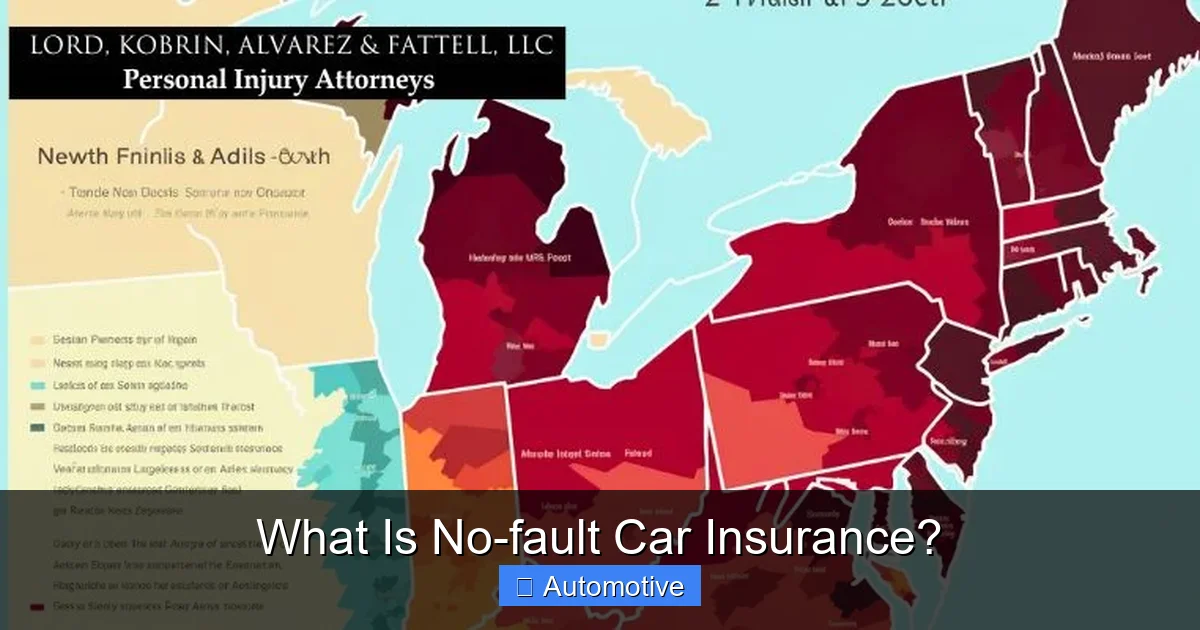
Not all states use the no-fault system. As of 2024, only 12 states and Puerto Rico have mandatory no-fault laws. These states are:
– Florida
– Hawaii
– Kansas
– Kentucky
– Massachusetts
– Michigan
– Minnesota
– New Jersey
– New York
– North Dakota
– Oregon
– Utah
– Puerto Rico
Each of these states has its own version of no-fault rules, including different PIP minimums, thresholds for lawsuits, and coverage options.
For example, Michigan is known for its “pure” no-fault system, where drivers have unlimited medical coverage through PIP but cannot sue for pain and suffering unless they meet strict criteria. In contrast, states like Kentucky and New Jersey offer a “choice” no-fault system, where drivers can opt out of no-fault and retain the right to sue more freely.
If you live in one of these states, no-fault insurance is not optional—it’s the law. Failing to carry the required PIP coverage can result in fines, license suspension, or even vehicle impoundment.
Drivers in non-no-fault states (like California, Texas, or Illinois) operate under a traditional tort system, where the at-fault driver’s insurance pays for damages. In those states, determining fault is critical, and lawsuits are more common.
How to Know If You’re in a No-Fault State
The easiest way to find out is to check your state’s Department of Motor Vehicles (DMV) or insurance department website. You can also ask your insurance agent or review your policy documents—PIP coverage will be listed if you’re in a no-fault state.
Another clue: if your insurance quote includes a line item for “Personal Injury Protection” or “PIP,” you’re likely in a no-fault state.
Pros and Cons of No-Fault Car Insurance
Visual guide about What Is No-fault Car Insurance?
Image source: lordandkobrin.com
Like any insurance system, no-fault has its advantages and drawbacks. Whether it’s right for you depends on your driving habits, financial situation, and where you live.
Advantages of No-Fault Insurance
Faster Claims Processing: One of the biggest benefits is speed. Because your own insurer pays first, you don’t have to wait for fault to be determined. Medical bills get paid quickly, and you can focus on recovery instead of paperwork.
Reduced Lawsuits: No-fault systems are designed to cut down on frivolous lawsuits. By limiting the right to sue unless injuries are severe, they help keep the legal system from getting clogged with minor injury claims.
Guaranteed Coverage: Even if you’re partially at fault or the other driver is uninsured, your PIP coverage kicks in. This provides peace of mind, especially in hit-and-run accidents or when the other party has no insurance.
Covers Lost Wages and Household Services: Unlike basic medical payments coverage, PIP often includes reimbursement for lost income and help with daily tasks—something that can be a lifesaver if you’re injured and can’t work.
Simpler for Minor Accidents: In fender benders or low-speed collisions, no-fault eliminates the need for lengthy investigations. Everyone gets help faster.
Disadvantages of No-Fault Insurance
Higher Premiums: Because insurers pay out more in claims (especially in states like Michigan with unlimited PIP), premiums tend to be higher in no-fault states. Drivers may pay more for coverage than those in tort states.
Limited Right to Sue: If you suffer a serious injury but don’t meet the state’s threshold, you may be barred from seeking compensation for pain and suffering—even if the other driver was clearly at fault.
Potential for Fraud: No-fault systems can be vulnerable to abuse, such as exaggerated injury claims or unnecessary medical treatments. This can drive up costs for everyone.
Doesn’t Cover Vehicle Damage: You still need collision or comprehensive coverage to fix your car, which adds to your overall insurance cost.
Complex Rules by State: Each no-fault state has different laws, making it confusing if you move or drive across state lines. What’s covered in Florida might not apply in New York.
No-Fault vs. At-Fault (Tort) Insurance Systems
To fully understand no-fault insurance, it helps to compare it with the traditional at-fault, or tort, system used in most states.
In an at-fault system, the driver who causes the accident is financially responsible for any damages. Their liability insurance pays for the other party’s medical bills, vehicle repairs, and other losses. Determining fault is essential—and often involves police reports, witness statements, and insurance investigations.
For example, if you’re hit by a speeding driver in Texas (an at-fault state), their insurance company will pay for your injuries and car repairs—once fault is established. If they’re uninsured, you’d rely on your own uninsured motorist coverage.
The main advantage of the at-fault system is that it holds negligent drivers accountable. It also allows injured parties to sue for pain and suffering, even in minor cases. However, the process can be slow, and disputes over fault are common.
No-fault, on the other hand, prioritizes speed and simplicity. It removes the blame game from minor injury claims and ensures everyone gets help quickly. But it limits legal recourse and can lead to higher premiums.
Which System Is Better?
There’s no clear winner—it depends on your priorities.
If you value quick payments and want to avoid lawsuits, no-fault may be appealing. If you prefer the ability to sue for full damages and don’t mind a longer claims process, the at-fault system might suit you better.
Many experts argue that no-fault works best in densely populated areas with high traffic volumes, where minor accidents are common. In rural areas with fewer crashes, the at-fault system may be more efficient.
Tips for Drivers in No-Fault States
If you live in a no-fault state, here are some practical tips to make the most of your coverage and avoid common pitfalls.
1. Understand Your PIP Limits: Know how much coverage you have for medical expenses, lost wages, and replacement services. If your policy has low limits, consider increasing them—especially if you have a high income or dependents.
2. See Approved Medical Providers: Some insurers require you to use in-network doctors or clinics for PIP claims. Going out-of-network could result in higher out-of-pocket costs or denied claims.
3. Keep Detailed Records: Save all medical bills, receipts, and documentation of lost income. This helps support your claim and speeds up reimbursement.
4. Report Accidents Promptly: Notify your insurer within the required timeframe (usually 24–72 hours). Delays can complicate your claim.
5. Don’t Accept Quick Settlements Without Advice: Insurance adjusters may offer fast payouts, but these might not cover long-term needs. Consult a lawyer if your injuries are serious.
6. Consider Additional Coverage: No-fault doesn’t protect your car or provide liability for others’ injuries. Make sure you have collision, comprehensive, and adequate liability coverage.
7. Review Your Policy Annually: Insurance needs change. Life events like a new job, marriage, or buying a home may require adjustments to your coverage.
Conclusion
No-fault car insurance is a unique system designed to protect drivers from the delays and uncertainties of traditional liability claims. By requiring your own insurer to cover your medical expenses and lost wages—regardless of fault—it ensures faster access to care and reduces the burden on the legal system.
While it comes with trade-offs—such as higher premiums and limited lawsuit rights—no-fault can be a smart choice for drivers in high-traffic areas or those who value peace of mind. The key is understanding how it works in your state, knowing what’s covered (and what’s not), and making sure your policy meets your needs.
Whether you’re a new driver or have been on the road for years, taking the time to learn about no-fault insurance can save you time, money, and stress after an accident. Stay informed, stay covered, and drive safely.
Frequently Asked Questions
What states have no-fault car insurance?
Twelve states and Puerto Rico have no-fault laws: Florida, Hawaii, Kansas, Kentucky, Massachusetts, Michigan, Minnesota, New Jersey, New York, North Dakota, Oregon, and Utah. Each has its own rules and coverage requirements.
Does no-fault insurance cover car damage?
No, no-fault insurance only covers bodily injury-related expenses like medical bills and lost wages. Vehicle damage is covered by collision or liability insurance, depending on who was at fault.
Can I sue someone in a no-fault state?
Yes, but only if your injuries meet your state’s legal threshold—such as significant disfigurement, permanent injury, or medical costs exceeding a set amount. Minor injuries typically can’t be sued over.
What is PIP in car insurance?
PIP stands for Personal Injury Protection. It’s the core coverage in no-fault states and pays for medical expenses, lost wages, and sometimes household services after an accident, regardless of fault.
Is no-fault insurance more expensive?
Generally, yes. Because insurers pay more in claims—especially in states with unlimited medical coverage—premiums tend to be higher in no-fault states compared to at-fault states.
Do I need collision coverage in a no-fault state?
Yes, if you want your car repaired after an accident. No-fault insurance doesn’t cover vehicle damage, so collision coverage is essential for protecting your vehicle.
