
What Is Full Coverage Car Insurance

Full coverage car insurance isn’t a single policy—it’s a combination of coverages that protect you, your car, and others in a wide range of situations. It typically includes liability, collision, and comprehensive insurance, offering broader protection than state-minimum plans.
Key Takeaways
- Full coverage is not a single policy: It’s a term used to describe a bundle of insurance types, usually liability, collision, and comprehensive coverage.
- It protects your vehicle from more than just crashes: Comprehensive coverage handles theft, vandalism, weather damage, and animal collisions.
- Lenders often require it: If you’re financing or leasing a car, your lender will likely require full coverage to protect their investment.
- It’s more expensive than minimum coverage: While it costs more upfront, it can save you thousands in out-of-pocket repair or replacement costs.
- Deductibles affect your premium: Choosing a higher deductible lowers your monthly payment but increases what you pay out of pocket after a claim.
- It doesn’t cover everything: Personal belongings, mechanical breakdowns, and normal wear and tear are typically not included.
- Shop around for the best value: Rates and coverage details vary widely between insurers, so comparing quotes is essential.
📑 Table of Contents
What Is Full Coverage Car Insurance?
If you’ve ever shopped for car insurance, you’ve probably heard the term “full coverage.” It sounds reassuring—like a safety net that catches you no matter what happens on the road. But here’s the truth: full coverage isn’t an official insurance product. Instead, it’s a common phrase used to describe a combination of coverages that go beyond the bare minimum required by law.
Think of it like a well-stocked first-aid kit. State-minimum liability insurance is like having just a bandage and antiseptic—it covers the basics if you hurt someone else. Full coverage, on the other hand, is like adding gauze, splints, pain relievers, and even a thermal blanket. It’s designed to handle a wider range of injuries—both to others and to yourself and your vehicle.
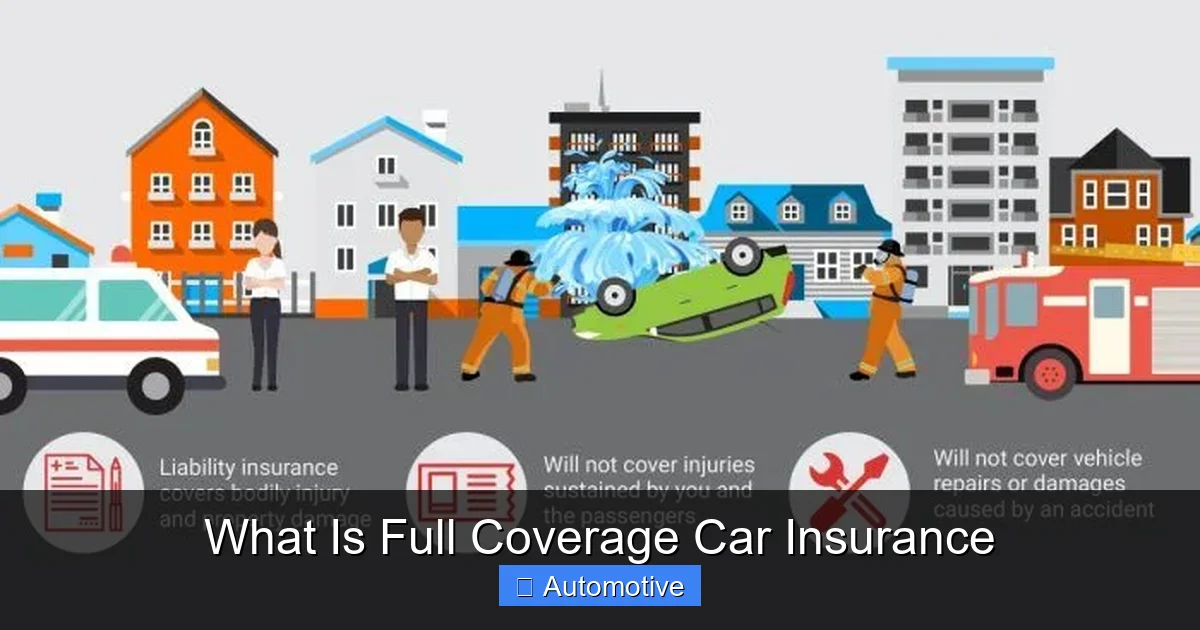
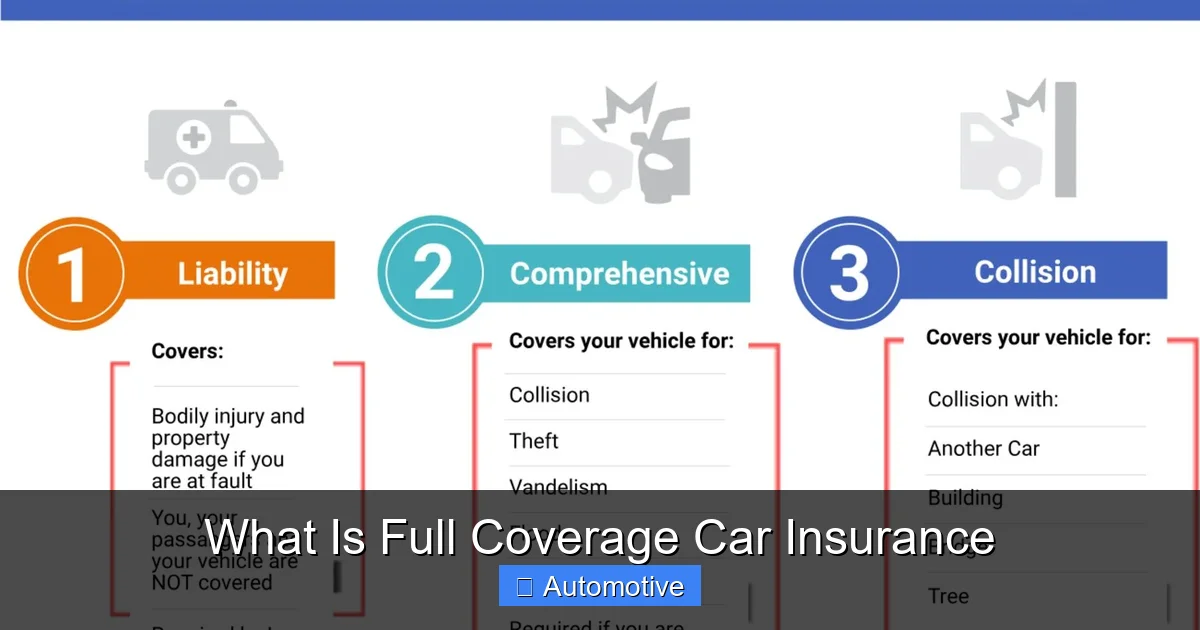
So what exactly does full coverage include? At its core, it typically bundles three main types of insurance: liability coverage (which is legally required in most states), collision coverage (to repair your car after an accident), and comprehensive coverage (to protect against non-collision events like theft or hail). Some drivers also add extras like uninsured motorist protection, medical payments, or roadside assistance to round out their policy.
But why does this matter? Because understanding what full coverage really means can help you make smarter decisions about protecting your car, your finances, and your peace of mind. Whether you’re buying your first car, refinancing an auto loan, or just reevaluating your current policy, knowing the ins and outs of full coverage ensures you’re not overpaying for unnecessary protection—or worse, underinsured when you need it most.
Breaking Down the Components of Full Coverage
Visual guide about What Is Full Coverage Car Insurance
Image source: automoblog.net
To truly grasp what full coverage car insurance offers, it helps to look under the hood at each component. While the exact mix can vary slightly depending on your insurer and needs, most full coverage policies include the following core elements:
Liability Coverage: Protecting Others
Liability insurance is the foundation of any car insurance policy—and it’s mandatory in nearly every state. It covers damages you cause to other people or their property in an accident where you’re at fault. This includes two parts:
– Bodily Injury Liability: Pays for medical bills, lost wages, and pain and suffering of others injured in an accident you caused.
– Property Damage Liability: Covers repairs or replacement of another person’s vehicle or other property (like a fence or mailbox) damaged in the crash.
For example, imagine you rear-end another driver at a stoplight. Their car needs $8,000 in repairs, and they break their arm, resulting in $15,000 in medical expenses. If your liability limits are high enough, your insurance will cover those costs (up to your policy limits), protecting you from paying out of pocket.
Most states set minimum liability requirements—say, 25/50/25 (meaning $25,000 per person for bodily injury, $50,000 per accident, and $25,000 for property damage). But these minimums are often too low to cover serious accidents. That’s why many financial advisors recommend carrying at least 100/300/100 or higher, especially if you have assets to protect.
Collision Coverage: Fixing Your Own Car After a Crash
While liability covers others, collision coverage steps in to repair or replace your own vehicle after an accident—regardless of who’s at fault. This includes collisions with other cars, objects (like a tree or guardrail), or even single-vehicle rollovers.
Let’s say you skid on ice and hit a concrete barrier. Your car sustains $6,000 in damage. With collision coverage, your insurer will pay for the repairs (minus your deductible). Without it? You’d foot the entire bill yourself.
Collision coverage is especially valuable for newer or more expensive vehicles, where repair costs can be steep. However, as your car ages and depreciates, the cost of collision may start to outweigh the car’s actual cash value. That’s why some drivers drop collision once their car is worth less than, say, $4,000–$5,000.
Comprehensive Coverage: Protection Beyond Collisions
Comprehensive coverage handles incidents that don’t involve crashing into something. Think of it as your “everything else” protection. It covers damage from:
– Theft or vandalism
– Fire
– Floods, hail, or other weather events
– Falling objects (like tree branches)
– Animal collisions (yes, hitting a deer counts!)
– Civil disturbances (like riots)
For instance, if a hailstorm dents your roof and hood, comprehensive will cover the repairs. If someone breaks into your car and steals your stereo, that’s covered too (though personal items inside the car usually aren’t—more on that later).
Like collision, comprehensive comes with a deductible. Common choices are $250, $500, or $1,000. The higher your deductible, the lower your premium—but the more you’ll pay if you file a claim.
Together, collision and comprehensive are often referred to as “physical damage coverage.” They’re the parts of full coverage that directly protect your vehicle, making them essential if you want to avoid major out-of-pocket expenses after unexpected events.
Why Lenders Require Full Coverage
Visual guide about What Is Full Coverage Car Insurance
Image source: carinsurancecomparison.com
If you’re financing or leasing a car, chances are your lender or leasing company has already told you: “You need full coverage.” But why?
Simple: they have a financial stake in your vehicle. When you take out an auto loan, the car serves as collateral. If you default on payments, the lender can repossess it. But if the car is totaled in an accident and you only have liability insurance, there’s no way to recover its value—leaving the lender holding the bag.
That’s where full coverage comes in. By requiring collision and comprehensive insurance, lenders ensure that if the car is damaged or destroyed, the insurance payout can be used to repair it or pay off the loan balance. This protects their investment and reduces their risk.
In practice, this means your lender will likely specify minimum coverage amounts and may even insist on a low deductible (like $500 or less). They’ll also require that they be listed as a “loss payee” on your policy, meaning any claim checks for vehicle damage will be made out to both you and the lender.
It’s important to note that this requirement lasts only as long as you owe money on the car. Once you pay off your loan or lease ends, you’re free to adjust your coverage—though that doesn’t always mean you should drop it entirely (more on that below).
Is Full Coverage Worth the Cost?
Visual guide about What Is Full Coverage Car Insurance
Image source: cdn.wallethub.com
This is the million-dollar question—or at least the hundred-dollars-a-month question. Full coverage costs significantly more than state-minimum liability insurance. Depending on your location, driving record, and vehicle, you could pay $100–$300+ more per month for the added protection.
So is it worth it? The answer depends on several factors:
The Value of Your Vehicle
If you drive a brand-new SUV worth $45,000, full coverage is almost always a smart move. The cost of repairing or replacing that vehicle far exceeds the extra premium you’ll pay. But if you’re driving a 15-year-old sedan worth $3,000, paying $150/month for full coverage might not make financial sense. In that case, you might consider dropping collision and comprehensive and setting aside that money in a dedicated savings account for potential repairs.
Your Financial Situation
Can you afford to pay $5,000 out of pocket if your car is totaled? If not, full coverage provides crucial financial protection. Even if your car isn’t new, unexpected events like theft or hailstorms can leave you without transportation—and without the means to replace your vehicle quickly.
Your Risk Tolerance
Some people sleep better knowing they’re fully protected, even if it costs more. Others prefer to self-insure for smaller risks and only carry liability. There’s no right or wrong answer—just what fits your lifestyle and comfort level.
Where You Live
If you live in an area with high theft rates, frequent severe weather, or heavy traffic, the likelihood of needing comprehensive or collision coverage increases. Conversely, if you park in a secure garage in a low-risk area, your chances of filing a claim may be lower.
A good rule of thumb: If the annual cost of full coverage exceeds 10% of your car’s value, it might be time to reconsider. For example, if your car is worth $10,000 and full coverage costs $1,200/year, that’s 12%—potentially too high. But if your car is worth $25,000 and coverage costs $1,500/year (6%), it’s likely a worthwhile investment.
What Full Coverage Doesn’t Cover
Here’s a critical point many drivers overlook: full coverage doesn’t mean “covers everything.” There are important gaps you should know about:
– Personal belongings: Items stolen from your car (like laptops, purses, or golf clubs) are generally not covered under auto insurance. You’d need homeowners or renters insurance for that.
– Mechanical breakdowns: If your engine fails due to normal wear and tear or lack of maintenance, that’s not covered. Extended warranties or mechanical breakdown insurance (MBI) are separate products.
– Rental cars: Unless you add rental reimbursement coverage, you won’t get paid for a rental while your car is in the shop.
– Normal depreciation: Insurance pays the actual cash value (ACV) of your car at the time of loss—not what you paid for it new. So if your 3-year-old car is totaled, you’ll get its current market value, minus your deductible.
– Driving for rideshare: Using your car for Uber or Lyft usually voids standard coverage unless you have a commercial or rideshare endorsement.
Understanding these limits helps you avoid unpleasant surprises and consider supplemental coverages if needed.
How to Choose the Right Full Coverage Policy
Not all full coverage policies are created equal. To get the best value, follow these tips:
Compare Quotes from Multiple Insurers
Insurance rates can vary wildly between companies—even for identical coverage. Get quotes from at least three insurers, including national brands (like State Farm or Geico) and regional ones (like Auto-Owners or Erie). Use online comparison tools or work with an independent agent who can shop around for you.
Adjust Your Deductibles Wisely
Raising your deductible from $500 to $1,000 can lower your premium by 15–30%. But make sure you can actually afford to pay that amount if you need to file a claim. Keep the deductible money in a savings account just in case.
Bundle Policies for Discounts
Many insurers offer multi-policy discounts if you bundle auto with home, renters, or umbrella insurance. You could save 10–25% just by consolidating.
Ask About Other Discounts
Safe driver, good student, low mileage, anti-theft device, and paperless billing discounts can all reduce your rate. Don’t assume they’re automatic—ask your agent what’s available.
Review Your Coverage Annually
Life changes—and so should your insurance. If you pay off your car, move to a safer neighborhood, or start working from home, your needs may shift. Review your policy each year during renewal to ensure it still fits.
Final Thoughts: Making Full Coverage Work for You
Full coverage car insurance isn’t about having “all the insurance”—it’s about having the right insurance for your situation. It’s a powerful tool that shields you from financial disaster after accidents, theft, or natural disasters. But it’s not one-size-fits-all.
By understanding what it includes (and what it doesn’t), evaluating your vehicle’s value and risk factors, and shopping smartly, you can build a policy that offers real protection without breaking the bank. Whether you’re behind the wheel of a luxury sedan or a trusty commuter hatchback, the goal is the same: drive with confidence, knowing you’re prepared for whatever the road throws your way.
Frequently Asked Questions
Is full coverage car insurance required by law?
No, full coverage is not legally required in any state. However, if you’re financing or leasing a vehicle, your lender will almost always require it to protect their investment.
Can I drop full coverage once I pay off my car?
Yes, once your loan is paid off, you’re free to adjust your coverage. But consider whether dropping collision and comprehensive makes financial sense based on your car’s value and your ability to cover repair costs.
Does full coverage include roadside assistance?
Not automatically. Roadside assistance is usually an optional add-on. Some insurers include it for free with certain plans, but most charge extra for towing, jump-starts, or tire changes.
Will full coverage pay for a rental car after an accident?
Only if you have rental reimbursement coverage, which is typically optional. Without it, you’ll need to pay for a rental out of pocket while your car is being repaired.
Does comprehensive coverage include windshield repair?
Yes, most comprehensive policies cover windshield damage, and many insurers offer zero-deductible glass repair. Some even provide mobile service to fix chips or cracks at your location.
Can I get full coverage on an older car?
Yes, but it may not be cost-effective. If your car’s value is low, the cost of full coverage might exceed potential payouts. Weigh the premiums against the vehicle’s actual cash value before deciding.
