What Is Auto Vehicle Hold on a Subaru

Contents
- 1 Key Takeaways
- 2 📑 Table of Contents
- 3 What Is Auto Vehicle Hold on a Subaru?
- 4 How Does Auto Vehicle Hold Work?
- 5 When and Where Is Auto Vehicle Hold Most Useful?
- 6 How to Use Auto Vehicle Hold in Your Subaru
- 7 Auto Vehicle Hold vs. Other Braking Systems
- 8 Which Subaru Models Have Auto Vehicle Hold?
- 9 Common Misconceptions About Auto Vehicle Hold
- 10 Maintenance and Troubleshooting
- 11 Conclusion
- 12 Frequently Asked Questions



Auto Vehicle Hold (AVH) on a Subaru is a smart safety feature that automatically holds the brakes after you stop, preventing rollback on hills and reducing driver fatigue in traffic. It works seamlessly with the electronic parking brake and enhances control without requiring constant foot pressure on the brake pedal.
Key Takeaways
- Auto Vehicle Hold prevents rollback: It automatically engages the brakes when you come to a stop, especially on inclines, so your Subaru doesn’t creep forward or backward.
- Reduces driver fatigue: No need to keep your foot on the brake in stop-and-go traffic—AVH does the work for you.
- Works with electronic parking brake: AVH integrates with Subaru’s electronic parking brake system for smooth, coordinated operation.
- Activates automatically: Once enabled, it kicks in whenever the car stops, whether at a red light or on a steep hill.
- Easy to turn on or off: A simple button on the center console lets you enable or disable AVH based on your preference.
- Enhances safety and convenience: Especially useful for new drivers or those navigating hilly terrain, AVH adds an extra layer of confidence.
- Compatible with most modern Subarus: Found in models like the Outback, Forester, Crosstrek, and Ascent from 2018 onward.
📑 Table of Contents
- What Is Auto Vehicle Hold on a Subaru?
- How Does Auto Vehicle Hold Work?
- When and Where Is Auto Vehicle Hold Most Useful?
- How to Use Auto Vehicle Hold in Your Subaru
- Auto Vehicle Hold vs. Other Braking Systems
- Which Subaru Models Have Auto Vehicle Hold?
- Common Misconceptions About Auto Vehicle Hold
- Maintenance and Troubleshooting
- Conclusion
What Is Auto Vehicle Hold on a Subaru?
Imagine you’re driving your Subaru up a steep hill in the city. You stop at a red light, and instead of worrying about rolling backward when you release the brake, your car just… stays put. No handbrake yanking, no frantic clutch work—just smooth, confident control. That’s the magic of Auto Vehicle Hold (AVH), a smart feature built into many modern Subaru vehicles.
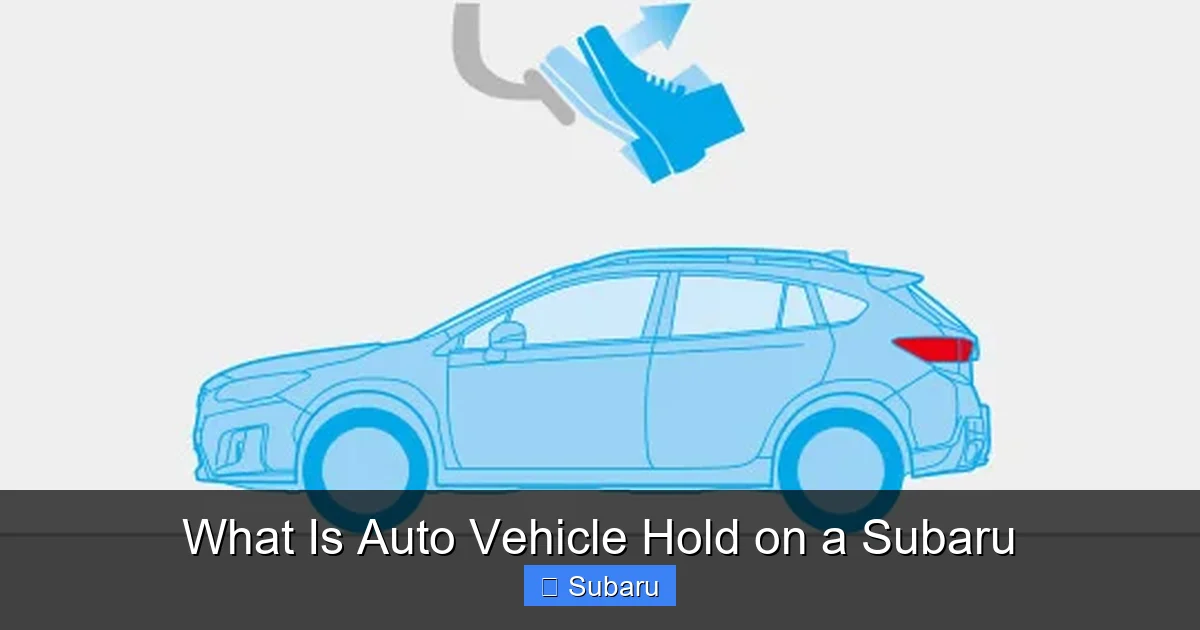
Auto Vehicle Hold is an advanced driver assistance technology designed to make driving easier, safer, and more comfortable—especially in tricky situations like stop-and-go traffic, steep inclines, or busy intersections. Once activated, AVH automatically applies the brakes the moment your Subaru comes to a complete stop, holding it in place without any input from you. When you’re ready to go, simply press the accelerator, and the system releases the brakes smoothly.
This feature is especially helpful for drivers who frequently navigate hilly areas or congested urban roads. It eliminates the need to constantly balance the brake, clutch (in manual models), and accelerator—reducing stress and fatigue. And because it works seamlessly with Subaru’s electronic parking brake and vehicle dynamics systems, AVH feels like a natural extension of the car’s intelligence.
How Does Auto Vehicle Hold Work?
Visual guide about What Is Auto Vehicle Hold on a Subaru
Image source: d2hucwwplm5rxi.cloudfront.net
At its core, Auto Vehicle Hold uses a combination of sensors, electronic control units, and the vehicle’s braking system to detect when the car has stopped and maintain brake pressure until it’s time to move again. Here’s a closer look at how it all comes together.
Sensor Input and Detection
When you bring your Subaru to a stop—whether on flat ground or a slope—the vehicle’s onboard systems monitor several key inputs. These include wheel speed sensors, brake pressure sensors, and sometimes even incline detection via the vehicle’s stability control system. Once the car detects that it has come to a complete stop (typically when speed drops below 2–3 mph), the AVH system kicks in.
The system doesn’t just rely on speed; it also considers whether the driver has released the brake pedal. If you’ve stopped and taken your foot off the brake, AVH interprets this as a signal that you want the car to stay put. At that moment, it automatically applies the electronic parking brake or holds hydraulic pressure in the brake lines to keep the wheels locked.
Brake Application and Release
One of the cleverest aspects of AVH is how it manages brake pressure. Unlike the traditional parking brake, which locks the rear wheels mechanically, AVH uses electronic control to apply just the right amount of force. This means the car doesn’t lurch or jerk when the system engages—it simply stops and stays stopped.
When you’re ready to move, pressing the accelerator sends a signal to the AVH system to release the brakes. The transition is smooth and immediate, allowing the car to move forward (or backward) without delay. There’s no need to manually disengage the brake or shift into a different gear—everything happens automatically.
Integration with Other Systems
Auto Vehicle Hold doesn’t work in isolation. It’s part of a broader network of safety and convenience features in Subaru vehicles. For example, it communicates with the Electronic Parking Brake (EPB), Hill Start Assist, and even the transmission control module (in automatic models). This integration ensures that AVH behaves predictably in different driving scenarios.
For instance, if you’re on a steep hill and the system detects that the car might roll backward when you release the brake, AVH will hold the brakes longer or apply more pressure to prevent movement. In stop-and-go traffic, it reduces the need for constant pedal work, letting you rest your foot without worrying about creeping forward.
When and Where Is Auto Vehicle Hold Most Useful?

Visual guide about What Is Auto Vehicle Hold on a Subaru
Image source: i.imgur.com
Auto Vehicle Hold shines in specific driving conditions where traditional braking methods can be awkward or tiring. Let’s explore some real-world scenarios where AVH makes a noticeable difference.
Stop-and-Go Traffic
If you’ve ever sat in bumper-to-bumper traffic, you know how tiring it can be to constantly press and release the brake pedal. Your left foot (in automatic models) or right foot (in manuals) gets sore, and it’s easy to accidentally creep forward when you think you’ve stopped.
With AVH, you can come to a complete stop, take your foot off the brake, and relax. The system holds the car in place until you’re ready to go. When the light turns green or traffic starts moving, just press the accelerator—no need to reapply the brake or worry about rolling. This is a huge relief during long commutes or rush-hour jams.
Driving on Hills and Inclines
Hills are where AVH truly earns its keep. Whether you’re pulling up to a stop sign on a steep driveway or waiting at a red light on a mountain road, the risk of rolling backward is real—especially in manual transmission vehicles.
With AVH, that worry disappears. The system detects the incline and holds the brakes automatically. You can focus on timing your acceleration without fumbling with the handbrake or riding the clutch. This is especially helpful for new drivers or those driving in hilly cities like San Francisco or Denver.
Parking and Tight Spaces
Even when parking, AVH can be useful. If you’re backing into a tight spot or parallel parking on a slope, the system helps keep the car stable while you maneuver. You don’t have to worry about rolling into the car behind you while you adjust your position.
Additionally, because AVH works with the electronic parking brake, it can assist in holding the car while you shift into park or engage the parking brake manually. This added stability makes parking less stressful, especially in crowded lots or on uneven surfaces.
Busy Intersections and Roundabouts
In busy urban areas, intersections and roundabouts often require frequent stops and starts. AVH helps you maintain control without constant pedal input. You can stop confidently, check for traffic, and proceed smoothly when it’s your turn—all without the hassle of managing the brake and accelerator simultaneously.
How to Use Auto Vehicle Hold in Your Subaru
Visual guide about What Is Auto Vehicle Hold on a Subaru
Image source: subaruauto.com.ge
Using Auto Vehicle Hold is simple, but it helps to know how to activate and control it properly. Here’s a step-by-step guide to getting the most out of this feature.
Activating the System
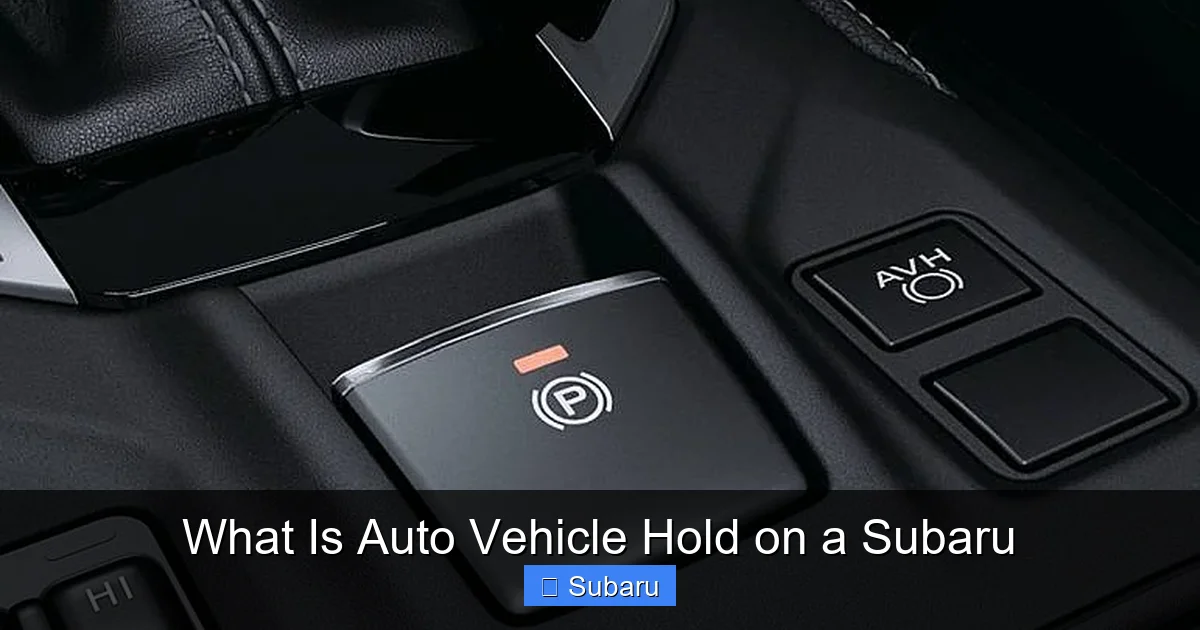
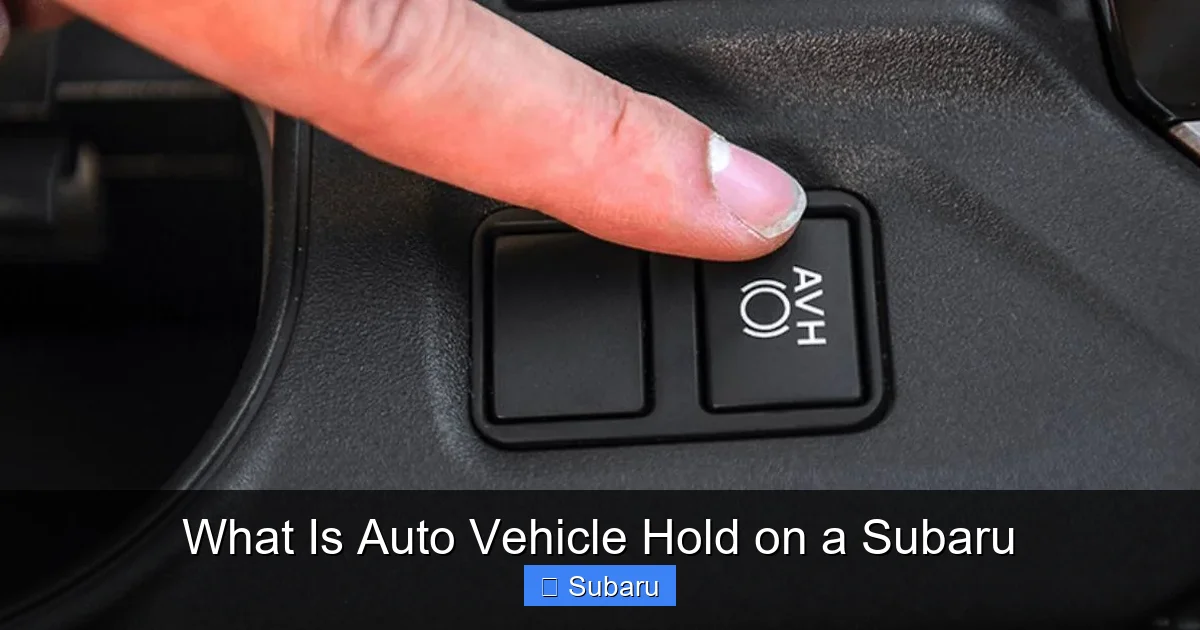
Most Subaru models with AVH have a dedicated button on the center console, usually labeled “AUTO HOLD” or “AVH.” It’s often located near the electronic parking brake button or gear shifter.
To turn AVH on:
- Start your Subaru and ensure the ignition is on.
- Press the AUTO HOLD button. A light on the dashboard or button itself will illuminate, indicating the system is active.
- The system is now ready to engage whenever you come to a stop.
To turn it off, simply press the button again. The indicator light will go out, and AVH will no longer activate automatically.
Understanding the Indicator Lights
Subaru vehicles typically include dashboard indicators to let you know when AVH is active or engaged. Look for a green or white light that says “AUTO HOLD” or shows a car with brake symbols. This light means the system is on and ready.
When the system is actively holding the car (e.g., at a stoplight), you might see a different indicator—sometimes amber or flashing—to show that the brakes are engaged. This is normal and confirms that AVH is doing its job.
Practical Tips for Everyday Use
To get the most out of Auto Vehicle Hold, keep these tips in mind:
- Use it in traffic: AVH is ideal for city driving. Turn it on during your commute to reduce fatigue.
- Disable on slippery surfaces: In snow, ice, or loose gravel, AVH might hold the wheels too firmly, increasing the risk of skidding. Turn it off in these conditions.
- Combine with Hill Start Assist: Many Subarus also have Hill Start Assist, which works alongside AVH for extra confidence on slopes.
- Don’t rely on it for parking: AVH is not a replacement for the parking brake. Always engage the electronic parking brake when parked, especially on hills.
- Check your owner’s manual: Features can vary by model and year. Consult your manual for specific instructions.
Auto Vehicle Hold vs. Other Braking Systems
It’s easy to confuse Auto Vehicle Hold with other braking technologies, but each serves a different purpose. Let’s compare AVH to similar features to clarify how it fits into Subaru’s safety suite.
Auto Vehicle Hold vs. Hill Start Assist
Hill Start Assist (HSA) is a related but distinct feature. Like AVH, it prevents rollback on inclines. However, HSA only works for a few seconds after you release the brake—typically 1–2 seconds. It’s designed to give you time to move your foot from the brake to the accelerator without rolling.
Auto Vehicle Hold, on the other hand, continues to hold the car indefinitely until you press the accelerator. It’s more versatile and useful in longer stops, like at traffic lights or in traffic jams. In many Subarus, both systems work together—HSA provides short-term support, while AVH takes over for longer holds.
Auto Vehicle Hold vs. Electronic Parking Brake
The Electronic Parking Brake (EPB) is a manual system you activate with a button. It locks the rear wheels to keep the car stationary when parked. AVH, by contrast, is automatic and temporary—it only holds the car while you’re stopped and releases when you drive away.
Think of EPB as a long-term parking solution and AVH as a short-term traffic helper. They complement each other: use AVH in traffic, and EPB when you park.
Auto Vehicle Hold vs. Traditional Handbrake
The traditional handbrake (or parking brake lever) is a mechanical system that requires manual operation. It’s reliable but inconvenient in daily driving—especially in traffic.
AVH eliminates the need to pull and release the handbrake repeatedly. It’s faster, easier, and more comfortable, making it ideal for modern driving conditions.
Which Subaru Models Have Auto Vehicle Hold?
Auto Vehicle Hold is available on many recent Subaru models, particularly those with automatic transmissions and advanced safety packages. Here’s a quick overview of where you’ll find it.
Popular Models with AVH
- Subaru Outback: Available on most trims from 2018 onward, especially with the Touring or Limited packages.
- Subaru Forester: Standard or optional on higher trims starting around 2019.
- Subaru Crosstrek: Included on Premium and Limited trims from 2020 onward.
- Subaru Ascent: Standard on all trims since its 2019 debut.
- Subaru Legacy: Available on most models from 2018 onward.
Trim and Package Requirements
AVH is often tied to higher trim levels or specific option packages. For example, it may come standard with the EyeSight Driver Assist Technology package, which includes adaptive cruise control, lane keep assist, and pre-collision braking.
If you’re shopping for a used Subaru, check the trim level and features list. AVH is more common on Limited, Touring, and Premium trims. Some base models may not include it, even if they have other advanced features.
Manual vs. Automatic Transmissions
Auto Vehicle Hold is primarily found in automatic transmission models. While some manual Subarus may have related features like Hill Start Assist, full AVH functionality is rare in stick-shift vehicles due to the need for clutch coordination.
If you drive a manual Subaru, you won’t get the full AVH experience—but you may still benefit from Hill Start Assist, which helps prevent rollback during hill starts.
Common Misconceptions About Auto Vehicle Hold
Despite its usefulness, Auto Vehicle Hold is often misunderstood. Let’s clear up some common myths.
“It’s the Same as Cruise Control”
No—cruise control maintains a set speed on the highway. AVH only works when the car is stopped. They serve completely different purposes.
“It Will Hold the Car Forever”
AVH is designed for temporary stops, not long-term parking. It will disengage when you press the accelerator or turn off the ignition. Always use the parking brake when leaving the car.
“It Works in All Conditions”
AVH performs best on dry, paved surfaces. In snow, ice, or mud, it may not respond optimally. In extreme conditions, it’s safer to disable AVH and use traditional braking methods.
“It Replaces the Need for Good Driving Habits”
No technology replaces safe driving. AVH is a helper, not a substitute for attention and skill. Always stay alert and in control of your vehicle.
Maintenance and Troubleshooting
Auto Vehicle Hold is a reliable system, but like any electronic feature, it may occasionally need attention.
When to Service AVH
If you notice that AVH isn’t engaging, releases too early, or holds too long, it may need inspection. Common causes include:
- A faulty brake sensor
- Low brake fluid
- A malfunctioning electronic control unit
- Worn brake pads affecting pressure detection
Visit a Subaru service center if you experience issues. They can run diagnostics and reset the system if needed.
Resetting the System
Sometimes, AVH may stop working after a battery disconnect or software update. In most cases, a simple ignition cycle (turning the car off and on) will reset it. If not, consult your owner’s manual or a technician.
Battery and Electrical Considerations
Because AVH relies on electronic sensors and the vehicle’s electrical system, a weak battery or faulty wiring can affect performance. Keep your battery in good condition, especially in cold climates.
Conclusion
Auto Vehicle Hold on a Subaru is more than just a convenience—it’s a smart safety feature that enhances control, reduces fatigue, and boosts confidence behind the wheel. Whether you’re navigating city traffic, climbing steep hills, or parking in tight spaces, AVH makes driving smoother and more enjoyable.
By automatically holding the brakes when you stop, it eliminates the stress of managing multiple pedals and prevents unwanted movement. It works seamlessly with other Subaru technologies like the electronic parking brake and Hill Start Assist, creating a cohesive driving experience.
While it’s not a replacement for good driving habits or the parking brake, AVH is a valuable tool for modern drivers. If your Subaru has it, take the time to learn how to use it properly. You’ll wonder how you ever drove without it.
So the next time you’re stuck in traffic or waiting at a hilltop stop sign, remember: your Subaru has your back. With Auto Vehicle Hold, you can stop, relax, and go—smoothly, safely, and stress-free.
Frequently Asked Questions
What does Auto Vehicle Hold do on a Subaru?
Auto Vehicle Hold automatically applies the brakes when your Subaru comes to a stop, preventing rollback on hills and eliminating the need to keep your foot on the brake in traffic. It releases when you press the accelerator.
Is Auto Vehicle Hold the same as Hill Start Assist?
No. Hill Start Assist only holds the car for a few seconds after you release the brake, while Auto Vehicle Hold continues to hold the car until you press the accelerator, making it useful for longer stops.
Can I turn off Auto Vehicle Hold?
Yes. There’s usually a button on the center console labeled “AUTO HOLD” or “AVH.” Press it to turn the feature on or off based on your preference.
Does Auto Vehicle Hold work in the snow?
It may work, but it’s not recommended in slippery conditions. AVH can hold the wheels too firmly, increasing the risk of skidding. Turn it off in snow, ice, or loose gravel.
Do all Subaru models have Auto Vehicle Hold?
No. It’s available on most modern Subaru models with automatic transmissions, especially higher trims like Limited or Touring. Check your owner’s manual or trim details to confirm.
Is Auto Vehicle Hold a replacement for the parking brake?
No. AVH is for temporary stops, not long-term parking. Always use the electronic parking brake when you park, especially on hills or overnight.