
What Is an Underwriting Review for Car Insurance?

An underwriting review for car insurance is the process insurers use to assess your risk level before approving or renewing your policy. It examines your driving history, vehicle details, and personal information to determine your premium and coverage options.
Key Takeaways
- Underwriting review evaluates risk: Insurers analyze your driving record, claims history, and personal details to decide if you’re eligible for coverage and at what cost.
- It affects your premium: A clean driving record and low-risk profile typically lead to lower rates, while accidents or violations can increase costs.
- Required at policy start and renewal: You’ll undergo an underwriting review when buying a new policy or renewing an existing one.
- Uses data from multiple sources: Insurers pull info from DMV records, credit reports (in most states), and claims databases like CLUE.
- Can result in policy changes: Based on the review, your insurer may adjust coverage, raise rates, or even deny or cancel your policy.
- Shop around if flagged: If one insurer rates you high-risk, comparing quotes from others can help you find better options.
- Maintain good habits: Safe driving, timely payments, and accurate reporting help keep your underwriting profile favorable.
📑 Table of Contents
- What Is an Underwriting Review for Car Insurance?
- How Does the Underwriting Review Process Work?
- What Factors Influence an Underwriting Review?
- When Does an Underwriting Review Happen?
- How to Prepare for an Underwriting Review
- What Happens If You Fail an Underwriting Review?
- Tips to Improve Your Underwriting Profile
- Conclusion
What Is an Underwriting Review for Car Insurance?
When you apply for car insurance—or even when you renew your current policy—your insurer doesn’t just take your word for it. Behind the scenes, a detailed evaluation takes place. This process is called an underwriting review, and it’s one of the most important steps in determining whether you’ll get coverage, how much you’ll pay, and what kind of policy you’ll receive.
Think of underwriting like a background check for your driving life. Insurance companies use this review to assess how likely you are to file a claim in the future. The more risk you present, the higher your premium—or the less likely you are to be approved at all. But don’t worry: most drivers pass underwriting reviews without issue. The goal isn’t to punish you—it’s to help insurers set fair, accurate rates based on real data.
Whether you’re a new driver, switching insurers, or simply renewing your policy, understanding how underwriting works can save you money and stress. In this guide, we’ll break down what happens during an underwriting review, what factors influence the outcome, and how you can improve your chances of getting the best possible rate.
How Does the Underwriting Review Process Work?
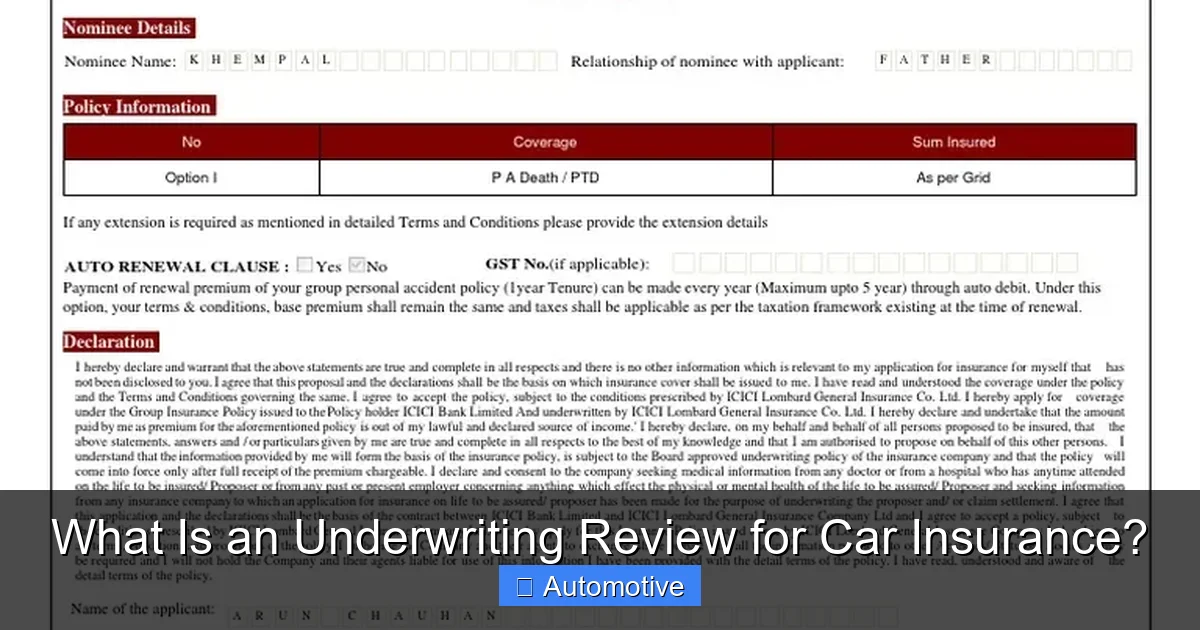
The underwriting review process begins the moment you submit an application for car insurance. Whether you apply online, over the phone, or through an agent, the insurer will collect information about you, your vehicle, and your driving habits. This data is then analyzed by underwriters—professionals trained to evaluate risk and make informed decisions about coverage.
Visual guide about What Is an Underwriting Review for Car Insurance?
Image source: imgv2-1-f.scribdassets.com
Step 1: Application Submission
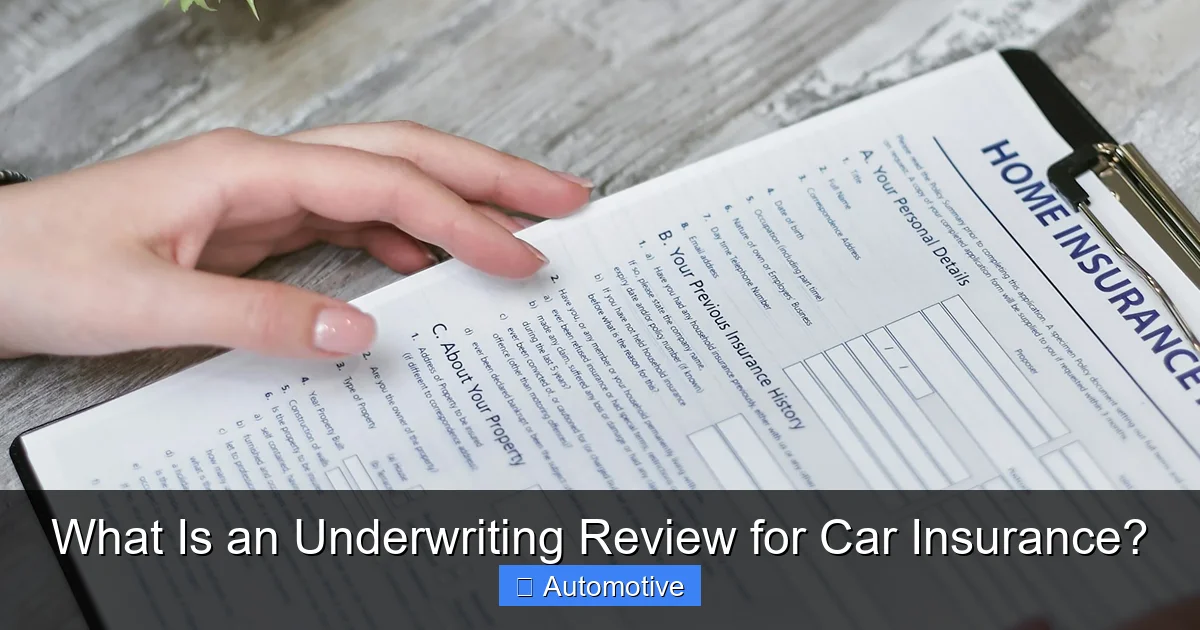
You start by filling out an application. This includes personal details like your name, address, date of birth, and driver’s license number. You’ll also provide information about your vehicle—make, model, year, and VIN—and how you plan to use it (e.g., commuting, pleasure, business).
Be honest and accurate. Even small mistakes—like listing the wrong mileage or misreporting your annual driving distance—can raise red flags. Insurers verify much of this information, and discrepancies could lead to delays, higher rates, or even policy cancellation.
Step 2: Data Collection and Verification
Once your application is submitted, the insurer pulls data from multiple sources to verify your information and assess risk. This is where the real underwriting begins.
Common sources include:
- Department of Motor Vehicles (DMV): Your driving record, including accidents, tickets, and license status.
- Claims History Databases: Such as the Comprehensive Loss Underwriting Exchange (CLUE), which tracks past insurance claims.
- Credit Reports: Used in most states (except California, Hawaii, and Massachusetts) to evaluate financial responsibility.
- Motor Vehicle Records (MVR): Official reports showing your driving history over the past 3–7 years.
For example, if you had a speeding ticket two years ago, it will likely appear in your MVR and affect your risk score. Similarly, if you filed a claim after a minor fender bender, that will show up in CLUE.
Step 3: Risk Assessment and Classification
Using the collected data, underwriters assign you a risk classification. This determines your premium and coverage options. Most insurers use a tiered system, such as:
- Preferred: Clean driving record, good credit, low mileage. Lowest rates.
- Standard: Minor violations or average credit. Moderate rates.
- Non-Standard or High-Risk: Multiple accidents, DUIs, or poor credit. Higher premiums or limited coverage.
For instance, a 35-year-old driver with no accidents, a clean license, and a credit score above 700 would likely fall into the preferred category. In contrast, a 20-year-old with a recent at-fault accident and a DUI might be classified as high-risk.
Step 4: Policy Offer or Adjustment
Based on the risk assessment, the insurer will either approve your application or make adjustments. This could mean:
- Offering a policy at a standard or discounted rate.
- Requiring a higher deductible to lower your premium.
- Limiting coverage options (e.g., no comprehensive or collision).
- Adding surcharges for high-risk factors.
- Denying coverage altogether (rare, but possible for extreme cases).
Even if you’re approved, the underwriting review doesn’t end there. Insurers often conduct periodic reviews—especially at renewal—to reassess your risk profile.
What Factors Influence an Underwriting Review?
Many variables go into an underwriting review. Some are within your control, while others are not. Understanding these factors can help you prepare and improve your chances of getting favorable terms.
Visual guide about What Is an Underwriting Review for Car Insurance?
Image source: images.pexels.com
Driving History
Your driving record is one of the most important factors. Insurers look at:
- Accidents (especially at-fault ones)
- Traffic violations (speeding, running red lights, etc.)
- DUIs or reckless driving convictions
- License suspensions or revocations
For example, a single speeding ticket might increase your premium by 10–20%, while a DUI could double it or lead to policy denial. The good news? Many insurers offer accident forgiveness or safe driver discounts after a few clean years.
Claims History
Even if you weren’t at fault, filing a claim can affect your underwriting review. Insurers use databases like CLUE to see how many claims you’ve made in the past 5–7 years. Frequent claims—especially for minor incidents—can signal higher risk.
Tip: Before filing a claim for small damages (e.g., under $1,000), consider whether it’s worth the potential rate increase. Sometimes paying out of pocket is smarter in the long run.
Credit-Based Insurance Score
In most states, insurers use a credit-based insurance score—not your regular credit score—to assess risk. This score considers payment history, debt levels, and credit length. Studies show a correlation between credit behavior and claim frequency, so better credit often means lower premiums.
For example, a driver with a credit score of 650 might pay $200 more per year than someone with a 750 score—even with identical driving records.
Vehicle Type and Usage
The car you drive matters. High-performance vehicles, luxury cars, and models with high theft rates typically cost more to insure. Similarly, using your car for business or long commutes increases exposure and risk.
Example: Insuring a 2023 Honda Civic for weekend use will be cheaper than insuring a 2023 BMW M3 used for daily commuting.
Personal Demographics
Age, gender (in some states), marital status, and location also play a role. Younger drivers, especially teens, face higher rates due to inexperience. Urban drivers often pay more than rural ones due to higher traffic density and theft rates.
Note: Some states prohibit using gender or marital status in underwriting, so check your local laws.
Coverage History and Lapses
Maintaining continuous coverage is crucial. A lapse—even for a few days—can trigger higher rates or denial. Insurers see lapses as a red flag, suggesting financial instability or risky behavior.
Tip: Set up automatic payments and renew your policy before it expires to avoid gaps.
When Does an Underwriting Review Happen?
You’ll encounter an underwriting review at several key points in your insurance journey. Knowing when it happens can help you prepare and avoid surprises.
Visual guide about What Is an Underwriting Review for Car Insurance?
Image source: images.pexels.com
At Policy Purchase
The first and most thorough underwriting review occurs when you buy a new policy. Whether you’re a first-time buyer or switching insurers, the company will conduct a full assessment to determine your risk level and set your initial premium.
This is your chance to shop around. Get quotes from multiple insurers to compare how different companies view your risk profile. One might offer a lower rate based on their underwriting criteria.
At Policy Renewal
Most insurers conduct an underwriting review every 6 or 12 months when your policy renews. They’ll check for changes in your driving record, claims history, credit, or personal details.
For example, if you got a speeding ticket since your last renewal, your premium might increase. Conversely, if you completed a defensive driving course, you could qualify for a discount.
After a Major Life Event
Significant changes—like moving to a new state, getting married, or adding a teen driver—can trigger a review. Notify your insurer promptly to avoid coverage issues.
Example: Moving from a rural area to a city with high traffic and theft rates could increase your premium. Updating your address ensures accurate underwriting.
After a Claim
Filing a claim doesn’t always trigger a full review, but major or frequent claims might. Insurers may reassess your risk and adjust your policy accordingly.
In some cases, especially after a DUI or at-fault accident, your insurer might non-renew your policy at the next term.
How to Prepare for an Underwriting Review
While you can’t control every factor in an underwriting review, you can take steps to present yourself as a low-risk driver. Preparation can lead to better rates and smoother renewals.
Review Your Driving Record
Request a copy of your motor vehicle record (MVR) from your state’s DMV. Check for errors—like tickets you paid or accidents you weren’t involved in. Dispute inaccuracies immediately.
Tip: Many DMVs offer online access. A clean record can save you hundreds per year.
Check Your Claims History
You can request a free CLUE report once a year at choicetrust.com. Review it for errors or outdated claims. If a claim is listed incorrectly, contact the insurer to correct it.
Improve Your Credit
Pay bills on time, reduce credit card balances, and avoid opening new accounts before applying for insurance. Even a 20-point increase in your credit score can lower your premium.
Maintain Continuous Coverage
Never let your policy lapse. If you’re between cars, consider non-owner car insurance to stay covered. A lapse can label you “high-risk” and increase future rates.
Drive Safely
The best way to pass an underwriting review is to avoid accidents and violations. Use defensive driving techniques, obey speed limits, and avoid distractions like texting.
Bonus: Some insurers offer telematics programs (like Progressive’s Snapshot or Allstate’s Drivewise) that monitor your driving and reward safe behavior with discounts.
Be Honest on Your Application
Don’t exaggerate mileage, lie about usage, or omit violations. Insurers verify everything, and dishonesty can lead to policy cancellation or denial of claims.
What Happens If You Fail an Underwriting Review?
While most drivers pass underwriting reviews without issue, some may face challenges. Here’s what to do if your application is denied or your rates are too high.
Policy Denial
In rare cases, an insurer may deny coverage. This usually happens with extreme risk factors—like multiple DUIs, license suspension, or a history of fraud.
If denied, you’re not out of options. You can:
- Apply with a high-risk insurer (e.g., The General, Dairyland).
- Seek coverage through your state’s assigned risk pool.
- Work on improving your risk profile (e.g., complete a DUI program, rebuild credit).
High Premiums
If your rates are too high, shop around. Different insurers weigh factors differently. One company might overlook a minor ticket, while another penalizes it heavily.
Example: A driver with a single speeding ticket might pay $1,200/year with Insurer A but only $900/year with Insurer B.
Policy Cancellation or Non-Renewal
Insurers can cancel your policy mid-term for fraud or non-payment, or choose not to renew it at the end of the term due to increased risk.
If this happens, you’ll receive written notice. Use the time to find new coverage before the policy ends.
Tips to Improve Your Underwriting Profile
Want to lower your premiums and pass underwriting reviews with flying colors? Start with these proactive steps.
Take a Defensive Driving Course
Many insurers offer discounts for completing approved courses. These programs teach safe driving techniques and can also remove points from your license in some states.
Bundle Your Policies
Combining auto, home, or renters insurance with the same company often leads to multi-policy discounts—sometimes up to 25% off.
Increase Your Deductible
Raising your deductible from $500 to $1,000 can lower your premium by 15–30%. Just make sure you can afford the higher out-of-pocket cost if you file a claim.
Drive Less
Low-mileage drivers often qualify for discounts. If you work from home or use public transit, ask about pay-per-mile or low-mileage programs.
Install Safety Features
Anti-theft devices, dash cams, and advanced safety systems (like automatic braking) can reduce risk and qualify you for discounts.
Review Your Policy Annually
Life changes. So should your insurance. Review your coverage each year to ensure it still fits your needs and that you’re getting the best rate.
Conclusion
An underwriting review for car insurance is a standard but essential process that helps insurers assess your risk and set fair premiums. While it may sound intimidating, it’s simply a way for companies to understand your driving profile and offer appropriate coverage.
By maintaining a clean driving record, managing your credit, and staying informed, you can navigate underwriting reviews with confidence. Remember: the goal isn’t to trick the system—it’s to present yourself as a responsible, low-risk driver. And when you do, you’ll enjoy lower premiums, better coverage, and peace of mind on the road.
Whether you’re applying for your first policy or renewing an existing one, take the time to prepare. A little effort now can lead to big savings later. And if you ever feel overwhelmed, don’t hesitate to talk to an independent insurance agent who can guide you through the process and help you find the best deal.
Frequently Asked Questions
What is an underwriting review for car insurance?
An underwriting review is the process insurers use to evaluate your risk level by analyzing your driving history, credit, vehicle details, and other personal factors. It determines your eligibility for coverage and sets your premium.
How often does an underwriting review happen?
It occurs when you first buy a policy, at each renewal (usually every 6 or 12 months), and sometimes after major life events or claims.
Can I fail an underwriting review?
Yes, though it’s rare. Extreme risk factors like multiple DUIs or fraud can lead to denial. In such cases, you can seek coverage through high-risk insurers or state programs.
Does my credit score affect my car insurance?
Yes, in most states. Insurers use a credit-based insurance score to assess risk. Better credit typically leads to lower premiums.
How can I improve my chances of passing an underwriting review?
Maintain a clean driving record, keep continuous coverage, improve your credit, and be honest on your application. Safe driving and low mileage also help.
What happens if my underwriting review results in higher rates?
You can shop around for quotes from other insurers. Different companies weigh risk factors differently, so you may find a better rate elsewhere.
