What Is Alc Level in Mazda 3

Contents
- 1 Key Takeaways
- 2 📑 Table of Contents
- 3 What Exactly is ALC in the Mazda 3?
- 4 How ALC Technology Works: The Science Behind the Swivel
- 5 Practical Benefits: Why ALC Level Matters for Your Daily Drive
- 6 Using and Customizing Your ALC Settings
- 7 Maintaining and Troubleshooting ALC
- 8 The Evolution of ALC: From 2008 to 2026 Mazda 3
- 9 Conclusion: Shedding Light on a Smart Feature
- 10 Frequently Asked Questions

Engine Flush Cleaner

Car Battery Tester

Tire Pressure Monitoring System (TPMS)

Car Ambient Light Kit
The ALC Level in Mazda 3 refers to the Adaptive Lighting Control system, an intelligent feature that automatically adjusts your headlight beam pattern based on speed, steering input, and surrounding traffic. This enhances visibility around curves and reduces glare for oncoming drivers, significantly improving nighttime safety. Understanding your ALC settings ensures you get the most from this advanced lighting technology.
Imagine you’re driving your Mazda 3 down a dark, winding country road at night. Your eyes are fixed on the road ahead, but you can’t see what’s around the next bend. Suddenly, your headlights swivel to the left, illuminating the curve before you even turn the wheel. That’s not magic—that’s the ALC Level in Mazda 3 at work. If you’ve ever wondered what that ALC button or setting means, you’re not alone. Many Mazda owners see the term in their manual or on their dashboard and aren’t quite sure what it does. In simple terms, ALC stands for Adaptive Lighting Control, and it’s one of the most clever pieces of safety technology in your car. It’s designed to take the guesswork out of nighttime driving by automatically adjusting your headlights to match the road and traffic conditions. By 2026, this system has become even more sophisticated, using advanced software and sensor fusion to act like a co-pilot for your eyes. In this guide, we’ll break down everything you need to know about the ALC Level in Mazda 3—what it is, how it works, why it matters, and how to use it. Whether you drive a 2024 model or are curious about the latest 2026 updates, this article will make you an ALC expert.
Key Takeaways
- ALC is Adaptive Lighting Control: It’s Mazda’s system that swivels your headlights to illuminate corners and adjusts beam range for varying conditions.
- It uses multiple sensors: Cameras, steering angle sensors, and vehicle speed data work together to calculate the optimal beam pattern in real-time.
- ALC boosts safety: By lighting up curves before you turn and automatically dimming for oncoming traffic, it reduces the risk of accidents.
- You can customize its behavior: Some Mazda 3 models allow drivers to adjust ALC sensitivity or turn it off via the infotainment menu.
- Maintenance is key: Keep headlights clean and ensure camera lenses (often behind the rearview mirror) are unobstructed for ALC to function properly.
- It’s part of i-Activsense: ALC integrates with other safety tech like Blind Spot Monitoring for a comprehensive driver-assist suite.
- Future ALC will be smarter: By 2026, expect deeper integration with navigation data and autonomous driving systems for predictive lighting.
📑 Table of Contents
- What Exactly is ALC in the Mazda 3?
- How ALC Technology Works: The Science Behind the Swivel
- Practical Benefits: Why ALC Level Matters for Your Daily Drive
- Using and Customizing Your ALC Settings
- Maintaining and Troubleshooting ALC
- The Evolution of ALC: From 2008 to 2026 Mazda 3
- Conclusion: Shedding Light on a Smart Feature
What Exactly is ALC in the Mazda 3?
Let’s start with the basics. ALC, or Adaptive Lighting Control, is an advanced headlight system that goes beyond traditional fixed-beam or even standard auto-on headlights. Its primary job is to dynamically change the direction, range, and intensity of your Mazda 3’s headlights based on what’s happening around you. Think of it as giving your car the ability to “look” around corners and adjust its vision accordingly. This isn’t just a convenience feature; it’s a critical safety tool that addresses a common problem: standard headlights only point straight ahead, leaving the sides of winding roads in darkness until you’re already turning. ALC solves this by pivoting the headlight units slightly left or right when you steer, lighting up the path you’re about to travel. Additionally, it can adjust the high-beam pattern to avoid dazzling oncoming drivers, seamlessly switching between high and low beams faster than a human can react. The “Level” part of the phrase refers to the system’s operational status and its sensitivity settings—you might see an “ALC Level” indicator on your dash or within the vehicle settings menu, showing whether it’s active and how aggressively it’s responding.
The Core Functions of ALC
At its heart, ALC performs two main functions that transform your nighttime driving experience. First, it provides dynamic cornering illumination. When you turn the steering wheel at speeds above a certain threshold (typically around 6-10 mph), sensors detect the turn and activate small motors inside the headlight assembly. These motors swivel the projector or reflector portion of the headlamp up to 15 degrees in the direction of the turn. This means that as you begin a right-hand curve, your right headlight will angle toward the inside of the curve, and the left headlight will remain more straight-ahead, collectively lighting up the road you’re entering. This gives you extra seconds of visibility to spot obstacles, pedestrians, or animals that would otherwise be hidden in the shadows until the last moment. Second, ALC manages adaptive high-beam control. Using a forward-facing camera (often the same one used for Lane Keep Assist and Traffic Sign Recognition), the system scans the road for the headlights or taillights of other vehicles. When it detects oncoming traffic or a vehicle ahead within a certain distance, it automatically partially or fully dims the high beams to prevent glare. Once the road is clear, it reactivates the high beams, all without you taking your hands off the wheel. This continuous adjustment happens in milliseconds, providing maximum illumination without compromising the safety of others.
ALC vs. Standard Auto High Beams
It’s important to distinguish ALC from simpler auto high-beam systems found in many cars. A standard auto high-beam system only toggles your high beams on and off based on ambient light and oncoming traffic detection. It doesn’t change the physical direction of the light. ALC, however, is a true adaptive system that physically moves the headlight projectors. This means it actively shapes the beam pattern to suit the driving scenario. For example, on a straight highway at night with no one around, ALC might keep both headlights fully aimed forward with high beams on. But when you enter a curve, it will pivot them to follow the road’s arc, even if high beams are still active. Conversely, if you’re following another car on a straight road, ALC might create a “shadow” or cutoff in the beam pattern to avoid dazzling the driver ahead, while still providing ample light on your side of the road. This nuanced, multi-axis adjustment is what makes ALC a premium feature often bundled with higher trim levels of the Mazda 3.
How ALC Technology Works: The Science Behind the Swivel
Now that we know what ALC does, let’s peek under the hood to understand how it accomplishes these feats. The magic of ALC lies in the seamless collaboration between hardware sensors, electronic control units (ECUs), and precise electromechanical actuators. It’s a closed-loop system that constantly monitors the vehicle’s state and the external environment, making micro-adjustments hundreds of times per second. This process is entirely automatic, requiring no input from the driver once activated.
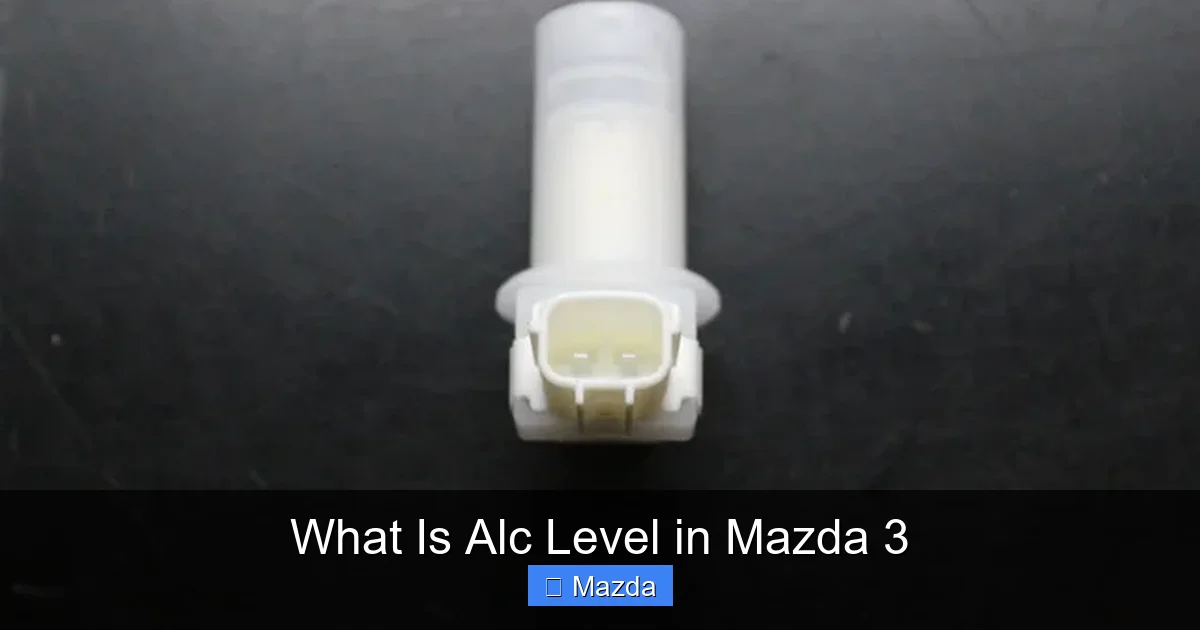
Visual guide about What Is Alc Level in Mazda 3
Image source: s3.amazonaws.com
The Sensor Suite: Eyes and Ears of the System
ALC relies on data from several existing sensors in your Mazda 3’s i-Activsense suite. The most critical is the forward-facing monocular camera, typically mounted near the rearview mirror. This camera continuously scans the road ahead, identifying lane markings, traffic signs, and—most importantly for ALC—the position and type of other vehicles’ lights. It can distinguish between oncoming headlights and preceding red taillights, and it estimates their distance and relative speed. Supplementing the camera is the steering angle sensor, which tells the system exactly how far and how quickly you’re turning the wheel. This is crucial for the cornering illumination function; without it, the system wouldn’t know which way to point the lights. Additionally, the vehicle speed sensor provides data to determine if the car is moving fast enough (usually above 6 mph) for ALC to engage, preventing unnecessary swiveling when parking or crawling in traffic. In some newer 2026 models, Mazda has integrated GPS and navigation map data to predict upcoming curves based on stored map information, allowing the system to pre-emptively adjust the beams even before the steering wheel is turned.
The Brain and Brawn: ECUs and Actuators
All this sensor data streams into the Body Control Module (BCM) or a dedicated Lighting Control Module. This ECU runs sophisticated algorithms that process the inputs in real-time. For cornering, it calculates the desired swivel angle based on steering angle, vehicle speed, and yaw rate. For high-beam management, it uses image processing from the camera to locate other light sources and determine if they pose a glare risk. Once a decision is made, the ECU sends commands to tiny electric actuators mounted on each headlight assembly. These actuators are essentially small, precise motors that physically rotate the headlight’s projector lens or reflector. They can move independently, allowing the left and right headlights to swivel at different angles—for instance, when turning left, the right headlight might swivel more sharply to illuminate the apex of the curve. The actuators also control the internal shade or solenoid that creates the high-beam cutoff pattern for oncoming traffic. This entire cycle—sense, compute, act—happens in a fraction of a second, so fast that you’ll never notice the mechanical movement, only the resulting improved illumination.
Integration with Mazda’s i-Activsense Ecosystem
ALC doesn’t operate in isolation. It’s a key component of Mazda’s broader i-Activsense driver-assistance technology suite. This means it shares data and coordinates with other systems like Adaptive Cruise Control (ACC), Lane Departure Warning (LDW), and Smart City Brake Support. For example, when ACC is active and you’re following a vehicle, ALC can work with the radar data to maintain a consistent, non-dazzling beam pattern. Similarly, if LDW detects you unintentionally drifting out of your lane at night, ALC might subtly adjust the lighting to highlight the lane markings, providing a visual cue. This integration creates a more cohesive and intuitive safety net, where each system enhances the others. In 2026 Mazda 3 models, this integration has deepened, with ALC even communicating with the upcoming Co-Pilot autonomous driving software to anticipate maneuvers from the autonomous system and pre-adjust lighting for optimal visibility during hands-off driving.
Practical Benefits: Why ALC Level Matters for Your Daily Drive
Knowing how ALC works is one thing, but experiencing its benefits is another. For Mazda 3 owners, the ALC Level isn’t just a technical specification—it’s a tangible improvement in confidence and safety during every nighttime journey. Let’s explore the real-world advantages that make this system worth understanding and utilizing.
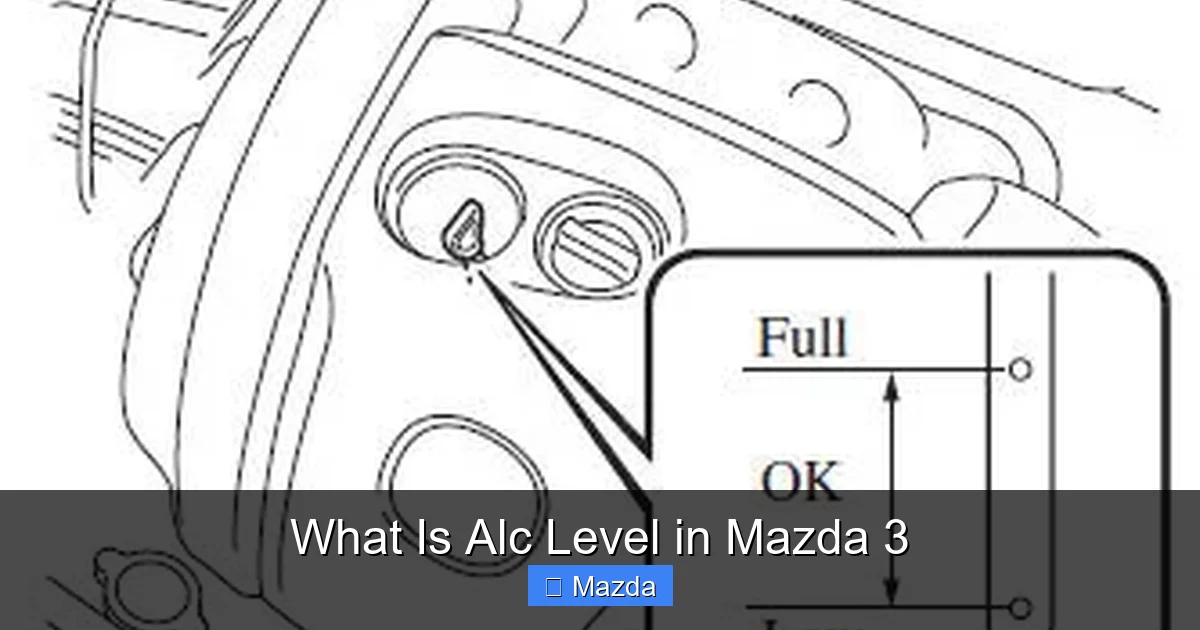
Visual guide about What Is Alc Level in Mazda 3
Image source: mazda3tech.com
Seeing Around Corners: A Game-Changer on Rural Roads
The most immediate and dramatic benefit of ALC is its ability to illuminate curves before you turn. On unlit rural roads or winding mountain passes, this is a literal lifesaver. Without ALC, your headlights only show what’s directly in front of you. As you approach a bend, the road disappears into darkness until you’re mid-turn, giving you little time to react to hazards like fallen branches, potholes, or animals. With ALC active, the headlights swivel as you start to steer, “pointing” where you’re going. This reveals the curve’s path and any obstacles on it earlier, allowing for smoother, safer cornering. Drivers often describe it as the car “looking ahead” for them. For anyone who regularly drives on dark, scenic routes, this feature reduces stress and fatigue, as your eyes no longer have to strain to pierce the darkness ahead of the turn.
Eliminating the “High Beam Flash” Dance
Anyone who drives at night has experienced the awkward ritual of flashing your high beams at an oncoming car to remind them to dim theirs, or quickly switching your own beams off when you see distant headlights. ALC’s adaptive high-beam control automates this polite but critical interaction. The system constantly monitors the road ahead with its camera. The moment it detects an oncoming vehicle’s headlights or a car in your lane ahead, it seamlessly dips your high beams to low, creating a sharp cutoff that prevents glare in the other driver’s eyes. Once that vehicle has passed or you’ve moved far enough ahead, ALC smoothly restores your high beams. This happens without any manual intervention, ensuring you always have the best possible illumination without blinding others. It’s not just about courtesy; it’s about safety for everyone on the road. Studies show that glare from improper high-beam use contributes to nighttime accidents. ALC eliminates that risk entirely.
Enhanced Visibility in Variable Conditions
Beyond curves and oncoming traffic, ALC adapts to other scenarios. In heavy rain, fog, or snow, the system can slightly adjust the beam pattern to reduce backscatter from particles in the air, improving clarity. When following another vehicle on a highway, ALC may create a “tunnel” of light that illuminates your lane without dazzling the driver ahead. It also considers vehicle speed; at lower city speeds, the system may keep the beams more focused and lower to the ground for better close-range illumination, while at highway speeds, it might extend the range and slightly raise the aim to see farther ahead. Some 2026 Mazda 3 models even integrate ALC with the predictive headlight feature, which uses GPS data to anticipate upcoming intersections or stop signs and briefly widen the beam to highlight potential hazards. This level of contextual awareness makes ALC a truly intelligent lighting companion.
Using and Customizing Your ALC Settings
While ALC is designed to work automatically, Mazda gives drivers some control over its behavior. Knowing how to access and adjust these settings ensures the system aligns with your personal preferences and driving habits. The controls are typically found within the Mazda Connect infotainment system’s vehicle settings menu.
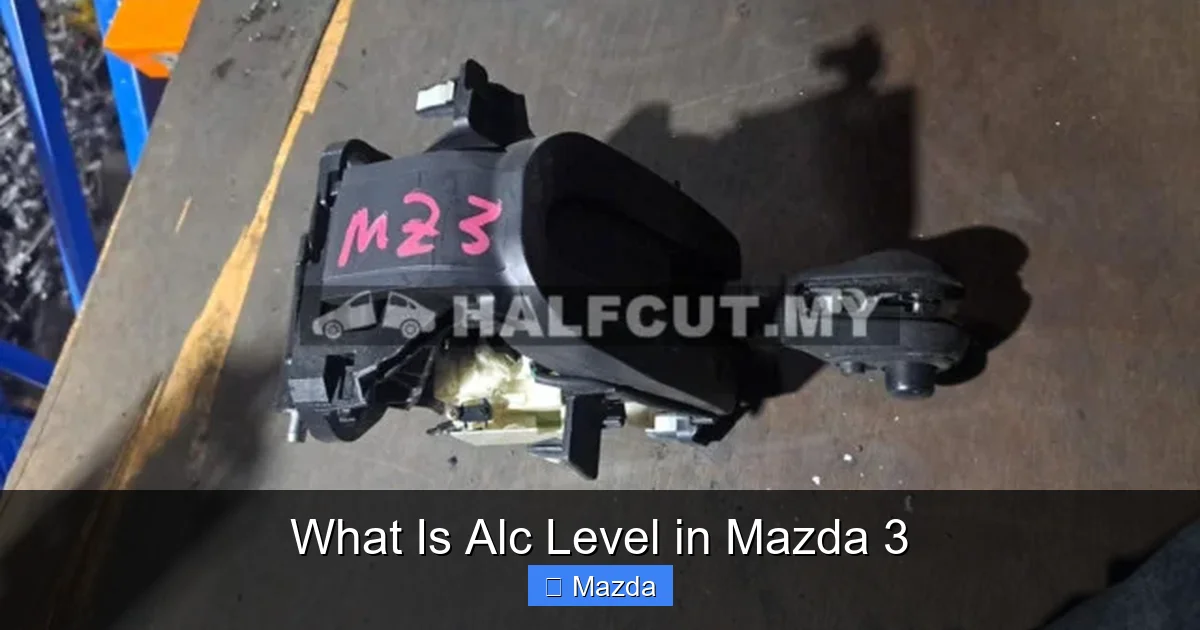
Visual guide about What Is Alc Level in Mazda 3
Image source: halfcut.my
Finding the ALC Menu
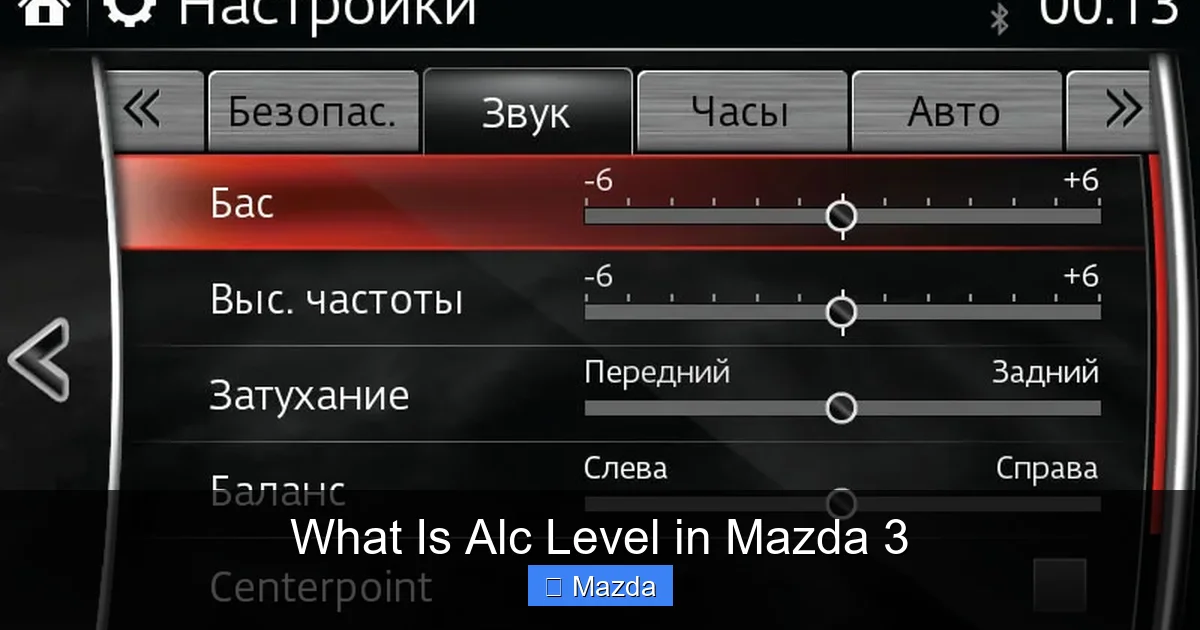
To access ALC settings, start by pressing the COMAND controller (the rotary knob) on the center console. Navigate to Settings (the gear icon), then select Vehicle Settings. From there, look for options like Lighting or Driver Assistance. Depending on your model year and trim, you might see a submenu specifically for Adaptive Lighting or Headlight Settings. Here, you can toggle the entire ALC system on or off, and in some models, adjust its sensitivity or activation speed. For instance, you might be able to set the minimum speed at which cornering illumination engages (e.g., 6 mph vs. 10 mph) or choose how aggressively the system responds to steering input. Not all Mazda 3 trims offer these customizations; base models may have ALC as a non-adjustable, fully automatic feature. Always consult your owner’s manual for the exact menu path for your specific vehicle.
When Might You Turn ALC Off?
While ALC is overwhelmingly beneficial, there are a few niche scenarios where you might want to disable it temporarily. If you’re driving in very dense fog, the swiveling motion of the headlights could potentially scatter light in a way that reduces visibility more than it helps; in such cases, using your low beams manually and keeping them fixed might be better. Similarly, if you’re off-roading in extremely rough terrain where the steering is constantly turning at low speeds, ALC’s constant micro-adjustments could be distracting or unnecessary. Some professional drivers or enthusiasts who prefer absolute control over their vehicle’s every function might also opt to turn it off. However, for the vast majority of drivers, keeping ALC permanently on is the safest and most convenient choice. The system is designed to deactivate itself when it senses conditions where its function would be ineffective or counterproductive, such as during very slow-speed maneuvers.
Understanding ALC Indicator Lights
Your Mazda 3’s dashboard may display small icons related to ALC. A common one is a headlight symbol with curved arrows that illuminates when ALC is active. If you see a warning light—often an exclamation mark inside a headlight icon—it indicates a fault in the system. This could mean a sensor is obstructed, an actuator is stuck, or there’s a communication error with the BCM. When this happens, ALC will typically disable itself, and your headlights will revert to a fixed, non-adaptive mode. Don’t ignore this warning; while your standard headlights will still work, you’ll lose the adaptive benefits until the issue is diagnosed and repaired.
Maintaining and Troubleshooting ALC
Like any sophisticated electronic system, ALC requires minimal but important maintenance to stay in top working order. Most issues stem from physical obstructions or misalignment rather than electronic failure. Here’s how to keep your ALC performing reliably.
Keep Sensors and Cameras Clean
The forward-facing camera is the eyes of ALC’s high-beam function. It’s usually located behind the windshield, near the rearview mirror. Dirt, snow, ice, or even a cracked windshield in that area can block its view, causing ALC to malfunction or disengage. Regularly clean this section of the glass with a soft, non-abrasive cloth. In winter, ensure you clear all ice and snow from around the mirror and camera housing. Similarly, the steering angle sensor is part of the steering column assembly and is generally sealed, but major impacts or steering system repairs can throw off its calibration. If you ever have work done on your steering or suspension, it’s wise to have the ALC system checked for proper calibration.
Headlight Assembly Care
The physical swiveling of the headlights means the projector units must move freely. Over time, debris, road salt, or moisture can get into the headlight housing and jam the actuator mechanism. If you notice your headlights making noise when turning or failing to swivel, it may need cleaning or lubrication by a professional. Also, a severely oxidized or cloudy headlight lens can scatter light so much that the adaptive pattern becomes ineffective. Regularly clean and, if needed, restore your headlight lenses to maintain clarity. When replacing bulbs, ensure you use the correct specification (e.g., HID or LED if equipped) as incorrect bulbs can alter the beam pattern and confuse the ALC system.
Diagnosing Common Problems
If ALC isn’t working, here’s a quick diagnostic checklist:
- Check the basics: Is ALC turned on in the vehicle settings? Are your regular headlights working?
- Look for warnings: Is there an ALC or headlight warning light on your dash?
- Inspect the windshield: Is the area around the rearview mirror clean and undamaged?
- Consider recent repairs: Was the front bumper, grille, or headlight assembly recently removed? This can misalign the headlights or damage wiring to the actuators.
- Test in different conditions: Does ALC work on a dark road but not in city traffic? This might indicate a camera calibration issue.
Most ALC problems require a dealer or specialist with diagnostic tools to check for fault codes in the BCM and to recalibrate the camera and headlight alignment. Don’t attempt to disassemble the headlight yourself, as the internal components are precisely calibrated and sensitive.
The Evolution of ALC: From 2008 to 2026 Mazda 3
The ALC system in your modern Mazda 3 is the result of over a decade of innovation. To appreciate how far it’s come, it’s helpful to look at its history and where it’s headed.
Early Adaptive Lighting in Mazda 3
The first-generation Mazda 3 (2004-2009), including the popular 2008 model, did not offer any form of adaptive headlights. Lighting was static, with high and low beams controlled manually or via a basic auto-on sensor. The second generation (2010-2013) saw Mazda introduce AFS (Adaptive Front Lighting System) in some markets, which was a rudimentary cornering light that used a fixed auxiliary lamp or swiveled the low beam slightly. However, it lacked the camera-based high-beam management and the sophisticated integration of today’s ALC. This is why a 2008 Mazda 3’s value remains relatively modest compared to newer models—its technology is dated, especially in safety features like adaptive lighting. The third generation (2014-2018) brought Mazda’s i-Activsense to the forefront, with ALC becoming more common on higher trims, featuring better swivel ranges and more reliable camera-based high-beam control. By the current fourth generation (2019-present), ALC became a standard or widely available feature, with software refinements making it smoother and more intuitive.
2026 Innovations: Smarter, More Connected
The 2026 Mazda 3 represents a significant leap in ALC capability. Mazda has integrated machine learning algorithms that allow the system to adapt to the driver’s typical routes and steering habits, pre-emptively tuning the swivel response for a more personalized feel. Furthermore, Vehicle-to-Everything (V2X) communication is now optional, enabling the ALC to receive data from infrastructure like smart streetlights or from other equipped vehicles about road geometry or hazards ahead, adjusting the beams before the car even reaches the curve. Another 2026 enhancement is predictive beam shaping using high-resolution navigation maps; the system knows the exact curvature of the road 500 meters ahead and can set the optimal beam width and direction in advance, making cornering illumination even more precise. There’s also a new “Pedestrian Highlight” mode that, when combined with the 360-degree camera system, can momentarily direct a focused pool of light on a pedestrian detected at the roadside, increasing their visibility to you and making them more aware of your vehicle.
ALC in the Era of Autonomous Driving
As Mazda progresses toward higher levels of automation with its upcoming Mazda Co-Pilot system, ALC is evolving from a driver-assist feature to an integral part of the autonomous suite. When the car is in charge of steering, ALC will work in concert with the autonomous driving computer to ensure the vehicle always has optimal illumination for its sensor suite (cameras, lidar, radar) and for any human passengers who might need to take over. In concept, the ALC system will “communicate” with the autonomous planner, saying, “I’m about to turn left in 2 seconds, preparing left-headlight swivel now.” This synergy ensures that even in a self-driving scenario, safety and visibility are maximized. It also means that future ALC systems might have additional modes, like a “conserve energy” setting for electric Mazda 3 models that slightly reduces actuator movement to save battery power, or a “valet mode” that disables swiveling to prevent wear.
Conclusion: Shedding Light on a Smart Feature
The ALC Level in your Mazda 3 is far more than a checkbox on a specification sheet—it’s a daily companion that actively works to make your nighttime driving safer, less stressful, and more intuitive. By automatically pivoting your headlights around bends and managing high beams to avoid glare, it addresses two of the most common and dangerous nighttime driving challenges. As we’ve seen, this system relies on a sophisticated network of sensors, smart software, and precise actuators, all integrated into the broader i-Activsense safety ecosystem. For owners of 2024 and 2025 models, understanding and maintaining ALC is key to enjoying its full benefits. For those looking at the 2026 Mazda 3, ALC represents just one facet of a rapidly advancing suite of technologies that blur the line between driver-assist and autonomous operation. Take a moment to explore your vehicle’s settings menu, locate the ALC controls, and appreciate this clever piece of engineering next time you drive after dark. And while you’re learning about your Mazda’s features, why not dive deeper into its other systems? Our guides on fuel-saving tech like Active Eco or specialized driving modes like Subaru’s X-Mode offer great comparisons to see how different brands approach vehicle optimization. Your Mazda 3 is packed with intelligence—ALC is one of its brightest ideas.
Frequently Asked Questions
What does ALC stand for in the Mazda 3?
ALC stands for Adaptive Lighting Control. It’s the system that automatically adjusts your headlight beams for cornering and oncoming traffic to improve nighttime visibility and safety.
How do I know if my ALC is working?
When ALC is active, a small headlight icon with curved arrows may illuminate on your dash. You can also test it by driving at night on a winding road; the headlights should swivel as you steer. If the beams stay fixed, check your vehicle settings or for any warning lights.
Can I turn off the ALC system?
Yes, in most Mazda 3 models you can disable ALC through the infotainment system’s Vehicle Settings menu. However, Mazda recommends keeping it on for optimal safety, as it’s designed to operate seamlessly in the background.
Does ALC work in bad weather like heavy rain or fog?
ALC will still function mechanically, but heavy precipitation can scatter light and reduce overall effectiveness. The system may also be less effective if the forward-facing camera is obstructed by water, snow, or dirt on the windshield.
Will using ALC drain my car’s battery faster?
No. ALC only operates when the headlights are on and the vehicle is running. Its power draw is minimal and managed by the car’s electrical system, so it won’t significantly impact battery life or fuel efficiency.
Is ALC the same as auto high beams?
No. Auto high beams simply toggle between high and low beams based on ambient light and oncoming traffic. ALC goes further by physically swiveling the headlights to illuminate curves and creating nuanced beam patterns, not just switching beams on and off.