
What Is 50-state Emissions on Toyota Vehicles?

50-state emissions on Toyota vehicles means the car meets strict environmental standards in all 50 U.S. states, including California’s tougher rules. This ensures cleaner air, better fuel efficiency, and broader resale value—no matter where you live or travel.
When you’re shopping for a new or used Toyota, you might come across the term “50-state emissions” on window stickers, brochures, or online listings. At first glance, it might seem like just another technical label—but it actually carries significant meaning for both the environment and your ownership experience. Understanding what 50-state emissions means can help you make a smarter, more informed decision when choosing your next vehicle.
So, what exactly does “50-state emissions” mean? Simply put, it indicates that a Toyota vehicle meets the strictest emissions standards across all 50 U.S. states—including California, which has its own, more rigorous environmental regulations. Unlike some vehicles that are only certified for 49 states (excluding California and those that follow its rules), 50-state emissions models are designed to comply with the toughest standards nationwide. This ensures that no matter where you live—whether it’s Los Angeles, Denver, or Miami—you can legally register and drive the vehicle without hassle.
But this isn’t just about legality. Choosing a 50-state emissions Toyota often means you’re getting a cleaner, more efficient, and more future-proof vehicle. These models typically feature advanced engineering to reduce harmful pollutants, improve fuel economy, and support long-term sustainability. Whether you’re concerned about air quality, resale value, or simply want peace of mind knowing your car meets the highest standards, 50-state emissions certification is a strong indicator of quality and compliance.
Key Takeaways
- 50-state emissions means full U.S. compliance: These Toyota models meet the strictest emissions standards, including California’s, so they can be sold and registered anywhere in the country.
- Cleaner for the environment: Vehicles with 50-state emissions certification produce fewer harmful pollutants like nitrogen oxides (NOx) and carbon monoxide (CO), helping reduce smog and air pollution.
- Better long-term value: Because they’re legal in all states, these Toyotas often have higher resale value and are easier to sell or transfer across state lines.
- More advanced technology: To meet strict standards, Toyota uses advanced engine controls, catalytic converters, and onboard diagnostics (OBD) systems in 50-state models.
- Not all models are 50-state compliant: Some performance or specialty trims may only meet 49-state (federal) standards, so always check the emissions label under the hood.
- Hybrid and electric models often exceed requirements: Many Toyota hybrids and EVs are designed to surpass 50-state standards, offering ultra-low emissions and excellent fuel economy.
- Important for buyers in strict states: If you live in California, New York, or other states that follow CARB rules, you’ll need a 50-state emissions vehicle to register your car legally.
📑 Table of Contents
Understanding Emissions Standards in the U.S.
To truly grasp what 50-state emissions means, it helps to understand the broader landscape of vehicle emissions regulations in the United States. The Environmental Protection Agency (EPA) sets federal emissions standards that apply across the country. These rules limit the amount of pollutants—such as carbon monoxide, nitrogen oxides, hydrocarbons, and particulate matter—that vehicles can emit. However, the Clean Air Act allows individual states to adopt stricter standards if they choose.
California is the only state with the legal authority to set its own emissions rules, thanks to a special waiver granted by the EPA. Because of its long history of air quality challenges—especially in cities like Los Angeles—California has developed some of the toughest vehicle emissions standards in the world. Over time, other states have opted to follow California’s lead. Currently, more than a dozen states—including New York, Massachusetts, Vermont, Maine, Washington, Oregon, and several others—have adopted California’s standards through the California Air Resources Board (CARB).
This creates a two-tier system: vehicles that meet only federal (49-state) standards and those that meet California’s stricter (50-state) standards. When a Toyota is labeled as “50-state emissions,” it means the vehicle has been engineered and tested to comply with both federal and California-level regulations. As a result, it can be legally sold and registered in any state—even those with the most demanding environmental requirements.
Why California Sets the Bar Higher
California’s leadership in emissions regulation stems from its unique geography and population density. Surrounded by mountains and home to some of the nation’s largest urban areas, the state has long struggled with smog and poor air quality. In response, California began regulating vehicle emissions as early as the 1960s—long before the federal government stepped in. Today, the California Air Resources Board (CARB) continues to push the envelope, requiring automakers to produce cleaner vehicles, promote zero-emission technologies, and reduce greenhouse gas emissions.
Because of this, vehicles that meet California’s standards are often more technologically advanced than their 49-state counterparts. They may include enhanced catalytic converters, more precise fuel injection systems, improved exhaust gas recirculation (EGR), and sophisticated onboard diagnostics (OBD) that monitor emissions in real time. These features not only help reduce pollution but also improve engine performance and fuel efficiency.
Federal vs. California Standards: What’s the Difference?
The difference between federal (49-state) and California (50-state) emissions standards comes down to stringency. California’s rules are generally more restrictive, especially for pollutants like nitrogen oxides (NOx) and non-methane organic gases (NMOG). For example, a 50-state emissions vehicle might be allowed to emit 0.02 grams per mile of NOx, while a 49-state model could emit up to 0.03 grams per mile—a seemingly small difference, but one that adds up across millions of vehicles.
Additionally, California requires automakers to offer a certain percentage of zero-emission vehicles (ZEVs), such as battery electric vehicles (BEVs) and hydrogen fuel cell vehicles. While this doesn’t directly affect every Toyota model, it influences the overall engineering strategy. Toyota, for instance, has invested heavily in hybrid and electric technology—partly to meet California’s ZEV mandate and partly to stay competitive in a changing market.
How Toyota Designs Vehicles for 50-State Compliance
Visual guide about What Is 50-state Emissions on Toyota Vehicles?
Image source: mag.toyota.co.uk
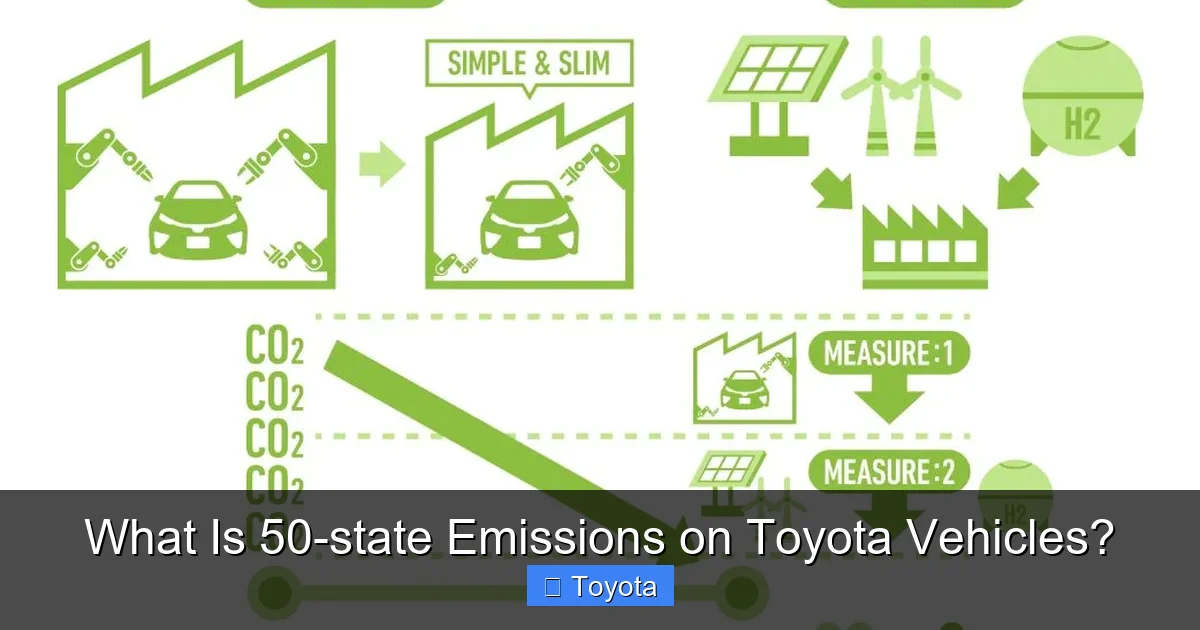
Toyota takes emissions compliance seriously. As one of the world’s largest automakers, the company has a strong incentive to ensure its vehicles can be sold in all 50 states—especially since California is one of its largest markets. To meet 50-state emissions standards, Toyota engineers its vehicles with a combination of advanced technologies, rigorous testing, and ongoing refinement.
One of the key strategies Toyota uses is platform standardization. Many of its popular models—like the Camry, RAV4, and Corolla—are designed from the ground up to meet 50-state standards. This means that whether you buy a hybrid or gasoline-powered version, the engine, exhaust system, and emissions controls are optimized for the strictest regulations. This approach simplifies production, reduces costs, and ensures consistency across the lineup.
Advanced Engine and Exhaust Systems
At the heart of 50-state emissions compliance is the engine. Toyota uses highly efficient, low-emission engines that are tuned to burn fuel more cleanly. For example, many of its four-cylinder engines feature direct fuel injection, variable valve timing (VVT-i), and high compression ratios—all of which improve combustion efficiency and reduce unwanted emissions.
The exhaust system is equally important. Toyota equips 50-state models with high-performance catalytic converters that convert harmful gases into less harmful substances like carbon dioxide and water vapor. These converters are often made with precious metals like platinum, palladium, and rhodium, which act as catalysts to speed up chemical reactions. In some models, Toyota uses dual catalytic converters or advanced three-way catalysts to further reduce emissions.
Another key component is the exhaust gas recirculation (EGR) system. This system redirects a small portion of exhaust gases back into the engine’s combustion chamber, lowering combustion temperatures and reducing the formation of nitrogen oxides (NOx)—one of the primary contributors to smog.
Onboard Diagnostics (OBD) and Real-Time Monitoring
Modern Toyota vehicles with 50-state emissions certification are equipped with advanced onboard diagnostics (OBD-II) systems. These systems continuously monitor the performance of the engine, fuel system, and emissions controls. If a problem is detected—such as a faulty oxygen sensor or a failing catalytic converter—the OBD system triggers a warning light on the dashboard (usually the “Check Engine” light) and stores a diagnostic trouble code (DTC).
This real-time monitoring is crucial for maintaining emissions compliance. It ensures that the vehicle continues to operate within legal limits throughout its lifespan, not just when it leaves the factory. It also helps mechanics quickly identify and fix issues during routine maintenance or inspections.
Hybrid and Electric Innovations
Toyota has been a pioneer in hybrid technology, and its 50-state emissions models often benefit from these innovations. The Toyota Hybrid System (THS), used in vehicles like the Prius, Camry Hybrid, and RAV4 Hybrid, combines a gasoline engine with an electric motor to maximize efficiency and minimize emissions. In many driving conditions—especially stop-and-go city traffic—the vehicle runs entirely on electric power, producing zero tailpipe emissions.
Even Toyota’s plug-in hybrids (like the Prius Prime) and fully electric vehicles (like the bZ4X) are designed with 50-state compliance in mind. These models often exceed emissions standards, earning them recognition as ultra-low-emission vehicles (ULEVs) or even zero-emission vehicles (ZEVs) in certain configurations.
Benefits of Choosing a 50-State Emissions Toyota
Visual guide about What Is 50-state Emissions on Toyota Vehicles?
Image source: jordistireshop.com
Opting for a Toyota with 50-state emissions certification offers several advantages—beyond just meeting legal requirements. Whether you’re buying new or used, this designation can impact your driving experience, environmental footprint, and long-term ownership costs.
Legal Flexibility Across State Lines
One of the most practical benefits is the ability to register and drive your vehicle anywhere in the U.S. If you move from a state with lax emissions standards to one that follows California’s rules—like New York or Washington—you won’t face registration issues. This is especially important for military families, remote workers, or anyone who relocates frequently.
Even if you don’t plan to move, knowing your Toyota is 50-state compliant gives you peace of mind. You can take road trips across the country without worrying about whether your car will be allowed in certain states. It also simplifies the process of selling or transferring ownership, as the vehicle will be acceptable to buyers nationwide.
Improved Air Quality and Environmental Impact
By choosing a 50-state emissions Toyota, you’re making a positive contribution to air quality. These vehicles emit fewer harmful pollutants, which helps reduce smog, acid rain, and respiratory health issues. According to the EPA, transportation accounts for nearly 30% of greenhouse gas emissions in the U.S.—so every cleaner vehicle on the road makes a difference.
Toyota’s commitment to 50-state standards also supports broader environmental goals. The company has pledged to achieve carbon neutrality across its operations and vehicle lifecycle by 2050. Vehicles that meet strict emissions standards are a key part of that strategy.
Higher Resale Value and Market Appeal
Because 50-state emissions vehicles are legal in all states, they tend to have broader market appeal and higher resale value. A used Toyota with 50-state certification is more attractive to buyers in California, the Northeast, and the Pacific Northwest—regions where emissions compliance is a major concern.
Additionally, these vehicles often come with advanced features and better fuel economy, which further boost their value. For example, a 2023 Toyota RAV4 Hybrid with 50-state emissions might retain 60–70% of its value after three years, compared to 50–60% for a similar 49-state model.
Better Fuel Efficiency and Lower Operating Costs
Many 50-state emissions Toyotas are engineered for optimal fuel efficiency. Cleaner combustion, reduced friction, and hybrid technology all contribute to better miles per gallon (MPG). For example, the 2024 Toyota Camry Hybrid achieves up to 52 MPG in the city—thanks in part to its emissions-compliant design.
Over time, this translates to significant savings at the pump. If you drive 15,000 miles per year and save just $0.10 per gallon, you could save over $200 annually. Multiply that over five years, and the savings add up.
How to Identify a 50-State Emissions Toyota
Visual guide about What Is 50-state Emissions on Toyota Vehicles?
Image source: jordistireshop.com
Not all Toyota models are created equal when it comes to emissions. While most mainstream vehicles are built to 50-state standards, some performance trims, specialty editions, or older models may only meet 49-state (federal) requirements. So how can you tell the difference?
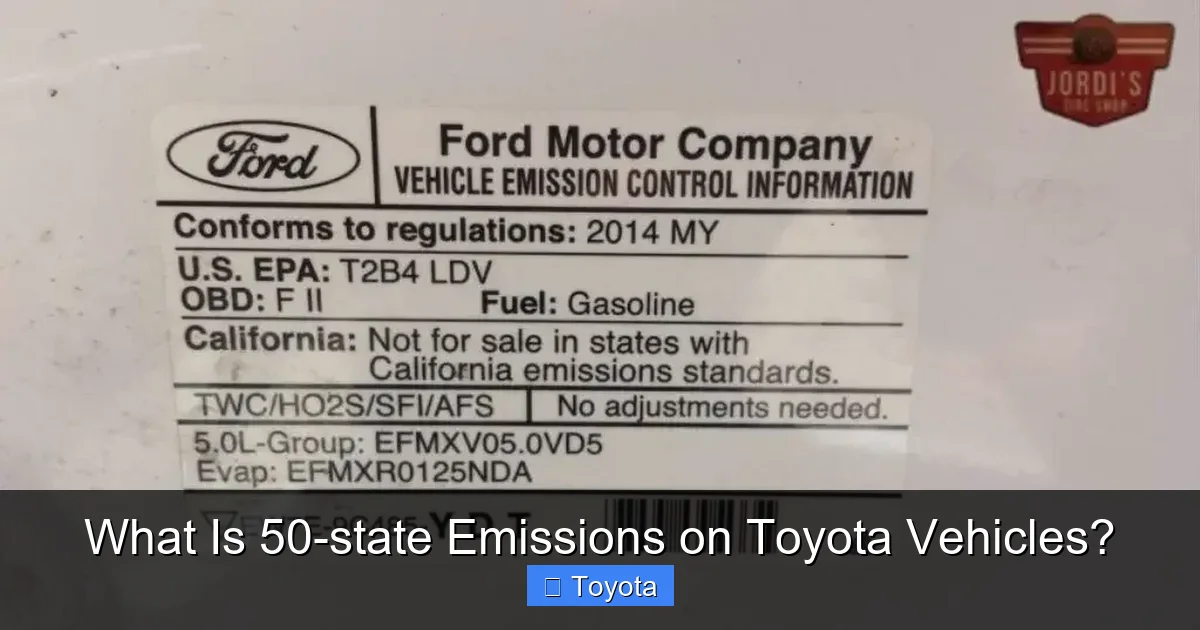
Check the Emissions Label Under the Hood
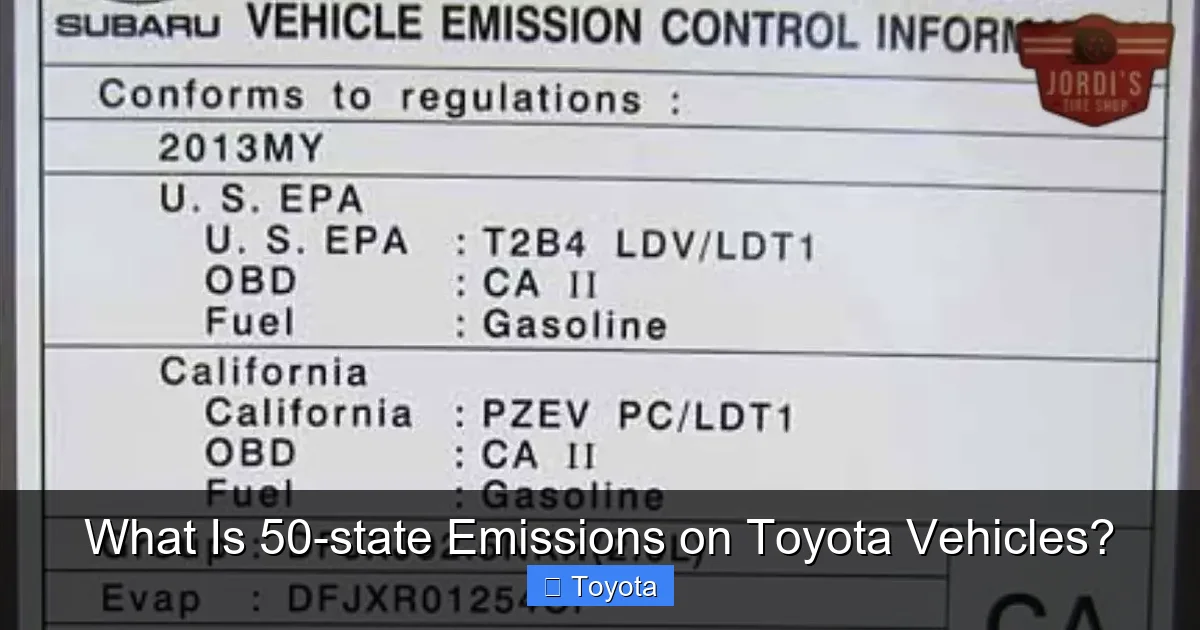
The easiest way to confirm emissions compliance is to look at the emissions certification label, usually located on the underside of the hood or on the radiator support. This label lists the vehicle’s emissions standard, such as “Tier 3 Bin 30” or “LEV III ULEV.” If it says “50-State” or “CARB Compliant,” you’re good to go.
For example, a 2024 Toyota Highlander might have a label that reads: “This vehicle conforms to U.S. EPA and California regulations for 2024 model year vehicles.” That’s a clear sign it’s 50-state compliant.
Review the Monroney Sticker (Window Sticker)
New Toyota vehicles come with a Monroney sticker—the official window sticker that includes pricing, features, and fuel economy. Look for a section labeled “Emissions” or “Environmental Performance.” It should indicate whether the vehicle meets 50-state standards.
You can also check the EPA’s Fuel Economy website (fueleconomy.gov) and enter the vehicle’s make, model, and year. The site will show emissions ratings and whether the car is certified for all 50 states.
Ask the Dealer or Seller
If you’re buying from a dealership or private seller, don’t hesitate to ask about emissions compliance. Reputable sellers should be able to provide documentation or point you to the correct label. For used vehicles, you can also request a vehicle history report (like Carfax or AutoCheck), which may include emissions test results.
Use Toyota’s Online Tools
Toyota’s official website offers a vehicle configurator and model comparison tool. When browsing specific trims, look for notes about emissions standards. Many hybrid and electric models will highlight their 50-state compliance as a selling point.
Common Misconceptions About 50-State Emissions
Despite its importance, “50-state emissions” is often misunderstood. Let’s clear up some common myths so you can make informed decisions.
Myth: All Toyotas Are 50-State Compliant
While most Toyota models are designed for 50-state compliance, not all are. Some high-performance variants—like certain TRD (Toyota Racing Development) packages—may only meet 49-state standards due to modifications that increase power but also emissions. Always verify the specific trim and model year.
Myth: 50-State Means Zero Emissions
50-state emissions doesn’t mean the vehicle produces no emissions—just that it meets the strictest legal limits. Even the cleanest gasoline-powered Toyota still emits some pollutants. True zero emissions come from fully electric vehicles (like the bZ4X) or hydrogen fuel cell vehicles (like the Mirai).
Myth: It Only Matters in California
While California is the originator of strict standards, over a dozen other states follow its rules. If you live in or plan to visit any of these states, 50-state compliance is essential. Even in states with looser rules, choosing a cleaner vehicle benefits public health and the environment.
Myth: It Costs Significantly More
In most cases, the price difference between 49-state and 50-state models is minimal—often just a few hundred dollars. Given the long-term benefits in resale value, fuel savings, and peace of mind, it’s usually worth the small premium.
The Future of Emissions Standards and Toyota’s Role
As climate change and air quality concerns grow, emissions standards are expected to become even stricter. The Biden administration has proposed new rules that would require even lower emissions from new vehicles by 2032. At the same time, states like California are moving toward banning the sale of new gasoline-powered cars by 2035.
Toyota is preparing for this shift. The company continues to invest in hybrid, plug-in hybrid, battery electric, and hydrogen fuel cell technologies. While it has been slower than some competitors to embrace full electrification, Toyota’s strategy focuses on offering a range of low-emission options to meet diverse consumer needs.
Many of Toyota’s future models—especially in the SUV and truck segments—will likely be designed with 50-state emissions as the baseline. This ensures they remain viable in all markets, regardless of regulatory changes.
Toyota’s Commitment to Sustainability
Beyond vehicle design, Toyota is working to reduce emissions across its entire supply chain. The company has set goals to use 100% renewable energy in its manufacturing plants and to recycle or reuse 95% of its vehicle materials. These efforts support the broader mission of creating a more sustainable transportation ecosystem.
What This Means for Consumers
For buyers, the future looks bright. As emissions standards tighten, 50-state compliance will become the norm rather than the exception. This means cleaner air, more efficient vehicles, and greater flexibility for drivers across the country. Choosing a Toyota with 50-state emissions today is a smart step toward a greener tomorrow.
In conclusion, “50-state emissions” on Toyota vehicles isn’t just a regulatory checkbox—it’s a mark of quality, innovation, and responsibility. Whether you’re buying a hybrid sedan, a rugged SUV, or an electric crossover, choosing a 50-state compliant model ensures you’re getting a vehicle that’s built to last, built to perform, and built for the future.
Frequently Asked Questions
What does 50-state emissions mean on a Toyota?
50-state emissions means the Toyota vehicle meets the strictest emissions standards in all 50 U.S. states, including California’s tougher rules. This ensures the car can be legally registered and driven anywhere in the country.
Is a 50-state emissions Toyota better for the environment?
Yes. These vehicles produce fewer harmful pollutants like nitrogen oxides and carbon monoxide, helping reduce smog and improve air quality. Many also offer better fuel efficiency, further lowering their environmental impact.
Can I register a 49-state emissions Toyota in California?
No. California and states that follow its standards require vehicles to meet 50-state emissions certification. A 49-state model would not be eligible for registration in these areas.
Are all Toyota hybrids 50-state compliant?
Most Toyota hybrids are designed to meet 50-state standards, but it’s always best to check the emissions label under the hood or consult the window sticker to confirm.
Does 50-state emissions affect fuel economy?
Often, yes. Vehicles built to meet strict emissions standards typically use advanced engine and fuel technologies that improve combustion efficiency, resulting in better miles per gallon.
Will 50-state emissions become the standard for all new cars?
It’s likely. As more states adopt California’s rules and federal regulations tighten, 50-state compliance is expected to become the norm for new vehicles nationwide.