

What Does the “4” Mean on a Dodge Charger?

Contents
- 1 Key Takeaways
- 2 📑 Table of Contents
- 3 What Does the “4” Mean on a Dodge Charger?
- 4 A Brief History of the Dodge Charger
- 5 Engine and Performance: What’s Under the Hood?
- 6 Trim Levels and the “4” Badge
- 7 Why Did Dodge Stop Using the “4” Badge?
- 8 How to Identify a “4” Charger Today
- 9 Practical Tips for Buyers and Owners
- 10 The Legacy of the “4” Badge
- 11 Conclusion
- 12 Frequently Asked Questions

Car Mud Flaps (Universal)

Car Trash Can
Reflective Safety Triangle

Side Mirror Rain Guard
The “4” on a Dodge Charger doesn’t refer to four cylinders or four-wheel drive. Instead, it’s a model designation tied to specific trim levels and engine configurations, often signaling a balance of power, technology, and style. Understanding this badge helps buyers make smarter choices.
Key Takeaways
- The “4” is not about engine cylinders: Despite common assumptions, the “4” does not mean the car has a four-cylinder engine. Most Chargers with this badge still feature V6 or V8 powertrains.
- It refers to trim level and model year: The “4” typically appears on certain trims like the SXT or GT, especially in earlier model years, to denote a specific configuration or package.
- Common on 2011–2014 models: The “4” badge was most frequently used on Chargers from 2011 to 2014, particularly on rear-wheel-drive V6 models.
- No relation to all-wheel drive: Unlike some other brands, Dodge does not use “4” to indicate four-wheel or all-wheel drive. AWD models are clearly labeled as such.
- Part of Dodge’s naming evolution: The use of “4” reflects Dodge’s strategy during the early 2010s to differentiate trims and appeal to buyers seeking performance without the full Hellcat price tag.
- Can affect resale value and parts: Knowing what the “4” means helps when shopping used, as it impacts maintenance, insurance, and aftermarket support.
- Modern Chargers dropped the “4” badge: Since around 2015, Dodge phased out the “4” emblem in favor of clearer trim names like GT, R/T, and Scat Pack.
📑 Table of Contents
- What Does the “4” Mean on a Dodge Charger?
- A Brief History of the Dodge Charger
- Engine and Performance: What’s Under the Hood?
- Trim Levels and the “4” Badge
- Why Did Dodge Stop Using the “4” Badge?
- How to Identify a “4” Charger Today
- Practical Tips for Buyers and Owners
- The Legacy of the “4” Badge
- Conclusion
What Does the “4” Mean on a Dodge Charger?
If you’ve ever spotted a Dodge Charger with a bold “4” badge on the rear decklid, you might have wondered—what does that number actually mean? Is it a sign of four cylinders? Four-wheel drive? Or something else entirely? You’re not alone. Many car enthusiasts, buyers, and even some mechanics have scratched their heads over this mysterious emblem.
The short answer? The “4” on a Dodge Charger doesn’t stand for engine size or drivetrain. Instead, it’s a model designation used primarily during the early 2010s to identify specific trim levels and configurations. While it may look like a performance badge or a nod to mechanical specs, it’s more about marketing and trim differentiation than raw power or technology.
In this guide, we’ll dive deep into the history, meaning, and significance of the “4” badge on the Dodge Charger. Whether you’re shopping for a used Charger, restoring a classic, or just curious about automotive badges, this article will give you the full story—no decoder ring required.
A Brief History of the Dodge Charger

Visual guide about What Does the “4” Mean on a Dodge Charger?
Image source: docharger.org
Before we decode the “4,” it helps to understand the Charger’s legacy. The Dodge Charger first roared onto the scene in 1966 as a fastback muscle car designed to compete with the Ford Mustang and Chevrolet Camaro. Over the decades, it evolved through multiple generations, from the iconic 1969 Charger R/T to the modern four-door performance sedan we know today.
The modern Charger, introduced in 2006, brought back the nameplate with a bold, aggressive design and serious horsepower under the hood. It quickly became a favorite among performance lovers, law enforcement, and pop culture icons—thanks in part to its starring role in the *Fast & Furious* franchise.
By the early 2010s, Dodge was refining the Charger lineup to appeal to a broader audience. They introduced new trims, updated interiors, and experimented with badging to help buyers distinguish between models. This is where the “4” badge entered the picture.
The Rise of the “4” Badge (2011–2014)
The “4” emblem first appeared on Dodge Chargers around 2011, coinciding with a major redesign of the vehicle. This generation, known as the LD platform, featured sleeker styling, improved fuel efficiency, and a more refined driving experience. Dodge used the “4” badge to highlight certain trims—particularly the SXT and GT models—that offered a balance of performance, comfort, and value.
These models typically came equipped with the 3.6-liter Pentastar V6 engine, producing around 292 to 300 horsepower. While not as thunderous as the V8-powered R/T or SRT models, the V6 Chargers were still quick, handling well and offering a more fuel-efficient option for daily driving.
The “4” badge was Dodge’s way of signaling that this was a modern, capable Charger—without the full muscle car price tag. It wasn’t about engine count or drivetrain; it was about positioning the car as a smart, sporty choice for buyers who wanted style and performance without going full-throttle.
Why “4”? The Marketing Logic
So why the number “4”? There’s no official statement from Dodge explaining the choice, but industry experts and car historians have a few theories.
One popular idea is that “4” represents the four-door configuration of the Charger. Unlike the two-door muscle cars of the past, the modern Charger is a practical sedan with four doors—making it more family-friendly and versatile. By using the “4” badge, Dodge may have been emphasizing this shift toward everyday usability without sacrificing performance.
Another theory ties the “4” to the car’s model year or generation. The LD platform Charger debuted in 2006, but the 2011 refresh marked a significant update—some even consider it a new generation. The “4” could symbolize the fourth iteration of the Charger nameplate, though this is speculative.
Regardless of the exact reasoning, the “4” badge served a clear purpose: to help buyers quickly identify a specific type of Charger—one that was sporty, modern, and accessible.
Engine and Performance: What’s Under the Hood?
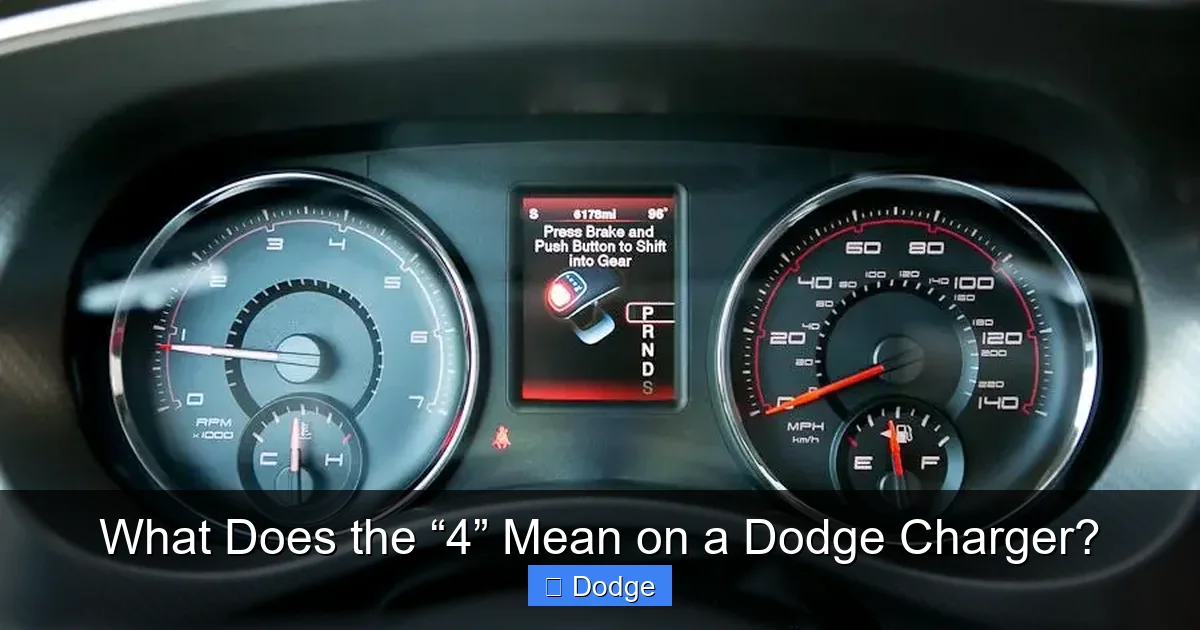
Visual guide about What Does the “4” Mean on a Dodge Charger?
Image source: cstatic-images.com
Now, let’s clear up a major misconception: the “4” does not mean the Charger has a four-cylinder engine. In fact, every Charger with a “4” badge during this era came with either a V6 or, in rare cases, a V8.
The 3.6L Pentastar V6: The Heart of the “4”
The most common engine found in “4”-badged Chargers is the 3.6-liter Pentastar V6. This engine was a cornerstone of Chrysler’s lineup during the 2010s, known for its smooth power delivery, reliability, and decent fuel economy.
Producing between 292 and 300 horsepower (depending on the model year and tuning), the V6 Charger could accelerate from 0 to 60 mph in about 6.5 to 7 seconds. That’s not neck-snapping speed, but it’s more than enough for highway merging, spirited driving, and daily commuting.
The V6 also offered better fuel efficiency than the V8 models, averaging around 19 mpg in the city and 31 mpg on the highway. For buyers who wanted the Charger’s aggressive looks without the gas-guzzling reputation, the “4” badge was a green light.
Rare V8 Appearances
While rare, some “4”-badged Chargers did come with V8 engines—particularly in later model years or special editions. For example, certain R/T models with the 5.7-liter HEMI V8 (370 hp) retained the “4” emblem, possibly due to trim packaging or dealer customization.
However, these were exceptions, not the rule. Most “4” Chargers were V6-powered, and the badge was not used to indicate engine type.
Transmission and Drivetrain
All “4”-badged Chargers from this era came with rear-wheel drive (RWD) and an 8-speed automatic transmission. This setup provided a balanced driving experience, with responsive shifting and good traction.
It’s important to note that the “4” does not mean all-wheel drive (AWD). Dodge used separate badging for AWD models, often labeled as “AWD” or “All-Wheel Drive.” If you see a Charger with a “4” and AWD, it’s likely a later model or a custom badge job.
Trim Levels and the “4” Badge
To truly understand the “4,” you need to look at the trim levels it appeared on. During the 2011–2014 period, Dodge offered several Charger trims, each with different features, engines, and price points.
SXT and GT: The “4” Sweet Spot
The “4” badge was most commonly found on the SXT and GT trims. These models were designed to be the entry-level and mid-range options, offering a blend of performance, technology, and affordability.
– SXT: The base model, often equipped with the 3.6L V6, cloth seats, and basic infotainment. The “4” badge helped distinguish it from the more basic SE trim (which didn’t have the badge).
– GT: A step up from the SXT, the GT added sportier styling, upgraded suspension, and available AWD. Some GT models also carried the “4” badge, especially in earlier years.
The “4” served as a visual cue that these trims were more performance-oriented than the base SE, but not as extreme as the R/T or SRT models.
R/T and SRT: No “4” Here
Higher-performance trims like the R/T (with the 5.7L HEMI V8) and SRT (with the 6.1L or 6.4L HEMI) did not use the “4” badge. Instead, they featured their own distinct badging—R/T, SRT, or SRT8—to emphasize their muscle car credentials.
This further confirms that the “4” was not about power or engine size, but about trim positioning.
Special Editions and Custom Badges
Some dealerships or owners added “4” badges to non-“4” models as a customization. This was especially common in regions where the badge was popular or misunderstood. Always check the VIN and build sheet to confirm the original trim and engine.
Why Did Dodge Stop Using the “4” Badge?
By 2015, the “4” badge began to disappear from the Charger lineup. There are a few reasons for this shift.
Trim Simplification
Dodge streamlined its naming convention in the mid-2010s. Instead of using numerical badges like “4,” they leaned into clearer trim names: SXT, GT, R/T, Scat Pack, and Hellcat. This made it easier for buyers to understand what they were getting.
For example, the GT trim—formerly associated with the “4”—became a standalone performance-oriented model with available AWD and sport-tuned suspension. The “4” was no longer needed to signal its capabilities.
Focus on Performance Branding
As the Charger evolved, Dodge leaned harder into its performance identity. The introduction of the 707-horsepower Hellcat in 2015 shifted the brand’s image toward extreme power and speed. Numerical badges like “4” didn’t fit that narrative.
Instead, Dodge emphasized horsepower numbers, “Scat Pack” branding, and “Hellcat” logos to attract performance enthusiasts.
Consumer Confusion
Despite its marketing intent, the “4” badge caused confusion. Many buyers assumed it meant four cylinders or four-wheel drive, leading to misunderstandings at dealerships and online forums.
By removing the badge, Dodge reduced confusion and made the lineup more intuitive.
How to Identify a “4” Charger Today
If you’re shopping for a used Charger and spot a “4” badge, here’s how to verify what you’re looking at.
Check the Model Year
The “4” badge was primarily used from 2011 to 2014. If the car is a 2015 or newer model, the badge is likely aftermarket or misapplied.
Review the Trim and Engine
Use the VIN decoder (available on Dodge’s website or third-party tools) to confirm the original trim and engine. Most “4” Chargers will show:
– Trim: SXT or GT
– Engine: 3.6L V6
– Drivetrain: RWD (unless AWD was optioned)
Look for Other Badging
Check for additional badges like “SXT,” “GT,” or “AWD.” The presence of these can help confirm the car’s identity.
Inspect the Interior and Features
“4” Chargers typically came with cloth or optional leather seats, Uconnect infotainment, and standard safety features. Higher trims like R/T or SRT will have performance seats, upgraded audio, and more aggressive styling.
Practical Tips for Buyers and Owners
Whether you’re buying a used Charger or already own one with a “4” badge, here are some practical tips.
For Buyers: What to Watch For
– Don’t assume it’s a V6: While most are, verify the engine to avoid surprises.
– Check for AWD: If you need all-wheel drive, confirm it’s equipped—don’t rely on the “4” badge.
– Research common issues: Early 2010s Chargers had some transmission and electrical quirks. Get a pre-purchase inspection.
– Compare trims: A “4” Charger may be a great value, but make sure it has the features you want.
For Owners: Maintaining Your “4” Charger
– Stick to the maintenance schedule: The 3.6L V6 is reliable, but regular oil changes and fluid checks are key.
– Upgrade wisely: The “4” Charger responds well to cold air intakes, exhaust upgrades, and ECU tuning.
– Preserve the badge: If you love the “4” emblem, keep it clean and consider a custom paint job to make it stand out.
The Legacy of the “4” Badge
Though no longer in use, the “4” badge remains a nostalgic symbol of a transitional period in Dodge’s history. It represents a time when the Charger was evolving from a pure muscle car into a modern performance sedan—one that could balance power, practicality, and style.
For collectors and enthusiasts, a “4”-badged Charger is a piece of automotive history. It’s a reminder of when Dodge was experimenting with branding, trying to appeal to a new generation of drivers who wanted excitement without excess.
Today, the Charger continues to evolve—with the upcoming electric Charger Daytona signaling a bold new direction. But for those who remember the “4,” it will always stand for a unique moment in time: when a number on a trunk meant more than just engine specs. It meant possibility.
Conclusion
So, what does the “4” mean on a Dodge Charger? It’s not about cylinders, drivetrain, or horsepower. Instead, it’s a trim-level designation used primarily on 2011–2014 SXT and GT models with the 3.6L V6 engine. The badge helped Dodge differentiate these sporty, accessible Chargers from the base SE and the high-performance R/T and SRT trims.
While the “4” is no longer used, its legacy lives on in the cars that wear it. Understanding its meaning helps buyers make informed decisions, appreciate the Charger’s evolution, and avoid common misconceptions.
Whether you’re cruising in a “4”-badged Charger or just admiring one at a car show, now you know the story behind the badge. And that’s something worth celebrating.
Frequently Asked Questions
Does the “4” on a Dodge Charger mean it has a four-cylinder engine?
No, the “4” does not indicate a four-cylinder engine. Most Chargers with this badge are equipped with a 3.6-liter V6 engine. The badge refers to trim level, not engine size.
Does the “4” mean the Charger has all-wheel drive?
No, the “4” does not signify all-wheel drive. AWD models are labeled separately. The “4” badge was used on both RWD and AWD versions, depending on the trim and options.
Which model years had the “4” badge?
The “4” badge was most common on Dodge Chargers from 2011 to 2014, particularly on SXT and GT trims. It was phased out around 2015 as Dodge simplified its trim naming.
Can a “4” Charger have a V8 engine?
It’s rare, but possible. Some R/T models with the 5.7L HEMI V8 retained the “4” badge due to trim packaging or dealer customization. Always verify the engine using the VIN.
Is the “4” badge valuable or collectible?
While not highly collectible, the “4” badge represents a specific era of the Charger. Enthusiasts may appreciate its nostalgic value, especially on well-maintained 2011–2014 models.
Should I avoid a Charger with a “4” badge?
Not at all. “4” Chargers are reliable, fun to drive, and often more affordable than V8 models. Just make sure it has the features and condition you want before buying.


