
What Does Check Rear Seat Mean in a Toyota?

If you’ve seen the “Check Rear Seat” message on your Toyota dashboard, don’t ignore it. This alert is part of Toyota’s Rear Seat Reminder system, designed to prevent children or pets from being accidentally left behind. Understanding how it works and responding properly can make a life-saving difference.
Key Takeaways
- It’s a safety reminder, not a warning light: The “Check Rear Seat” message is part of Toyota’s Rear Seat Reminder system, not a mechanical issue.
- Triggered by rear door activity: The system activates when a rear door is opened before the engine starts and remains open after ignition.
- Designed to prevent heatstroke and accidents: This feature helps avoid tragic outcomes from children or pets being left in hot vehicles.
- Can be disabled or customized: Some Toyota models allow you to turn off or adjust the reminder in the vehicle settings.
- Works with other safety tech: It complements Toyota Safety Sense and other driver-assist features for added protection.
- Respond immediately: Always check the back seat when this message appears—even if you think no one is there.
- Educate family and caregivers: Make sure everyone who drives your Toyota knows what this alert means and how to respond.
📑 Table of Contents
- What Does “Check Rear Seat” Mean in a Toyota?
- How Does the Toyota Rear Seat Reminder System Work?
- Why Is This Feature Important?
- When Does the “Check Rear Seat” Message Appear?
- How to Respond When You See the Message
- Can You Disable or Customize the Rear Seat Reminder?
- How the Rear Seat Reminder Fits Into Toyota’s Safety Ecosystem
- Real-Life Examples and Tips from Toyota Owners
- Conclusion: A Simple Alert with Life-Saving Potential
What Does “Check Rear Seat” Mean in a Toyota?
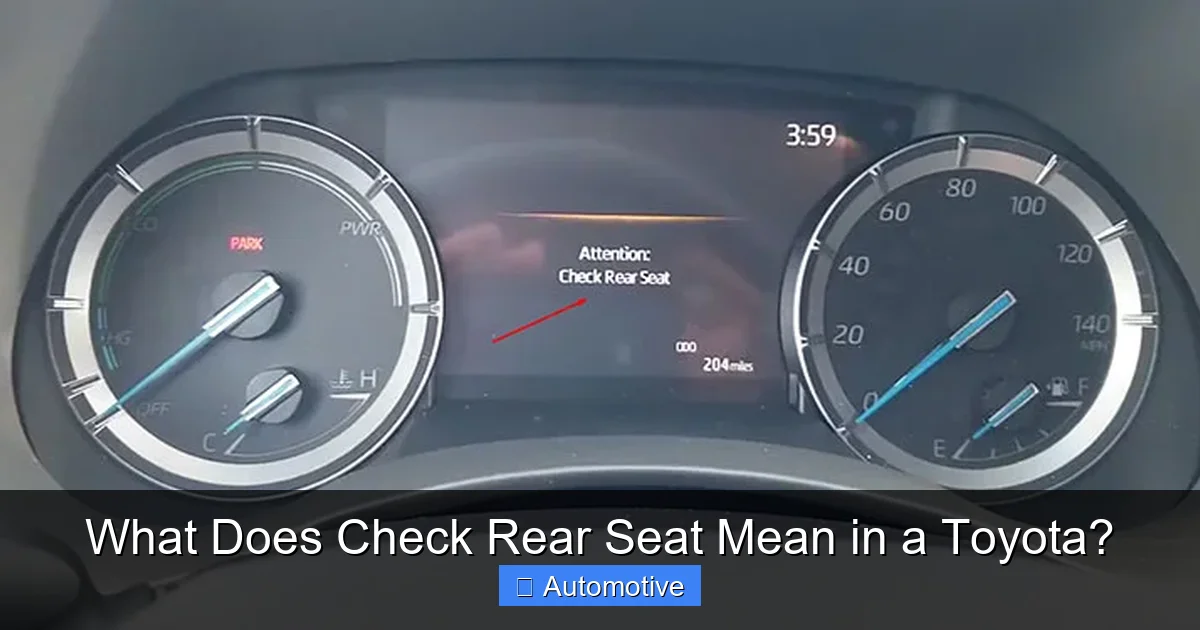
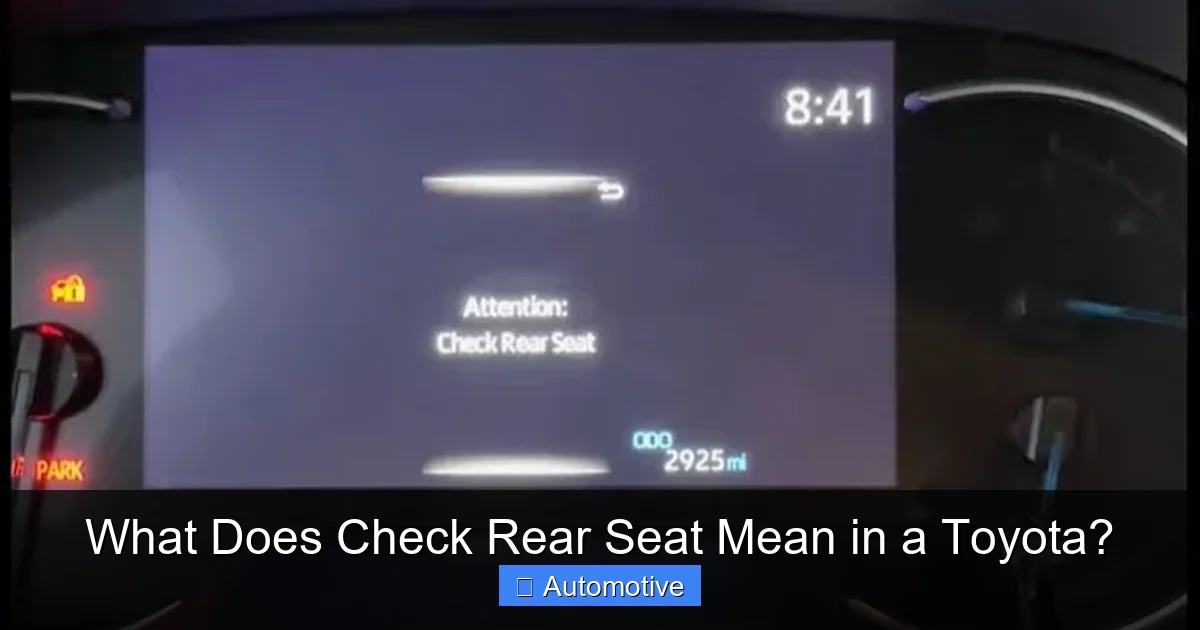
If you’ve ever been driving your Toyota and suddenly seen the message “Check Rear Seat” flash across your dashboard, you’re not alone. Many Toyota owners have encountered this alert and wondered what it means, whether it’s serious, and what they should do about it. The good news? It’s not a sign of a mechanical problem or malfunction. Instead, it’s a thoughtful, life-saving feature designed to protect children, pets, and even valuable items from being accidentally left behind in the back seat.
This message is part of Toyota’s Rear Seat Reminder system—a safety technology introduced in many newer Toyota models starting around 2018. It’s especially common in family-friendly vehicles like the Toyota Highlander, RAV4, Camry, Sienna, and Avalon. While it might seem like a minor nag at first, this alert plays a crucial role in preventing tragic accidents, particularly those involving young children left in hot cars. According to the National Highway Traffic Safety Administration (NHTSA), over 900 children have died from heatstroke in vehicles since 1998—most of them under the age of three. Toyota’s “Check Rear Seat” reminder is one way automakers are stepping up to address this preventable issue.
How Does the Toyota Rear Seat Reminder System Work?
The Toyota Rear Seat Reminder system is surprisingly simple in design but powerful in purpose. It doesn’t rely on sensors to detect people or objects in the back seat. Instead, it uses a logic-based trigger that monitors door activity. Here’s how it works:
Visual guide about What Does Check Rear Seat Mean in a Toyota?
Image source: bryansgarage.com
Door Activity Triggers the Alert
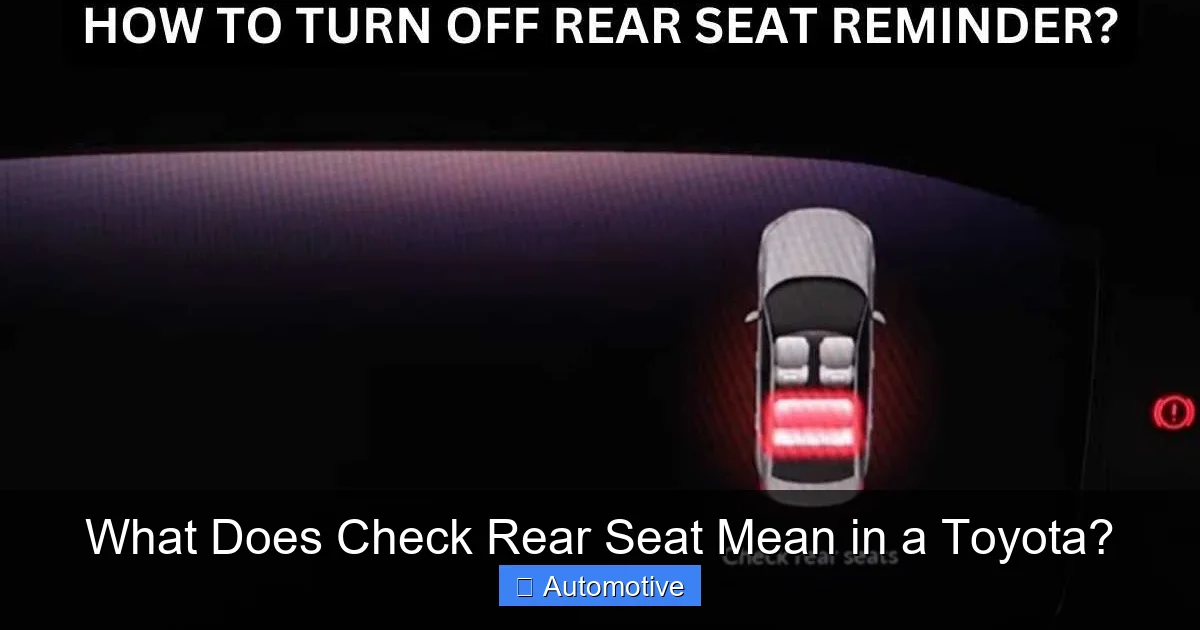
The system activates when a rear door—either the left or right back door—is opened before the engine is started. If that same rear door remains open (or is opened again) after the engine is turned on, the system interprets this as a potential sign that someone may have entered the vehicle and could still be in the back seat. At that point, the “Check Rear Seat” message appears on the instrument cluster, often accompanied by a chime or audible alert.
Why Door Activity Matters
Think about it: if you open the back door to put groceries in, load a stroller, or help a child into a car seat, and then close it before driving, the system doesn’t trigger. But if you open the back door, get in the front, start the car, and then open the back door again—say, to let a child out at school—the system assumes someone might still be in the back. It’s a smart way to catch situations where a caregiver might be distracted and forget a child or pet.
No Sensors, Just Smart Logic
Unlike some advanced systems that use weight sensors or cameras, Toyota’s approach is purely based on door usage. This makes it reliable, low-maintenance, and less prone to false alarms. It also means the system works even if a child is sleeping quietly or hidden under a blanket—scenarios where sensors might fail to detect a presence.
Why Is This Feature Important?
The “Check Rear Seat” message isn’t just another dashboard notification—it’s a critical safety tool. Let’s explore why this feature matters so much, especially for families and caregivers.
Visual guide about What Does Check Rear Seat Mean in a Toyota?
Image source: psychoautos.com
Preventing Pediatric Vehicular Heatstroke
One of the most heartbreaking and preventable causes of child death in vehicles is pediatric vehicular heatstroke (PVH). On a warm day, the temperature inside a parked car can rise 20 degrees in just 10 minutes. Even with windows cracked, a child’s body temperature can reach dangerous levels quickly. Most of these incidents happen when a parent or caregiver forgets a child is in the back seat—often due to a change in routine, stress, or distraction.
The Rear Seat Reminder system acts as a second set of eyes, prompting drivers to double-check the back seat before walking away from the vehicle. It’s a simple but effective way to break the chain of forgetfulness that leads to tragedy.
Protecting Pets and Valuables
While the primary focus is on children, the system also helps protect pets. Dogs and cats are just as vulnerable to heatstroke as children, and many pet owners have accidentally left their furry friends in the car. Additionally, the reminder can prompt drivers to check for forgotten items like laptops, purses, or medications that could be damaged or stolen if left behind.
Peace of Mind for Caregivers
For parents, grandparents, nannies, and babysitters, the “Check Rear Seat” alert provides peace of mind. It’s a gentle nudge to pause and verify that everyone is accounted for—especially during busy mornings or after long trips. Even experienced caregivers can have moments of distraction, and this feature helps fill that gap.
When Does the “Check Rear Seat” Message Appear?
Understanding when and why this message pops up can help you respond appropriately. Here are the most common scenarios that trigger the alert:
Visual guide about What Does Check Rear Seat Mean in a Toyota?
Image source: psychoautos.com
After Dropping Off a Child
Imagine you drop your child off at daycare. You open the back door, unbuckle them, and help them out. Then you close the door, get back in the driver’s seat, and start the car. If you drive away without opening the back door again, the system may still trigger the “Check Rear Seat” message because it detected rear door activity before ignition. This is a false positive, but it’s better to be safe than sorry.
Loading and Unloading Items
If you open the back door to load groceries, a suitcase, or sports equipment, then start the engine and drive off, the system might activate. Even if no person is in the back, the logic assumes something—or someone—was placed there.
Passenger Entry After Engine Start
Let’s say you start your car, then a friend hops in the back seat. The system sees that a rear door was opened after ignition and may prompt the reminder. This is especially common in ride-sharing or carpool situations.
False Alarms and Common Triggers
Sometimes, the message appears even when no one was in the back seat. This can happen if a door was opened slightly (e.g., to check the weather or grab something from the back) and then closed. The system doesn’t distinguish between a quick peek and a full entry—it just knows the door was used.
How to Respond When You See the Message
When the “Check Rear Seat” alert appears, the best response is simple: stop and check. Here’s what to do:
Pull Over Safely
If you’re driving, find a safe place to pull over as soon as possible. Don’t ignore the message while in traffic. Your safety and the safety of others is the top priority.
Open the Rear Doors and Inspect
Get out of the vehicle and open both rear doors. Look carefully in the back seat, under blankets, and in footwells. Check for children, pets, or items that may have been forgotten.
Reset the System
After confirming the back seat is clear, the message should disappear on its own. If it persists, try turning the vehicle off and on again. In some models, you may need to press and hold the “OK” button on the steering wheel or infotainment system to acknowledge the alert.
Use It as a Habit
Even if you don’t see the message, make it a habit to check the back seat every time you exit the vehicle. Pair this with other safety habits, like placing your phone or purse in the back seat to force yourself to look.
Can You Disable or Customize the Rear Seat Reminder?
Yes, in many Toyota models, you can adjust or disable the Rear Seat Reminder system. Here’s how:
Accessing Vehicle Settings
Go to the main menu on your Toyota’s infotainment screen. Look for “Settings,” then “Vehicle,” and then “Driving Assist” or “Safety.” From there, you should find an option for “Rear Seat Reminder.”
Turning It Off
You can usually toggle the feature on or off. Some models also allow you to choose between “On,” “Off,” or “With Chime” (which adds an audible alert).
Why You Might Want to Keep It On
While it’s tempting to disable the reminder if it feels annoying, experts strongly recommend keeping it active. The few seconds it takes to check the back seat could save a life. If the alerts are too frequent, consider adjusting your habits—like closing the rear door before starting the engine—to reduce false triggers.
Model-Specific Variations
Not all Toyota models have the same settings. For example, the 2023 Toyota Highlander allows full customization, while older models may only offer an on/off toggle. Check your owner’s manual or consult a Toyota dealer for model-specific instructions.
How the Rear Seat Reminder Fits Into Toyota’s Safety Ecosystem
The “Check Rear Seat” feature doesn’t work in isolation—it’s part of a broader suite of safety technologies designed to protect drivers, passengers, and pedestrians. Toyota calls this integrated approach Toyota Safety Sense (TSS), and the Rear Seat Reminder complements several other features:
Pre-Collision System (PCS)
This system detects potential collisions with vehicles, pedestrians, or cyclists and can automatically apply the brakes if the driver doesn’t respond in time. While it focuses on forward safety, the Rear Seat Reminder adds a layer of protection for occupants inside the vehicle.
Lane Departure Alert (LDA)
LDA warns you if you drift out of your lane without signaling. Combined with the Rear Seat Reminder, it helps keep both the driver and passengers safe—inside and outside the vehicle.
Automatic High Beams and Dynamic Radar Cruise Control
These features reduce driver fatigue and improve visibility, making it easier to focus on the road—and remember to check the back seat.
Blind Spot Monitor and Rear Cross-Traffic Alert
These systems help when reversing or changing lanes, but they don’t monitor the interior. The Rear Seat Reminder fills that gap by ensuring no one is left behind.
Together, these technologies create a comprehensive safety net. The “Check Rear Seat” message is a small but vital part of that network—one that emphasizes prevention and mindfulness.
Real-Life Examples and Tips from Toyota Owners
Many Toyota owners have shared stories about how the Rear Seat Reminder has helped them. Here are a few real-life examples and practical tips:
“It Saved My Dog”
One owner recounted how they dropped their child off at soccer practice and drove home, only to see the “Check Rear Seat” message. They pulled over and discovered their dog had jumped into the back seat during the drop-off and was still there. “I never would’ve known,” they said. “It was a hot day, and he could’ve been in serious danger.”
“It Became a Family Habit”
Another family started placing their coffee cup in the back seat every morning. “Now we always have to check to get our coffee,” the parent said. “It’s a small trick, but it works.”
Tip: Use a Stuffed Animal
Some parents move a stuffed animal from the front seat to the back when a child is buckled in. When the child is out, they move the toy back to the front. This visual cue helps prevent forgetfulness.
Tip: Set a Phone Reminder
If your Toyota doesn’t have the feature or you’ve disabled it, set a recurring reminder on your phone: “Check the back seat.”
Tip: Educate Everyone Who Drives
Make sure your spouse, grandparents, or babysitters know what the message means. A quick explanation can prevent confusion and ensure everyone responds correctly.
Conclusion: A Simple Alert with Life-Saving Potential
The “Check Rear Seat” message in your Toyota is more than just a dashboard notification—it’s a thoughtful, proactive safety feature designed to protect the most vulnerable passengers. By using simple door activity logic, it helps prevent tragic accidents caused by forgetfulness, distraction, or routine changes. While it may seem like a minor inconvenience at times, the few seconds it takes to check the back seat could make all the difference.
Whether you’re a parent, pet owner, or frequent carpooler, this feature is a valuable reminder to stay mindful and vigilant. Keep it enabled, educate your family, and make checking the rear seat a non-negotiable habit. In a world full of distractions, sometimes the simplest alerts are the most important. Your Toyota isn’t just提醒ing you to check the rear seat—it’s helping you protect what matters most.
Frequently Asked Questions
What does “Check Rear Seat” mean in a Toyota?
The “Check Rear Seat” message is a safety reminder from Toyota’s Rear Seat Reminder system. It alerts you to check the back seat for children, pets, or items that may have been left behind.
Is “Check Rear Seat” a warning light or a problem with my car?
No, it’s not a warning light or mechanical issue. It’s a safety feature designed to prevent accidents, not indicate a problem with the vehicle.
How do I turn off the “Check Rear Seat” alert in my Toyota?
You can usually disable it through the vehicle settings menu under “Safety” or “Driving Assist.” However, experts recommend keeping it on for safety.
Why does the message appear even when no one is in the back seat?
The system is triggered by rear door activity, not by detecting people. If a rear door was opened before or after starting the engine, the alert may appear—even if nothing was left behind.
Does every Toyota have the Rear Seat Reminder system?
Most newer models (2018 and later) include it, especially family vehicles like the RAV4, Highlander, and Sienna. Check your owner’s manual to confirm.
Can the system detect if a child is sleeping in the back seat?
No, it doesn’t use sensors to detect people. It only monitors door activity. That’s why it’s important to always check the back seat when the message appears.
