What Does Check Awd System Mean on a Toyota Highlander?

Contents
- 1 Key Takeaways
- 2 📑 Table of Contents
- 3 What Does “Check AWD System” Mean on a Toyota Highlander?
- 4 How the Toyota Highlander AWD System Works
- 5 Common Causes of the “Check AWD System” Warning
- 6 What to Do When the Warning Light Comes On
- 7 Preventing Future AWD System Issues
- 8 Conclusion
- 9 Frequently Asked Questions


If your Toyota Highlander displays a “Check AWD System” warning, it means the all-wheel-drive system has detected a fault. This alert doesn’t always mean a major repair—it could be a simple sensor issue or low fluid—but it should never be ignored to ensure safety and performance.
Key Takeaways
- Common Causes: Faulty wheel speed sensors, low AWD fluid, or a malfunctioning transfer case can trigger the warning.
- Don’t Ignore It: Driving with a faulty AWD system can reduce traction, especially in wet or snowy conditions.
- Diagnostic Tools Needed: A professional scan tool is usually required to read the specific error code behind the warning.
- DIY Checks Possible: You can inspect tires, fluid levels, and visible wiring before visiting a mechanic.
- Reset Isn’t Always Enough: Simply clearing the code without fixing the root cause will likely result in the light returning.
- Regular Maintenance Helps: Keeping up with scheduled service reduces the risk of AWD-related issues.
- Warranty Coverage: If your Highlander is under warranty, repairs may be covered—check your owner’s manual.
📑 Table of Contents
What Does “Check AWD System” Mean on a Toyota Highlander?
So, you’re driving your Toyota Highlander down the road, maybe heading to work or taking the family on a weekend trip, when suddenly—a warning light pops up on your dashboard: “Check AWD System.” Your heart skips a beat. What does it mean? Is it serious? Can you keep driving?
First, take a breath. While this warning shouldn’t be ignored, it doesn’t always mean your SUV is about to break down. The “Check AWD System” message appears when the vehicle’s onboard computer detects an issue with the all-wheel-drive (AWD) system. The AWD system in your Highlander is designed to send power to all four wheels when needed, improving traction and stability—especially in rain, snow, or off-road conditions. When something goes wrong, the system flags it to protect both the vehicle and your safety.
But here’s the thing: the warning is generic. It doesn’t tell you exactly what’s broken. That’s why it’s important to understand what could be causing it, how to respond, and when to get professional help. In this guide, we’ll walk you through everything you need to know about the “Check AWD System” warning on your Toyota Highlander—from common causes to troubleshooting steps and prevention tips.
How the Toyota Highlander AWD System Works

Visual guide about What Does Check Awd System Mean on a Toyota Highlander?
Image source: static.cargurus.com
Before diving into the warning light, it helps to understand how the AWD system in your Highlander actually functions. Unlike older four-wheel-drive systems that require manual engagement, the Highlander uses an intelligent, full-time AWD system that automatically distributes power between the front and rear wheels based on driving conditions.
Key Components of the AWD System
The system relies on several key parts working together:
– **Front and Rear Differentials:** These allow the wheels on each axle to rotate at different speeds, which is essential when turning.
– **Transfer Case:** This component sends power from the transmission to both the front and rear axles.
– **Torque Coupling:** A hydraulic or electronically controlled clutch that engages the rear wheels when slippage is detected.
– **Wheel Speed Sensors:** Located at each wheel, these sensors monitor how fast each wheel is spinning and send data to the AWD control module.
– **AWD Control Module:** The “brain” of the system, it processes sensor data and decides when to send power to the rear wheels.
When everything is working correctly, the system operates seamlessly. For example, if you’re driving on a dry highway, most of the power goes to the front wheels for better fuel efficiency. But if the front wheels start to slip—say, on a patch of ice or wet leaves—the system instantly sends power to the rear wheels to maintain traction.
When the System Detects a Problem
The AWD control module constantly monitors the system for inconsistencies. If it detects a mismatch in wheel speeds, a faulty sensor, low fluid, or electrical issues, it triggers the “Check AWD System” warning. This is a protective measure—it prevents further damage and alerts you to get the issue checked.
It’s worth noting that the Highlander’s AWD system is not meant for serious off-roading. It’s designed for everyday driving in adverse weather and light terrain. Pushing it beyond its limits can contribute to system strain and trigger warnings.
Common Causes of the “Check AWD System” Warning

Visual guide about What Does Check Awd System Mean on a Toyota Highlander?
Image source: bryansgarage.com
Now that you know how the system works, let’s look at the most common reasons why your Highlander might display this warning. Understanding these causes can help you narrow down the issue and decide whether you can handle it yourself or need a mechanic.
1. Faulty Wheel Speed Sensors
One of the most frequent culprits is a malfunctioning wheel speed sensor. These sensors are critical because they tell the AWD system how fast each wheel is turning. If one sensor fails or sends incorrect data, the system can’t accurately determine if slippage is occurring.
For example, imagine you’re driving on a snowy road. The front left wheel starts to spin faster than the others because it’s on ice. The sensor should detect this and signal the system to send power to the rear wheels. But if that sensor is dirty, damaged, or disconnected, the system won’t respond correctly—and the warning light may come on.
Symptoms of a bad wheel speed sensor include:
– The AWD warning light stays on
– ABS or traction control warnings may also appear
– Reduced stability in slippery conditions
These sensors are usually located near the wheel hubs and can be affected by dirt, moisture, or physical damage. In some cases, simply cleaning the sensor or its mounting area can resolve the issue. However, if the sensor is damaged, it will need to be replaced.
2. Low or Contaminated AWD Fluid
The AWD system in the Highlander uses special fluid in the transfer case and rear differential to lubricate components and operate the torque coupling. If the fluid level is low or the fluid is old and contaminated, it can cause the system to malfunction.
Over time, AWD fluid breaks down due to heat and friction. Contaminants like metal shavings or moisture can also enter the system, reducing its effectiveness. When the fluid isn’t doing its job, the torque coupling may not engage properly, leading to slippage and triggering the warning.
Signs of low or bad AWD fluid include:
– A burning smell from the rear of the vehicle
– Whining or grinding noises from the rear differential
– The AWD system feeling “sluggish” or unresponsive
Toyota recommends checking and replacing AWD fluid every 30,000 to 60,000 miles, depending on driving conditions. If you frequently drive in snow, mud, or towing heavy loads, you may need to service it more often.
3. Issues with the Transfer Case or Torque Coupling
The transfer case and torque coupling are mechanical components that can wear out over time. The torque coupling, in particular, uses a viscous fluid or electromagnetic clutch to engage the rear wheels. If it fails, the AWD system can’t send power to the back, and the warning light will appear.
Common signs of transfer case or coupling problems include:
– A clunking noise when shifting from park to drive
– Difficulty engaging AWD mode
– The vehicle feels like it’s “dragging” or resisting turns
These issues are more serious and usually require professional diagnosis and repair. In some cases, the entire torque coupling may need to be replaced, which can be costly—often ranging from $800 to $1,500 depending on labor and parts.
4. Electrical or Wiring Problems
Modern AWD systems rely heavily on electronics. A loose connection, corroded wire, or blown fuse can disrupt communication between sensors and the control module, causing the system to malfunction.
For instance, if the wiring harness near the rear differential gets damaged from road debris or moisture, it can cause intermittent signals or complete failure. Similarly, a blown fuse in the AWD circuit can disable the entire system.
These issues can be tricky to diagnose because they may come and go. You might notice the warning light appears after driving through deep puddles or over rough roads. A visual inspection of wiring and fuses can sometimes reveal the problem, but a professional scan tool is usually needed to pinpoint electrical faults.
5. Tire Size or Pressure Mismatch
Believe it or not, even something as simple as mismatched tires can trigger the “Check AWD System” warning. The AWD system relies on all four wheels rotating at nearly the same speed. If one tire is significantly smaller or larger than the others—due to wear, different brands, or incorrect inflation—the system detects a speed difference and assumes there’s a problem.
For example, if your front tires are worn down but the rear ones are new, the front tires will rotate faster. The AWD control module sees this as slippage and may disable the system to prevent damage.
To avoid this:
– Always replace tires in sets of four
– Use the same brand, model, and size
– Keep tire pressure consistent across all wheels
Even a small difference in tread depth (more than 2/32 of an inch) can cause issues. Regularly rotating your tires and checking pressure can help maintain balance.
What to Do When the Warning Light Comes On
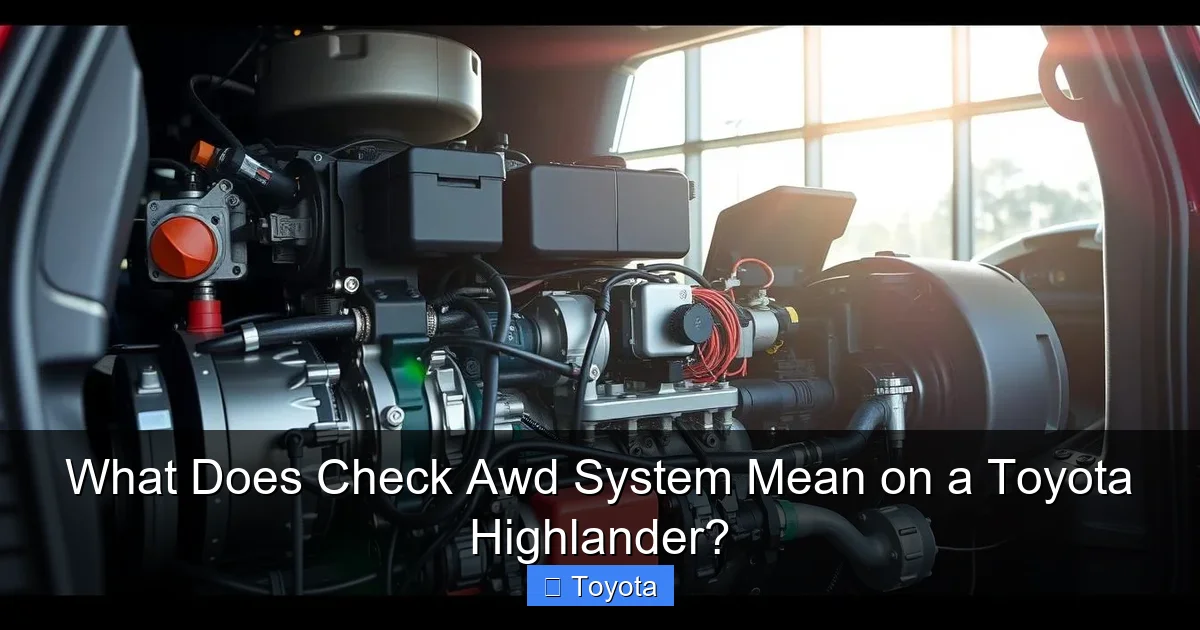
Visual guide about What Does Check Awd System Mean on a Toyota Highlander?
Image source: vehiclebright.com
Seeing the “Check AWD System” light can be stressful, but knowing how to respond can save you time, money, and stress. Here’s a step-by-step guide on what to do when the warning appears.
Step 1: Don’t Panic—But Don’t Ignore It
First, stay calm. The warning doesn’t mean your vehicle is unsafe to drive immediately, but it does mean you should take action soon. Avoid driving in conditions where AWD is critical—like heavy snow, rain, or off-road trails—until the issue is resolved.
Step 2: Check the Basics
Before heading to a mechanic, perform a few quick checks:
– **Inspect Tires:** Make sure all four tires are the same size, brand, and tread depth. Check air pressure and inflate if needed.
– **Look for Leaks:** Check under the vehicle for any signs of fluid leaks, especially near the rear differential or transfer case.
– **Check Fluid Levels:** Locate the AWD fluid dipstick (usually near the rear differential) and check the level and condition. The fluid should be clean and at the proper level.
– **Scan for Codes:** If you have an OBD2 scanner, plug it in and check for diagnostic trouble codes (DTCs). Codes like C1256 or C1279 often relate to AWD issues.
Step 3: Try a System Reset
Sometimes, the warning light appears due to a temporary glitch. You can try resetting the system by:
1. Turning the ignition to “ON” (but don’t start the engine)
2. Pressing the brake pedal 5 times within 5 seconds
3. Turning the ignition off and waiting 10 seconds
4. Starting the engine and seeing if the light goes off
This won’t fix a mechanical problem, but it can clear false alarms caused by sensor hiccups.
Step 4: Visit a Toyota Service Center
If the light remains on, it’s time to get professional help. Toyota dealerships and certified mechanics have the tools and expertise to diagnose AWD issues accurately. They can:
– Read specific error codes
– Test sensors and electrical components
– Inspect the transfer case and torque coupling
– Perform fluid changes and repairs
Be sure to describe any symptoms you’ve noticed—like noises, handling changes, or when the light first appeared. This information helps the technician pinpoint the problem faster.
Preventing Future AWD System Issues
The best way to deal with the “Check AWD System” warning is to avoid it altogether. Regular maintenance and smart driving habits can go a long way in keeping your Highlander’s AWD system in top shape.
Follow the Maintenance Schedule
Your owner’s manual outlines a recommended maintenance schedule for the AWD system. Key items include:
– AWD fluid change every 30,000–60,000 miles
– Tire rotation every 5,000–7,500 miles
– Inspection of sensors and wiring during routine service
Sticking to this schedule helps catch small issues before they become big problems.
Drive Responsibly
While the Highlander’s AWD system is robust, it’s not indestructible. Avoid:
– Driving through deep water or mud
– Towing beyond the vehicle’s capacity
– Spinning tires aggressively on ice or snow
These actions can strain the system and lead to premature wear.
Monitor Warning Lights Early
If you notice other warning lights—like ABS, traction control, or check engine—address them promptly. These systems are interconnected, and a problem in one can affect the others.
Conclusion
The “Check AWD System” warning on your Toyota Highlander is a signal that something needs attention—but it doesn’t have to be a disaster. By understanding how the AWD system works, recognizing common causes, and knowing how to respond, you can keep your Highlander running safely and smoothly.
Whether it’s a simple sensor issue, low fluid, or a more serious mechanical problem, early diagnosis and repair are key. Don’t ignore the warning, but also don’t panic. With the right knowledge and a trusted mechanic, you can get back on the road with confidence.
Remember: your Highlander’s AWD system is there to help you in tough conditions. Taking care of it means it will take care of you.
Frequently Asked Questions
Can I still drive my Highlander if the “Check AWD System” light is on?
Yes, you can usually drive short distances, but avoid slippery or off-road conditions. The AWD system may be disabled, reducing traction and safety.
Will disconnecting the battery reset the AWD warning?
Sometimes, but it’s not reliable. A proper system reset or diagnostic scan is more effective. Disconnecting the battery may also reset other systems unnecessarily.
How much does it cost to fix a “Check AWD System” issue?
Costs vary widely—from $100 for a sensor replacement to over $1,000 for torque coupling repairs. Diagnosis usually starts around $100–$150.
Can bad tires cause the AWD warning to come on?
Yes. Mismatched tire size, brand, or tread depth can trick the system into thinking there’s slippage, triggering the warning.
Is the AWD system covered under Toyota’s warranty?
Yes, if your Highlander is within the warranty period (typically 3 years/36,000 miles for basic, 5 years/60,000 miles for powertrain), AWD repairs may be covered.
How often should I change the AWD fluid?
Toyota recommends changing AWD fluid every 30,000 to 60,000 miles, or more frequently if you drive in harsh conditions like snow, mud, or towing.