
What Does 2.5 S Mean on a Nissan Altima?

The “2.5 S” on a Nissan Altima refers to the 2.5-liter four-cylinder engine and the base trim level “S.” This combination offers reliable performance, fuel efficiency, and essential features for daily driving.
If you’ve ever glanced at the back of a Nissan Altima and spotted the letters “2.5 S,” you might have wondered—what exactly does that mean? It’s not just a random code. Those two characters and a number actually tell you a lot about the car’s engine size, trim level, and overall character. Whether you’re shopping for a used Altima, comparing trims, or just curious about your own vehicle, understanding what “2.5 S” stands for can help you make smarter decisions.
The Nissan Altima has been a staple in the mid-size sedan market for decades, known for its balance of comfort, fuel economy, and value. Over the years, Nissan has offered various engine options and trim levels, but the 2.5-liter four-cylinder engine paired with the “S” trim has remained one of the most popular configurations. It’s the go-to choice for drivers who want a dependable, no-frills sedan that gets them from point A to point B without breaking the bank. But there’s more to it than just being “basic.” The 2.5 S offers a well-rounded package that appeals to a wide range of drivers—from young professionals to growing families.
Key Takeaways
- Engine Specification: The “2.5” indicates a 2.5-liter naturally aspirated four-cylinder engine, standard across most Altima models.
- Trim Level: The “S” is the base trim, offering essential features at an affordable price point.
- Performance Output: Produces around 182–188 horsepower and 180 lb-ft of torque, depending on model year.
- Fuel Efficiency: Delivers excellent gas mileage, typically 28–32 MPG combined, making it ideal for commuters.
- Transmission: Paired with a continuously variable transmission (CVT) for smooth acceleration and efficiency.
- Target Audience: Best suited for drivers seeking reliability, value, and everyday practicality over luxury or sportiness.
- Evolution Over Years: The 2.5 S trim has seen minor updates in tech and design but remains consistent in core functionality.
📑 Table of Contents
Breaking Down the “2.5” in 2.5 S
When you see “2.5” on a Nissan Altima, it refers to the engine displacement—specifically, a 2.5-liter four-cylinder engine. Engine displacement is a measure of the total volume of all the cylinders in an engine, and it’s one of the key indicators of how much power the engine can produce. In this case, the 2.5-liter engine is a naturally aspirated (non-turbocharged) inline-four, meaning it uses four cylinders arranged in a straight line to generate power.
This engine has been a workhorse for Nissan for many years, appearing not only in the Altima but also in other models like the Nissan Rogue and Maxima. It’s known for its reliability, smooth operation, and decent fuel economy. While it’s not the most powerful engine on the market, it strikes a smart balance between performance and efficiency—perfect for daily commuting and highway driving.
Engine Specifications and Performance
The 2.5-liter engine in the Altima typically produces between 182 and 188 horsepower, depending on the model year and whether it’s paired with front-wheel drive or all-wheel drive. Torque output is around 180 lb-ft, which provides enough low-end grunt for smooth city driving and confident highway merging. While it won’t win any drag races, it’s more than capable of handling everyday driving tasks with ease.
One of the engine’s standout features is its use of Nissan’s Variable Valve Timing Control System (VVTCS), which optimizes valve timing for better fuel efficiency and performance across different driving conditions. This technology helps the engine breathe more efficiently, improving both power delivery and gas mileage.
Fuel Efficiency and Real-World MPG
One of the biggest selling points of the 2.5-liter engine is its fuel economy. The Altima 2.5 S typically achieves around 28 miles per gallon in the city and 39 on the highway, with a combined rating of about 32 MPG. These numbers are impressive for a mid-size sedan and make the Altima a top choice for drivers who rack up a lot of miles.
For example, if you commute 30 miles each way to work, you could go nearly a week between fill-ups—even with regular city driving. That kind of efficiency translates into real savings over time, especially when gas prices rise. And because the engine runs on regular unleaded fuel, you don’t need to spend extra on premium gasoline.
Engine Reliability and Maintenance
Nissan’s 2.5-liter four-cylinder engine has earned a solid reputation for reliability. With proper maintenance—like regular oil changes, timely spark plug replacements, and keeping up with scheduled service—it can easily last 200,000 miles or more. Many owners report trouble-free driving well into high mileage ranges, which is a big reason why used Altima 2.5 S models remain in high demand.
That said, like any engine, it’s not immune to issues. Some owners have reported problems with the timing chain tensioner or oil consumption in earlier model years (particularly 2013–2015). However, Nissan has made improvements in later models, and most of these concerns have been addressed through recalls or design updates. Staying on top of maintenance and addressing warning lights promptly can go a long way in preventing major repairs.
Understanding the “S” Trim Level
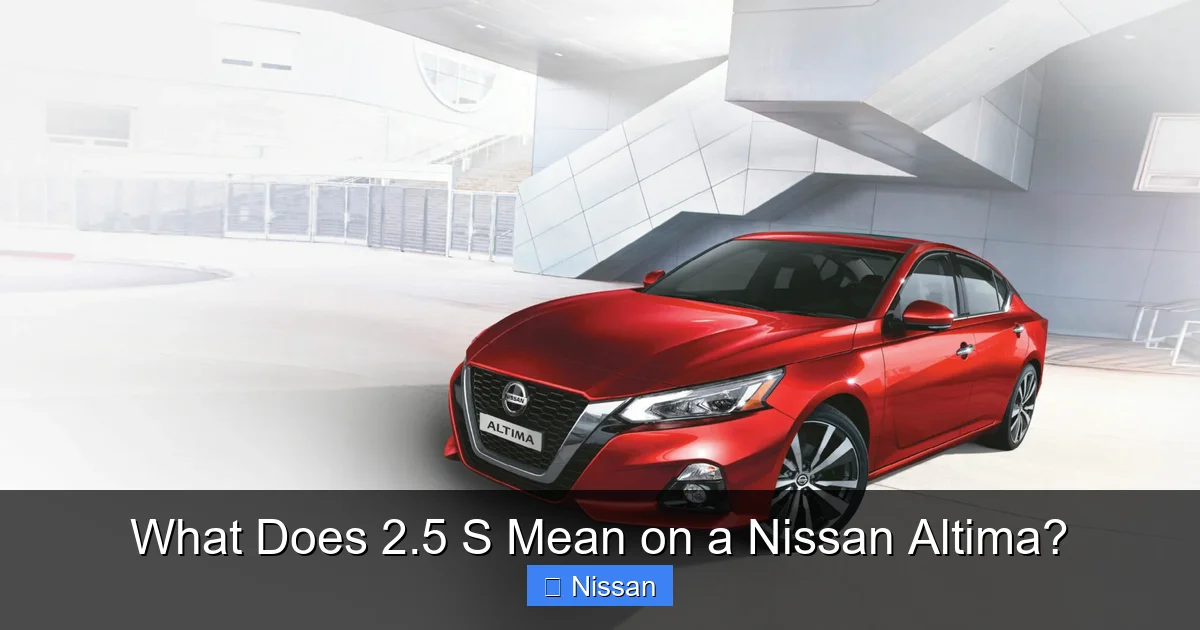
Visual guide about What Does 2.5 S Mean on a Nissan Altima?
Image source: motorguru.ae
Now that we’ve covered the engine, let’s talk about the “S” in 2.5 S. In Nissan’s trim hierarchy, “S” stands for the base or entry-level trim. It’s the most affordable version of the Altima, designed to offer the essentials without the bells and whistles of higher trims like the SV, SL, or SR.
The “S” trim is ideal for buyers who prioritize value and practicality over luxury. It comes with a solid list of standard features, including power windows and locks, air conditioning, a basic infotainment system, and cloth upholstery. While it may not have leather seats or a premium sound system, it covers all the basics you’d expect in a modern sedan.
Standard Features on the 2.5 S
Despite being the base model, the 2.5 S isn’t barebones. Depending on the model year, you’ll typically find features like:
– 16- or 17-inch steel or alloy wheels
– Halogen headlights
– Manual or automatic climate control
– 60/40 split-folding rear seats
– USB ports and auxiliary input
– Bluetooth connectivity for hands-free calling and audio streaming
– Cruise control
– Rearview camera (standard on most 2015 and newer models)
These features make the 2.5 S a comfortable and functional daily driver. It’s not flashy, but it gets the job done—and does it well.
How the “S” Compares to Other Trims
To understand the value of the “S” trim, it helps to compare it to higher trims. The next step up is usually the SV, which adds features like a larger touchscreen, Apple CarPlay and Android Auto, dual-zone climate control, and upgraded upholstery. The SL trim goes even further with leather seats, a premium Bose audio system, and advanced safety features like blind-spot monitoring.
While those upgrades are nice, they also come with a higher price tag. The 2.5 S allows you to get into an Altima at a lower cost, making it a smart choice if you’re on a budget or don’t need all the extras. Plus, because the engine is the same across trims, you’re not sacrificing performance by choosing the base model.
Who Should Choose the 2.5 S?
The 2.5 S is perfect for:
– First-time car buyers looking for affordability
– Commuters who want great fuel economy
– Families needing a reliable second car
– Anyone who values simplicity and low ownership costs
If you’re not into tech-heavy interiors or sporty handling, the 2.5 S offers everything you need in a no-nonsense package.
Transmission and Drivetrain: The CVT Connection
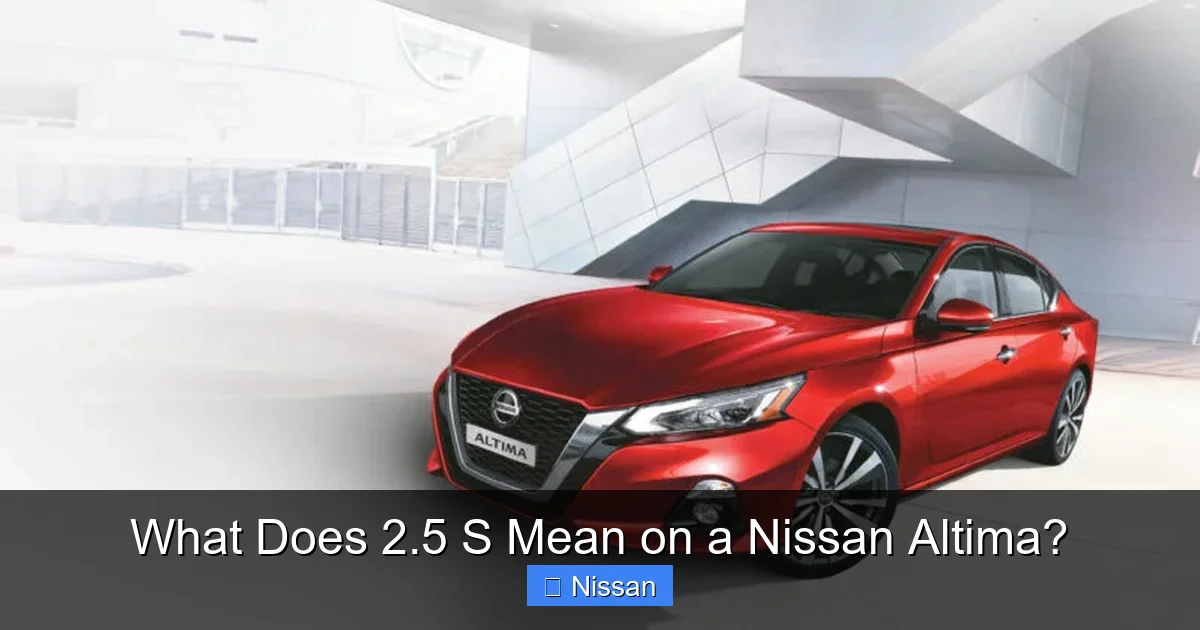
Visual guide about What Does 2.5 S Mean on a Nissan Altima?
Image source: motorguru.ae
One of the defining characteristics of the Nissan Altima 2.5 S is its transmission. Since around 2013, Nissan has paired the 2.5-liter engine with a continuously variable transmission (CVT). Unlike traditional automatic transmissions with fixed gears, a CVT uses a belt and pulley system to provide an infinite number of gear ratios, allowing the engine to operate at its most efficient RPM for any given speed.
How the CVT Works
Imagine driving up a hill. A traditional automatic might shift down to a lower gear to maintain power. A CVT, on the other hand, seamlessly adjusts to keep the engine in its optimal power band, resulting in smoother acceleration and better fuel economy. This is why the Altima feels so relaxed on the highway—the engine stays in its sweet spot, reducing strain and noise.
Pros and Cons of the CVT
The CVT offers several advantages:
– Improved fuel efficiency
– Smoother acceleration without gear shifts
– Lighter weight than traditional automatics
However, it’s not without criticism. Some drivers dislike the “rubber band” feel—where the engine revs high but acceleration feels sluggish. Others report reliability concerns, especially in earlier models. But Nissan has made significant improvements over the years, and modern CVTs are much more durable and refined.
Driving Experience with the CVT
In everyday driving, the CVT in the 2.5 S feels responsive and quiet. It’s especially well-suited for city driving, where frequent stops and starts benefit from the transmission’s ability to adapt instantly. On the highway, it keeps engine RPMs low, which reduces noise and improves efficiency.
If you’re used to traditional automatics, it might take a little getting used to—but most drivers adapt quickly and appreciate the smoothness and efficiency.
Safety and Technology in the 2.5 S
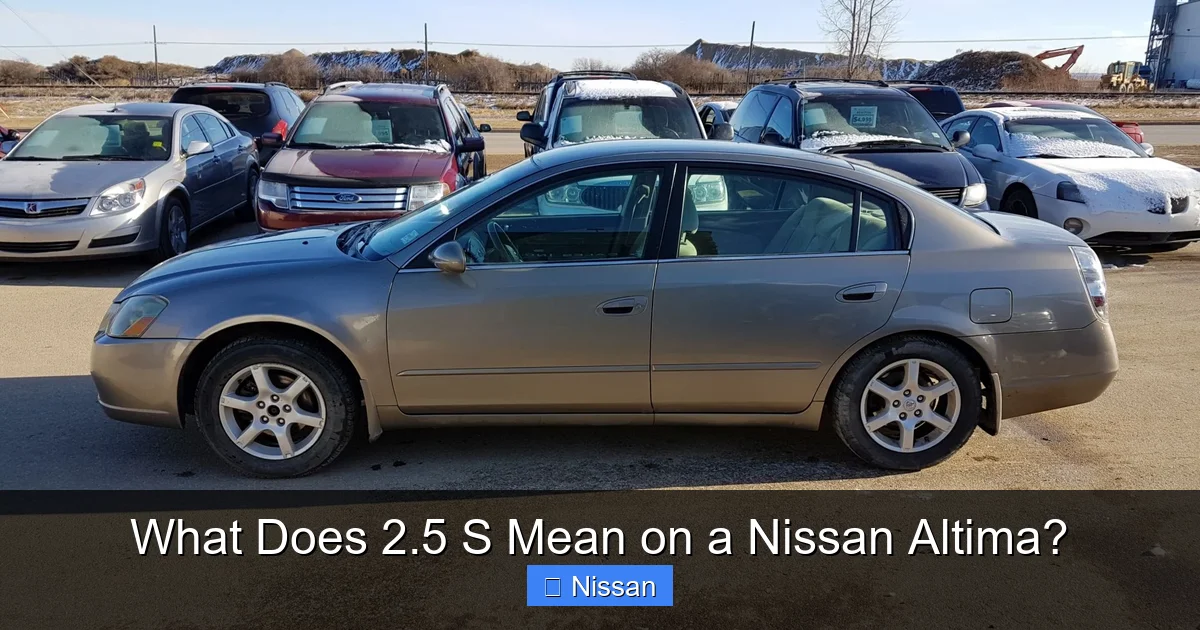
Visual guide about What Does 2.5 S Mean on a Nissan Altima?
Image source: gtrautosales.com
While the 2.5 S is the base trim, it still comes with a respectable list of safety and tech features—especially in newer models.
Standard Safety Features
Even the base Altima includes essential safety equipment such as:
– Anti-lock brakes (ABS)
– Electronic stability control (ESC)
– Traction control
– Front, side, and curtain airbags
– Rearview camera (standard on most 2015+ models)
In later years, Nissan began offering its Safety Shield 360 suite on higher trims, but the 2.5 S may not include all of those features unless added as an option. Still, it meets all federal safety standards and performs well in crash tests.
Infotainment and Connectivity
The 2.5 S typically comes with a basic infotainment system featuring a 7-inch touchscreen, AM/FM radio, Bluetooth, and USB connectivity. While it lacks Apple CarPlay and Android Auto in older models, many 2019 and newer 2.5 S trims include these smartphone integration features as standard or optional.
For drivers who rely on navigation, you can often add Nissan’s navigation system as an upgrade, or simply use your phone via Bluetooth.
Comfort and Convenience
Inside, the 2.5 S offers a functional and comfortable cabin. The seats are supportive for long drives, and the dashboard layout is intuitive. While materials are mostly hard plastic, they’re durable and easy to clean—perfect for families or pet owners.
Rear seat space is generous, with plenty of legroom for adults. The trunk offers 15.4 cubic feet of cargo space, which is competitive for the class.
Ownership Experience: Pros and Cons
So, what’s it really like to own a Nissan Altima 2.5 S? Let’s break it down.
Pros of the 2.5 S
– Excellent fuel economy
– Low purchase price and affordable insurance
– Reliable engine with a long lifespan
– Comfortable ride quality
– Good visibility and easy handling
– Available all-wheel drive on select models (2020+)
Cons of the 2.5 S
– Less powerful than turbocharged or V6 alternatives
– Base trim lacks advanced tech and luxury features
– CVT may feel unengaging to driving enthusiasts
– Interior materials are mostly hard plastic
– Resale value is lower than some competitors
Real-World Ownership Tips
If you’re considering a 2.5 S, here are a few tips:
– Check the vehicle history report for maintenance records and accident history.
– Test drive multiple models to compare CVT behavior.
– Consider certified pre-owned (CPO) models for added warranty protection.
– Keep up with oil changes every 5,000 miles to protect the engine.
– Upgrade to all-season tires for better handling in wet or snowy conditions.
Evolution of the 2.5 S Over the Years
The Nissan Altima has gone through several redesigns, and the 2.5 S has evolved alongside it. The current generation (introduced in 2019) features a more modern design, improved interior materials, and updated tech—even on the base trim.
Earlier models (2013–2018) had a more conservative look and fewer standard features, but they’re still solid choices on the used market. The 2020 model year introduced all-wheel drive as an option on the 2.5 S, a rare feature in the mid-size sedan segment.
Despite these changes, the core appeal of the 2.5 S remains the same: a dependable, efficient, and affordable sedan that does the basics exceptionally well.
Conclusion: Is the 2.5 S Right for You?
The Nissan Altima 2.5 S is more than just a base model—it’s a smart, practical choice for drivers who value reliability, fuel economy, and everyday usability. The 2.5-liter engine delivers smooth performance and excellent gas mileage, while the “S” trim keeps costs down without sacrificing essential features.
Whether you’re a daily commuter, a student, or a family on a budget, the 2.5 S offers a well-rounded package that’s hard to beat in its price range. It may not have the flash of higher trims or the power of performance models, but it excels at what it’s designed to do: get you where you need to go—safely, comfortably, and affordably.
If you’re looking for a no-nonsense sedan that won’t let you down, the Nissan Altima 2.5 S is definitely worth a test drive.
Frequently Asked Questions
What does the “2.5” in 2.5 S mean?
The “2.5” refers to the engine’s displacement—a 2.5-liter four-cylinder engine. It indicates the total volume of the engine’s cylinders and is a key factor in determining power and efficiency.
Is the 2.5 S the base model of the Nissan Altima?
Yes, the “S” is the base trim level. It includes essential features like power windows, air conditioning, and Bluetooth, but lacks the luxury and tech upgrades found in higher trims like the SV or SL.
How much horsepower does the 2.5 S engine produce?
The 2.5-liter engine in the Altima 2.5 S typically produces between 182 and 188 horsepower, depending on the model year and drivetrain configuration.
What kind of transmission does the 2.5 S use?
The 2.5 S is equipped with a continuously variable transmission (CVT), which provides smooth acceleration and improved fuel efficiency compared to traditional automatics.
Is the Nissan Altima 2.5 S fuel efficient?
Yes, the 2.5 S is very fuel efficient, averaging around 28 MPG in the city and 39 MPG on the highway, with a combined rating of about 32 MPG.
Can the 2.5 S come with all-wheel drive?
Yes, starting with the 2020 model year, Nissan began offering all-wheel drive as an option on the 2.5 S trim, making it one of the few mid-size sedans in its class with AWD capability.
