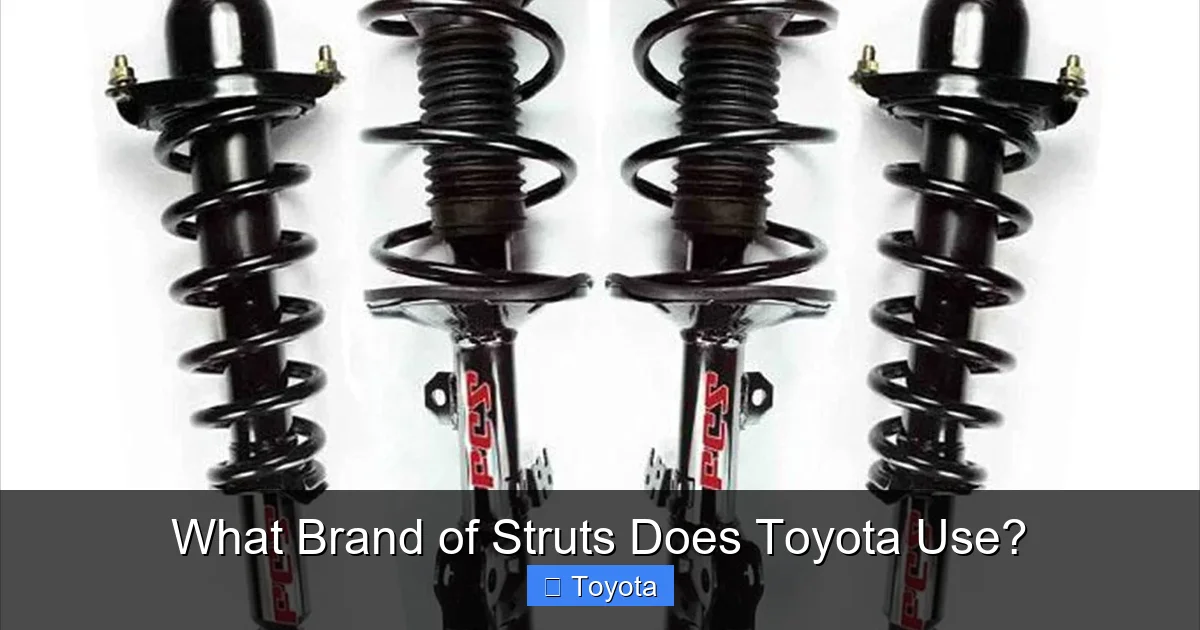
What Brand of Struts Does Toyota Use?

Contents
- 1 Key Takeaways
- 2 📑 Table of Contents
- 3 What Brand of Struts Does Toyota Use?
- 4 Why Struts Matter in Toyota Vehicles
- 5 Top OEM Strut Brands Used by Toyota
- 6 How to Identify the Strut Brand in Your Toyota
- 7 Aftermarket Strut Options for Toyota Owners
- 8 Choosing the Right Struts for Your Toyota
- 9 Conclusion: Trust the Right Brand for Your Toyota
- 10 Frequently Asked Questions

Car Cup Holder Expander

Car Vacuum Cleaner (Portable)

Carburetor Cleaner
Interior Cleaner Spray
Toyota doesn’t manufacture its own struts but relies on top-tier OEM suppliers like KYB, Monroe, and Tokico. These brands provide high-quality, durable struts designed specifically for Toyota models, ensuring smooth rides and long-term reliability.
Key Takeaways
- OEM Suppliers: Toyota uses struts from trusted brands like KYB, Monroe, and Tokico as original equipment on many models.
- KYB Dominance: KYB is the most common strut supplier for Toyota, found in popular models like the Camry, Corolla, and RAV4.
- Performance Variants: Some Toyota performance models, like the GR Supra, use specialized struts from brands like Bilstein.
- Aftermarket Options: Owners can upgrade to aftermarket struts from brands like Gabriel, Sachs, or Koni for improved handling or comfort.
- Model-Specific Fit: Strut brands and types vary by Toyota model, year, and trim level—always verify compatibility before purchasing.
- Quality Matters: Using OEM-equivalent or higher-quality struts ensures safety, ride comfort, and longevity.
- Installation Tips: Proper installation and alignment are critical—consider professional service for best results.
📑 Table of Contents
What Brand of Struts Does Toyota Use?
If you’re a Toyota owner—or thinking about becoming one—you’ve probably wondered about the parts that keep your car riding smoothly. One of the most important components in your vehicle’s suspension system is the strut. Struts absorb shocks from bumps, potholes, and uneven roads, helping maintain tire contact with the pavement and ensuring a comfortable, controlled ride. But here’s a question that comes up often: *What brand of struts does Toyota use?*
The short answer? Toyota doesn’t make its own struts. Instead, it partners with world-class automotive component manufacturers to supply struts as original equipment. These brands are carefully selected for their reliability, performance, and ability to meet Toyota’s strict engineering standards. Over the years, names like KYB, Monroe, and Tokico have become synonymous with Toyota’s suspension systems.
But it’s not just about brand names. The type of strut, its design, and its performance characteristics vary depending on the Toyota model—whether it’s a compact Corolla, a rugged Tacoma, or a sporty GR86. Understanding which brands Toyota uses and why can help you make smarter decisions when it’s time to replace your struts, whether you’re sticking with OEM parts or exploring aftermarket upgrades.
In this guide, we’ll dive deep into the world of Toyota struts. We’ll explore the top brands Toyota trusts, how to identify them in your vehicle, and what to consider when choosing replacements. Whether you’re a DIY mechanic or just want to be more informed at the repair shop, this article will give you the knowledge you need to keep your Toyota riding like new.
Why Struts Matter in Toyota Vehicles

Visual guide about What Brand of Struts Does Toyota Use?
Image source: automotivesimple.com
Before we get into the brands, let’s talk about why struts are so important—especially in a Toyota. Known for their reliability and longevity, Toyota vehicles are built to last hundreds of thousands of miles. But even the most durable cars need maintenance, and the suspension system is one of the first areas to show wear over time.
Struts are more than just shock absorbers. In many modern vehicles, including most Toyotas, the strut is a structural part of the suspension. It combines a shock absorber with a coil spring and mounting components into one unit. This design saves space, reduces weight, and improves handling. When struts wear out, you might notice:
– A bouncy or floaty ride
– Excessive nose-diving when braking
– Poor cornering and swaying in turns
– Uneven tire wear
– Knocking or clunking noises over bumps
Ignoring worn struts doesn’t just make your ride uncomfortable—it can affect braking performance, steering response, and overall safety. That’s why it’s crucial to replace them with high-quality parts that match or exceed the original specifications.
Toyota engineers design their vehicles with specific suspension characteristics in mind. Whether it’s the comfort-focused tuning of a Camry or the off-road capability of a 4Runner, the struts play a key role in delivering that intended driving experience. Using the right brand and type of strut ensures your Toyota continues to perform as designed.
Top OEM Strut Brands Used by Toyota
Visual guide about What Brand of Struts Does Toyota Use?
Image source: thecarhow.com
Now, let’s get to the heart of the matter: which brands does Toyota actually use for its struts? While Toyota doesn’t publicly list every supplier for every model year, decades of industry research, parts catalogs, and mechanic insights have revealed a clear pattern. Here are the top OEM (Original Equipment Manufacturer) strut brands you’ll find in Toyota vehicles.
KYB: The Most Common Toyota Strut Supplier
If there’s one name that dominates Toyota’s strut supply chain, it’s KYB. Short for Kayaba, this Japanese company has been a leader in suspension technology since 1919. KYB struts are original equipment on a wide range of Toyota models, including the Camry, Corolla, RAV4, Highlander, and Tacoma.
Why does Toyota trust KYB so much? For starters, KYB is based in Japan, just like Toyota, which makes logistics and quality control easier. But more importantly, KYB’s struts are known for their durability, consistent performance, and precise engineering. They’re designed to meet Toyota’s exact specifications, ensuring a perfect fit and reliable operation.
KYB offers several strut lines, but the most common in Toyotas are the Excel-G and Gas-a-Just series. The Excel-G struts are direct replacements for OEM units and are ideal for drivers who want to maintain the original ride quality. The Gas-a-Just struts, on the other hand, provide a slightly firmer ride and are often used in heavier vehicles or those that carry heavy loads.
One real-world example: a 2018 Toyota RAV4 typically comes with KYB Excel-G struts from the factory. If you’re replacing them, sticking with KYB ensures you’re getting the same performance and comfort as the original setup.
Monroe: A Trusted American Name in Suspension
While KYB leads in Japan, Monroe is a major player in North America. Owned by Tenneco, Monroe has been manufacturing shock absorbers and struts since 1916. Many Toyota vehicles sold in the U.S., especially older models, come equipped with Monroe struts as original equipment.
Monroe struts are known for their affordability and widespread availability. They’re often used in base-model Toyotas where cost efficiency is a priority. The Monroe OESpectrum struts, for example, are designed to match OEM performance and are a popular choice for replacement.
However, it’s worth noting that Monroe struts may not always offer the same level of refinement as KYB, especially in higher-performance applications. That said, for everyday driving, they provide a smooth, reliable ride and are a solid choice for budget-conscious owners.
Tokico: A Legacy Brand with Toyota Roots
Tokico is another Japanese company with deep ties to Toyota. In fact, Tokico was once a subsidiary of Toyota and supplied suspension components for many of its vehicles. Although the brand has been largely absorbed into other companies (including Hitachi and later Denso), Tokico struts can still be found in older Toyota models, particularly from the 1990s and early 2000s.
Tokico struts were known for their smooth damping and quiet operation. If you own a vintage Toyota like a 1995 Camry or a 2000 4Runner, there’s a good chance it came with Tokico struts. While new Tokico-branded struts are rare today, their legacy lives on in the engineering standards they helped establish.
Bilstein: Performance-Oriented Struts for Special Models
Not all Toyota struts are created equal—especially when it comes to performance models. The Toyota GR Supra, for example, uses high-performance struts from Bilstein, a German company renowned for its racing heritage and precision engineering.
Bilstein struts feature monotube designs, which offer better heat dissipation and more consistent damping than traditional twin-tube struts. This makes them ideal for spirited driving, track use, or vehicles that demand superior handling.
While Bilstein isn’t used across the entire Toyota lineup, it’s a sign of Toyota’s commitment to performance. If you’re driving a GR Supra, GR86, or another sport-tuned Toyota, you might find Bilstein struts under the fenders—delivering a firmer, more responsive ride.
How to Identify the Strut Brand in Your Toyota

Visual guide about What Brand of Struts Does Toyota Use?
Image source: marvel-b1-cdn.bc0a.com
So, how do you know which brand of struts your Toyota has? It’s not always obvious, but there are a few ways to find out.
Check the Strut Itself
The easiest method is to look at the strut assembly. Most OEM struts have the manufacturer’s name or logo stamped or printed on the body. For example, KYB struts usually have “KYB” clearly marked, often near the top mount or on the shock body. Monroe struts will have “Monroe” or “OESpectrum” printed on them.
If your Toyota is still under warranty or has low mileage, the struts are likely original and will match the OEM brand. However, if the car has been repaired before, the struts might have been replaced with aftermarket units.
Consult the Owner’s Manual or Service Records
Your Toyota’s owner’s manual won’t list the strut brand, but it will tell you the part number. You can cross-reference this number with parts catalogs online to find the manufacturer. Similarly, if you have service records, they may indicate which brand was used during previous repairs.
Use Online Parts Lookup Tools
Websites like RockAuto, AutoZone, or Toyota Parts Deal allow you to enter your vehicle’s year, make, model, and engine to see a list of compatible struts. These sites often show which brands are OEM-equivalent and which were original equipment.
For example, searching for a 2020 Toyota Camry LE will show that KYB Excel-G struts are the most common OEM replacement, confirming that KYB was likely the original supplier.
Ask a Mechanic or Toyota Dealer
If you’re still unsure, a trusted mechanic or Toyota dealership can help. They have access to factory parts databases and can tell you exactly which brand and model of strut was installed at the factory.
Aftermarket Strut Options for Toyota Owners
While OEM struts are great for maintaining original performance, many Toyota owners choose to upgrade to aftermarket struts for better handling, comfort, or durability. Here are some popular aftermarket brands and what they offer.
Gabriel: Affordable and Reliable
Gabriel is a well-known American brand that offers a wide range of struts for Toyota vehicles. Their Guardian and Ultra lines are popular replacements for OEM units. Gabriel struts are often more affordable than KYB or Monroe and provide solid performance for daily driving.
They’re a good choice if you’re on a budget but still want reliable suspension components. However, they may not offer the same level of refinement as higher-end brands.
Sachs: European Engineering for a Premium Ride
Sachs, a German brand owned by ZF, is known for its high-quality suspension components. Their struts are often used in European cars but are also available for many Toyota models. Sachs struts tend to offer a smoother, more refined ride than some American brands, making them a great upgrade for drivers who prioritize comfort.
Koni: Adjustable Performance Struts
For enthusiasts who want to fine-tune their suspension, Koni offers adjustable struts that let you dial in the damping force. Koni’s FSD (Frequency Selective Damping) technology automatically adjusts to road conditions, providing both comfort and control.
While Koni struts are more expensive, they’re ideal for drivers who want a customizable ride—whether for daily commuting or weekend canyon carving.
BC Racing or KW Suspension: For the Track and Enthusiasts
If you’re serious about performance, brands like BC Racing or KW Suspension offer coilover strut systems that allow for height and damping adjustment. These are popular among Toyota GR86 or Supra owners who want to lower their car or improve track performance.
Keep in mind that these upgrades often require professional installation and alignment, and they may void your warranty if installed on a new vehicle.
Choosing the Right Struts for Your Toyota
With so many options available, how do you choose the right struts for your Toyota? Here are some practical tips to help you decide.
Match Your Driving Style
– If you drive mostly on highways and want a smooth, comfortable ride, stick with OEM-equivalent struts like KYB Excel-G or Monroe OESpectrum.
– If you frequently carry heavy loads or drive on rough roads, consider gas-charged struts like KYB Gas-a-Just for better control.
– If you enjoy spirited driving or track days, look into performance struts from Bilstein, Koni, or BC Racing.
Consider Your Budget
OEM and OEM-equivalent struts typically cost between $100 and $250 per unit. Premium brands like Bilstein or Koni can run $300 to $600 or more. While higher-end struts offer better performance, they may not be necessary for everyday driving.
Check Compatibility
Always verify that the struts you’re buying are compatible with your specific Toyota model, year, and trim. Some struts are designed for different suspension setups (e.g., with or without electronic damping control), so double-check before purchasing.
Don’t Forget the Mounts and Bearings
When replacing struts, it’s a good idea to replace the upper mounts and bearing plates as well. These components wear out over time and can cause noise or poor performance if left in place.
Get a Professional Alignment
After installing new struts, your vehicle will need a wheel alignment. Even if the alignment seems fine, the suspension geometry changes when struts are replaced, so skipping this step can lead to uneven tire wear and poor handling.
Conclusion: Trust the Right Brand for Your Toyota
So, what brand of struts does Toyota use? The answer is clear: Toyota relies on industry leaders like KYB, Monroe, Tokico, and Bilstein to deliver reliable, high-performance suspension components. KYB stands out as the most common supplier, especially in popular models like the Camry and RAV4, while performance variants may feature Bilstein or other premium brands.
Whether you’re replacing worn struts or upgrading for better performance, choosing the right brand matters. OEM-equivalent struts ensure your Toyota rides as intended, while aftermarket options offer enhanced handling, comfort, or adjustability.
The key is to match the strut to your driving needs, budget, and vehicle specifications. And remember—proper installation and alignment are just as important as the brand you choose.
By understanding the role of struts and the brands Toyota trusts, you can keep your vehicle safe, comfortable, and enjoyable to drive for years to come. Whether you’re cruising down the highway or tackling a winding backroad, the right struts will make all the difference.
Frequently Asked Questions
What brand of struts does Toyota use from the factory?
Toyota primarily uses KYB struts as original equipment on most of its vehicles, including the Camry, Corolla, and RAV4. Monroe and Tokico are also used in certain models and regions.
Can I replace Toyota struts with aftermarket brands?
Yes, you can replace Toyota struts with aftermarket brands like Gabriel, Sachs, or Koni. Just ensure they are compatible with your vehicle and meet or exceed OEM specifications.
Are KYB struts the best for Toyota?
KYB struts are highly regarded for their quality and are often the OEM choice for Toyota. They offer excellent durability and ride comfort, making them a top pick for most drivers.
Do performance Toyotas use different struts?
Yes, performance models like the GR Supra and GR86 often use high-performance struts from brands like Bilstein, which provide firmer damping and better handling.
How often should Toyota struts be replaced?
Struts typically last 50,000 to 100,000 miles, depending on driving conditions. Signs of wear include bouncing, poor handling, and uneven tire wear.
Can I install struts myself on a Toyota?
While DIY installation is possible, it requires special tools and knowledge. For safety and proper alignment, it’s recommended to have a professional mechanic perform the installation.