
V Brakes vs Disc Brakes: Which Is Best?

Discover which braking system, V Brakes vs Disc Brakes, offers superior performance and safety for your cycling needs. This guide breaks down their differences, helping you choose the best for your ride.
Key Takeaways
- V Brakes are affordable and simple.
- Disc Brakes offer superior stopping power.
- Disc Brakes perform better in wet conditions.
- V Brakes are lighter than disc brakes.
- Disc brakes require more maintenance.
- Choose brakes based on riding style and budget.
Navigating the world of bicycle components can feel complex. You might be wondering about the best way to stop your bike safely and efficiently. Two common types of brakes dominate the scene: V brakes and disc brakes. For many cyclists, the difference between them isn’t always clear, leading to confusion when it’s time for an upgrade or a new bike purchase. Understanding the nuances of V brakes vs disc brakes is crucial for making an informed decision that enhances your riding experience and safety. This guide will simplify the differences, pros, and cons of each system, empowering you to choose the perfect brakes for your adventures on two wheels. Let’s dive into the details of V brakes vs disc brakes.
Understanding Bicycle Braking Systems
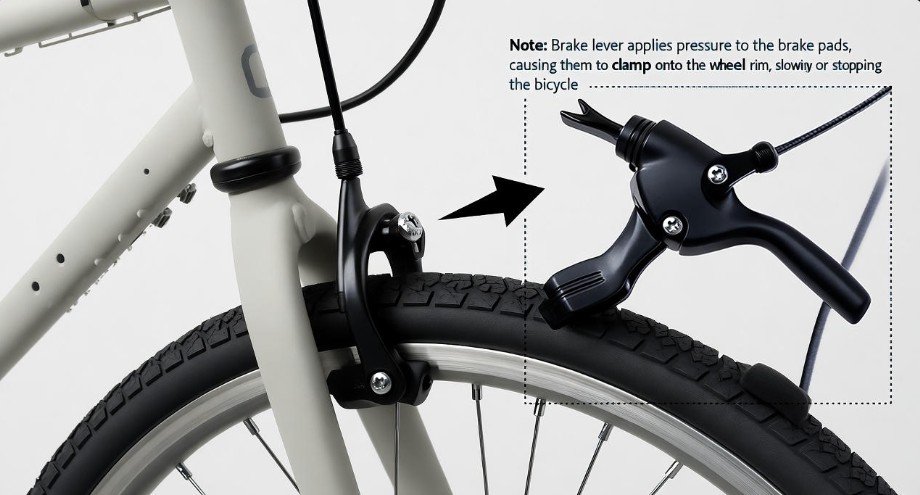
Brakes are arguably the most important safety feature on a bicycle. They allow you to control your speed and come to a stop reliably. Over the years, bicycle braking technology has evolved significantly. While older bikes often featured caliper brakes or even rod-actuated brakes, the modern landscape is largely dominated by two main types: V brakes and disc brakes. Each system operates on different principles and offers distinct advantages and disadvantages. Choosing between V brakes vs disc brakes often comes down to your riding style, the terrain you frequent, and your budget.
What Are V Brakes?
V brakes, also known as direct-pull cantilever brakes, are a type of rim brake. They are characterized by their long, arch-shaped arms that pivot at posts mounted on the bicycle frame and fork. When you activate the brake lever, a cable pulls one arm upwards, causing a brake pad to press against the rim of the wheel. This friction slows down the wheel and, consequently, the bicycle.
V brakes have been a popular choice for many years due to their simplicity, affordability, and ease of maintenance. They are commonly found on hybrid bikes, mountain bikes (especially older models), and some touring bikes. Their straightforward design means that if something goes wrong, it’s usually easy to diagnose and fix.
How V Brakes Work
The mechanism of V brakes is quite intuitive. Brake levers on your handlebars are connected via cables to the brake arms. When you squeeze the lever, the cable tension increases. This tension is transmitted to the brake arms, pulling them inward towards the wheel rim. As the arms move, the brake pads mounted on them are forced into contact with the braking surface of the rim. The friction generated between the pads and the rim is what slows your bike down. The harder you squeeze, the more pressure the pads apply, and the faster you stop.
It’s important to note that V brakes are designed to work specifically with the wheel rim as the braking surface. This means that the condition of your rims – whether they are worn or damaged – can directly impact the effectiveness of your V brakes.
Pros of V Brakes
- Affordability: V brakes are generally much cheaper to manufacture and purchase than disc brake systems. This makes them a cost-effective option for budget-conscious cyclists.
- Simplicity and Ease of Maintenance: Their design is straightforward. Adjusting cable tension, replacing brake pads, or centering the arms can usually be done with basic tools and minimal mechanical knowledge.
- Lightweight: Compared to most disc brake setups, V brakes are lighter. This can be an advantage for riders who prioritize a lower overall bike weight.
- Wide Compatibility: Many frames and forks are designed with V brake mounts, making them a versatile option for many types of bikes.
- Easy Wheel Removal: With a quick-release or the ability to unhook the brake cable, removing a wheel for repair or transport is typically very quick.
Cons of V Brakes
- Performance in Wet or Muddy Conditions: Their effectiveness can be significantly reduced when the rim surface is wet, muddy, or icy. Brake pads can struggle to get a consistent grip on the rim in such conditions, leading to longer stopping distances.
- Rim Wear: The brake pads rub directly on the wheel rim. Over time, this can wear down the rim’s braking surface, eventually requiring wheel replacement.
- Less Powerful Stopping: While adequate for general riding, V brakes generally offer less overall stopping power compared to well-functioning disc brakes. This is particularly noticeable during hard braking or on steep descents.
- Brake Fade: Under prolonged braking on long descents, V brakes can overheat, leading to a phenomenon known as brake fade, where their effectiveness diminishes significantly.
- Can Be Affected by Wheel Trueing: If a wheel is not perfectly true (lopsided), it can cause the brake pads to rub inconsistently or make adjustment more difficult.
What Are Disc Brakes?
Disc brakes are a more modern braking system found on a vast majority of new mountain bikes, gravel bikes, and increasingly, road and hybrid bikes. Instead of acting on the wheel rim, disc brakes use a rotor (a metal disc) that is attached to the wheel hub. A caliper, mounted to the frame or fork, houses brake pads that squeeze the rotor to slow the wheel.
There are two main types of disc brakes: mechanical and hydraulic. Mechanical disc brakes use a traditional cable to actuate the caliper, similar to V brakes. Hydraulic disc brakes use a fluid-filled line to transmit force from the brake lever to the caliper, offering more power and modulation.
How Disc Brakes Work
The operation of disc brakes is different from V brakes. A rotor, typically made of steel, is bolted to your bike’s wheel hub. When you squeeze the brake lever, a mechanism (cable for mechanical, fluid for hydraulic) moves pistons within the brake caliper. These pistons push brake pads, usually made of organic or metallic compounds, to clamp down on the rotor. The friction between the pads and the rotor generates the stopping power.
The key advantage here is that the braking surface (the rotor) is separate from the rim. This means that rim wear is no longer a concern, and the system is less affected by dirt, water, or mud that might accumulate on the rim.
Types of Disc Brakes
- Mechanical Disc Brakes: These use a standard brake cable to pull a piston or lever within the caliper. They are generally less expensive than hydraulic disc brakes and can be easier to service for those familiar with cable systems. However, they often offer less stopping power and poorer modulation (control over braking force) compared to hydraulic versions.
- Hydraulic Disc Brakes: These use a sealed system filled with brake fluid. When you pull the lever, fluid is pushed through a hose to actuate the pistons in the caliper. Hydraulic disc brakes offer superior stopping power, better modulation, and are generally more resistant to performance degradation in adverse conditions. They require specialized tools and knowledge for maintenance.
Pros of Disc Brakes
- Superior Stopping Power: Disc brakes, especially hydraulic ones, provide significantly more stopping power than V brakes. This is crucial for controlling speed on steep descents and for quick, emergency stops.
- Consistent Performance in All Conditions: They are far less affected by rain, mud, snow, or ice. The rotor is positioned away from the rim, keeping the braking surface cleaner and drier, leading to more reliable braking in adverse weather.
- No Rim Wear: Since the braking surface is the rotor, your wheel rims are protected from wear. This can extend the lifespan of your wheels.
- Better Modulation: Hydraulic disc brakes, in particular, offer excellent modulation. This means you have finer control over how much braking force you apply, allowing for smooth deceleration and preventing accidental lock-ups.
- Less Affected by Wheel Damage: Minor wobbles or dents in the wheel rim do not directly impact braking performance as they can with V brakes.
Cons of Disc Brakes
- Higher Cost: Disc brake systems are generally more expensive to purchase and install than V brakes.
- Increased Weight: The rotors, calipers, and often heavier hubs and levers make disc brake systems heavier than V brake counterparts.
- More Complex Maintenance: While routine maintenance like pad replacement can be straightforward, more involved tasks like bleeding hydraulic systems require specialized tools and knowledge.
- Potential for Rotor Rub: If not properly aligned, the brake pads can rub against the rotor, creating a persistent noise and drag.
- Can Overheat on Long Descents (less common with modern systems): While generally better than V brakes, prolonged heavy braking on very long descents can still cause rotors to overheat, though modern designs have largely mitigated this.
V Brakes vs Disc Brakes: A Direct Comparison
To help you visualize the differences, let’s compare V brakes and disc brakes across several key categories. This table highlights the core distinctions that will influence your decision when choosing between V brakes vs disc brakes.
| Feature | V Brakes | Disc Brakes (Hydraulic) |
|---|---|---|
| Stopping Power | Good | Excellent |
| Performance in Wet/Mud | Reduced | Excellent |
| Weight | Lighter | Heavier |
| Cost | Lower | Higher |
| Maintenance Complexity | Simple | More Complex (especially bleeding) |
| Rim Wear | Yes | No |
| Modulation (Brake Control) | Fair | Excellent |
| Common on Bikes | Hybrid, entry-level MTBs, older bikes | MTB, Gravel, Road, Commuter |
Which Brake System Is Right for You?
The choice between V brakes vs disc brakes largely depends on your cycling habits and priorities. Consider these factors:
For the Casual Commuter and Recreational Rider
If you primarily ride on paved paths, bike lanes, and in fair weather, V brakes can be perfectly adequate. They are cost-effective, easy to maintain, and provide sufficient stopping power for everyday riding. Many hybrid bikes and city bikes come equipped with V brakes for these reasons.
For the Mountain Biker and Off-Road Enthusiast
For anyone venturing onto trails, tackling steep descents, or riding in unpredictable conditions, disc brakes are the clear winner. Their superior stopping power, consistent performance in wet and muddy environments, and better modulation offer crucial control and safety when you need it most. Hydraulic disc brakes are highly recommended for serious off-road riding.
For the Touring and Long-Distance Cyclist
Touring often involves carrying heavy loads and navigating varied terrain and weather. Disc brakes provide the reliable stopping power and all-condition performance that touring cyclists demand, especially on long descents. While V brakes can work, the added security of disc brakes is often worth the investment.
For the Budge-Conscious Rider
If budget is your primary concern, V brakes offer excellent value. You can get a reliable braking system at a much lower cost. For many recreational riders, the performance difference may not justify the premium price of disc brakes.
Can I Upgrade from V Brakes to Disc Brakes?
This is a common question for cyclists looking to improve their bike’s performance. The short answer is: it depends on your bike’s frame and fork.
For your bike to accommodate disc brakes, the frame and fork must have specific mounting points (called disc brake tabs) where the brake caliper can be attached. Additionally, the wheel hubs must be compatible with disc brake rotors. If your current bike frame and fork do not have these mounting points, you cannot simply add disc brakes. In such cases, upgrading to a new bike with disc brakes would be necessary.
If your bike does have the necessary mounting points, you would need to purchase compatible disc brake calipers, rotors, levers, and potentially new wheels (or at least hubs) with disc brake compatibility. This can be a significant investment, often approaching the cost of a new bicycle.
Maintenance Tips for V Brakes and Disc Brakes
Proper maintenance ensures your brakes perform optimally and last longer, regardless of whether you have V brakes or disc brakes.
V Brake Maintenance
- Regular Pad Inspection: Check your brake pads for wear. Replace them when the wear indicator line is reached or when they appear significantly worn down.
- Clean Rims: Keep your wheel rims clean, free of dirt, grease, and debris. This ensures better friction and prevents premature wear.
- Cable Tension Adjustment: If your brakes feel spongy or don’t engage firmly, you may need to adjust the cable tension. Most V brake systems have barrel adjusters near the lever or on the brake arm itself.
- Centering the Arms: If one pad rubs the rim more than the other, you can adjust the centering screws on the brake arms to equalize tension.
- Check for Rim Damage: Inspect your rims for dents or significant wear. A damaged rim can compromise braking and necessitates replacement.
Disc Brake Maintenance
- Pad Inspection: Check brake pads for wear regularly. Replace them if they are thin or glazed.
- Rotor Cleaning: Keep rotors clean and dry. Avoid touching the rotor surface with your oily fingers or using lubricants near them, as this can contaminate the pads and reduce performance. Use isopropyl alcohol to clean rotors if necessary.
- Pad Bedding-In: New brake pads and rotors need to be “bedded in” to achieve optimal performance. This process involves a series of firm, controlled stops without fully locking the wheel, allowing the pad material to transfer evenly to the rotor.
- Checking for Rub: Listen for any persistent rubbing sounds. If your pads are rubbing, you may need to realign the caliper. This is often done by loosening the caliper mounting bolts, squeezing the brake lever firmly, and re-tightening the bolts while holding the lever.
- Hydraulic System Bleeding: For hydraulic disc brakes, periodic bleeding is necessary to remove air bubbles from the system and ensure optimal fluid pressure. This is typically a task for a bike shop unless you have the specialized tools and experience. Refer to manufacturer guidelines or YouTube tutorials for guidance.
For anyone looking to understand the mechanics better, resources from organizations like the Cycling UK offer great general advice on bike maintenance, including brakes.
Pro Tips
When inspecting your V brake pads, check if they are hitting the tire sidewall instead of the rim. This is a common setup error that reduces braking effectiveness and can be dangerous. Ensure they are aligned to strike the braking surface of the rim squarely.
Frequently Asked Questions (FAQ)
1. Which brakes are safer, V brakes or disc brakes?
Disc brakes are generally considered safer due to their superior stopping power and consistent performance in all weather conditions, reducing the risk of accidents caused by reduced braking ability.
2. Can I mix V brakes and disc brakes on my bike?
No, you cannot mix V brakes and disc brakes on the same bike for the front or rear wheel. They are entirely different systems that require specific frame mounts and wheel hubs.
3. Are disc brakes worth the extra cost?
For serious cyclists, mountain bikers, or those who ride in wet conditions, the enhanced performance, safety, and reliability of disc brakes often justify the extra cost.
4. How often should V brake pads be replaced?
V brake pads should be replaced when they show significant wear, typically every 500-1500 miles depending on riding conditions and usage. Inspect them regularly.
5. How often should disc brake pads be replaced?
Disc brake pad replacement intervals vary widely, from 200 to 2000 miles or more, depending on the pad material, riding style, and conditions. Always inspect them regularly.
6. Do disc brakes make my bike heavier?
Yes, disc brake systems add weight compared to V brakes due to the rotors, calipers, and often more robust levers and hubs required.
7. Which type of brake is better for downhill riding?
Disc brakes, especially hydraulic ones, are significantly better for downhill riding due to their immense stopping power and resistance to brake fade.
Conclusion
Choosing between V brakes and disc brakes is a decision that impacts your biking experience. V brakes offer an affordable, simple, and lightweight solution ideal for casual riding on paved surfaces. They are easy to maintain and a great option for budget-conscious cyclists. On the other hand, disc brakes provide unparalleled stopping power, superior control, and reliable performance in all conditions, making them the superior choice for off-road adventures, touring, and any rider prioritizing maximum safety and performance. While they come at a higher cost and with slightly more complex maintenance, the benefits, especially for those tackling challenging terrain or adverse weather, are undeniable. Understanding the core differences of V brakes vs disc brakes empowers you to select the system that best suits your needs, ensuring a safer and more enjoyable ride every time you hit the road or trail.