Tire Pressure Drops When Cold
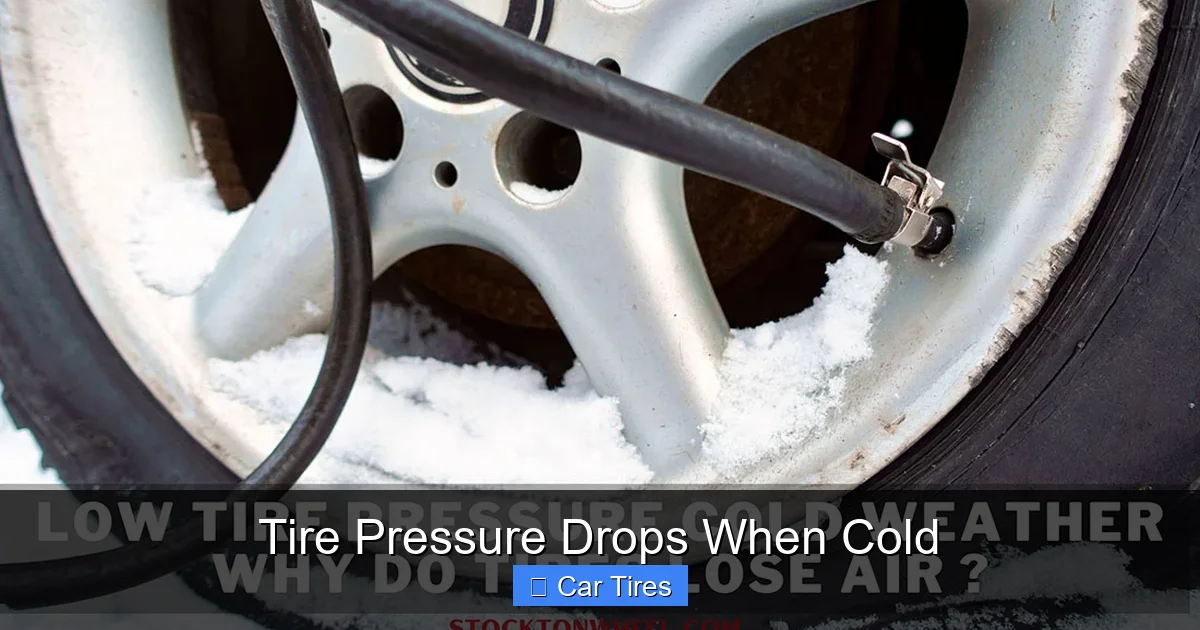
Tire pressure drops when cold because air contracts in lower temperatures, reducing the pressure inside your tires. This natural phenomenon can affect fuel efficiency, handling, and tire wear if left unchecked. Regularly checking and adjusting tire pressure during colder months is essential for safe driving.
In This Article
- 1 Key Takeaways
- 2 📑 Table of Contents
- 3 Why Tire Pressure Drops When Cold
- 4 How Cold Weather Affects Your Vehicle’s Performance
- 5 How to Check and Maintain Proper Tire Pressure
- 6 Seasonal Tips for Cold Weather Driving
- 7 Myths and Misconceptions About Tire Pressure
- 8 Conclusion
- 9 Frequently Asked Questions
- 9.1 Why does tire pressure drop in cold weather?
- 9.2 How often should I check tire pressure in winter?
- 9.3 Can I rely on my car’s TPMS instead of manual checks?
- 9.4 Should I inflate my tires to the number on the sidewall?
- 9.5 What happens if I drive with underinflated tires?
- 9.6 Can I overinflate tires to compensate for cold weather?
Key Takeaways
- Temperature affects tire pressure: For every 10°F drop in temperature, tire pressure decreases by about 1 PSI.
- Cold weather causes air contraction: As temperatures fall, air molecules inside tires move slower and take up less space, lowering pressure.
- Underinflated tires reduce fuel efficiency: Low pressure increases rolling resistance, causing your engine to work harder and burn more fuel.
- Safety risks increase with low pressure: Poor handling, longer braking distances, and higher risk of blowouts are common with underinflated tires.
- Check tire pressure monthly: Use a reliable gauge when tires are cold (not driven for at least 3 hours) for accurate readings.
- Use the manufacturer’s recommended PSI: Found on the driver’s door jamb or owner’s manual—not the max pressure listed on the tire sidewall.
- Consider seasonal adjustments: In winter, check pressure more frequently and top off as needed to maintain optimal performance.
📑 Table of Contents
Why Tire Pressure Drops When Cold
Have you ever stepped out on a chilly morning, turned the key in your car, and noticed the tire pressure warning light flicker on? You’re not alone. Many drivers experience this during colder months, and it’s not a sign of a faulty sensor or a leak—it’s actually a normal physical response to temperature changes. Understanding why tire pressure drops when cold can help you stay safe, save money on gas, and extend the life of your tires.
The science behind this is simple: air contracts when it gets cold. Just like how a balloon shrinks when placed in the freezer, the air inside your tires takes up less space as temperatures drop. This contraction reduces the pressure inside the tire, which is measured in pounds per square inch (PSI). For every 10-degree Fahrenheit decrease in temperature, tire pressure typically drops by about 1 PSI. So, if it’s 70°F one day and drops to 40°F the next, you could lose around 3 PSI—enough to trigger a warning light on many modern vehicles.
This effect isn’t just limited to winter mornings. Even seasonal shifts from summer to fall can cause noticeable pressure drops. If you’ve ever inflated your tires in warm weather and then noticed they were underinflated a few weeks later as the weather cooled, this is why. It’s a predictable and repeatable phenomenon rooted in the ideal gas law, which states that pressure and temperature are directly related when volume is constant.
The Science Behind Air Contraction
To really grasp why tire pressure drops when cold, let’s break it down a bit more. Air is made up of tiny molecules that are constantly moving. When the temperature rises, these molecules move faster and spread out, increasing pressure. When it gets cold, they slow down and pack closer together, reducing pressure.
Think of it like a crowded room. When people are excited (warm), they move around a lot and take up more space. But when they’re calm or sleepy (cold), they huddle together and occupy less room. The same principle applies to air molecules inside your tires.
This behavior is described by Charles’s Law, a fundamental gas law that states the volume of a gas is directly proportional to its temperature (when pressure is constant). While your tire’s volume doesn’t change much, the pressure does—because the air inside is getting denser as it cools. This is why even brand-new tires with no leaks can lose pressure in cold weather.
Real-World Examples of Cold Weather Pressure Loss
Let’s say you check your tire pressure on a warm autumn day when it’s 75°F, and all four tires read 35 PSI—perfectly within the recommended range. A few weeks later, winter arrives, and overnight temperatures drop to 25°F. That’s a 50-degree difference. Based on the 1 PSI per 10°F rule, your tires could now be reading around 30 PSI—a 5 PSI drop.
That might not sound like much, but it’s significant. Most vehicle manufacturers recommend a tire pressure between 30 and 35 PSI. Dropping to 30 PSI is still within range, but if it drops further—say, to 28 PSI—you’re now underinflated. And underinflated tires can lead to a host of problems, from poor fuel economy to increased risk of a blowout.
Another example: imagine you’re driving to a ski resort in the mountains. You start your trip on a mild 60°F day, and your tires are properly inflated. But as you climb higher, temperatures drop to 20°F. Even if you don’t stop to check your tires, the pressure is dropping with every degree. By the time you arrive, your tires could be several PSI below optimal—putting you at risk on winding mountain roads.
How Cold Weather Affects Your Vehicle’s Performance
Visual guide about Tire Pressure Drops When Cold
Image source: ohsbodyshop.com
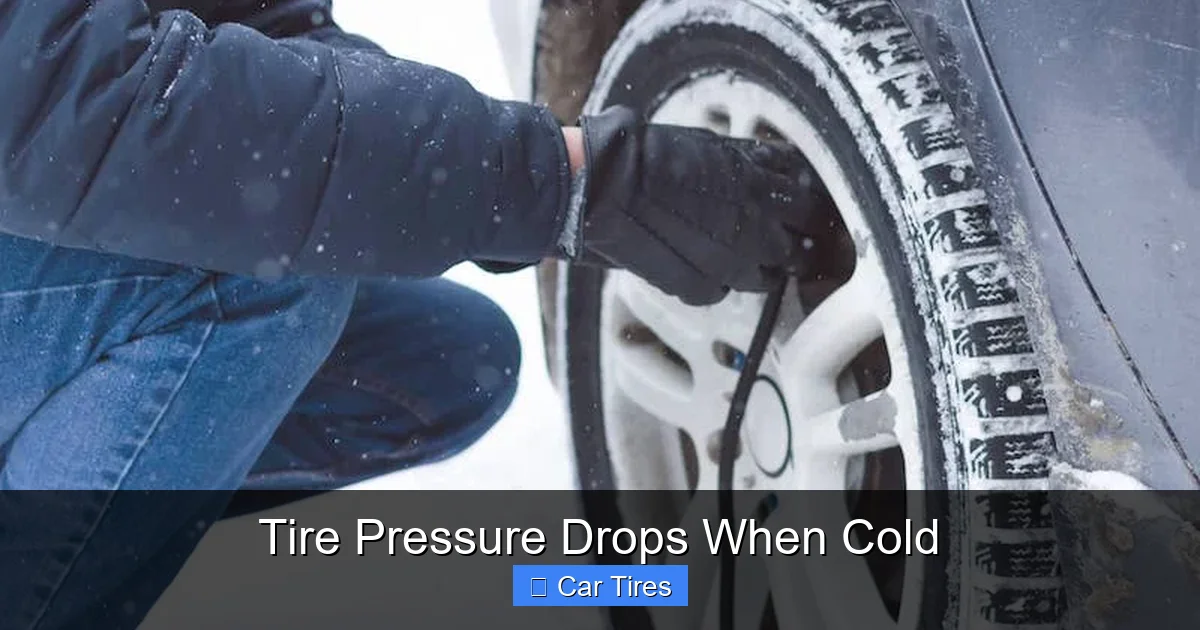
When tire pressure drops when cold, it doesn’t just affect the tires—it impacts your entire driving experience. From how your car handles to how much you spend at the pump, underinflated tires can have wide-ranging consequences.
One of the most noticeable effects is reduced fuel efficiency. When tires are underinflated, they have a larger contact patch with the road. This increases rolling resistance—the force needed to keep the tires moving. Your engine has to work harder to overcome this resistance, which means it burns more fuel. Studies have shown that driving with tires underinflated by just 5 PSI can reduce fuel economy by up to 2%. Over time, that adds up to hundreds of dollars in wasted fuel.
But fuel economy isn’t the only concern. Handling and braking performance also suffer. Underinflated tires are more flexible, which can lead to sluggish steering and reduced responsiveness. In emergency situations, this could mean the difference between avoiding an accident and a collision. Additionally, braking distances increase because the tire doesn’t maintain optimal contact with the road surface.
Safety Risks of Underinflated Tires
Safety is the biggest reason to keep an eye on tire pressure, especially in cold weather. Underinflated tires generate more heat due to increased flexing of the sidewalls. This heat buildup can weaken the tire structure over time, increasing the risk of a blowout—especially at highway speeds.
Blowouts are dangerous not just because they can cause you to lose control of your vehicle, but also because they often happen suddenly and without warning. A tire that’s been underinflated for weeks might seem fine until it reaches a critical point and fails.
Another safety issue is reduced traction. Cold weather already makes roads more slippery due to ice, snow, or wet conditions. Underinflated tires compound this problem by reducing the tire’s ability to grip the road. This is especially dangerous during cornering or sudden maneuvers.
Impact on Tire Wear and Longevity
Driving on underinflated tires doesn’t just affect performance—it also shortens the life of your tires. When a tire is underinflated, the outer edges (shoulders) bear more of the vehicle’s weight than the center of the tread. This leads to uneven wear, with the shoulders wearing down faster than the middle.
Over time, this uneven wear can make the tire unsafe and require early replacement. Tires are expensive—often $100 or more per tire—so replacing them prematurely is a significant financial burden. Proper inflation ensures even weight distribution across the tread, promoting uniform wear and maximizing tire life.
Additionally, underinflated tires are more prone to damage from potholes, curbs, and other road hazards. The sidewalls are more flexible and less able to absorb impacts, increasing the risk of cuts, bulges, or punctures.
How to Check and Maintain Proper Tire Pressure
Visual guide about Tire Pressure Drops When Cold
Image source: tiregrades.com
Now that you understand why tire pressure drops when cold, the next step is knowing how to check and maintain it. The good news is that it’s simple, quick, and doesn’t require any special tools—just a tire pressure gauge and access to an air pump.
The first rule of thumb: always check tire pressure when the tires are cold. This means the vehicle hasn’t been driven for at least three hours, or has been driven less than a mile at low speed. Why? Because driving generates heat, which increases tire pressure. Checking a warm tire will give you a falsely high reading, leading you to underinflate it.
Step-by-Step Guide to Checking Tire Pressure
1. **Find the recommended PSI:** Look for a sticker on the driver’s side door jamb, inside the fuel door, or in your owner’s manual. This number is the manufacturer’s recommended pressure—not the maximum pressure listed on the tire sidewall.
2. **Remove the valve cap:** Unscrew the small cap on the tire’s valve stem. Keep it safe so you don’t lose it.
3. **Press the gauge onto the valve stem:** Firmly press a digital or analog tire pressure gauge onto the stem. You’ll hear a brief hiss of air—that’s normal. Hold it steady until the reading stabilizes.
4. **Read the pressure:** Check the gauge display. Compare it to the recommended PSI.
5. **Add or release air as needed:** If the pressure is too low, use an air pump to add air. If it’s too high, press the center of the valve stem briefly to release some air, then recheck.
6. **Replace the valve cap:** Screw it back on securely to keep dirt and moisture out.
Repeat this process for all four tires, and don’t forget the spare if your vehicle has one.
When and How Often to Check
Experts recommend checking tire pressure at least once a month. But during colder months, consider checking it every two weeks. Temperature swings are more dramatic in fall and winter, so your tires are more likely to lose pressure quickly.
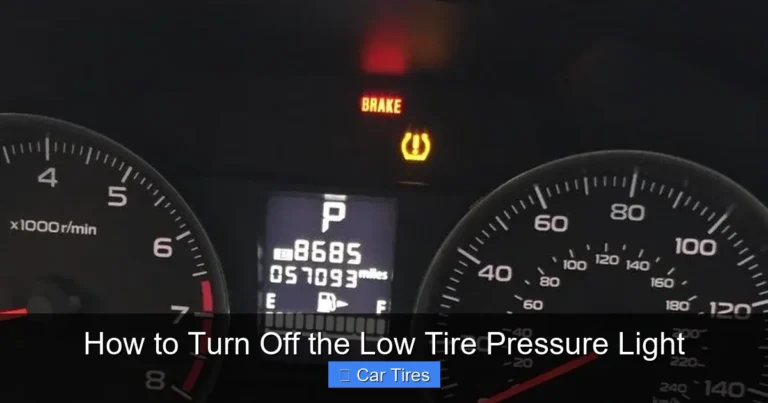
If you notice the tire pressure warning light come on, don’t ignore it. Pull over safely and check your tires as soon as possible. Many modern vehicles have a TPMS (Tire Pressure Monitoring System) that alerts you when pressure drops below a certain threshold—usually around 25% below the recommended level.
Using the Right Tools
Not all tire pressure gauges are created equal. Stick-on gauges that attach to the valve stem are convenient but often inaccurate. For reliable readings, use a digital or dial gauge. Digital gauges are easy to read and often more precise, while dial gauges are durable and don’t require batteries.
You can find quality gauges at auto parts stores, gas stations, or online for under $20. Some gas stations also have air pumps with built-in gauges, but these can be less accurate—especially if they’re old or poorly maintained. It’s always best to use your own gauge.
Seasonal Tips for Cold Weather Driving
Visual guide about Tire Pressure Drops When Cold
Image source: tiregrades.com
Winter driving presents unique challenges, and tire pressure is a big part of that. Here are some practical tips to help you stay safe and maintain optimal tire performance during colder months.
Pre-Winter Tire Inspection
Before the first frost, take your car in for a full tire inspection. A professional can check for tread depth, signs of uneven wear, and any damage that could worsen in cold weather. They can also verify that your tires are properly inflated and balanced.
If your tires are nearing the end of their life (tread depth below 4/32 of an inch), consider replacing them before winter hits. Winter tires are designed with softer rubber compounds that stay flexible in cold temperatures, providing better grip on snow and ice. Even if you don’t live in a snowy area, winter tires can improve safety in cold, wet conditions.
Keep a Portable Air Compressor
A portable air compressor is a lifesaver in winter. These compact devices plug into your car’s 12-volt outlet and can inflate a flat or underinflated tire in minutes. Some models even come with built-in pressure gauges and automatic shut-off features.
Keep one in your trunk or glove compartment, along with a tire pressure gauge. That way, if you notice low pressure on a cold morning, you can top off your tires without having to drive to a gas station—where the air pump might be frozen or out of order.
Avoid Overinflating in Cold Weather
It’s tempting to overinflate your tires in winter to compensate for pressure loss. But this can be just as dangerous as underinflating. Overinflated tires have a smaller contact patch, reducing traction and increasing the risk of hydroplaning on wet roads. They’re also more prone to blowouts from road impacts.
Stick to the manufacturer’s recommended PSI, even in cold weather. The TPMS is calibrated for that specific pressure, and deviating from it can trigger false warnings or mask real problems.
Park in a Garage When Possible
If you have access to a garage, use it. Parking your car indoors helps moderate temperature swings, reducing the rate at which tire pressure drops. Even an unheated garage is warmer than outside, especially overnight.
If you don’t have a garage, try to park in a sheltered area—like under a carport or near a building—to minimize exposure to wind and extreme cold.
Myths and Misconceptions About Tire Pressure
There are several myths about tire pressure that can lead to confusion—and unsafe driving practices. Let’s clear up some of the most common ones.
Myth: The Number on the Tire Sidewall Is the Recommended PSI
Many people assume the number printed on the tire sidewall (e.g., “MAX PRESS 44 PSI”) is the correct pressure to use. But this is the maximum pressure the tire can safely hold—not the recommended pressure for your vehicle.
Using the sidewall number can lead to overinflation, which reduces traction, increases wear in the center of the tread, and makes the ride harsher. Always refer to the door jamb sticker or owner’s manual for the correct PSI.
Myth: TPMS Means You Don’t Need to Check Manually
While TPMS is a helpful tool, it’s not a substitute for regular manual checks. Most systems only alert you when pressure drops significantly—often 25% below recommended. That means your tires could be underinflated for weeks before the light comes on.
Also, TPMS sensors can fail or lose battery power over time. Relying solely on the system could leave you driving on underinflated tires without knowing it.
Myth: Tire Pressure Doesn’t Change Much in Winter
Some drivers believe that because they checked their tires in fall, they’re fine for the whole winter. But as we’ve seen, temperature swings can cause rapid pressure changes. A warm spell followed by a cold snap can drop pressure by several PSI in just a few days.
Regular checks are essential—especially during seasonal transitions.
Myth: All Tires Lose Pressure at the Same Rate
In reality, tire pressure loss can vary between tires due to differences in valve stems, rim seals, or minor leaks. One tire might lose pressure faster than the others, even if they’re the same model and age.
That’s why it’s important to check all four tires individually, not just assume they’re all the same.
Conclusion
Tire pressure drops when cold—it’s a simple fact of physics that every driver should understand. As temperatures fall, the air inside your tires contracts, reducing pressure and potentially compromising safety, fuel efficiency, and tire life. But with regular checks, the right tools, and a bit of seasonal awareness, you can stay ahead of the problem.
Make it a habit to check your tire pressure at least once a month, and more often during colder months. Use a reliable gauge, follow the manufacturer’s recommended PSI, and don’t ignore warning lights. A few minutes of maintenance can save you money, improve your driving experience, and keep you safe on the road.
Remember, your tires are the only part of your car that touches the road. Keeping them properly inflated isn’t just about avoiding a warning light—it’s about protecting yourself, your passengers, and everyone else on the road.
Frequently Asked Questions
Why does tire pressure drop in cold weather?
Tire pressure drops when cold because air contracts as temperatures decrease. For every 10°F drop, pressure typically falls by about 1 PSI. This is a normal physical reaction and not a sign of a leak.
How often should I check tire pressure in winter?
Check your tire pressure at least once a month, but consider checking every two weeks during colder months. Temperature swings are more extreme in winter, leading to faster pressure loss.
Can I rely on my car’s TPMS instead of manual checks?
No. TPMS only alerts you when pressure drops significantly—often 25% below recommended. It’s best to manually check your tires monthly for accurate, proactive maintenance.
Should I inflate my tires to the number on the sidewall?
No. The sidewall shows the maximum pressure the tire can hold, not the recommended pressure for your vehicle. Always use the PSI listed on the driver’s door jamb or owner’s manual.
What happens if I drive with underinflated tires?
Driving with underinflated tires reduces fuel efficiency, increases braking distance, causes uneven tire wear, and raises the risk of blowouts—especially in cold weather.
Can I overinflate tires to compensate for cold weather?
No. Overinflating reduces traction, increases center tread wear, and makes the ride harsher. Stick to the recommended PSI to maintain safety and performance.