Tire Feels Like It’s Wobbling
If your tire feels like it’s wobbling, don’t ignore it—this could signal serious safety issues like unbalanced wheels, worn suspension, or bent rims. Addressing the problem early can prevent accidents, improve handling, and extend tire life.
Have you ever been driving down the road, maybe cruising at 60 mph on the highway, when suddenly your steering wheel starts shaking? Or worse—you feel a rhythmic wobble coming from one of your tires, like it’s dancing on the pavement? That unsettling sensation isn’t just annoying; it’s a red flag. When your tire feels like it’s wobbling, it’s your car’s way of saying, “Hey, something’s not right down here.”
This kind of vibration or wobble can happen at low speeds, but it’s most noticeable when you’re driving faster—usually between 50 and 70 mph. You might feel it in the steering wheel, the seat, or even the entire vehicle. Some drivers describe it as a “shimmy,” a “shake,” or a “pulsing” feeling. No matter how you describe it, one thing’s for sure: it’s not normal, and it shouldn’t be ignored.
The good news? In most cases, a wobbling tire isn’t a sign of imminent disaster. But it *is* a symptom that needs attention—fast. Left unchecked, that wobble can lead to uneven tire wear, poor handling, and even dangerous driving conditions. The key is figuring out *why* it’s happening so you can fix it before it gets worse. Whether you’re a weekend driver or a daily commuter, understanding the causes and solutions can save you time, money, and stress.
In This Article
Key Takeaways
- Unbalanced tires are the #1 cause of wobbling: Over time, weight distribution changes, causing vibrations—especially at higher speeds.
- Worn suspension components can mimic tire wobble: Struts, ball joints, and tie rods wear out and affect wheel stability.
- Bent or damaged rims lead to uneven rotation: Hitting potholes or curbs can warp rims, creating a visible wobble.
- Improper tire installation matters: Incorrectly mounted or over/under-inflated tires can cause instability.
- Wheel misalignment affects handling and wear: Even slight misalignment can cause wobbling and uneven tread wear.
- Regular maintenance prevents most wobble issues: Routine checks for balance, alignment, and suspension health keep your ride smooth.
- Ignoring wobbling can be dangerous: It may lead to loss of control, blowouts, or accidents—especially at highway speeds.
📑 Table of Contents
What Does a Wobbling Tire Feel Like?
When a tire wobbles, the sensation can vary depending on the cause and severity. But most drivers report a few common experiences. You might feel a side-to-side shaking in the steering wheel, especially when accelerating or braking. Some describe it as a “wobble” or “shimmy” that gets stronger as speed increases. Others notice a vibration through the floor or seat, making the whole car feel unstable.
For example, imagine you’re driving on a smooth highway. At 55 mph, everything feels fine. But as you hit 65 mph, the steering wheel starts to shake—not violently, but enough to make you grip it tighter. That’s a classic sign of tire imbalance. Or maybe you feel a rhythmic thumping from the rear, like a drumbeat under your seat. That could point to a damaged tire or bent rim.
The wobble might come and go, or it could be constant. It might worsen when you brake, suggesting a warped rotor (though that’s more of a brake issue than a tire one). But if the wobble is clearly coming from the tire—especially if it’s isolated to one wheel—then it’s time to dig deeper.
It’s also important to note where you feel the wobble. If it’s mostly in the steering wheel, the problem is likely in the front tires. If it’s in the seat or rear of the car, the issue is probably in the back. This can help you and your mechanic narrow down the source.
Top Causes of a Wobbling Tire

Visual guide about Tire Feels Like It’s Wobbling
Image source: bryansgarage.com
There are several reasons why your tire might feel like it’s wobbling. Some are simple fixes, while others require more involved repairs. Let’s break down the most common causes so you can understand what might be going on under your car.
1. Unbalanced Tires
This is the number one culprit behind tire wobbling. Tires are balanced using small weights attached to the wheel. Over time, these weights can fall off, or the tire’s weight distribution can shift due to wear, damage, or even temperature changes. When a tire is unbalanced, it doesn’t rotate evenly, causing vibrations that you feel through the steering wheel or chassis.
For instance, if you’ve recently had new tires installed but didn’t get them balanced, you might notice wobbling within the first few hundred miles. Or if you’ve driven over a deep pothole, a weight might have shaken loose. Unbalanced tires usually cause wobbling at higher speeds—say, 55 mph and up—and the vibration tends to get worse as you go faster.
The fix? A professional wheel balance. A technician will mount your wheel on a balancing machine, which spins it to detect uneven weight distribution. Then, they’ll add small weights to counterbalance the heavy spots. It’s a quick, affordable fix—usually under $20 per wheel—and it can make a huge difference in ride quality.
2. Bent or Damaged Rims
Your wheels aren’t just for looks—they’re critical to how your car handles. If you’ve hit a curb, driven through a deep pothole, or been in a minor collision, your rim might be bent. Even a slight bend can cause the tire to wobble as it spins, creating a side-to-side motion that feels like a shake or wobble.
You might not see the damage just by looking at the wheel, especially if it’s a small dent or warp. But if you notice wobbling that started after a bump or impact, a bent rim is a strong possibility. In some cases, the wobble is more noticeable at certain speeds—like between 60 and 70 mph—and may disappear at lower or higher speeds.
Fixing a bent rim can be tricky. Minor bends can sometimes be repaired by a professional wheel specialist using heat and pressure. But if the damage is severe, the rim may need to be replaced. Driving on a bent rim not only causes wobbling but can also lead to tire damage, air leaks, and unsafe handling.
3. Worn Suspension Components
Your car’s suspension system keeps your tires in contact with the road and absorbs shocks from bumps and potholes. But over time, parts like ball joints, tie rod ends, control arm bushings, and struts can wear out. When these components fail, they can cause your wheels to move unpredictably, leading to a wobbling sensation.
For example, worn ball joints can allow the wheel to shift slightly as it turns, creating a shaky or loose feeling. Similarly, bad tie rods can cause the front wheels to wobble independently, especially when turning. You might also notice uneven tire wear or a pulling sensation when driving straight.
Suspension issues often develop gradually, so you might not notice them at first. But if your wobbling started slowly and has gotten worse over time, worn suspension parts could be the cause. A mechanic can inspect these components during a routine check or alignment service.
4. Improper Tire Installation
Even the best tires can cause problems if they’re not installed correctly. If a tire isn’t seated properly on the rim, or if the lug nuts aren’t tightened evenly, it can lead to wobbling. This is especially common after a tire rotation or replacement.
Imagine you just got new tires put on. The technician mounts them, inflates them, and sends you on your way. But if one of the tires wasn’t fully seated on the rim, or if the lug nuts were tightened in the wrong order, the wheel might not spin smoothly. This can cause a wobble that feels like it’s coming from the tire itself.
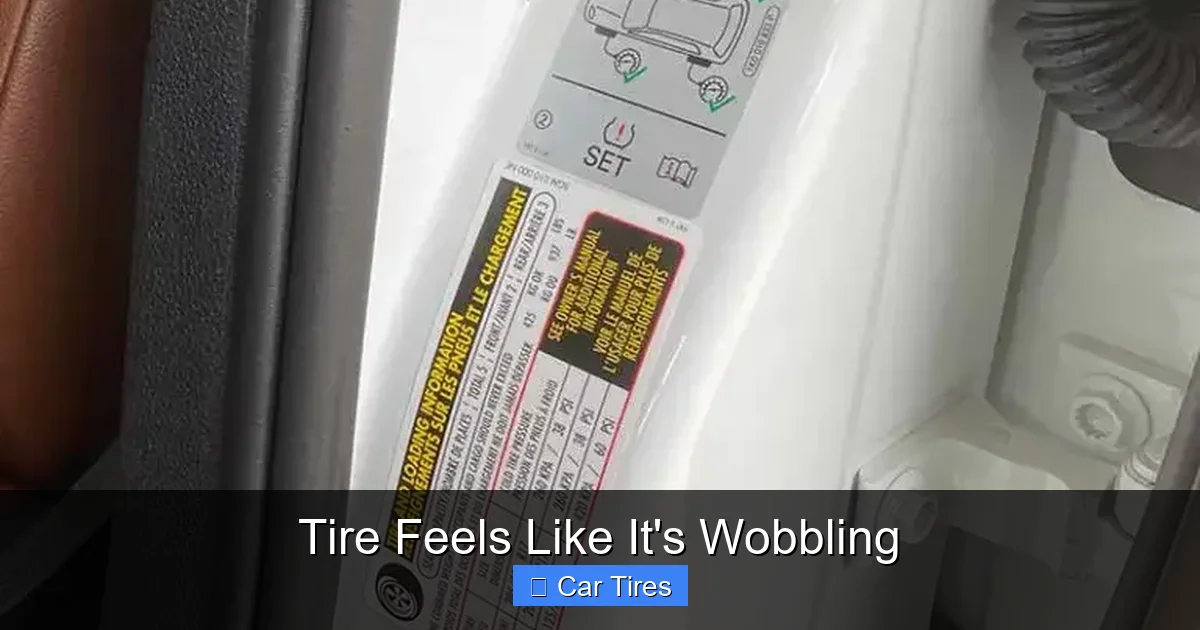
Another issue is over- or under-inflation. Tires that are too full or too flat don’t make even contact with the road, which can lead to vibrations. Always check your tire pressure regularly—ideally once a month—and keep it at the level recommended in your owner’s manual or on the door jamb sticker.
5. Wheel Misalignment
Your wheels need to be aligned so they point in the same direction and make even contact with the road. If your alignment is off—even slightly—it can cause wobbling, uneven tire wear, and poor handling. Misalignment often happens after hitting a curb, driving on rough roads, or after suspension repairs.
You might notice your car pulling to one side, or your steering wheel being off-center when driving straight. But alignment issues can also cause a subtle wobble, especially at higher speeds. A professional alignment service can measure your wheel angles and adjust them to factory specifications.
6. Damaged or Worn Tires
Sometimes, the tire itself is the problem. Tires can develop bulges, bubbles, or flat spots due to impact damage, manufacturing defects, or age. A bulge on the sidewall, for example, creates an uneven surface that causes wobbling as the tire rotates.
Flat spots can happen if you brake hard and lock up the wheels, especially in cold weather. This creates a flat section on the tread that causes a thumping sensation. And as tires wear down, their shape can change, leading to imbalance and vibration.
Always inspect your tires regularly for signs of damage, uneven wear, or low tread depth. If you see a bulge, crack, or unusual wear pattern, it’s time to replace the tire.
How to Diagnose a Wobbling Tire

Visual guide about Tire Feels Like It’s Wobbling
Image source: tiregrades.com
Figuring out why your tire is wobbling doesn’t have to be a guessing game. With a few simple checks, you can narrow down the cause and decide whether you need a professional inspection.
Step 1: Note When and Where You Feel the Wobble
Start by paying attention to *when* the wobble happens. Does it occur only at certain speeds? Does it get worse when you brake or accelerate? Is it in the steering wheel, seat, or floor?
For example, if the wobble starts at 60 mph and gets stronger at 70 mph, it’s likely a balance or alignment issue. If it happens only when braking, it could be warped rotors. If it’s in the rear, focus on the back tires and suspension.
Step 2: Inspect the Tires and Wheels
Look at each tire for visible damage. Check for bulges, cracks, uneven wear, or foreign objects like nails or stones. Spin the wheels by hand (when the car is safely lifted) to see if they wobble visibly.
Also, check the tire pressure. Use a reliable gauge to make sure all four tires are inflated to the correct PSI. Low or high pressure can cause wobbling.
Step 3: Check for Loose or Worn Parts
With the car on the ground, try rocking each wheel side to side and up and down. If there’s excessive play, it could indicate worn ball joints, tie rods, or wheel bearings. Listen for clunking noises when you do this—another sign of looseness.
You can also look for signs of leaking fluid near the struts or shocks, which could mean they’re failing.
Step 4: Take It for a Test Drive
Drive at different speeds and note when the wobble occurs. Try driving on smooth roads versus rough ones. If the wobble disappears on smooth pavement, it might be related to road conditions or tire wear.
Step 5: Visit a Professional
If you can’t pinpoint the cause, or if the wobble is severe, take your car to a trusted mechanic or tire shop. They have the tools and expertise to perform a full inspection, including a road force balance, alignment check, and suspension evaluation.
How to Fix a Wobbling Tire
Visual guide about Tire Feels Like It’s Wobbling
Image source: tiregrades.com
Once you’ve identified the cause, the fix is usually straightforward. Here’s how to address the most common issues:
Get Your Tires Balanced
If unbalanced tires are the culprit, a wheel balance is the solution. Most shops can do this in 30–60 minutes. They’ll remove the wheels, spin them on a balancer, and add weights as needed. Cost: $15–$25 per wheel.
Repair or Replace Damaged Rims
For bent rims, consult a wheel repair specialist. Minor bends can often be fixed, but severe damage may require a new rim. Don’t try to drive on a badly bent wheel—it’s unsafe and can damage your tire.
Replace Worn Suspension Parts
If ball joints, tie rods, or struts are worn, they’ll need to be replaced. This is a more involved repair, but it’s essential for safety and handling. A mechanic can inspect and replace these parts as needed.
Reinstall or Replace Tires
If the wobble is due to improper installation, the tire may need to be remounted. If the tire is damaged or worn, replace it. Always replace tires in pairs (both front or both rear) to maintain balance.
Get a Wheel Alignment
After any suspension work or tire replacement, get an alignment. This ensures your wheels are pointing in the right direction and will prevent future wobbling and uneven wear.
Preventing Tire Wobbling in the Future
The best way to deal with a wobbling tire is to avoid it altogether. Regular maintenance and smart driving habits can go a long way.
Rotate Your Tires Regularly
Most manufacturers recommend rotating your tires every 5,000 to 7,500 miles. This helps ensure even wear and can prevent imbalance.
Check Tire Pressure Monthly
Use a tire pressure gauge to check all four tires (and the spare) once a month. Adjust as needed, especially before long trips or in extreme temperatures.
Inspect Tires and Wheels Often
Look for signs of damage, wear, or loose parts. Catching issues early can prevent wobbling and more serious problems.
Avoid Potholes and Curbs
Whenever possible, steer clear of deep potholes, curbs, and debris. These can damage rims, tires, and suspension components.
Get Regular Maintenance
Include tire balance, alignment, and suspension checks in your routine service schedule. Many shops offer multi-point inspections that cover these areas.
When to See a Mechanic Immediately
While some wobbling issues are minor, others can be dangerous. Seek professional help right away if:
– The wobble is severe or getting worse.
– You hear clunking, grinding, or rubbing noises.
– The car pulls strongly to one side.
– You notice smoke, fluid leaks, or a burning smell.
– The wobble happens at low speeds or when braking.
These could indicate serious problems like failing wheel bearings, broken suspension parts, or brake issues—all of which require immediate attention.
Conclusion
A tire that feels like it’s wobbling is more than just a nuisance—it’s a warning sign that something’s not right with your vehicle. Whether it’s unbalanced tires, a bent rim, worn suspension, or misalignment, the cause is usually fixable with the right diagnosis and repair.
Don’t ignore the wobble. The sooner you address it, the safer your drive will be, and the longer your tires and suspension will last. Regular maintenance, careful driving, and prompt repairs are the best ways to keep your ride smooth, stable, and safe.
Remember: your tires are the only part of your car that touches the road. Keeping them in top condition isn’t just about comfort—it’s about safety. So the next time your tire feels like it’s wobbling, take it seriously. Your car—and your peace of mind—will thank you.
Frequently Asked Questions
Why does my tire wobble at high speeds?
Tire wobbling at high speeds is often caused by unbalanced tires, which create vibrations as they spin. Other causes include bent rims, misalignment, or worn suspension parts. The wobble typically worsens as speed increases because the imbalance becomes more pronounced.
Can a wobbling tire cause an accident?
Yes, a severely wobbling tire can lead to loss of control, especially at highway speeds. It may cause poor handling, uneven braking, or even a blowout. Addressing the issue promptly reduces the risk of accidents and improves overall driving safety.
How much does it cost to fix a wobbling tire?
Costs vary depending on the cause. A wheel balance typically costs $15–$25 per tire. Rim repairs range from $50 to $200, while suspension repairs can cost $200–$800 or more. Getting a proper diagnosis first helps avoid unnecessary expenses.
Can I drive with a wobbling tire?
It’s not recommended. While minor wobbling might seem manageable, it can worsen quickly and lead to tire damage, suspension failure, or unsafe handling. Limit driving and see a mechanic as soon as possible.
How often should I balance my tires?
Tires should be balanced whenever they’re replaced, rotated, or if you notice vibrations. Many experts recommend checking balance every 10,000 to 12,000 miles or during routine maintenance.
Will a wheel alignment fix a wobbling tire?
Not always. Alignment corrects wheel angles but won’t fix unbalanced tires or bent rims. However, misalignment can contribute to wobbling, so it’s often part of the solution—especially after suspension work or tire replacement.