
Tinting Your Car’s Tail Lights: Laws

Tinting your car’s tail lights can enhance style, but it’s not just about looks—safety and legality matter most. Laws vary by state and country, and improper tinting can lead to failed inspections, tickets, or even accidents. Always check local regulations before applying any film or spray.
So, you’ve got your ride looking sharp—custom rims, a fresh paint job, maybe even some underglow. But now you’re thinking about taking it up a notch with tinted tail lights. After all, those sleek, smoked-out rear ends look straight out of a movie, right? We get it. Tail light tinting has become a popular mod among car enthusiasts who want to give their vehicle a more aggressive or modern appearance. But before you grab that spray can or roll of tint film, there’s something crucial you need to know: **tinting your car’s tail lights isn’t just a style choice—it’s a legal and safety issue**.
While a dark, smoky finish might look cool, it can seriously reduce the brightness of your brake lights, turn signals, and reverse lights. That means other drivers might not see you stopping or turning in time, especially at night or in bad weather. And that’s exactly why governments regulate how much—if any—tinting is allowed on tail lights. The rules aren’t just suggestions; they’re designed to prevent accidents and keep everyone safer on the road.
In this guide, we’ll walk you through everything you need to know about tinting your car’s tail lights legally. From understanding federal guidelines to navigating state-specific laws, we’ll cover the dos and don’ts so you can make an informed decision. Whether you’re planning a DIY project or considering professional installation, knowing the laws will save you time, money, and potential legal trouble down the line.
Key Takeaways
- Tail light tinting is regulated for safety: Laws exist to ensure your brake lights, turn signals, and reverse lights remain visible to other drivers.
- State laws differ significantly: Some states allow moderate tinting, while others ban it completely—always verify your local DMV or transportation department rules.
- Red and amber lights have strict rules: Brake lights must emit red light, and turn signals must be amber; tinting that alters these colors is typically illegal.
- Film vs. spray tinting matters: Pre-cut films are often easier to remove and may be more compliant than permanent spray-on coatings.
- Law enforcement can issue citations: Even if your car passes inspection, an officer can pull you over for obscured lighting during routine stops.
- DIY tinting risks include peeling and bubbling: Poor application can reduce visibility further and create distractions or hazards.
- When in doubt, consult a professional: A certified automotive shop can help you choose legal, high-quality tinting options that meet local standards.
📑 Table of Contents
Why Tail Light Visibility Matters
Let’s start with the basics: why do tail lights need to be visible in the first place? It might seem obvious, but understanding the “why” behind the rules helps explain why tinting restrictions exist.
Your tail lights serve several critical functions. First, they signal to drivers behind you when you’re braking. Second, they indicate when you’re turning left or right. Third, they help illuminate your vehicle’s rear at night so others can see you. Each of these functions relies on bright, clear lighting that can be seen from a distance—especially in low-visibility conditions like rain, fog, or darkness.
When you apply tint to your tail lights, you’re essentially reducing the amount of light that passes through the lens. Even a thin layer of dark film can cut down brightness by 20% to 50%, depending on the material and application. That might not sound like much, but in real-world driving scenarios, that difference could mean the driver behind you doesn’t notice you’ve hit the brakes until it’s too late.
Consider this: at highway speeds, a car traveling at 65 mph covers about 95 feet per second. If the driver behind you needs an extra half-second to react because your brake lights are dimmer than they should be, that’s nearly 50 feet of lost stopping distance. In heavy traffic or sudden braking situations, that gap could easily result in a rear-end collision.
Moreover, modern vehicles are equipped with advanced safety systems like automatic emergency braking and collision warnings. These systems often rely on visual cues from other cars—including tail light brightness—to assess risk. If your lights are too dim, these systems might not detect your vehicle properly, reducing their effectiveness.
The Role of Color in Tail Light Function
Another key factor is color. Federal Motor Vehicle Safety Standards (FMVSS) require that brake lights emit red light and turn signals emit amber (yellow) light. These colors were chosen for a reason: they’re highly visible and easily distinguishable from other light sources on the road.
Tinting that changes the perceived color of your lights—for example, making red brake lights appear brown or black—is almost always illegal. Even if the actual bulb still emits red light, a dark tint can distort how that color appears to other drivers. This confusion can lead to delayed reactions or misinterpretation of your intentions.
For instance, if your brake lights look dark or non-functional because of heavy tinting, another driver might assume you’re not braking and continue accelerating—only to realize too late that you’ve stopped. Similarly, if your turn signal appears dim or off due to tinting, drivers may not know you’re about to change lanes or make a turn.
Real-World Consequences of Poor Visibility
There are countless stories of accidents caused by obscured or non-functioning lights. One well-documented case involved a driver who had heavily tinted his tail lights with spray paint. During a nighttime drive, he braked suddenly at a stop sign. The driver behind him, unable to see the dim red glow, rear-ended him at 30 mph. Fortunately, no one was seriously injured, but the crash could have been avoided if the lights had been properly visible.
In another example, a police officer in California pulled over a vehicle for having “non-illuminating” brake lights. Upon inspection, it was discovered that the owner had applied a thick layer of black tint film, completely blocking the light output. The driver received a citation and was required to remove the tint immediately.
These stories aren’t rare. Law enforcement agencies across the U.S. routinely issue warnings or tickets for improperly modified lighting. And while some drivers argue that their lights “still work,” the reality is that reduced visibility increases risk—even if the lights technically function.
Federal vs. State Regulations
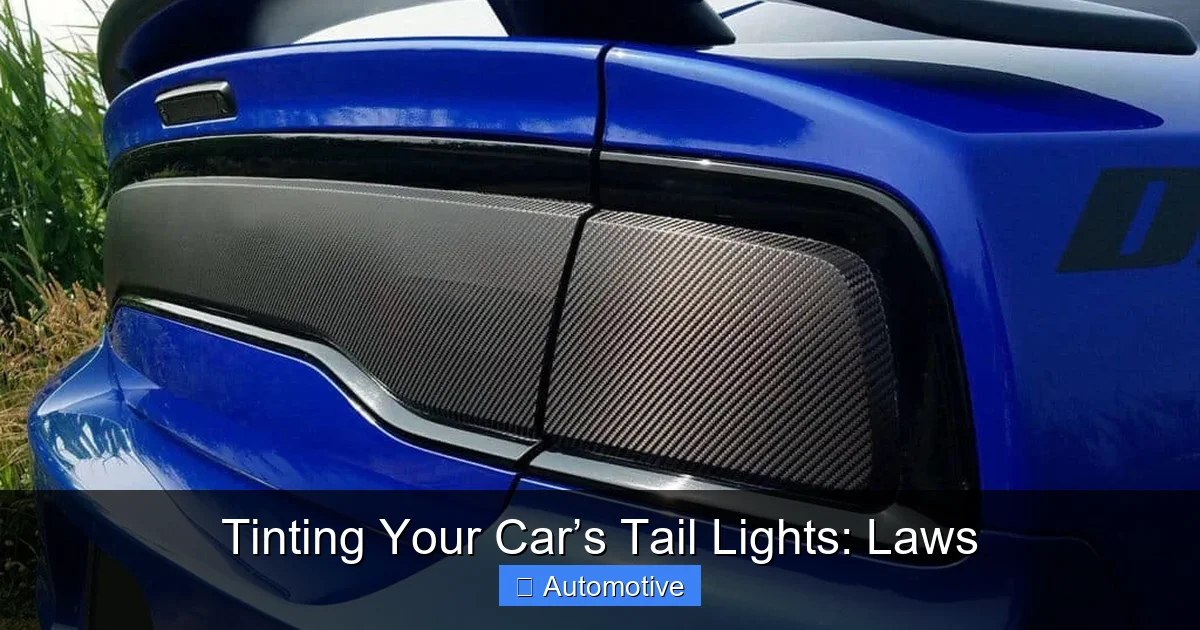
Visual guide about Tinting Your Car’s Tail Lights: Laws
Image source: low-offset.com
Now that we’ve covered why visibility matters, let’s talk about the rules. In the United States, vehicle lighting is governed by a combination of federal and state laws. Understanding the difference between the two is essential for staying compliant.
Federal Motor Vehicle Safety Standards (FMVSS)
At the federal level, the National Highway Traffic Safety Administration (NHTSA) sets minimum safety standards for all vehicles sold or operated in the U.S. These are known as the Federal Motor Vehicle Safety Standards (FMVSS), and they include specific requirements for lighting.
According to FMVSS No. 108, all passenger vehicles must have functioning brake lights, turn signals, and tail lights that meet certain brightness and color standards. The regulation states that lighting devices must be “clearly visible” from a specified distance—typically 500 feet during daylight and 1,000 feet at night.
While FMVSS doesn’t explicitly ban tinting, it does require that any modification to lighting must not reduce visibility below these thresholds. In practice, this means that if your tinted tail lights fail to meet the brightness requirements, they’re considered non-compliant—even if they technically “work.”
It’s also worth noting that FMVSS applies to new vehicles as manufactured. Once a car is on the road, states have the authority to set their own rules for aftermarket modifications, including tinting. This is where things get complicated.
State-by-State Variations
Unlike federal law, which sets a baseline, state laws can vary widely. Some states are relatively lenient and allow moderate tinting as long as the lights remain functional. Others have strict bans on any form of tail light tinting.
For example:
– **California**: Allows tinting only if the original lights are still clearly visible and functional. The law specifically prohibits any covering that obscures the red or amber color of brake lights and turn signals. Many enthusiasts use light-smoke films that reduce brightness slightly but don’t block the color.
– **Texas**: Permits tinting as long as the lights meet federal visibility standards. However, law enforcement can still issue a citation if they determine the lights are too dim.
– **New York**: Has some of the strictest rules. Any tinting that reduces light output is considered illegal, and vehicles may fail inspection if the lights appear darkened.
– **Florida**: Allows tinting but requires that brake lights remain clearly visible from 500 feet away. Inspections are less strict than in New York, but police can still pull you over for obscured lighting.
– **Arizona**: One of the more permissive states. Tinting is allowed as long as the lights function properly and aren’t completely blacked out.
These differences mean that a modification legal in one state might get you a ticket in another. If you travel frequently or move between states, it’s especially important to know the local rules.
Enforcement and Penalties
Even if your state allows some level of tinting, enforcement can still be strict. Police officers are trained to spot vehicles with non-compliant lighting during routine traffic stops. If they notice your tail lights are unusually dark or don’t illuminate properly, they can issue a citation.
Penalties vary by state but often include:
– A fine (typically $50–$200 for a first offense)
– A requirement to fix the issue within a set time frame
– Points on your driving record (in some states)
– Failure to pass annual vehicle inspection
In extreme cases—such as using spray paint to completely black out lights—you could face more serious charges, especially if an accident occurs and investigators determine that poor lighting contributed to the crash.
Types of Tail Light Tinting
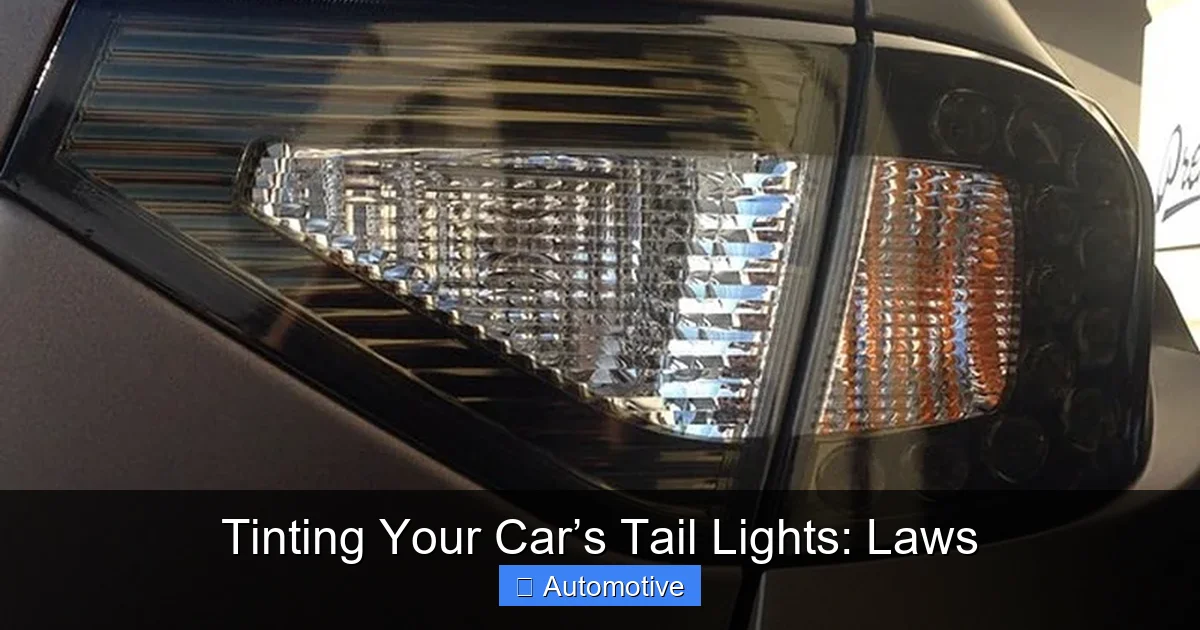
Visual guide about Tinting Your Car’s Tail Lights: Laws
Image source: low-offset.com
If you’re still interested in tinting your tail lights despite the risks, it’s important to understand the different methods available. Not all tinting is created equal, and some options are more likely to comply with the law than others.
Pre-Cut Vinyl Films
One of the most popular and legal-friendly options is pre-cut vinyl film. These are thin, adhesive-backed sheets designed specifically for tail lights. They come in various shades—light smoke, medium smoke, and dark smoke—and are applied like window tint.
The advantage of vinyl films is that they’re removable. If you move to a stricter state or decide you don’t like the look, you can peel them off without damaging the lens. High-quality films are also designed to allow light to pass through while reducing glare and UV exposure.
When choosing a film, look for products labeled as “DOT-compliant” or “street legal.” These are typically lighter in shade and engineered to meet federal visibility standards. Avoid ultra-dark films, especially those marketed as “limo tint” or “blackout,” as they’re almost certainly illegal.
Spray-On Tint
Spray-on tint is another option, but it comes with more risks. These products are applied like paint and bond directly to the lens surface. While they can create a smooth, seamless look, they’re much harder to remove and can permanently alter the appearance of your lights.
Spray tints often reduce light output more than films because they’re thicker and less transparent. They’re also prone to peeling, bubbling, and uneven application—especially if not applied by a professional. And because they’re permanent, you can’t easily revert to stock if you move or change your mind.
Due to these issues, many states treat spray-on tinting more strictly than film. In some cases, it’s outright banned.
Permanent Paint or Dye
Some DIYers attempt to tint their tail lights using regular spray paint or dye. This is strongly discouraged. Not only does it drastically reduce visibility, but it can also damage the plastic lens over time. Paint can crack, fade, or react with UV light, leading to cloudy or discolored lenses.
Additionally, painted lights are nearly impossible to restore to their original condition. If you’re caught with painted tail lights, you may be required to replace the entire assembly—costing hundreds of dollars.
LED Upgrades with Tinting
A safer alternative is upgrading to LED tail lights and then applying a light tint. LED bulbs are significantly brighter than traditional halogen bulbs, so even with a slight reduction from tinting, they may still meet visibility standards.
Many aftermarket LED tail light kits are designed to be DOT-compliant and come with built-in tinting or smoked lenses. These are often a better choice than modifying stock lights, as they’re engineered for both style and safety.
Just be sure to check that the specific model you’re buying is legal in your state. Some LED kits may look great but fail inspection due to improper flash patterns or color output.
How to Tint Your Tail Lights Legally
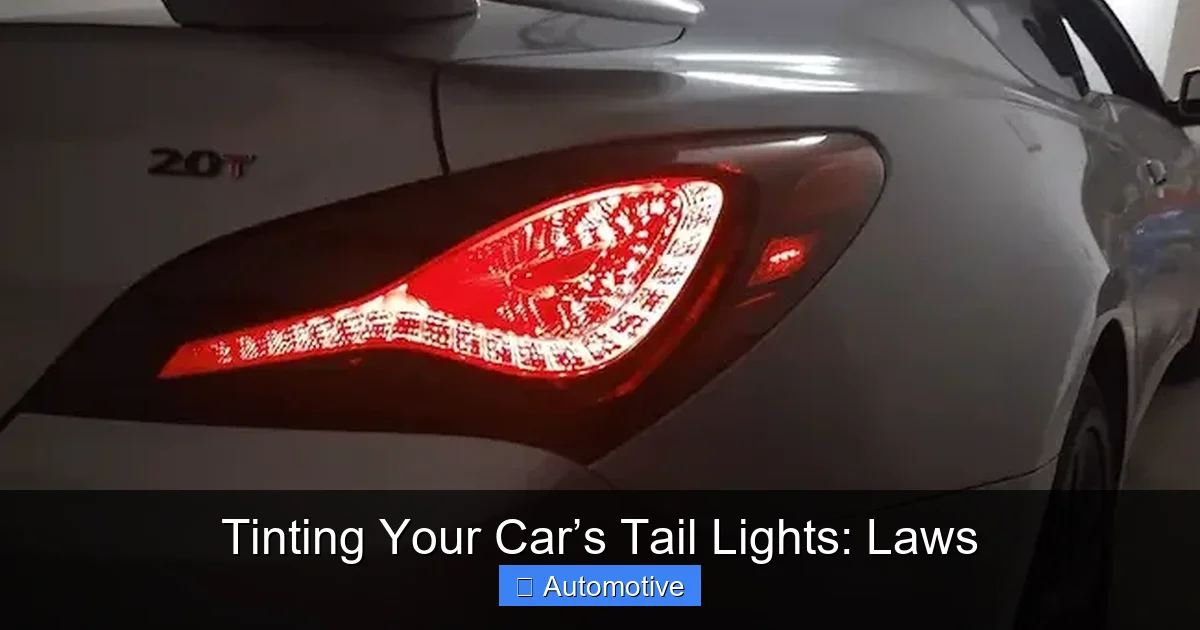
Visual guide about Tinting Your Car’s Tail Lights: Laws
Image source: windowtintlaws.us
If you’ve decided to proceed with tinting, here’s how to do it the right way—without breaking the law or compromising safety.
Step 1: Research Your State’s Laws
Before buying any product, check your state’s Department of Motor Vehicles (DMV) or equivalent agency website. Look for sections on vehicle lighting, modifications, or inspection requirements. Some states even have online tools that let you check if a specific modification is allowed.
If you’re unsure, call your local DMV or visit a certified inspection station. They can tell you exactly what’s permitted.
Step 2: Choose the Right Product
Opt for a high-quality, light-smoke vinyl film from a reputable brand. Avoid anything labeled “dark,” “blackout,” or “limo.” Look for films that are 50% or higher in light transmission—meaning at least half the light passes through.
Some recommended brands include Vivid Lighting, Lamin-X, and 3M. These companies offer DOT-compliant films specifically designed for tail lights.
Step 3: Prepare the Surface
Clean the tail lights thoroughly with soap and water, then wipe them down with isopropyl alcohol to remove any oils or residue. Any dirt or grease will prevent the film from adhering properly and can cause bubbles or peeling.
Step 4: Apply the Film Carefully
Follow the manufacturer’s instructions precisely. Most films require a spray solution (usually water and a drop of dish soap) to allow repositioning during application. Use a squeegee to smooth out air bubbles and ensure a tight seal around the edges.
Take your time—rushing can lead to wrinkles or misalignment. If you’re not confident in your skills, consider hiring a professional installer.
Step 5: Test the Lights
Once the film is applied and dried (usually 24–48 hours), test all your lights: brake, turn signals, reverse, and running lights. Have someone stand behind the car while you operate each function to ensure they’re bright and clearly visible.
If any light appears dim or discolored, remove the film immediately.
Step 6: Keep Documentation
Save the packaging and receipt for your tint film. If you’re pulled over or inspected, having proof that you used a legal product can help demonstrate compliance.
Alternatives to Tinting
If the legal risks or application challenges seem too high, consider these safer alternatives to achieve a similar look.
Smoked or Tinted OEM-Style Lights
Many manufacturers and aftermarket companies sell tail light assemblies with built-in smoked or tinted lenses. These are designed to meet federal and state standards while offering a darker appearance.
Because they’re made specifically for road use, they’re more likely to pass inspection and avoid legal issues. Plus, they often come with LED bulbs for improved brightness.
Light Covers or Overlays
Some companies offer snap-on covers that fit over your existing tail lights. These are removable and don’t require any adhesive, making them a low-risk option.
However, be cautious—some covers may still reduce visibility or trap moisture, leading to fogging or damage.
Custom Paint Jobs (on Non-Functional Areas)
If you’re set on a custom look, consider painting non-functional parts of the rear end—like the bumper or trim—instead of the lights themselves. This allows for personalization without affecting safety or legality.
Conclusion
Tinting your car’s tail lights can give your vehicle a bold, modern look—but it’s not without risks. The laws exist for a reason: to keep you and others safe on the road. While some states allow light tinting, others ban it outright, and enforcement can be strict.
Before you make any changes, always check your local regulations and choose high-quality, compliant products. When in doubt, consult a professional or opt for legal alternatives like smoked OEM-style lights.
Remember, style shouldn’t come at the cost of safety. A few extra seconds of visibility could make all the difference in preventing an accident. So tint smart, drive safe, and keep those lights shining bright.
Frequently Asked Questions
Is it legal to tint tail lights in all states?
No, tail light tinting laws vary by state. Some states allow light tinting if the lights remain visible, while others ban any form of tinting that reduces brightness. Always check your local DMV regulations before modifying your vehicle.
Can I get a ticket for tinted tail lights?
Yes, law enforcement can issue a citation if your tail lights are too dark or don’t meet visibility standards. Even in states that allow tinting, officers may pull you over if the lights appear obscured during a traffic stop.
What’s the difference between film and spray tinting?
Vinyl film is removable and often more compliant with laws, while spray-on tint is permanent and typically reduces light output more. Films are generally safer and easier to correct if needed.
Will tinted tail lights fail inspection?
It depends on your state’s inspection standards. In states with strict lighting rules—like New York or Illinois—tinted tail lights may cause your vehicle to fail inspection if they appear too dim.
Can I tint my brake lights if I use LED bulbs?
Possibly, but only if the combination still meets federal visibility standards. LED bulbs are brighter, so a light tint might be acceptable. However, you must ensure the final output remains clearly visible and legally compliant.
How do I remove tail light tint if it’s illegal?
For vinyl films, peel them off carefully using heat (like a hairdryer) to loosen the adhesive. For spray-on tint, you may need to sand and polish the lens or replace the entire assembly. Always test visibility after removal.