
Tinting the Front Windshield: What You Need to Know

Tinting the front windshield can reduce glare, block UV rays, and improve comfort, but it’s not as simple as slapping on a film. Laws vary by state, and choosing the right tint requires balancing visibility, legality, and performance. This guide covers what you need to know before making a decision.
So, you’re thinking about tinting your front windshield. Maybe you’ve noticed how much hotter your car gets in the summer sun, or perhaps you’re tired of squinting through blinding glare on your morning commute. Tinting seems like a smart fix—after all, it works great on side and rear windows, right? But when it comes to the front windshield, things get a little more complicated.
Unlike side windows, the front windshield plays a critical role in your safety. It’s not just a piece of glass—it’s part of your car’s structural integrity, supports airbag deployment, and is essential for clear visibility. That’s why tinting it requires more thought, research, and caution. You can’t just pick the darkest film off the shelf and call it a day. Laws, technology, and safety all come into play.
In this guide, we’ll walk you through everything you need to know about tinting the front windshield—from legal restrictions and film types to installation tips and long-term care. Whether you’re looking to reduce heat, protect your skin, or just improve your driving comfort, we’ve got you covered. Let’s dive in.
Key Takeaways
- Check your state laws first: Most states limit how dark you can tint the front windshield, often allowing only a clear or lightly shaded strip at the top.
- UV and heat protection matter: Even clear films can block up to 99% of UV rays and reduce interior heat, protecting your skin and dashboard.
- Not all tint films are equal: Ceramic and carbon films offer better heat rejection and durability than traditional dyed films.
- Professional installation is key: DIY kits often lead to bubbles, peeling, or uneven application—hire a certified installer for best results.
- Visibility and safety come first: Dark tints can reduce night visibility and interfere with cameras in advanced driver-assistance systems (ADAS).
- Warranty and maintenance matter: High-quality films often come with long warranties and require gentle cleaning to last.
- Consider alternatives: If full tint isn’t legal, UV-blocking glass or aftermarket visors may offer similar benefits.
📑 Table of Contents
- Understanding Windshield Tint Laws by State
- Benefits of Tinting the Front Windshield
- Types of Windshield Tint Films
- Professional Installation vs. DIY: What’s the Best Choice?
- Maintaining Your Tinted Windshield
- Alternatives to Windshield Tinting
- Final Thoughts: Is Front Windshield Tinting Right for You?
Understanding Windshield Tint Laws by State
Before you even think about buying tint film, you need to know the rules. Windshield tint laws in the U.S. vary significantly from state to state, and violating them can result in fines, failed inspections, or even having to remove the film entirely.
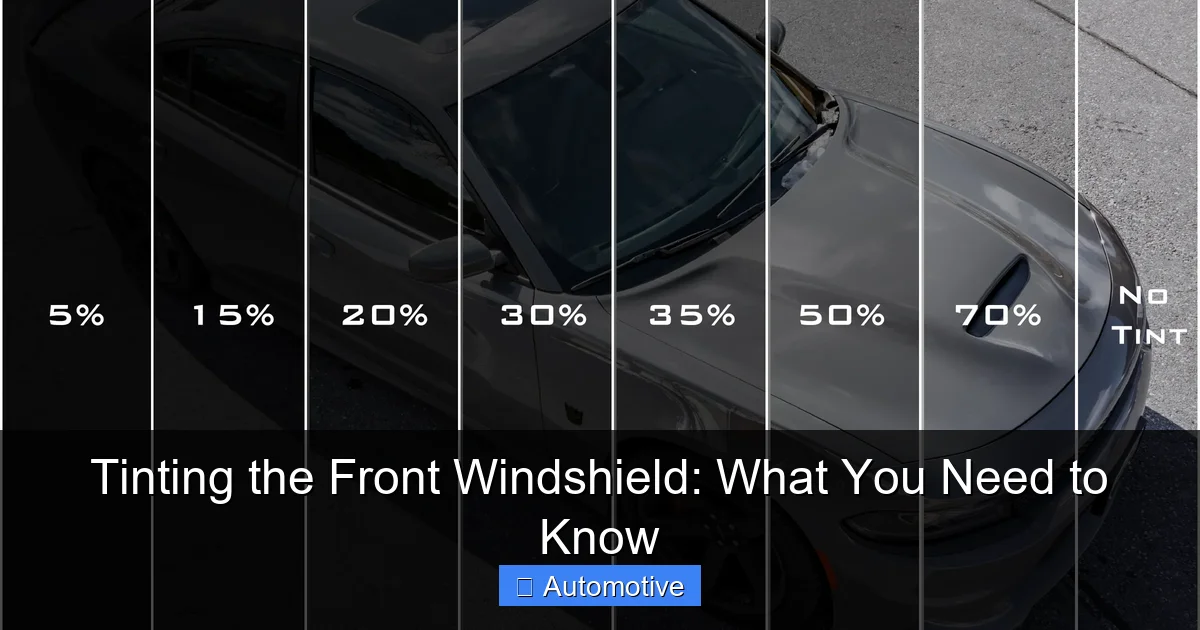
Most states allow some form of windshield tinting, but it’s almost always limited to a narrow strip at the very top of the windshield—commonly referred to as the “AS-1 line.” This strip typically extends 4 to 6 inches down from the top edge and must meet specific visibility standards. For example, in California, the strip must allow more than 70% of light to pass through, which essentially means it has to be nearly clear or very lightly tinted.
A few states, like Arizona and Florida, are more lenient and allow slightly darker tints or even full windshield coverage under certain conditions—usually with a medical exemption. However, these exemptions require documentation from a licensed physician and must be carried in the vehicle at all times.
On the other end of the spectrum, states like New York and Illinois have strict rules that prohibit any tint on the front windshield beyond the standard AS-1 line. Even a slightly darkened strip can get you pulled over.
Why such strict regulations? It all comes down to safety. Law enforcement needs to be able to see inside your vehicle during traffic stops, and drivers need maximum visibility, especially at night or in low-light conditions. Dark tints can reduce visibility by up to 50%, making it harder to spot pedestrians, road signs, or hazards.
To stay compliant, always check your state’s Department of Motor Vehicles (DMV) or equivalent agency website. Some states also have online tint calculators or charts that show legal VLT (Visible Light Transmission) percentages for each window. When in doubt, consult a professional installer—they’re usually up-to-date on local laws and can help you choose a legal option.
Benefits of Tinting the Front Windshield

Visual guide about Tinting the Front Windshield: What You Need to Know
Image source: acutintpro.com
So, if the laws are so strict, why do people still want to tint their front windshields? The answer lies in the real, tangible benefits that even a light or clear tint can provide.
First and foremost: UV protection. The sun’s ultraviolet rays don’t just cause sunburns—they also contribute to premature aging, skin cancer, and eye damage. Most modern windshields are already laminated with a layer that blocks UVB rays, but they don’t stop UVA rays, which penetrate deeper into the skin. A quality tint film, even a clear one, can block up to 99% of both UVA and UVB rays, giving you and your passengers much-needed protection during long drives.
Heat reduction is another major benefit. On a hot summer day, the inside of a car can reach temperatures over 120°F (49°C). A tinted windshield helps reflect solar energy, keeping the cabin cooler and reducing the load on your air conditioning. This not only improves comfort but also saves fuel—especially in gas-powered vehicles—by reducing AC usage.
Glare reduction is a game-changer for many drivers. Whether it’s the low morning sun, blinding reflections off wet roads, or the high beams of oncoming traffic, glare can be dangerous. A lightly tinted windshield or a top strip can diffuse harsh light, making it easier to see the road without squinting or shielding your eyes.
There’s also the matter of interior protection. Sunlight doesn’t just heat up your car—it fades upholstery, cracks dashboards, and damages electronics. Over time, UV exposure can turn your once-plush seats into brittle, discolored messes. Tinting helps preserve your car’s interior, maintaining its value and appearance for years.
Finally, there’s the aesthetic appeal. A clean, uniform tint across all windows gives your car a sleek, professional look. Even a subtle top strip can enhance the overall appearance without compromising visibility.
Types of Windshield Tint Films
Visual guide about Tinting the Front Windshield: What You Need to Know
Image source: six08graphics.com
Not all tint films are created equal. The type of film you choose will affect everything from heat rejection and durability to price and appearance. Here’s a breakdown of the most common types used for front windshields.
Dyed Films
Dyed films are the most affordable option and work by absorbing solar heat. They contain a layer of dye between adhesive and protective layers. While they offer decent glare reduction and a sleek look, they have some downsides. Over time, the dye can fade or bubble, especially under intense sun exposure. They also don’t reject heat as effectively as other types—meaning more heat gets trapped inside the car.
These films are generally not recommended for front windshields due to their lower performance and potential for degradation. However, they might be suitable for a very light top strip if you’re on a tight budget.
Metalized Films
Metalized films contain tiny metallic particles that reflect heat and UV rays. They’re more durable than dyed films and offer better heat rejection. The metallic layer also adds strength, making the film more resistant to scratches and peeling.
However, there’s a catch: the metal can interfere with electronic signals. This includes GPS, cell phone reception, and even keyless entry systems. In modern cars with advanced driver-assistance systems (ADAS) like lane departure warnings or automatic emergency braking, this interference can be a serious issue. If your car relies on sensors or cameras near the windshield, metalized films may not be the best choice.
Carbon Films
Carbon films are a popular mid-range option. They use carbon particles to block infrared heat without interfering with electronics. They offer excellent heat rejection, don’t fade over time, and give a matte-black finish that looks great on any vehicle.
Carbon films are a solid choice for front windshield tinting, especially if you want a balance of performance, durability, and affordability. They’re also non-reflective, which helps maintain visibility at night.
Ceramic Films
Ceramic films are the top-tier option. Made with advanced ceramic nanoparticles, they provide the highest level of heat rejection—blocking up to 50% of infrared heat—while remaining completely non-metallic. This means no signal interference and excellent clarity.
Ceramic films are also highly durable, resistant to fading, and offer superior UV protection. They’re ideal for front windshields, especially in hot climates or for drivers who spend long hours on the road. The only downside? They’re the most expensive option, often costing two to three times more than dyed films.
Hybrid Films
Some manufacturers offer hybrid films that combine elements of dyed and metalized or ceramic technologies. These aim to deliver better performance than basic dyed films without the drawbacks of full metalization. While they can be a good compromise, they’re less common and may not offer the same consistency as pure ceramic or carbon films.
When choosing a film, consider your priorities: Are you focused on heat rejection? Signal clarity? Budget? A professional installer can help you weigh the options and select the best film for your needs and vehicle.
Professional Installation vs. DIY: What’s the Best Choice?
Visual guide about Tinting the Front Windshield: What You Need to Know
Image source: cartintlaw.com
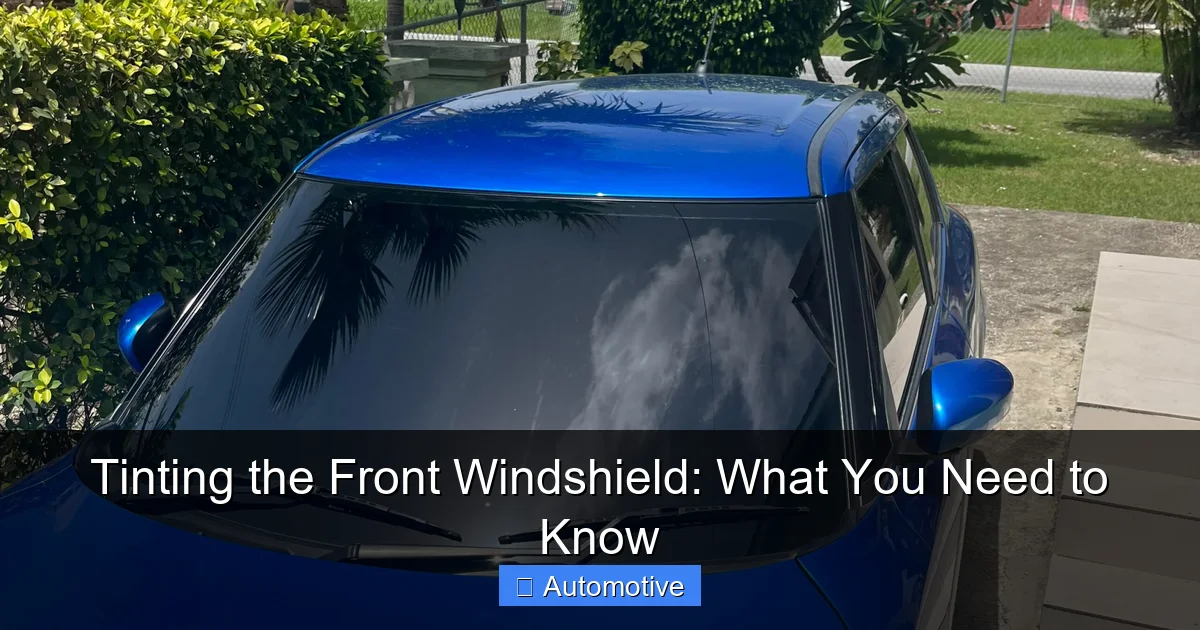
You might be tempted to save money by installing windshield tint yourself. After all, there are plenty of DIY kits available online, and the process seems straightforward—clean the glass, apply the film, squeegee out the bubbles. But when it comes to the front windshield, DIY is rarely the best idea.
The front windshield is curved, large, and critical to your safety. Even a small mistake—like a wrinkle, bubble, or misalignment—can impair visibility and become a distraction while driving. Professional installers have the tools, experience, and environment to get it right the first time.
Why Professionals Do It Better
Certified tint installers work in clean, climate-controlled shops with specialized equipment. They use precision-cut films designed for your specific make and model, ensuring a perfect fit. They also have access to high-quality films and know how to handle tricky areas like the edges and defroster lines.
Another advantage? Warranty protection. Most professional installations come with a manufacturer’s warranty that covers peeling, bubbling, or discoloration for 5 to 10 years. If something goes wrong, you can get it fixed or replaced at no cost. DIY kits usually offer little to no warranty.
The Risks of DIY
DIY tinting often leads to common problems like trapped air bubbles, water spots, or adhesive failure. Once the film is applied, it’s nearly impossible to remove without leaving residue or damaging the glass. And if you get pulled over for an illegal tint, you’ll still have to pay to have it professionally removed—defeating the purpose of saving money.
There’s also the issue of legality. A professional installer will ensure your tint complies with state laws, while a DIY job might accidentally exceed legal limits.
What to Look for in a Professional Installer
When choosing a shop, look for certifications from organizations like the International Window Film Association (IWFA). Read online reviews, ask about the films they use, and request a warranty. A reputable installer will be transparent about pricing, process, and expected results.
Expect to pay between $100 and $400 for a professional front windshield tint, depending on the film type and your vehicle. While it’s more expensive than a DIY kit, the peace of mind, performance, and longevity are well worth it.
Maintaining Your Tinted Windshield
Once your windshield is tinted, proper care will help it last longer and perform better. Tint films are durable, but they’re not indestructible.
Cleaning Tips
For the first 30 days after installation, avoid rolling down your windows or cleaning the inside of the glass. The adhesive needs time to fully cure, and moisture or pressure can disrupt the bond.
After that, clean the tinted surface gently. Use a soft microfiber cloth and a mild, ammonia-free cleaner. Ammonia can break down the adhesive and cause the film to peel or discolor. Avoid abrasive sponges, paper towels, or harsh chemicals.
What to Avoid
Don’t use sharp objects near the tint, and be careful with suction cup mounts for dash cams or GPS devices. Repeated pressure can weaken the film over time. If you must use a mount, choose one with a wide base or consider a permanent adhesive mount instead.
Also, avoid parking in direct sunlight for extended periods if possible. While high-quality films are designed to handle heat, extreme and constant exposure can shorten their lifespan.
Signs It’s Time to Replace
Over time, even the best films may show signs of wear. Look for bubbling, peeling at the edges, discoloration, or reduced clarity. If you notice any of these issues, it’s time to consult your installer. Most warranties will cover defects, but damage from improper care or accidents may not.
With proper maintenance, a quality tint can last 10 years or more—making it a smart long-term investment.
Alternatives to Windshield Tinting
If full or even partial windshield tinting isn’t legal or practical in your area, don’t worry—there are still ways to enjoy the benefits of sun protection.
Factory UV-Blocking Glass
Many newer vehicles come with windshields that have built-in UV protection. Check your owner’s manual or consult your dealer to see if your car already has this feature. If it does, you may not need additional tint at all.
Solar Shields and Visors
Portable windshield sun shades can block up to 99% of UV rays when parked. They’re inexpensive, easy to use, and store neatly in your trunk. While they don’t help while driving, they’re great for reducing heat buildup when your car is parked.
Polarized Sunglasses
For glare reduction, a good pair of polarized sunglasses can make a big difference. They’re especially helpful for drivers who wear prescription glasses or have light sensitivity.
Aftermarket Visors
Some companies offer clip-on or adhesive visors that extend the sun visor downward, blocking more of the windshield. These are legal in most states and can be a simple, low-cost solution.
While these alternatives don’t offer the same seamless look or continuous protection as tint, they can still improve comfort and safety—especially when combined.
Final Thoughts: Is Front Windshield Tinting Right for You?
Tinting the front windshield isn’t a decision to take lightly. It involves balancing legal compliance, safety, performance, and cost. But for many drivers, the benefits—UV protection, heat reduction, glare control, and interior preservation—make it a worthwhile upgrade.
Start by checking your state’s laws and consulting a professional installer. Choose a high-quality film that matches your needs, and invest in proper installation. With the right approach, you can enjoy a cooler, safer, and more comfortable driving experience—without breaking the rules or compromising visibility.
Remember, the goal isn’t to make your car look like a stealth vehicle. It’s to enhance your comfort and protection while staying safe and legal on the road. Whether you go with a clear ceramic film or a subtle top strip, a well-done tint can make every drive a little better.
Frequently Asked Questions
Is it legal to tint the front windshield?
It depends on your state. Most states allow a clear or lightly tinted strip at the top of the windshield, but full coverage is usually prohibited. Always check local laws before proceeding.
Can I install windshield tint myself?
While DIY kits are available, professional installation is strongly recommended. The front windshield is curved and critical for safety, and mistakes can impair visibility or lead to legal issues.
Will tint interfere with my car’s cameras or sensors?
Metalized films can interfere with GPS, cell signals, and ADAS features. Ceramic or carbon films are safer choices as they don’t block electronic signals.
How much does it cost to tint a front windshield?
Professional installation typically costs between $100 and $400, depending on the film type, vehicle, and shop. Higher-end ceramic films are more expensive but offer better performance.
How long does windshield tint last?
With proper care, quality tint can last 10 years or more. Most professional installations come with a warranty covering defects like peeling or discoloration.
Can I remove tint from my windshield?
Yes, tint can be removed, but it’s best done by a professional to avoid damaging the glass or leaving adhesive residue. DIY removal can be messy and time-consuming.