Subaru Won’t Start

Contents
- 1 Key Takeaways
- 2 📑 Table of Contents
- 3 Common Reasons Your Subaru Won’t Start
- 4 Step-by-Step Troubleshooting: What to Do When Your Subaru Won’t Start
- 5 Preventing Future Starting Problems
- 6 When to Call a Mechanic
- 7 Real-World Examples: Subaru Won’t Start Scenarios
- 8 Conclusion
- 9 Frequently Asked Questions

Car Back Support Cushion

Car Tool Kit Set

Car Ambient Light Kit

Car Armrest Cushion
If your Subaru won’t start, don’t panic—common issues like a dead battery, faulty starter, or fuel system problems are often easy to fix. This guide walks you through step-by-step diagnostics, prevention tips, and when to call a professional.
You’re running late for work, you hop into your trusty Subaru, turn the key—and nothing. No crank, no engine turnover, just silence. Or maybe it cranks but won’t fire up. Frustrating? Absolutely. But before you call a tow truck, know this: most “Subaru won’t start” problems have simple, fixable causes.
Subarus are known for their reliability, all-wheel drive, and rugged performance. But like any vehicle, they’re not immune to mechanical hiccups. Whether you drive a Forester, Outback, Impreza, or WRX, the reasons your Subaru won’t start often fall into a few common categories. The good news? Many of these issues can be diagnosed at home with basic tools and a little patience.
In this guide, we’ll walk you through the most frequent causes of a Subaru not starting, how to troubleshoot them, and when it’s time to visit a mechanic. We’ll keep it practical, easy to follow, and packed with real-world tips so you can get back on the road—without the stress.
Key Takeaways
- Dead or weak battery: The most common reason a Subaru won’t start—check voltage and connections.
- Faulty starter motor: A clicking sound with no engine turnover often points to starter failure.
- Fuel delivery issues: Clogged filters or a failing fuel pump can prevent ignition.
- Ignition switch problems: Worn switches may not send power to the starter or fuel system.
- Security system glitches: The immobilizer may误lock the engine—try the spare key or reset the system.
- Timing belt failure: A broken belt can cause severe engine damage and prevent starting.
- Extreme weather effects: Cold or heat can impact battery performance and fuel flow.
📑 Table of Contents
Common Reasons Your Subaru Won’t Start
When your Subaru won’t start, it’s usually trying to tell you something. The key is learning how to listen. Most starting problems fall into one of several buckets: electrical, fuel, ignition, or mechanical. Let’s break them down.
Electrical Issues
Electrical problems are the #1 culprit when a Subaru won’t start. Your car’s electrical system powers everything from the starter to the fuel injectors. If there’s a break in that chain, the engine won’t turn over.
The battery is the heart of the electrical system. A dead or weak battery means no power to start the engine. Even if the lights come on, the battery might not have enough juice to crank the starter. Cold weather is especially hard on batteries—lithium-ion and lead-acid batteries lose efficiency in freezing temps.
Corroded or loose battery terminals are another common issue. Over time, white or green buildup can form on the terminals, blocking the flow of electricity. A simple cleaning with baking soda and water can often solve the problem.
Fuses and relays also play a role. A blown fuse in the starter circuit or fuel pump relay can prevent the engine from starting. Always check your owner’s manual for the fuse box location and diagram.
Fuel System Problems
Your engine needs fuel to run. If fuel isn’t reaching the combustion chamber, your Subaru won’t start—even if it cranks.
A clogged fuel filter is a frequent offender. Over time, dirt and debris can build up in the filter, restricting fuel flow. Most Subarus have a fuel filter that should be replaced every 30,000 to 60,000 miles, depending on driving conditions.
The fuel pump is another critical component. Located inside the fuel tank, it sends pressurized fuel to the engine. If the pump fails, you might hear a whining noise or no sound at all when you turn the key to “on.” A failing pump often gives warning signs—like sputtering at high speeds or difficulty starting when the tank is low.
Bad fuel injectors can also cause starting issues. If injectors are clogged or leaking, they won’t deliver the right amount of fuel. This is more common in older vehicles or those using low-quality fuel.
Ignition and Starter Issues
The starter motor is what physically turns the engine over when you turn the key. If it fails, you’ll often hear a loud click but no engine rotation. This is a classic sign of a bad starter.
Worn starter solenoids or brushes can also cause intermittent starting problems. Sometimes the starter works one day and not the next—this is a red flag.
The ignition switch is another potential weak point. If the switch is worn, it may not send power to the starter or fuel system when you turn the key. You might notice the dashboard lights flicker or go out when jiggling the key.
Mechanical Failures
While less common, mechanical issues can definitely cause a Subaru to not start. The most serious is a broken timing belt.
Subarus use interference engines, meaning if the timing belt snaps, the pistons can collide with the valves, causing catastrophic damage. If your Subaru won’t start and you suspect a timing belt issue—especially if it hasn’t been replaced in over 100,000 miles—stop trying to start it immediately. Continuing to crank can worsen the damage.
Low compression due to worn piston rings or valve issues can also prevent starting, but this is rare and usually comes with other symptoms like smoke or poor performance.
Step-by-Step Troubleshooting: What to Do When Your Subaru Won’t Start
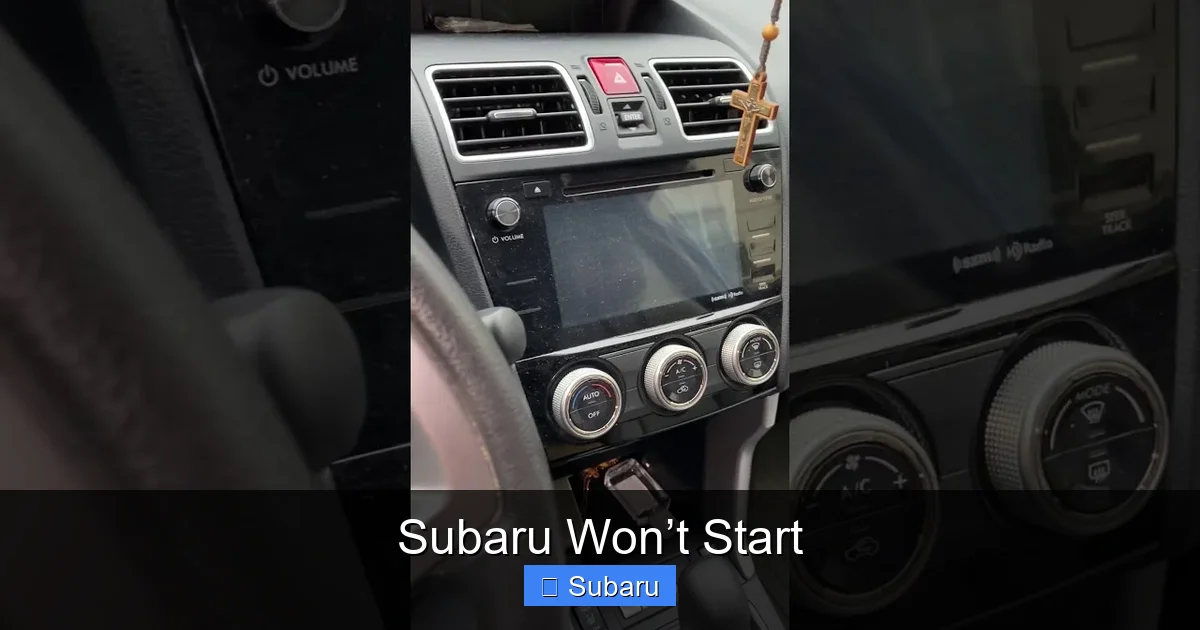
Visual guide about Subaru Won’t Start
Image source: i.ytimg.com
Don’t panic. Follow this step-by-step checklist to diagnose why your Subaru won’t start. Most issues can be identified in under 15 minutes.
Step 1: Check the Battery
Start with the battery. Turn on the headlights. If they’re dim or don’t come on, the battery is likely dead.
Use a multimeter to check voltage. A healthy battery should read 12.6 volts or higher when the car is off. If it’s below 12.4 volts, it may not have enough power to start the engine.
Check the terminals for corrosion. If you see white or green buildup, disconnect the cables (negative first), clean with a wire brush and baking soda solution, then reconnect tightly.
Try jump-starting the car. If it starts, the battery may need recharging or replacement. If it still won’t start, move to the next step.
Step 2: Listen for Sounds
Turn the key to “start” and listen carefully.
– **No sound at all:** Could be a bad ignition switch, blown fuse, or dead battery.
– **Clicking sound:** Likely a bad starter or weak battery.
– **Cranking but no start:** Points to fuel, spark, or compression issues.
If you hear a single loud click but the engine doesn’t turn, the starter solenoid may be engaging but the motor isn’t spinning. This often means a bad starter.
Step 3: Check the Fuel System
Turn the key to “on” (don’t start) and listen near the fuel tank. You should hear a faint humming sound for 2–3 seconds—this is the fuel pump priming.
If you don’t hear it, the fuel pump may be faulty. Check the fuel pump fuse and relay first. If those are good, the pump itself may need replacement.
Try adding a fuel system cleaner to a full tank of gas. This can help if the issue is minor clogging.
Step 4: Inspect the Starter
If the battery is good and you hear a click but no crank, the starter is suspect.
Locate the starter (usually near the transmission on the passenger side). Tap it gently with a hammer while someone tries to start the car. If it starts, the starter is failing and needs replacement.
You can also test the starter with a multimeter, but this requires some electrical knowledge. If you’re not comfortable, skip to a mechanic.
Step 5: Check the Security System
Subarus have an immobilizer system that prevents the engine from starting without the correct key.
If the security light is flashing on the dashboard, the car may not recognize the key. Try using the spare key. If that works, the original key’s chip may be damaged.
You can also try resetting the system: turn the key to “on,” wait 10 seconds, turn it off, wait 10 seconds, then try starting again.
Step 6: Look for Warning Lights
Check the dashboard for any warning lights—especially the check engine light, battery light, or oil pressure light.
A flashing check engine light during cranking could indicate a serious issue like a misfire or timing problem.
Use an OBD2 scanner to read trouble codes. Many auto parts stores offer free scans.
Preventing Future Starting Problems
Visual guide about Subaru Won’t Start
Image source: blogmedia.dealerfire.com
An ounce of prevention is worth a pound of cure. Here’s how to keep your Subaru starting reliably for years.
Maintain the Battery
Check battery terminals every 6 months for corrosion. Clean as needed.
Test the battery annually, especially before winter. Most batteries last 3–5 years—replace proactively.
Use a battery maintainer if you don’t drive often. Short trips don’t fully recharge the battery.
Follow the Maintenance Schedule
Stick to Subaru’s recommended service intervals. This includes:
– Replacing the timing belt every 100,000 miles (or sooner if recommended).
– Changing the fuel filter every 30,000–60,000 miles.
– Inspecting spark plugs and wires every 30,000 miles.
Neglecting maintenance is a fast track to starting problems.
Use Quality Fuel and Additives
Fill up at reputable stations. Cheap or contaminated fuel can clog injectors and damage the fuel pump.
Use a fuel injector cleaner every 3,000–5,000 miles to keep the system clean.
In cold climates, consider a fuel additive that prevents gelling.
Protect Against Extreme Weather
Cold weather slows chemical reactions in the battery, reducing its power. Park in a garage if possible.
Use a block heater in freezing climates to warm the engine and improve starting.
In hot weather, avoid leaving the car in direct sunlight for long periods. Heat can degrade battery life.
Keep Spare Keys and Fuses Handy
Always carry a spare key with a working chip. If the original fails, you’re not stranded.
Keep a fuse kit in the glove box. Replacing a blown fuse takes seconds and can save a tow.
When to Call a Mechanic
Some problems are beyond DIY fixes. Here’s when to seek professional help.
You’ve Tried Everything and It Still Won’t Start
If you’ve checked the battery, starter, fuel pump, and security system—and your Subaru still won’t start—it’s time for a mechanic.
They have diagnostic tools to test compression, fuel pressure, and electrical circuits.
You Suspect Timing Belt Failure
If your Subaru has high mileage and hasn’t had the timing belt replaced, don’t keep cranking. A broken belt can destroy the engine.
A mechanic can inspect the belt and replace it if needed.
Strange Noises or Smells
Grinding, knocking, or burning smells during startup are red flags. These could indicate internal engine damage.
Stop trying to start the car and call for a tow.
Electrical Gremlins
If dashboard lights flicker, windows don’t work, or the radio resets randomly, there may be a wiring or grounding issue.
These problems require specialized diagnosis.
You’re Not Comfortable with Repairs
If you’re unsure about any step, don’t guess. A wrong move can cause more damage.
It’s better to pay for professional help than risk costly repairs.
Real-World Examples: Subaru Won’t Start Scenarios
Let’s look at a few real cases to illustrate common fixes.
Case 1: Dead Battery in Winter
Sarah’s 2018 Outback wouldn’t start on a -10°F morning. The lights were dim, and the engine didn’t crank.
She jumped the car, and it started right up. After driving for 30 minutes, it restarted fine.
Solution: She replaced the 4-year-old battery and installed a battery blanket. No more cold-weather issues.
Case 2: Faulty Starter
Mike’s 2012 Forester made a loud click but wouldn’t turn over. Jump-starting didn’t help.
He tapped the starter with a hammer—and it started. The next day, it failed again.
Solution: He replaced the starter. Now it starts reliably.
Case 3: Clogged Fuel Filter
Lisa’s 2015 Impreza cranked but wouldn’t fire. It had been sputtering on the highway.
She replaced the fuel filter (overdue by 20,000 miles), and the car started immediately.
Solution: Regular maintenance prevented a breakdown.
Case 4: Immobilizer Glitch
Tom’s 2020 Crosstrek wouldn’t start. The security light was flashing.
He tried the spare key—it worked. The original key’s chip had failed.
Solution: He got a new key programmed at the dealer.
Conclusion
When your Subaru won’t start, it’s easy to feel frustrated—but most problems have straightforward solutions. Start with the battery, listen for clues, and work through the checklist methodically.
Remember: prevention is key. Regular maintenance, quality fuel, and attention to warning signs can save you from being stranded.
If you’ve tried everything and your Subaru still won’t start, don’t hesitate to call a professional. Some issues require expert diagnosis and repair.
With the right knowledge and a little patience, you can keep your Subaru running strong for years to come.
Frequently Asked Questions
Why won’t my Subaru start even though the battery is new?
Even a new battery can have issues if terminals are corroded or the alternator isn’t charging it properly. Check connections and test the alternator output.
My Subaru cranks but won’t start—what’s wrong?
This usually points to fuel, spark, or air issues. Check the fuel pump, spark plugs, and air filter. A clogged fuel filter or bad fuel pump are common causes.
Can a bad key cause my Subaru not to start?
Yes. The immobilizer system may not recognize a damaged or unprogrammed key. Try the spare key or have the original reprogrammed.
How often should I replace the timing belt on my Subaru?
Most Subarus require a timing belt replacement every 100,000 miles. Check your owner’s manual—some models recommend it sooner.
Is it safe to jump-start a Subaru?
Yes, but use caution. Connect cables in the correct order (positive to positive, negative to ground), and avoid sparks near the battery.
Why does my Subaru won’t start in cold weather?
Cold reduces battery efficiency and thickens engine oil. Use a battery maintainer, park in a garage, or install a block heater for better cold starts.