Signs That You Need a New Car Battery
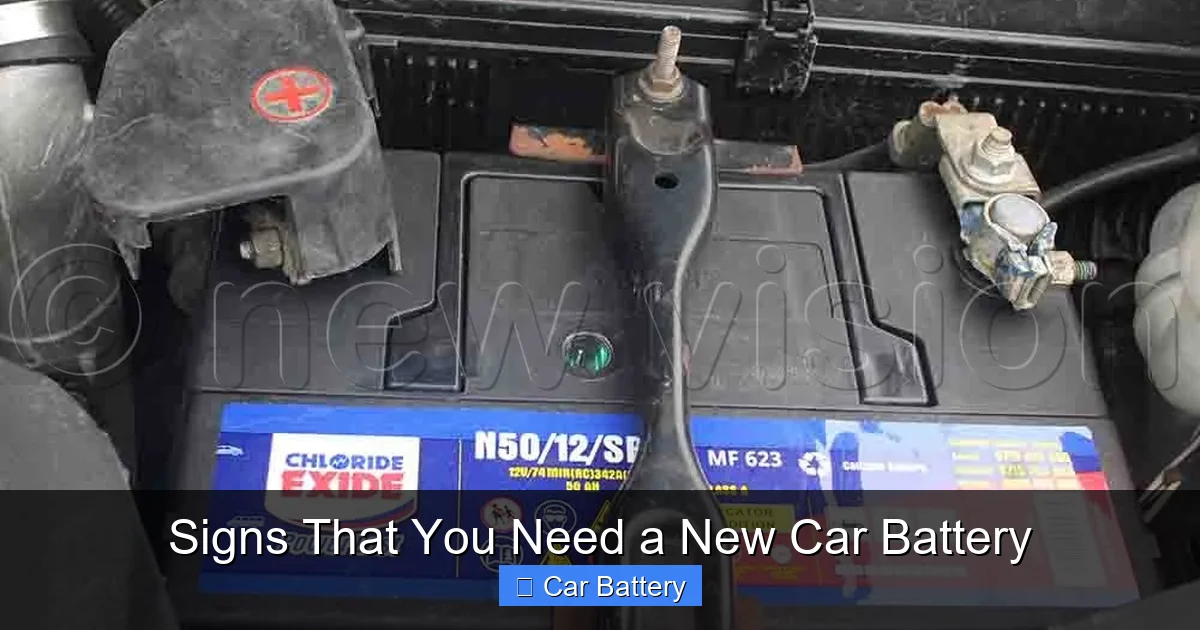
Your car battery is the heart of your vehicle’s electrical system, and when it starts to fail, it sends clear warning signals. Recognizing these signs early can save you from unexpected breakdowns, costly towing fees, and damage to other components. From slow engine cranking to dim headlights, this guide covers everything you need to know to determine if it’s time for a replacement.
In This Article
- 1 Key Takeaways
- 2 📑 Table of Contents
- 3 Introduction: Why Your Car Battery Matters More Than You Think
- 4 1. Slow Engine Crank: The Most Common Warning Sign
- 5 2. Dim Headlights and Electrical Problems
- 6 3. Dashboard Warning Lights: What They’re Trying to Tell You
- 7 4. Physical Signs of Battery Damage
- 8 5. Age and Maintenance: When to Replace Proactively
- 9 6. Frequent Jump-Starts and Other Red Flags
- 10 Conclusion: Don’t Wait Until It’s Too Late
- 11 Frequently Asked Questions
Key Takeaways
- Slow engine crank: If your engine takes longer than usual to start, especially in cold weather, it may indicate a weak battery.
- Dim headlights and electrical issues: Flickering lights, weak dashboard illumination, or malfunctioning accessories often point to insufficient power from the battery.
- Check engine or battery warning light: A lit warning light on your dashboard could signal a charging system problem, often related to the battery.
- Swollen or bloated battery case: Physical damage like bulging sides suggests overheating or overcharging, reducing battery life.
- Old age (3–5 years): Most car batteries last between 3 and 5 years; if yours is older, consider proactive replacement.
- Corroded battery terminals: White, ashy buildup on terminals can disrupt electrical flow and mimic battery failure.
- Frequent jump-starts needed: Needing regular jumps is a strong indicator your battery can no longer hold a charge.
📑 Table of Contents
- Introduction: Why Your Car Battery Matters More Than You Think
- 1. Slow Engine Crank: The Most Common Warning Sign
- 2. Dim Headlights and Electrical Problems
- 3. Dashboard Warning Lights: What They’re Trying to Tell You
- 4. Physical Signs of Battery Damage
- 5. Age and Maintenance: When to Replace Proactively
- 6. Frequent Jump-Starts and Other Red Flags
- Conclusion: Don’t Wait Until It’s Too Late
Introduction: Why Your Car Battery Matters More Than You Think
Your car battery does more than just start your engine—it powers nearly every electrical component in your vehicle. From your radio and air conditioning to your headlights and onboard computers, the battery is the silent workhorse that keeps everything running smoothly. Yet, despite its importance, many drivers don’t think about their battery until it fails completely, often at the worst possible moment—like when you’re late for work or stuck in a parking lot at night.
Think of your car battery like the battery in your smartphone. Over time, it loses its ability to hold a full charge. You might notice it draining faster, needing more frequent recharging, or shutting down unexpectedly. The same principle applies to your car. A healthy battery delivers around 12.6 volts when the engine is off and maintains a steady charge while driving. But as it ages, its capacity diminishes, and it becomes less reliable. The good news? Most battery issues give off early warning signs. By learning to recognize these signals, you can replace your battery before it leaves you stranded.
In this guide, we’ll walk you through the most common signs that you need a new car battery. Whether you’re a seasoned driver or just learning the basics of car maintenance, understanding these symptoms can save you time, money, and stress. We’ll cover everything from performance issues to physical signs of wear, and even offer practical tips for testing and replacing your battery. So, let’s dive in and make sure your car is always ready to go when you are.
1. Slow Engine Crank: The Most Common Warning Sign
Visual guide about Signs That You Need a New Car Battery
Image source: automotiveplanner.com
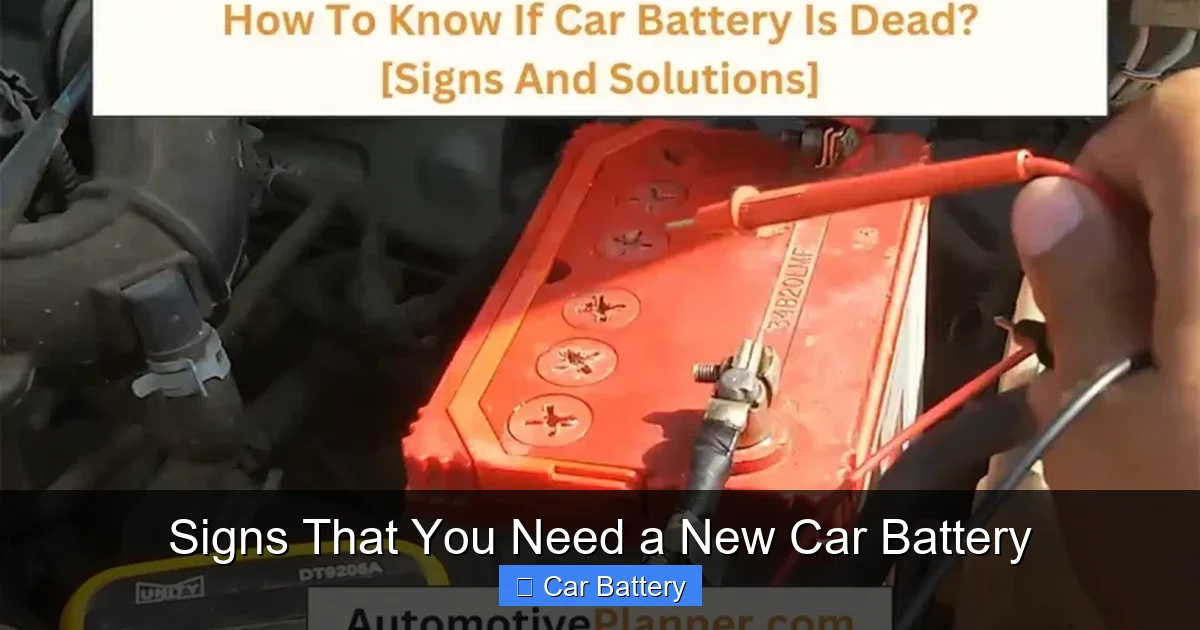
One of the earliest and most noticeable signs that you need a new car battery is a slow engine crank. When you turn the key or press the start button, instead of the engine firing up immediately, it hesitates. You might hear a grinding or clicking sound, or the engine may turn over sluggishly, as if it’s struggling to get going. This delay is a classic symptom of a weakening battery.
Why Does a Weak Battery Cause Slow Cranking?
The starter motor requires a significant burst of electrical power to turn the engine over and begin the combustion process. A healthy battery delivers this power instantly. But as the battery ages, its internal components degrade, reducing its ability to supply the necessary voltage. This means the starter motor doesn’t get the full power it needs, resulting in a slower, labored crank.
For example, imagine trying to start a lawnmower with a nearly dead battery-powered drill. The drill spins slowly, and the mower barely turns over. The same thing happens in your car. If you notice that your engine takes longer to start—especially first thing in the morning or after the car has been sitting for a few hours—it’s a strong indicator that your battery is on its last legs.
How Cold Weather Makes It Worse
Cold weather is particularly tough on car batteries. In freezing temperatures, the chemical reactions inside the battery slow down, reducing its output. At the same time, your engine’s oil thickens, making it harder for the starter to turn the engine. This double whammy means that a weak battery that might have squeaked by in summer could completely fail in winter.
If you live in a cold climate, you may notice that your car starts fine in the afternoon but struggles in the morning. This is a red flag. Don’t assume it’s just the cold—your battery may be the real culprit. In fact, many battery failures happen during winter months, not because the battery suddenly died, but because the cold exposed its existing weakness.
What You Can Do About It
If you experience slow cranking, don’t ignore it. Start by testing your battery’s voltage with a multimeter. A fully charged battery should read around 12.6 volts when the engine is off. If it’s below 12.4 volts, it’s likely undercharged or failing. You can also visit an auto parts store—many offer free battery testing.
If the test confirms a weak battery, it’s time for a replacement. But if the battery tests okay, the issue might be with the starter motor, alternator, or electrical connections. In any case, addressing slow cranking early can prevent a complete breakdown.
2. Dim Headlights and Electrical Problems
Visual guide about Signs That You Need a New Car Battery
Image source: nolaautomotiverepairs.com
Another telltale sign that you need a new car battery is dim or flickering headlights, especially when the engine is idling or the car is off. You might also notice that your dashboard lights are dimmer than usual, or that accessories like the radio, power windows, or windshield wipers operate more slowly than normal.
How the Battery Powers Your Car’s Electronics
While the alternator generates power while the engine is running, the battery supplies electricity when the engine is off and helps stabilize voltage during operation. When the battery is weak, it can’t maintain a consistent voltage, leading to fluctuations in electrical output. This causes lights to dim and electronics to behave erratically.
For instance, you might be driving at night and notice that your headlights brighten when you accelerate but dim when you stop at a red light. This is a classic sign of a failing battery or alternator. While the alternator is responsible for charging the battery while driving, a weak battery can’t accept or hold that charge properly, leading to inconsistent power delivery.
Other Electrical Symptoms to Watch For
Beyond dim lights, a weak battery can cause a range of electrical issues:
– The radio resets or loses presets.
– Power windows move slowly or get stuck.
– The check engine light or battery warning light comes on.
– The car’s computer systems behave oddly, such as erratic fuel gauge readings or warning chimes that don’t make sense.
These symptoms can be confusing because they mimic other problems, like a faulty alternator or wiring issues. But if multiple electrical systems are acting up, the battery is often the root cause.
Testing for Electrical Issues
To confirm whether your battery is the problem, try this simple test: Turn on your headlights and let them run for about 15 minutes with the engine off. Then, try to start the car. If the engine cranks slowly or doesn’t start at all, your battery likely can’t hold a charge.
You can also use a multimeter to check voltage under load. With the engine off, connect the multimeter to the battery terminals. A healthy battery should read 12.4–12.6 volts. If it drops below 12 volts, it’s time for a replacement.
3. Dashboard Warning Lights: What They’re Trying to Tell You
Visual guide about Signs That You Need a New Car Battery
Image source: howmuchtofixit.com
Modern cars are equipped with sophisticated onboard diagnostics that monitor the health of your battery and charging system. One of the most obvious signs that you need a new car battery is a lit warning light on your dashboard—specifically, the battery or charging system warning light.
The Battery Warning Light
This light usually looks like a battery symbol or says “ALT” or “CHARGE.” When it illuminates, it means the alternator isn’t charging the battery properly, or the battery isn’t accepting a charge. While this could indicate a problem with the alternator, it’s often caused by a weak or dead battery.
For example, if your battery is old and can’t hold a charge, the alternator may not be able to keep up with the demand, triggering the warning light. In some cases, the light comes on intermittently, especially when using high-power accessories like heated seats or the defroster.
The Check Engine Light
While the check engine light can signal hundreds of issues, it can also be triggered by battery problems. A weak battery can cause voltage fluctuations that confuse the car’s computer, leading to error codes related to the ignition system, fuel injectors, or emissions controls.
If your check engine light comes on along with other battery-related symptoms—like slow cranking or dim lights—it’s worth having your battery tested. A mechanic can use an OBD2 scanner to read the error codes and determine if the battery is the root cause.
Don’t Ignore the Warning Signs
Many drivers make the mistake of ignoring dashboard lights, thinking they’ll go away on their own. But a lit battery or check engine light is your car’s way of saying, “Hey, something’s wrong!” Ignoring it can lead to a complete breakdown, especially if the battery dies while you’re driving.
If the warning light comes on, have your battery and charging system inspected as soon as possible. Most auto parts stores offer free diagnostic checks, so there’s no excuse to wait.
4. Physical Signs of Battery Damage
Sometimes, the signs that you need a new car battery are right in front of you—literally. Physical damage to the battery case or terminals can indicate serious problems that affect performance and safety.
Swollen or Bloated Battery Case
If the sides of your battery appear bulging or swollen, it’s a sign of internal damage. This usually happens when the battery overheats or is overcharged, causing gases to build up inside the casing. A swollen battery is not only less efficient but also poses a safety risk—it could leak acid or even explode in extreme cases.
Overcharging is often caused by a faulty alternator that sends too much voltage to the battery. If you notice a swollen battery, have your alternator checked immediately. Continuing to drive with a damaged battery can lead to further electrical problems.
Corroded Battery Terminals
Corrosion appears as a white, blue, or greenish powdery substance around the battery terminals. It’s caused by a chemical reaction between the battery acid and the metal terminals. While corrosion itself doesn’t mean the battery is dead, it can prevent proper electrical contact, leading to starting problems.
You might notice that your car starts fine one day but won’t start the next, even though the battery seems fine. This intermittent issue is often due to corrosion disrupting the flow of electricity.
How to Clean Corroded Terminals
Cleaning corrosion is simple and can often restore proper function:
1. Turn off the engine and disconnect the negative (black) terminal first, then the positive (red) terminal.
2. Mix a tablespoon of baking soda with a cup of water.
3. Use an old toothbrush to scrub the terminals and cable ends.
4. Rinse with water and dry thoroughly.
5. Reconnect the terminals, positive first, then negative.
6. Apply a thin layer of petroleum jelly or terminal protector to prevent future corrosion.
If cleaning doesn’t solve the problem, the battery may be failing internally and need replacement.
Leaking or Cracked Battery Case
A cracked or leaking battery is a serious issue. Battery acid is highly corrosive and can damage your car’s engine bay, paint, and electrical components. If you see fluid leaking from the battery or smell a strong sulfur (rotten egg) odor, stop driving immediately and have the battery replaced.
Leaks often occur due to physical damage, overfilling, or excessive heat. Never attempt to repair a leaking battery—replace it as soon as possible.
5. Age and Maintenance: When to Replace Proactively
Even if your battery isn’t showing obvious signs of failure, age is a major factor in determining when to replace it. Most car batteries last between 3 and 5 years, depending on climate, driving habits, and maintenance.
Why Batteries Wear Out Over Time
Car batteries are made up of lead plates and sulfuric acid, which undergo chemical reactions to produce electricity. Over time, these plates corrode, and the acid breaks down, reducing the battery’s capacity. Heat accelerates this process—batteries in hot climates often fail sooner than those in cooler regions.
Short trips are also hard on batteries. If you frequently drive less than 20 minutes at a time, the alternator doesn’t have enough time to fully recharge the battery, leading to a gradual loss of charge.
When to Replace Based on Age
If your battery is more than 3 years old, start monitoring it closely. After 5 years, it’s wise to replace it proactively—even if it seems to be working fine. Think of it like replacing the tires on your car: just because they still have tread doesn’t mean they’re safe forever.
Many mechanics recommend replacing the battery every 4–5 years as part of routine maintenance. This prevents unexpected failures and ensures your car starts reliably, especially in extreme weather.
Maintenance Tips to Extend Battery Life
While you can’t stop a battery from aging, you can take steps to prolong its life:
– Drive regularly to allow the alternator to recharge the battery.
– Avoid leaving lights or accessories on when the engine is off.
– Keep the battery clean and free of corrosion.
– Use a battery maintainer if the car will be parked for long periods.
– Park in a garage during extreme temperatures.
6. Frequent Jump-Starts and Other Red Flags
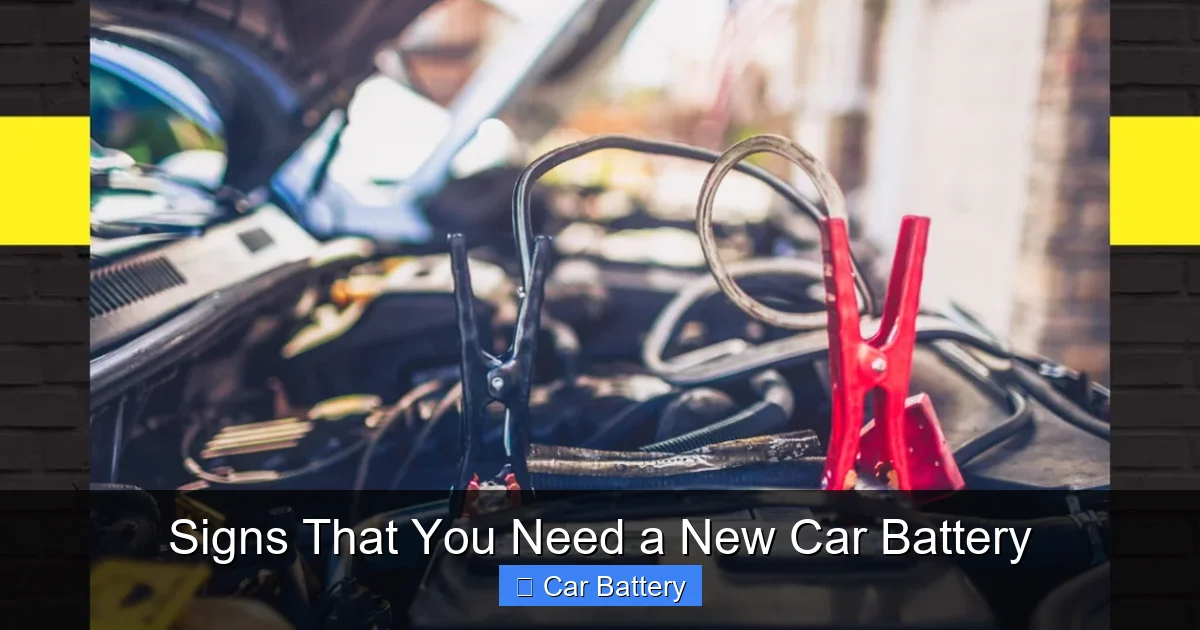
If you find yourself needing jump-starts more than once or twice a year, it’s a clear sign that you need a new car battery. While occasional jumps can happen due to leaving lights on or extreme cold, frequent jumps indicate a deeper problem.
Why Jump-Starting Isn’t a Long-Term Fix
Jump-starting gives your battery a temporary boost, but it doesn’t solve the underlying issue. If the battery can’t hold a charge, it will die again soon after. Repeated jump-starts can also strain the alternator and other electrical components.
Moreover, relying on jump-starts is inconvenient and potentially dangerous. You never know when you’ll be stranded, and not everyone carries jumper cables or knows how to use them.
Other Red Flags
– The car won’t start after being parked overnight.
– The battery dies after short trips.
– You’ve replaced the battery within the last 2–3 years but it’s already failing (could indicate an alternator problem).
– The car starts fine when warm but struggles when cold.
If you experience any of these issues, have your battery tested. Most auto parts stores can perform a load test to determine if the battery is still serviceable.
Conclusion: Don’t Wait Until It’s Too Late
Your car battery is one of the most critical components of your vehicle, yet it’s often overlooked until it fails. By learning to recognize the signs that you need a new car battery—such as slow cranking, dim lights, warning lights, physical damage, age, and frequent jump-starts—you can take action before getting stranded.
Regular maintenance, timely testing, and proactive replacement are key to avoiding unexpected breakdowns. Remember, a healthy battery not only ensures reliable starts but also protects your car’s electrical system from damage.
If you’re unsure about your battery’s condition, don’t hesitate to get it checked. Most auto parts stores offer free testing, and replacing a battery is far cheaper than dealing with a tow truck or emergency repair.
Stay ahead of the curve, keep your battery in top shape, and enjoy the peace of mind that comes with a reliable ride.
Frequently Asked Questions
How long do car batteries typically last?
Most car batteries last between 3 and 5 years, depending on climate, driving habits, and maintenance. In hot climates or with frequent short trips, they may fail sooner.
Can a bad alternator mimic a bad battery?
Yes, a faulty alternator can cause symptoms similar to a weak battery, such as dim lights and slow cranking. A professional test can determine which component is failing.
Is it safe to drive with a swollen battery?
No, a swollen battery poses a safety risk and should be replaced immediately. It may leak acid or overheat, potentially causing damage or injury.
How often should I test my car battery?
It’s a good idea to test your battery once a year, especially if it’s over 3 years old. Many auto parts stores offer free testing.
Can I replace my car battery myself?
Yes, most car batteries can be replaced at home with basic tools. Just be sure to disconnect the negative terminal first and follow safety precautions.
Why does my battery keep dying even after replacement?
Frequent battery failure after replacement may indicate an underlying issue, such as a faulty alternator, parasitic drain, or electrical problem. Have your charging system inspected.