
Should I Buy a Car with Rust Underneath

Buying a car with rust underneath isn’t always a deal-breaker, but it requires careful evaluation. Surface rust may be harmless, but structural corrosion can compromise safety and value. Always inspect thoroughly or consult a mechanic before deciding.
Key Takeaways
- Not all rust is dangerous: Surface rust on non-structural parts like exhaust shields or undercarriage panels is often cosmetic and manageable.
- Structural rust is a red flag: Corrosion on frame rails, suspension mounts, or floor pans can weaken the car’s integrity and pose safety risks.
- Location matters: Cars from snowy, salt-heavy regions (like the Midwest or Northeast U.S.) are more prone to undercarriage rust.
- Get a professional inspection: A trusted mechanic can assess the severity and estimate repair costs before you buy.
- Negotiate the price: Rust lowers a vehicle’s value—use it as leverage to get a fair deal.
- Consider long-term costs: Even minor rust can spread; factor in potential repairs or treatments down the road.
- Prevention is key: If you do buy, invest in rustproofing and regular undercarriage washes to slow future corrosion.
📑 Table of Contents
- Should I Buy a Car with Rust Underneath?
- Understanding Rust: What It Is and Why It Forms
- Where Rust Is Most Dangerous: Structural vs. Cosmetic Areas
- How to Inspect a Car for Undercarriage Rust
- When Is It Safe to Buy a Car with Rust Underneath?
- How to Protect Your Investment After Purchase
- Final Thoughts: Making the Right Decision
Should I Buy a Car with Rust Underneath?
So, you’ve found a used car that checks most of your boxes—good mileage, solid features, and a price that fits your budget. But during your inspection, you notice some rust underneath. Now you’re wondering: *Should I buy a car with rust underneath?* It’s a fair question, and one that many used car buyers face, especially in regions where winter roads are salted heavily or humidity levels are high.
Rust is one of the most common issues in older or high-mileage vehicles, and it’s not always a deal-breaker. But it’s also not something to ignore. The presence of rust underneath a car can range from harmless surface discoloration to serious structural damage that compromises safety and longevity. The key is understanding what kind of rust you’re dealing with, where it’s located, and how much it might cost to fix—or prevent from getting worse.
In this guide, we’ll walk you through everything you need to know about buying a car with rust underneath. We’ll break down the types of rust, how to inspect for it, when it’s safe to proceed, and how to protect your investment if you do decide to buy. Whether you’re shopping for a budget commuter or a project car, this information will help you make a smart, informed decision.
Understanding Rust: What It Is and Why It Forms
Visual guide about Should I Buy a Car with Rust Underneath
Image source: noxudolusa.com
Before you can decide whether to buy a car with rust underneath, it helps to understand what rust actually is and why it forms in the first place. Rust, scientifically known as iron oxide, occurs when iron or steel is exposed to oxygen and moisture over time. In cars, this typically happens on metal components under the vehicle—places that are constantly exposed to rain, snow, road salt, and dirt.
Most modern cars are built with galvanized steel, which has a protective zinc coating to slow down corrosion. However, this coating isn’t permanent. Over years of driving, especially in harsh climates, the coating can wear off, especially in areas that get hit by rocks, debris, or salt. Once the bare metal is exposed, rust can begin to form.
There are three main types of rust you might encounter on a used car:
Surface Rust
This is the mildest form of rust. It appears as a reddish-brown discoloration on the surface of metal parts but hasn’t penetrated deeply. Surface rust is common on exhaust systems, heat shields, and undercarriage panels. It’s often cosmetic and can be sanded off and treated with rust converters or primers. In many cases, it doesn’t affect the car’s performance or safety.
Scale Rust
Scale rust is more serious. It forms when surface rust isn’t treated and continues to spread. The metal begins to flake and pit, losing thickness and strength. This type of rust is often found on older vehicles or those stored in damp environments. If left unchecked, scale rust can weaken structural components.
Penetrating Rust (Through Rust)
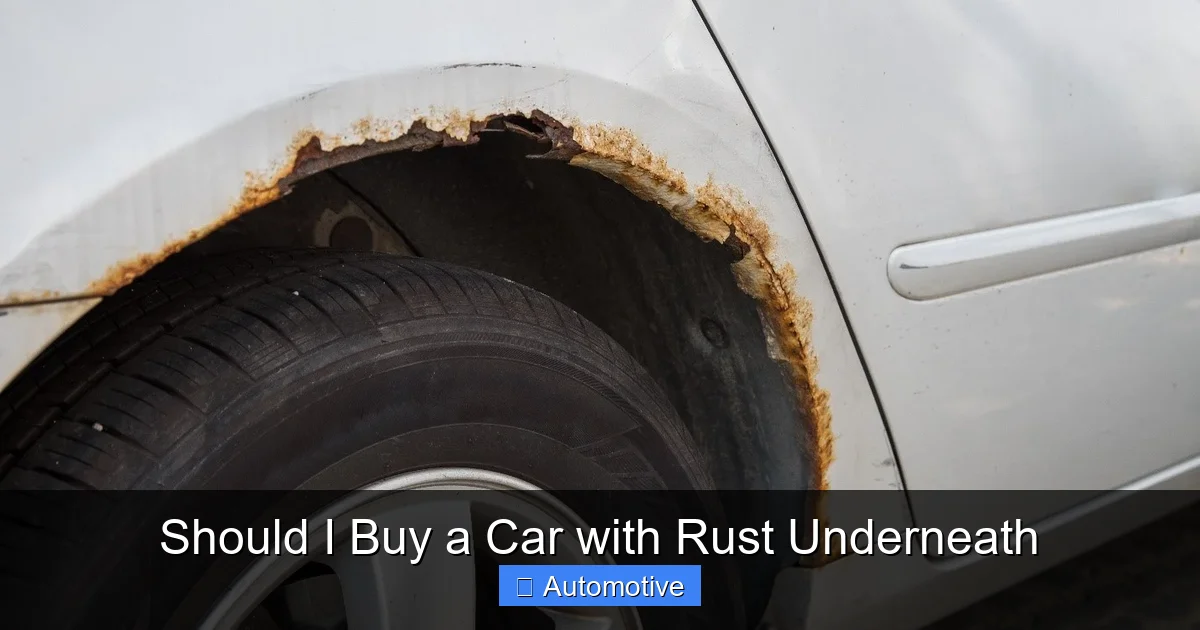
This is the most dangerous type. Penetrating rust eats through the metal completely, creating holes. It’s commonly found on floor pans, frame rails, wheel wells, and suspension mounting points. If a car has penetrating rust in critical areas, it may be unsafe to drive and expensive—or impossible—to repair properly.
Understanding these types helps you assess the severity of the rust you’re seeing. But location is just as important as the type.
Where Rust Is Most Dangerous: Structural vs. Cosmetic Areas
Visual guide about Should I Buy a Car with Rust Underneath
Image source: phillongbodyshop.com
Not all rust is created equal—and where it’s located makes a huge difference in whether you should buy a car with rust underneath. Some areas of the undercarriage are purely cosmetic, while others are critical to the car’s safety and performance.
Safe (Cosmetic) Rust Areas
These parts can develop rust without compromising the car’s integrity:
– **Exhaust system:** Rust on mufflers, pipes, or hangers is common and usually only affects appearance and noise levels. Replacing exhaust components is relatively affordable.
– **Heat shields:** These protect other parts from exhaust heat. Rust here is typically surface-level and doesn’t impact function.
– **Undercarriage skid plates or splash guards:** These are replaceable plastic or metal covers. Rust on them is cosmetic.
– **Brake lines (surface rust only):** Light surface rust on brake lines isn’t an immediate concern, but deep pitting or flaking requires inspection by a mechanic.
In these areas, rust is often manageable and doesn’t justify walking away from a good deal—especially if the rest of the car is in solid condition.
Red Flag (Structural) Rust Areas
These locations are cause for serious concern:
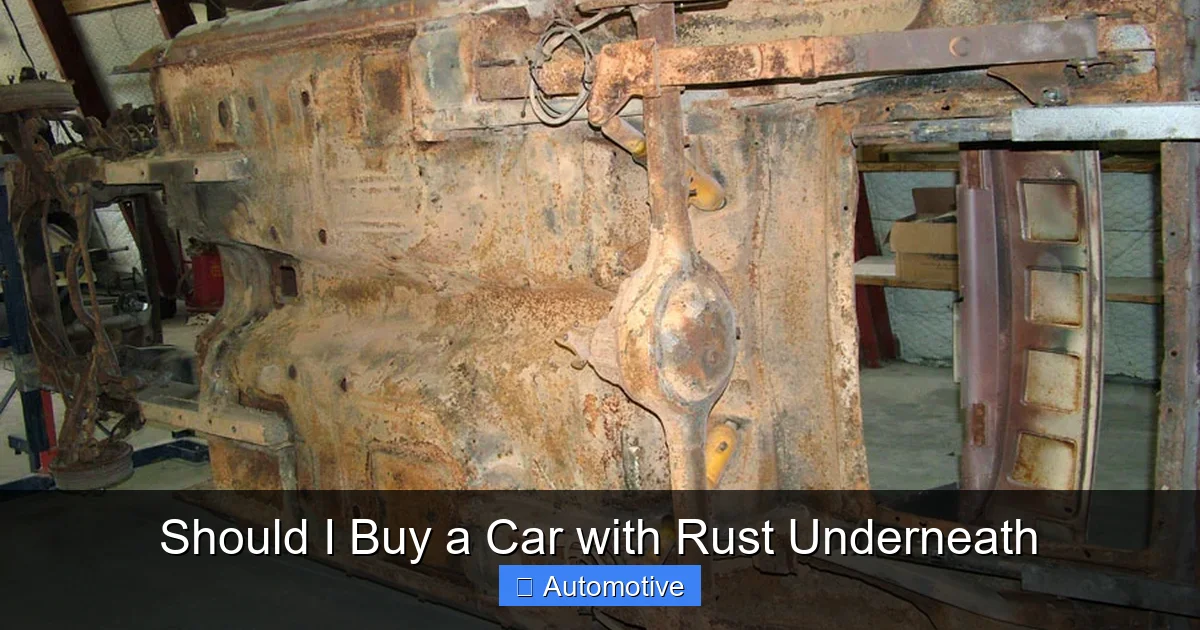
– **Frame rails:** The frame is the backbone of the car. Rust here can weaken the entire structure, affecting handling and crash safety.
– **Floor pans:** Holes in the floor can let in moisture, exhaust fumes, and compromise cabin integrity. Repairing floor pans is labor-intensive.
– **Suspension mounting points:** These areas support the weight of the car and absorb road impacts. Rust here can lead to suspension failure.
– **Rocker panels and wheel wells:** These areas are prone to moisture and salt buildup. Severe rust can weaken side-impact protection.
– **Subframe:** The subframe holds the engine, transmission, and suspension. Rust here is a major safety issue.
If you see flaking, holes, or soft spots in any of these areas, it’s a strong signal that the car may have serious underlying damage. In some cases, the cost to repair structural rust can exceed the value of the car itself.
How to Inspect a Car for Undercarriage Rust
Visual guide about Should I Buy a Car with Rust Underneath
Image source: rustbullet.com
So, you’ve found a car you like—but it has some rust underneath. How do you know if it’s safe to buy? The best approach is a thorough inspection. You don’t need to be a mechanic, but knowing what to look for can save you from a costly mistake.
Do a Visual Inspection
Start by getting under the car—use a jack and jack stands, or visit a service center with a lift. Look for:
– **Flaking or bubbling paint:** This can indicate rust forming beneath the surface.
– **Soft or spongy metal:** Tap suspect areas with a screwdriver handle. If the metal gives way or feels weak, it’s likely rusted through.
– **Holes or perforations:** Any hole in the frame, floor, or suspension area is a major red flag.
– **Excessive surface rust:** While not always dangerous, widespread surface rust suggests poor maintenance or long-term exposure to moisture.
Pay close attention to the areas mentioned earlier—frame rails, floor pans, and suspension mounts. Use a flashlight and mirror to see into tight spaces.
Check for Signs of Repairs
Sometimes, previous owners have attempted rust repairs. Look for:
– **Welded patches:** These can be strong if done professionally, but amateur welds may hide deeper issues.
– **Epoxy or body filler:** These materials are not suitable for structural repairs and may indicate a quick fix.
– **Fresh paint or undercoating:** While protective, excessive undercoating can hide rust. If the undercarriage looks “too clean” or freshly painted, ask why.
Use a Magnet Test
A simple trick: place a magnet on suspect areas. If it sticks firmly, the metal is likely intact. If it doesn’t stick or sticks weakly, there may be rust or filler underneath.
Get a Professional Inspection
Even if you’re confident in your inspection, it’s wise to have a trusted mechanic look at the car. They can use specialized tools, check for hidden damage, and estimate repair costs. Many mechanics offer pre-purchase inspections for $100–$200—a small price to pay for peace of mind.
When Is It Safe to Buy a Car with Rust Underneath?
Now for the big question: *Should I buy a car with rust underneath?* The answer depends on several factors, including the type and location of the rust, the car’s overall condition, and your budget for repairs.
It’s Likely Safe If:
– The rust is limited to cosmetic areas like the exhaust or heat shields.
– Surface rust is present but hasn’t progressed to flaking or pitting.
– The car is otherwise in good mechanical condition (engine, transmission, brakes).
– You’re buying the car at a significant discount to account for the rust.
– You plan to treat the rust and prevent further corrosion.
For example, a 10-year-old sedan with surface rust on the muffler and a few spots on the undercarriage panels might still be a solid buy—especially if it’s priced $1,000–$2,000 below market value. You can treat the rust, replace the muffler, and enjoy a reliable car for years.
It’s Probably Not Safe If:
– There’s penetrating rust on the frame, floor pans, or suspension mounts.
– The car has a history of flood damage or long-term storage in a damp environment.
– The undercarriage shows signs of major repairs or poor maintenance.
– The seller is unwilling to negotiate or provide maintenance records.
– You’re not prepared to invest in repairs or rustproofing.
For instance, a truck with holes in the frame rails or a hole in the driver’s side floor pan is likely not worth the risk—even if it runs well. The safety concerns and repair costs could outweigh any savings.
Consider the Climate and Usage
Also think about where you live and how you’ll use the car. If you’re in a snowy, salt-heavy area, even minor rust can worsen quickly. In contrast, if you live in a dry climate and plan to garage the car, you may have more flexibility.
How to Protect Your Investment After Purchase
If you decide to buy a car with rust underneath, your work isn’t over. Taking proactive steps can slow further corrosion and extend the car’s life.
Treat Existing Rust
– **Sand and clean:** Remove surface rust with sandpaper or a wire brush.
– **Apply rust converter:** This chemical turns rust into a stable, paintable surface.
– **Prime and paint:** Use a rust-inhibiting primer and undercoating paint to seal the area.
For deeper rust, consider professional treatment or replacement of affected parts.
Invest in Rustproofing
– **Undercoating:** Apply a rubberized undercoating to protect the undercarriage from moisture and salt.
– **Electronic rust inhibitors:** These devices emit a low-voltage current to slow corrosion (though effectiveness varies).
– **Fluid film or wax-based sprays:** These penetrate crevices and provide long-lasting protection.
Maintain Regularly
– **Wash the undercarriage:** After driving in snow or salt, rinse the undercarriage to remove corrosive materials.
– **Inspect annually:** Check for new rust spots, especially after winter.
– **Keep it dry:** Store the car in a garage or covered area when possible.
These steps won’t stop rust forever, but they can significantly slow its progress.
Final Thoughts: Making the Right Decision
So, should you buy a car with rust underneath? The short answer is: *It depends.* Rust isn’t automatically a deal-breaker, but it’s not something to ignore either. The key is understanding the difference between harmless surface rust and dangerous structural corrosion.
If the rust is limited to cosmetic areas and the car is otherwise in good shape, you might be looking at a great deal—especially if you negotiate a lower price. But if the rust has compromised critical structural components, it’s probably best to walk away.
Always inspect thoroughly, get a professional opinion, and consider the long-term costs. And if you do buy, take steps to protect your investment from future corrosion.
At the end of the day, buying a used car is about balancing risk and reward. Rust adds risk, but with the right knowledge and precautions, it doesn’t have to ruin your chances of finding a reliable, affordable vehicle.
Frequently Asked Questions
Is surface rust on the undercarriage dangerous?
Surface rust is usually not dangerous if it’s limited to non-structural parts like heat shields or exhaust components. It’s often cosmetic and can be treated with sanding, rust converter, and paint.
Can rust be repaired on a car’s frame?
Minor rust on frame rails can sometimes be repaired with welding and reinforcement, but extensive or penetrating rust may compromise structural integrity. In such cases, repair may not be safe or cost-effective.
How much does it cost to fix undercarriage rust?
Costs vary widely. Surface rust treatment may cost $100–$300, while structural repairs like floor pan replacement can range from $500 to $2,000 or more, depending on labor and parts.
Does rust affect a car’s resale value?
Yes, rust significantly lowers resale value, especially if it’s visible or structural. Buyers are often wary of rust, so it can be harder to sell a rusty car later.
Can I prevent rust from spreading after buying a car?
Yes. Regular undercarriage washing, rustproofing treatments, and annual inspections can slow or prevent rust from spreading, especially in harsh climates.
Should I avoid cars from snowy or coastal areas?
Not necessarily, but be extra cautious. Cars from regions with heavy salt use or high humidity are more prone to rust. Always inspect thoroughly and consider the vehicle’s maintenance history.