
Sell My Car to Copart

Selling your car to Copart is a fast, reliable way to get cash for vehicles in any condition—running or not. Whether your car is wrecked, old, or just no longer needed, Copart offers a streamlined process that connects you with thousands of buyers nationwide.
Key Takeaways
- Copart accepts cars in any condition: Even if your vehicle is damaged, non-running, or totaled, Copart will take it off your hands.
- Fast and convenient process: You can list your car online, schedule pickup, and get paid quickly—often within days.
- No need to repair or clean the car: Copart specializes in salvaged and used vehicles, so you don’t have to spend money fixing it up.
- Wide buyer network: Thousands of licensed dealers, rebuilders, and exporters bid on your vehicle, helping you get a fair market price.
- Free to list: There’s no upfront cost to sell your car to Copart—you only pay a small fee if your vehicle sells.
- Available nationwide: With over 200 locations across the U.S., Copart makes it easy to sell your car no matter where you live.
- Great for insurance write-offs: If your car was declared a total loss by your insurer, Copart can help you recover some value.
📑 Table of Contents
- Why Sell My Car to Copart? A Smarter Choice for Any Vehicle
- What Types of Vehicles Can You Sell to Copart?
- How to Sell My Car to Copart: A Step-by-Step Guide
- Tips to Get the Best Price When You Sell My Car to Copart
- Common Misconceptions About Selling to Copart
- Is Selling My Car to Copart Right for You?
- Final Thoughts: Make the Smart Move and Sell My Car to Copart
Why Sell My Car to Copart? A Smarter Choice for Any Vehicle
So you’ve decided it’s time to part ways with your car. Maybe it’s been sitting in the driveway for months, or perhaps it was recently in an accident and your insurance company called it a total loss. Whatever the reason, you’re probably wondering: “Where can I sell my car quickly and get a fair price—especially if it’s not in perfect shape?”
That’s where Copart comes in.
Copart isn’t your average used car dealer. It’s one of the largest online auction platforms for salvage, used, and clean-title vehicles in the world. Founded in 1982, Copart has grown to serve over 750,000 vehicles per month across more than 200 locations in the U.S., Canada, the UK, and other countries. But what makes Copart different—and why so many people choose to sell their car to Copart—is its unique model: it connects sellers directly with a vast network of licensed buyers, including auto dealers, rebuilders, exporters, and recyclers.
Unlike private sales or trade-ins at dealerships, selling your car to Copart means you don’t have to worry about haggling, cleaning the car, or making costly repairs. Whether your vehicle is drivable or not, has a clean title or is salvaged, Copart will take it. And because the platform uses a competitive bidding system, you often end up with a better price than you’d get from a private buyer or junkyard.
In this guide, we’ll walk you through everything you need to know about how to sell your car to Copart—from the initial listing to getting paid. We’ll cover the types of vehicles they accept, the step-by-step process, tips to maximize your sale price, and answers to common questions. By the end, you’ll feel confident knowing you’ve made the smartest choice for selling your car.
What Types of Vehicles Can You Sell to Copart?
Visual guide about Sell My Car to Copart
Image source: copart.com
One of the biggest advantages of selling your car to Copart is the sheer variety of vehicles they accept. Whether your car is brand new, gently used, wrecked, or completely undriveable, Copart has a place for it. Here’s a breakdown of the types of vehicles you can sell:
Salvage and Totaled Vehicles
If your car was involved in an accident, flood, fire, or other incident and your insurance company declared it a total loss, Copart is an excellent option. In fact, many insurance companies partner with Copart to sell totaled vehicles. Even if the car is missing parts or has severe damage, it can still have value to rebuilders or recyclers.
For example, a 2018 Honda Accord with front-end collision damage might be worth thousands in usable parts—airbags, electronics, interior components, and more. Copart’s buyers know this and will bid accordingly.
Non-Running or Inoperable Cars
Don’t have the time or money to fix your car so it can run again? No problem. Copart accepts non-running vehicles as long as they can be towed. Many buyers specialize in repairing or rebuilding these cars, so even a vehicle that won’t start can fetch a decent price.
Imagine you have a 2005 Ford F-150 that’s been sitting in your garage for two years. The engine won’t turn over, and you don’t want to spend $3,000 to fix it. Instead of paying a junkyard $200 to haul it away, you could list it on Copart and potentially earn $1,500 or more from a buyer who plans to rebuild it.
Clean-Title Used Cars
Yes, you can even sell a perfectly good, running car to Copart. While private sales might get you a slightly higher price, Copart offers unmatched convenience. You avoid the hassle of listing on multiple sites, meeting strangers, running background checks, or dealing with payment scams.
A 2016 Toyota Camry with 80,000 miles and a clean title might sell for $12,000 privately, but on Copart, you could get $10,500—minus a small selling fee—without any of the stress. For many people, that trade-off is worth it.
Classic, Vintage, and Rare Vehicles
Copart also welcomes classic cars, muscle cars, and rare models—even if they’re not in showroom condition. Enthusiasts and collectors often browse Copart auctions looking for restoration projects or rare finds.
For instance, a 1970 Chevrolet Chevelle with a missing engine might not run, but its body, trim, and VIN could be highly valuable to a restoration shop. Listing it on Copart gives it exposure to thousands of potential buyers who appreciate its potential.
Fleet and Commercial Vehicles
Businesses with company cars, delivery vans, or trucks can also sell to Copart. Whether it’s a single vehicle or an entire fleet, Copart handles bulk sales efficiently. This is especially useful for rental car companies, delivery services, or contractors upgrading their vehicles.
Vehicles with Missing Titles or Documentation Issues
While having a clear title is ideal, Copart can often work with sellers who have lost their title or have other documentation challenges. They have processes in place to verify ownership and help resolve issues, though this may take a bit longer.
How to Sell My Car to Copart: A Step-by-Step Guide
Visual guide about Sell My Car to Copart
Image source: dollarbreak.com
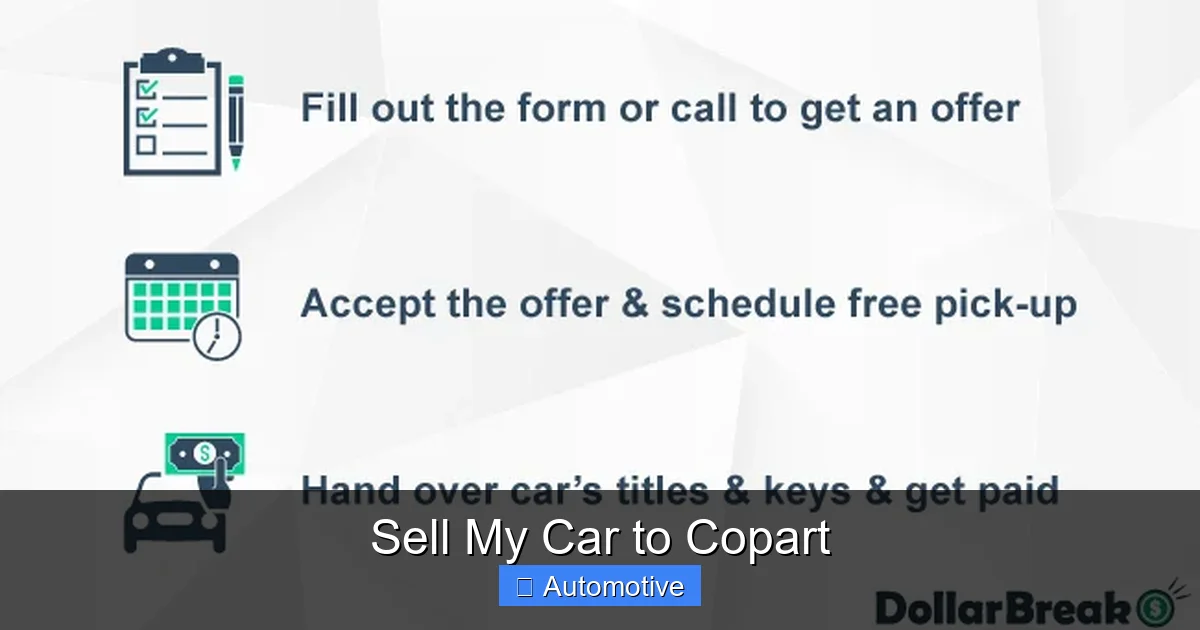
Selling your car to Copart is surprisingly simple—especially when you know what to expect. Here’s a clear, step-by-step breakdown of the entire process, from start to finish.
Step 1: Create a Seller Account
The first step is to sign up for a free seller account on the Copart website (copart.com). You’ll need to provide basic information like your name, address, phone number, and email. Once your account is approved—usually within 24 hours—you’ll be able to list vehicles for sale.
Tip: Make sure your contact information is accurate. Copart may need to reach you quickly to confirm details or schedule pickup.
Step 2: Gather Required Documents
Before listing your car, gather the following documents:
– Vehicle title (signed over to you or in your name)
– Valid government-issued ID
– Proof of ownership (such as a registration or insurance card)
– Odometer reading (required by law)
If you don’t have the title, Copart may still accept the vehicle, but you’ll need to provide additional documentation and may face delays.
Step 3: Take High-Quality Photos
Photos are crucial. Buyers can’t inspect the car in person before bidding, so your images need to tell the full story. Take clear, well-lit photos from multiple angles:
– Front, back, and both sides
– Interior (dashboard, seats, trunk)
– Engine bay
– Any damage (dents, scratches, broken glass)
Use natural light and avoid shadows. If your car has significant damage, be honest—buyers appreciate transparency and are more likely to bid if they know exactly what they’re getting.
Step 4: Write a Detailed Vehicle Description
Your description should include:
– Year, make, model, and trim
– Mileage
– Engine and transmission type
– Any known mechanical issues
– Accident history
– Reason for selling
Example: “2017 Nissan Altima, 95,000 miles, 2.5L 4-cylinder, automatic transmission. Front-end collision damage from minor fender bender. Airbags not deployed. Engine starts and runs. Interior in good condition. Clean title in hand.”
The more detail you provide, the more confident buyers will feel—and the higher your bids may be.
Step 5: Set Your Reserve Price (Optional)
Copart allows you to set a reserve price—the minimum amount you’re willing to accept. If bidding doesn’t reach your reserve, the car won’t sell. This protects you from selling for less than your car is worth.
However, setting a high reserve can reduce buyer interest. A good rule of thumb: research similar vehicles on Copart and set your reserve slightly below the average selling price to encourage bidding.
Step 6: Choose Your Auction Type
Copart offers two main auction types:
– **Live Auctions:** Held at physical locations with real-time bidding. Great for high-value or unique vehicles.
– **Timed Online Auctions:** Listed on the website with a set end time (usually 5–7 days). Most sellers choose this option for convenience.
For most people, timed online auctions are the easiest and most effective way to sell.
Step 7: Wait for Bids and Monitor the Auction
Once your car is listed, buyers will start placing bids. You can monitor the auction through your Copart account. If you set a reserve, you’ll be notified if it’s met.
Tip: Avoid last-minute bidding wars by listing your car early in the week. Auctions that end on weekends often get more attention.
Step 8: Accept the Winning Bid
When the auction ends, the highest bidder wins—provided your reserve was met (if you set one). Copart will notify you and the buyer. You’ll then coordinate with the buyer to arrange pickup or delivery.
Step 9: Prepare the Vehicle for Pickup
Before the buyer arrives:
– Remove all personal items from the car
– Provide the title and any required documents
– Ensure the vehicle is accessible for towing (if non-running)
Copart can often arrange towing for non-running vehicles, but confirm this with the buyer.
Step 10: Get Paid
After the buyer picks up the car and confirms everything is in order, Copart processes your payment. You’ll receive funds via check or electronic transfer, usually within 3–5 business days.
Note: Copart charges a selling fee, typically 5–10% of the final sale price, with a minimum fee (around $50–$100). This is deducted from your payout.
Tips to Get the Best Price When You Sell My Car to Copart
Visual guide about Sell My Car to Copart
Image source: images.hgmsites.net
Want to maximize your earnings? Here are some proven strategies to help you get the best possible price when you sell your car to Copart.
Be Honest About the Condition
Don’t hide damage or mechanical issues. Buyers appreciate transparency, and dishonesty can lead to disputes or even canceled sales. If your car has a blown engine, say so. If the airbags deployed, mention it. Accurate descriptions build trust and attract serious bidders.
Highlight Unique Features
Does your car have low mileage, a rare color, or upgraded features like a sunroof or premium sound system? Mention these in your description. Even small details can increase perceived value.
For example: “Only 42,000 miles, one previous owner, leather seats, navigation system, and custom alloy wheels.”
Time Your Auction Right
List your car when buyer activity is high. Avoid holidays and major events. Mid-week listings (Tuesday–Thursday) often perform better than weekend ones.
Also, consider the season. Convertibles and sports cars may sell for more in spring and summer, while SUVs and trucks might fetch higher prices in fall and winter.
Use High-Quality Photos
Blurry or dark photos turn buyers away. Use a smartphone with good lighting and take photos during the day. Clean the car if possible—even a quick rinse can make a big difference.
Set a Competitive Reserve Price
Research similar vehicles on Copart and set your reserve slightly below the average selling price. This encourages bidding without pricing yourself out of the market.
Respond Quickly to Questions
Buyers may reach out with questions about the car. Respond promptly and honestly. A quick reply can turn a curious bidder into a committed buyer.
Consider Listing During Peak Demand
Certain times of year see higher demand for used cars—like tax refund season (February–April) or back-to-school months (August). Listing during these periods can increase competition and drive up bids.
Common Misconceptions About Selling to Copart
Despite its popularity, there are still some myths and misunderstandings about selling your car to Copart. Let’s clear them up.
“Copart only takes wrecked cars.”
False. While Copart is well-known for salvage vehicles, they accept cars in any condition—including clean-title, fully functional vehicles. In fact, many people sell perfectly good cars to Copart for the convenience and speed.
“I’ll get less money than selling privately.”
Not necessarily. While private sales can yield higher prices, they also come with risks: scams, no-shows, payment issues, and time spent meeting strangers. Copart offers a secure, fast, and hassle-free alternative. And with competitive bidding, you might be surprised by how much your car sells for.
“I need to fix the car before selling.”
Absolutely not. One of the biggest perks of selling to Copart is that you don’t need to repair, clean, or detail the vehicle. Buyers expect cars to be sold “as-is,” so save your time and money.
“The process is complicated.”
It’s actually very straightforward. With an online account, clear photos, and basic info, you can list your car in under an hour. Copart’s support team is also available to help if you have questions.
“I can’t sell if I don’t have the title.”
While having the title is ideal, Copart can often work with you if it’s missing. You may need to provide additional documentation or go through a verification process, but it’s usually manageable.
Is Selling My Car to Copart Right for You?
So, should you sell your car to Copart? The answer depends on your situation, but for many people, it’s an excellent choice.
You should consider selling to Copart if:
– Your car is damaged, non-running, or totaled
– You want a fast, hassle-free sale
– You don’t want to deal with private buyers or dealerships
– You’re looking to recover value from a vehicle you can’t use
– You’re an insurance company, fleet manager, or business selling multiple vehicles
On the other hand, if you have a high-value, low-mileage car in excellent condition and you’re willing to put in the time and effort, a private sale might get you a few hundred dollars more. But for most people—especially those with older, damaged, or unwanted vehicles—Copart offers the best combination of speed, convenience, and fair pricing.
Final Thoughts: Make the Smart Move and Sell My Car to Copart
Selling a car doesn’t have to be stressful, expensive, or time-consuming. Whether your vehicle is wrecked, worn out, or just no longer fits your lifestyle, Copart provides a reliable, transparent, and efficient way to turn it into cash.
From the moment you create your account to the day you receive your payment, Copart handles the heavy lifting. You don’t need to clean the car, fix it, or negotiate with buyers. You simply list it, let the market decide its value, and walk away with money in your pocket.
And with over 40 years of experience, a nationwide network, and thousands of satisfied sellers, Copart has earned its reputation as one of the best places to sell your car—no matter what condition it’s in.
So if you’ve been thinking, “I need to sell my car,” don’t wait. Visit copart.com today, create your seller account, and take the first step toward a quick, easy, and profitable sale.
Your car may be done with you—but it’s not done being useful. Let Copart help you get the most out of it.
Frequently Asked Questions
Can I sell my car to Copart if it doesn’t run?
Yes, absolutely. Copart accepts non-running vehicles as long as they can be towed. Many buyers specialize in repairing or rebuilding these cars, so you can still get a fair price.
Do I need a title to sell my car to Copart?
Ideally, yes—but Copart can often work with you if the title is missing. You may need to provide additional documentation or go through a verification process.
How much does it cost to sell my car to Copart?
Listing is free. Copart charges a selling fee only if your car sells, typically 5–10% of the final price, with a minimum fee of around $50–$100.
How long does it take to get paid after selling to Copart?
Payment is usually processed within 3–5 business days after the buyer picks up the vehicle and confirms everything is in order.
Can I sell a car with a salvage title to Copart?
Yes, Copart specializes in salvage and totaled vehicles. In fact, many insurance companies use Copart to sell cars declared total losses.
Is it safe to sell my car to Copart?
Yes. Copart is a licensed, reputable company with over 40 years in business. All transactions are secure, and payments are guaranteed once the sale is complete.