
Rain Getting Through Car Cover? Causes and How to Stop It

Quick Answer
If rain is getting through your car cover, the usual causes are water-resistant fabric becoming saturated, leaking seams, worn coatings, poor fit, wind-driven rain, or water pooling on top. Moisture can also be condensation rather than a true leak, which is why a breathable outdoor car cover matters.
What I check first
- Check the seams: Wet lines that follow stitching usually point to seam leakage.
- Look for pooling: Standing water puts more pressure on the same section of fabric.
- Inspect the fit: Loose edges let wind push rain underneath the cover.
- Check the fabric: An aging water-repellent coating may stop making rain bead.
- Rule out condensation: Even a cover that blocks rain can have moisture form underneath.
Fast confirmation
- Dry the car and cover completely, then inspect the underside during or immediately after the next rain.
Finding rain getting through a car cover is frustrating because the cover is supposed to prevent that exact problem. I usually start by finding where the moisture begins instead of assuming the whole cover has failed.
That simple approach matters. A wet roof can come from a leaking seam, while scattered droplets may only be condensation.
In This Guide
Why Is Rain Getting Through My Car Cover?
Rain usually gets through because the cover has reached the limit of its water resistance or water has found an easier path around the fabric. Seams, openings, worn areas, and loose edges are often more important than the center of the material.
Definition: Rain getting through a car cover means outside liquid water reaches the vehicle through the cover material, seams, openings, or edges. That is different from condensation, which forms underneath the cover from moisture already in the surrounding air.
Water-resistant fabric can become saturated
Water-resistant does not mean that a cover can resist unlimited rain. A long storm can eventually overwhelm some fabrics, especially if water remains on one area.
I check whether rain still beads and rolls away. If the surface darkens and holds water instead, the outer treatment may be losing effectiveness.
The water-repellent finish may be worn
Outdoor covers deal with sunlight, heat, dirt, washing, wind, and repeated folding. Those conditions can slowly reduce the performance of the surface coating.
A cover may still look fine while shedding water much worse than it did when new. This is easy to miss.
Rain can enter from underneath
Wind changes everything. A loose cover may block rain from above while allowing wind-driven water to enter around the front, rear, wheel wells, or lower sides.
- Loose elastic hems can lift during gusts.
- Missing straps allow the cover to shift.
- Oversized covers create openings and folds.
- Wrong mirror placement can pull other sections out of position.
That is why I never judge rain protection from fabric alone. Fit matters just as much outdoors.
Is It Rain Leakage or Condensation?
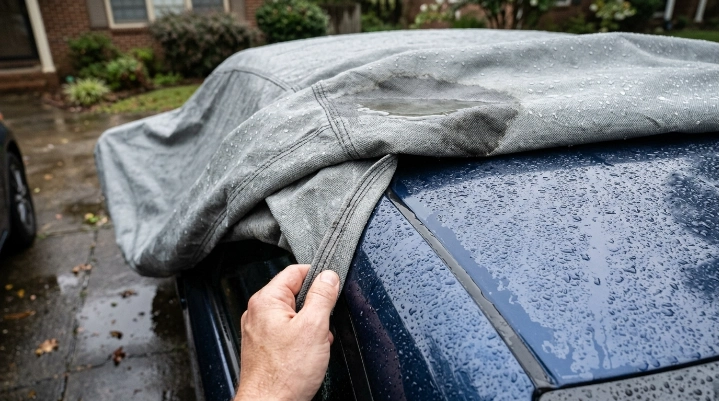
Moisture under a car cover does not automatically mean the rain passed through it. Condensation can form when humid air meets cooler body panels under the cover.
This is one of the easiest problems to misdiagnose. I look at the moisture pattern before blaming the material.
| What you see | More likely cause | What to check |
|---|---|---|
| Wet line directly below stitching | Seam leakage | Inspect stitching and seam tape |
| Water near lower edges only | Wind-driven rain | Check straps, hem, and fit |
| Many fine droplets over several panels | Condensation | Check ventilation and humidity |
| Wet patch beneath a puddle on the cover | Fabric saturation or pressure | Stop water from pooling |
| Random leaks from faded or thin areas | Aging cover | Inspect material against bright light |
A breathable vehicle cover lets water vapor escape more easily. That can help reduce how long condensation remains trapped around the vehicle.
My favorite simple check starts with a completely dry vehicle. Put the dry cover on, then examine it immediately after rainfall rather than hours later.
Distinct wet paths usually suggest outside water entry. Fine moisture spread across cooler surfaces points more toward condensation.
Where Does Water Get Through a Car Cover?
Water usually follows the weakest part of the cover. I inspect these areas before assuming the entire material is defective.
Stitched seams
Every sewn seam creates tiny needle holes. Reinforced, coated, or taped seams resist water better than simple exposed stitching.
Look closely at roof lines, mirror pockets, and panel joins. Those spots often receive direct rainfall for hours.
Mirror pockets and antenna openings
Openings complicate the shape of a cover. Poor stitching or excessive tension around these areas can create small leak paths.
An antenna hole that was cut by hand deserves special attention. Water can run down the antenna and directly beneath the cover.
Low spots where water pools
A loose cover often creates shallow bowls between the roof, hood, windshield, and trunk. Rain collects there instead of flowing away.
The longer that water sits, the harder the material must work. Pooling can also stretch the cover and stress nearby seams.
The lower edge
Water near rocker panels and bumpers may not have passed through the fabric at all. Wind can simply push rain under a loose hem.
Check whether the cover shifted after the storm. A movement of only a few inches can expose part of the vehicle.
How Do I Stop Rain Getting Through My Car Cover?
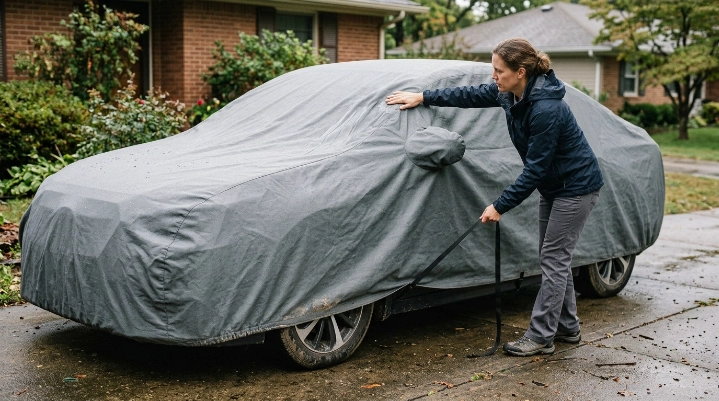
The best fix depends on where the water enters. I use a simple dry-test-inspect routine instead of applying waterproofing products everywhere.
- Dry the vehicle and cover. Start with both completely dry so old moisture does not confuse the test.
- Inspect the cover in bright light. Look for thinning, pinholes, tears, worn folds, and damaged stitching.
- Check the fit. Center mirror pockets and make sure the cover reaches both bumpers evenly.
- Secure every strap. Tighten them enough to control movement without pulling seams excessively.
- Remove low spots. Reposition loose fabric so rain runs off instead of collecting in a puddle.
- Watch the next rainfall. Check the underside while the location of the leak is still obvious.
Fix a poor fit first
A cover should sit close to the vehicle without being stretched like a drum. Too much slack encourages wind movement and water pooling.
A cover that is too small creates a different problem. High tension can stress stitching around mirrors, bumpers, and corners.
Deal with damaged seams carefully
Check the cover manufacturer’s instructions before applying seam sealer. Some treatments can affect breathability, warranties, or fabric coatings.
Minor seam problems may be repairable. Long sections of deteriorated stitching usually make replacement the more dependable choice.
Keep the cover clean
Dirt can interfere with water-repellent finishes and make inspection harder. Follow the manufacturer’s cleaning instructions instead of assuming normal laundry detergent is safe.
I also clean the vehicle before covering it whenever practical. Dirt trapped underneath can move against paint when wind shifts the cover.
Give trapped moisture somewhere to go
Do not seal a wet vehicle beneath a non-breathable layer for long periods. Allow the car and cover to dry whenever weather conditions permit.
For broader exterior protection and maintenance guidance, the Kelley Blue Book exterior care section is a useful reference for everyday owners.
Section Takeaway: Find the leak before treating the fabric. Correct fit, drainage, damaged seams, and trapped moisture first.
Which Car Cover Type Handles Rain Best?
For outdoor parking, I want a cover that balances rain resistance with moisture escape. A cover that blocks outside rain but traps every bit of humidity underneath can create another problem.
The marketing terms can be confusing. The construction matters more than a large word printed on the package.
| Cover type | Rain protection | Moisture escape | Best use |
|---|---|---|---|
| Basic indoor cover | Low | Often good | Garage dust protection |
| Water-resistant outdoor cover | Moderate to high | Usually better | Regular outdoor parking |
| Waterproof non-breathable cover | High from outside | Low | Situations where trapped humidity can be controlled |
| Breathable weather-resistant cover | High when well made | Good | Longer outdoor use |
I pay particular attention to seam construction, fit, ventilation, and how the fabric handles prolonged rain. A long layer count alone does not tell me whether those details are good.
As of 2026, that basic buying logic still applies. Choose the cover for your parking environment rather than relying on one marketing label.
The Edmunds car maintenance section is also useful when you want to place cover care within a broader vehicle-maintenance routine.
When Should I Replace a Leaking Car Cover?
Replace the cover when the material or construction has deteriorated enough that simple fit corrections no longer stop water entry. Repeated leaks in multiple areas are a strong sign.
A small isolated seam problem is different. One damaged point may be repairable if the rest of the cover remains flexible and intact.
Signs I would stop trusting the cover
- Multiple leaking seams: Water appears beneath several stitched areas.
- Peeling material: The surface coating flakes, cracks, or separates.
- Thin fabric: Light passes through areas that used to look solid.
- Permanent stretching: Large pockets form and hold water after every storm.
- Failed elastic: The cover no longer stays around the bumpers.
- Torn straps: Wind can move the cover even after it is positioned correctly.
A worn cover can create problems beyond water entry. Loose material can also move against dusty paint when the wind rises.
Before replacing it, check the warranty and care instructions. Some manufacturers treat seam failure differently from normal coating wear.
Frequently Asked Questions
Why is my waterproof car cover letting water through?
The fabric may block water while seams, openings, or damaged areas leak. Water can also enter under loose edges, while condensation underneath can look almost identical to rain penetration.
Is it normal for a car to be wet under a cover?
A small amount of moisture can appear from condensation in humid conditions. Regular heavy wetness, pooled water, or clear drip paths should be investigated because they can point to leakage, poor fit, or inadequate ventilation.
Can rain pass through car cover seams?
Yes. Stitching creates small holes in the material, so seam construction matters. If the wet area follows a stitched line, inspect that seam before treating the entire cover.
Should a car cover be completely waterproof?
Not necessarily. For long outdoor use, moisture management matters along with rain protection because humidity can become trapped underneath a non-breathable barrier.
Can I put a car cover on a wet car?
It is better to let the vehicle dry first when possible. Covering a wet car adds moisture beneath the cover and can make it difficult to tell whether later dampness came from rain or trapped humidity.
How can I tell if my car cover has lost its water resistance?
Watch the cover during rain. If water no longer beads, large areas become saturated quickly, or new leaks appear away from seams and edges, the water-repellent surface may be deteriorating.
Can I spray waterproofing treatment on my car cover?
Only use a treatment approved for that cover material. An incompatible coating can change breathability, damage the fabric, or affect the manufacturer’s warranty, so check the care instructions first.
Final takeaway: If rain is getting through your car cover, first decide whether you have a true leak or condensation. Then check seams, fit, pooling, worn fabric, and wind exposure before replacing the cover.
A good outdoor cover should protect the vehicle without creating a moisture trap. Fixing the actual entry point is usually much more effective than simply adding another waterproof layer.