
No Crank No Start Diagnosis in a Car

Experiencing a no crank no start issue in your car can be frustrating and confusing. This guide walks you through common causes, step-by-step diagnosis, and practical fixes to get your engine turning over again—no mechanic required.
Key Takeaways
- Battery issues are the most common cause: A dead or weak battery often prevents the engine from cranking. Always check voltage and connections first.
- Faulty starter motor or solenoid: If you hear a clicking sound but the engine won’t turn, the starter may be failing or stuck.
- Ignition switch problems: A worn or damaged ignition switch can interrupt power to the starter circuit, causing a no crank condition.
- Bad ground connections: Corroded or loose ground wires can disrupt electrical flow, even with a good battery.
- Security system or immobilizer interference: Modern cars may prevent cranking if the immobilizer doesn’t recognize the key.
- Neutral safety switch or clutch interlock failure: Automatic and manual cars have safety switches that must be engaged to allow cranking.
- Fuses and relays matter: Blown fuses or faulty relays in the starter circuit can stop the engine from turning over.
📑 Table of Contents
- Introduction: What Does “No Crank No Start” Really Mean?
- Common Causes of a No Crank No Start Condition
- Step-by-Step No Crank No Start Diagnosis
- Advanced Diagnostics and When to Call a Mechanic
- Preventive Maintenance to Avoid No Crank Issues
- Real-World Examples and Troubleshooting Tips
- Conclusion: Take Control of Your Car’s Starting System
Introduction: What Does “No Crank No Start” Really Mean?
Picture this: You’re running late for work, you hop into your car, turn the key—and nothing happens. No engine turnover, no grinding noise, just silence. Or maybe you hear a single loud click, but the engine doesn’t spin. That’s the dreaded “no crank, no start” scenario, and it’s one of the most common (and stressful) car problems drivers face.
When we say “no crank,” we mean the engine isn’t turning over when you try to start the car. The starter motor—the component responsible for spinning the engine to begin combustion—isn’t engaging. This is different from a “crank but no start,” where the engine turns but doesn’t fire up. In a no crank situation, the car is completely unresponsive at the ignition stage.
This issue can stem from electrical, mechanical, or safety-related causes. The good news? Most no crank problems are fixable without a trip to the dealership. With a little know-how and the right troubleshooting steps, you can often identify and resolve the issue yourself. Whether you’re a weekend DIYer or just want to understand what’s going on under the hood, this guide will walk you through everything you need to know about no crank no start diagnosis in a car.
Common Causes of a No Crank No Start Condition
Visual guide about No Crank No Start Diagnosis in a Car
Image source: i.ytimg.com
Before diving into diagnostics, it helps to understand what might be preventing your engine from cranking. While the symptoms may look the same—silence or a click when you turn the key—the root causes can vary widely. Let’s break down the most common culprits.
Battery-Related Issues
The battery is the heart of your car’s electrical system. Without sufficient power, nothing happens when you turn the key. A dead or weak battery is the number one cause of no crank problems. Even if your lights turn on or the radio plays, the starter motor requires a significant surge of current to spin the engine—far more than what’s needed for accessories.
Common battery issues include:
– Low charge due to leaving lights on or a parasitic drain
– Corroded or loose battery terminals
– Aging battery (most last 3–5 years)
– Faulty alternator not recharging the battery while driving
For example, if your headlights dim when you try to start the car, or the dashboard lights flicker, that’s a strong sign the battery isn’t delivering enough power.
Starter Motor or Solenoid Failure
The starter motor is a small electric motor that physically turns the engine’s flywheel when you start the car. It’s activated by the ignition switch and powered through a solenoid, which acts like a relay. If either component fails, the engine won’t crank.
Symptoms of a bad starter include:
– A single loud click when turning the key (the solenoid is engaging but the motor isn’t spinning)
– Repeated clicking (could indicate low battery or poor connection)
– No sound at all (may point to a dead battery or faulty ignition switch)
Sometimes, the starter can be temporarily revived by tapping it gently with a hammer—this works if the internal brushes are stuck. But it’s a short-term fix; the starter will likely need replacement soon.
Ignition Switch Problems
The ignition switch sends power to the starter circuit when you turn the key. Over time, the switch can wear out, especially in older vehicles. A faulty ignition switch may not complete the circuit, so even with a good battery and starter, nothing happens.
Signs of a bad ignition switch:
– No dashboard lights when the key is turned
– Intermittent starting issues (works sometimes, doesn’t others)
– Accessories like the radio or power windows not working when the key is in the “on” position
This is often overlooked because people assume the battery or starter is at fault. But if you’ve ruled those out, the ignition switch is a prime suspect.
Safety Switches and Interlocks
Modern cars have safety features designed to prevent accidental starting. These include:
– Neutral safety switch (automatics): Prevents the car from starting unless it’s in Park or Neutral
– Clutch interlock switch (manuals): Requires the clutch pedal to be fully depressed before starting
If these switches fail or become misaligned, they can block the starter circuit. For example, if your automatic car won’t start in Park but will in Neutral, the neutral safety switch may be faulty or out of adjustment.
Security System or Immobilizer Issues
Many newer vehicles use an immobilizer system that communicates with a chip in the key. If the system doesn’t recognize the key, it will disable the starter and fuel system to prevent theft.
Symptoms include:
– The engine cranks briefly then shuts off
– A flashing security light on the dashboard
– No crank at all, even with a good battery
Sometimes, simply using a spare key or reprogramming the existing one can resolve the issue.
Electrical Connections and Grounds
Even with a good battery and starter, poor electrical connections can stop the engine from cranking. Corrosion on battery terminals, loose cables, or bad ground connections (especially from the engine to the chassis) can disrupt the flow of electricity.
A bad ground is often overlooked but can be just as problematic as a dead battery. The starter needs a solid path to ground to complete the circuit. If the ground strap is corroded or broken, the starter won’t receive enough current to operate.
Step-by-Step No Crank No Start Diagnosis
Visual guide about No Crank No Start Diagnosis in a Car
Image source: i.ytimg.com
Now that you know the possible causes, let’s walk through a systematic approach to diagnosing a no crank no start condition. This method helps you eliminate possibilities one by one, saving time and avoiding unnecessary repairs.
Step 1: Check the Battery
Start with the simplest and most common cause—the battery. Even if your lights work, the battery might not have enough power to crank the engine.
Here’s what to do:
1. Turn on the headlights and observe their brightness. If they’re dim or flicker when you try to start the car, the battery is likely weak.
2. Use a multimeter to check the battery voltage. A healthy battery should read 12.6 volts or higher when the car is off. If it’s below 12.4 volts, it may not have enough charge.
3. Inspect the battery terminals for corrosion (a white or green powdery substance). Clean them with a wire brush and baking soda solution if needed.
4. Ensure the battery cables are tight and secure. Loose connections can prevent current from flowing.
Pro tip: If you have access to jumper cables and another vehicle, try jump-starting your car. If it starts, the battery was likely the issue—but don’t assume the alternator is working. Drive to an auto parts store to have both the battery and charging system tested.
Step 2: Listen for Sounds When Turning the Key
The sound (or lack of sound) when you turn the key can give you valuable clues.
– No sound at all: This usually points to a dead battery, faulty ignition switch, or a blown fuse. Check the battery first, then inspect the ignition switch and fuses.
– Single loud click: This often means the solenoid is engaging but the starter motor isn’t spinning. Could be a bad starter, poor connection, or low battery.
– Rapid clicking: Typically indicates a weak battery or poor connection. The solenoid is trying to engage but can’t get enough power.
If you hear a click but no crank, try tapping the starter motor gently with a hammer while someone turns the key. If the engine starts, the starter is likely failing and needs replacement.
Step 3: Test the Starter Circuit
If the battery is good and you’re hearing a click, the next step is to check the starter circuit.
Use a multimeter to test for voltage at the starter solenoid. With the key in the “start” position, you should see battery voltage (around 12 volts) at the small terminal on the solenoid. If there’s no voltage, the issue is upstream—possibly the ignition switch, neutral safety switch, or a blown fuse.
You can also perform a voltage drop test on the battery cables. A high voltage drop indicates resistance in the cable, which can prevent the starter from getting enough power.
Step 4: Check Fuses and Relays
Modern cars have multiple fuses and relays that protect the electrical system. A blown fuse or faulty relay in the starter circuit can prevent cranking.
Locate your vehicle’s fuse box (usually under the dashboard or in the engine bay) and check the fuses related to the ignition and starter. Look for any that are burnt or broken. Replace them with fuses of the same rating.
Also, check the starter relay. You can often swap it with a similar relay (like the horn relay) to see if the problem goes away. If the car starts after swapping, the relay was faulty.
Step 5: Inspect Safety Switches
For automatic transmissions, try starting the car in Neutral instead of Park. If it starts in Neutral but not Park, the neutral safety switch may be misaligned or defective.
For manual transmissions, ensure the clutch pedal is fully depressed. If the car still won’t start, the clutch interlock switch might be faulty. You can temporarily bypass it by jumping the switch with a screwdriver (only for testing—don’t drive with it bypassed).
Step 6: Check the Ignition Switch
If all else fails, the ignition switch may be the culprit. This is harder to test without specialized tools, but you can look for signs of wear.
Try jiggling the key while turning it. If the car starts intermittently, the switch may be worn. Also, check if dashboard lights come on when the key is turned to the “on” position. If not, the ignition switch isn’t sending power.
Some vehicles allow you to test the ignition switch output with a multimeter. Refer to your vehicle’s service manual for specific procedures.
Step 7: Verify Ground Connections
A bad ground can mimic a dead battery or bad starter. The most important ground is the one connecting the engine block to the chassis.
Locate the ground strap (usually a thick black cable from the engine to the frame). Check for corrosion, looseness, or damage. Clean and tighten the connections. If the strap is broken, replace it.
You can also perform a voltage drop test between the battery negative terminal and the engine block. With the key in the “start” position, the reading should be less than 0.2 volts. Higher readings indicate a poor ground.
Advanced Diagnostics and When to Call a Mechanic
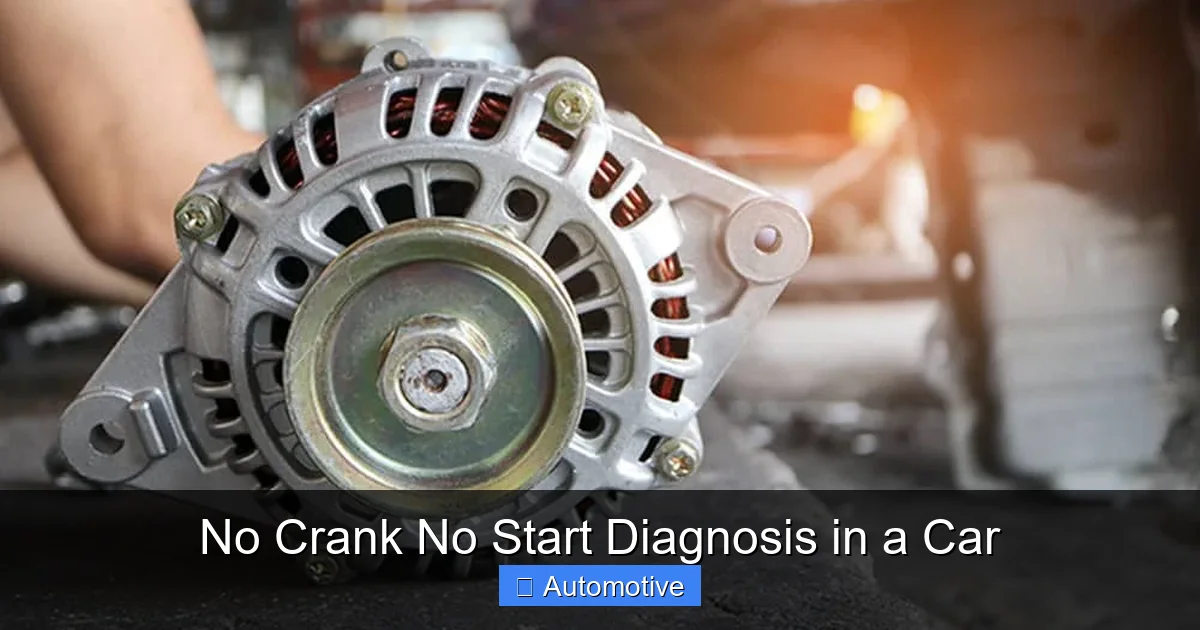
Visual guide about No Crank No Start Diagnosis in a Car
Image source: cloreautomotive.com
While many no crank issues can be resolved with basic tools and knowledge, some problems require more advanced diagnostics.
Using a Scan Tool
Modern vehicles store diagnostic trouble codes (DTCs) even when the engine doesn’t start. A scan tool can read these codes and provide clues about electrical or immobilizer issues.
For example, a code like P0615 (starter relay circuit) or B2799 (immobilizer malfunction) can point you directly to the problem. Even if the car won’t start, many scan tools can communicate with the vehicle’s computer as long as the battery has some charge.
Immobilizer System Troubleshooting
If your car has an immobilizer and won’t crank, check the security light on the dashboard. A flashing or solid light often indicates a key recognition issue.
Try using a spare key. If it works, the original key’s chip may be damaged. You may need to have the key reprogrammed by a dealer or locksmith.
In some cases, the immobilizer module itself can fail. This usually requires professional diagnosis and replacement.
When to Seek Professional Help
There are times when DIY troubleshooting hits a wall. Consider calling a mechanic if:
– You’ve checked the battery, starter, fuses, and grounds, but the car still won’t crank
– You suspect an internal engine problem (e.g., seized engine)
– The immobilizer system is involved and you don’t have access to programming tools
– You’re uncomfortable working with high-voltage electrical systems
A professional mechanic has the tools and experience to perform advanced tests, such as checking starter current draw or testing the ignition switch output under load.
Preventive Maintenance to Avoid No Crank Issues
The best way to deal with a no crank problem is to prevent it from happening in the first place. Regular maintenance can go a long way in keeping your starting system reliable.
Battery Care
– Test your battery annually, especially before winter
– Clean terminals regularly to prevent corrosion
– Replace the battery every 3–5 years, even if it seems fine
– Avoid leaving lights or accessories on when the engine is off
Starter and Electrical System Checks
– Listen for unusual noises when starting (grinding, whining)
– Address any starting hesitation immediately
– Inspect wiring and connections during routine service
Keep Spare Keys and Fuses Handy
– Carry a spare key with a working chip
– Keep a set of common fuses in your glove box
– Know the location of your vehicle’s fuse box and relay panel
Protect Against Parasitic Drain
– Unplug phone chargers, dash cams, and other accessories when not in use
– Have your electrical system checked if the battery dies frequently
Real-World Examples and Troubleshooting Tips
Let’s look at a few real-world scenarios to illustrate how no crank diagnosis works in practice.
Example 1: The Clicking Sound
Sarah turns the key and hears a loud click, but the engine doesn’t turn. She checks the battery—12.6 volts, terminals clean. She taps the starter with a hammer while her friend turns the key. The engine starts. Diagnosis: Failing starter motor. She replaces it the next day.
Example 2: No Sound at All
Tom’s car is completely silent when he turns the key. The dashboard lights don’t come on. He checks the battery—dead. He jump-starts the car, and it runs fine. But the next morning, it’s dead again. Diagnosis: Faulty alternator not charging the battery. He replaces the alternator.
Example 3: Starts in Neutral, Not Park
Lisa’s automatic car won’t start in Park, but it starts in Neutral. She checks the neutral safety switch and finds it misaligned. After adjusting it, the car starts normally in Park.
Pro Tips for DIY Diagnosticians
– Always disconnect the battery before working on electrical components
– Use a multimeter—it’s one of the most valuable tools for car diagnostics
– Label wires and take photos before disconnecting anything
– Keep a repair manual for your specific vehicle model
Conclusion: Take Control of Your Car’s Starting System
A no crank no start condition doesn’t have to leave you stranded or at the mercy of a mechanic. With a clear understanding of the common causes and a systematic approach to diagnosis, you can often identify and fix the problem yourself.
Start with the battery—it’s the most likely culprit. Then listen for sounds, check fuses and relays, inspect safety switches, and verify ground connections. Use tools like a multimeter and scan tool to dig deeper when needed.
Remember, prevention is key. Regular maintenance, clean connections, and attention to early warning signs can save you from future headaches.
Whether you’re dealing with a simple loose cable or a complex immobilizer issue, the knowledge you’ve gained here puts you in control. So the next time your car won’t start, take a deep breath, grab your tools, and get to work. Your engine—and your wallet—will thank you.
Frequently Asked Questions
Why won’t my car start even though the battery is new?
A new battery doesn’t guarantee a fix if there’s a parasitic drain, bad ground, or faulty starter. Also, the alternator might not be charging the battery properly. Test the charging system and inspect connections.
Can a bad alternator cause a no crank condition?
Yes, indirectly. A failing alternator won’t recharge the battery while driving, leading to a drained battery over time. If the battery voltage drops too low, the car won’t crank.
How do I know if my starter is bad?
Listen for a single loud click when turning the key. If the engine doesn’t turn over and the battery is good, the starter or solenoid is likely faulty. Tapping it with a hammer may temporarily fix it.
Why does my car only start in Neutral?
This usually indicates a problem with the neutral safety switch. It may be misaligned, worn, or defective. Adjusting or replacing the switch typically resolves the issue.
Can a bad key cause a no crank problem?
Yes, especially in cars with immobilizer systems. If the key’s chip isn’t recognized, the car won’t allow the engine to crank. Try a spare key or have the key reprogrammed.
Is it safe to jump-start a car that won’t crank?
Yes, as long as the battery isn’t damaged or leaking. Use proper jumper cable connections and avoid sparks near the battery. If the car starts, drive it to test the alternator.