
Mobile Car Tinting: Everything You Need to Know

Mobile car tinting offers convenience, protection, and style—all without leaving your driveway. Whether you’re shielding your interior from UV rays or enhancing privacy, this guide covers all the essentials, from legal limits to choosing the right film.
Key Takeaways
- Convenience is key: Mobile tinting services come to you—home, office, or anywhere—saving time and hassle.
- Protects your car’s interior: Quality tint blocks up to 99% of harmful UV rays, preventing dashboard cracking and seat fading.
- Improves comfort and privacy: Reduces glare and heat buildup while keeping prying eyes out of your vehicle.
- Legal compliance matters: Tint darkness and reflectivity are regulated by state laws—always check local rules before tinting.
- Film quality varies widely: Ceramic and carbon films offer superior performance over cheaper dyed options.
- Professional installation ensures longevity: DIY kits often bubble or peel; experts deliver smooth, durable results.
- Maintenance is simple: With proper care, quality tint can last 5–10 years without fading or peeling.
📑 Table of Contents
What Is Mobile Car Tinting?
Imagine getting your car windows professionally tinted without ever stepping foot in a shop. That’s the magic of mobile car tinting. Instead of driving to a detailing center, waiting in line, and leaving your vehicle behind for hours (or even days), a certified technician comes directly to your location—whether that’s your driveway, office parking lot, or even a coffee shop—and installs high-quality window film right on the spot.
This service has exploded in popularity over the past decade, thanks to busy lifestyles and the growing demand for on-demand automotive care. Mobile tinting isn’t just about convenience—it’s also about consistency. Reputable mobile technicians use the same premium films and precision tools as brick-and-mortar shops, ensuring professional-grade results. Plus, many offer warranties and follow strict safety protocols, so you’re not sacrificing quality for comfort.
Whether you drive a compact sedan, an SUV, or a luxury coupe, mobile car tinting adapts to your schedule and space. It’s perfect for new car owners who want immediate protection, families juggling errands, or professionals who can’t afford downtime. And because the process typically takes 1–3 hours depending on the vehicle size, you can often get it done during a lunch break or while running other tasks nearby.
How Does Mobile Tinting Work?
The process starts with a quick phone call or online booking. Most mobile tinting companies let you choose your preferred date, time, and location. Once scheduled, a technician arrives with all necessary equipment: clean microfiber cloths, precision cutting tools, squeegees, heat guns, and rolls of high-performance window film.
Before applying the tint, the technician thoroughly cleans each window inside and out, removing dust, grease, and old residue. They then measure and cut the film to fit your specific glass dimensions—often using pre-cut patterns for popular models. The actual application involves spraying a soapy solution on the glass, positioning the film, and using a squeegee to remove air bubbles and excess liquid. A final heat treatment helps the film conform perfectly to curved windows.
Unlike DIY kits that often result in crooked lines or trapped moisture, professional mobile tinting ensures a seamless finish. Technicians are trained to handle complex curves, defroster lines, and rear windshields with precision. And because they work in controlled environments (even outdoors), they minimize contamination from wind-blown debris—a common cause of imperfections in amateur jobs.
Benefits of Mobile Car Tinting
Mobile car tinting isn’t just a trend—it’s a smart investment in your vehicle’s longevity, comfort, and value. Let’s break down the top benefits that make it worth considering.
Visual guide about Mobile Car Tinting: Everything You Need to Know
Image source: i.ytimg.com
Ultraviolet (UV) Protection
One of the most compelling reasons to tint your windows is UV defense. The sun’s ultraviolet rays don’t just tan your skin—they also wreak havoc on your car’s interior. Over time, UV exposure causes dashboards to crack, upholstery to fade, and vinyl trim to deteriorate. According to the Skin Cancer Foundation, up to 50% of lifetime sun exposure occurs during driving.
High-quality window films block up to 99% of UVA and UVB rays. This not only preserves your car’s resale value but also protects your health. Passengers—including children and pets—are shielded from harmful radiation, reducing the risk of skin damage and long-term health issues. Ceramic and metallic films offer the strongest UV protection, outperforming basic dyed options.
Heat Reduction and Improved Comfort
On a hot summer day, stepping into an untinted car feels like entering an oven. Interior temperatures can soar above 140°F (60°C), making air conditioning less effective and increasing fuel consumption as the AC works overtime.
Window tint significantly reduces heat buildup by rejecting solar infrared radiation. Depending on the film type, it can cut interior temperatures by 30–60%. For example, a ceramic tint might reject 70% of solar heat, while a standard dyed film blocks around 40%. This means faster cooling, less strain on your AC system, and a more pleasant driving experience—especially during long commutes or road trips.
Consider this real-world scenario: Two identical cars park in direct sunlight for three hours. The untinted car’s interior reaches 135°F, while the tinted one stays at 98°F. That’s a 37-degree difference—enough to make a huge impact on comfort and safety.
Enhanced Privacy and Security
Tinted windows act as a visual barrier, keeping prying eyes away from your belongings. Whether you’re carrying laptops, gym bags, or shopping purchases, darker glass deters casual thieves and reduces the temptation for break-ins.
Privacy also extends to personal comfort. Parents appreciate not being stared at while buckling kids into car seats. Commuters enjoy a sense of solitude during rush hour. And let’s be honest—nobody wants strangers seeing their messy backseat or half-eaten snacks.
However, it’s important to balance privacy with legality. Most states allow moderate tinting on side and rear windows but restrict front-side windows to ensure driver visibility. Always verify local laws before opting for darker shades.
Glare Reduction for Safer Driving
Glare from the sun, headlights, or reflective surfaces can impair vision and cause eye strain—especially during dawn, dusk, or rainy conditions. This is a leading cause of daytime accidents.
Quality window film reduces glare by filtering harsh light without compromising clarity. Unlike sunglasses, which only protect your eyes, tint works continuously across all windows. This is especially helpful for drivers with light sensitivity or conditions like cataracts.
Modern films also minimize interior reflections at night, so you’re not distracted by your own dashboard lights. The result? Sharper focus, reduced fatigue, and safer journeys—day or night.
Preserves Resale Value
A well-maintained interior significantly boosts your car’s resale value. Buyers are willing to pay more for vehicles with pristine dashboards, unfaded seats, and scratch-free trim. Tinting helps achieve that by slowing down sun damage.
Additionally, professionally installed tint signals care and attention to detail. It shows potential buyers that you’ve invested in protecting your vehicle—a subtle but powerful selling point during trade-ins or private sales.
Types of Window Tint Films
Not all window films are created equal. The market offers several types, each with distinct advantages and price points. Understanding these options helps you choose the best fit for your needs, budget, and climate.
Visual guide about Mobile Car Tinting: Everything You Need to Know
Image source: prestigetinting.com.au
Dyed Window Film
Dyed film is the most affordable option, typically costing $100–$200 for a full car installation. It consists of a layer of dyed polyester sandwiched between adhesive and a protective coating. The dye absorbs solar heat, reducing interior temperature.
Pros: Low cost, easy to install, provides basic privacy and glare reduction.
Cons: Prone to fading and bubbling over time, offers minimal UV protection (around 50%), and can interfere with electronic signals like GPS or key fobs due to lack of metallic content.
Best for: Budget-conscious drivers in mild climates who prioritize affordability over long-term performance.
Metalized Window Film
Metalized films contain tiny metallic particles embedded in the polyester layer. These particles reflect heat and UV rays, offering better performance than dyed films. They’re more durable and resist fading.
Pros: Strong heat rejection (up to 60%), excellent UV protection (95%+), scratch-resistant surface.
Cons: Can interfere with radio, cell phone, and GPS signals due to metallic content. Slightly more expensive ($200–$400).
Best for: Drivers in hot regions who want improved heat control without breaking the bank.
Carbon Window Film
Carbon film uses a layer of carbon particles instead of dye or metal. Carbon is naturally non-reflective and provides consistent color without fading. It blocks about 99% of UV rays and rejects up to 60% of solar heat.
Pros: No signal interference, rich black finish that doesn’t fade, good heat and UV protection.
Cons: Mid-range price ($300–$500), not as effective as ceramic in extreme heat.
Best for: Those seeking a balance of performance, aesthetics, and reliability—ideal for daily drivers in moderate to warm climates.
Ceramic Window Film
Ceramic film is the premium choice, using nano-ceramic technology to reject heat and block UV rays without metals or dyes. It’s the most advanced option on the market, offering up to 99% UV protection and 70%+ heat rejection.
Pros: No signal interference, superior clarity, exceptional durability, resists fading and bubbling, works well in all climates.
Cons: Highest price point ($400–$800), but often backed by lifetime warranties.
Best for: Luxury vehicle owners, frequent travelers, and anyone living in extremely hot or sunny areas. If you want the best protection and longest lifespan, ceramic is worth the investment.
Hybrid and Spectrally Selective Films
These advanced films combine multiple technologies—for example, a dyed base with a ceramic top layer—to optimize performance. Spectrally selective films target specific wavelengths of light, blocking heat while allowing visible light to pass through.
Pros: High clarity, excellent heat rejection, minimal signal disruption.
Cons: Limited availability, higher cost.
Best for: Tech-savvy drivers who want maximum efficiency without compromising on visibility or connectivity.
Understanding Car Tint Laws by State
Before you book a mobile tinting service, it’s crucial to understand your state’s regulations. Window tint laws vary widely across the U.S., governing how dark your tint can be, which windows can be tinted, and whether reflective films are allowed.
Visual guide about Mobile Car Tinting: Everything You Need to Know
Image source: lirp.cdn-website.com
Most states use a measurement called Visible Light Transmission (VLT) to define legal darkness. VLT refers to the percentage of visible light that passes through the film. A 5% tint allows only 5% of light through—making it very dark—while a 50% tint is relatively light.
Here’s a quick overview of common restrictions:
- Windshield: Most states allow a non-reflective tint only on the top 4–6 inches (AS-1 line). Some prohibit any tint.
- Front Side Windows: Typically must allow more light than rear windows. Common limits range from 35% to 70% VLT.
- Rear Side and Rear Windows: Often allow darker tints, sometimes as low as 5% VLT, especially if the car has dual side mirrors.
- Reflectivity: Many states limit how much light the tint can reflect (usually under 25%) to prevent glare for other drivers.
For example, in California, front side windows must have at least 70% VLT, while rear windows can go as low as 15%. In Texas, front sides must be 25% or lighter, but rears can be as dark as 5%. Florida allows 28% on front sides and 15% on rears.
Violating these laws can result in fines, failed inspections, or even having to remove the tint at your own expense. Some states also require medical exemptions for darker tints due to vision conditions—but these are rare and require documentation.
Tip: Always ask your mobile tinting provider about local laws before installation. Reputable companies will verify compliance and may even provide a certificate of legality upon request.
Choosing the Right Mobile Tinting Service
With so many mobile tinting providers popping up, how do you pick the right one? Not all services are equal—some cut corners, use low-grade films, or lack proper training. Here’s what to look for.
Certifications and Experience
Look for technicians certified by organizations like the International Window Film Association (IWFA) or manufacturers like 3M or Llumar. These certifications indicate proper training and adherence to industry standards.
Ask how long the company has been in business. A provider with 5+ years of experience is more likely to deliver consistent results than a new startup.
Film Quality and Warranty
Don’t settle for “generic” or “premium” labels without specifics. Ask which brands and film types they use. Top-tier providers carry names like Ceramic Pro, SunTek, or V-KOOL.
Also, check the warranty. Quality films often come with 5–10 year or even lifetime warranties against fading, peeling, or bubbling. If a company offers only a 1-year warranty, it’s a red flag.
Customer Reviews and References
Read online reviews on Google, Yelp, or Facebook. Look for patterns: Are customers praising the cleanliness, punctuality, and finish? Or complaining about missed appointments and poor adhesion?
If possible, ask for before-and-after photos or references from local clients. A trustworthy technician won’t hesitate to share proof of their work.
Pricing Transparency
Beware of unusually low quotes. While mobile tinting is generally cheaper than shop-based services (due to lower overhead), prices below $150 for a full car are suspicious. Quality ceramic film alone costs more than that.
Get a detailed quote that breaks down film type, labor, and any additional fees. Avoid companies that pressure you into upsells or demand full payment upfront.
Insurance and Cleanliness
Ensure the technician carries liability insurance. Accidents happen—what if they scratch your paint or damage your electronics? Insurance protects you.
Also, observe their setup. Do they use clean towels, cover your seats, and protect your interior? A professional will treat your car like their own.
Installation Process and What to Expect
Knowing what happens during a mobile tinting appointment helps set realistic expectations and ensures a smooth experience.
Before the Appointment
Clear your car’s interior—remove loose items from seats, floor mats, and door pockets. This gives the technician easy access and prevents contamination. If possible, park in a shaded, wind-free area to minimize dust.
During Installation
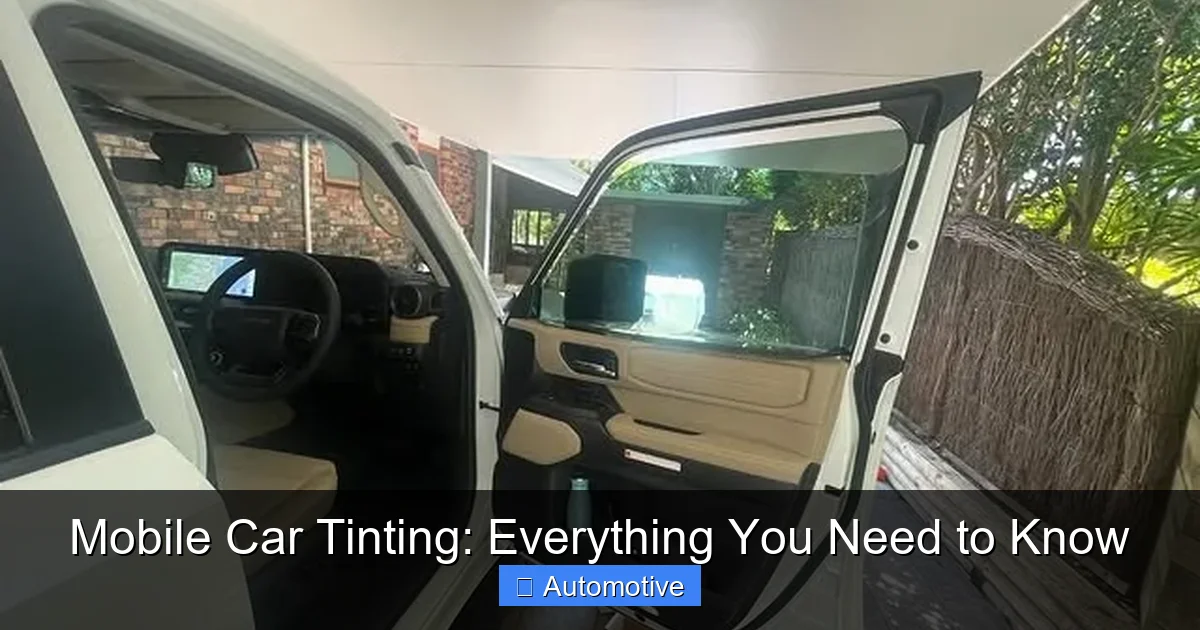
The technician will arrive with a portable workstation, often including a pop-up tent or canopy for shade. They’ll inspect your windows, confirm the film type, and begin cleaning. Expect them to spend 20–30 minutes per window on prep work—this is normal and necessary for a flawless result.
You’ll notice they use a soapy solution and razor blades to strip old film (if present) and scrub every inch. Then, they’ll measure, cut, and apply the new film with precision. The entire process usually takes 1.5–3 hours for a standard sedan.
Aftercare Instructions
Once complete, the technician will provide care guidelines. Most recommend:
- Wait 3–5 days before rolling windows down to allow the adhesive to cure.
- Avoid cleaning the windows for at least a week.
- Use ammonia-free cleaners and soft cloths thereafter.
- Don’t use abrasive pads or harsh chemicals.
Minor bubbling or hazing is normal in the first few days as moisture evaporates. If issues persist beyond a week, contact the provider—most honor their warranties promptly.
Cost of Mobile Car Tinting
Prices vary based on film type, vehicle size, and regional labor rates. Here’s a general breakdown:
- Dyed film: $100–$250
- Metalized film: $200–$400
- Carbon film: $300–$500
- Ceramic film: $400–$800+
SUVs, trucks, and luxury vehicles may cost 20–30% more due to larger glass surfaces. Some companies offer package deals (e.g., “full car + windshield strip”) or discounts for multiple vehicles.
While mobile tinting is often 10–20% cheaper than shop services, the real value lies in convenience and quality. You’re not just paying for film—you’re paying for expertise, warranty, and peace of mind.
Maintaining Your Tinted Windows
With proper care, quality tint can last 5–10 years. Here’s how to extend its life:
- Clean windows weekly with a microfiber cloth and mild, ammonia-free cleaner.
- Avoid parking in direct sunlight for extended periods when possible.
- Use sunshades when parked to reduce heat stress.
- Inspect edges periodically for lifting or peeling—address issues early.
- Never use sharp objects near the glass.
Remember: cheaper films degrade faster. Investing in ceramic or carbon tint means less maintenance and longer-lasting results.
Conclusion
Mobile car tinting combines modern convenience with proven protection. It shields your interior, enhances comfort, boosts privacy, and adds value—all without disrupting your schedule. Whether you choose dyed, metalized, carbon, or ceramic film, the key is selecting a reputable provider who uses quality materials and follows local laws.
Don’t let misinformation or fear of complexity hold you back. With the right knowledge and a trusted technician, tinting your car is a simple, smart decision. Your vehicle—and your passengers—will thank you every time you hit the road.
Frequently Asked Questions
Is mobile car tinting legal?
Yes, mobile car tinting is legal as long as the installed film complies with your state’s window tint laws. Always confirm the VLT percentage and reflectivity limits before installation.
How long does mobile tinting take?
Most full-car tinting jobs take 1.5 to 3 hours, depending on vehicle size and film type. Sedans are typically faster than SUVs or trucks.
Can I roll my windows down immediately after tinting?
No. Wait at least 3–5 days to allow the adhesive to fully cure. Rolling windows down too soon can cause the film to shift or peel.
Will tint interfere with my key fob or GPS?
Only metalized films may cause signal interference. Ceramic and carbon films are non-metallic and won’t affect electronic devices.
Can I wash my car after tinting?
Yes, but avoid high-pressure washes near the window edges for the first week. Hand washing is safest during the curing period.
What if my tint bubbles or peels?
Minor bubbling is normal and usually resolves in a few days. If peeling or large bubbles persist, contact your installer—most offer warranties covering defects.
