
Kawasaki W800 Problems: Common Issues & Fixes

The Kawasaki W800 is a beloved retro-styled motorcycle known for its smooth ride and vintage charm—but like any machine, it has its quirks. From electrical gremlins to carburetor hiccups, understanding common Kawasaki W800 problems and their solutions can save you time, money, and frustration on the road.
If you’re drawn to motorcycles that blend classic styling with modern engineering, the Kawasaki W800 likely caught your eye. Launched as a revival of the iconic W series from the 1960s and 70s, the W800 delivers a nostalgic riding experience with a parallel-twin engine, upright seating, and timeless design. It’s no surprise that riders love it for city cruising, weekend tours, and even daily commuting. But beneath that handsome exterior lies a machine that, while generally reliable, isn’t immune to mechanical hiccups.
Like any motorcycle with a mix of vintage inspiration and contemporary tech, the W800 comes with its own set of quirks. Some issues stem from design choices, others from wear and tear over time. The good news? Most Kawasaki W800 problems are well-documented by owners and mechanics alike—and many have straightforward fixes. Whether you’re a new owner or considering buying a used model, knowing what to look for can make all the difference in keeping your bike running smoothly and safely.
In this guide, we’ll walk through the most common Kawasaki W800 problems, explain why they happen, and offer practical solutions you can implement yourself or discuss with your mechanic. From electrical gremlins to carburetor tuning, clutch care to oil leaks, we’ve got you covered. Our goal isn’t to scare you away from this fantastic bike—it’s to empower you with knowledge so you can enjoy every mile with confidence.
Key Takeaways
- Electrical issues are common: Faulty wiring, weak grounds, and aging connectors often cause flickering lights or starting problems—regular inspection helps prevent failures.
- Carburetor tuning is critical: The W800’s twin carburetors need precise synchronization; poor tuning leads to rough idling, stalling, or poor fuel economy.
- Clutch slippage occurs with wear: Heavy use or improper maintenance can wear clutch plates, causing power loss under acceleration—replace worn components promptly.
- Oil leaks signal seal degradation: Aging cam cover and engine case seals often leak; early detection and replacement prevent major damage.
- Throttle cable wear affects responsiveness: Stiff or frayed cables hinder smooth throttle control—lubricate or replace them during routine service.
- Battery drain stems from parasitic draw: Faulty relays or aftermarket accessories can drain the battery overnight—test charging system regularly.
- Regular maintenance prevents most issues: Following Kawasaki’s service schedule and using quality parts keeps your W800 reliable for years.
📑 Table of Contents
- Electrical System Issues: Flickering Lights, Starting Troubles & Ground Problems
- Carburetor Troubles: Rough Idle, Stalling & Poor Fuel Economy
- Clutch Slippage and Wear: Power Loss Under Load
- Oil Leaks: Cam Cover, Engine Case & Seal Failures
- Throttle Cable and Choke Mechanism Problems
- Battery and Charging System Failures
- Preventive Maintenance: Keeping Your W800 Problem-Free
- Conclusion
Electrical System Issues: Flickering Lights, Starting Troubles & Ground Problems
One of the most frequently reported Kawasaki W800 problems involves the electrical system. Riders often complain about dim or flickering headlights, intermittent instrument panel behavior, or difficulty starting the bike—especially in cold weather. While the W800 uses a modern 12-volt electrical system, its wiring harness and grounding points weren’t always built to handle the demands of today’s accessories or the wear of daily use.
Weak or Corroded Ground Connections
The root cause of many electrical issues is poor grounding. The W800 relies on several ground points—especially near the battery, engine case, and frame—to complete its circuits. Over time, these connections can corrode, loosen, or accumulate dirt, leading to voltage drops. This manifests as flickering lights when you rev the engine or turn signals that flash erratically.
A simple fix? Clean and tighten all major ground connections. Start with the battery negative terminal, then check the engine-to-frame ground strap (usually located near the starter motor). Use a wire brush to remove corrosion and apply dielectric grease to prevent future buildup. Many owners report immediate improvements in headlight brightness and starter performance after this basic maintenance step.
Faulty Starter Relay or Solenoid
Another common culprit behind starting issues is the starter relay (also called the starter solenoid). If you turn the key and hear a faint click but the engine doesn’t crank, the relay may be failing. This component acts as a switch that sends high current from the battery to the starter motor. When it wears out, it can’t deliver enough power—even if the battery is fully charged.
Testing the relay is easy: listen for a solid “clunk” when you press the starter button. If it’s weak or silent, replace it. Relays are inexpensive (typically $20–$40) and located near the battery under the seat. Swapping it out often resolves hard-starting problems instantly.
Aftermarket Accessories Causing Parasitic Drain
Many W800 owners add USB chargers, phone mounts, or auxiliary lights—but improper installation can lead to parasitic battery drain. If your bike won’t start after sitting for a few days, even with a new battery, you might have a hidden draw.
To diagnose, use a multimeter to measure current draw with the ignition off. A healthy system should draw less than 50 milliamps. If it’s higher, disconnect aftermarket devices one by one until the draw drops. Always install accessories with inline fuses and consider using a battery tender during long storage periods.
Carburetor Troubles: Rough Idle, Stalling & Poor Fuel Economy
The Kawasaki W800 uses twin Mikuni BSR34 carburetors—a reliable setup, but one that demands regular attention. Unlike fuel-injected bikes, carburetors are sensitive to air-fuel mixture changes caused by altitude, temperature, or wear. Neglecting them leads to some of the most frustrating Kawasaki W800 problems: rough idling, hesitation on acceleration, and excessive fuel consumption.
Improper Carburetor Synchronization
Because the W800 has two carburetors feeding a single engine, they must be perfectly balanced. If one pulls more air than the other, the engine runs unevenly—causing vibrations, surging, or stalling at low speeds. This imbalance often develops over time due to worn throttle shaft bushings or vacuum leaks.

Visual guide about Kawasaki W800 Problems: Common Issues & Fixes
Image source: homeandlifetips.com
Synchronization requires a vacuum gauge tool (like a TwinMax) and should be done during every major service. Mechanics typically adjust the sync screw between the carbs while monitoring vacuum readings. DIYers can attempt this with patience, but it’s easy to over-tighten and damage components. If you’re unsure, leave it to a pro—but know that a well-synced carb setup transforms the ride quality dramatically.
Clogged Pilot Jets or Air Leaks
At low RPMs, the W800 relies on tiny pilot jets to deliver fuel. These jets clog easily from ethanol-blended gasoline or old fuel residue. Symptoms include stalling when coming to a stop, surging at idle, or difficulty starting when cold.
Cleaning the carbs is the solution—but it’s not just about spraying cleaner. You’ll need to remove the carburetors, disassemble them carefully, and use compressed air to blow out every jet and passage. Pay special attention to the pilot circuits. Reassembly must be precise; even a misaligned float can cause fuel overflow or lean running.
Float Height and Fuel Level Issues
The float inside each carburetor controls fuel level in the bowl. If it’s set too high, fuel floods the engine; too low, and it runs lean. Both scenarios hurt performance and can damage the engine over time.
Check float height during carb cleaning. Kawasaki specifies 13.5mm ± 0.5mm. Adjust by gently bending the float tang—but avoid over-bending, as it can crack the float. Also, inspect the float needle valve for wear; a leaking valve causes chronic flooding.
Pro tip: Use non-ethanol fuel when possible. Ethanol attracts moisture, which accelerates corrosion in carburetors and fuel lines.
Clutch Slippage and Wear: Power Loss Under Load
The W800’s wet multi-plate clutch is robust, but it’s not indestructible. Riders often notice clutch slippage—especially under hard acceleration or uphill climbs—as one of the more concerning Kawasaki W800 problems. Ignoring it can lead to complete failure and expensive repairs.
Worn Clutch Plates
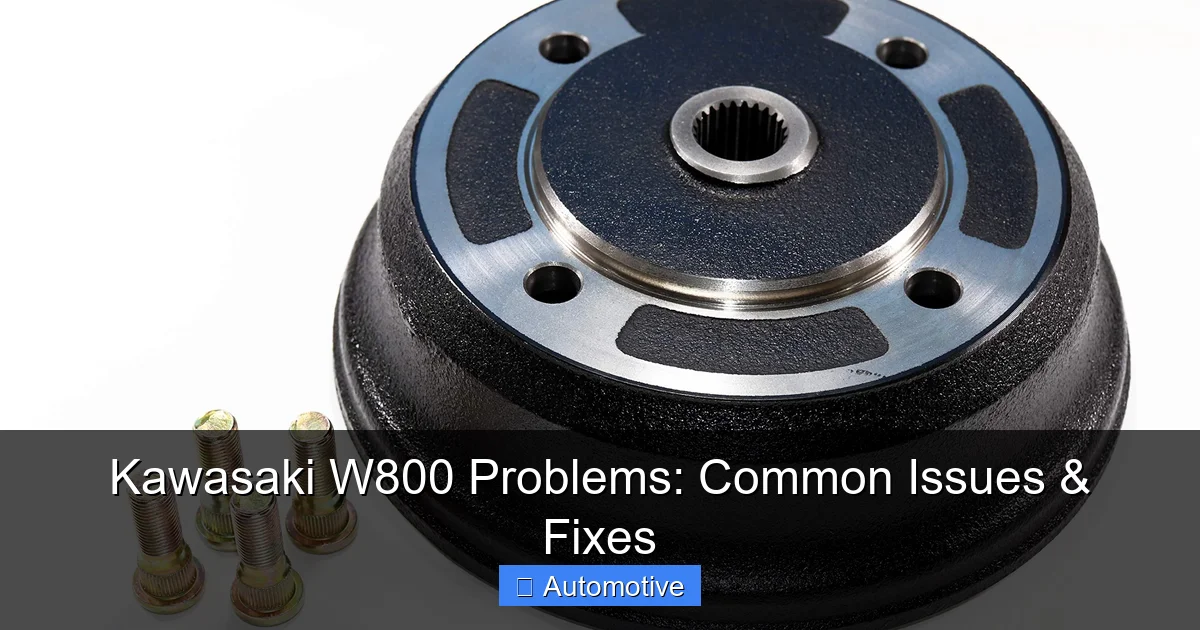
Clutch plates wear down over time, reducing friction between the steel and friction plates. When they’re too thin, the clutch can’t fully engage, causing the engine to rev without corresponding wheel speed. This is most noticeable in higher gears or when carrying a passenger.
Visual guide about Kawasaki W800 Problems: Common Issues & Fixes
Image source: m.media-amazon.com
Kawasaki recommends inspecting clutch plates every 12,000 miles. If the friction material is less than 2.8mm thick, replace the set. Use OEM or high-quality aftermarket plates—cheap alternatives often glaze quickly and slip sooner.
Improper Clutch Cable Adjustment
Before assuming internal wear, check cable free play. Too little free play keeps the clutch partially disengaged; too much makes shifting stiff and incomplete. The W800 should have 10–15mm of free play at the lever.
Adjust using the barrel adjuster near the lever and the locknut at the engine case. If the cable feels gritty or stiff, lubricate it with cable-specific grease or replace it. A frayed cable can snap unexpectedly—always inspect during oil changes.
Oil Contamination
Using the wrong oil or overfilling can contaminate the clutch. The W800 requires JASO MA or MA2-rated motorcycle oil, which maintains friction for wet clutches. Automotive oils often contain friction modifiers that cause slippage.
Also, avoid overfilling. Excess oil creates pressure that can force its way past clutch seals, coating the plates. Stick to the dipstick’s “FULL” mark when cold.
Oil Leaks: Cam Cover, Engine Case & Seal Failures
Oil leaks are among the most visible—and annoying—Kawasaki W800 problems. While a few drops might seem harmless, persistent leaks signal degrading seals and gaskets that, if ignored, can lead to low oil levels and engine damage.
Cam Cover Gasket Leaks
The cam cover sits atop the engine and is sealed with a rubber gasket. Heat cycles and age cause this gasket to harden and crack, allowing oil to seep out—usually near the front or sides.
Visual guide about Kawasaki W800 Problems: Common Issues & Fixes
Image source: mechanicspick.com
Replacing the cam cover gasket is a weekend job. Remove the cover, clean both surfaces thoroughly, and install a new OEM gasket with a thin layer of high-temp RTV silicone on the corners (as per Kawasaki specs). Torque bolts in sequence to avoid warping.
Engine Case Seams and Oil Pan Leaks
The W800’s engine cases are joined with liquid gasket. Over time, this sealant can shrink or crack, especially around the oil pan or timing cover. Leaks here often appear as drips under the engine.
Repairing case seams is more involved and may require engine disassembly. For minor leaks, some owners use high-quality gasket sealant, but this is a temporary fix. For long-term reliability, consider having a mechanic re-seal the cases properly.
Valve Cover and Rocker Arm Seal Issues
Smaller leaks can occur at the valve cover or rocker arm shafts. These are easier to address—just replace the O-rings or gaskets. Always torque to spec and avoid over-tightening, which distorts aluminum parts.
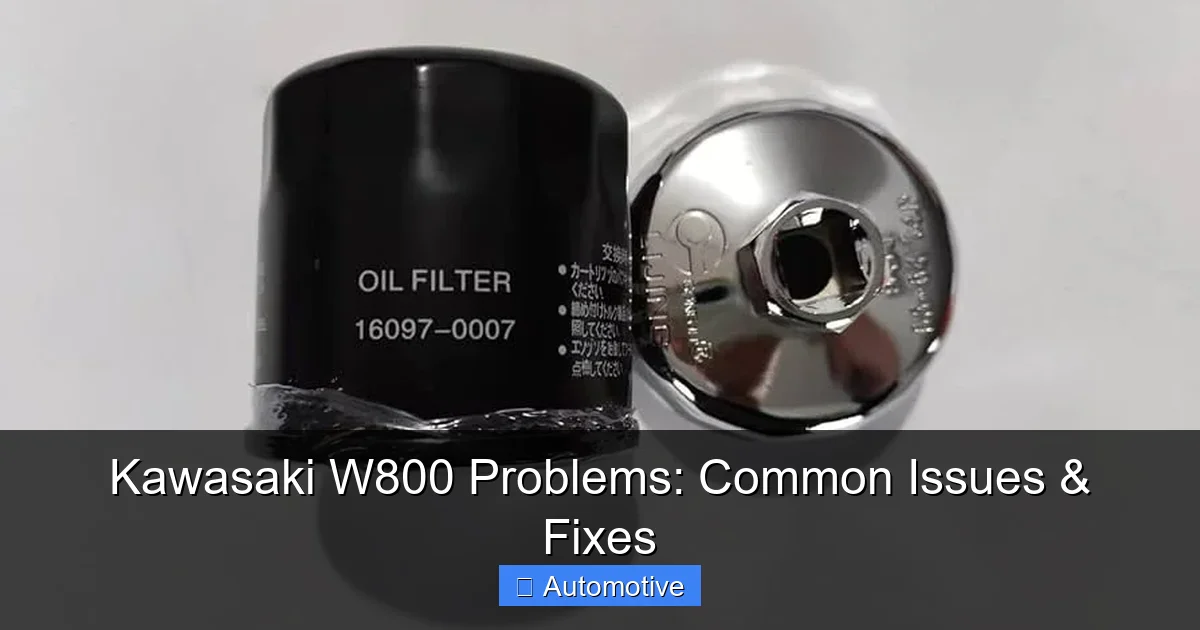
Regular oil changes with the correct viscosity (10W-40 JASO MA) help extend seal life. Also, check oil level weekly—low oil accelerates seal drying and cracking.
Throttle Cable and Choke Mechanism Problems
Smooth throttle response is essential for safe riding, but worn or poorly maintained cables can ruin the experience. The W800 uses a traditional cable-actuated throttle, which is simple but prone to wear if neglected.
Stiff or Binding Throttle Cable
A sticky throttle makes low-speed maneuvering dangerous and acceleration jerky. Causes include lack of lubrication, kinks in the cable housing, or dirt buildup.
Lubricate the cable annually using a cable lube tool. If it’s frayed or has tight bends, replace it. Always route the new cable away from hot or moving parts.
Choke Cable Malfunction
The choke helps start cold engines by enriching the mixture. If the choke cable sticks or doesn’t return fully, the bike may flood or run rich unnecessarily.
Inspect the choke lever and cable for smooth operation. Clean and lube the mechanism. If the choke plate doesn’t close fully, check for warping or debris in the carburetor bore.
Battery and Charging System Failures
A dead battery is a common roadside headache—and the W800 isn’t immune. While the charging system is generally reliable, several factors can lead to premature battery failure.
Weak Alternator Output
The W800’s stator generates AC current, converted to DC by the regulator/rectifier. If either component fails, the battery won’t charge properly. Symptoms include dim lights at idle, slow cranking, or a battery that dies repeatedly.
Test charging voltage with a multimeter at 3,000 RPM—it should read 13.5–14.5 volts. If lower, inspect the regulator/rectifier (located under the fuel tank) and stator windings for shorts or opens.
Old or Sulfated Battery
Even with a healthy charging system, batteries degrade after 3–5 years. Sulfation (lead sulfate buildup) reduces capacity and causes slow starts.
Use a smart charger to maintain the battery during storage. If it won’t hold a charge after a full recharge, replace it with a high-quality AGM unit.
Preventive Maintenance: Keeping Your W800 Problem-Free
The best way to avoid Kawasaki W800 problems is through consistent, proactive maintenance. Follow the factory service schedule, use quality parts, and listen to your bike.
Key practices include:
- Changing oil and filter every 3,000–5,000 miles
- Inspecting and lubricating cables every 6 months
- Cleaning and synchronizing carbs annually
- Checking tire pressure and chain tension weekly
- Storing with a battery tender if unused for weeks
Join owner forums like W800Forum.com or Facebook groups—they’re goldmines of real-world advice and troubleshooting tips.
Conclusion
The Kawasaki W800 is a joy to ride—a perfect blend of retro charm and everyday usability. While it’s not without its flaws, most Kawasaki W800 problems are manageable with awareness and timely care. From electrical fixes to carb tuning and clutch maintenance, many issues can be resolved with basic tools and a little patience.
Don’t let these potential hicups deter you. With proper attention, your W800 will reward you with thousands of reliable, smile-inducing miles. Stay proactive, stay informed, and keep that classic twin purring like it did on day one.
Frequently Asked Questions
Why does my Kawasaki W800 stall at idle?
This is often due to clogged pilot jets in the carburetors or improper synchronization. Clean the carbs and check the air-fuel mixture. Also, inspect for vacuum leaks in intake manifolds.
Can I convert my W800 to fuel injection?
Technically possible but not practical. Conversion kits are expensive and complex, requiring ECU tuning and sensor integration. Most owners find carb maintenance sufficient for reliable performance.
How often should I sync the carburetors on my W800?
Every 6,000–12,000 miles or if you notice rough idle, surging, or poor throttle response. Regular syncing ensures smooth engine operation and better fuel economy.
Is it normal for the W800 to leak a little oil?
Small seepage isn’t uncommon, but active dripping is not normal. Check cam cover and engine case seals. Address leaks early to prevent low oil levels and engine damage.
What type of oil should I use in my Kawasaki W800?
Use 10W-40 motorcycle oil rated JASO MA or MA2. Avoid automotive oils with friction modifiers, as they can cause clutch slippage in wet clutch systems.
My W800 won’t start after sitting for a week—what’s wrong?
This is likely a parasitic drain from an aftermarket accessory or a weak battery. Test the charging system and inspect for devices drawing power when the ignition is off.