Jeep Compass Won’t Start but Has Power

Contents
- 1 Key Takeaways
- 2 📑 Table of Contents
- 3 Introduction: The Frustration of a Silent Engine
- 4 Understanding the “Has Power” Symptom
- 5 Top 6 Causes for a Jeep Compass That Won’t Start
- 6 Step-by-Step Diagnostic Guide You Can Try
- 7 When to Call a Professional: Advanced Diagnostics
- 8 Prevention and Maintenance Tips
- 9 Conclusion: Don’t Panic, Diagnose Systematically
- 10 Frequently Asked Questions


If your Jeep Compass has power (lights, radio work) but the engine won’t start, the problem is likely with the starter motor, fuel delivery, or ignition system—not a dead battery. This guide breaks down the most frequent culprits, from a faulty starter solenoid to a bad fuel pump or a triggered security system. We provide clear diagnostic steps you can try and explain when it’s time to call a professional mechanic for a proper fix.
Key Takeaways
- The battery is likely charged: Since accessories have power, the issue is somewhere in the starting or fuel pathway.
- Listen for clues: A single click, silence, or a whirring sound points to different failed components like the starter or solenoid.
- Fuel and spark are essential: No fuel pressure or no spark from the ignition system will prevent combustion.
- The security system can lock you out: A faulty key fob or a malfunctioning immobilizer can disable the starter.
- Start simple: Always check fuses, relays, and connections before assuming a major part failure.
- Professional diagnostics are key: Many modern issues require a scan tool to read computer codes for an accurate diagnosis.
[FEATURED_IMAGE_PLACEHOLDER]
📑 Table of Contents
- Introduction: The Frustration of a Silent Engine
- Understanding the “Has Power” Symptom
- Top 6 Causes for a Jeep Compass That Won’t Start
- Step-by-Step Diagnostic Guide You Can Try
- When to Call a Professional: Advanced Diagnostics
- Prevention and Maintenance Tips
- Conclusion: Don’t Panic, Diagnose Systematically
Introduction: The Frustration of a Silent Engine
You slide into the driver’s seat of your trusty Jeep Compass. The dome light comes on. You press the brake and the dashboard lights up. You turn the key (or press the start button) and… nothing. The engine doesn’t even cough. But the radio still works, and the headlights are bright. This is one of the most common and maddening automotive problems: your Jeep Compass won’t start but has power.
This symptom tells you something very important right away. The battery is not completely dead. There’s enough charge to run the accessories. The problem lies somewhere between that healthy battery and the engine actually firing up. The starter might not be engaging. Fuel might not be reaching the cylinders. Or the car’s security system might be refusing to let the engine run. Figuring out which one it is saves you time, money, and the tow truck bill.
In this complete guide, we’ll walk through the most likely reasons your Jeep Compass is experiencing this exact issue. We’ll use simple language and a logical, step-by-step approach. Whether you’re a DIY enthusiast who wants to check a few things yourself or you need to understand what a mechanic is talking about, this article is for you.
Understanding the “Has Power” Symptom
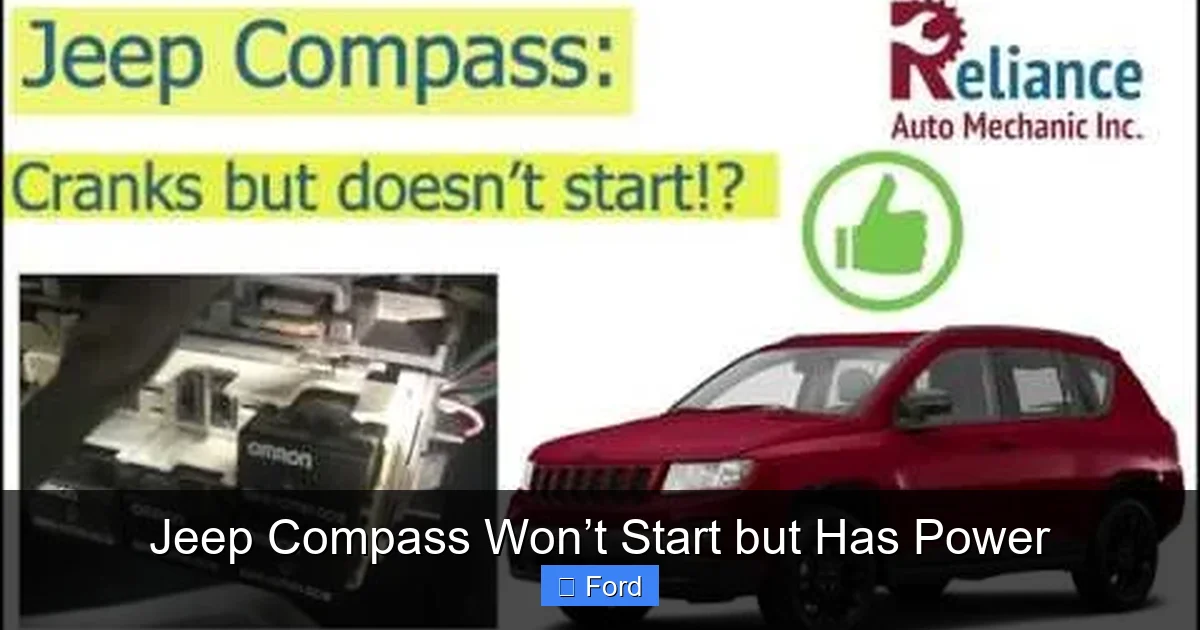
Before we dive into causes, let’s be crystal clear on what “has power” means. When you turn the key to the “ON” or “RUN” position (without cranking), you should see:
Visual guide about Jeep Compass Won’t Start but Has Power
Image source: motorcarnutglass.com
- Dashboard illumination (all gauges, warning lights)
- Working interior lights (dome, map lights)
- A functioning radio or infotainment system
- Power windows/locks
- Bright headlights (if you turn them on while parked)
If all these things work, your battery is providing at least 12 volts to the vehicle’s accessory circuits. The starting circuit, however, is a separate, high-draw path. The starter motor requires a massive amount of amperage (hundreds of amps) to turn the engine over. A battery can have enough voltage for lights but be too weak (high internal resistance) to deliver that starter current. That’s the first thing we’ll check.
The Difference Between “No Power” and “Won’t Start”
A “no power” scenario—where even the dash lights are dim or absent—points almost exclusively to a dead or disconnected battery, a bad battery terminal connection, or a failed main fuse. Your situation is different. You’ve already ruled out the most obvious and simple problem. That means we need to look at the components responsible for the actual cranking and starting process.
Top 6 Causes for a Jeep Compass That Won’t Start
Based on repair data and owner forums, here are the most frequent offenders, in a rough order of probability.
Visual guide about Jeep Compass Won’t Start but Has Power
Image source: i.ytimg.com
1. Starter Motor or Starter Solenoid Failure
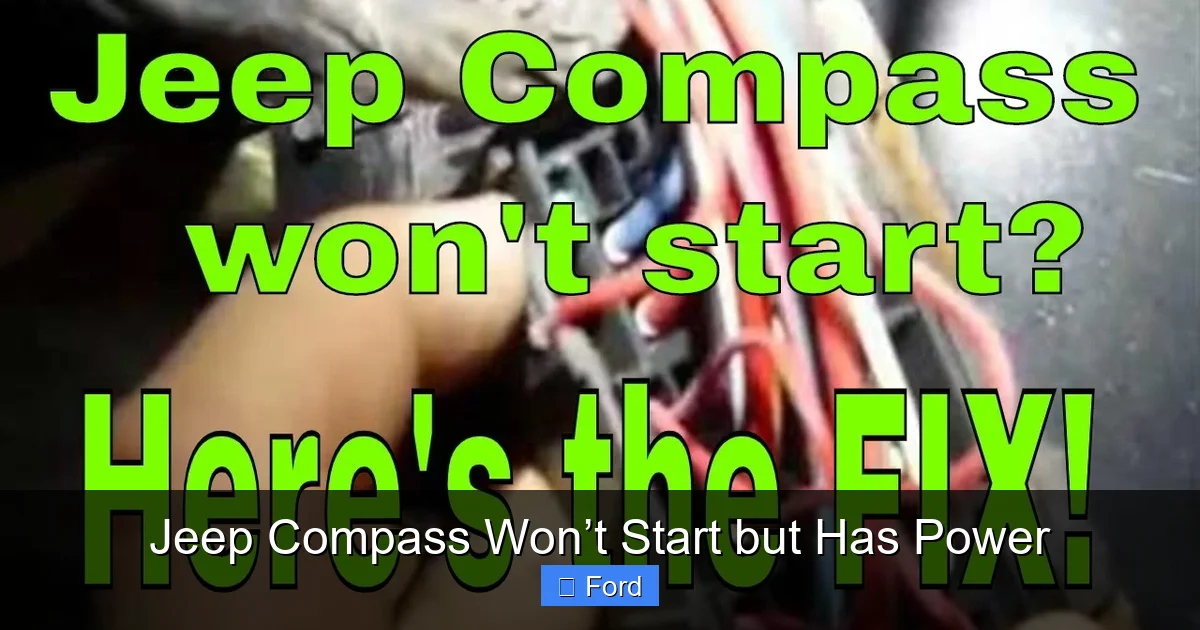
The starter is an electric motor. When you turn the key, a signal goes to the starter solenoid, which is a heavy-duty relay. The solenoid pushes a small gear (the Bendix) to engage with the engine’s flywheel and then sends power to the starter motor to spin the engine. Failure can happen in a few ways:
- Clicking Sound Only: You hear a rapid click-click-click from under the hood (often from the solenoid) but the engine doesn’t turn. This usually means the solenoid is receiving the signal but isn’t engaging the starter motor, or the motor itself has an internal short. The battery might be weak too, unable to provide the crank amps.
- Single Loud Click: A solitary, heavy CLUNK. This is the solenoid engaging but the motor isn’t turning. The motor is likely dead.
- Silence: No sound at all. Could be a failed ignition switch, a broken wire to the starter, a bad starter relay/fuse, or a completely dead battery that can’t even power the solenoid.
- Whirring/Grinding: You hear the starter motor spin but the engine doesn’t. The Bendix gear is not engaging the flywheel, or the flywheel teeth are damaged.
Tip: Have a friend turn the key while you listen near the front of the engine (driver’s side, near the transmission bellhousing). A mechanic’s stethoscope can help pinpoint the exact source of the click.
2. Fuel Delivery Problem
Even if the starter spins the engine perfectly (this is called “cranking”), the engine needs a precise mist of gasoline vapor mixed with air to ignite. No fuel, no start. Common fuel system failures in the Compass include:
- Failed Fuel Pump: The pump inside the gas tank has quit. You’ll often hear a brief whirring or humming from the rear of the vehicle for 1-2 seconds when you turn the key to “ON” (before cranking). If you don’t hear this “fuel pump prime,” the pump or its relay may be bad.
- Clogged Fuel Filter: A severely blocked filter can restrict fuel flow enough to prevent starting, especially if the fuel is dirty.
- Bad Fuel Pressure Regulator or Leaking Injectors: Can cause a loss of prime in the fuel lines.
How to Check: Listening for the pump prime is the easiest DIY check. A professional will use a fuel pressure gauge on the test port on the fuel rail to see if the system holds the correct pressure (usually 40-60 PSI for many Compass models).
3. Ignition System Failure (No Spark)
Gas engines need a high-voltage spark at the precise moment to ignite the fuel-air mix. The ignition system creates this spark. On modern Jeeps like the Compass, this is controlled by the Powertrain Control Module (PCM). Issues include:
- Faulty Crankshaft Position Sensor (CKP): This sensor tells the PCM where the engine is in its rotation. Without this signal, the PCM doesn’t know when to fire the spark plugs or injectors. This is a very common cause of no-start conditions with power. The engine will crank but never fire.
- Failed Ignition Coils or Coil-on-Plug (COP) units: If all coils fail (unlikely), there’s no spark. One failed coil might cause a misfire but usually still starts.
- Bad PCM or No Power to PCM: If the engine computer is dead or not receiving power, nothing happens.
How to Check: A mechanic uses a scan tool to check for CKP sensor data. They can also use a spark tester on a plug wire (if equipped) or a noid light to check if the injectors are being pulsed. These are advanced diagnostics.
4. Security/Immobilizer System Glitch
Your Jeep Compass has a sophisticated anti-theft system. The key fob has a transponder chip. When you insert the key or press the start button, the system reads the chip. If it doesn’t recognize the code, it disables the starter and/or fuel system. Symptoms:
- Dashboard security light (a car with a key icon) stays on or flashes rapidly.
- The engine cranks for a split second and then stops, or it doesn’t crank at all.
- Sometimes it works after a few tries, or only with the spare key.
Causes include a dead battery in the key fob, a faulty immobilizer antenna ring around the ignition, a bad PCM, or a lost key programming.
5. Faulty Ignition Switch
The ignition switch is the physical lock cylinder you turn with the key (or the button in push-button start systems). It has multiple internal contacts for different circuits: ACC, ON, START. Over time, these contacts wear out.
- Symptom: You turn the key to START and nothing happens. No click, no crank. But the dash lights are on in the ON position.
- Sometimes jiggling the key or wiggling the steering wheel (if it’s binding) will make contact temporarily.
On push-button start systems, the “start” signal is sent by the button to the Body Control Module (BCM). A faulty button or BCM can mimic this problem.
6. Blown Fuse or Failed Relay
This seems simple, but it’s surprisingly common. The starter circuit is protected by a high-amperage fuse or fusible link, and often a starter relay in the Power Distribution Center (PDC) under the hood.
- Symptom: Complete silence when trying to start. All other electrical functions work.
- Check the owner’s manual for the exact fuse and relay locations. A visual inspection might show a melted fuse element. Swapping the starter relay with an identical one (like the horn relay) is a quick test.
Step-by-Step Diagnostic Guide You Can Try
Before you call a mechanic, here is a safe, logical order to check things. Always ensure the vehicle is in Park (or Neutral with the parking brake on) and the area is well-ventilated.

Visual guide about Jeep Compass Won’t Start but Has Power
Image source: miro.medium.com
Step 1: The Battery Health Check
Even though it has power for accessories, the battery could still be the culprit. The starter needs massive cranking amps.
- Visual: Check for heavy white/green corrosion on the battery terminals. Clean them with a battery terminal brush and a baking soda/water solution if needed. Tighten the clamps.
- Voltage Test: With the car off, a healthy battery reads 12.6 volts. Below 12.4 volts is weak. Have someone try to start it while you watch the voltage. If it drops below 9.6 volts during cranking, the battery is failing.
- Load Test: Most auto parts stores will load-test your battery for free. This is the best test.
Step 2: Listen and Feel
Have an assistant turn the key to start while you:
- Listen carefully under the hood for clicks, whirs, or grinding.
- Feel the large positive battery cable and starter motor body (carefully, it can get hot). Do you feel a slight thump (solenoid engaging)?
- Does the engine actually crank? Put your hand on the engine; does it shake and turn over? If it cranks normally but won’t start, you’ve ruled out the starter and battery as the primary cause. The issue is fuel or spark. If it doesn’t crank, the starter circuit is the focus.
Step 3: Check Fuses and Relays
Open the hood and find the Power Distribution Center (PDC). Use your owner’s manual to locate the starter fuse and starter relay. Pull them and inspect. If they look okay, swap the starter relay with another of the same type (e.g., the horn relay) and try starting again.
Step 4: Security System Check
Look at your dashboard. Is the security light (key icon) solid or flashing? Try your spare key fob. If the battery in your fob is over 3-4 years old, replace it. Sometimes, simply re-programming the key to the vehicle is needed, which requires a dealer or locksmith with the proper tool.
Step 5: Basic Fuel System Check
When you turn the key to ON (before cranking), listen at the rear of the vehicle for a 1-2 second hum from the fuel tank. No sound? The fuel pump, its fuse, or its relay may be bad. Do not try to check for fuel pressure yourself unless you know what you’re doing—it’s a fire risk.
When to Call a Professional: Advanced Diagnostics
If the simple checks above don’t reveal the problem, it’s time to call in the experts. Modern vehicles like the Jeep Compass are run by computers. The most efficient way to diagnose a no-start is to plug a professional scan tool into the OBD-II port.
What the Mechanic Will Do
- Scan for Codes: The PCM may have stored trouble codes. A code like P0335 (Crankshaft Position Sensor) is a huge red flag for a no-start.
- Check Live Data: They’ll look at the scan tool to see if the crankshaft sensor is sending a signal, if the fuel pump is being commanded on, and if the security system is armed.
- Test Components: They’ll perform a “noid light” test to see if the fuel injectors are pulsing. They’ll check for spark by grounding a spark plug. They’ll measure fuel pressure with a gauge.
- Check the Starter Circuit: They’ll test voltage at the starter motor’s control terminal when the key is turned. If voltage is present but the starter doesn’t engage, the starter is bad. If no voltage is present, the problem is upstream (ignition switch, relay, wiring).
For issues like a bad CKP sensor or a failed fuel pump, the repair is straightforward once confirmed. For intermittent electrical gremlins or PCM issues, diagnosis can take longer.
Prevention and Maintenance Tips
You can’t prevent all failures, but you can reduce the odds:
- Battery Care: Have the battery tested annually, especially before winter. Keep terminals clean and tight.
- Don’t Run on Empty:
- Use Quality Fuel: Poor quality or contaminated gas can clog the fuel filter and injectors.
- Address Warning Lights: If your check engine light comes on, even if the car seems fine, get it scanned. A pending code for a sensor could be a warning of an imminent no-start.
- Key Fob Battery: Replace the key fob battery every 2-3 years as a preventive measure.
The fuel pump is cooled by gasoline. Frequently driving with a near-empty tank can overheat and shorten the pump’s life. Try not to go below 1/4 tank.
Conclusion: Don’t Panic, Diagnose Systematically
Finding that your Jeep Compass won’t start but has power is a classic puzzle. The good news is that the symptom itself narrows the field dramatically. Your battery is providing accessory power, so we focus on the starter circuit, fuel delivery, spark generation, and the security system.
Start with the free, easy checks: listen for sounds, inspect fuses/relays, check the key fob battery, and listen for the fuel pump prime. These steps solve a surprising number of problems. If those don’t work, the issue is likely a faulty starter motor/solenoid, a failed crankshaft position sensor, a dead fuel pump, or a glitch in the immobilizer system—all of which require professional diagnosis and repair.
Remember, this is a common issue across many makes and models. For example, owners of the Jeep Cherokee report very similar problems, often pointing to the same culprits like the starter or fuel pump. The fundamental principles of diagnosing a “crank-but-no-start” condition are universal. By understanding the system, you can have an informed conversation with your mechanic and avoid unnecessary parts replacements.
Stay safe, work methodically, and don’t hesitate to seek expert help when the diagnosis goes beyond basic checks. Getting it fixed right the first time gets you back to enjoying your Compass on the road.
Frequently Asked Questions
Why does my Jeep Compass crank but won’t start?
If the engine cranks normally but won’t fire, the problem is likely a lack of fuel or spark. Common causes are a faulty crankshaft position sensor, a failed fuel pump, clogged fuel injectors, or a major ignition system failure. The starter and battery are working if it cranks.
Is it the battery or starter if my Jeep has power but won’t start?
Since your lights and radio work, the battery has enough charge for accessories. The issue is probably the starter motor/solenoid not engaging, a weak battery that can’t provide cranking amps, or a problem in the starter circuit (like a bad relay or ignition switch). A load test on the battery is the best way to confirm.
Can a bad key fob cause my Jeep Compass not to start?
Yes. The key fob’s transponder chip must be read by the car’s security system. If the fob’s battery is dead, the signal is weak. A faulty immobilizer antenna ring or a lost key programming can also prevent the starter from activating, often indicated by a flashing security light on the dash.
How do I know if my Jeep Compass fuel pump is bad?
The classic sign is the absence of a brief humming sound from the fuel tank (usually under the rear seat or cargo area) when you turn the key to the “ON” position without cranking. You should hear it for 1-2 seconds as the pump pressurizes the system. No sound often points to a failed pump, pump relay, or pump fuse.
What’s the first thing to check when my car won’t start but has power?
First, listen carefully. Do you hear a click, a whir, or complete silence? Have someone turn the key while you listen under the hood near the starter. Next, check the owner’s manual for the starter fuse and relay in the engine bay fuse box and swap the relay with an identical one (like the horn relay) as a test.
Should I try to jump-start my Jeep Compass if it has power but won’t start?
You can try, but it’s often ineffective. Since the battery has enough power for accessories, a jump may not provide the extra cranking amps needed if the battery is weak. If the problem is the starter, fuel, or ignition, a jump start won’t help either. It’s better to diagnose the specific cause first. If you do try, ensure the donor car is off and connect cables properly.