
Is Toyota Proace Available in the Usa?

The Toyota ProAce is not currently available in the USA. Designed for the European and global markets, this versatile light commercial van hasn’t been officially launched in North America due to differing regulations and market preferences. However, Toyota offers several capable alternatives in the U.S. that serve similar purposes.
Key Takeaways
- Toyota ProAce is not sold in the USA: The ProAce is a European-market vehicle and has never been officially imported or sold in the United States.
- It’s built on a Stellantis platform: The ProAce shares its underpinnings with the Peugeot Expert, Citroën Jumpy, and Fiat Scudo, making it a rebadged model in the Toyota lineup.
- U.S. market favors larger vans: American consumers and businesses prefer larger vehicles like the Ford Transit, Mercedes Sprinter, and Ram ProMaster.
- Emissions and safety standards differ: The ProAce doesn’t meet U.S. EPA emissions and NHTSA safety requirements without costly modifications.
- Toyota offers U.S. alternatives: Models like the Toyota Sienna, Highlander, and Tacoma can serve some of the same roles as the ProAce.
- Importation is possible but impractical: While you can import a ProAce via special channels, it’s expensive, complex, and often not road-legal without modifications.
- Future availability remains unlikely: There are no signs Toyota plans to bring the ProAce to the U.S., given market trends and existing product lines.
📑 Table of Contents
- Is Toyota ProAce Available in the USA? The Straight Answer
- What Is the Toyota ProAce?
- Why Isn’t the Toyota ProAce Sold in the USA?
- Could You Import a Toyota ProAce to the USA?
- Toyota Alternatives to the ProAce in the USA
- Will Toyota Ever Bring the ProAce to the USA?
- Conclusion: The ProAce Remains a European Favorite
Is Toyota ProAce Available in the USA? The Straight Answer
If you’ve been searching for the Toyota ProAce in the United States, you’ve probably come up empty-handed. That’s because, despite its growing popularity in Europe and other global markets, the Toyota ProAce is not available in the USA. There’s no official dealer network, no U.S. model listings, and no factory support for this van on American soil.
The ProAce is a practical, fuel-efficient light commercial vehicle (LCV) designed primarily for European roads and business needs. It’s ideal for small deliveries, tradespeople, and urban fleets. But in the U.S., where vehicle preferences lean toward larger, more powerful trucks and vans, the ProAce simply hasn’t found a home. Toyota has chosen to focus its North American commercial offerings on models that better align with local demand—like the Tacoma pickup and the Sienna minivan.
So why isn’t the ProAce here? The reasons are a mix of regulatory, economic, and cultural factors. From emissions standards to consumer habits, several barriers prevent this otherwise impressive van from hitting American streets. In this article, we’ll explore the ins and outs of the Toyota ProAce, why it’s absent from the U.S. market, and what alternatives Toyota and other brands offer for American drivers who need a reliable work van.
What Is the Toyota ProAce?
Visual guide about Is Toyota Proace Available in the Usa?
Image source: cdn.vanclan.co
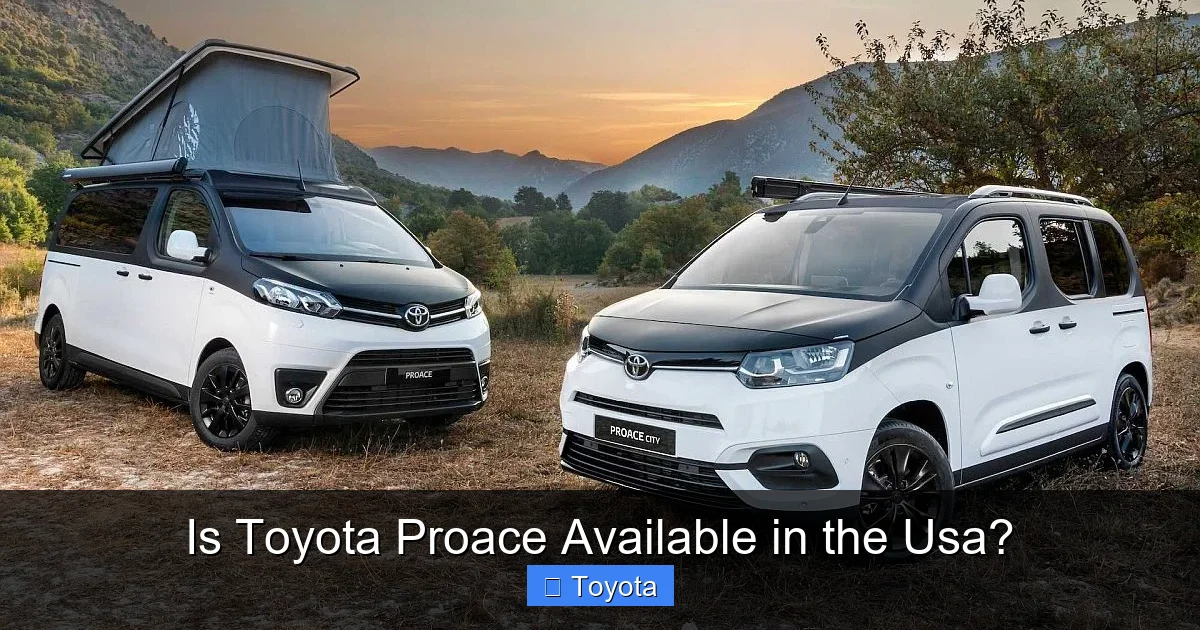
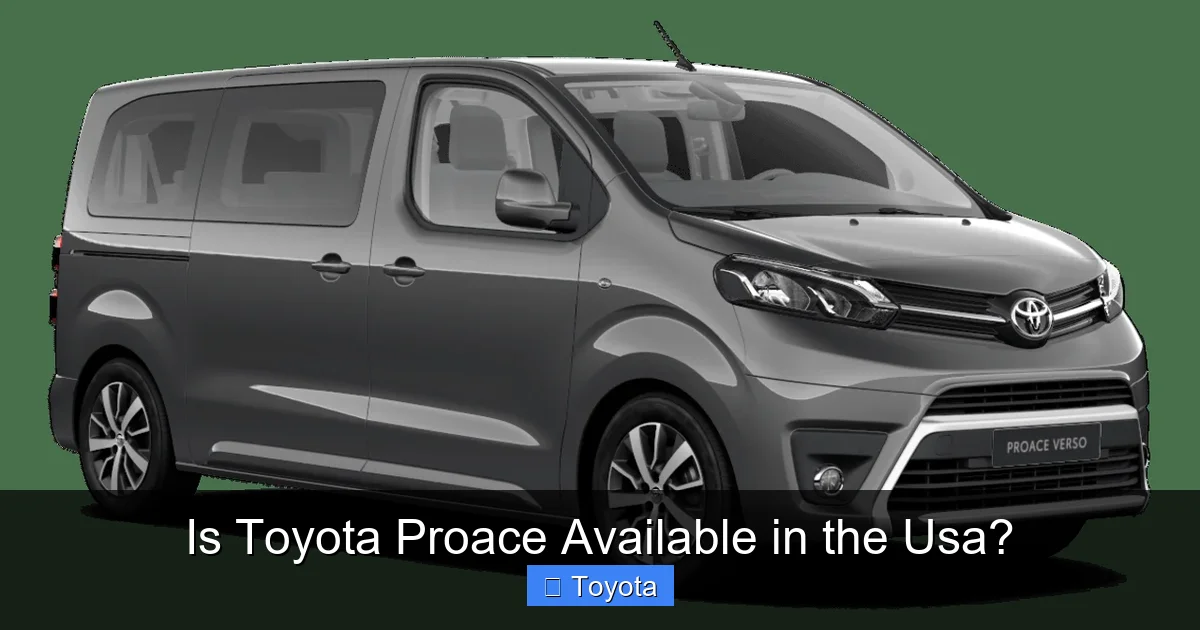
Before diving into why it’s not in the U.S., let’s get to know the Toyota ProAce. This compact-to-mid-size van is part of Toyota’s commercial vehicle lineup and is designed for businesses that need a dependable, efficient, and versatile workhorse. It’s available in multiple configurations, including panel van, crew van, and passenger versions (sold as the ProAce City in some markets).
The ProAce comes in two main sizes: the standard ProAce (based on the Peugeot Expert) and the smaller ProAce City (based on the Peugeot Partner). Both are built on platforms developed by Stellantis (the parent company of Peugeot, Citroën, and Fiat), which means Toyota is essentially offering a rebadged version of these European vans. This partnership allows Toyota to expand its commercial offerings without developing an entirely new vehicle from scratch.
Key Features of the Toyota ProAce
The ProAce is packed with features that make it attractive to small and medium-sized businesses. It offers a generous cargo capacity—up to 6.1 cubic meters (about 215 cubic feet) in the largest configuration—making it suitable for everything from plumbing supplies to delivery services. The low loading floor and wide side doors make it easy to load and unload goods quickly.
Under the hood, the ProAce typically runs on a 2.0-liter diesel engine, delivering around 120 to 180 horsepower depending on the trim. Some markets also offer a 1.5-liter diesel or even a fully electric version called the ProAce Electric, which boasts a range of up to 205 miles (WLTP cycle). These powertrains are optimized for fuel efficiency and low emissions, which is a big selling point in Europe where environmental regulations are strict.
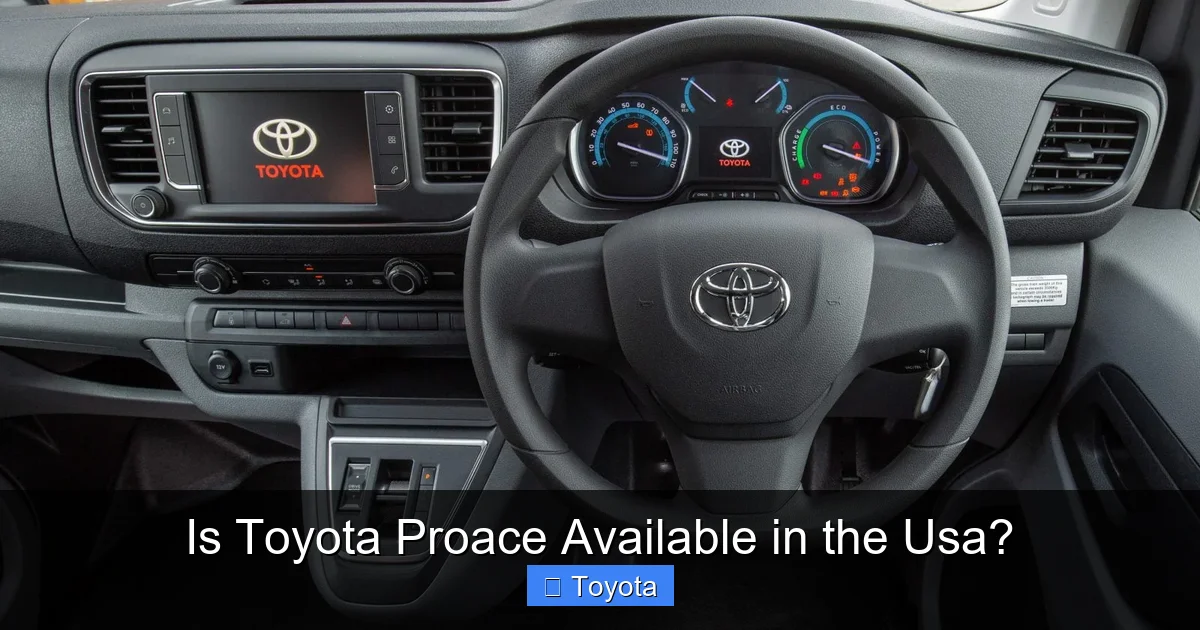
Inside, the ProAce offers a functional and comfortable cabin. While it’s not luxurious, it includes modern amenities like a touchscreen infotainment system, Bluetooth connectivity, and optional driver assistance features such as lane departure warning and automatic emergency braking. For a work van, it’s surprisingly well-equipped.
Why the ProAce Succeeds in Europe
The ProAce thrives in Europe because it fits perfectly into the region’s urban landscape and business culture. European cities are often dense, with narrow streets and tight parking spaces. The ProAce’s compact dimensions make it easy to maneuver in city centers, while its efficient diesel engines keep fuel costs low—a major concern for fleet operators.
Additionally, European regulations encourage low-emission vehicles, and the ProAce’s diesel and electric variants align well with these goals. Many European governments offer tax incentives for businesses that adopt cleaner vehicles, further boosting the appeal of models like the ProAce Electric.
In contrast, the U.S. market has different priorities. American drivers tend to favor larger vehicles with more power and interior space. The idea of a compact diesel van, especially one with a manual transmission (common in Europe), doesn’t resonate as strongly with U.S. consumers. This cultural and practical mismatch is one of the main reasons the ProAce hasn’t made its way across the Atlantic.
Why Isn’t the Toyota ProAce Sold in the USA?
Visual guide about Is Toyota Proace Available in the Usa?
Image source: mag.toyota.co.uk
Now that we understand what the ProAce is and why it’s popular abroad, let’s tackle the big question: why isn’t it available in the United States? The answer involves a combination of regulatory hurdles, market demand, and strategic decisions by Toyota.
Regulatory and Compliance Challenges
One of the biggest barriers to bringing the ProAce to the U.S. is compliance with American safety and emissions standards. The U.S. has some of the strictest vehicle regulations in the world, enforced by agencies like the Environmental Protection Agency (EPA) and the National Highway Traffic Safety Administration (NHTSA).
The ProAce, as sold in Europe, is designed to meet Euro 6 emissions standards, which are different from U.S. Tier 3 standards. While both aim to reduce pollutants, the testing methods and allowable limits vary. To sell the ProAce in the U.S., Toyota would need to modify the engine and exhaust system to meet EPA requirements—a costly and time-consuming process.
Safety is another major concern. U.S. vehicles must pass rigorous crash tests and include specific safety features like advanced airbag systems, electronic stability control, and rearview cameras. The ProAce may not come standard with all these features, or they may need to be upgraded to meet NHTSA standards. Retrofitting an entire vehicle line for U.S. compliance can cost millions of dollars—money that may not be justified by projected sales.
Market Demand and Consumer Preferences
Even if Toyota could overcome the regulatory hurdles, there’s the question of whether Americans would buy the ProAce. The U.S. commercial van market is dominated by larger vehicles like the Ford Transit, Mercedes-Benz Sprinter, and Ram ProMaster. These vans offer more cargo space, higher towing capacity, and often come with gasoline or diesel engines that appeal to American tastes.
The ProAce, by comparison, is smaller and less powerful. While that’s a benefit in Europe, it’s a drawback in the U.S., where businesses often need to haul heavy loads or transport multiple workers. A compact van like the ProAce might be seen as underpowered or too small for typical American jobs.
Additionally, diesel engines—while popular in Europe—are less common in U.S. light-duty vehicles due to past emissions scandals and stricter regulations. Many American buyers prefer gasoline engines for their familiarity and lower maintenance costs. The ProAce’s diesel focus further limits its appeal in the U.S. market.
Toyota’s Strategic Focus in North America
Toyota has a strong presence in the U.S., but its commercial vehicle strategy is different from its European approach. In North America, Toyota emphasizes pickup trucks like the Tacoma and Tundra, as well as SUVs and minivans like the Highlander and Sienna. These vehicles align better with American driving habits and consumer preferences.
The Sienna, for example, is a minivan that can serve some of the same roles as the ProAce—transporting people and goods with ease. While it’s not a commercial van, it offers sliding doors, ample cargo space, and hybrid efficiency, making it a practical choice for small businesses or families who need versatility.
Toyota also offers the Tacoma, a midsize pickup that’s popular with contractors and outdoor enthusiasts. With its rugged design and available crew cab configuration, the Tacoma can handle many of the same tasks as the ProAce, just in a different form factor.
By focusing on these established models, Toyota can leverage its existing manufacturing, distribution, and service networks. Introducing a new vehicle like the ProAce would require significant investment in tooling, training, and marketing—resources that may be better spent on improving current offerings.
Could You Import a Toyota ProAce to the USA?
Visual guide about Is Toyota Proace Available in the Usa?
Image source: kong-proxy-aws.toyota-europe.com
Given that the ProAce isn’t sold in the U.S., some enthusiasts and business owners wonder if they can import one. The short answer is: technically, yes—but it’s complicated, expensive, and often not worth the effort.
The Import Process: What You Need to Know
Under U.S. law, vehicles that are at least 25 years old can be imported without meeting modern safety and emissions standards. This is known as the “25-year rule.” However, the Toyota ProAce was first introduced in 2016, so even the oldest models are only about eight years old—nowhere near the 25-year threshold.
For newer vehicles, importation is possible through the Environmental Protection Agency’s (EPA) and Department of Transportation’s (DOT) exemption programs. These allow certain vehicles to be imported if they can be modified to meet U.S. standards. However, this process is complex and costly.
You’d need to work with a Registered Importer (RI), a company licensed to modify foreign vehicles to comply with U.S. regulations. The RI would handle everything from emissions testing to safety upgrades. The cost? Often thousands of dollars per vehicle, not including shipping and customs fees.
Practical Challenges and Costs
Let’s say you find a used ProAce in Europe and want to bring it to the U.S. Here’s what you’re looking at:
– **Shipping costs:** Transporting a van from Europe to the U.S. can cost $2,000 to $4,000, depending on the port and method.
– **Import duties and taxes:** The U.S. charges a 2.5% duty on light trucks and vans from most countries, plus state taxes and registration fees.
– **Modification costs:** A Registered Importer might charge $5,000 to $10,000 to bring the ProAce up to U.S. standards.
– **Ongoing maintenance:** Parts and service for a ProAce would be hard to find in the U.S., and repairs could be expensive.
Add it all up, and you could easily spend $15,000 to $25,000 just to get a used ProAce road-legal in the U.S.—on top of the vehicle’s purchase price. For that kind of money, you could buy a brand-new Ford Transit or Ram ProMaster with full warranty and local support.
Is It Worth It?
For most people, importing a ProAce isn’t practical. The costs are high, the process is complicated, and the long-term ownership experience could be frustrating. Unless you’re a collector or have a very specific need that only the ProAce can meet, it’s usually better to choose a U.S.-available alternative.
That said, if you’re determined, it’s not impossible. Some niche importers and specialty shops have brought over European vans for commercial use, especially in industries like food trucks or mobile workshops. But these are exceptions, not the rule.
Toyota Alternatives to the ProAce in the USA
If you’re looking for a Toyota vehicle that can do some of the same jobs as the ProAce, you’re not out of luck. While Toyota doesn’t offer a direct equivalent, several models can serve as capable alternatives—especially if you need passenger and cargo versatility.
Toyota Sienna: The Family-Friendly Work Van
The Toyota Sienna is a minivan that blends passenger comfort with practical cargo space. With seating for up to eight people and a maximum cargo volume of over 150 cubic feet (with seats folded), it’s surprisingly capable for light commercial use.
The Sienna comes standard with a hybrid powertrain, delivering excellent fuel economy—around 36 mpg combined. That’s a huge advantage over gas-guzzling vans like the Ford Transit. It also includes modern safety features like Toyota Safety Sense 2.0, which includes adaptive cruise control, lane keeping assist, and automatic emergency braking.
For small businesses that need to transport people and equipment—like HVAC technicians, caterers, or mobile service providers—the Sienna can be a smart choice. It’s not as rugged as a dedicated van, but it’s comfortable, efficient, and widely available.
Toyota Highlander: SUV Versatility
The Highlander is a midsize SUV that offers three rows of seating and up to 84.3 cubic feet of cargo space. While it’s not a van, it’s a great option for businesses that need to move people and gear without sacrificing comfort.
The Highlander is available with a V6 engine or a hybrid system, giving you a choice between power and efficiency. It also comes with all-wheel drive, making it suitable for all-weather driving. For contractors, real estate agents, or mobile healthcare workers, the Highlander provides a professional image and plenty of space.
Toyota Tacoma: The Rugged Workhorse
If you need something more capable off-road or for heavy-duty tasks, the Toyota Tacoma is a strong contender. This midsize pickup has a reputation for reliability and durability, making it a favorite among tradespeople and outdoor enthusiasts.
The Tacoma offers a crew cab configuration with a spacious rear seat and a versatile bed for hauling tools, materials, or equipment. With available four-wheel drive and a towing capacity of up to 6,800 pounds, it can handle jobs that a van like the ProAce couldn’t.
While it doesn’t offer the same enclosed cargo space as a van, the Tacoma’s bed can be equipped with caps, tonneau covers, or even camper shells to protect your gear. It’s not a direct replacement for the ProAce, but for many users, it’s a more practical and powerful alternative.
Will Toyota Ever Bring the ProAce to the USA?
Given the current market landscape, it’s unlikely that Toyota will introduce the ProAce in the U.S. anytime soon. The company has a solid lineup of vehicles that meet American needs, and there’s little demand for a compact European van.
That said, the future is never certain. If electric vehicles become more mainstream and regulations shift, Toyota might reconsider. The ProAce Electric, for example, could appeal to eco-conscious businesses if charging infrastructure improves and incentives increase.
But for now, Toyota seems content to let other brands dominate the commercial van segment in the U.S. Ford, Mercedes, Ram, and Nissan all offer strong contenders, and Toyota’s focus remains on trucks, SUVs, and hybrids.
Conclusion: The ProAce Remains a European Favorite
The Toyota ProAce is a well-designed, efficient, and practical van that serves European businesses beautifully. But in the USA, it’s a vehicle that doesn’t exist—at least not through official channels. Regulatory barriers, market preferences, and Toyota’s strategic priorities all contribute to its absence.
If you’re in the U.S. and need a work van, you’ll need to look elsewhere. Fortunately, Toyota offers several capable alternatives like the Sienna, Highlander, and Tacoma that can handle many of the same tasks. And if you’re set on a European van, brands like Ford, Mercedes, and Ram have models that are built for American roads and regulations.
While the ProAce may never grace American streets, its legacy lives on in the global commercial vehicle market—and in the hearts of drivers who appreciate its blend of efficiency, reliability, and practicality.
Frequently Asked Questions
Is the Toyota ProAce sold in the USA?
No, the Toyota ProAce is not sold in the United States. It is only available in European and select global markets. Toyota has not introduced this model to the U.S. due to regulatory and market differences.
Can I import a Toyota ProAce to the USA?
Yes, but it’s complicated and expensive. You’d need to use a Registered Importer to modify the vehicle to meet U.S. safety and emissions standards, which can cost thousands of dollars. Most people find it more practical to buy a U.S.-available alternative.
What Toyota vehicle is similar to the ProAce?
The Toyota Sienna minivan is the closest alternative, offering passenger and cargo space with hybrid efficiency. The Highlander SUV and Tacoma pickup also serve some of the same roles for work and transport.
Why doesn’t Toyota sell the ProAce in America?
The ProAce doesn’t meet U.S. emissions and safety standards without costly modifications. Additionally, American consumers prefer larger vans and trucks, making the compact ProAce a poor fit for the market.
Is there an electric version of the Toyota ProAce?
Yes, the ProAce Electric is available in Europe with a range of up to 205 miles. However, it is not sold in the U.S., and there are no plans to introduce it stateside at this time.
Will Toyota bring the ProAce to the USA in the future?
It’s unlikely. Toyota’s current U.S. lineup meets market demands, and there’s little indication the company plans to introduce the ProAce. Any future availability would depend on regulatory changes and consumer interest.