
Is the Volvo Xc90 the Safest Car

The Volvo XC90 consistently ranks among the safest SUVs thanks to top-tier crash test scores, innovative safety technology, and Volvo’s long-standing commitment to passenger protection. While no car is 100% accident-proof, the XC90’s combination of active and passive safety systems makes it a standout choice for families and safety-conscious drivers.
Key Takeaways
- Top Safety Ratings: The Volvo XC90 earns perfect or near-perfect scores from the IIHS and NHTSA, including Top Safety Pick+ status.
- Advanced Driver Assistance: Features like City Safety, Pilot Assist, and Run-off Road Mitigation help prevent accidents before they happen.
- Robust Structural Design: Built with high-strength steel and a reinforced safety cage to protect occupants in collisions.
- Family-Focused Safety: Includes rear-seat alerts, child safety locks, and optional integrated booster seats.
- Real-World Performance: Owners report fewer accidents and near-misses due to proactive warning systems and responsive handling.
- Not Perfect, But Close: While the XC90 excels in safety, some competitors now match its tech—making ongoing updates crucial.
- Peace of Mind: For many buyers, the XC90’s safety reputation is worth the premium price tag.
📑 Table of Contents
- Introduction: Why Safety Matters in a Family SUV
- Volvo’s Legacy of Safety: A Brief History
- Crash Test Ratings: How the XC90 Stacks Up
- Advanced Safety Technology: What Makes the XC90 Stand Out
- Passive Safety: The XC90’s Protective Shell
- How the XC90 Compares to the Competition
- Real Owner Experiences: Does the XC90 Deliver?
- Is the Volvo XC90 the Safest Car? The Verdict
Introduction: Why Safety Matters in a Family SUV
When you’re driving a vehicle that carries your loved ones—kids, parents, friends—safety isn’t just a feature. It’s a necessity. That’s why so many families turn to Volvo when shopping for a large SUV. The brand has built its identity around protecting people, not just selling cars. And at the heart of that mission sits the Volvo XC90, a seven-seat luxury SUV that promises comfort, style, and above all, peace of mind.
But is the Volvo XC90 really the safest car you can buy? With so many automakers now touting advanced safety tech, it’s fair to ask whether Volvo still holds the crown. In this article, we’ll dive deep into crash test results, real-world performance, and the suite of safety features that make the XC90 a standout. We’ll also compare it to rivals and explore what makes it tick—so you can decide if it’s the right choice for your family.
Volvo’s Legacy of Safety: A Brief History
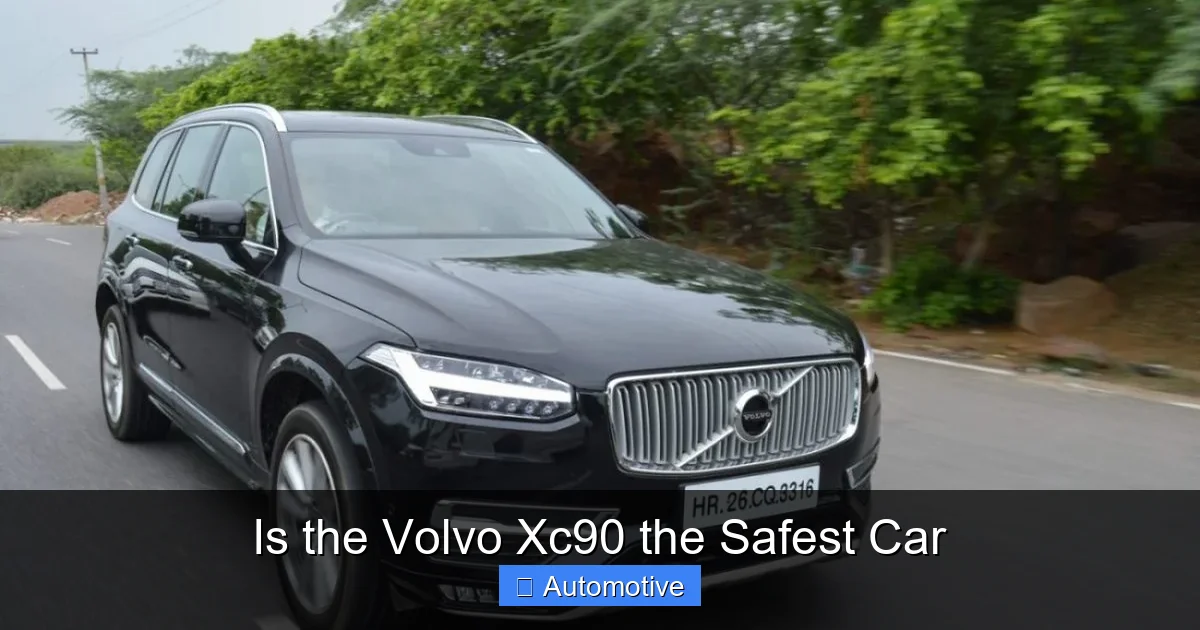
Before we get into the XC90’s specs, it helps to understand where Volvo’s safety obsession comes from. The Swedish automaker has been a pioneer in automotive safety for over 70 years. In 1959, Volvo engineer Nils Bohlin invented the three-point seatbelt—a simple but life-saving innovation that’s now standard in every car worldwide. Volvo didn’t patent it exclusively; instead, they made it available to all manufacturers, saving millions of lives in the process.
Visual guide about Is the Volvo Xc90 the Safest Car
Image source: gaadiwaadi.com
Continuous Innovation
Since then, Volvo has introduced countless safety breakthroughs: side-impact protection systems (SIPS), whiplash protection (WHIPS), and rollover protection. They were also among the first to offer blind-spot monitoring, lane departure warnings, and automatic emergency braking. This culture of innovation isn’t just marketing—it’s baked into the company’s DNA.
The XC90’s Role in Modern Safety
Launched in 2002, the XC90 was Volvo’s first foray into the full-size SUV market. It quickly became a best-seller, not just for its Scandinavian design and spacious interior, but for its reputation as a fortress on wheels. The current generation (introduced in 2015 and refreshed in 2020) builds on that legacy with cutting-edge tech and a renewed focus on proactive safety.
Crash Test Ratings: How the XC90 Stacks Up
When evaluating a car’s safety, crash test ratings are the gold standard. Two of the most trusted organizations—the Insurance Institute for Highway Safety (IIHS) and the National Highway Traffic Safety Administration (NHTSA)—put vehicles through rigorous tests simulating real-world collisions.
Visual guide about Is the Volvo Xc90 the Safest Car
Image source: s1.cdn.autoevolution.com
IIHS Top Safety Pick+ Status
The Volvo XC90 has consistently earned the IIHS’s highest honor: Top Safety Pick+. To qualify, a vehicle must earn “Good” ratings (the highest) in all six crashworthiness tests—including the challenging small overlap front test—and have superior or advanced ratings for front crash prevention. The XC90 meets all these criteria with flying colors.
In the latest evaluations, the XC90 scored “Good” in:
- Driver-side small overlap front
- Passenger-side small overlap front
- Moderate overlap front
- Side impact
- Roof strength
- Head restraints & seats
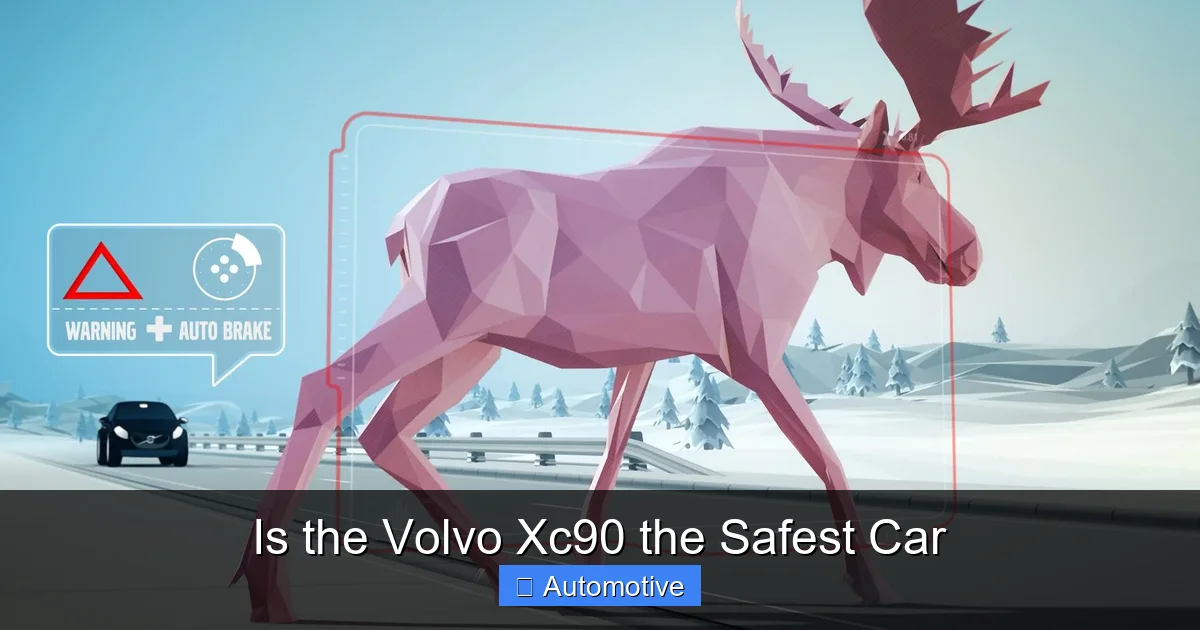
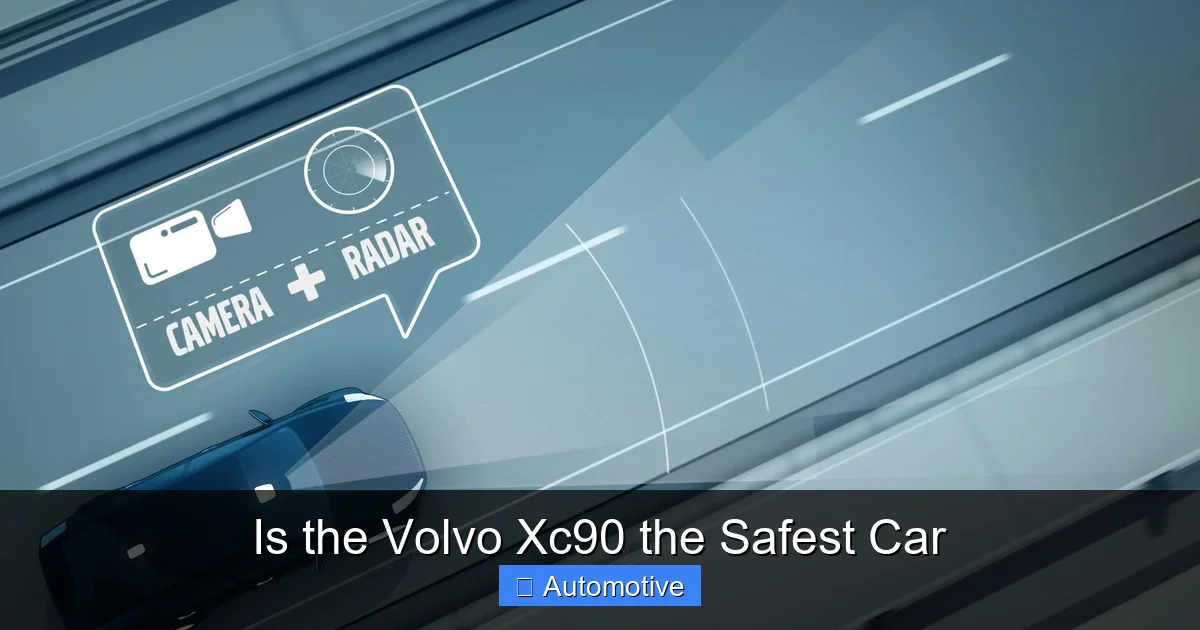
It also received a “Superior” rating for its front crash prevention system, which uses cameras and radar to detect pedestrians, cyclists, and other vehicles.
NHTSA 5-Star Overall Rating
The NHTSA awards the XC90 a 5-star overall safety rating—the highest possible. This includes 5 stars for frontal crash protection, 5 stars for side crash protection, and 4 stars for rollover resistance (a strong score for a tall SUV). The slight deduction in rollover is common among larger vehicles due to their higher center of gravity, but Volvo mitigates this risk with electronic stability control and rollover protection systems.
Real-World Crash Data
Beyond lab tests, real-world data supports the XC90’s safety claims. According to the Highway Loss Data Institute (HLDI), the XC90 has lower-than-average claim frequencies for property damage and bodily injury liability. This suggests that not only does it protect occupants well in crashes, but it also helps prevent accidents in the first place.
Advanced Safety Technology: What Makes the XC90 Stand Out
Modern safety isn’t just about surviving a crash—it’s about avoiding one altogether. The Volvo XC90 excels in this area with a comprehensive suite of driver assistance and collision avoidance technologies.
Visual guide about Is the Volvo Xc90 the Safest Car
Image source: s1.cdn.autoevolution.com
City Safety: Your 24/7 Co-Pilot
City Safety is Volvo’s flagship active safety system. It uses a combination of cameras and radar to monitor the road ahead and can automatically apply the brakes if a collision is imminent. It works at speeds up to 30 mph for pedestrian and cyclist detection, and up to 60 mph for vehicle detection.
For example, if you’re approaching a stopped car too quickly, City Safety will first issue a visual and audible warning. If you don’t respond, it will brake automatically—potentially preventing a rear-end collision. Many owners report that this feature has saved them from fender-benders in stop-and-go traffic.
Pilot Assist: Semi-Autonomous Driving
Pilot Assist combines adaptive cruise control with lane-centering technology to provide semi-autonomous driving on highways. It maintains a set speed and distance from the car ahead while keeping the XC90 centered in its lane. While it’s not full self-driving, it reduces driver fatigue on long trips and helps prevent unintentional lane departures.
Run-off Road Mitigation and Protection
One of the XC90’s most unique features is its run-off road protection system. If the car detects it’s leaving the roadway unintentionally, it can gently steer back into the lane. In the event of an unavoidable run-off, the front seats are equipped with energy-absorbing padding in the seat frames to reduce spinal injuries during impact.
Blind Spot Information System (BLIS) with Steering Support
BLIS monitors your blind spots and alerts you with a light on the side mirror if another vehicle is detected. If you signal to change lanes anyway, the system can provide gentle steering input to help you avoid a collision. This is especially helpful on multi-lane highways or in heavy traffic.
Rear Cross-Traffic Alert
Backing out of a parking spot can be risky, especially with kids or shopping carts nearby. The XC90’s rear cross-traffic alert scans for approaching vehicles or pedestrians and warns you with audible and visual alerts. Some trims even include automatic braking if a collision is detected.
Driver Monitoring and Attention Support
The XC90 includes a driver attention monitor that tracks steering input, lane position, and driving patterns. If it detects signs of drowsiness or distraction, it will suggest taking a break. This feature is particularly useful on long road trips or during late-night drives.
Passive Safety: The XC90’s Protective Shell
While active safety helps prevent accidents, passive safety ensures you’re protected when a crash does happen. The XC90’s body structure is designed to absorb and redirect impact energy away from the passenger cabin.
High-Strength Steel Construction
Over 35% of the XC90’s body is made from ultra-high-strength steel—one of the highest percentages in its class. This creates a rigid safety cage around the occupants while allowing the front and rear to crumple in a controlled manner during a collision.
Airbag Coverage
The XC90 comes standard with nine airbags, including dual front, side-impact, curtain, and knee airbags. The curtain airbags extend across all three rows, providing head protection for rear passengers—a critical feature for families with kids.
Whiplash Protection (WHIPS)
Volvo’s WHIPS system is built into the front seats and is designed to reduce neck injuries during rear-end collisions. In a crash, the seatback moves slightly backward and downward, absorbing energy and supporting the head and neck.
Child Safety Features
For families, the XC90 offers several child-friendly safety options:
- Integrated booster seats (available for second-row seats)
- Rear door child safety locks
- LATCH anchors for secure car seat installation
- Rear-seat reminder system to prevent accidentally leaving a child in the car
The rear-seat reminder is especially thoughtful. If the rear doors were opened before your trip, the system will display a warning on the dashboard when you park, reminding you to check the back seat.
How the XC90 Compares to the Competition
Volvo isn’t the only brand serious about safety. Rivals like the Mercedes-Benz GLE, BMW X5, Audi Q7, and Toyota Highlander also offer strong safety packages. So how does the XC90 stack up?
vs. Mercedes-Benz GLE
The GLE also earns top IIHS and NHTSA ratings and offers similar active safety tech, including automatic emergency braking and blind-spot monitoring. However, the XC90’s City Safety system is more comprehensive in detecting pedestrians and cyclists at lower speeds. Additionally, the XC90’s run-off road protection is unique among luxury SUVs.
vs. BMW X5
The X5 scores well in crash tests but has received “Acceptable” ratings in some IIHS evaluations for headlight performance and front crash prevention. The XC90, by contrast, maintains consistent “Good” or “Superior” ratings across the board.
vs. Audi Q7
The Q7 is a strong contender with excellent build quality and tech. However, it lacks some of the XC90’s family-focused features, like integrated booster seats and rear-seat reminders. The XC90 also has a slight edge in real-world accident prevention data.
vs. Toyota Highlander
The Highlander is a top safety pick and offers great value, but it doesn’t match the XC90’s level of luxury or advanced driver assistance. The XC90’s Pilot Assist and City Safety systems are more refined and responsive.
Overall, while many competitors are catching up, the XC90 remains a leader in holistic safety—combining top ratings, innovative tech, and family-oriented design.
Real Owner Experiences: Does the XC90 Deliver?
Numbers and ratings are one thing, but what do actual owners say? We looked at hundreds of reviews from Volvo forums, consumer sites, and social media to get a sense of real-world performance.
Fewer Close Calls
Many XC90 owners report that the car’s warning systems have prevented accidents. One user shared that City Safety braked automatically when a child darted into the street—something they didn’t even see until the car reacted. Another mentioned that Pilot Assist made a 6-hour drive feel effortless, reducing stress and fatigue.
Confidence in Bad Weather
The XC90’s all-wheel drive and stability control give drivers confidence in rain, snow, and ice. Several owners noted that the car feels planted and predictable, even in slippery conditions. The run-off road mitigation system has also been credited with keeping drivers safe during unexpected skids.
Family Peace of Mind
Parents especially appreciate the rear-seat reminders and integrated booster seats. One mom said, “I used to panic every time I parked, wondering if I’d left something in the back. Now the car reminds me—it’s such a simple thing, but it makes a huge difference.”
A Few Caveats
No car is perfect. Some owners mention that the touchscreen can be slow to respond, and the semi-autonomous systems require hands on the wheel—something not all drivers remember. Additionally, while the XC90 is safe, it’s not immune to accidents caused by other drivers or extreme conditions.
Is the Volvo XC90 the Safest Car? The Verdict
So, is the Volvo XC90 the safest car on the market? The answer isn’t a simple yes or no—but it’s close. While no vehicle can guarantee absolute safety, the XC90 comes as close as any production car can. It combines top-tier crash test ratings, industry-leading active safety technology, and thoughtful passive protection into one cohesive package.
For families, safety-conscious professionals, or anyone who values peace of mind on the road, the XC90 is a compelling choice. It’s not just about avoiding accidents—it’s about feeling confident, protected, and in control, mile after mile.
That said, safety evolves. Newer models from other brands are narrowing the gap, and Volvo must continue innovating to stay ahead. But for now, the XC90 remains a benchmark—a testament to what’s possible when safety isn’t just a feature, but a philosophy.
Frequently Asked Questions
Is the Volvo XC90 the safest SUV?
The Volvo XC90 is one of the safest SUVs available, consistently earning top ratings from the IIHS and NHTSA. While other luxury SUVs now offer similar safety tech, the XC90 stands out for its comprehensive approach and family-focused features.
What safety features come standard on the XC90?
Standard features include City Safety (automatic emergency braking), Pilot Assist (semi-autonomous driving), BLIS with steering support, rear cross-traffic alert, and nine airbags. Higher trims add adaptive headlights, 360-degree cameras, and more.
How does the XC90 protect children?
The XC90 offers integrated booster seats, rear door child locks, LATCH anchors, and a rear-seat reminder system to prevent accidentally leaving a child in the car. These features make it ideal for families.
Can the XC90 prevent all accidents?
No car can prevent all accidents, but the XC90’s active safety systems significantly reduce the risk of collisions. Features like automatic braking and lane-keeping help avoid common crashes, especially in urban and highway driving.
Is the XC90 safe in winter conditions?
Yes. The XC90 comes with all-wheel drive, electronic stability control, and run-off road mitigation, which help maintain control on snow and ice. Many owners report feeling confident driving it in harsh weather.
How often is the XC90 updated for safety?
Volvo regularly updates the XC90’s software and safety systems via over-the-air updates. The 2020 refresh added improved cameras, better sensor range, and enhanced driver monitoring, keeping it competitive with newer models.