
Is the Toyota Proace Available in the Usa

The Toyota ProAce is not currently available in the USA. Designed primarily for European markets, this versatile light commercial van offers impressive cargo space, fuel efficiency, and modern tech—but it hasn’t been introduced to American dealerships due to regulatory, market, and strategic reasons.
If you’ve been searching for a compact yet capable commercial van and stumbled upon the Toyota ProAce, you might be wondering: “Is the Toyota ProAce available in the USA?” It’s a fair question—especially if you’re used to Toyota’s strong presence in the American automotive market. From the rugged Tacoma to the fuel-efficient Prius, Toyota offers a wide range of vehicles tailored to U.S. drivers. But when it comes to light commercial vans, the lineup looks quite different.
The short answer? No, the Toyota ProAce is not available in the United States. Despite its growing reputation in Europe as a reliable, efficient, and well-equipped workhorse, this van has never made its way across the Atlantic. That might come as a surprise, especially if you’ve seen photos of its sleek design, spacious cargo area, and advanced driver assistance features. But there are solid reasons why Toyota has kept the ProAce out of the American market—reasons tied to regulations, consumer preferences, and global business strategy.
In this article, we’ll dive deep into why the Toyota ProAce isn’t sold in the U.S., explore what makes it so popular overseas, and offer practical alternatives for American buyers who need a dependable van for work or personal use. Whether you’re a small business owner, a delivery driver, or just someone who needs extra cargo space, understanding the ProAce’s absence—and your options—can help you make a smarter decision.
Key Takeaways
- No U.S. Availability: The Toyota ProAce is not sold in the United States as of 2024, despite its popularity across Europe.
- European Market Focus: Toyota markets the ProAce exclusively in Europe, where it competes with vans like the Ford Transit Custom and Volkswagen Transporter.
- Shared Platform with Stellantis: The ProAce is built on the same platform as the Peugeot Expert, Citroën Jumpy, and Fiat Scudo, reflecting a partnership between Toyota and Stellantis.
- Right-Hand Drive Legacy: Previous versions were only offered in right-hand drive, limiting global expansion potential.
- U.S. Van Alternatives Exist: American buyers can consider Toyota Sienna, Ford Transit Connect, or Ram ProMaster City for similar utility.
- Import Challenges: Importing a ProAce privately is possible but costly and complicated due to emissions and safety standards.
- Future Uncertain: Toyota has not announced plans to bring the ProAce to the U.S., though market demand could influence future decisions.
📑 Table of Contents
Why Isn’t the Toyota ProAce Sold in the USA?
The absence of the Toyota ProAce in the U.S. market isn’t due to a lack of quality or demand—it’s the result of a mix of regulatory, economic, and strategic factors. Let’s break down the main reasons why this capable van hasn’t made it to American dealerships.
Regulatory and Safety Standards
One of the biggest hurdles for any vehicle entering the U.S. market is compliance with federal safety and emissions standards. The U.S. has some of the strictest regulations in the world, particularly when it comes to crash safety, airbags, electronic stability control, and emissions output. While the Toyota ProAce meets European standards (like Euro 6 emissions and EU safety protocols), adapting it to meet U.S. Federal Motor Vehicle Safety Standards (FMVSS) would require significant engineering changes.
For example, U.S. vehicles must have specific headlight configurations, bumper heights, and side-impact protection systems that differ from European models. Retrofitting the ProAce to meet these standards would be expensive—and Toyota would need to sell enough units to justify the investment. Given the relatively small market for compact commercial vans in the U.S., the cost-benefit analysis likely doesn’t add up.
Market Demand and Consumer Preferences
American consumers have different vehicle preferences than their European counterparts. In Europe, compact vans like the ProAce are ideal for narrow city streets, tight parking spaces, and high fuel prices. They’re commonly used by tradespeople, delivery services, and small businesses that need maneuverability and efficiency.
In the U.S., however, larger vehicles dominate the market. Full-size vans like the Ford Transit, Ram ProMaster, and Mercedes-Benz Sprinter are more popular because they offer greater cargo capacity and are better suited to American roads and driving habits. Even smaller commercial vehicles in the U.S.—like the Ford Transit Connect or Nissan NV200—are often larger than the ProAce.
Additionally, American buyers tend to prioritize power and towing capacity over fuel efficiency. The ProAce, while efficient, is designed for urban and suburban use, not long-haul deliveries or heavy-duty tasks. This mismatch in priorities reduces the incentive for Toyota to bring the ProAce stateside.
Strategic Business Decisions
Toyota’s global strategy plays a big role in vehicle availability. The company focuses its resources on models that align with regional market demands. In Europe, the ProAce fills a clear gap in Toyota’s commercial lineup, competing directly with other compact vans. But in the U.S., Toyota already offers the Sienna minivan and the Tacoma-based commercial vehicles, which serve overlapping needs.
Moreover, Toyota has a partnership with Stellantis (the parent company of Peugeot, Citroën, and Fiat) to produce the ProAce and its siblings. This collaboration is centered in Europe, where Stellantis has strong manufacturing and distribution networks. Expanding this partnership to the U.S. would require new factories, supply chains, and dealer training—none of which are currently in place.
Right-Hand Drive Legacy
Earlier versions of the ProAce were only available in right-hand drive, which limited their appeal outside of countries like the UK, Japan, and Australia. While the current generation is available in left-hand drive for continental Europe, the legacy of right-hand drive production may have slowed global expansion efforts. Switching production lines and retooling factories for left-hand drive models is a costly process, and Toyota may have prioritized markets with higher demand.
What Is the Toyota ProAce? A Closer Look

Visual guide about Is the Toyota Proace Available in the Usa
Image source: gearshifters.org
Even though it’s not available in the U.S., the Toyota ProAce is worth understanding—especially if you’re curious about what you’re missing. This van has earned a strong reputation in Europe for its blend of practicality, efficiency, and modern features.
Design and Dimensions
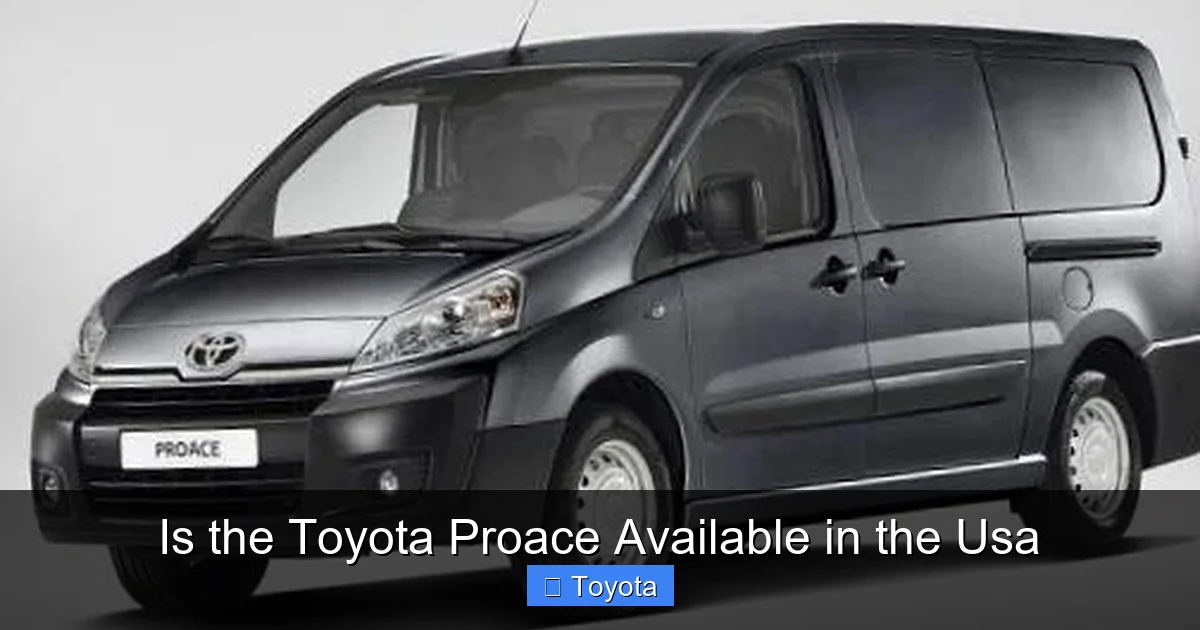
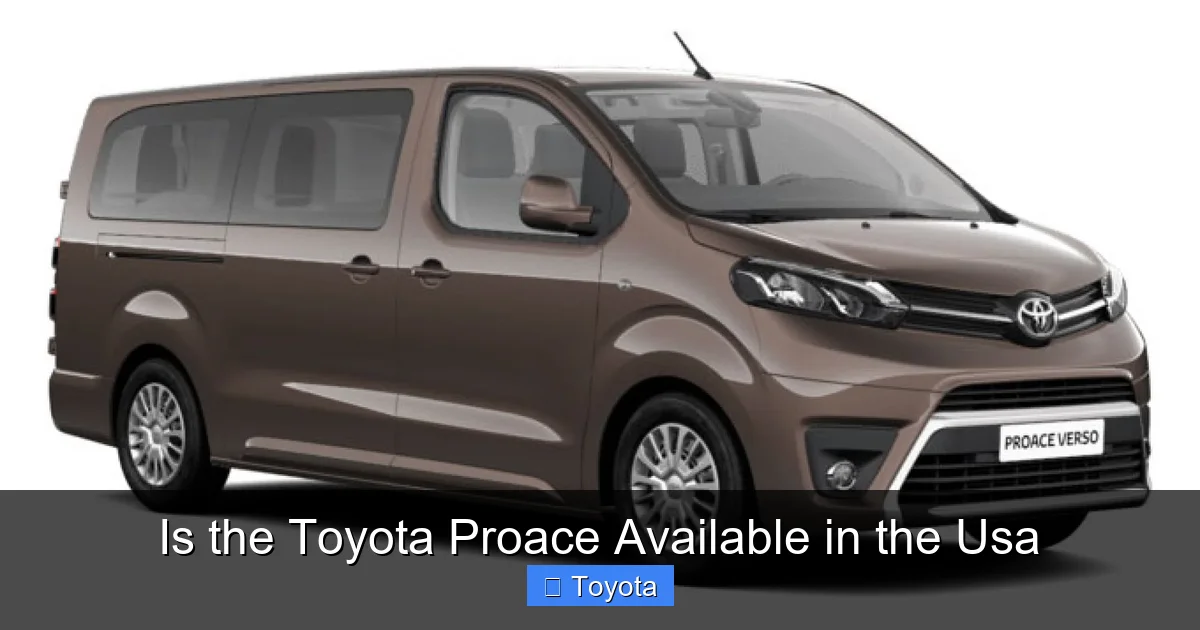
The Toyota ProAce is a medium-sized light commercial vehicle (LCV) designed for urban and suburban use. It comes in multiple body styles, including a panel van, crew van, and chassis cab, with three different wheelbase lengths. The standard version offers up to 6.1 cubic meters (about 215 cubic feet) of cargo space, which is competitive for its class.
Its exterior design is clean and professional, with a bold front grille, LED daytime running lights, and aerodynamic lines that improve fuel efficiency. Inside, the cabin is surprisingly refined for a work van, with durable materials, comfortable seating, and a user-friendly dashboard.
Engine Options and Fuel Efficiency
The ProAce is powered by a range of diesel engines, all built in partnership with Stellantis. The most common option is a 2.0-liter turbo diesel that delivers around 120 to 180 horsepower, depending on the trim. These engines are known for their reliability and low fuel consumption, with some models achieving over 40 miles per gallon (mpg) on the European cycle.
While diesel engines are less popular in the U.S., they’re still widely used in Europe for commercial vehicles due to their torque and efficiency. The ProAce also offers a plug-in hybrid version in some markets, combining a diesel engine with an electric motor for even lower emissions and improved city driving range.
Technology and Safety Features
Toyota has equipped the ProAce with a suite of modern tech and safety features. Standard equipment includes a 7-inch touchscreen with Apple CarPlay and Android Auto, Bluetooth connectivity, and a rearview camera. Higher trims add navigation, wireless charging, and advanced driver assistance systems like lane departure warning, adaptive cruise control, and automatic emergency braking.
These features make the ProAce not just a work tool, but a comfortable and safe vehicle for daily driving. For small business owners who spend long hours on the road, these amenities can make a big difference.
Real-World Use Cases
In Europe, the ProAce is used by a wide range of professionals. Plumbers, electricians, and HVAC technicians appreciate its compact size and cargo flexibility. Delivery companies use it for last-mile logistics, especially in cities where larger vans can’t maneuver easily. Some owners even convert the ProAce into camper vans for weekend adventures.
One example is a small bakery in Berlin that uses a ProAce to deliver fresh bread and pastries to local cafes. The van’s efficient diesel engine helps keep fuel costs low, while the spacious cargo area allows them to transport dozens of orders at once. Another example is a mobile dog grooming service in Amsterdam, which converted the ProAce into a fully equipped grooming salon on wheels.
Could the Toyota ProAce Ever Come to the USA?
Visual guide about Is the Toyota Proace Available in the Usa
Image source: autotras.com
While the ProAce isn’t available now, could that change in the future? It’s not impossible—but it’s unlikely in the near term. Let’s explore the possibilities.
Market Shifts and EV Trends
One factor that could influence Toyota’s decision is the growing demand for electric vehicles (EVs). The ProAce is already available as a plug-in hybrid, and Toyota has announced plans to expand its electric commercial vehicle lineup. If U.S. demand for electric vans increases—especially among delivery companies and municipalities—Toyota might consider bringing an electric ProAce to America.
However, even then, the company would likely prioritize larger EVs like the upcoming electric Tacoma or a future electric version of the Sienna. The compact van segment remains niche in the U.S., and Toyota may prefer to focus on higher-volume models.
Changing Consumer Habits
Another possibility is a shift in American driving habits. As cities become more congested and fuel prices fluctuate, there could be growing interest in smaller, more efficient vehicles. If urban delivery services and small businesses start favoring compact vans over full-size models, Toyota might see an opportunity.
But this would require a significant cultural shift. Americans have long favored larger vehicles, and changing that mindset takes time. Additionally, infrastructure—like parking availability and charging stations—would need to support smaller commercial vehicles.
Strategic Partnerships
Toyota’s partnership with Stellantis could also play a role. If Stellantis decides to expand its U.S. commercial vehicle presence, Toyota might follow suit. However, Stellantis already sells the Ram ProMaster City in the U.S., which occupies a similar space to the ProAce. Introducing a competing model could create internal conflict.
Alternatives to the Toyota ProAce in the USA
Visual guide about Is the Toyota Proace Available in the Usa
Image source: kri-kri.com
If you’re in the U.S. and need a reliable, efficient van for work or personal use, don’t worry—there are several great alternatives to the Toyota ProAce. Here are some top options to consider.
Toyota Sienna
The Toyota Sienna is the closest thing to the ProAce in Toyota’s U.S. lineup. While it’s technically a minivan, the Sienna offers impressive cargo space, seating for up to eight, and available all-wheel drive. The latest model is a hybrid, delivering excellent fuel economy—up to 36 mpg combined.
It’s not a commercial van, but for small businesses that need passenger and cargo flexibility, the Sienna is a strong choice. It’s also packed with safety features and Toyota’s reputation for reliability.
Ford Transit Connect
The Ford Transit Connect is a compact commercial van that’s been popular in the U.S. for years. It offers up to 123 cubic feet of cargo space, a fuel-efficient four-cylinder engine, and a comfortable ride. Available in both short and long wheelbase versions, it’s ideal for delivery services, tradespeople, and small businesses.
The Transit Connect also comes with modern tech features, including Ford’s SYNC infotainment system and available driver assistance tools.
Ram ProMaster City
The Ram ProMaster City is another compact van option, built on the same platform as the Fiat Doblo. It offers a wide-opening rear door, low load floor, and up to 131 cubic feet of cargo space. The ProMaster City is known for its maneuverability and ease of parking, making it a favorite among urban drivers.
It’s powered by a 2.4-liter four-cylinder engine and comes with a user-friendly interior and available safety features.
Nissan NV200
The Nissan NV200 is a compact van that’s been used by companies like UPS and FedEx for last-mile deliveries. It’s efficient, easy to drive, and offers a clean, professional interior. While Nissan discontinued the NV200 in 2022, used models are still widely available and offer great value.
Mercedes-Benz Sprinter
For those who need more space and power, the Mercedes-Benz Sprinter is a top-tier option. It’s larger than the ProAce but offers unmatched cargo capacity, customization options, and advanced safety features. Available in diesel, gasoline, and electric versions, the Sprinter is ideal for businesses that need a serious work van.
Importing a Toyota ProAce: Is It Worth It?
Some buyers consider importing a Toyota ProAce from Europe to bypass the lack of U.S. availability. While technically possible, it’s a complex and expensive process.
Legal and Regulatory Hurdles
To legally drive a ProAce in the U.S., it must comply with FMVSS and EPA emissions standards. Most European models won’t meet these requirements without costly modifications. Additionally, vehicles over 25 years old can be imported under the “classic car” exemption, but newer models must go through a lengthy certification process.
Costs and Logistics
Importing a van involves shipping fees, customs duties, taxes, and potential modification costs. You’ll also need to register the vehicle in your state, which may require additional inspections. All told, the total cost could exceed $10,000—on top of the van’s purchase price.
Practical Considerations
Even if you successfully import a ProAce, you’ll face challenges with parts availability, service, and resale value. Toyota dealerships in the U.S. won’t stock ProAce parts, so repairs could be difficult and expensive. Additionally, the van’s resale value may be low due to its limited market.
For most buyers, importing a ProAce isn’t practical. It’s usually better to choose a U.S.-available alternative that’s supported by local dealers and service networks.
Conclusion
So, is the Toyota ProAce available in the USA? The answer remains no—at least for now. This capable and efficient van has won over European drivers with its practicality, modern features, and reliable performance. But due to regulatory barriers, market differences, and strategic priorities, it hasn’t made its way to American shores.
That doesn’t mean you’re out of options. The U.S. market offers several excellent alternatives, from the Toyota Sienna to the Ford Transit Connect and Ram ProMaster City. These vehicles provide similar utility, better support, and easier ownership.
While the ProAce may not be available today, the future of commercial vehicles is evolving. As demand for electric and compact vans grows, Toyota could reconsider its strategy. But for now, American buyers will need to look elsewhere for their next work van.
If you’re set on the ProAce, keep an eye on Toyota’s global announcements—and consider joining online forums where enthusiasts discuss import possibilities. But for most, the smart move is to choose a U.S.-available model that meets your needs without the hassle.
Frequently Asked Questions
Is the Toyota ProAce sold in the United States?
No, the Toyota ProAce is not currently sold in the United States. It is only available in European markets and a few other regions outside North America.
Why doesn’t Toyota sell the ProAce in the USA?
Toyota has not brought the ProAce to the U.S. due to regulatory differences, lower market demand for compact vans, and strategic focus on other models like the Sienna and Tacoma.
Can I import a Toyota ProAce to the USA?
Yes, but it’s complicated and expensive. You’ll need to meet U.S. safety and emissions standards, pay import fees, and may face challenges with parts and service.
What are the best alternatives to the Toyota ProAce in the USA?
Top alternatives include the Toyota Sienna, Ford Transit Connect, Ram ProMaster City, and Nissan NV200, all of which offer similar utility and are widely available.
Will Toyota ever bring the ProAce to the USA?
There’s no official announcement, but it’s unlikely in the near future. Market demand, regulations, and Toyota’s current lineup make a U.S. launch improbable.
Is the Toyota ProAce electric?
The ProAce is available as a plug-in hybrid in some European markets, but there is no fully electric version yet. Toyota is developing more electric commercial vehicles for the future.