Is the Toyota Ae86 a Good Car?

Contents
- 1 Key Takeaways
- 2 📑 Table of Contents
- 3 Introduction: The Car That Started a Movement
- 4 Design and Heritage: The Birth of a Classic
- 5 Performance and Driving Dynamics: Pure Driver’s Car
- 6 Reliability and Maintenance: Built to Last
- 7 Ownership Experience: Daily Driver or Weekend Warrior?
- 8 Is the Toyota AE86 a Good Car? Final Verdict
- 9 Conclusion: A Legend That Lives On
- 10 Frequently Asked Questions

Car Tire Inflator

Reflective Stickers

Car Cup Holder Expander

Windshield Washer Fluid
The Toyota AE86 is more than just a car—it’s a cultural icon. Known for its lightweight design, rear-wheel drive, and engaging driving dynamics, it’s a favorite among drifters and classic car lovers.
Key Takeaways
- Iconic Design and Heritage: The AE86, part of the Corolla lineup, became legendary thanks to its role in the “Initial D” anime and its popularity in drifting culture.
- Rear-Wheel Drive Dynamics: Unlike most front-wheel-drive economy cars of its time, the AE86’s RWD layout offers balanced handling and a fun, responsive driving experience.
- Lightweight and Nimble: Weighing under 1,000 kg, the AE86 feels agile and quick, making it ideal for tight corners and spirited driving.
- Reliable 4A-GE Engine: The 1.6L twin-cam engine is known for durability, tunability, and a high-revving nature that rewards skilled drivers.
- Strong Aftermarket Support: Decades of enthusiast love mean parts, upgrades, and tuning options are widely available and affordable.
- Affordable Entry Point: Despite its cult status, the AE86 remains relatively affordable compared to other classic performance cars.
- Not Perfect for Daily Use: While fun, its age, lack of modern safety features, and basic interior make it less ideal as a daily driver.
📑 Table of Contents
- Introduction: The Car That Started a Movement
- Design and Heritage: The Birth of a Classic
- Performance and Driving Dynamics: Pure Driver’s Car
- Reliability and Maintenance: Built to Last
- Ownership Experience: Daily Driver or Weekend Warrior?
- Is the Toyota AE86 a Good Car? Final Verdict
- Conclusion: A Legend That Lives On
Introduction: The Car That Started a Movement
The Toyota AE86 isn’t just a car—it’s a legend. Born in the early 1980s as part of the fifth-generation Corolla lineup, this compact coupe quickly transcended its humble roots to become a symbol of driving purity, grassroots motorsport, and automotive culture. Whether you know it as the “Hachi-Roku” (Japanese for “eight-six”) or simply the “AE86,” this little rear-wheel-drive machine has earned a permanent place in the hearts of car enthusiasts around the world.
What makes the AE86 so special? It’s not about raw horsepower or luxury appointments. Instead, it’s about balance, simplicity, and the pure joy of driving. In an era when most economy cars were front-wheel drive and focused on fuel efficiency, the AE86 stood out with its rear-wheel-drive layout, lightweight body, and a naturally aspirated engine that loved to rev. It was a car built for drivers, not just commuters.
Over the years, the AE86 has gained fame through pop culture, especially the wildly popular anime and manga series *Initial D*, where the protagonist, Takumi Fujiwara, pilots a modified AE86 through treacherous mountain passes. This exposure introduced a new generation to the car’s capabilities and cemented its status as a drift icon. But beyond the anime, real-world racers, drifters, and weekend warriors have proven time and again that the AE86 is more than just a pretty face—it’s a capable, tunable, and deeply rewarding machine.
Design and Heritage: The Birth of a Classic

Visual guide about Is the Toyota Ae86 a Good Car?
Image source: automotivian.com
The AE86 in Context: A Corolla Like No Other
The Toyota AE86 was introduced in 1983 as part of the E80 series of the Corolla. It was available in two body styles: a two-door coupe (the Levin) and a three-door hatchback (the Trueno), with subtle differences in headlights and trim. Despite being a Corolla—a nameplate synonymous with reliability and practicality—the AE86 was engineered with driving enthusiasts in mind.
Unlike its front-wheel-drive siblings, the AE86 featured a rear-wheel-drive layout, a 50:50 front-to-rear weight distribution, and a lightweight chassis. This combination made it one of the few affordable, mass-produced RWD cars of its time. It was essentially a spiritual successor to the earlier Toyota 2000GT and the Corolla Sports models, carrying forward the brand’s sporty DNA.
Cultural Impact: From Japan to the World
The AE86’s rise to fame wasn’t just due to its performance—it was also a product of timing and culture. In Japan, the 1980s saw the birth of touge (mountain pass) racing, where young drivers would test their skills on winding roads at night. The AE86, with its nimble handling and low center of gravity, was perfectly suited for these high-speed duels.
But it was the *Initial D* series that truly globalized the AE86’s legend. The story of a tofu delivery driver mastering the art of drifting in his humble AE86 captured imaginations worldwide. Suddenly, teenagers in Europe, North America, and Australia were searching for their own Hachi-Roku. The car became a symbol of underdog triumph, skill over speed, and the beauty of analog driving.
Design Evolution and Variants
The AE86 came in several variants, including the base model, the sportier GTS, and the limited-run Black Limited edition. The Levin and Trueno models were nearly identical mechanically, but the Trueno featured pop-up headlights, which added to its futuristic appeal. The Black Limited, produced in 1986, featured a black interior, special badging, and a slightly more aggressive stance.
Despite its age, the AE86’s design remains timeless. Its boxy silhouette, short overhangs, and minimalist interior reflect the utilitarian ethos of 1980s Japanese engineering. It’s not flashy, but it has a certain honesty—a car that wears its purpose on its sleeve.
Performance and Driving Dynamics: Pure Driver’s Car

Visual guide about Is the Toyota Ae86 a Good Car?
Image source: carcitymotors.com
The 4A-GE Engine: High-Revving Heart
At the core of the AE86 is the legendary 4A-GE engine. This 1.6-liter inline-four was Toyota’s first mass-produced dual overhead cam (DOHC) engine, featuring a 16-valve head and a redline of 7,500 rpm. With around 112–130 horsepower (depending on the market and year), it wasn’t the most powerful engine on the road, but it was incredibly responsive and eager to rev.
The 4A-GE was known for its “twin-cam” sound—a high-pitched, mechanical wail that grew louder as the engine approached its redline. It wasn’t built for brute force, but for precision and driver engagement. The engine’s short stroke and high-revving nature made it perfect for spirited driving, especially on twisty roads or race tracks.
One of the engine’s standout features was its mechanical simplicity. With no turbochargers or complex electronics, it was easy to work on and highly tunable. Enthusiasts could easily bolt on headers, intake systems, and ECU upgrades to squeeze out more power. The engine’s reliability also meant it could handle increased stress with proper maintenance.
Chassis and Handling: A Balanced Machine
The AE86’s chassis was a masterpiece of lightweight engineering. Weighing in at just 950–980 kg (depending on trim), it was one of the lightest production cars of its era. This low mass, combined with a near-perfect 50:50 weight distribution, gave the car exceptional balance and agility.
The suspension setup—MacPherson struts in the front and a four-link solid rear axle—was simple but effective. While not as sophisticated as modern multi-link systems, it allowed for predictable handling and easy tuning. The rear axle, in particular, was a favorite among drifters, as it could be easily modified for better grip or controlled oversteer.
Steering was manual and unassisted, providing direct feedback and a strong connection to the road. There was no power steering to mask imperfections—what you felt was exactly what the tires were doing. This rawness is what many drivers love about the AE86. It demands attention and skill, rewarding those who take the time to learn its nuances.
Drifting and Motorsport Legacy
The AE86 didn’t just look good—it performed. In the world of drifting, it became the car of choice for many professional drivers. Its RWD layout, light weight, and balanced chassis made it ideal for controlled slides and precise cornering. The car’s ability to rotate quickly and maintain momentum through corners gave it a natural advantage on race tracks and touge roads.
In Japan, the AE86 dominated grassroots racing events like the D1 Grand Prix and various time attack competitions. In the U.S., it became a staple in Formula Drift, with drivers like Ken Gushi and Daijiro Yoshihara piloting heavily modified AE86s to victory. Even today, you’ll find AE86s competing in vintage racing series and local track days.
Reliability and Maintenance: Built to Last
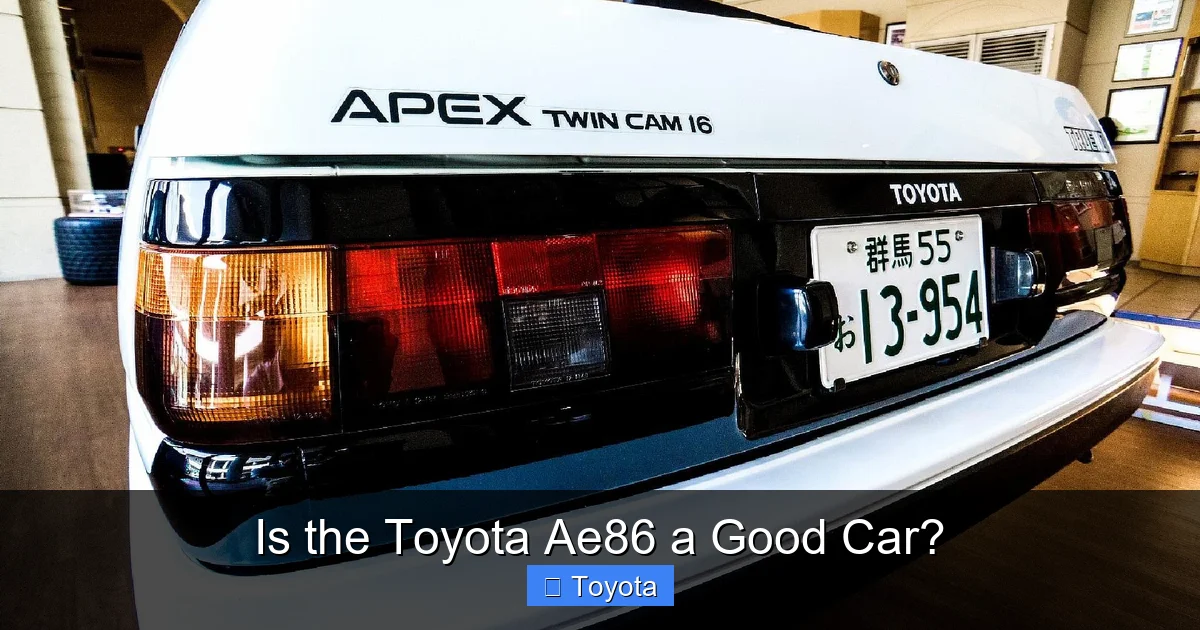
Visual guide about Is the Toyota Ae86 a Good Car?
Image source: global.toyota
Proven Durability of the 4A-GE
One of the AE86’s strongest selling points is its reliability. The 4A-GE engine, when properly maintained, can easily surpass 200,000 miles. Regular oil changes, timing belt replacements, and attention to cooling system health are key to keeping it running smoothly.
The engine’s cast-iron block and aluminum head were built to handle high RPMs and moderate tuning. Many owners have successfully run turbo kits or built high-compression naturally aspirated engines without major issues. However, like any older engine, neglect can lead to problems—especially with oil consumption and valve train wear.
Common Issues and How to Avoid Them
While the AE86 is generally reliable, it’s not immune to age-related wear. Common issues include:
- Rust: Especially in the rear wheel arches, quarter panels, and floor pans. Regular inspections and rust prevention treatments are essential.
- Suspension Wear: Bushings, shocks, and ball joints degrade over time. Upgrading to polyurethane bushings and performance shocks can improve handling and longevity.
- Brake Fade: The stock brakes are adequate for street use but can fade under heavy track use. Upgrading to larger rotors, performance pads, and stainless steel lines is recommended for spirited driving.
- Electrical Gremlins: Older wiring can become brittle. Checking grounds, connectors, and the alternator is important for reliability.
Regular maintenance is key. Unlike modern cars with complex electronics, the AE86 is relatively simple to work on. Many owners do their own repairs, thanks to its straightforward design and abundant online resources.
Aftermarket Support: A Tuner’s Dream
One of the AE86’s greatest strengths is its massive aftermarket support. Decades of enthusiast interest have led to a thriving ecosystem of parts, upgrades, and tuning options. Whether you want to restore it to stock condition or build a full-blown race car, there’s a solution.
Popular upgrades include:
- Engine Swaps: Many owners swap in more powerful engines like the 4A-GEU (from the AE92), 3S-GE, or even the 1JZ/2JZ from Toyota’s sportier models.
- Suspension Kits: Coilovers, sway bars, and camber kits are widely available to improve handling.
- Body Kits and Aero: From subtle OEM+ styles to aggressive widebody kits, customization options are endless.
- Interior Upgrades: Lightweight seats, roll cages, and modern gauges can enhance both performance and safety.
The AE86’s tunability is a big part of its enduring appeal. It’s a blank canvas for enthusiasts who want to build a car that reflects their personality and driving style.
Ownership Experience: Daily Driver or Weekend Warrior?
Practicality and Comfort
Let’s be honest—the AE86 was never designed for comfort. The interior is spartan, with basic cloth seats, minimal sound insulation, and no modern amenities like air conditioning (in many models) or power windows. The ride is firm, and road noise is noticeable at highway speeds.
For daily driving, these limitations can be a drawback. Long commutes, bad weather, and pothole-ridden roads can make the AE86 feel outdated and tiring. However, for weekend drives, track days, or scenic backroad runs, it’s pure joy.
Fuel Economy and Running Costs
The AE86 is surprisingly fuel-efficient for a performance-oriented car. The 4A-GE engine averages around 25–30 mpg on the highway, depending on driving style. This makes it relatively cheap to run, especially compared to modern sports cars.
Insurance can be affordable, particularly if you’re over 25 and have a clean driving record. However, modified or track-used AE86s may require specialty insurance.
Maintenance costs are generally low, thanks to the car’s simplicity and widespread parts availability. However, rust repair and restoration can add up, especially if the car has been neglected.
Resale Value and Investment Potential
The AE86 has held its value remarkably well. Well-maintained, unmodified examples—especially Black Limited models—can fetch $15,000 to $25,000 or more, depending on condition and location. Modified or race-prepped cars vary widely in price.
As a classic car, the AE86 is considered a solid investment. Its cultural significance, limited production numbers, and enduring popularity suggest that values will remain strong—or even appreciate—over time.
Is the Toyota AE86 a Good Car? Final Verdict
So, is the Toyota AE86 a good car? The answer depends on what you’re looking for.
If you want a reliable, comfortable, and modern daily driver, the AE86 is not the best choice. It lacks airbags, ABS, traction control, and other safety features we take for granted today. Its interior is basic, and its ride can be harsh.
But if you’re seeking a car that connects you to the road, rewards skill, and delivers pure driving joy, the AE86 is exceptional. It’s a car that teaches you to drive better, to feel the limits of grip, and to appreciate the art of balance and control.
For enthusiasts, the AE86 is more than just a car—it’s a philosophy. It represents a time when cars were simpler, lighter, and more engaging. It’s a reminder that performance isn’t just about horsepower; it’s about harmony between driver and machine.
Whether you’re drifting on a mountain pass, cruising through a scenic countryside, or simply admiring its timeless design, the AE86 delivers an experience that few modern cars can match.
Conclusion: A Legend That Lives On
The Toyota AE86 may be over 40 years old, but its legacy is stronger than ever. From its humble beginnings as a Corolla coupe to its status as a global icon, the AE86 has proven that greatness doesn’t require complexity or luxury. It’s a car built for the love of driving—a machine that rewards patience, skill, and passion.
If you’re considering buying one, do your research. Find a well-maintained example, inspect it for rust and mechanical issues, and be prepared for the quirks of classic car ownership. But if you’re ready to embrace the analog driving experience, the AE86 will not disappoint.
In a world of increasingly automated and detached vehicles, the AE86 stands as a beacon of driving purity. It’s not just a good car—it’s a great one.
Frequently Asked Questions
Is the Toyota AE86 reliable?
Yes, the AE86 is known for its reliability, especially the 4A-GE engine. With proper maintenance, it can last well over 200,000 miles. Regular oil changes and timing belt replacements are essential.
Can the AE86 be used as a daily driver?
While possible, the AE86 is better suited as a weekend or track car. Its lack of modern comforts, firm ride, and minimal sound insulation make it less ideal for daily commuting.
How much does a Toyota AE86 cost?
Prices vary widely based on condition, model, and modifications. Clean, unmodified examples typically range from $10,000 to $25,000, while project cars can be found for under $5,000.
Is the AE86 good for drifting?
Absolutely. The AE86’s rear-wheel drive, lightweight chassis, and balanced handling make it one of the best entry-level drift cars ever made. It’s a favorite in drifting communities worldwide.
What engine does the AE86 have?
The AE86 is powered by the 1.6-liter 4A-GE inline-four engine, a high-revving, twin-cam unit producing around 112–130 horsepower, depending on the market and year.
Are parts for the AE86 still available?
Yes, thanks to strong aftermarket support, parts for the AE86 are widely available. Many components are reproduced or upgraded by specialty manufacturers, making restoration and tuning easier than ever.