Is Kia a Safe Car?

Contents
- 1 Key Takeaways
- 2 📑 Table of Contents
- 3 Is Kia a Safe Car? A Comprehensive Look at Safety, Ratings, and Technology
- 4 Crash Test Ratings: What the Experts Say
- 5 Advanced Safety Technology: Kia Drive Wise
- 6 Structural Design and Crash Protection
- 7 Real-World Safety: Owner Experiences and Reliability
- 8 Family Safety: SUVs and Minivans
- 9 Electric and Hybrid Safety: The Future of Kia
- 10 How Kia Compares to Competitors
- 11 Tips for Maximizing Safety in Your Kia
- 12 Conclusion: Kia Is a Safe Choice for Modern Drivers
- 13 Frequently Asked Questions

Car Cup Holder Expander

Steering Wheel Cover

Emergency First Aid Kit

Tire Repair Kit
Kia has made impressive strides in vehicle safety over the past decade, earning top marks from major safety organizations. With advanced driver-assistance systems, strong crash test ratings, and a commitment to innovation, Kia cars are now among the safest on the road.
Key Takeaways
- Top Safety Ratings: Many Kia models earn 5-star overall safety ratings from the NHTSA and Top Safety Pick+ awards from the IIHS.
- Advanced Safety Tech: Kia equips most vehicles with standard features like forward collision warning, automatic emergency braking, and lane-keeping assist.
- Structural Integrity: Kia uses high-strength steel in key areas to improve crash protection and passenger safety.
- Real-World Performance: Owners report high satisfaction with Kia’s safety systems, especially in avoiding accidents during daily driving.
- Family-Friendly Safety: SUVs like the Kia Telluride and Sorento offer excellent visibility, child safety features, and robust protection.
- Warranty & Reliability: Kia’s 10-year/100,000-mile powertrain warranty reflects confidence in long-term durability and safety.
- Continuous Improvement: Kia invests heavily in R&D to stay ahead of evolving safety standards and consumer expectations.
📑 Table of Contents
- Is Kia a Safe Car? A Comprehensive Look at Safety, Ratings, and Technology
- Crash Test Ratings: What the Experts Say
- Advanced Safety Technology: Kia Drive Wise
- Structural Design and Crash Protection
- Real-World Safety: Owner Experiences and Reliability
- Family Safety: SUVs and Minivans
- Electric and Hybrid Safety: The Future of Kia
- How Kia Compares to Competitors
- Tips for Maximizing Safety in Your Kia
- Conclusion: Kia Is a Safe Choice for Modern Drivers
Is Kia a Safe Car? A Comprehensive Look at Safety, Ratings, and Technology
When shopping for a new or used car, safety is often one of the top concerns—especially for families, new drivers, or anyone who spends a lot of time on the road. You want to know that the vehicle you’re driving can protect you and your passengers in the event of a crash. And if you’re considering a Kia, you might be wondering: Is Kia a safe car?
The short answer? Yes—Kia has transformed itself into a leader in automotive safety over the past decade. Once known more for affordability than advanced engineering, Kia has invested heavily in safety technology, structural design, and crash protection. Today, many Kia models consistently earn top safety ratings from trusted organizations like the National Highway Traffic Safety Administration (NHTSA) and the Insurance Institute for Highway Safety (IIHS).
But don’t just take our word for it. Let’s dive deep into what makes Kia a safe choice, from crash test results and safety features to real-world performance and owner feedback. Whether you’re eyeing a compact Kia Forte, a family-friendly Kia Sorento, or a stylish Kia EV6, understanding the safety credentials of your vehicle is essential.
Crash Test Ratings: What the Experts Say

Visual guide about Is Kia a Safe Car?
Image source: safeautomotive.com.br
One of the most reliable ways to assess a car’s safety is by looking at its crash test ratings. These evaluations simulate real-world collisions and measure how well a vehicle protects its occupants. Two of the most respected authorities in this space are the NHTSA and the IIHS.
NHTSA 5-Star Safety Ratings
The NHTSA uses a 5-star rating system, with 5 stars being the highest score. Vehicles are tested in frontal crash, side crash, and rollover scenarios. Many Kia models have earned 5-star overall safety ratings, which means they perform exceptionally well across all categories.
For example, the 2023 Kia Telluride received a 5-star overall rating from the NHTSA. This large SUV aced every test, including front and side impacts, as well as rollover resistance. Similarly, the 2023 Kia Seltos and Kia Sportage—both popular compact SUVs—also earned 5-star ratings, making them excellent choices for safety-conscious buyers.
IIHS Top Safety Pick+ Awards
The IIHS is known for its rigorous testing standards, including small overlap front crashes, which simulate hitting a tree or pole. To earn the coveted Top Safety Pick+ award, a vehicle must perform well in all crash tests, have strong headlights, and offer effective front crash prevention systems.
In recent years, several Kia models have achieved this elite status. The 2023 Kia K5, for instance, earned a Top Safety Pick+ from the IIHS, thanks to its strong performance in crash tests and standard front crash prevention. The 2023 Kia EV6, Kia’s all-electric crossover, also received the Top Safety Pick+ award—a significant achievement for an EV, where battery placement and structural integrity are critical.
These awards aren’t just badges of honor—they reflect real-world safety. Vehicles that earn Top Safety Pick+ status are statistically less likely to be involved in fatal crashes, according to IIHS data.
Advanced Safety Technology: Kia Drive Wise
Visual guide about Is Kia a Safe Car?
Image source: shunauto.com
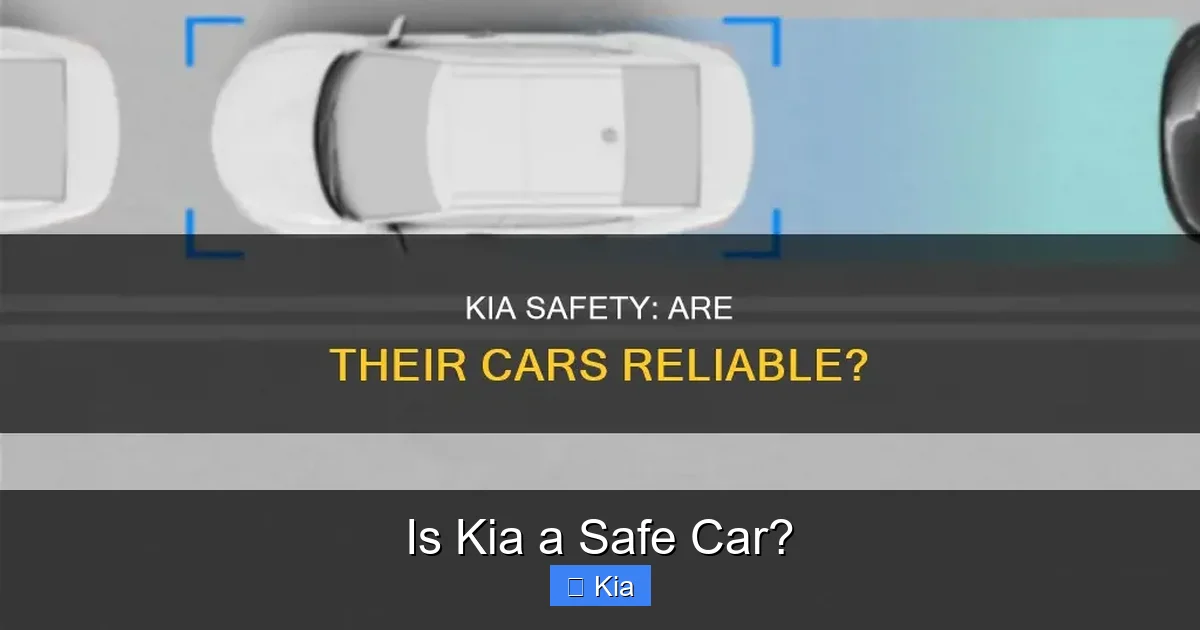
Beyond crashworthiness, modern safety is about preventing accidents before they happen. That’s where advanced driver-assistance systems (ADAS) come in. Kia has developed its own suite of safety technologies called Kia Drive Wise, which is now standard on most new models.
Standard Safety Features
Even base trims of Kia vehicles come equipped with a robust set of safety technologies. These include:
– Forward Collision-Avoidance Assist (FCA): Detects vehicles, pedestrians, and cyclists in your path and can automatically apply the brakes if a collision is imminent.
– Lane Keeping Assist (LKA): Gently steers the car back into its lane if it begins to drift without a turn signal.
– Driver Attention Warning (DAW): Monitors driving patterns and alerts you if it detects signs of drowsiness or distraction.
– Highway Driving Assist (HDA): Combines adaptive cruise control and lane-centering to reduce driver fatigue on long trips.
These features aren’t just nice-to-have—they’re proven to reduce accidents. According to the IIHS, vehicles with forward collision warning and automatic emergency braking can reduce rear-end crashes by up to 50%.
Available Upgrades
For even greater peace of mind, higher trims and optional packages offer additional safety tech:
– Blind-Spot Collision Warning (BCW): Alerts you when a vehicle is in your blind spot.
– Rear Cross-Traffic Collision-Avoidance Assist (RCCA): Helps prevent collisions when backing out of parking spaces.
– Safe Exit Assist: Warns passengers not to open doors if a vehicle or cyclist is approaching from behind.
– Surround View Monitor: Provides a 360-degree camera view, making parking and low-speed maneuvers safer.
These features are especially helpful in urban environments or tight parking lots, where visibility can be limited.
Structural Design and Crash Protection

Visual guide about Is Kia a Safe Car?
Image source: shunauto.com
A car’s safety isn’t just about technology—it’s also about how well the vehicle’s body can absorb and redirect crash forces. Kia has made significant improvements in this area by using advanced materials and engineering techniques.
High-Strength Steel Construction
Kia uses high-strength and ultra-high-strength steel in critical areas of the vehicle’s frame, such as the A-pillars, B-pillars, and roof rails. These materials are lighter than traditional steel but much stronger, helping to maintain cabin integrity during a crash.
For example, the Kia Telluride’s body structure is made up of over 50% high-strength steel. This contributes to its excellent crash test performance and helps protect occupants in side-impact and rollover scenarios.
Energy-Absorbing Zones
Kia designs its vehicles with crumple zones—areas at the front and rear that are engineered to deform in a controlled way during a collision. These zones absorb impact energy, reducing the force transferred to the passenger compartment.
Additionally, Kia uses advanced airbag systems, including front, side, and curtain airbags, to provide comprehensive protection. Some models even feature center airbags that deploy between the driver and front passenger to prevent head injuries in side impacts.
Real-World Safety: Owner Experiences and Reliability
While crash tests and technology specs are important, real-world performance matters just as much. How do Kia vehicles actually hold up on the road?
Owner Satisfaction and Feedback
Surveys and reviews from Kia owners consistently highlight satisfaction with safety features. On sites like Edmunds, Kelley Blue Book, and Consumer Reports, many drivers praise Kia’s intuitive safety systems and reliable performance.
One 2022 Kia Sportage owner shared: “I was in a minor fender bender last winter, and the forward collision warning system kicked in just in time. It probably saved me from a more serious accident.”
Another common theme is the peace of mind that comes with Kia’s safety tech, especially for parents. The ability to monitor blind spots, get alerts when backing up, and have the car help stay in the lane makes driving less stressful.
Reliability and Long-Term Safety
Safety isn’t just about avoiding crashes—it’s also about reliability. A car that breaks down frequently or has electrical issues can become a safety hazard. Fortunately, Kia has improved dramatically in this area.
According to J.D. Power’s Vehicle Dependability Study, Kia ranks among the top non-luxury brands for long-term reliability. This means fewer unexpected repairs and more consistent performance over time.
Plus, Kia’s industry-leading 10-year/100,000-mile powertrain warranty gives buyers confidence that their vehicle—and its safety systems—will remain in good working order for years to come.
Family Safety: SUVs and Minivans
For families, safety takes on even greater importance. Children, elderly passengers, and frequent carpooling require vehicles that offer extra protection, visibility, and convenience.
Top Family-Friendly Kia Models
Kia offers several vehicles that are ideal for families, with strong safety ratings and family-focused features:
– Kia Telluride: This three-row SUV is a favorite among families for its spacious interior, smooth ride, and top safety scores. It comes standard with Kia Drive Wise and offers optional features like rear-seat reminder and safe exit assist.
– Kia Sorento: Available in hybrid and plug-in hybrid versions, the Sorento combines fuel efficiency with excellent safety. It earned a Top Safety Pick from the IIHS and includes features like rear cross-traffic alert and blind-spot monitoring.
– Kia Carnival: Kia’s minivan alternative offers sliding doors, ample cargo space, and a high seating position for better visibility. It also includes standard safety tech and earned a 5-star NHTSA rating.
Child Safety Features
Kia vehicles are equipped with LATCH (Lower Anchors and Tethers for Children) systems to securely install car seats. Many models also include rear-door child safety locks and power window controls that prevent accidental activation.
Additionally, the Kia Telluride and Sorento offer rear-seat reminder systems that alert drivers to check the back seat before exiting—helping prevent tragic incidents of children being left in hot cars.
Electric and Hybrid Safety: The Future of Kia
As Kia expands its electric vehicle (EV) lineup, safety remains a top priority. EVs present unique challenges, such as battery protection and high-voltage systems, but Kia has addressed these with careful engineering.
Kia EV6 and Safety Innovations
The Kia EV6, Kia’s flagship electric crossover, is built on a dedicated EV platform designed for safety. Its battery pack is mounted low in the chassis, lowering the center of gravity and reducing rollover risk. The battery is also encased in a rigid aluminum frame to protect it in a crash.
The EV6 earned a Top Safety Pick+ from the IIHS and includes all the standard Kia Drive Wise features, plus EV-specific safety systems like battery thermal management to prevent overheating.
Hybrid and Plug-In Hybrid Models
Kia’s hybrid and plug-in hybrid vehicles, like the Sorento Hybrid and Niro, also prioritize safety. These models undergo the same rigorous testing as their gasoline counterparts and often include additional features like regenerative braking systems that improve control and reduce wear on brake components.
How Kia Compares to Competitors
When evaluating safety, it’s helpful to compare Kia to other brands in the same segment. How does it stack up against Toyota, Honda, Hyundai, and Subaru?
Kia vs. Toyota and Honda
Toyota and Honda have long been known for safety, with models like the Camry and CR-V earning top marks. However, Kia has closed the gap significantly. In many cases, Kia models now match or exceed their competitors in safety ratings and standard features.
For example, the 2023 Kia K5 and Toyota Camry both earned Top Safety Pick+ awards, but the K5 offers more standard safety tech at a lower starting price.
Kia vs. Hyundai
As sister brands under Hyundai Motor Group, Kia and Hyundai share many platforms and safety technologies. Both brands perform well in crash tests and offer similar ADAS features. The choice often comes down to styling, pricing, and personal preference.
Kia vs. Subaru
Subaru is renowned for its standard all-wheel drive and EyeSight safety suite. While Subaru still leads in some areas, Kia has made major strides. The Telluride, for instance, offers comparable safety and more interior space than the Subaru Ascent, often at a lower price.
Tips for Maximizing Safety in Your Kia
Even the safest car can be compromised by poor driving habits or lack of maintenance. Here are some tips to get the most out of your Kia’s safety features:
– Keep Software Updated: Kia regularly releases over-the-air updates for its safety systems. Make sure your vehicle’s software is current.
– Maintain Tires and Brakes: Properly inflated tires and well-maintained brakes are essential for optimal performance of safety systems like ABS and traction control.
– Use Child Safety Seats Correctly: Always follow manufacturer instructions and use the LATCH system when installing car seats.
– Stay Alert: While ADAS can help, they’re not a substitute for attentive driving. Keep your eyes on the road and hands on the wheel.
– Regular Inspections: Have your Kia inspected annually to ensure all safety systems are functioning properly.
Conclusion: Kia Is a Safe Choice for Modern Drivers
So, is Kia a safe car? The evidence is clear: yes, Kia vehicles are among the safest on the road today. With top crash test ratings, advanced safety technology, strong structural design, and a commitment to continuous improvement, Kia has earned its place as a leader in automotive safety.
Whether you’re driving a compact sedan, a rugged SUV, or an all-electric crossover, Kia offers peace of mind through innovation and reliability. And with features like Kia Drive Wise now standard on most models, you don’t have to pay extra for cutting-edge safety.
For families, commuters, and adventure seekers alike, Kia delivers a winning combination of safety, value, and style. So the next time you’re shopping for a new car, don’t overlook Kia—it might just be the safest choice you make.
Frequently Asked Questions
Are all Kia models safe?
Most modern Kia models are highly rated for safety, especially those from 2020 onward. While older models may not have the same level of technology, newer Kias consistently earn top marks from the NHTSA and IIHS.
Does Kia have automatic emergency braking?
Yes, forward collision-avoidance assist (FCA) with automatic emergency braking is standard on nearly all new Kia vehicles, including the Forte, Sportage, and Telluride.
How does Kia compare to Toyota in safety?
Kia now matches or exceeds Toyota in many safety categories. Both brands offer strong crash test ratings and advanced safety tech, but Kia often provides more standard features at a lower price.
Is the Kia Telluride safe for families?
Absolutely. The Telluride has earned 5-star NHTSA ratings and Top Safety Pick+ status. It includes family-friendly features like rear-seat reminders, safe exit assist, and excellent crash protection.
Are Kia electric cars safe in a crash?
Yes. The Kia EV6 and other electric models are designed with reinforced battery protection and undergo the same rigorous safety testing as gasoline vehicles. They’ve earned top safety awards from the IIHS.
Do Kia safety features work in bad weather?
Most Kia safety systems, like lane keeping and adaptive cruise control, are designed to work in various conditions. However, performance may be reduced in heavy rain, snow, or fog—always drive cautiously in adverse weather.