Is It Worth Fixing Subaru Head Gaskets?

Contents
- 1 Key Takeaways
- 2 📑 Table of Contents
- 3 Is It Worth Fixing Subaru Head Gaskets?
- 4 Why Subaru Head Gaskets Fail
- 5 Signs Your Subaru Has a Head Gasket Problem
- 6 How Much Does It Cost to Fix Subaru Head Gaskets?
- 7 Is It Worth the Investment?
- 8 How to Prevent Future Head Gasket Issues
- 9 Real-World Examples: Owners Share Their Stories
- 10 Conclusion: Make the Right Choice for You
- 11 Frequently Asked Questions


Fixing Subaru head gaskets can be expensive, but it’s often worth it if your car is otherwise in good condition. With proper diagnosis and quality repairs, many Subarus go on to last well over 200,000 miles—making the investment smart for long-term ownership.
Key Takeaways
- Head gasket failure is common in older Subaru models: Especially in 1996–2011 Outbacks, Foresters, and Imprezas with EJ-series engines.
- Repair costs range from $1,500 to $3,500: Labor-intensive work due to the boxer engine design increases pricing.
- Early detection saves money: Watch for white exhaust smoke, coolant loss, or milky oil to avoid engine damage.
- It’s often worth fixing if the car is reliable otherwise: High mileage doesn’t always mean it’s time to replace—many Subarus thrive post-repair.
- Use quality parts and experienced mechanics: OEM or upgraded gaskets and proper torque specs prevent repeat failures.
- Consider resale value and longevity: A properly repaired Subaru can retain value and serve reliably for years.
- Preventative maintenance helps: Regular coolant changes and using Subaru-approved coolant reduce future risks.
📑 Table of Contents
- Is It Worth Fixing Subaru Head Gaskets?
- Why Subaru Head Gaskets Fail
- Signs Your Subaru Has a Head Gasket Problem
- How Much Does It Cost to Fix Subaru Head Gaskets?
- Is It Worth the Investment?
- How to Prevent Future Head Gasket Issues
- Real-World Examples: Owners Share Their Stories
- Conclusion: Make the Right Choice for You
Is It Worth Fixing Subaru Head Gaskets?
If you own a Subaru—especially an older model like an Outback, Forester, or Impreza—you’ve probably heard the dreaded words: “head gasket failure.” It’s one of the most common and talked-about issues in the Subaru community. And for good reason. These engines, particularly the EJ25 flat-four (boxer) engines used from the mid-1990s to around 2011, are notorious for head gasket leaks. But here’s the real question: is it worth fixing Subaru head gaskets?
The short answer? Often, yes—especially if your car is otherwise in solid shape. But like any major repair, it depends on several factors: the vehicle’s age, mileage, overall condition, repair costs, and your long-term plans. In this guide, we’ll walk you through everything you need to know to make an informed decision. From recognizing the warning signs to understanding repair options and costs, we’ll help you decide whether sinking money into a head gasket repair is the right move for you and your Subaru.
Why Subaru Head Gaskets Fail
Visual guide about Is It Worth Fixing Subaru Head Gaskets?
Image source: gmundcars.com
Before deciding whether to fix a head gasket, it helps to understand why they fail in the first place. Subaru’s EJ-series engines—especially the 2.5-liter EJ25—were built with a design that, while reliable in many ways, had a known weakness: the head gaskets.
The Design Flaw
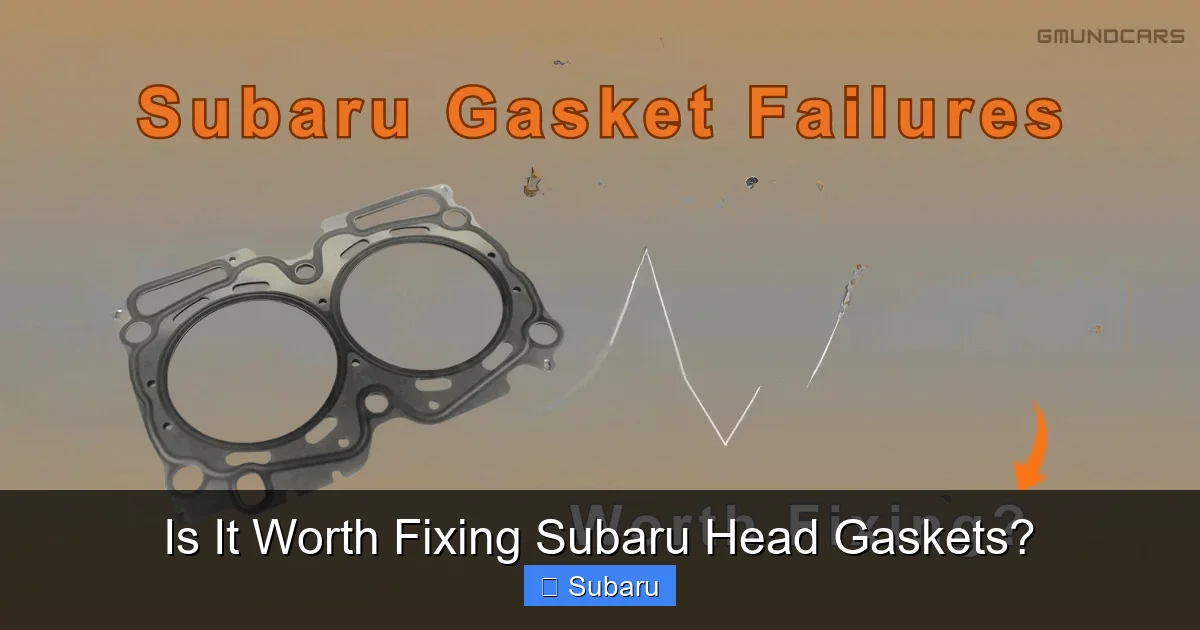
The head gasket sits between the engine block and the cylinder head, sealing the combustion chambers, coolant passages, and oil galleries. In most engines, this is a straightforward job. But in Subaru’s boxer engine, the cylinders lie flat, and the heads are bolted on from the sides. This design makes access more difficult and puts unique stress on the gaskets.
In early EJ25 engines, Subaru used a multi-layer steel (MLS) head gasket, but the design didn’t account for the thermal expansion differences between the aluminum cylinder heads and the cast-iron engine block. Over time, repeated heating and cooling cycles caused the gaskets to lose their seal—especially near the coolant passages at the rear of the engine.
Coolant and Maintenance Factors
Another major contributor to head gasket failure is improper coolant maintenance. Subaru recommends using a specific phosphate-free coolant (often labeled “Subaru Super Coolant” or equivalent). Many owners unknowingly use standard ethylene glycol coolant, which can react with the engine materials and accelerate gasket degradation.
Additionally, infrequent coolant changes—Subaru recommends every 30,000 miles or 3 years—can lead to corrosion and sludge buildup. This increases pressure in the cooling system and puts extra strain on the gaskets.
High Mileage and Age
While not every Subaru will suffer head gasket failure, the risk increases significantly after 100,000 miles—especially if the vehicle has seen harsh driving conditions, overheating episodes, or poor maintenance. Models from 1996 to 2011 are most at risk, though even some 2012 and newer models have reported issues.
Signs Your Subaru Has a Head Gasket Problem
Visual guide about Is It Worth Fixing Subaru Head Gaskets?
Image source: gmundcars.com
Catching a head gasket issue early can save you thousands in engine damage. Here are the most common symptoms to watch for:
White Smoke from the Exhaust
If you see thick, white smoke pouring from your tailpipe—especially when the engine is cold—it could mean coolant is leaking into the combustion chamber. This smoke often has a sweet smell (from burning coolant) and doesn’t dissipate quickly.
Coolant Loss Without Visible Leaks
You’re topping off the coolant reservoir frequently, but you can’t find any puddles under the car. This is a classic sign of an internal leak. The coolant is either burning in the engine or mixing with the oil.
Milky or Foamy Oil
Check your oil dipstick and oil filler cap. If the oil looks milky, frothy, or like a chocolate milkshake, coolant is mixing with the engine oil. This is a serious issue that can lead to engine bearing failure if not addressed.
Overheating Engine
A failing head gasket can allow combustion gases to enter the cooling system, causing air pockets and overheating. If your temperature gauge spikes frequently—even with sufficient coolant—it’s time for a closer look.
Bubbles in the Radiator or Overflow Tank
With the engine running and the radiator cap off (only when cool!), watch for bubbles in the coolant. This indicates combustion gases are escaping into the cooling system—a clear sign of a blown head gasket.
Reduced Engine Performance or Misfires
If coolant enters a combustion chamber, it can cause a misfire in that cylinder. You might notice rough idling, hesitation during acceleration, or a check engine light with codes like P0300 (random misfire).
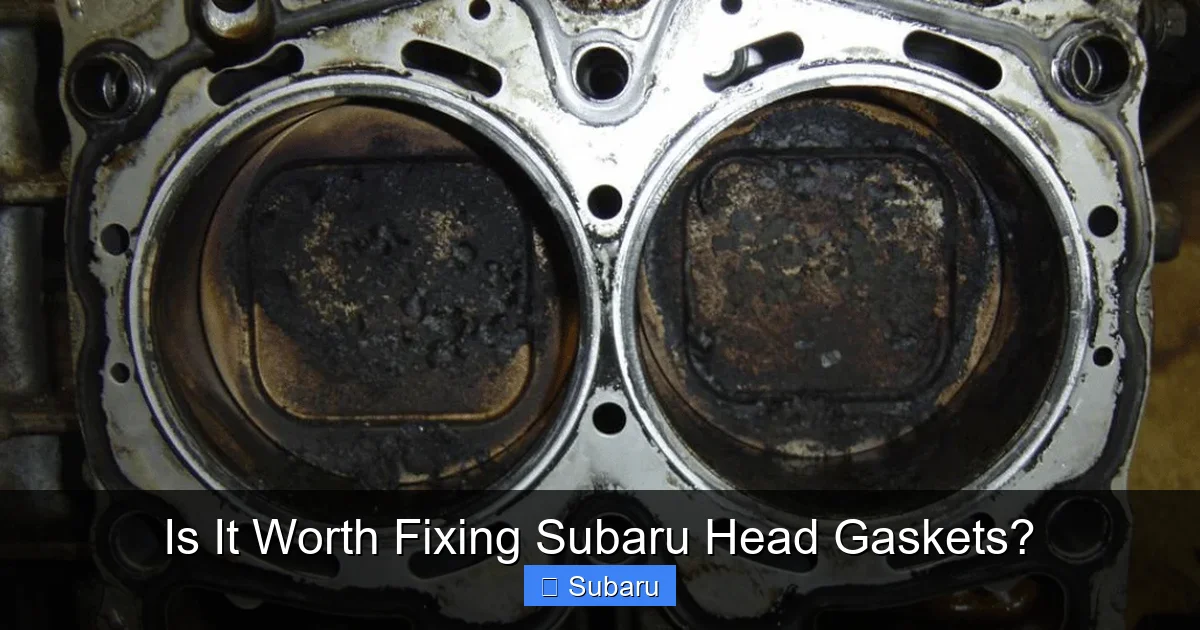
How Much Does It Cost to Fix Subaru Head Gaskets?
Visual guide about Is It Worth Fixing Subaru Head Gaskets?
Image source: gmundcars.com
This is the million-dollar question—literally. Head gasket repairs are not cheap, and Subaru’s boxer engine design makes the job especially labor-intensive.
Labor Costs
Because the engine lies flat and the heads are accessed from the sides, replacing head gaskets on a Subaru requires removing the entire engine or at least dropping it significantly. This means 10–15 hours of labor at most shops.
At an average labor rate of $100–$150 per hour, labor alone can cost $1,500–$2,250. Some independent Subaru specialists may charge slightly less, while dealerships often charge more.
Parts and Additional Repairs
The head gasket kit itself (including head bolts, valve cover gaskets, and intake gaskets) typically costs $200–$400. However, many mechanics recommend replacing related components during the repair to prevent future issues:
- Timing belt and water pump (if due)
- Thermostat
- Radiator hoses
- Coolant flush and refill
These additions can add $300–$600 to the total bill.
Total Repair Estimate
Most Subaru owners report paying between $1,800 and $3,500 for a complete head gasket repair. Prices vary based on location, shop rates, and whether you go to a dealership or an independent mechanic.
DIY vs. Professional Repair
Some experienced DIYers have tackled head gasket replacements themselves, saving thousands on labor. However, this is not a beginner project. It requires specialized tools, a clean workspace, and a solid understanding of engine mechanics. Mistakes can lead to warped heads, incorrect torque specs, or repeat failures.
If you’re considering DIY, invest in a factory service manual, use a torque wrench, and consider having the cylinder heads resurfaced at a machine shop.
Is It Worth the Investment?
Now for the big decision: should you spend $2,000+ to fix a head gasket on a high-mileage Subaru?
The answer depends on several factors.
Vehicle Condition and Mileage
If your Subaru has 150,000–200,000 miles but runs well otherwise—good transmission, solid suspension, minimal rust—it’s often worth repairing. Many Subarus go on to reach 250,000+ miles after a proper head gasket job.
On the other hand, if the car has major issues like transmission failure, frame rust, or chronic electrical problems, it may be time to let it go.
Resale Value
A Subaru with a known head gasket issue will sell for significantly less—often $1,500–$3,000 below market value. Fixing the problem can restore much of that value, especially if you provide documentation of the repair.
For example, a 2008 Outback with 180,000 miles might sell for $4,000 with a blown head gasket, but $6,500–$7,000 after repair.
Emotional and Practical Attachment
Many Subaru owners are loyal to their vehicles. If you’ve driven your car for years, replaced the timing belt, and kept up with maintenance, it may feel like family. In that case, the repair is often worth it for peace of mind and continued reliability.
Long-Term Ownership Plans
If you plan to keep the car for another 5–10 years, the repair makes financial sense. But if you’re looking to upgrade soon, it might be better to sell or trade in now—before the problem gets worse.
How to Prevent Future Head Gasket Issues
Once your Subaru is repaired, you’ll want to avoid a repeat failure. Here’s how:
Use the Right Coolant
Always use Subaru-approved coolant or an equivalent phosphate-free formula. Avoid mixing coolants, and never use plain water as a temporary fix.
Follow the Maintenance Schedule
Change the coolant every 30,000 miles or 3 years. Replace the thermostat and inspect hoses regularly.
Monitor Engine Temperature
Install an aftermarket temperature gauge or use an OBD2 scanner to keep an eye on coolant temps. Overheating is the #1 enemy of head gaskets.
Avoid Overloading or Towing in Heat
Subarus aren’t built for heavy towing. If you must tow, do it in cool weather and take frequent breaks to let the engine cool.
Consider Upgraded Gaskets
Some mechanics recommend using aftermarket head gaskets designed for durability, such as those from Fel-Pro or Cometic. These may offer better resistance to thermal stress.
To give you a better sense of what to expect, here are a few real-life experiences from Subaru owners who faced head gasket decisions.
Case 1: The 2005 Outback with 160,000 Miles
Sarah from Oregon noticed her Outback was losing coolant and had a slight misfire. A compression test confirmed a head gasket leak. She paid $2,400 at a local Subaru specialist to replace both head gaskets, timing belt, and water pump. Three years later, the car has 210,000 miles and runs smoothly. “It was a tough decision,” she says, “but I love this car. It’s like new again.”
Case 2: The 2001 Forester with 190,000 Miles
Mike from Michigan found milky oil and decided to DIY the repair. He spent $600 on parts and 40 hours of work. He had the heads resurfaced and used ARP head bolts for extra strength. The car now has 230,000 miles and no issues. “It was hard, but I saved $2,000 and learned a lot.”
Case 3: The 2008 Impreza with 140,000 Miles
Jen noticed white smoke and took her car to the dealer. The quote was $3,800. She traded it in instead, losing $2,500 on value. “I didn’t want the hassle,” she says. “But I wish I’d fixed it—my friend did the same repair for $2,100 and still drives hers daily.”
These stories show that the decision isn’t black and white. It depends on your budget, skills, and attachment to the vehicle.
Conclusion: Make the Right Choice for You
So, is it worth fixing Subaru head gaskets? For many owners, the answer is a resounding yes—especially if the car is otherwise in good shape and you plan to keep it for years to come. While the repair is expensive and time-consuming, it can extend your Subaru’s life by hundreds of thousands of miles and save you from buying a new car.
The key is early detection, quality repairs, and ongoing maintenance. Don’t ignore the warning signs. Get a proper diagnosis from a trusted mechanic, weigh the costs against the car’s value, and consider your long-term goals.
Subarus are known for their durability, all-wheel drive capability, and loyal following. With the right care—and a well-done head gasket repair—your Subaru can keep taking you on adventures for many more years.
Frequently Asked Questions
How long do Subaru head gaskets last?
Most Subaru head gaskets last 100,000–150,000 miles, but failure can occur earlier due to poor maintenance or overheating. Some models from 1996–2011 are especially prone to early failure.
Can you drive with a blown head gasket?
You can drive short distances, but it’s not recommended. Coolant loss, overheating, and oil contamination can cause serious engine damage within days or even hours.
Will Subaru fix head gaskets under warranty?
Most head gasket failures occur outside the factory warranty period. However, Subaru extended the warranty on certain 2009–2011 models to 8 years/100,000 miles for this issue—check your VIN on Subaru’s website.
Can a head gasket be repaired without replacing it?
There are sealant products that claim to fix minor leaks, but they’re not reliable for Subaru head gaskets. A full replacement is the only long-term solution.
Do all Subarus have head gasket problems?
No—many Subarus go their entire lives without issues. But the EJ25 engine in models from 1996–2011 has a higher failure rate than average, so vigilance is key.
Is it better to replace both head gaskets at once?
Yes. If one side has failed, the other is likely close behind. Replacing both during the same repair saves labor costs and prevents future breakdowns.