
Is It Legal to Sell a Car Without a Catalytic Converter
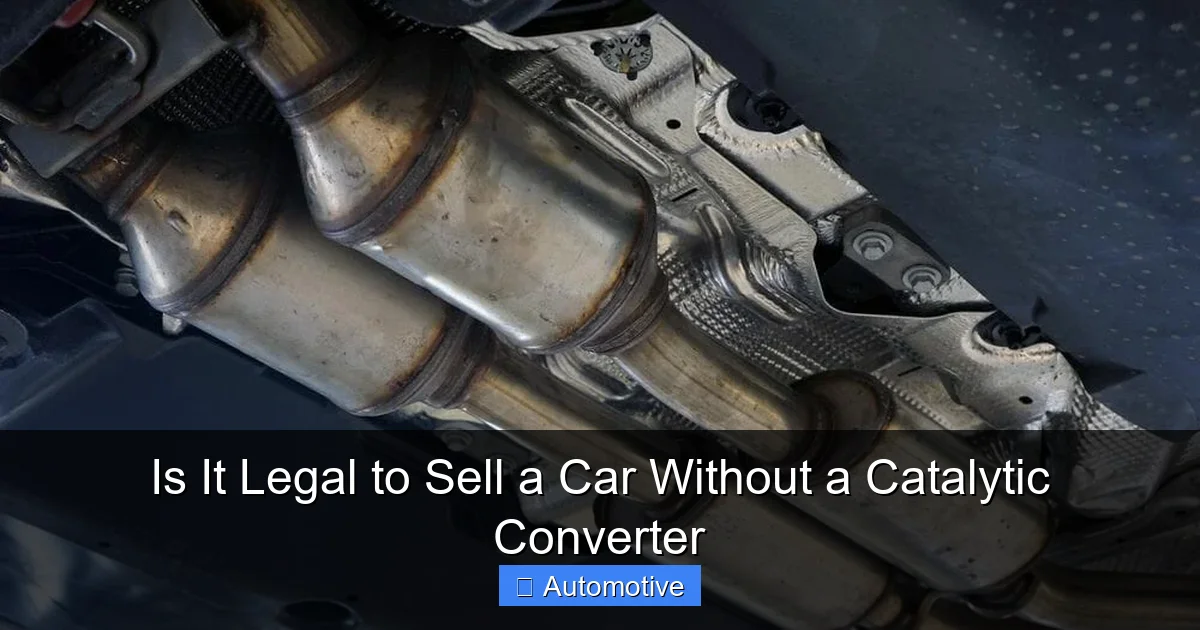
Selling a car without a catalytic converter is illegal in most U.S. states and many countries due to strict emissions laws. Removing or tampering with this emissions control device violates federal and state regulations, and doing so before a sale can result in hefty fines, failed inspections, and legal liability.
In This Article
- 1 Key Takeaways
- 2 📑 Table of Contents
- 3 Understanding the Catalytic Converter and Its Role
- 4 Federal Laws Governing Catalytic Converters
- 5 State and Local Regulations: What You Need to Know
- 6 Legal Consequences of Selling a Car Without a Catalytic Converter
- 7 Exceptions and Special Cases
- 8 Environmental and Health Impacts of Removing Catalytic Converters
- 9 What to Do If Your Catalytic Converter Is Stolen
- 10 Tips for Selling a Car Legally and Responsibly
- 11 Conclusion
- 12 Frequently Asked Questions
- 12.1 Is it illegal to sell a car without a catalytic converter in all states?
- 12.2 Can I sell a car with a stolen catalytic converter?
- 12.3 Are there any vehicles exempt from having a catalytic converter?
- 12.4 What happens if I get caught selling a car without a catalytic converter?
- 12.5 Can I install an aftermarket catalytic converter when selling a car?
- 12.6 How can I protect my catalytic converter from theft?
Key Takeaways
- Federal law prohibits tampering with emissions equipment: The Clean Air Act makes it illegal to remove or disable a catalytic converter on any vehicle used on public roads.
- State laws often mirror or exceed federal standards: Most states require functioning catalytic converters and perform emissions testing during vehicle registration or sale.
- Selling a car without a catalytic converter can lead to legal consequences: Sellers may face fines, lawsuits, or be required to reinstall the part before the sale is finalized.
- Buyers are also at risk: Purchasing a vehicle without a catalytic converter may result in registration denial, inspection failure, or future repair costs.
- Exceptions exist for off-road or classic vehicles: Some states allow removal on vehicles not driven on public roads, such as race cars or pre-1975 models.
- Environmental impact is significant: Catalytic converters reduce harmful emissions like carbon monoxide, nitrogen oxides, and hydrocarbons.
- Always verify local regulations before selling or modifying a vehicle: Laws vary by state and municipality, so consulting your DMV or environmental agency is essential.
📑 Table of Contents
- Understanding the Catalytic Converter and Its Role
- Federal Laws Governing Catalytic Converters
- State and Local Regulations: What You Need to Know
- Legal Consequences of Selling a Car Without a Catalytic Converter
- Exceptions and Special Cases
- Environmental and Health Impacts of Removing Catalytic Converters
- What to Do If Your Catalytic Converter Is Stolen
- Tips for Selling a Car Legally and Responsibly
- Conclusion
Understanding the Catalytic Converter and Its Role
The catalytic converter is one of the most important—and often misunderstood—components in a modern vehicle. Nestled in the exhaust system, usually between the engine and the muffler, this small but powerful device plays a critical role in reducing harmful emissions. It works by converting toxic gases produced during combustion—such as carbon monoxide, nitrogen oxides, and unburned hydrocarbons—into less harmful substances like carbon dioxide, nitrogen, and water vapor.
Without a catalytic converter, a car’s exhaust would release significantly higher levels of pollutants into the atmosphere. This not only contributes to air pollution and smog but also poses serious health risks, including respiratory issues and increased cancer risk. That’s why catalytic converters have been mandatory on all gasoline-powered vehicles in the United States since 1975, following the passage of the Clean Air Act.
But beyond its environmental benefits, the catalytic converter has become a target for theft due to the precious metals it contains—platinum, palladium, and rhodium. These metals can fetch hundreds or even thousands of dollars on the scrap market, making vehicles with intact converters prime targets. Unfortunately, this has led some individuals to consider removing the converter before selling a car, either to sell the part separately or to avoid the hassle of replacing a stolen one.
However, removing a catalytic converter isn’t just a matter of convenience or profit—it’s a legal issue with serious consequences. Whether you’re a private seller or a dealership, selling a car without a catalytic converter can land you in hot water with both federal and state authorities.
Federal Laws Governing Catalytic Converters
Visual guide about Is It Legal to Sell a Car Without a Catalytic Converter
Image source: vehiclefreak.com
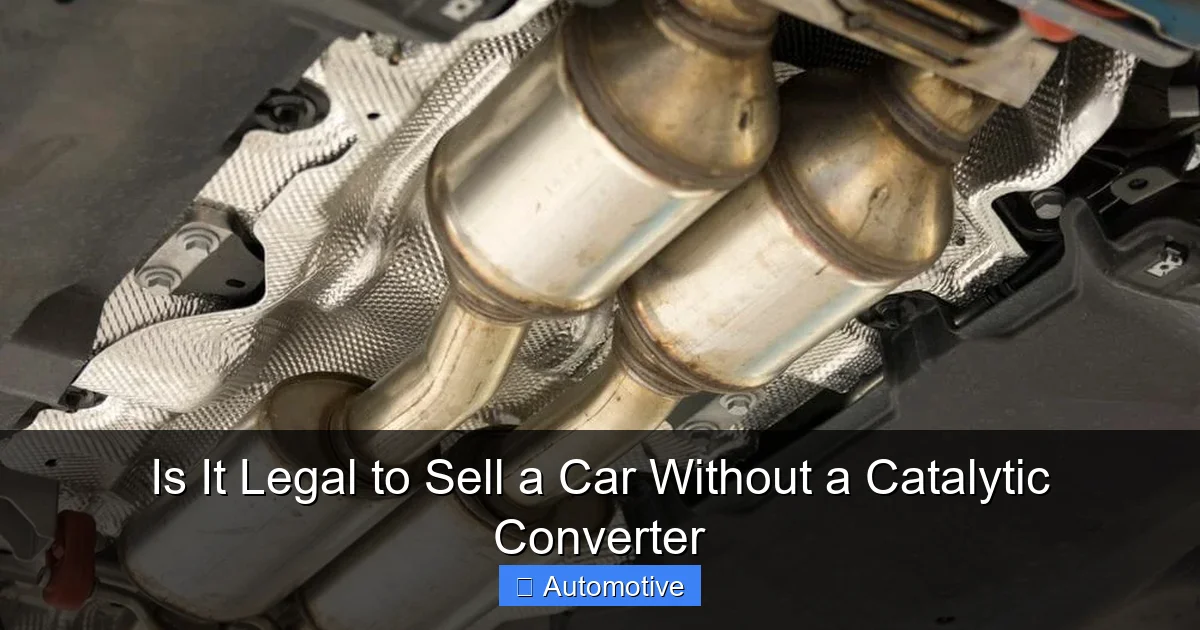
At the federal level, the legality of selling a car without a catalytic converter is governed primarily by the Clean Air Act, enforced by the Environmental Protection Agency (EPA). This landmark legislation, first passed in 1970 and strengthened in subsequent amendments, gives the EPA the authority to regulate air pollution from motor vehicles.
Under Section 203(a)(3) of the Clean Air Act, it is illegal to:
– Remove or render inoperative any device or element of design installed on a motor vehicle to comply with emissions standards.
– Sell, offer for sale, or install any part that bypasses, defeats, or renders inoperative any emissions control device.
This means that removing a catalytic converter—even if the car still runs—is a direct violation of federal law. The law applies to all vehicles manufactured after 1974, and it doesn’t matter whether the vehicle is new or used, privately owned or sold by a dealer.
The EPA takes these violations seriously. Penalties for tampering with emissions equipment can include fines of up to $4,819 per violation (as of 2023, adjusted for inflation), and in some cases, criminal charges may apply. While the EPA typically focuses on manufacturers and large-scale violators, individual sellers are not immune—especially if the violation is part of a pattern or involves fraudulent activity.
One common misconception is that the law only applies to vehicles currently registered or driven on public roads. However, the Clean Air Act also covers vehicles that are sold or offered for sale, regardless of their current registration status. So even if a car is sitting in a driveway and not being driven, removing the catalytic converter before listing it for sale is still illegal.
State and Local Regulations: What You Need to Know
Visual guide about Is It Legal to Sell a Car Without a Catalytic Converter
Image source: cdn.shopify.com
While federal law sets the baseline, state and local regulations often go even further in restricting the removal or sale of vehicles without catalytic converters. Most states have adopted their own emissions standards and inspection programs that require vehicles to have functioning emissions control systems—including catalytic converters—at the time of sale or registration.
For example, in California—a state known for its strict environmental policies—the California Air Resources Board (CARB) enforces some of the toughest emissions laws in the country. Under California law, it is illegal to sell, offer for sale, or install a vehicle or part that does not meet CARB standards. This includes vehicles missing catalytic converters or equipped with aftermarket parts that haven’t been certified.
Other states with robust emissions testing programs—such as New York, New Jersey, Illinois, and Colorado—also require vehicles to pass smog checks before they can be registered or sold. These inspections typically include a visual check for the presence and condition of the catalytic converter. If the converter is missing or appears to have been tampered with, the vehicle will fail inspection, and the seller may be required to repair it before the sale can proceed.
Even in states without mandatory smog checks, many still have laws that mirror federal regulations. For instance, Texas prohibits the removal of emissions control devices on vehicles used on public roads, and selling a car without a catalytic converter could result in a citation or fine.
It’s also important to note that local jurisdictions—such as counties or cities—may have additional rules. Some areas require emissions testing for used car sales, while others impose stricter penalties for tampering. Always check with your local Department of Motor Vehicles (DMV) or environmental agency to understand the specific requirements in your area.
Legal Consequences of Selling a Car Without a Catalytic Converter
Visual guide about Is It Legal to Sell a Car Without a Catalytic Converter
Image source: media.king5.com
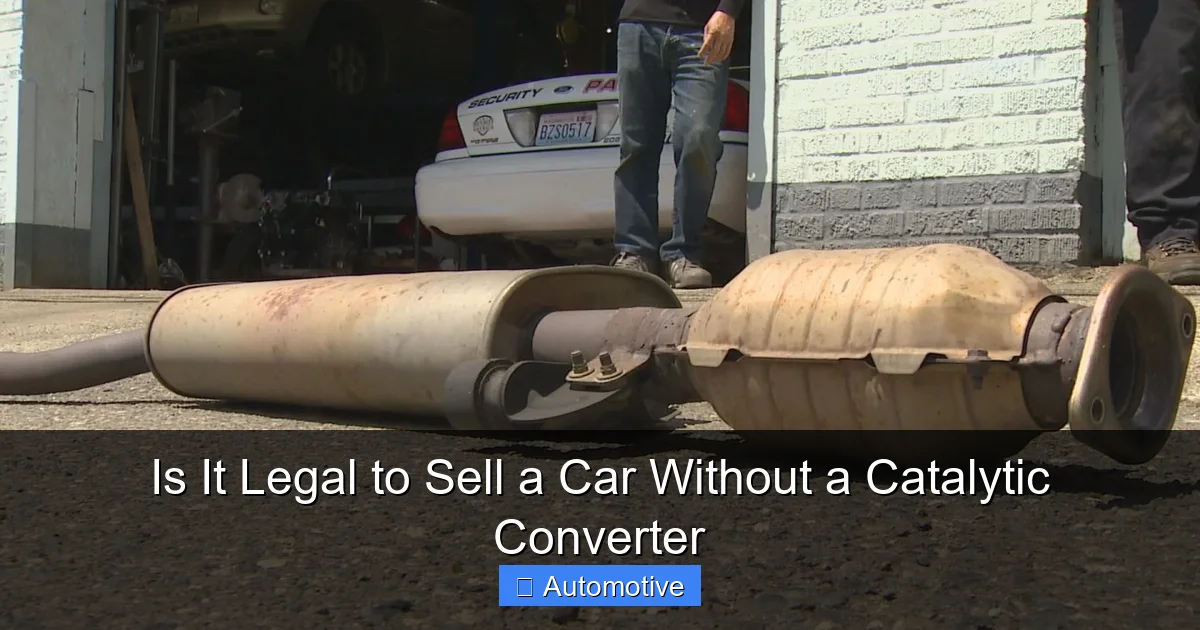
The legal risks of selling a car without a catalytic converter go beyond just failing an inspection. Depending on the circumstances, sellers can face civil penalties, criminal charges, and even lawsuits from buyers.
One of the most immediate consequences is that the buyer may be unable to register the vehicle. In states with emissions testing, a missing catalytic converter will cause the car to fail inspection, and the buyer will be required to install a new one—often at significant cost. If the seller didn’t disclose the missing part, the buyer may have grounds for a legal claim based on fraud or misrepresentation.
In some cases, buyers have successfully sued sellers for the cost of replacing a stolen or removed catalytic converter, especially if the seller knew about the issue and failed to disclose it. For example, a 2021 case in Florida resulted in a private seller being ordered to pay over $2,000 to the buyer after the car failed emissions testing due to a missing converter.
Dealerships face even greater scrutiny. Automotive dealers are held to higher standards under both federal and state laws, and selling a vehicle without a catalytic converter can result in license suspension, fines, or even criminal charges. The Federal Trade Commission (FTC) also monitors deceptive sales practices, and failing to disclose a missing emissions device could be considered a violation of consumer protection laws.
Additionally, if a vehicle without a catalytic converter is involved in an accident or contributes to air pollution, the seller could potentially be held liable—especially if they knowingly sold a non-compliant vehicle. While this is rare, it underscores the seriousness of tampering with emissions equipment.
Exceptions and Special Cases
While the general rule is that catalytic converters must remain installed, there are a few narrow exceptions where removal may be legal—though these are highly specific and often misunderstood.
One common exception applies to vehicles that are not intended for use on public roads. For example, race cars, off-road vehicles, and agricultural equipment may be exempt from emissions requirements in certain states. However, even in these cases, the vehicle must be clearly labeled and never driven on public highways. If the vehicle is later sold for street use, the catalytic converter must be reinstalled.
Another exception involves older vehicles. In some states, cars manufactured before 1975 are exempt from emissions testing and may not require a catalytic converter. However, this varies widely by location. For instance, California requires all vehicles—regardless of age—to have a functioning catalytic converter if they are driven on public roads. In contrast, states like Arizona may allow pre-1975 vehicles to operate without one.
There are also limited circumstances where a catalytic converter can be legally replaced with an aftermarket part, but only if it is EPA- or CARB-certified. These replacement converters must meet the same emissions standards as the original and are typically more expensive than universal or uncertified parts. Installing an uncertified or “delete” pipe in place of a converter is illegal in all 50 states.
It’s also worth noting that some hybrid or electric vehicles may not have traditional catalytic converters, but this doesn’t mean they’re exempt from emissions laws. These vehicles are designed to meet strict emissions standards through other means, and tampering with their systems is still prohibited.
Environmental and Health Impacts of Removing Catalytic Converters
Beyond the legal implications, removing a catalytic converter has serious environmental and public health consequences. The device is a key component in reducing the amount of harmful pollutants released into the air.
Without a catalytic converter, a single vehicle can emit up to:
– 90% more carbon monoxide—a colorless, odorless gas that can be fatal in high concentrations.
– 50% more nitrogen oxides—which contribute to smog, acid rain, and respiratory diseases.
– 40% more hydrocarbons—unburned fuel that forms ground-level ozone and can trigger asthma and other lung conditions.
Collectively, these pollutants contribute to poor air quality, especially in urban areas. According to the EPA, transportation is one of the largest sources of air pollution in the United States, and catalytic converters have prevented billions of tons of harmful emissions since their introduction.
Removing converters also undermines decades of progress in improving air quality. Cities like Los Angeles, which once suffered from severe smog, have seen dramatic improvements thanks in part to stricter emissions standards and the widespread use of catalytic converters. Reversing this progress by removing these devices harms public health and the environment.
Moreover, the increase in catalytic converter thefts has led some to consider removal as a preventive measure. While it’s understandable to want to protect your vehicle, removing the converter doesn’t eliminate the risk—it just makes the car non-compliant and harder to sell legally. Instead, owners are encouraged to take preventive steps such as parking in well-lit areas, installing security devices, or engraving the VIN on the converter to deter thieves.
What to Do If Your Catalytic Converter Is Stolen
If your catalytic converter has been stolen, it’s important to act quickly and legally. The first step is to report the theft to local law enforcement and your insurance company. Many comprehensive auto insurance policies cover catalytic converter theft, so you may be able to file a claim to cover the cost of replacement.
When replacing the converter, make sure to use an EPA- or CARB-certified part. This ensures the vehicle remains compliant with emissions laws and will pass inspection. Avoid using universal or uncertified converters, as they may not meet legal standards and could lead to fines or registration issues.
If you’re planning to sell the vehicle, be transparent with potential buyers about the theft and the replacement. Providing documentation—such as a police report, insurance claim, and receipt for the new converter—can help build trust and avoid legal issues.
In some cases, you may be eligible for financial assistance. Some states and local governments offer rebates or low-cost replacement programs for victims of catalytic converter theft, especially for low-income drivers or essential workers. Check with your state’s environmental or transportation agency to see if such programs are available.
Tips for Selling a Car Legally and Responsibly
Whether you’re selling a car privately or through a dealership, it’s essential to ensure the vehicle is in compliance with all emissions laws. Here are some practical tips to help you sell your car legally and avoid trouble:
– Never remove the catalytic converter before selling: Even if it’s damaged or stolen, the vehicle must have a functioning converter to be sold legally in most cases.
– Disclose any issues upfront: If the converter was recently replaced or repaired, let buyers know. Transparency builds trust and reduces the risk of legal disputes.
– Check your state’s emissions requirements: Visit your DMV or environmental agency website to understand the rules for vehicle sales in your area.
– Get a pre-sale inspection: Having a mechanic inspect the vehicle can help identify any issues—including emissions problems—before listing it for sale.
– Keep records of repairs and replacements: Documentation can protect you in case of disputes and help the buyer register the vehicle.
– Avoid aftermarket “delete” kits: These are illegal and will cause the vehicle to fail inspection. Only use certified replacement parts.
By following these guidelines, you can sell your car with confidence, knowing you’re complying with the law and protecting the environment.
Conclusion
Selling a car without a catalytic converter is not only illegal in most jurisdictions—it’s also harmful to public health and the environment. Federal and state laws are clear: tampering with or removing emissions control devices like catalytic converters violates the Clean Air Act and can result in significant fines, legal liability, and registration problems.
While the rise in catalytic converter thefts has created challenges for vehicle owners, the solution is not to remove the part but to take preventive measures and follow the law. Whether you’re buying or selling a car, always ensure the vehicle has a functioning catalytic converter and meets all emissions standards.
By understanding the rules and acting responsibly, you can help protect air quality, avoid legal trouble, and ensure a smooth transaction for everyone involved.
Frequently Asked Questions
Is it illegal to sell a car without a catalytic converter in all states?
Yes, in most states it is illegal to sell a car without a catalytic converter due to federal and state emissions laws. Even in states without mandatory smog checks, federal law prohibits tampering with emissions equipment.
Can I sell a car with a stolen catalytic converter?
You can sell the car, but only after replacing the stolen converter with a legal, certified part. Selling a vehicle with a missing converter violates emissions laws and may prevent the buyer from registering the car.
Are there any vehicles exempt from having a catalytic converter?
Some off-road vehicles, race cars, and pre-1975 models may be exempt in certain states, but only if they are not driven on public roads. Always check local regulations before removing a converter.
What happens if I get caught selling a car without a catalytic converter?
You could face fines, be required to repair the vehicle, or even face legal action from the buyer. Dealerships may also lose their license for repeated violations.
Can I install an aftermarket catalytic converter when selling a car?
Yes, but only if it is EPA- or CARB-certified. Uncertified or “universal” converters are illegal and will cause the vehicle to fail emissions testing.
How can I protect my catalytic converter from theft?
Park in well-lit areas, install a security device or shield, and consider engraving your VIN on the converter. Some insurance policies also cover theft, so check your coverage.




![Window Tinting Laws in Virginia [Updated, 2023] What Every Driver Needs to Know Before Hitting the Road](https://aautomotives.com/wp-content/uploads/2025/10/Window-Tinting-Laws-in-Virginia-Updated-2023-What-Every-Driver-Needs-to-Know-Before-Hitting-the-Road-768x412.jpg "Window Tinting Laws in Virginia [Updated, 2023]: What Every Driver Needs to Know Before Hitting the Road 10")