Is a Car Battery Agm
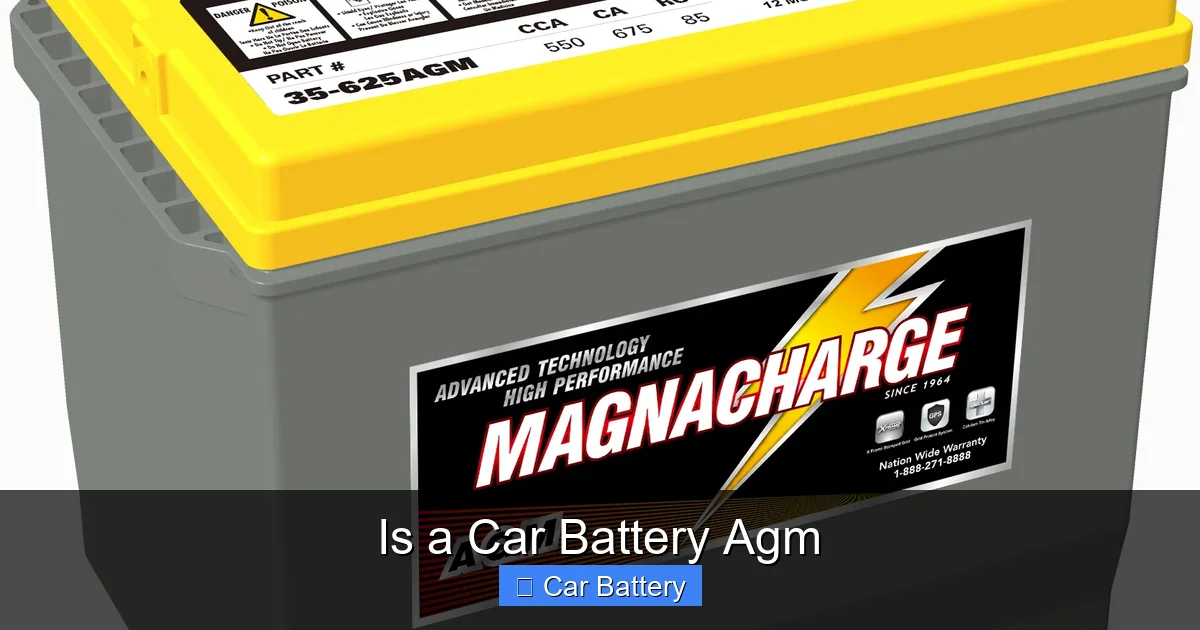
An AGM (Absorbent Glass Mat) car battery is a type of sealed lead-acid battery that offers superior performance, durability, and reliability compared to traditional flooded batteries. These batteries are commonly found in modern vehicles with start-stop technology and advanced electronics.
In This Article
- 1 Key Takeaways
- 2 📑 Table of Contents
- 3 Is a Car Battery AGM? Understanding the Basics
- 4 What Is an AGM Battery?
- 5 How to Tell If Your Car Battery Is AGM
- 6 Benefits of AGM Car Batteries
- 7 AGM Battery Maintenance and Care
- 8 When to Replace an AGM Battery
- 9 Conclusion: Is a Car Battery AGM? The Bottom Line
- 10 Frequently Asked Questions
Key Takeaways
- AGM stands for Absorbent Glass Mat: This technology uses fiberglass mats to hold electrolyte, making the battery spill-proof and maintenance-free.
- Higher performance and efficiency: AGM batteries deliver more consistent power, faster recharge rates, and better performance in extreme temperatures.
- Designed for modern vehicles: Many cars with start-stop systems, regenerative braking, and high electrical demands require AGM batteries.
- Longer lifespan: AGM batteries typically last 3–5 years, often longer than traditional flooded batteries under similar conditions.
- Not all cars need AGM: Older vehicles without advanced electronics may run fine on standard flooded batteries.
- Higher cost, but worth it: AGM batteries cost more upfront but offer better long-term value due to durability and performance.
- Proper charging is essential: AGM batteries require compatible chargers and voltage settings to avoid damage.
📑 Table of Contents
Is a Car Battery AGM? Understanding the Basics
If you’ve ever popped the hood of your car and noticed a battery labeled “AGM” or “Absorbent Glass Mat,” you might be wondering—what does that even mean? And more importantly, does it matter for your vehicle? The short answer is yes, it absolutely does.
AGM batteries are a modern advancement in automotive battery technology, designed to meet the growing electrical demands of today’s vehicles. Unlike traditional flooded lead-acid batteries, which use liquid electrolyte, AGM batteries use a special fiberglass mat to absorb and hold the electrolyte in place. This design makes them spill-proof, vibration-resistant, and far more efficient.
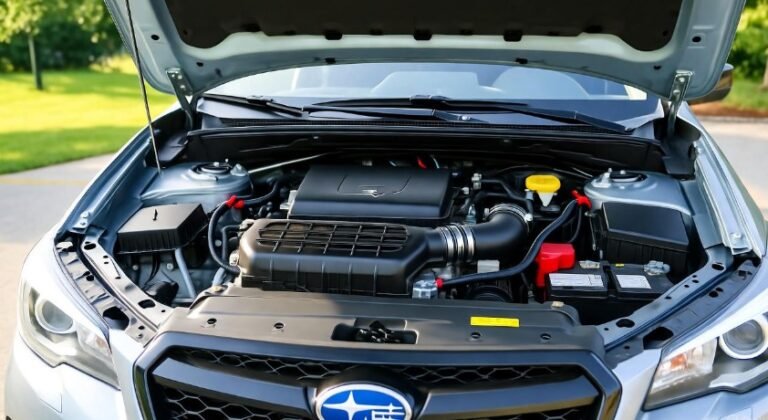
But how do you know if your car battery is AGM? It’s not always obvious just by looking at it. Some batteries have “AGM” printed right on the label, while others might be labeled as “sealed,” “maintenance-free,” or “valve-regulated.” The best way to confirm is to check your owner’s manual or consult a trusted mechanic. If your car has features like start-stop technology, advanced infotainment systems, or regenerative braking, there’s a good chance it uses an AGM battery.
What Is an AGM Battery?
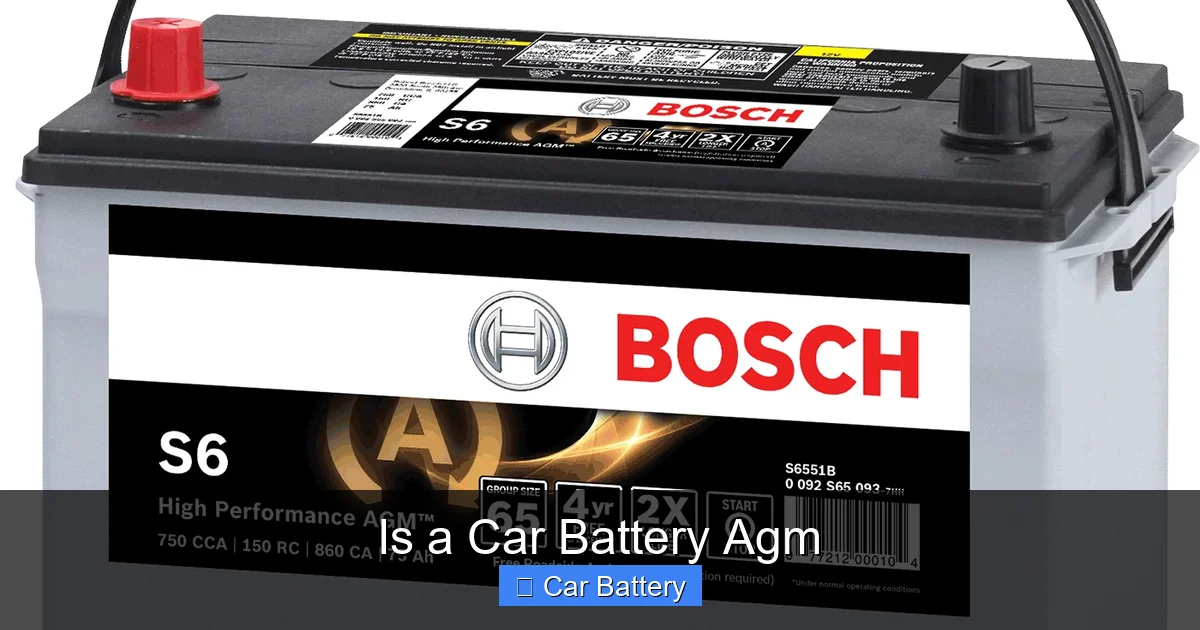
Visual guide about Is a Car Battery Agm
Image source: carbatteryworld.com
To truly understand whether your car battery is AGM, it helps to know what makes AGM batteries different. Let’s break it down.
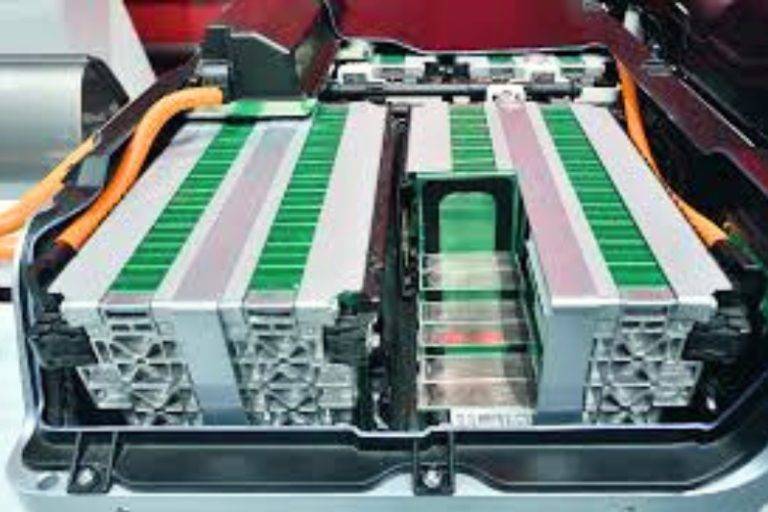
An AGM battery is a type of valve-regulated lead-acid (VRLA) battery. The key innovation is the use of absorbent glass mats—thin, woven fiberglass mats—placed between the lead plates inside the battery. These mats are soaked in electrolyte (a mixture of sulfuric acid and water), but unlike in flooded batteries, the liquid doesn’t slosh around. Instead, it’s held tightly in the mats, creating a “dry” cell that’s sealed and maintenance-free.
This design offers several advantages. First, because the electrolyte is immobilized, AGM batteries are completely spill-proof. You can mount them in almost any position, which gives automakers more flexibility in vehicle design. Second, the tight packing of plates and mats allows for lower internal resistance, meaning the battery can deliver higher bursts of power—perfect for starting engines in cold weather or powering high-drain electronics.
AGM batteries also recharge faster than flooded batteries. They can accept a charge up to five times faster, which is especially useful in vehicles with start-stop systems that frequently turn the engine on and off. Additionally, AGM batteries are more resistant to vibration and shock, making them ideal for off-road vehicles or rough driving conditions.
How AGM Differs from Other Battery Types
Not all car batteries are created equal. To understand why AGM stands out, it’s helpful to compare it to other common types: flooded (wet) batteries and gel batteries.
Flooded batteries are the most common and least expensive type. They contain liquid electrolyte that can spill if the battery is tipped or damaged. They require periodic maintenance, like checking water levels and cleaning terminals. While they work fine for basic vehicles, they’re not ideal for modern cars with high electrical loads.
Gel batteries, another type of VRLA battery, use a silica-based gel to immobilize the electrolyte. They’re also sealed and maintenance-free, but they’re more sensitive to overcharging and don’t perform as well in high-current applications. AGM batteries, by contrast, handle high power demands better and are less prone to damage from improper charging.
In short, AGM batteries strike the perfect balance between performance, durability, and reliability—making them the go-to choice for many modern vehicles.
How to Tell If Your Car Battery Is AGM
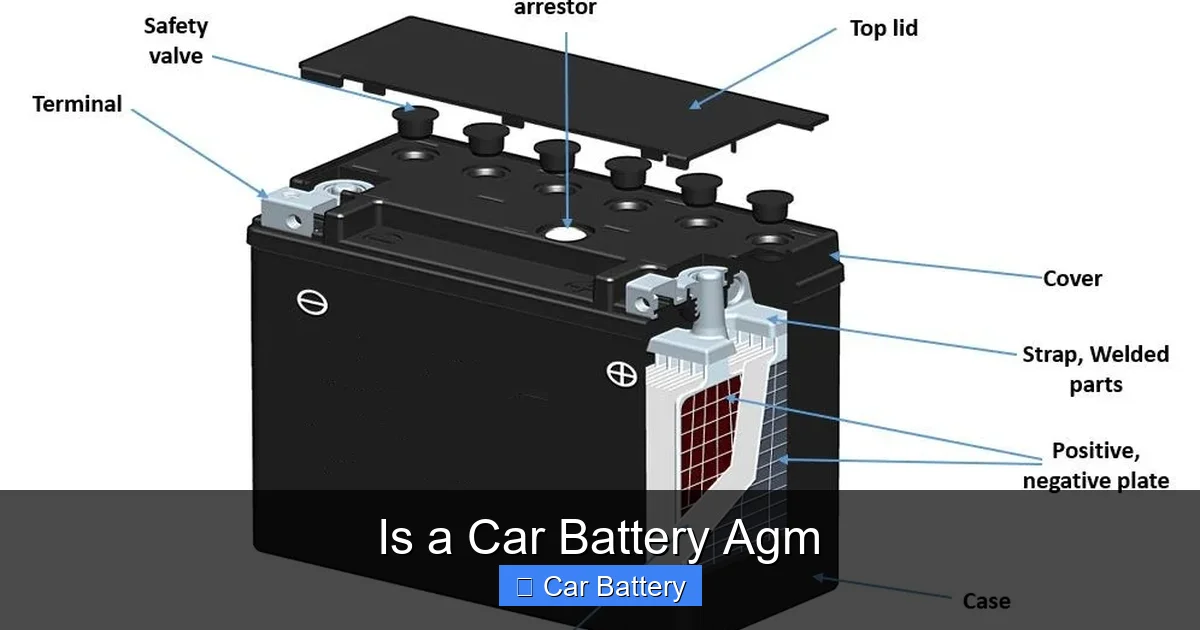
Visual guide about Is a Car Battery Agm
Image source: bravabatteries.com
So, how can you be sure whether your car battery is AGM? There are several ways to identify it, both visually and through documentation.
First, check the battery label. Most AGM batteries will have “AGM,” “Absorbent Glass Mat,” or “VRLA” printed somewhere on the casing. Some manufacturers use terms like “Enhanced Flooded Battery” (EFB), which is a step up from standard flooded but not quite AGM—common in entry-level start-stop vehicles.
Next, look at the battery’s physical design. AGM batteries are typically sealed with no removable caps. If you see caps that can be unscrewed to check water levels, it’s likely a flooded battery. AGM batteries also tend to be heavier for their size due to the dense internal construction.
Another clue is your vehicle’s features. If your car has start-stop technology (the engine shuts off at red lights to save fuel), it almost certainly uses an AGM or EFB battery. The same goes for vehicles with advanced driver assistance systems (ADAS), premium audio systems, or multiple USB ports and screens. These features draw a lot of power, and AGM batteries are better equipped to handle the load.
You can also consult your owner’s manual. It will specify the recommended battery type, including whether an AGM is required. If you’re still unsure, a quick call to your dealership or a visit to a trusted auto parts store can clear things up.
What Happens If You Put the Wrong Battery Type?
Using the wrong battery type—especially putting a flooded battery in a car designed for AGM—can cause serious problems. Modern vehicles with start-stop systems rely on AGM batteries to handle frequent engine restarts and rapid recharging. A standard flooded battery may not recharge quickly enough, leading to premature failure.
In some cases, the car’s onboard computer may detect the mismatch and disable certain features, like start-stop or regenerative braking. This not only reduces fuel efficiency but can also trigger warning lights on your dashboard.
Worse, using an incompatible battery can strain the alternator and electrical system, potentially leading to costly repairs. That’s why it’s crucial to use the correct battery type as specified by the manufacturer.
Benefits of AGM Car Batteries
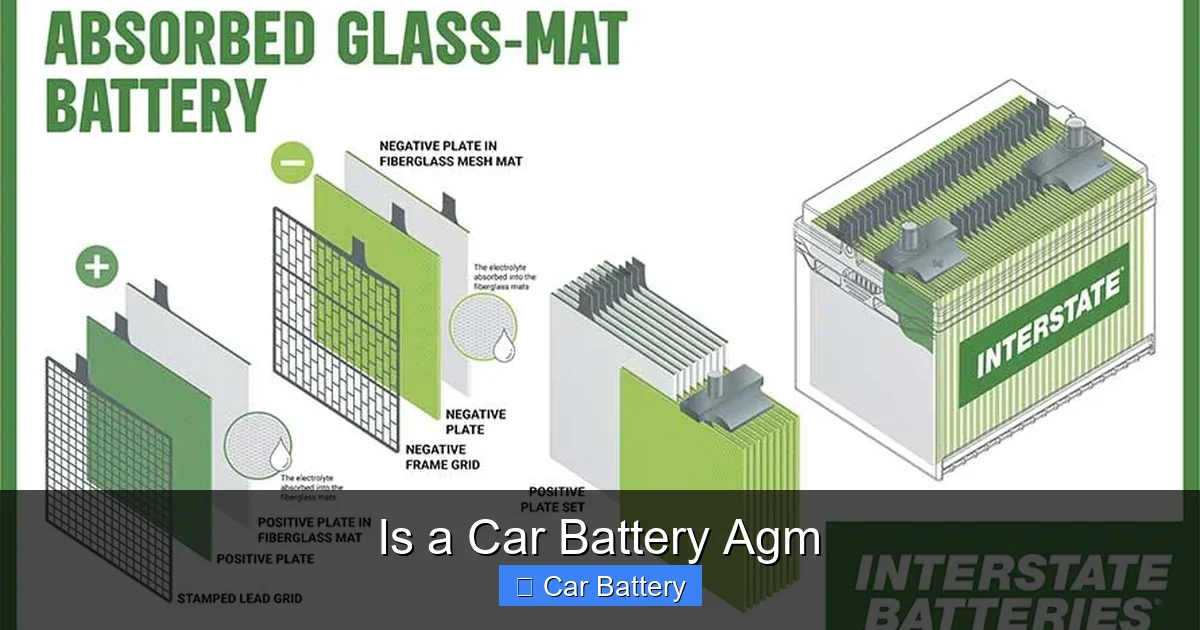
Visual guide about Is a Car Battery Agm
Image source: interstatebatteries.com
Now that you know how to identify an AGM battery, let’s talk about why they’re worth considering—even if your current car doesn’t require one.
One of the biggest advantages of AGM batteries is their superior performance. Thanks to their low internal resistance, they can deliver high cranking power, even in cold weather. This makes them ideal for drivers in colder climates who need reliable starts on winter mornings.
AGM batteries also have a longer lifespan than flooded batteries. While a typical flooded battery lasts 3–4 years, an AGM can last 4–6 years with proper care. This is due to their resistance to sulfation—a common cause of battery failure where lead sulfate crystals build up on the plates. AGM batteries are less prone to this because of their efficient charging and discharging cycles.
Another benefit is their deep-cycle capability. Unlike flooded batteries, which are designed for short bursts of power, AGM batteries can handle repeated deep discharges without significant damage. This makes them popular in RVs, boats, and vehicles with aftermarket electronics like sound systems or winches.
AGM Batteries and Start-Stop Technology
Start-stop systems are becoming standard in many new cars. These systems automatically shut off the engine when the car is idling (like at a traffic light) and restart it when you press the accelerator. While this saves fuel and reduces emissions, it puts extra strain on the battery.
AGM batteries are uniquely suited for this role. They can handle hundreds of thousands of charge-discharge cycles, making them perfect for the frequent restarts. In fact, many automakers specify AGM batteries for start-stop vehicles because flooded batteries simply can’t keep up.
If you drive a car with start-stop and your battery dies, replacing it with a standard flooded battery could cause the system to malfunction or disable entirely. Always check your owner’s manual before making a replacement.
AGM Battery Maintenance and Care
One of the great things about AGM batteries is that they’re maintenance-free. You don’t need to check water levels or top off electrolyte like you would with a flooded battery. However, that doesn’t mean you can ignore them completely.
Proper charging is essential for AGM batteries. They require a specific charging voltage—typically between 14.4 and 14.8 volts—to recharge efficiently without overheating. Using a standard charger designed for flooded batteries can undercharge or overcharge an AGM, reducing its lifespan.
Invest in a smart charger with an AGM mode. These chargers automatically adjust the voltage and current to match the battery’s needs. They’re especially useful if you store your car for long periods, like over winter.
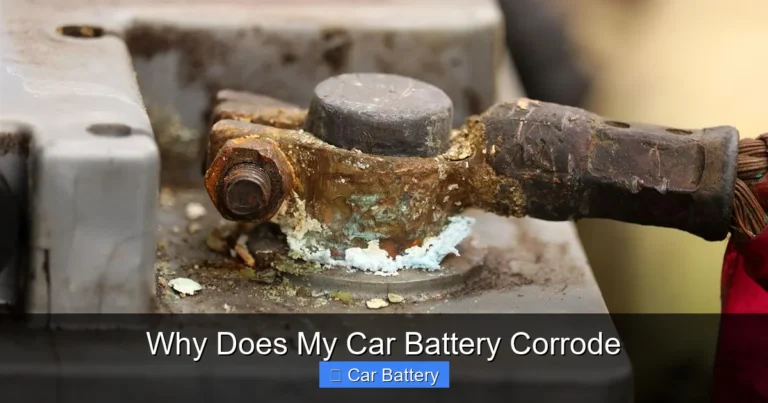
Keep the battery clean and secure. Dirt and corrosion on the terminals can interfere with electrical connections. Use a wire brush and baking soda solution to clean terminals, and apply a thin layer of dielectric grease to prevent future corrosion.
Also, avoid deep discharges whenever possible. While AGM batteries are more tolerant of deep cycles than flooded batteries, frequent deep discharges can still shorten their life. If your car sits unused for weeks, consider using a trickle charger or battery maintainer to keep it topped up.
Can You Jump-Start an AGM Battery?
Yes, you can jump-start an AGM battery just like any other car battery. However, there are a few precautions to take.
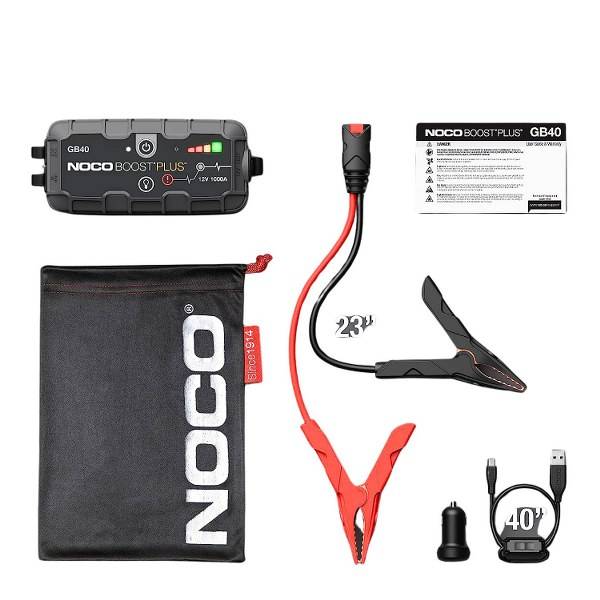
Use a compatible jump starter or another vehicle with a similar or higher voltage system. Avoid using a high-output jump starter unless it has an AGM mode, as excessive current can damage the battery.
Connect the jumper cables in the standard order: positive to positive, negative to negative (or to a grounded metal part on the dead car). Start the working vehicle, let it run for a few minutes, then try starting the dead car. Once the engine is running, disconnect the cables in reverse order.
After a jump-start, drive the car for at least 30 minutes to allow the alternator to fully recharge the battery. If the battery frequently dies, it may be time for a replacement.
When to Replace an AGM Battery
Even the best AGM batteries don’t last forever. Most will need replacement after 4–6 years, depending on driving habits, climate, and maintenance.
Signs that your AGM battery is failing include:
– Slow engine cranking, especially in cold weather
– Dim headlights or interior lights
– Frequent need for jump-starts
– Warning lights on the dashboard (like the battery or check engine light)
– Swelling or bulging of the battery case
If you notice any of these symptoms, have your battery tested. Many auto parts stores offer free battery testing. They can check the voltage, load capacity, and overall health of the battery.
Don’t wait until the battery completely dies. A sudden failure can leave you stranded and may damage your car’s electrical system. Plan ahead and replace the battery before it becomes a problem.
Choosing the Right AGM Battery
When it’s time to replace your AGM battery, make sure to choose the correct model. Check your owner’s manual for the recommended group size, cold cranking amps (CCA), and reserve capacity (RC).
Buy from a reputable brand like Optima, Odyssey, Bosch, or Interstate. These manufacturers offer high-quality AGM batteries with strong warranties. Avoid cheap, no-name brands—they may not meet the performance or safety standards of OEM parts.
Also, consider the warranty. Most AGM batteries come with a 3–5 year warranty, with the first 2–3 years being full replacement. Keep your receipt and register the battery if required to ensure warranty coverage.
Conclusion: Is a Car Battery AGM? The Bottom Line
So, is a car battery AGM? The answer depends on your vehicle. If you drive a modern car with start-stop technology, advanced electronics, or high electrical demands, there’s a strong chance your battery is AGM—or should be.
AGM batteries offer significant advantages over traditional flooded batteries: better performance, longer life, faster charging, and greater reliability. They’re built to handle the rigors of today’s vehicles and are well worth the higher upfront cost.
Even if your current car doesn’t require an AGM battery, understanding the technology helps you make informed decisions about maintenance and upgrades. Whether you’re replacing a dead battery or preparing for winter, knowing the difference between battery types ensures your car stays reliable and efficient.
In the end, the right battery isn’t just about starting your car—it’s about keeping all your vehicle’s systems running smoothly. And for many drivers, that means choosing AGM.
Frequently Asked Questions
How can I tell if my car battery is AGM?
Look for labels like “AGM,” “Absorbent Glass Mat,” or “VRLA” on the battery. Check your owner’s manual or look for features like start-stop technology, which often require AGM batteries. AGM batteries are also sealed with no removable caps.
Can I replace an AGM battery with a regular flooded battery?
It’s not recommended, especially in vehicles with start-stop systems. Flooded batteries can’t handle the frequent charge-discharge cycles, leading to early failure and potential system malfunctions.
Do AGM batteries require special chargers?
Yes, AGM batteries need chargers with an AGM mode that delivers the correct voltage (14.4–14.8V). Using a standard flooded battery charger can undercharge or damage the battery.
How long do AGM car batteries last?
Most AGM batteries last 4–6 years, depending on usage, climate, and maintenance. They typically outlast flooded batteries due to better resistance to sulfation and deep cycling.
Are AGM batteries worth the extra cost?
Yes, for most modern vehicles. The higher upfront cost is offset by longer lifespan, better performance, and compatibility with advanced systems like start-stop and regenerative braking.
Can AGM batteries be recycled?
Absolutely. Like all lead-acid batteries, AGM batteries are highly recyclable. Most auto parts stores and recycling centers accept them for safe disposal and material recovery.