How to Unlock Ford F150 with Keys Locked Inside

Contents
- 1 Key Takeaways
- 2 📑 Table of Contents
- 3 Understanding Your Ford F150’s Locking System
- 4 Immediate Steps When You Realize Keys Are Locked Inside
- 5 DIY Methods: Unlocking Your F150 Yourself
- 6 When DIY Fails: Calling for Professional Help
- 7 Preventing Future F150 Lockouts
- 8 Special Considerations for Different F150 Models
- 9 What About the Tailgate? A Common Point of Confusion
- 10 Conclusion: Your Action Plan
- 11 Frequently Asked Questions

Car USB Charger
Car Inverter

Car Wax Polish

Portable Work Light
Finding your keys locked inside your Ford F150 is a frustrating but common situation. The solution depends on your specific model year and trim, but options range from simple DIY tricks like using a wedge and rod to calling a professional locksmith. Always prioritize methods that won’t damage your truck’s paint or locking mechanism, and know that modern F150s with keyless entry often have backup plans. The key is to stay calm, assess your tools, and choose the safest approach to unlock your Ford F150 with keys locked inside.
You slam the door of your Ford F150, hear that familiar click of the locks engaging, and then your heart sinks. You reach into your pocket or purse and realize your keys are on the driver’s seat, safely inside the locked cab. That feeling of panic is all too real for any truck owner. The good news? You have options. Unlocking a Ford F150 with keys locked inside is a fixable problem, but the best method depends entirely on your truck’s year, trim level, and what tools you have on hand. This guide will walk you through every safe and practical solution, from the simplest trick you can try yourself to when it’s time to call in the professionals. We’ll keep things clear, step-by-step, and focused on protecting your truck’s finish and electronics.
First, take a breath. This happens to thousands of people every day. Rushing and using the wrong tool can cause hundreds of dollars in damage to your door panel or paint. We’ll start with the least invasive methods and move toward more involved solutions. Whether you have a classic 2005 F150 or a brand-new 2024 Lariat with a keyless entry keypad, we’ve got you covered. Let’s get you back in your truck.
Key Takeaways
- Check for a spare key first: Always keep a spare key at home or with a trusted person before attempting any unlocking method.
- DIY methods carry risk: Using improper tools like metal coat hangers can scratch paint or damage door seals.
- Modern F150s have hidden manuals: Many have a physical key hidden in the fob for the driver’s door, even with push-button start.
- Calling a pro is often safest: A locksmith or roadside assistance can unlock without damage, usually for $80-$150.
- Prevention is critical: Develop habits like checking your pocket before locking doors and consider a key fob with a remote start feature.
- Model year matters: Techniques for a 2015 F150 differ from a 2023 model due to changes in locking systems and door construction.
📑 Table of Contents
- Understanding Your Ford F150’s Locking System
- Immediate Steps When You Realize Keys Are Locked Inside
- DIY Methods: Unlocking Your F150 Yourself
- When DIY Fails: Calling for Professional Help
- Preventing Future F150 Lockouts
- Special Considerations for Different F150 Models
- What About the Tailgate? A Common Point of Confusion
- Conclusion: Your Action Plan
Understanding Your Ford F150’s Locking System
Before you start prying anything, it helps to know what you’re working with. Ford has used several locking systems across the F150’s long production run. Knowing your truck’s specific setup will point you to the most effective unlock method.
Key Fob Types and Manual Key Override
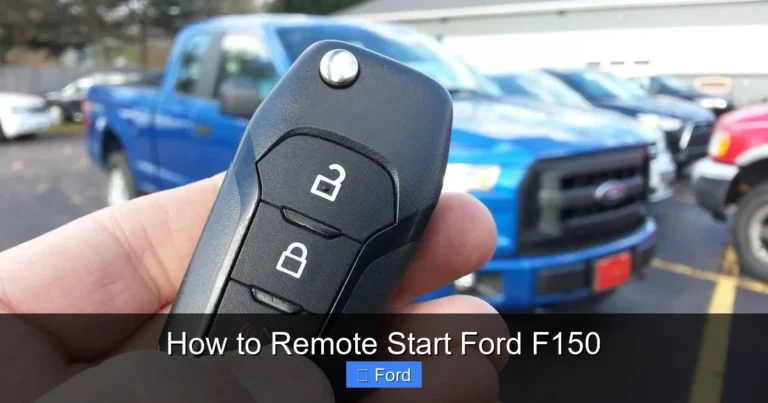
Most F150s from the late 2000s onward use a remote key fob. Even with push-button start, there is almost always a hidden mechanical key inside the fob. This is your first and most important clue. Locate the small release button or slider on your fob. Press it, and a physical key will pop out. This key is designed to unlock the driver’s door manually, even with a dead fob battery or a completely locked interior. The lock cylinder is typically hidden under a small trim cover on the driver’s door handle. Pry this cover off gently with a flathead screwdriver (wrapped in tape to prevent scratching), insert the key, and turn. This is the manufacturer’s intended backup method. If your fob has a keypad on the door (a feature on many higher trims), you can simply enter your factory code to unlock the doors. If you’ve never set a personal code, the factory code is often on a sticker in the glove box or on the passenger-side sun visor.
The Role of the Anti-Theft System
Modern F150s have sophisticated anti-theft systems (like Ford’s SecuriLock). When you use the manual key, the system may not recognize it immediately, causing the horn to honk or the lights to flash. This is usually just a warning. Once you unlock the door with the manual key, you may need to turn the ignition on with the key fob (or the manual key in the cylinder if it’s an older model) to reset the system. Don’t panic if the alarm sounds; it’s part of the process. For more complex anti-theft issues, you might need to consult a guide on how to reset the anti-theft system on a Ford F150, but for a simple lockout, the manual key method should suffice.
Immediate Steps When You Realize Keys Are Locked Inside
Don’t just start hammering on the window. A systematic approach saves time and prevents damage.

Visual guide about How to Unlock Ford F150 with Keys Locked Inside
Image source: m.media-amazon.com
1. Stay Calm and Assess
Panic leads to poor decisions. Take a deep breath. Check all doors and the tailgate. Sometimes one door or the rear hatch is not fully locked. On some F150 SuperCrew models, the rear passenger doors might have a manual lock button that was accidentally engaged, but the driver’s door might still be unlocked. Try every handle. Also, check the windows. Are any down even a crack? A slightly open window changes your options dramatically.
2. Locate Your Spare Key
This is the fastest solution. Do you have a spare at home with a family member? At your office? In a magnetic box under the truck (not recommended for security reasons)? Call someone who might have it. If you’re far from home, this might not be practical, but it’s always the first thing to consider.
3. Check for Keyless Entry Keypad
If your F150 has the keypad on the driver’s door (or the tailgate on newer models), try entering your code. The default factory code is often found on a sticker in the glove box. If you’ve changed it and can’t remember, you may need a dealership to reprogram it, which is not helpful in a lockout. But if you know the code, this is a zero-damage, instant solution.
DIY Methods: Unlocking Your F150 Yourself
If you’re locked out without a spare or keypad code, you can attempt these methods. Proceed with extreme caution. The goal is to get the lock rod to move without scratching the truck.

Visual guide about How to Unlock Ford F150 with Keys Locked Inside
Image source: i.ytimg.com
The Wedge and Rod Method (Most Common)
This classic technique works on many vehicles, including most F150s, especially those with traditional door handles and locks. You need two tools: an inflatable wedge (or a firm, soft wedge like a rubber doorstop) and a long, thin, flexible rod (a metal coat hanger straightened, a long plastic trim tool, or a dedicated auto lockout kit).
- Step 1: Create a small gap. Place the wedge at the top corner of the door frame (near the window). Inflate it gently if using an air wedge. You only need about 1/2 inch of gap. Too much force can bend the door frame or break the window.
- Step 2: Insert the rod through the gap. Your target is the lock button or the interior door handle. On an F150, the lock button is typically a small plastic knob on the armrest. You need to hook it or push it up. This takes patience. Gently fish the rod around until you feel the button. Hook it and pull upward, or push it from the side.
- Step 3: Listen for the lock mechanism. You should hear a distinct “thunk” as the lock disengages. Once heard, try the exterior handle immediately.
Critical Tips: Use a cloth or rubber coating on the wedge to protect paint. Work slowly. If you have a crew cab, the rear doors might be easier to access because the window frame is smaller. If your F150 has a power sliding rear window, this method might not work as the window seal is tighter. In that case, focus on the front doors.
The String or Shoelace Method
This works best on F150s with a post-style lock button (a small button that protrudes from the door panel) and a pull-up handle. It’s ineffective on flush-mounted buttons or push-button locks.
- Step 1: Tie a small loop in a shoelace or thin, strong string.
- Step 2: Work the loop down the side of the window, through the small gap at the top of the door (you may need a tiny wedge to create this gap).
- Step 3: Hook the loop around the post-style lock button. Pull up and outward simultaneously. The button should pop up, unlocking the door.
This method requires dexterity and patience. Practice on an unlocked door first if possible.
Access Through the Tailgate or Rear Window
This is a great option for many F150s. Check if your tailgate has an inner release handle. Many F150s have a lockable tailgate but a manual release inside the cargo bed. If the tailgate is locked but the rear window is unlocked or can be opened, you might reach through to the interior. On some models, the rear window can be opened from the outside with the key, even if the tailgate is locked. If you can open the rear window, you might be able to reach the rear seat or the cabin through the rear cab opening (on SuperCab or SuperCrew models) and unlock the front doors from inside. This method is highly model-specific.
Using the Manual Key Inside the Fob
As mentioned earlier, this is the OEM solution. If your fob has a hidden key, use it. The lock cylinder might be covered by a plastic cap. Use a flathead screwdriver (wrapped in a microfiber cloth) to gently pry the cap off. Insert the key and turn. It may take a bit of force, but it should turn easily. If the lock is frozen or sticky, a quick spray of lubricant like WD-40 into the cylinder (from the side) can help. Wait a minute, then try again.
When DIY Fails: Calling for Professional Help
If your attempts have been unsuccessful or you’re uncomfortable prying on your truck, it’s time to call a pro. This is often the smartest choice to guarantee no damage.

Visual guide about How to Unlock Ford F150 with Keys Locked Inside
Image source: thedailyautomotive.com
Roadside Assistance
If you have insurance (like State Farm, Geico) or a membership (AAA, Good Sam), they almost always offer lockout service. Call them. They will dispatch a technician with professional tools like a long, flexible reach tool or a specialized air wedge system that safely creates a gap. This is usually the most cost-effective option if you have the coverage, as it’s often included in your policy. There might be a small copay ($50-$100).
Locksmiths
A local automotive locksmith is your next best bet. Look for one that is certified and insured. They have tools designed specifically for modern vehicles, like the F150’s complex door handles. They can often unlock the door in under 5 minutes without any visible damage. Expect to pay $80-$150 for a standard lockout. Be wary of locksmiths who quote a low price over the phone and then raise it dramatically upon arrival. Get a firm quote first.
Dealership
Calling your Ford dealership is an option, but it’s usually the slowest and most expensive. They may not prioritize a lockout and could charge a high tow fee plus labor. However, if your key fob is completely dead and the manual key doesn’t work (a rare electronic failure), the dealership might be the only place with the proprietary software to reprogram a new fob on the spot. For a simple lockout, they are typically not the first call.
Preventing Future F150 Lockouts
Once you’re back in your truck, take steps to ensure this doesn’t happen again.
The Spare Key Strategy
Have at least one spare key. For a modern F150 with a key fob, a spare can be expensive ($200-$400 from dealer), but it’s cheaper than a locksmith call and potential damage. Keep it at home, with a spouse, or in a secure magnetic box placed in a non-obvious location (not under the bumper). Consider a key fob with a built-in physical key that you can keep on a separate keychain.
Develop Simple Habits
Make it a ritual: “Keys, phone, wallet” before you exit the vehicle. Always touch your pockets or purse as you open the door. When locking the doors remotely, visually confirm you have the fob in your hand. Never lock the doors with the fob inside the truck unless you have a way to get back in (like a keypad or open window).
Consider Technology Aids
Some aftermarket devices can help. A Bluetooth key tracker like Tile or AirTag attached to your fob can alert you if you walk away from it. For F150s with the SYNC system, some models have a smartphone app that can lock/unlock the doors. Explore if your specific model supports FordPass.
Special Considerations for Different F150 Models
One size does not fit all. Your approach must match your truck.
Older F150s (Pre-2009)
These typically have simple, robust mechanical locks with a visible keyhole on the door handle. The manual key method is straightforward. The wedge and rod method is very effective as the door seals are generally less tight. The interior lock button is usually a large, easy-to-push knob.
Newer F150s with Push-Button Start (2013+)
These often have a keyless entry keypad on the door or tailgate. This is your best friend. The manual key is still present but hidden. The door construction is tighter for aerodynamics, making the wedge method slightly harder. Be extra gentle. Some trims (like XLT, Lariat) have a proximity key that can unlock the doors if you grab the handle, but this only works if the fob is within a few feet—useless if it’s inside.
F150 Raptor and Special Editions
The Raptor may have unique door seals or added sound deadening that make creating a gap more difficult. Always start with the manual key or keypad. Some high-end trims have auto-dimming mirrors with integrated turn signals that can make the wedge placement trickier near the window.
What About the Tailgate? A Common Point of Confusion
Many F150 owners think, “Can I just open the tailgate and climb through?” It’s a logical thought, but there are caveats. The tailgate lock is separate from the cab doors. If the tailgate is unlocked, you can lower it. However, the rear window is often the barrier. On a SuperCrew, the rear window is behind the rear seats. You cannot climb from the bed into the cab through the rear window unless it is open or you break it. On a SuperCab (with smaller rear windows and no rear doors on some models), the rear window might be the only access point from the bed. If the rear window is locked and closed, the tailgate being down does not help you access the locked cab doors. Always check the state of the rear window first. If it’s open, you might be able to reach through and unlock a front door from the inside by pulling the lock knob or handle. This is a model-specific maneuver.
Conclusion: Your Action Plan
Locking your keys in your Ford F150 is an annoyance, not a catastrophe. The path to a solution is a clear decision tree. First, search for a spare key or use the keypad. If those fail, find your manual key inside the fob and use the hidden door cylinder. If the manual key is missing or doesn’t work, carefully attempt the wedge and rod method on a front door, prioritizing the driver’s side. If you’re not confident or the door is too tight, call your roadside assistance provider or a reputable locksmith. Once inside, immediately implement a prevention strategy—get that spare key made and form new habits. Remember, the cost of a spare key is far less than the cost of repairing a scratched door or a broken window. By understanding your F150’s locking system and having a plan, you can turn this stressful moment into a minor, quickly-resolved hiccup.
Frequently Asked Questions
Can I unlock my Ford F150 with a dead key fob?
Yes. Use the hidden mechanical key inside the fob to unlock the driver’s door manually. You may need to insert it into a hidden lock cylinder under the door handle trim. The car’s anti-theft system may honk, but it will reset once you start the engine with the fob (or key) inside.
Will using a coat hanger damage my F150’s door or paint?
It certainly can. A metal coat hanger can easily scratch the door pillar, window frame, or paint if it slips. It can also tear the delicate vapor barrier behind the door panel, causing water leaks. It’s safer to use a soft, plastic wedge and a flexible plastic rod, or to call a professional.
My F150 has a keypad, but I don’t know the code. What now?
The factory default code is often on a sticker in the glove box or on the passenger sun visor. If that’s missing or you changed it and forgot, a Ford dealership can retrieve or reset the code using your VIN, but they will likely charge a fee and require proof of ownership.
Is it cheaper to call a locksmith or my insurance company?
If you have roadside assistance through your insurance (like AAA or a policy add-on), they are almost always the cheapest option, often with a low or $0 copay. A standalone locksmith will charge $80-$150. Always check your policy benefits first before calling a private locksmith.
Can I climb in through the tailgate if the doors are locked?
Usually no. The tailgate and the cab are separate. Lowering the tailgate gives you access to the truck bed, but the rear window (and sometimes a solid wall) blocks access to the locked cab interior. You can only get inside if the rear window is already open or broken.
What’s the safest DIY method for a 2021 F150?
The safest method is always using the manual key hidden in your fob. If that’s not an option, the inflatable air wedge and a plastic lockout tool is the next safest DIY approach, as it minimizes contact with painted surfaces. Avoid metal tools and excessive force.