How to Turn on the Rear Windshield Wiper on a Jeep Wrangler

Contents
- 1 Key Takeaways
- 2 📑 Table of Contents
- 3 Understanding Your Jeep Wrangler’s Wiper System
- 4 Locating the Rear Wiper Control
- 5 Step-by-Step: Turning On the Rear Wiper
- 6 Troubleshooting Common Issues
- 7 Maintenance Tips for Longevity
- 8 Safety Considerations and Best Practices
- 9 Conclusion
- 10 Frequently Asked Questions

Octane Booster

Dashboard Polish

Car Armrest Cushion
Car Wash Mitt
Turning on the rear windshield wiper on your Jeep Wrangler is a simple yet essential skill for safe driving in rain, snow, or mud. The control is typically a rotary switch on the dashboard or center console, with settings for intermittent and continuous operation. This guide covers all Wrangler models (JK, JL, JT), troubleshooting common issues, and maintenance tips to keep your rear view crystal clear.
Ever been caught in a sudden downpour while driving your Jeep Wrangler, only to realize your rear window is a blurry mess? You’re not alone. The rear windshield wiper is a small but mighty feature that can make a huge difference in visibility and safety, especially in the unpredictable weather that Wrangler owners often encounter. Whether you’re navigating city streets after a rainstorm or tackling muddy backroads, knowing exactly how to activate that rear wiper is a must. In this complete guide, we’ll walk you through every step, from finding the switch to troubleshooting problems, so you’re never left squinting at a fogged-up rear window again.
Jeep Wranglers are built for adventure, but that adventure often comes with dirt, water, and snow. The rear wiper system is designed to clear the rear glass quickly and efficiently. However, the control layout has changed over the years, and not all Wranglers are set up the same way. That’s why we’ve broken it down by model generation and included plenty of practical tips. By the end of this article, you’ll be a pro at using your rear wiper, and you’ll know how to keep it in top shape for years to come. Let’s get started.
Key Takeaways
- Switch Location: The rear wiper control is a rotary knob or lever, usually on the dashboard left of the steering wheel or on the center console, varying by model year.
- Operating Modes: Most Wranglers offer intermittent (for light drizzle) and continuous (for heavy rain) settings, with some having adjustable speed intervals.
- Model Differences: JK (2007-2018) and JL/JT (2018+) have different switch placements; always consult your owner’s manual for your specific model.
- Common Issues: If the wiper doesn’t work, check the fuse, wiper motor, or switch; sometimes a simple blade cleaning or replacement solves streaking.
- Maintenance is Key: Replace wiper blades every 6-12 months and clean the rubber regularly to ensure smooth operation and prevent damage to the glass.
- Safety First: Use the rear wiper only when needed to avoid distraction, and never operate it manually while the vehicle is moving to prevent damage.
📑 Table of Contents
Understanding Your Jeep Wrangler’s Wiper System
Before we dive into the “how-to,” it helps to understand what you’re working with. The rear windshield wiper system on a Jeep Wrangler isn’t just a switch and a blade. It’s a small assembly that includes a motor, linkage arms, and the rubber blade itself. Knowing these components can help you diagnose issues later.
Components of the Rear Wiper Assembly
The rear wiper assembly is typically located at the top center of the rear windshield, hidden under a small plastic cover. Inside, you’ll find:
- The Wiper Motor: A small electric motor that powers the movement. It’s activated when you turn the switch.
- The Linkage Arms: These connect the motor to the wiper blade, converting the motor’s rotary motion into the back-and-forth sweeping action.
- The Wiper Blade: The rubber part that actually contacts the glass. It’s designed to flex and conform to the window’s curvature.
- The Nozzle (if equipped): Some Wranglers have a rear washer fluid sprayer integrated into the wiper arm or a separate nozzle. This is great for muddy situations.
Understanding these parts helps you realize that if the wiper moves but doesn’t clean well, the blade is likely the culprit. If it doesn’t move at all, the issue might be the motor, switch, or a fuse.
How the Wiper System Works
When you turn the rear wiper switch, you complete an electrical circuit that sends power from the battery to the wiper motor. The motor runs for as long as the switch is in the “on” position, moving the arm across the glass. In intermittent mode, an internal timer or electronic module pauses the motor between wipes. The length of that pause is often adjustable on some models. The system is designed to be simple and robust, but like any mechanical part, it can wear out. Exposure to sun, ice, and road grime takes a toll on the rubber blade and can eventually stress the motor or linkages.
Locating the Rear Wiper Control
This is the most common point of confusion for Wrangler owners. The location of the rear wiper switch has changed across different generations. Here’s a breakdown for the major models.

Visual guide about How to Turn on the Rear Windshield Wiper on a Jeep Wrangler
Image source: jeepfixes.com
Dashboard vs. Center Console Switches
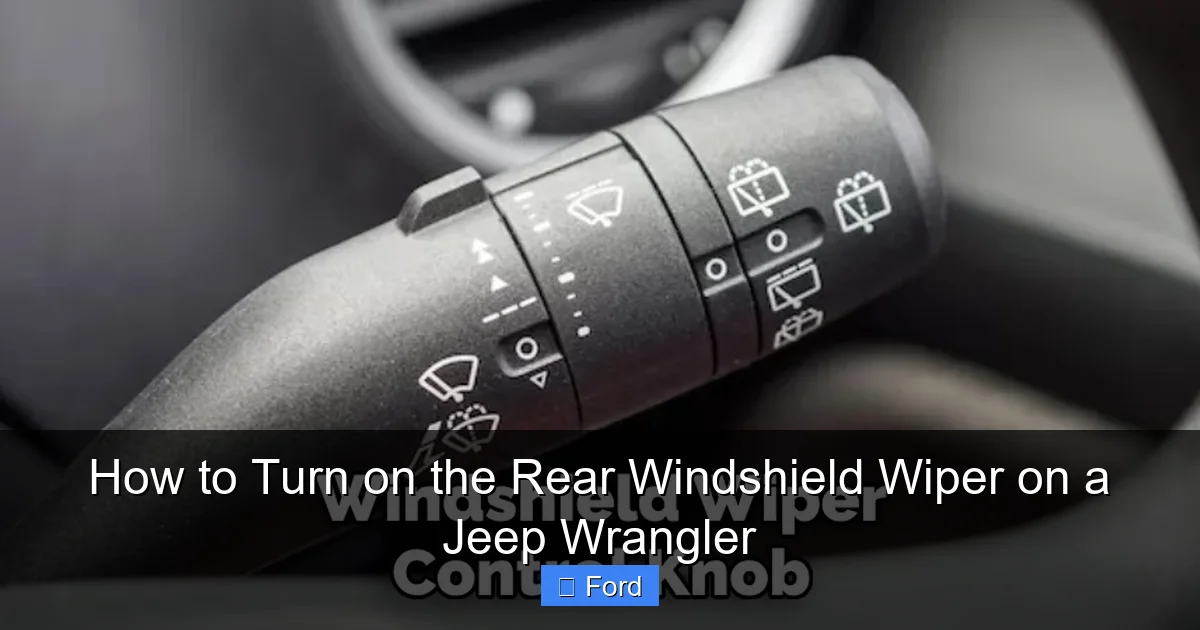
On most Jeep Wrangler JK models (2007-2018), you’ll find the rear wiper control on the dashboard, to the left of the steering wheel. It’s usually a rotary knob that also controls the front wipers. Turning it one direction operates the front wipers, and turning it the other direction (often marked with a rear window icon) operates the rear wiper. This knob may also have a push-button for the rear washer fluid.
Starting with the JL Wrangler (2018-present) and the JT Gladiator (2020-present), Jeep moved many controls to the center console for a cleaner dashboard look. On these models, the rear wiper switch is typically a separate rotary knob or a lever on the lower part of the center console, near the climate controls. It’s often labeled with a clear icon of a rear windshield with wiper blades. The front wiper control remains on the steering column stalk.
Pro Tip: If you’re ever unsure, your owner’s manual is the ultimate authority. The first few pages have a diagram of all controls. You can also look for the small wiper icon on the switch itself.
Model Year Variations (JK, JL, JT)
Even within the same generation, there can be slight differences based on trim level (Sport, Sahara, Rubicon, etc.). For example:
- JK (2007-2018): Almost all use the dashboard rotary knob. Earlier JKs (2007-2010) might have a slightly different knob design, but the function is identical.
- JL/JT (2018+): The center console switch is standard. Some higher trims might have a more sophisticated control with multiple speed settings, while base models have a simple on/off intermittent.
If you have a special edition or a vehicle modified by a previous owner, the switch location could be different. Always do a physical search around the driver’s area if you can’t find it immediately.
Step-by-Step: Turning On the Rear Wiper
Once you’ve located the switch, operating the rear wiper is straightforward. Here’s how to do it for the most common setups.

Visual guide about How to Turn on the Rear Windshield Wiper on a Jeep Wrangler
Image source: jeepfixes.com
Intermittent Mode for Light Drizzle
This is the most frequently used setting. It gives you a wipe every few seconds, which is perfect for light rain or mist. To activate it:
- Locate the rear wiper switch (see section above).
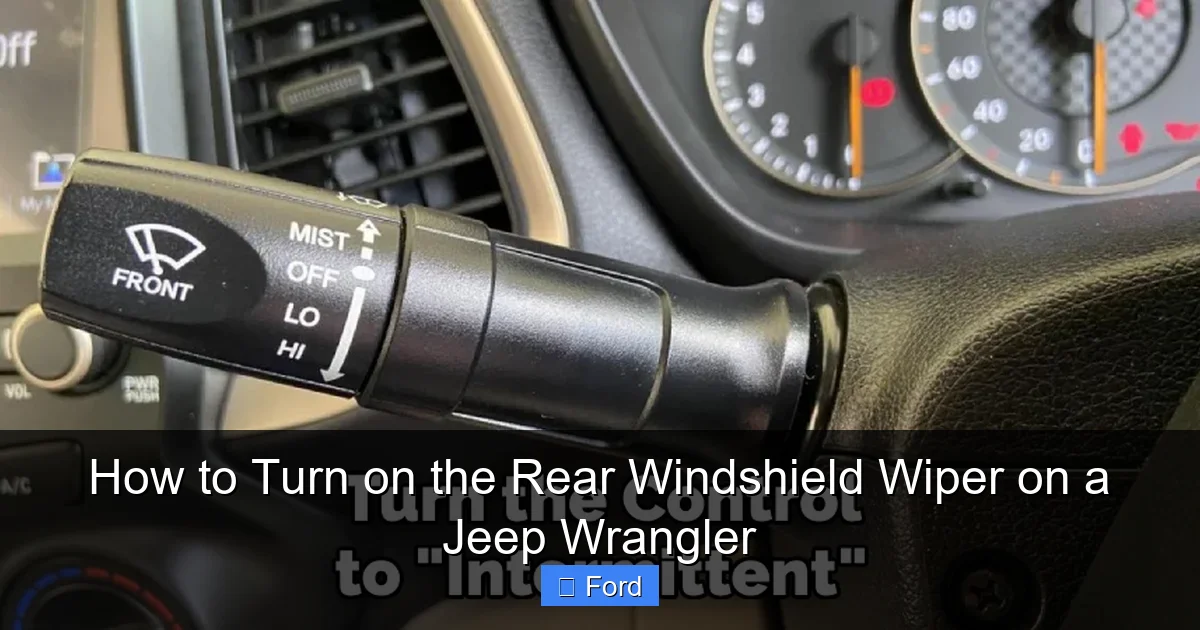
- Turn the knob or move the lever to the position marked with the rear wiper icon that has dotted lines or says “INT.” This is usually the first click from the off position.
- The wiper should give a couple of wipes and then pause. It will continue this cycle as long as the switch is in this position.
- On some models, you can adjust the interval between wipes. Look for a small rotating collar on the switch or a separate dial. Turning it changes the delay time.
Using intermittent mode conserves battery power and reduces wear on the wiper motor and blades compared to continuous operation.
Continuous Mode for Heavy Rain
When the rain is coming down hard, you need constant clearing. Here’s how to engage continuous mode:
- From the off position, turn the rear wiper switch past the intermittent setting to the next position. This is usually marked with solid wiper lines or simply “ON.”
- The wiper will now move steadily across the glass without pausing.
- There is typically no speed adjustment in continuous mode; it’s one fixed speed. If your model has multiple continuous speeds (rare), they will be marked as additional clicks.
Important: Do not attempt to manually move the wiper arm while the system is powered. This can damage the motor or linkage. Always use the switch to control movement.
Adjusting Wiper Speed and Settings
Some newer JL and JT models, especially those with the optional premium sound system or specific packages, may have a more advanced wiper control. This could include:
- Variable Intermittent: A dial that lets you choose from several preset pause intervals (e.g., 1 second, 3 seconds, 6 seconds).
- Rain-Sensing Wipers: While rare on the rear of Wranglers, some high-end models have a sensor that automatically turns on and adjusts speed based on moisture. The control for this is usually an “AUTO” setting on the switch.
If your Wrangler has rain-sensing rear wipers, the system will activate automatically when it detects water on the glass. You can often override it by turning the switch to manual intermittent or continuous. Consult your owner’s manual for the exact operation of these advanced features.
Troubleshooting Common Issues
So you’ve found the switch, turned it, and… nothing happens. Or maybe the wiper moves but leaves huge streaks. Don’t panic. Many rear wiper problems are simple to fix yourself.
Visual guide about How to Turn on the Rear Windshield Wiper on a Jeep Wrangler
Image source: jeepfixes.com
Wiper Not Moving at All
This is the most common issue. Follow this diagnostic checklist:
- Check the Fuse: The first and easiest step. Locate your fuse box (usually under the hood and inside the cabin near the driver’s knee). Your owner’s manual will have a diagram showing which fuse controls the rear wiper. Pull it with a fuse puller or needle-nose pliers. If the metal strip inside is broken, replace it with a fuse of the same amperage.
- Listen for the Motor: Have a helper turn the rear wiper on while you listen near the rear of the vehicle. Do you hear a faint hum or click from the tailgate area? If you hear sound but no movement, the motor might be jammed, or the linkage could be disconnected.
- Check the Switch: If there’s no sound at all, the switch itself might be faulty. This is less common but possible, especially on older JKs with high mileage.
- Test the Motor: You can sometimes apply direct 12V power from the battery to the motor’s connector (after disconnecting it) to see if it spins. If it doesn’t, the motor is dead and needs replacement.
If you’re not comfortable with electrical testing, a professional mechanic can diagnose this quickly. Sometimes, a poor ground connection or a broken wire in the tailgate harness (where the wiring passes from the body to the tailgate) is the culprit, especially on JKs which are known for wiring chafing in that area.
Streaking or Smearing
If the wiper moves but leaves water behind or smears dirt, the problem is almost always the blade:
- Worn Rubber: The rubber edge gets hard, cracked, or shredded over time. This is the #1 reason for poor wiping. Replace the blade immediately—they’re inexpensive and easy to swap.
- Dirt and Grime: A buildup of road film, sap, or mud on the blade or glass can cause skipping. Clean the rubber with a cloth dipped in mild soapy water or rubbing alcohol. Also, thoroughly clean the rear windshield.
- Improper Blade Angle: Sometimes the wiper arm gets bent (from aggressive manual wiping or car washes). The blade should sit flat against the glass at a 90-degree angle. Gently bend the arm back into place if needed.
For a detailed guide on inspecting and replacing wiper blades, you can refer to our general article on how to change windshield wipers on a Honda Civic. While the model is different, the principles of blade selection and installation are universal.
Unusual Noises
A squeaking, chirping, or grinding noise means something is wrong:
- Squeaking: Usually indicates a dry or hardened blade. Clean or replace the blade. It can also mean the glass is dirty.
- Chirping: Often happens at the start of a wipe. It can be the blade’s “break-in” period after replacement, or a sign of a slightly bent arm.
- Grinding or Clicking: This is serious. It suggests the motor’s internal gears are stripped or there’s physical obstruction (like ice) jamming the mechanism. Stop using it immediately to prevent further damage. Defrost the window thoroughly if ice is present, then try again. If the noise persists, the motor or linkage needs service.
Maintenance Tips for Longevity
Your rear wiper is out in the elements 24/7, exposed to UV rays, freezing temperatures, and debris. A little maintenance goes a long way in preventing problems.
Replacing Wiper Blades
Don’t wait until the blade is falling apart. As a rule, replace rear wiper blades every 6-12 months, depending on climate. Here’s how:
- Lift the wiper arm away from the glass until it locks in a service position. Some Wranglers have a clip or tab to hold it up.
- Locate the connector where the blade attaches to the arm. It’s usually a tab or hook.
- Press the tab (or follow the specific mechanism) to release the old blade. Slide it off the arm.
- Take the new blade and attach it the same way, ensuring it clicks securely.
- Gently lower the arm back onto the glass.
Note: The rear wiper blade on a Wrangler is often a different size and style than the front ones. Check your owner’s manual or the old blade for the correct size (e.g., 12″, 14″, 16″). You can also ask at any auto parts store—they can look it up for you.
Cleaning the Wiper Assembly
Periodically, lift the wiper arm and wipe down the rubber blade with a damp cloth. Also, clean the area where the blade rests on the glass. Remove any leaves, twigs, or mud that might have accumulated under the arm or in the pivot point. This prevents debris from jamming the mechanism and scratching your window.
In winter, ice can bond the blade to the glass. Never force a frozen wiper. Instead, start your vehicle, turn the defroster on, and let the glass warm up. You can also use a de-icer spray. Once the ice melts, operate the wiper gently to clear any remaining slush.
Winter Care and Ice Removal
Cold climates are tough on wipers. Here are extra tips:
- Install winter-specific wiper blades. They have a rubber boot that covers the metal parts to prevent ice buildup.
- When parking overnight, you can gently lift the wiper arm away from the glass (if your model allows) to prevent freezing. Some owners use a small piece of cardboard or a plastic bag between the blade and glass.
- Always use washer fluid rated for freezing temperatures. Summer fluid will turn to slush and can damage the system.
Safety Considerations and Best Practices
Using your rear wiper correctly isn’t just about visibility—it’s about safety and preventing damage to your vehicle.
When to Use the Rear Wiper
The rear wiper is for external conditions: rain, snow, sleet, or mud splatter from the road. It is not designed to clear interior condensation. If your rear window fogs up from the inside, use your defroster and ventilation system. Running the rear wiper on a dry or merely damp interior window will create static, attract dust, and can damage the blade or glass over time.
Avoiding Distracted Driving
Adjust your wiper settings before you start driving, or when stopped at a red light. Fiddling with switches while moving is a distraction. Get to know the positions by touch so you can adjust without taking your eyes off the road. Remember, in heavy rain, your focus should be on the road ahead and maintaining a safe distance from other vehicles. The wiper is a tool to aid visibility, not something to constantly tweak.
Preparing for Off-Road Adventures
If you’re heading off the beaten path, your rear wiper might get clogged with mud or sand. After a muddy run:
- Rinse the rear windshield and wiper assembly thoroughly with a hose.
- Check the wiper blade for embedded stones or debris that could scratch the glass next time it’s used.
- Operate the wiper a few times with the washer fluid to flush out any grit from the nozzle and arm pivots.
This simple post-adventure routine prevents premature wear and ensures your wiper is ready for the next rainy day on pavement.
Conclusion
Mastering your Jeep Wrangler’s rear windshield wiper is one of those small ownership tasks that pays big dividends in comfort and safety. You’ve now learned how to locate the control for your specific model year, how to use the intermittent and continuous settings, and what to do when things go wrong. Remember, the system is robust but needs basic care—like regular blade replacement and cleaning—to perform its best.
Your Wrangler is a versatile tool for any environment, and its wiper system is a key part of that versatility. Take a few minutes to familiarize yourself with the switch today, so when the weather turns, you’re ready. If you ever encounter a persistent electrical issue, don’t hesitate to consult a professional, as wiring problems can be tricky. With this knowledge, you’re all set to keep your rear view clear, whether you’re crawling through rock gardens or commuting through a thunderstorm. Happy (and clear) driving!
Frequently Asked Questions
Why won’t my Jeep Wrangler’s rear wiper turn on?
First, check the fuse for the rear wiper circuit, which is listed in your owner’s manual. If the fuse is good, listen for a motor hum when you turn the switch on. No sound usually indicates a faulty switch or a wiring issue, while a hum with no movement points to a seized motor or broken linkage. A professional diagnosis is recommended for electrical problems.
How often should I replace the rear wiper blade on my Wrangler?
Replace the rear wiper blade every 6 to 12 months, depending on your climate. In sunny, hot areas, the rubber degrades faster. In cold, snowy regions, ice and road salt accelerate wear. If you notice streaking, skipping, or squeaking, replace it immediately regardless of age to avoid scratching the glass.
Does the rear wiper have an adjustable intermittent setting?
It depends on your model year and trim. Most base JK and JL models have a simple intermittent/on/off switch. Some higher-trim JLs and JTs may have a variable intermittent dial that lets you adjust the pause time between wipes. Check your owner’s manual or the switch itself for multiple click positions or a rotating collar.
Can I use the rear wiper when the rear window is covered in snow?
No. Never operate the rear wiper on a snow-covered or iced-over window. The mechanism isn’t designed to push snow and can strip gears or bend the arm. Always clear snow and ice manually or with the defroster first. Once the glass is clear, you can use the wiper with washer fluid to remove slush.
Where is the rear wiper fuse located on a Jeep Wrangler?
The fuse locations vary. There is a fuse box under the hood (power distribution center) and another inside the cabin, typically on the lower left side of the dashboard behind a panel. Your owner’s manual has a exact diagram with fuse numbers and amperage. Look for a fuse labeled “Rear Wiper” or “R Wiper.”
My rear wiper moves but leaves a dry streak. What’s wrong?
A dry streak usually means the wiper blade is hardened and no longer flexible. The rubber can’t conform to the glass, so it skips over water. This is a sign the blade needs replacement. Before replacing, try cleaning the blade with soapy water and wiping the glass thoroughly, but if the problem persists, a new blade is the solution.