How to Turn Off Subaru Seatbelt Chime

Contents
- 1 Key Takeaways
- 2 📑 Table of Contents
- 3 Why Does Your Subaru Have a Seatbelt Chime?
- 4 Is It Legal to Disable the Seatbelt Chime?
- 5 How the Subaru Seatbelt Chime System Works
- 6 Step-by-Step Guide: How to Turn Off Subaru Seatbelt Chime
- 7 Why the Chime Might Still Be On (Troubleshooting)
- 8 Safer Alternatives to Disabling the Chime
- 9 Final Thoughts: Safety Over Convenience
- 10 Frequently Asked Questions



Turning off the Subaru seatbelt chime is possible on most models using a simple ignition-based procedure, but it’s important to prioritize safety and legality. This guide walks you through the steps, explains why the chime exists, and offers alternatives to disabling it permanently.
Key Takeaways
- Safety First: The seatbelt chime is a critical safety reminder designed to reduce injury and save lives—disabling it should be done cautiously and only when necessary.
- <>Model-Specific Steps: The process to turn off the chime varies slightly between Subaru models (e.g., Outback, Forester, Crosstrek), so always check your owner’s manual or confirm your vehicle year.
- Legal Considerations: In many U.S. states and countries, driving without a seatbelt is illegal—disabling the chime doesn’t exempt you from the law.
- Temporary vs. Permanent: Most Subaru chime disable methods are temporary and reset when the car is turned off and restarted.
- Alternative Solutions: If the chime is annoying during short trips or parking, consider using a seatbelt extender or buckle insert instead of disabling the system.
- Professional Help: If the chime won’t turn off or comes on unexpectedly, it may indicate a sensor issue—visit a Subaru dealer for diagnostics.
- Resale Value: Modifying safety systems can affect your car’s resale value and warranty—proceed with awareness.
📑 Table of Contents
- Why Does Your Subaru Have a Seatbelt Chime?
- Is It Legal to Disable the Seatbelt Chime?
- How the Subaru Seatbelt Chime System Works
- Step-by-Step Guide: How to Turn Off Subaru Seatbelt Chime
- Why the Chime Might Still Be On (Troubleshooting)
- Safer Alternatives to Disabling the Chime
- Final Thoughts: Safety Over Convenience
Why Does Your Subaru Have a Seatbelt Chime?
If you’ve ever hopped into your Subaru and been greeted by that persistent *ding-ding-ding* the moment you start the engine, you’re not alone. That sound is the seatbelt reminder chime—a standard safety feature in all modern Subaru vehicles. But why does it exist, and why can it feel so intrusive, especially during short drives or when you’re just moving the car in the driveway?
The seatbelt chime is part of a broader occupant protection system mandated by federal safety regulations in the United States and similar laws worldwide. It’s designed to encourage drivers and passengers to buckle up before driving. Studies from the National Highway Traffic Safety Administration (NHTSA) show that seatbelts reduce the risk of fatal injury by 45% for front-seat passengers in cars and up to 60% in SUVs and light trucks. Subaru, known for its commitment to safety (think EyeSight driver-assist technology), takes this seriously—hence the chime.
But let’s be honest: that constant reminder can get annoying. Maybe you’re just backing out of the garage, or you’re driving slowly in a parking lot. Perhaps you’re using a child seat or have a passenger who doesn’t need a seatbelt (like a service dog). Whatever the reason, many Subaru owners look for ways to silence the chime—temporarily or permanently.
The good news? You *can* turn off the Subaru seatbelt chime on most models. The process is straightforward, doesn’t require special tools, and can be done in under five minutes. But before you dive in, it’s important to understand the implications—both safety-wise and legally.
Is It Legal to Disable the Seatbelt Chime?
Visual guide about How to Turn Off Subaru Seatbelt Chime
Image source: psychoautos.com
Before we get into the “how,” let’s address the “should you.” Legally, disabling the seatbelt chime is a gray area. In most U.S. states, it’s not illegal to turn off the chime itself—after all, it’s just a sound. However, driving without wearing a seatbelt *is* illegal in nearly every state, with fines ranging from $25 to over $100 for a first offense.
For example, in California, Vehicle Code §27315 requires all drivers and passengers to wear seatbelts. The law doesn’t mention the chime, but it does enforce seatbelt use. So even if you disable the chime, you’re still required to buckle up. The same applies in states like New York, Texas, and Florida.
Internationally, the rules vary. In Canada, seatbelt use is mandatory under the Motor Vehicle Safety Act, and tampering with safety systems could void your warranty or insurance coverage. In the European Union, similar regulations apply, and modifying safety features may affect your vehicle’s compliance with type-approval standards.
Another legal consideration is liability. If you’re involved in an accident and weren’t wearing a seatbelt, insurance companies may reduce your claim payout—even if the other driver was at fault. Disabling the chime won’t protect you from that.
So while turning off the chime isn’t technically illegal in most places, it’s a decision that should be made with full awareness of the risks. If you do proceed, use it responsibly—only for short movements or specific situations, not as a way to avoid buckling up on the road.
How the Subaru Seatbelt Chime System Works
Visual guide about How to Turn Off Subaru Seatbelt Chime
Image source: psychoautos.com
To understand how to turn off the chime, it helps to know how it works. The Subaru seatbelt reminder system is part of the vehicle’s onboard diagnostics and safety network. It relies on a combination of sensors and signals to determine whether the driver (and sometimes front passenger) is buckled in.
Here’s a breakdown of the key components:
Seatbelt Buckle Sensor
Located inside the seatbelt buckle, this sensor detects whether the latch is inserted. When you plug in the seatbelt, the sensor sends a signal to the vehicle’s body control module (BCM). If the belt is unplugged when the ignition is turned on, the BCM triggers the chime.
Weight Sensor in the Seat
Many Subaru models, especially newer ones like the 2020+ Outback or Forester, include a weight sensor in the driver’s seat. This helps distinguish between a person and a heavy object (like a backpack). If the sensor detects a certain weight threshold (usually around 50–60 pounds), it assumes a person is sitting there and activates the chime if the belt isn’t buckled.
Ignition and Door Status
The chime typically activates when the ignition is turned to “On” or “Start,” and the driver’s door is closed. Some models also consider vehicle speed—once you reach a certain speed (often 15–20 mph), the chime may stop even if the belt isn’t fastened, though this varies.
Body Control Module (BCM)
This is the brain of the operation. The BCM receives input from the buckle sensor, seat sensor, ignition, and door switches. Based on this data, it decides whether to activate the chime, illuminate the seatbelt warning light on the dashboard, or both.
Understanding this system helps explain why simply unplugging the sensor or covering the seat won’t always work—and why the official disable procedure involves a specific sequence of ignition and buckle actions.
Step-by-Step Guide: How to Turn Off Subaru Seatbelt Chime
Visual guide about How to Turn Off Subaru Seatbelt Chime
Image source: psychoautos.com
Now for the main event: how to actually turn off the chime. The method described below works for most Subaru models from 2005 onward, including the Outback, Forester, Impreza, Crosstrek, Legacy, and Ascent. However, always consult your owner’s manual first, as procedures can vary slightly by year and trim level.
⚠️ Important: This method disables the chime temporarily. It will reset every time you turn the car off and restart it. There is no permanent factory setting to turn it off—this is by design for safety reasons.
Method 1: Standard Ignition Sequence (Most Common)
Follow these steps carefully:
- Ensure the car is off. Make sure the ignition is in the “Off” position and the key is removed (or the Start/Stop button is off).
- Close all doors. The driver’s door must be closed for the system to recognize the sequence.
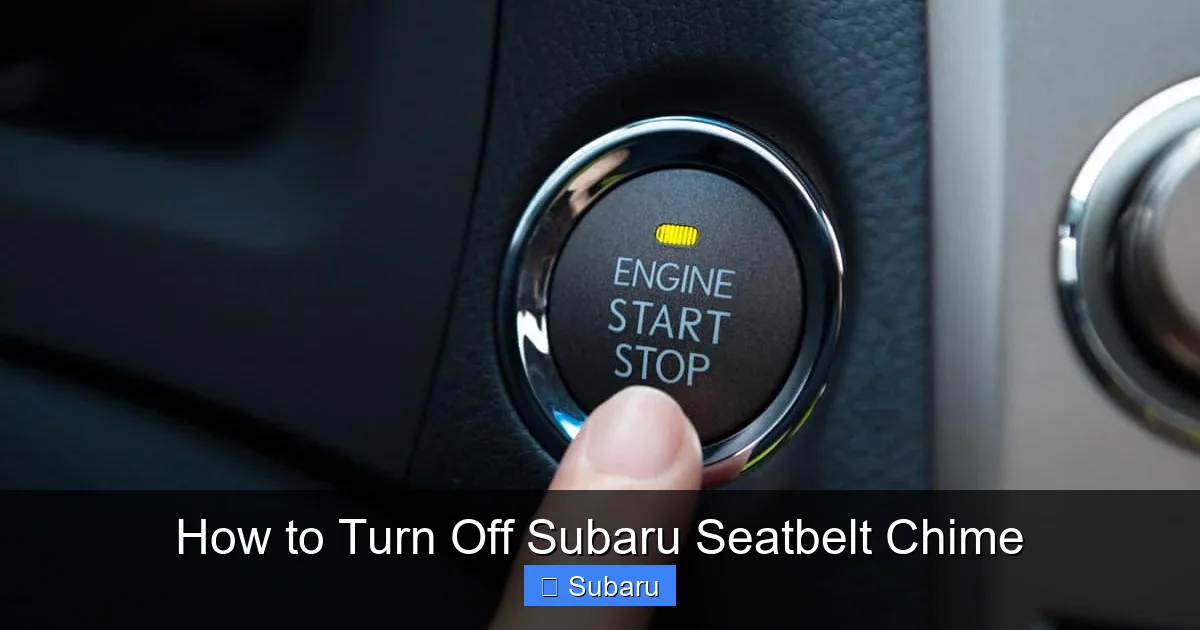
- Insert the key and turn to “On” (but don’t start the engine). Turn the key to the “On” position (dashboard lights will illuminate). If your Subaru has a push-button start, press the Start button twice without pressing the brake pedal.
- Wait for the seatbelt light to flash. Within 5–10 seconds, the seatbelt warning light on the dashboard should begin to flash. This indicates the system is in programming mode.
- Press and release the seatbelt buckle three times. Quickly buckle and unbuckle the driver’s seatbelt three times. Do this within 30 seconds of turning the ignition on.
- Turn the ignition off. After the third buckle/unbuckle, turn the key back to “Off” (or press the Start button once to turn off the engine).
- Wait 10 seconds, then restart the car. Turn the ignition back on. The chime should now be disabled—at least until the next time you turn the car off and on again.
Method 2: For Push-Button Start Models (2015+)
If your Subaru has a push-button start (common in newer models), the process is similar but uses the button instead of a key:
- Make sure the car is off and all doors are closed.
- Press the Start button twice (without pressing the brake) to enter “On” mode.
- Within 10 seconds, buckle and unbuckle the driver’s seatbelt three times.
- Press the Start button once to turn the car off.
- Wait 10 seconds, then press the Start button again (with brake) to start the engine.
- The chime should now be disabled for this ignition cycle.
Method 3: Using the OBD-II Port (Advanced)
For those who want a more permanent solution, some third-party tools and software (like Subaru Select Monitor or aftermarket OBD-II programmers) can disable the chime via the onboard diagnostics port. However, this requires technical knowledge and may void your warranty or affect other systems. It’s not recommended for most users.
⚠️ Warning: Never attempt to physically disconnect the seatbelt sensor or modify wiring. This can damage the airbag system, trigger warning lights, or cause the SRS (Supplemental Restraint System) to malfunction.
Why the Chime Might Still Be On (Troubleshooting)
If you’ve followed the steps above and the chime is still going off, don’t panic. There are several reasons why the disable sequence might not have worked.
Incorrect Timing
The buckle/unbuckle sequence must be done quickly—usually within 10–30 seconds of turning the ignition on. If you wait too long, the system won’t recognize the input.
Door Not Fully Closed
The system often requires the driver’s door to be closed. If it’s ajar, the chime may still activate.
Faulty Sensor
Over time, the seatbelt buckle sensor or seat weight sensor can wear out or get dirty. If the sensor is malfunctioning, it may send incorrect signals to the BCM, causing the chime to persist. This is common in older Subarus or vehicles with heavy use.
Software Glitch
Like any electronic system, the BCM can experience glitches. A simple battery disconnect (removing the negative terminal for 10–15 minutes) can reset the system and clear temporary errors.
Model-Specific Variations
Some Subaru models, especially those with advanced safety packages, may have different disable procedures. For example, the 2022+ Subaru Solterra (electric SUV) may require a different method due to its updated electronics.
If troubleshooting doesn’t work, it’s best to visit a Subaru dealership. They can run a diagnostic scan using factory tools to check for error codes and confirm whether the system is functioning properly.
Safer Alternatives to Disabling the Chime
Before you disable the chime, consider these safer, legal alternatives that address the root cause of the annoyance without compromising safety.
Use a Seatbelt Extender
If the chime bothers you because your seatbelt is hard to reach or uncomfortable, a seatbelt extender can help. These are legal in most states as long as they meet FMVSS 209 standards. Subaru sells OEM extenders, or you can find certified aftermarket options.
Install a Buckle Insert (For Short Trips)
Some drivers use a small plastic insert that mimics a buckled seatbelt. While this silences the chime, it’s not recommended for regular use—it defeats the purpose of the safety system. Only use it for very short movements (e.g., moving the car in a driveway).
Adjust Your Driving Habits
If you’re only driving a few feet, consider turning off the engine instead of idling with the chime on. Or, buckle up even for short trips—it only takes a second and sets a good example.
Check for Recalls or Updates
Subaru occasionally issues software updates for the BCM that can improve chime behavior. Check with your dealer to see if your vehicle is eligible for a free update.
Final Thoughts: Safety Over Convenience
At the end of the day, the seatbelt chime exists for a reason. It’s not just a nagging sound—it’s a life-saving reminder. While it’s understandable to want to turn it off, especially during low-speed maneuvers, the safest choice is always to wear your seatbelt.
That said, if you need to disable the chime temporarily for a valid reason, the ignition-based method is safe, reversible, and widely supported across Subaru models. Just remember: the chime will return after the next restart, and you’re still legally required to buckle up.
If the chime becomes a persistent issue—coming on when no one is in the seat, or not turning off when buckled—it’s worth having it checked. A faulty sensor could indicate a larger problem with your vehicle’s safety systems.
Subaru builds some of the safest cars on the road, and the seatbelt chime is part of that commitment. Respect the feature, use it wisely, and drive safely.
Frequently Asked Questions
Can I permanently turn off the Subaru seatbelt chime?
No, Subaru does not offer a permanent factory setting to disable the seatbelt chime. The disable method only works temporarily and resets after each ignition cycle. For a permanent solution, you’d need third-party tools, which may void your warranty.
Will disabling the chime affect my airbags?
No, turning off the chime using the ignition method does not affect the airbag system. However, physically tampering with sensors or wiring could disrupt the SRS and is not recommended.
Does the chime work for passengers too?
In most Subaru models, the chime only activates for the driver. Some newer models with passenger seat sensors may trigger a chime or warning light if a passenger is unbuckled, but this varies by year and trim.
Why does the chime come on when no one is in the seat?
This could be due to a faulty weight sensor or buckle sensor. Dirt, moisture, or wear can cause false readings. A diagnostic scan at a Subaru dealer can identify the issue.
Is it safe to use a seatbelt buckle insert to silence the chime?
While it may silence the chime, using a buckle insert defeats the safety purpose and is not recommended for regular driving. It should only be used for very short, low-speed movements.
Will disabling the chime lower my car’s resale value?
Modifying safety systems can raise concerns for buyers and may affect resale value. It’s best to avoid permanent changes and restore factory settings before selling.