How to Turn Off Security Indicator Light on Subaru

Contents
- 1 Key Takeaways
- 2 📑 Table of Contents
- 3 Why Is My Subaru’s Security Light On?
- 4 What Does the Security Indicator Light Mean?
- 5 How to Reset the Security Indicator Light (Step-by-Step)
- 6 Troubleshooting Common Issues
- 7 When to Visit a Subaru Dealer
- 8 Preventing Future Security Light Issues
- 9 Conclusion
- 10 Frequently Asked Questions

Engine Oil Additive

Multipurpose Lubricant Spray

Portable Air Pump

Car GPS Navigator
Turning off the security indicator light on your Subaru isn’t always necessary—it’s designed to flash as a theft deterrent. However, if it stays on constantly or blinks erratically, it may signal an issue with the immobilizer or key fob. This guide walks you through safe, step-by-step methods to reset or disable the light, troubleshoot common causes, and when to seek professional help.
Key Takeaways
- Understand the purpose: The security indicator light is part of Subaru’s anti-theft system and normally flashes when the car is locked.
- Don’t disable it permanently: Turning it off completely can compromise your vehicle’s security—only reset it when malfunctioning.
- Check your key fob battery: A weak battery can cause erratic light behavior; replacing it often resolves the issue.
- Use the ignition cycle method: Turning the key on and off in a specific sequence can reset the system and stop the light.
- Inspect the immobilizer system: Faulty transponders in keys or wiring issues may trigger constant illumination.
- Consult a dealer for complex issues: If DIY fixes fail, a Subaru technician can diagnose and reset the system using OEM tools.
- Keep your owner’s manual handy: It contains model-specific instructions for your Subaru’s security features.
📑 Table of Contents
Why Is My Subaru’s Security Light On?
If you’ve ever walked up to your Subaru and noticed a small red or orange light blinking near the dashboard or steering column, you’ve seen the security indicator light in action. This tiny light is more than just a visual cue—it’s a key component of your vehicle’s anti-theft system. Designed to deter potential thieves, it typically flashes when the car is locked and armed. But what happens when that light won’t stop blinking—or worse, stays solidly lit even when you’re driving? That’s when it shifts from a helpful feature to a cause for concern.
The security indicator light is directly tied to Subaru’s immobilizer system, which prevents the engine from starting unless the correct key with a programmed transponder chip is used. When everything is working properly, the light will flash briefly when you lock the car, then turn off once you start the engine with a valid key. However, if the system detects an anomaly—like a low key fob battery, a damaged key chip, or a communication error between components—the light may behave abnormally. It might blink continuously, stay on solid, or flash in irregular patterns. While this doesn’t always mean your car is at immediate risk, it’s a signal that something in the security system needs attention.
Understanding why the light is acting up is the first step toward fixing it. In many cases, the issue is minor and easily resolved with a simple reset or battery replacement. But in other situations, it could point to a deeper electrical or immobilizer problem that requires professional diagnosis. The good news? Most Subaru owners can handle the basics on their own. This guide will walk you through everything you need to know—from quick fixes to when it’s time to visit a dealership—so you can get that light behaving normally again and drive with peace of mind.
What Does the Security Indicator Light Mean?
Visual guide about How to Turn Off Security Indicator Light on Subaru
Image source: diycarexpert.com
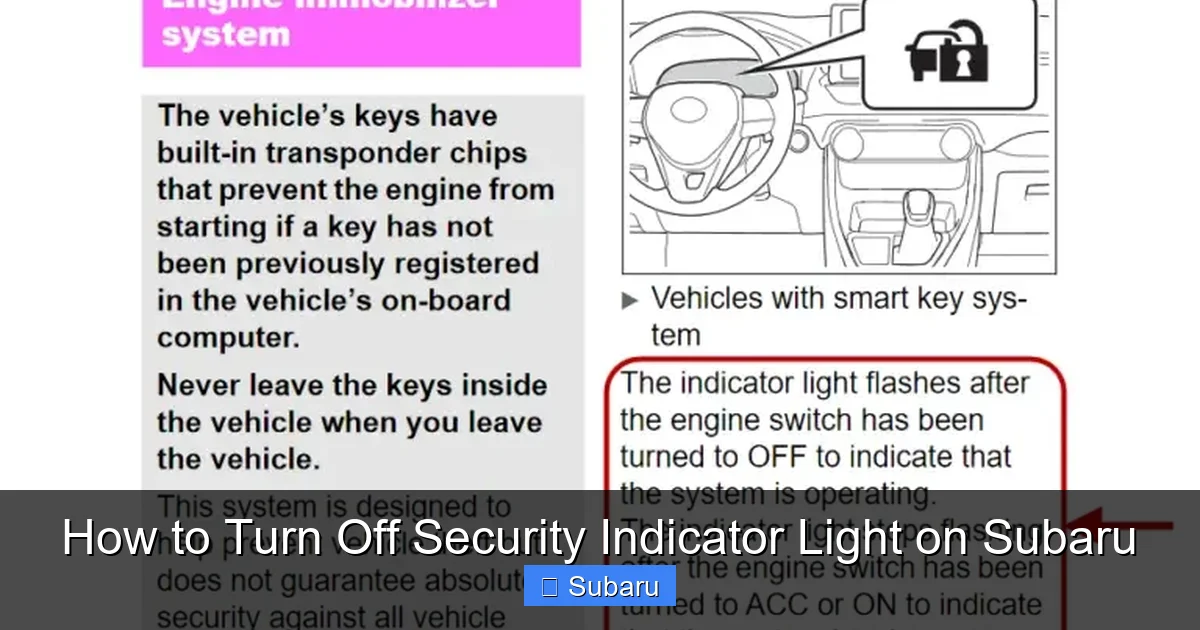
The security indicator light on your Subaru isn’t just a random flashing bulb—it’s a communication tool between your car’s anti-theft system and you. When functioning correctly, it provides important status updates about the state of your vehicle’s security. A slow, rhythmic blink when the car is locked means the system is armed and working as intended. Once you insert the correct key and start the engine, the light should turn off, confirming that the immobilizer has recognized the key and allowed the engine to run.
However, different light behaviors can indicate different issues. For example, if the light stays on solid while driving, it may suggest that the immobilizer system isn’t fully disengaging, which could eventually prevent the car from starting. On the other hand, rapid or erratic blinking might point to a problem with the key fob, such as a dying battery or a damaged transponder chip. In some cases, the light may flash in a specific pattern—like three short flashes followed by a pause—which can be a diagnostic code indicating a particular fault in the system.
It’s also worth noting that the exact behavior of the security light can vary slightly depending on your Subaru model and year. For instance, older models like the 2005 Outback may have slightly different light patterns compared to a 2020 Forester. That’s why it’s always a good idea to consult your owner’s manual for model-specific information. The manual will often include a section on warning lights and their meanings, helping you interpret what your car is trying to tell you.
Normal vs. Abnormal Light Behavior
To better understand whether your security light is acting normally or signaling a problem, it helps to know what to look for. Under normal conditions, the light should:
– Flash slowly (about once per second) when the car is locked and the security system is armed.
– Turn off completely once the engine is started with a valid key.
– Remain off while driving, unless the system detects an issue.
Abnormal behaviors include:
– The light staying on solid while the engine is running.
– Rapid or irregular blinking that doesn’t match the usual pattern.
– The light flashing even when the car is unlocked and the engine is off.
– No light at all when the car is locked (which could mean a burnt-out bulb or system failure).
If you notice any of these abnormal behaviors, it’s time to investigate further. While some issues are minor—like a weak key fob battery—others may require more in-depth troubleshooting.
Common Causes of a Malfunctioning Security Light
Several factors can cause the security indicator light to behave abnormally. The most common include:
– **Weak or dead key fob battery:** The transponder chip in your key relies on a small battery to communicate with the car. When the battery is low, the signal may be weak or inconsistent, causing the system to misread the key.
– **Damaged or unprogrammed key:** If you’ve recently had a new key made or replaced a lost one, it may not be properly programmed to your vehicle’s immobilizer system.
– **Faulty immobilizer antenna:** Located around the ignition switch, this component reads the key’s chip. If it’s damaged or dirty, it may fail to detect the key correctly.
– **Electrical issues:** Loose wiring, corroded connectors, or a failing control module can disrupt communication between the key and the immobilizer.
– **Aftermarket accessories:** Installing alarms, remote starters, or other electronics without proper integration can interfere with the factory security system.
Identifying the root cause is essential for choosing the right fix. In many cases, starting with the simplest solution—like replacing the key fob battery—can resolve the issue quickly.
How to Reset the Security Indicator Light (Step-by-Step)
Visual guide about How to Turn Off Security Indicator Light on Subaru
Image source: i.ytimg.com
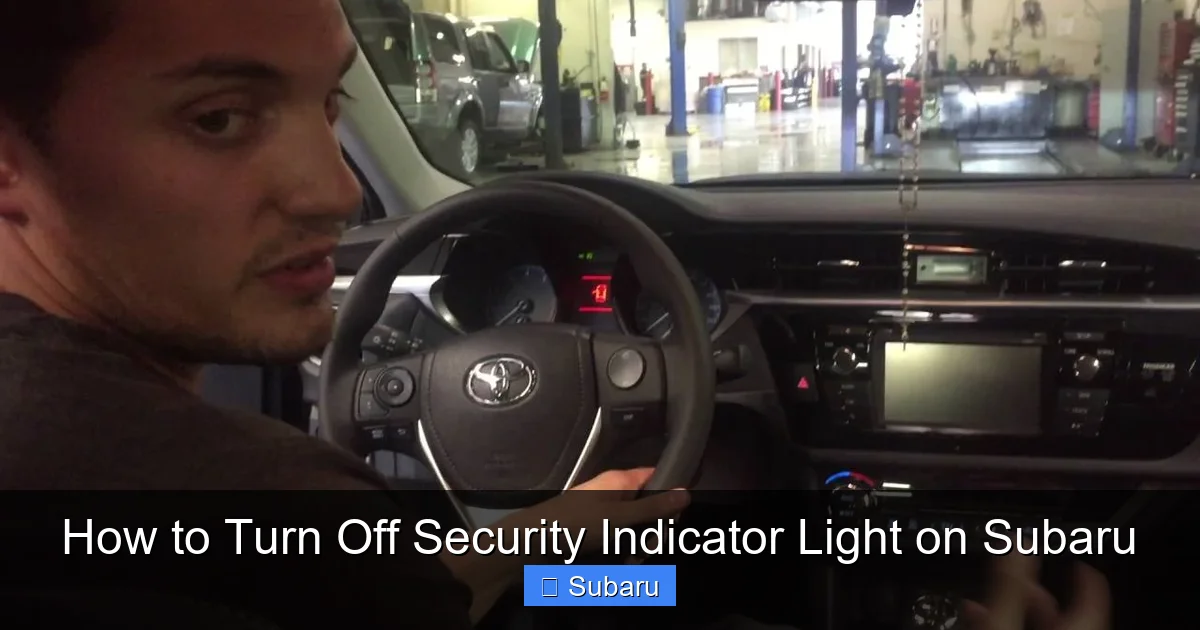
If your Subaru’s security light is blinking constantly or staying on when it shouldn’t, a system reset is often the quickest and safest way to restore normal function. The good news is that you don’t need special tools or technical expertise to do this—just your key and a few minutes of your time. Below is a step-by-step guide that works for most Subaru models, including the Outback, Forester, Impreza, and Legacy.
Method 1: The Ignition Cycle Reset
This is the most commonly recommended method and works for the majority of Subaru vehicles. It essentially “reboots” the immobilizer system by cycling power through the ignition.
1. **Turn off the engine and remove the key.** Make sure the car is completely off and the key is out of the ignition.
2. **Wait 10–15 seconds.** This allows the system to fully power down.
3. **Insert the key into the ignition.** Do not turn it yet.
4. **Turn the key to the “ON” position (but do not start the engine).** You’ll see the dashboard lights come on, including the security indicator.
5. **Wait for 10–15 seconds.** Watch the security light—it may flash or stay on during this time.
6. **Turn the key back to the “OFF” position.** Remove the key.
7. **Wait another 10–15 seconds.**
8. **Repeat steps 3–7 two more times.** This completes a total of three full ignition cycles.
9. **On the fourth attempt, turn the key to “ON” and then start the engine.** If the reset was successful, the security light should turn off after the engine starts and remain off while driving.
This method works by forcing the immobilizer system to re-recognize the key and reset its internal logic. It’s particularly effective after battery replacements, key fob issues, or random system glitches.
Method 2: Disconnect the Battery (Advanced Reset)
If the ignition cycle method doesn’t work, a more thorough reset involves disconnecting the car’s battery. This cuts power to the entire electrical system, including the immobilizer, and clears any stored error codes.
1. **Turn off the engine and remove the key.**
2. **Open the hood and locate the battery.** On most Subarus, it’s on the driver’s side.
3. **Disconnect the negative (-) terminal first.** Use a wrench to loosen the clamp and carefully remove the cable. Always disconnect the negative terminal first to avoid short circuits.
4. **Wait 15–30 minutes.** This ensures all capacitors in the system are fully discharged.
5. **Reconnect the negative terminal.** Tighten it securely.
6. **Close the hood and try starting the car.** The security light should now behave normally.
Note: Disconnecting the battery may reset other systems, such as the radio presets, clock, and adaptive cruise control settings. You may need to re-enter your radio code if your Subaru has one.
Method 3: Key Fob Re-Synchronization
Sometimes, the issue isn’t with the car—it’s with the key fob itself. If the fob’s signal is out of sync with the immobilizer, the security light may stay on or blink erratically. Re-synchronizing the fob can fix this.
1. **Stand close to the car with the key fob in hand.**
2. **Press and hold the “Lock” and “Unlock” buttons simultaneously for 5–10 seconds.** You may hear the locks cycle or see the lights flash.
3. **Release the buttons and try locking and unlocking the car remotely.**
4. **Insert the key and start the engine.** Check if the security light behaves normally.
This process re-establishes communication between the fob and the car’s security system. It’s especially useful after replacing the fob battery.
Troubleshooting Common Issues

Visual guide about How to Turn Off Security Indicator Light on Subaru
Image source: i.ytimg.com
Even after trying the reset methods, the security light may persist. When that happens, it’s time to dig deeper into potential causes. Below are some of the most common issues and how to address them.
Weak or Dead Key Fob Battery
The transponder chip in your key fob requires a small battery (usually a CR2032) to send a signal to the car. When the battery is low, the signal weakens, and the immobilizer may not recognize the key. This can cause the security light to blink constantly or stay on.
**How to fix it:**
– Purchase a new CR2032 battery (available at most drugstores or electronics shops).
– Use a small screwdriver or coin to open the key fob casing.
– Remove the old battery and insert the new one, ensuring the positive (+) side is facing up.
– Snap the fob back together and test it.
After replacing the battery, try the ignition cycle reset method to re-sync the system.
Damaged or Unprogrammed Key
If you’ve recently had a new key made—especially from a third-party locksmith—it may not be properly programmed to your Subaru’s immobilizer system. Even if it starts the car, an unprogrammed key can confuse the security system.
**How to fix it:**
– Use only the original key or a dealer-programmed replacement.
– If you suspect the key isn’t programmed, visit a Subaru dealership. They can verify the key’s status and reprogram it if needed.
– Avoid using cheap aftermarket keys, as they often lack the correct transponder chip.
Faulty Immobilizer Antenna
The immobilizer antenna is a small ring around the ignition switch that reads the key’s chip. If it’s damaged, dirty, or loose, it may fail to detect the key properly.
**How to fix it:**
– Inspect the area around the ignition for dirt, debris, or damage.
– Clean gently with a dry cloth.
– If the antenna appears cracked or disconnected, it may need replacement. This is a job best left to a professional.
Electrical or Wiring Problems
Loose connections, corroded wires, or a failing immobilizer control module can disrupt the system. These issues are harder to diagnose and often require a scan tool.
**How to fix it:**
– Check under the dashboard near the ignition for loose wires.
– Look for signs of corrosion or moisture.
– If you’re not comfortable inspecting wiring, take your car to a Subaru service center.
Aftermarket Accessories Interference
Installing a third-party alarm, remote starter, or GPS tracker can interfere with the factory security system if not properly integrated.
**How to fix it:**
– Temporarily disconnect the aftermarket device to see if the light behavior improves.
– Consult the installer or manufacturer for compatibility advice.
– Consider having the system professionally integrated.
When to Visit a Subaru Dealer
While many security light issues can be resolved at home, some problems require professional attention. If you’ve tried the reset methods, replaced the key fob battery, and inspected the key and ignition area—but the light still won’t behave normally—it’s time to visit a Subaru dealership or certified technician.
Dealerships have access to Subaru’s proprietary diagnostic tools, such as the Subaru Select Monitor (SSM), which can read detailed error codes from the immobilizer system. These tools can pinpoint issues that aren’t obvious during a visual inspection, such as a failing control module or internal wiring fault. Additionally, only dealerships can program new keys or reprogram existing ones using factory-level software.
You should also consider professional help if:
– The security light is accompanied by other warning lights (like the check engine light).
– The car won’t start at all, even with a known good key.
– You’ve recently been in an accident or had electrical work done.
– You’re planning to sell the car and want to ensure all systems are functioning properly.
A technician can perform a full system scan, clear any stored codes, and verify that the immobilizer is communicating correctly with the engine control unit. While this service may cost between $100 and $200, it’s a worthwhile investment for peace of mind and long-term reliability.
Preventing Future Security Light Issues
Once you’ve resolved the current issue, taking a few preventive steps can help avoid future problems with the security indicator light. These simple habits can keep your Subaru’s anti-theft system running smoothly for years to come.
Maintain Your Key Fob
Replace the key fob battery every 1–2 years, even if it seems to be working. A weak battery can cause intermittent issues that are hard to diagnose. Keep a spare battery in your glove compartment so you’re never caught off guard.
Use Genuine or Dealer-Programmed Keys
Avoid using cheap aftermarket keys or keys programmed by non-dealer locksmiths. These often lack the correct transponder chip or aren’t properly synced with your vehicle’s system.
Keep the Ignition Area Clean
Dirt, grease, or moisture around the ignition switch can interfere with the immobilizer antenna. Wipe the area gently with a dry cloth during regular maintenance.
Avoid Unnecessary Electrical Modifications
If you’re installing aftermarket electronics, choose reputable brands and have them professionally installed. Poorly integrated systems can disrupt the factory security setup.
Check the Owner’s Manual Regularly
Your Subaru’s manual contains valuable information about the security system, including light patterns, reset procedures, and troubleshooting tips. Keep it in the glove box for quick reference.
Schedule Regular Maintenance
During routine service visits, ask your technician to inspect the immobilizer system and key fobs. Early detection of issues can prevent bigger problems down the road.
Conclusion
The security indicator light on your Subaru is a vital part of its anti-theft system, designed to protect your vehicle from unauthorized access. While it’s normal for the light to flash when the car is locked, persistent or erratic behavior can signal an underlying issue. Fortunately, many of these problems can be resolved with simple steps like resetting the system, replacing the key fob battery, or re-synchronizing the key.
By understanding what the light means and how to respond, you can maintain both your car’s security and your own peace of mind. Remember, the goal isn’t to disable the light permanently—it’s to ensure it functions correctly as a deterrent. When in doubt, don’t hesitate to consult your owner’s manual or visit a Subaru dealership for professional assistance. With the right knowledge and a little proactive care, you can keep your Subaru running safely and securely for miles to come.
Frequently Asked Questions
Can I permanently disable the security indicator light on my Subaru?
No, it’s not recommended to permanently disable the security light, as it’s a key part of your car’s anti-theft system. Doing so could compromise your vehicle’s security and may even violate insurance or warranty terms. Instead, focus on fixing the underlying issue causing the light to malfunction.
Why does my Subaru security light stay on while driving?
If the security light stays on while driving, it usually means the immobilizer system isn’t fully recognizing your key. This could be due to a weak key fob battery, a damaged key chip, or a faulty immobilizer antenna. Try replacing the battery or visiting a dealer for diagnosis.
How often should I replace my Subaru key fob battery?
It’s a good idea to replace your key fob battery every 1–2 years, or sooner if you notice reduced range or inconsistent locking/unlocking. A weak battery can cause the security light to blink erratically.
Will disconnecting the battery reset the security light?
Yes, disconnecting the negative battery terminal for 15–30 minutes can reset the immobilizer system and clear error codes. However, this may also reset other systems like the radio and clock, so be prepared to reconfigure them.
Can a bad key cause the security light to blink?
Absolutely. A damaged, worn, or unprogrammed key can prevent the immobilizer from recognizing it, causing the security light to blink or stay on. Always use a properly programmed key from a Subaru dealer.
Is it safe to drive with the security light on?
If the light is on but the car starts and runs normally, it’s usually safe to drive—but you should address the issue soon. However, if the car struggles to start or stalls, stop driving and seek professional help immediately.