How to Turn Off Headlights on a 2023 Jeep Grand Cherokee

Contents
- 1 Key Takeaways
- 2 📑 Table of Contents
- 3 Understanding Your 2023 Jeep Grand Cherokee Headlight System
- 4 Manual Methods to Turn Off Headlights
- 5 Disabling Automatic Headlights via Vehicle Settings
- 6 Troubleshooting When Headlights Won’t Turn Off
- 7 Safety Considerations and Best Practices
- 8 Additional Tips for Grand Cherokee Owners
- 9 Frequently Asked Questions

Battery Terminal Cleaner

Brake Cleaner Spray

LED Indicator Light

Radiator Coolant
Knowing how to turn off the headlights on your 2023 Jeep Grand Cherokee is crucial to prevent battery drain and ensure safe operation. This guide covers everything from locating the manual switch to disabling automatic features through the Uconnect system. We also provide troubleshooting tips for when your lights won’t turn off, helping you maintain your vehicle’s electrical health.
Have you ever walked away from your 2023 Jeep Grand Cherokee only to realize hours later that the headlights are still on? It’s a sinking feeling, knowing that your battery is slowly draining, and you might be facing a jump-start in the morning. This common issue highlights a critical skill every Grand Cherokee owner should have: knowing exactly how to turn off the headlights. It’s not just about saving yourself from an inconvenient dead battery; it’s about understanding your vehicle’s systems, ensuring safety, and maintaining your SUV’s electrical health. In this comprehensive guide, we’ll walk you through every method, from the simplest physical switch to navigating the digital menus of the Uconnect system. We’ll also troubleshoot why lights might stay on and share best practices to keep your Jeep running smoothly.
The 2023 Jeep Grand Cherokee, like most modern vehicles, combines traditional manual controls with sophisticated automatic systems. This duality is great for convenience but can be confusing. Is that switch on the turn signal lever for high beams or something else? Where exactly is the main headlight control? And what’s the deal with those lights that seem to turn on by themselves? We’ll demystify it all. Our goal is to make you confident and in control of your Grand Cherokee’s lighting, whether you’re a new owner or just haven’t needed to dig into these settings before. So, let’s turn on our knowledge and get those headlights under control.
Key Takeaways
- Always verify headlights are off before exiting: Make it a habit to check the headlight switch or dashboard indicator to avoid a dead battery.
- The headlight switch is typically on the left of the steering column: It controls manual on/off, along with parking lights and automatic modes.
- Automatic headlights can be disabled via Uconnect settings: Navigate the infotainment menu to turn off auto-on features permanently.
- A persistent “on” state often indicates a faulty switch or relay: Simple checks can diagnose the issue before visiting a mechanic.
- Disabling headlights does not affect daytime running lights: DRLs operate on a separate circuit and will remain active in most models.
- Consult your owner’s manual for model-specific details: Features can vary slightly between Grand Cherokee trims and model years.
- Safety first: Never attempt to disable headlights while driving; ensure proper lighting for road conditions.
📑 Table of Contents
Understanding Your 2023 Jeep Grand Cherokee Headlight System
Before we dive into the “how-to,” it helps to understand what you’re working with. The headlight system in your Grand Cherokee is more than just a switch and a bulb. It’s a network controlled by the Body Control Module (BCM), which manages everything from the brightness to automatic activation based on ambient light. Knowing the components will make troubleshooting much easier.
Types of Headlights: Halogen, LED, and HID
The 2023 Grand Cherokee comes with different headlight types depending on the trim. Base models often use halogen bulbs, while higher trims feature LED or even HID (High-Intensity Discharge) systems. The method to turn them off is the same—via the headlight switch—but the underlying technology differs. LED systems, for instance, are more sensitive to voltage fluctuations and can drain a battery faster if left on. Regardless of the type, the control interface remains consistent across trims.
Automatic vs. Manual Headlight Modes
Your Grand Cherokee likely has an “AUTO” setting on the headlight switch. When engaged, sensors detect outside light levels and turn the headlights on or off automatically. This is convenient but can lead to surprises, like lights turning on in a dark parking garage or staying on briefly after you lock the car. Manual mode gives you direct control but requires you to remember to flip the switch. Understanding which mode you’re in is the first step to managing your lights.
The Role of the Body Control Module (BCM)
The BCM is the brain for many of your Grand Cherokee’s electrical accessories, including the headlights. It receives input from the headlight switch, ambient light sensors, and door ajar switches to decide when to power the lights. A glitch in the BCM, a faulty sensor, or a software hiccup can cause headlights to stay on even when the switch is off. This is why sometimes the solution isn’t just flipping a switch but may require a system reset or professional diagnosis.
Manual Methods to Turn Off Headlights
Let’s start with the most straightforward approach: using the physical controls. These are your first line of defense and work instantly, regardless of any automatic settings or system glitches.

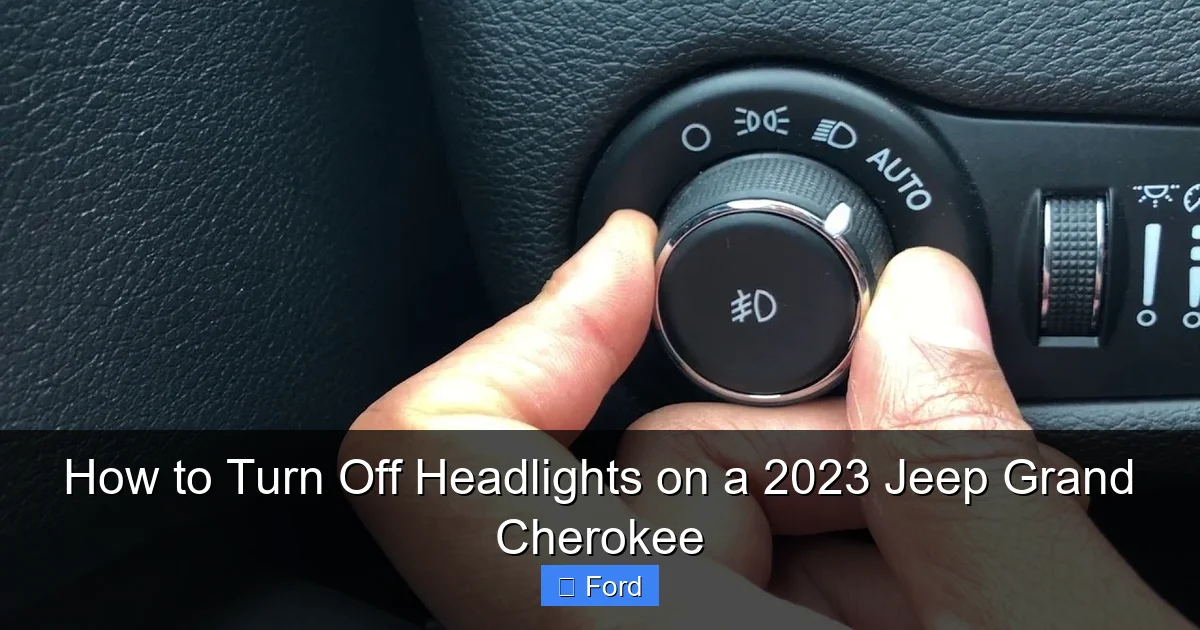
Visual guide about How to Turn Off Headlights on a 2023 Jeep Grand Cherokee
Image source: i.ytimg.com
Locating the Headlight Switch on the Dashboard
On the 2023 Grand Cherokee, the primary headlight control is a rotary knob on the left side of the steering column, just behind the turn signal lever. It’s part of the multifunction stalk assembly. To turn the headlights off manually, rotate this knob fully counterclockwise to the “OFF” position. You’ll usually feel a detent (a click) when it’s fully off. This action cuts power to the headlights immediately, overriding any automatic settings. It’s a good habit to do this every time you park, especially if you’ll be away from the vehicle for a while.
Using the Turn Signal Lever for High Beams
While the rotary knob controls the main headlights and parking lights, the high beams are activated by pushing or pulling the turn signal lever toward you. To ensure all external lights are off, make sure the lever is in its neutral position—not pushed or pulled. Sometimes, a slightly engaged high beam switch can keep the high beams on even when the main headlight switch is off, so give the lever a firm tap to center it.
The “Off” Position and Auto-On Feature Explained
When you turn the headlight switch to “OFF,” you might notice the headlights stay on for a few seconds after turning off the ignition. This is a “delay” or “exit” feature designed to light your path as you leave the vehicle. It should turn off automatically after about 30 seconds or when you lock the doors. If they stay on longer, it could indicate a problem with the door ajar switch or the BCM timing. For immediate shut-off, turn the switch to “OFF” after parking but before turning off the engine, or simply lock the doors with the key fob, which typically cancels the delay.
Disabling Automatic Headlights via Vehicle Settings
If you prefer your headlights to stay off until you manually turn them on, you can disable the automatic feature through the Uconnect infotainment system. This is a more permanent solution than just flipping the switch each time.

Visual guide about How to Turn Off Headlights on a 2023 Jeep Grand Cherokee
Image source: m.media-amazon.com
Accessing the Uconnect Infotainment System
Start by turning the ignition to the “ON” or “RUN” position (don’t start the engine). Press the “Settings” button on the Uconnect touchscreen, usually found in the bottom row of icons. From there, select “Vehicle” or “Vehicle Settings,” depending on your Grand Cherokee’s software version. The exact menu names can vary slightly, but look for lighting-related options.
Navigating to Lighting or Vehicle Settings
Within the Vehicle Settings menu, scroll to find “Lighting” or “Exterior Lights.” Here you’ll see options like “Headlight Illumination,” “Automatic High Beams,” and “Headlight Delay.” The specific option to disable auto headlights is often called “Auto-On Headlamps” or “Automatic Headlights.” Toggle this setting to “Off.” This tells the BCM not to activate the headlights based on ambient light sensors. You can also adjust the “Headlight Delay” time here if you find the exit lights too long or too short.
Disabling Auto Headlights and Exit Features
After turning off “Auto-On Headlamps,” you may also want to disable “Headlight Illumination on Exit” if you don’t want the lights to come on when you unlock the car or turn it off. This setting is often in the same menu. Once you’ve made your changes, exit the menu; the settings usually save automatically. Now, your headlights will only come on when you manually turn the rotary switch to the “ON” position. It’s worth noting that this process is similar to adjusting other vehicle settings. For instance, if you ever need to turn off automatic headlights on a Toyota Corolla, you’d navigate through that vehicle’s infotainment or dashboard menus, though the exact steps differ by brand.
Troubleshooting When Headlights Won’t Turn Off
Sometimes, despite your best efforts, the headlights refuse to shut off. This is usually a sign of a deeper issue. Let’s diagnose the common culprits.
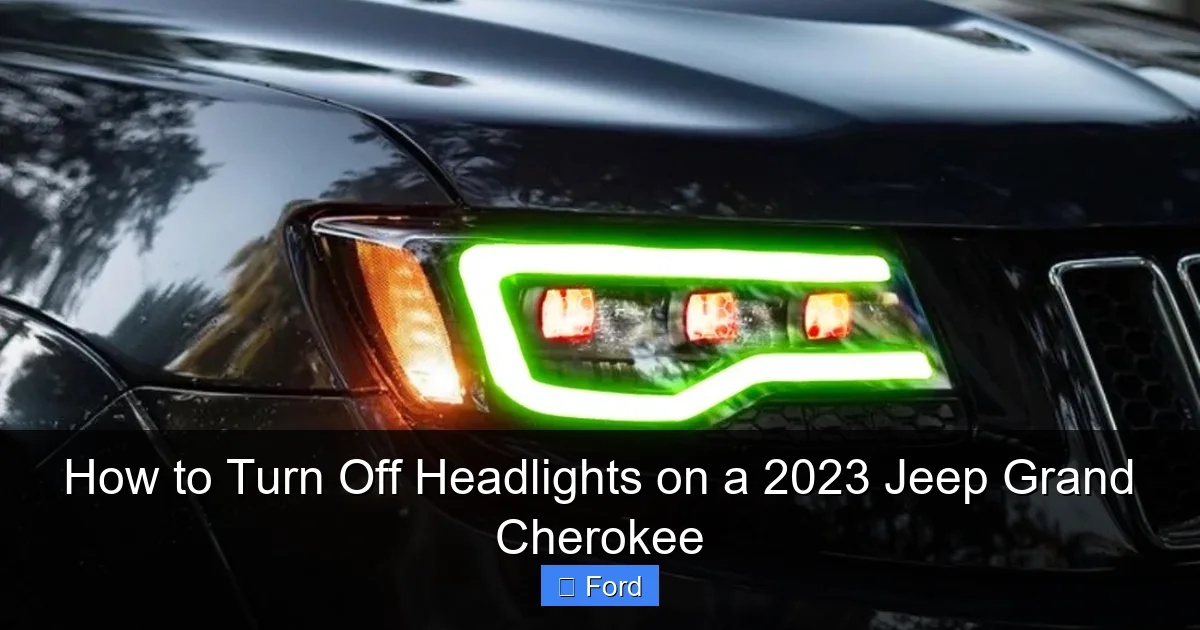
Visual guide about How to Turn Off Headlights on a 2023 Jeep Grand Cherokee
Image source: lightingtrendz.com
Common Causes: Stuck Switch, Faulty Relay, or BCM Issues
The most frequent cause is a mechanically stuck headlight switch. Over time, dirt and wear can cause the rotary knob to not fully disengage. Another possibility is a faulty headlight relay—a small component in the fuse box that controls power to the lights. If it welds itself in the “on” position, power flows continuously. Finally, a software glitch or faulty sensor in the BCM can send a constant “on” signal. The ambient light sensor, located on the dashboard near the windshield, if dirty or malfunctioning, might think it’s dark all the time.
DIY Checks and Simple Fixes
First, try wiggling and turning the headlight switch multiple times to loosen any debris. Listen for a faint click from the engine compartment—this is the relay switching. If you hear it click when turning the switch off, the relay might be working. Locate the headlight relay in the fuse box (owner’s manual map) and swap it with an identical relay of the same amperage from another circuit (like the horn relay) to see if that solves it. If the lights turn off with the swapped relay, you’ve found the problem and need a new relay. Also, clean the ambient light sensor with a soft cloth; it’s usually a small square lens on the dash.
When to Seek Professional Help
If DIY steps don’t work, the issue likely lies with the BCM or the switch itself, which requires specialized diagnostic tools. A dealer or qualified mechanic can scan the BCM for error codes. Sometimes, a simple system reset, similar to how you might reset the oil change light on a Jeep Grand Cherokee, can clear a temporary glitch. However, persistent problems may mean replacing the headlight switch or reprogramming the BCM, which is best left to professionals to avoid further electrical issues.
Safety Considerations and Best Practices
Manipulating your headlight system isn’t just about convenience; it has safety and legal implications. Here’s what you need to keep in mind.
Legal Requirements for Headlight Use
In all U.S. states, you are required to use headlights from sunset to sunrise and during poor visibility conditions like rain, fog, or snow. Deliberately disabling automatic headlights doesn’t exempt you from this law. You must manually turn them on when needed. Driving without proper headlights is illegal and dangerous, increasing the risk of accidents. Moreover, some states have specific rules about high beam usage to avoid blinding other drivers. Know your local regulations.
Battery Conservation Tips for Long-Term Parking
If you’re storing your Grand Cherokee for an extended period, take extra steps to preserve the battery. Disconnect the negative battery terminal if you won’t be driving for over a month. For shorter storage, ensure all lights are off, and consider using a battery tender or trickle charger. Also, check for any parasitic drains—like a glove box light that stays on—which can slowly sap power. Regularly starting the vehicle and letting it run for 15-20 minutes helps recharge the battery.
Impact on Warranty and Vehicle Systems
Disabling factory features like automatic headlights through the Uconnect menu is completely safe and won’t affect your warranty. It’s an intended user setting. However, physically modifying the wiring or disabling safety features like daytime running lights (if your model has them) could void parts of your warranty and may be illegal in some areas. Always revert to factory settings before taking your vehicle to a dealer for warranty work to avoid complications. Remember, systems like lane departure warning on a Honda Civic or other driver-assist features often have their own separate settings and shouldn’t be confused with lighting controls.
Additional Tips for Grand Cherokee Owners
Beyond the basics, here are some extra insights to enhance your ownership experience.
Using the Key Fob to Control Lights
Your key fob has a “panic” button that sounds the horn and flashes the lights. It also often has a dedicated button to manually turn on the headlights remotely. Consult your owner’s manual for the exact function. This can be useful for locating your vehicle in a dark parking lot, but be cautious—leaving the lights on via fob for too long can drain the battery.
Setting Up Automatic Headlight Preferences
If you like the auto feature but want to tweak it, explore all the settings in Uconnect. You can adjust the sensitivity of the ambient light sensor (if available) or change the delay time for headlights after engine shut-off. Some models allow you to set “HomeLink” or “Approach Lighting” that turns on lights when you unlock the car. Customizing these can balance convenience with battery conservation.
Maintaining Your Headlight System
Regular maintenance keeps your system reliable. Clean your headlights periodically to maintain brightness. If you have halogen bulbs, check them annually for dimming or filament breaks and replace them in pairs. For LED or HID systems, a professional should handle any issues. Also, ensure the wiring harnesses in the engine bay are secure and free of corrosion, especially if you live in a humid or salty environment. A well-maintained electrical system reduces the chance of unexpected failures.
Understanding how to control your 2023 Jeep Grand Cherokee’s headlights empowers you as a driver. It prevents costly battery replacements, ensures you’re always visible on the road, and helps you troubleshoot minor issues before they become major repairs. Whether you rely on the manual switch, customize the auto settings, or need to diagnose a stubborn problem, you now have the knowledge to take charge. Remember, your owner’s manual is the ultimate authority for your specific vehicle, and when in doubt, consult a certified Jeep technician. Safe travels!
Frequently Asked Questions
Can I turn off my 2023 Jeep Grand Cherokee headlights while driving?
No. For safety and legal reasons, you should never turn off your headlights while driving at night or in low visibility. The vehicle’s design prevents complete disablement while in motion, but you can switch to parking lights only via the rotary knob, which is still unsafe on dark roads.
Why do my headlights stay on for a minute after I turn off the car?
This is a built-in “headlight delay” or “exit lighting” feature. It provides illumination as you leave the vehicle. The duration is programmable in the Uconnect settings under Vehicle > Lighting. If they stay on indefinitely, there may be a fault with the door ajar switch or the BCM.
How do I completely disable automatic headlights on my Grand Cherokee?
Go to Settings > Vehicle > Lighting on the Uconnect screen. Find “Auto-On Headlamps” or “Automatic Headlights” and toggle it to “Off.” This prevents the headlights from turning on automatically based on ambient light, giving you full manual control.
What if my headlight switch feels stuck or doesn’t turn off?
Try moving the switch back and forth several times to dislodge any debris. If it remains stuck, the switch may be faulty and need replacement. Also, check the headlight relay in the fuse box; a welded relay can keep lights on even with the switch off.
Will turning off automatic headlights affect my daytime running lights (DRLs)?
No. Daytime running lights are a separate system that operates independently in most Grand Cherokee models. They will continue to function when the vehicle is running and in gear, regardless of your headlight switch position or auto settings, unless manually disabled via a different setting or hardware modification.
My headlights won’t turn off even after disabling auto mode. What now?
This indicates a likely electrical issue. First, check the headlight relay and swap it with a known good relay. If that doesn’t work, the problem could be a shorted wire, a faulty BCM, or a stuck switch. A professional diagnostic scan is recommended to pinpoint the exact cause.