
How to Shop for Car Insurance

Shopping for car insurance doesn’t have to be confusing or expensive. With the right strategy, you can find a policy that fits your needs and budget while staying protected on the road.
Key Takeaways
- Compare multiple quotes: Rates vary widely between insurers, so getting at least three quotes helps you find the best deal.
- Understand coverage types: Know the difference between liability, collision, comprehensive, and uninsured motorist coverage to choose wisely.
- Check your deductible: A higher deductible lowers your premium but increases out-of-pocket costs if you file a claim.
- Review discounts regularly: Safe driver, multi-car, and bundling discounts can significantly reduce your monthly payments.
- Assess your actual needs: Don’t over-insure an older car or under-insure a new one—match coverage to your vehicle and lifestyle.
- Read the fine print: Policy details matter—look for exclusions, limits, and renewal terms before signing.
- Reevaluate annually: Life changes like moving, getting married, or buying a new car mean your insurance needs may shift.
📑 Table of Contents
- How to Shop for Car Insurance: A Step-by-Step Guide
- Step 1: Know Your State’s Minimum Requirements
- Step 2: Assess Your Personal Insurance Needs
- Step 3: Compare Quotes from Multiple Insurers
- Step 4: Understand Coverage Types and Add-Ons
- Step 5: Take Advantage of Discounts
- Step 6: Read the Fine Print Before You Sign
- Step 7: Reevaluate Your Policy Annually
- Final Thoughts: Smart Shopping Pays Off
How to Shop for Car Insurance: A Step-by-Step Guide
So, you need car insurance. Maybe you just bought your first car, moved to a new state, or your current policy is up for renewal. Whatever the reason, shopping for car insurance can feel overwhelming. There are so many companies, coverage options, and confusing terms floating around. But here’s the good news: with a little know-how, you can find a policy that protects you without breaking the bank.
Car insurance isn’t just a legal requirement in most states—it’s also your financial safety net. Accidents happen, weather damages vehicles, and theft is always a risk. The right policy helps cover repair costs, medical bills, and legal fees if something goes wrong. But not all policies are created equal. Some offer bare-bones protection, while others come with extras like roadside assistance or rental car reimbursement. The key is knowing what you need and how to get it at a fair price.
In this guide, we’ll walk you through the entire process of shopping for car insurance—from understanding your state’s requirements to comparing quotes and choosing the best provider. Whether you’re a new driver or a seasoned pro, these tips will help you make confident, informed decisions. Let’s get started.
Step 1: Know Your State’s Minimum Requirements
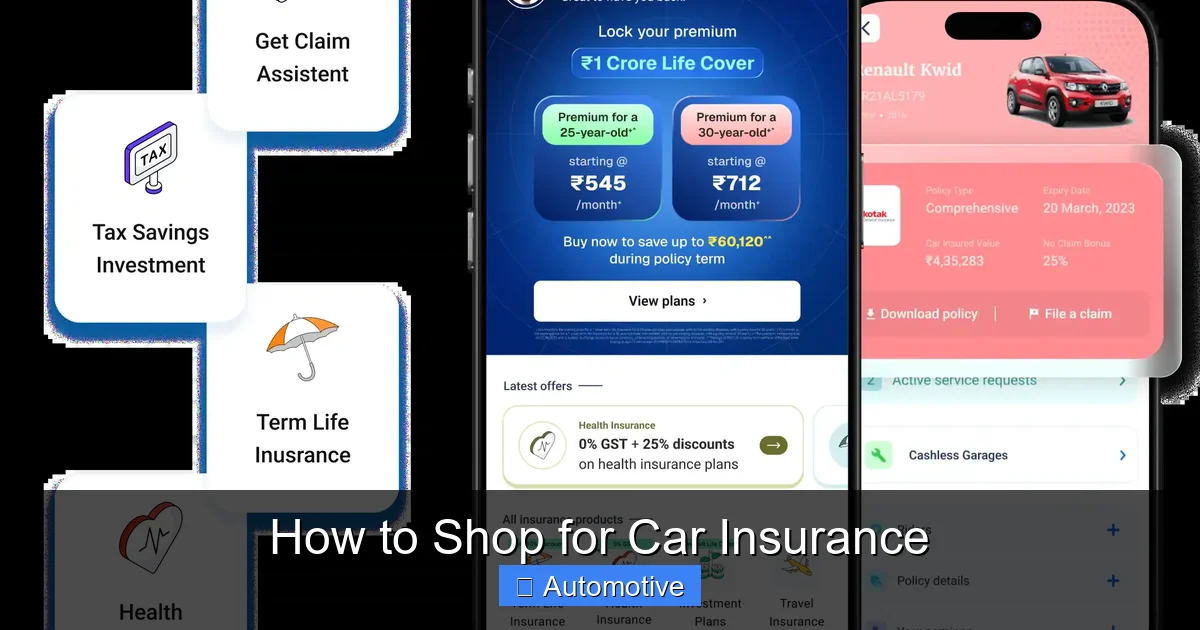
Visual guide about How to Shop for Car Insurance
Image source: i2.wp.com
Before you even think about shopping around, you need to understand what your state requires. Every state (except New Hampshire) mandates some level of car insurance, but the specifics vary widely. Most states require at least liability coverage, which pays for damage or injuries you cause to others in an accident. But that’s often not enough to fully protect you.
For example, in California, the minimum liability coverage is 15/30/5. That means $15,000 for injury per person, $30,000 per accident for total injuries, and $5,000 for property damage. In contrast, Florida requires $10,000 in personal injury protection (PIP) and $10,000 in property damage liability, but no bodily injury liability unless you’re at fault in a serious crash. These differences matter because they affect how much coverage you actually need.
Why Minimum Coverage Isn’t Always Enough
While meeting your state’s minimum might keep you legal, it often leaves you exposed. Imagine you cause an accident that totals another driver’s $30,000 car. If your property damage liability is only $5,000, you’re on the hook for the remaining $25,000. That’s a huge financial risk.
That’s why many experts recommend going beyond the minimum. Consider raising your liability limits to 100/300/100—$100,000 per person, $300,000 per accident, and $100,000 for property damage. This extra protection costs relatively little but can save you from financial disaster.
Check for Additional State Requirements
Some states also require uninsured/underinsured motorist coverage (UM/UIM), which protects you if you’re hit by a driver with no insurance or insufficient coverage. Others mandate medical payments coverage or PIP. Make sure you know what’s required where you live. You can usually find this information on your state’s Department of Motor Vehicles (DMV) or insurance commissioner website.
Pro tip: Even if your state doesn’t require certain coverages, they might still be worth adding. For instance, if you live in an area with a high rate of uninsured drivers, UM/UIM coverage is a smart move.
Step 2: Assess Your Personal Insurance Needs
Visual guide about How to Shop for Car Insurance
Image source: i2.wp.com
Once you know the legal basics, it’s time to think about your personal situation. Your ideal policy depends on factors like your car’s value, your driving habits, and your financial comfort level. Ask yourself a few key questions:
– How much would it cost to replace my car if it were totaled?
– Can I afford to pay out of pocket for repairs after an accident?
– Do I drive frequently or mostly on weekends?
– Do I have a clean driving record, or have I had accidents or tickets?
These questions help you determine how much coverage you actually need.
New vs. Used Cars: Coverage Differences
If you drive a brand-new or high-value car, you’ll likely want comprehensive and collision coverage. These cover damage to your own vehicle, whether from an accident, theft, vandalism, or natural disaster. For a $40,000 SUV, skipping this coverage could mean losing tens of thousands of dollars if something happens.
On the other hand, if you drive an older car worth $5,000 or less, you might consider dropping collision and comprehensive. The cost of these coverages could exceed the car’s value over time. For example, paying $1,200 a year for coverage on a $4,000 car doesn’t make financial sense. In that case, liability and UM/UIM might be enough.
Your Driving Habits Matter
Do you commute 50 miles a day in heavy traffic? Or do you only drive to the grocery store on weekends? High-mileage drivers face more risk and may need higher coverage limits. Similarly, if you frequently drive in areas with severe weather—like hail-prone regions or flood zones—comprehensive coverage becomes more valuable.
Also, consider your parking situation. If you park on the street in a high-crime area, theft and vandalism coverage is worth the extra cost. But if your car is garaged in a secure building, the risk is lower.
Financial Comfort and Deductibles
Your deductible—the amount you pay out of pocket before insurance kicks in—plays a big role in your premium. A $1,000 deductible will lower your monthly payment more than a $250 deductible. But if you file a claim, you’ll pay $1,000 instead of $250.
Choose a deductible you can comfortably afford in an emergency. If you have $2,000 in savings, a $1,000 deductible might be fine. But if your emergency fund is tight, a lower deductible could save you stress later.
Step 3: Compare Quotes from Multiple Insurers

Visual guide about How to Shop for Car Insurance
Image source: carsflow.com
Now that you know what you need, it’s time to shop around. Don’t just go with the first ad you see or the company your parents used. Insurance rates can vary by hundreds of dollars between providers for the same coverage.
Get at Least Three Quotes
Start by getting quotes from at least three different insurers. You can do this online, over the phone, or through an independent agent. Online quote tools are fast and convenient—just enter your info, and you’ll get a rate estimate in minutes.
But be careful: online quotes are often preliminary. They might not include all discounts or account for recent changes in your driving record. Always follow up with a phone call or agent to confirm the final rate.
Use an Independent Agent or Broker
Independent agents work with multiple insurance companies, so they can compare options for you. They’re especially helpful if you have a complex situation—like a teen driver, a DUI, or a custom vehicle. Agents know which insurers are more lenient with certain issues and can help you find the best fit.
Just remember: agents earn commissions, so they may have incentives to recommend certain policies. Always ask why they’re suggesting a particular plan and whether there are cheaper alternatives.
Compare Apples to Apples
When comparing quotes, make sure you’re looking at the same coverage levels, deductibles, and limits. A $100/month policy from Company A might seem like a steal—until you realize it only includes the state minimum. Meanwhile, Company B’s $130/month plan includes comprehensive, collision, and UM/UIM.
Use a spreadsheet or notebook to track:
– Company name
– Monthly and annual premium
– Coverage types and limits
– Deductibles
– Available discounts
– Customer service ratings
This makes it easier to spot the best value.
Don’t Forget About Customer Service
Price isn’t everything. A cheap policy isn’t worth much if the company drags its feet on claims or has terrible customer service. Check reviews on sites like J.D. Power, Consumer Reports, or the Better Business Bureau. Look for insurers with high claims satisfaction scores and low complaint ratios.
Also, consider how you prefer to communicate. Do you want 24/7 phone support? A user-friendly app? Local agents? These factors can affect your experience when you need help.
Step 4: Understand Coverage Types and Add-Ons
Car insurance policies include several types of coverage. Understanding each one helps you build the right policy for your needs.
Liability Coverage
This is the foundation of most policies. It covers:
– Bodily injury liability: Medical bills, lost wages, and pain and suffering for others if you’re at fault.
– Property damage liability: Repairs or replacement of another person’s vehicle or property.
As mentioned earlier, this doesn’t cover your own injuries or car. But it’s essential for protecting your assets.
Collision Coverage
Collision pays to repair or replace your car after an accident with another vehicle or object—like a tree or guardrail. It applies regardless of who’s at fault. This is important if your car is valuable or you can’t afford to pay for repairs yourself.
Comprehensive Coverage
Comprehensive covers non-collision events, such as:
– Theft
– Vandalism
– Fire
– Hail or flood damage
– Animal collisions (like hitting a deer)
It’s especially useful in areas prone to natural disasters or high crime.
Uninsured/Underinsured Motorist Coverage (UM/UIM)
This protects you if you’re hit by a driver with no insurance or not enough coverage to pay your bills. It can cover medical expenses, lost wages, and even pain and suffering. Given that nearly 13% of drivers are uninsured (according to the Insurance Research Council), this is a smart addition.
Personal Injury Protection (PIP) and Medical Payments
PIP covers medical expenses for you and your passengers, regardless of fault. It may also include lost wages and funeral costs. Medical payments coverage is similar but typically has lower limits and doesn’t cover lost income.
PIP is required in “no-fault” states like Florida and Michigan, but optional elsewhere.
Optional Add-Ons Worth Considering
Many insurers offer extras that can enhance your policy:
– **Rental car reimbursement:** Pays for a rental while your car is being repaired after a covered claim.
– **Roadside assistance:** Covers towing, jump-starts, flat tires, and lockout services.
– **Gap insurance:** If your car is totaled and you owe more than it’s worth, gap insurance covers the difference. This is useful for leased or financed vehicles.
– **New car replacement:** Some companies will replace your new car with a brand-new one if it’s totaled within the first year.
These add-ons cost extra, but they can provide peace of mind. Decide which ones fit your lifestyle and budget.
Step 5: Take Advantage of Discounts
Insurance companies offer a variety of discounts that can significantly lower your premium. Don’t leave money on the table—ask about every discount you qualify for.
Common Car Insurance Discounts
– **Safe driver discount:** For drivers with no accidents or tickets in the past 3–5 years.
– **Multi-car discount:** When you insure more than one vehicle with the same company.
– **Bundling discount:** Combining auto insurance with home, renters, or life insurance.
– **Good student discount:** For students with a B average or higher.
– **Low mileage discount:** If you drive fewer than 7,500–10,000 miles per year.
– **Defensive driving course discount:** Completing an approved safety course.
– **Pay-in-full discount:** Paying your annual premium upfront instead of monthly.
– **Paperless billing or auto-pay discount:** For going digital or setting up automatic payments.
Some insurers also offer discounts for certain professions (like teachers or first responders), military service, or owning a home.
How to Maximize Your Savings
Start by reviewing your policy annually. Life changes—like getting married, moving, or adding a teen driver—can affect your eligibility for discounts.
Also, ask your agent directly: “What discounts am I currently receiving, and are there any I might qualify for?” Sometimes, discounts aren’t automatically applied.
Pro tip: Even small discounts add up. A 10% safe driver discount on a $1,500 annual policy saves you $150. Over five years, that’s $750.
Step 6: Read the Fine Print Before You Sign
It’s tempting to skip the policy documents and just pay the bill. But the fine print contains important details that can affect your coverage.
Key Details to Review
– **Coverage limits:** Make sure they match what you discussed.
– **Exclusions:** What’s not covered? For example, some policies exclude damage from racing or using your car for rideshare.
– **Deductibles:** Confirm the amount for each type of coverage.
– **Renewal terms:** Does the policy auto-renew? Can the insurer raise rates without notice?
– **Claims process:** How do you file a claim? Is there a 24/7 hotline?
– **Cancellation policy:** What happens if you want to switch insurers?
Also, check for any endorsements or riders—additions to your policy that change the terms. These might include things like custom equipment coverage or international driving protection.
Ask Questions
If something isn’t clear, ask your agent or insurer. Don’t assume. For example, if you use your car for food delivery on weekends, make sure your policy covers commercial use. Many standard policies don’t.
Reading the fine print takes time, but it prevents surprises later. A policy that looks great on paper might have hidden limitations that leave you underinsured when you need it most.
Step 7: Reevaluate Your Policy Annually
Your life changes, and so should your insurance. Review your policy every year—or whenever a major life event occurs.
When to Reassess
– You buy a new car
– You move to a new city or state
– You get married or divorced
– You add a teen driver to your policy
– Your driving habits change (e.g., you start working from home)
– You pay off your car loan
Each of these can affect your risk profile and coverage needs.
Shop Around Again
Just because you’ve been with the same insurer for years doesn’t mean you’re getting the best rate. Insurers often raise rates gradually, and loyalty doesn’t always pay. Get new quotes annually to see if you can save.
Also, check if your insurer has introduced new discounts or improved their customer service. Sometimes, staying put makes sense—but only if you’re confident you’re still getting a fair deal.
Adjust Coverage as Needed
If your car’s value has dropped significantly, you might drop collision and comprehensive. If you’ve built up savings, you could raise your deductible to lower your premium. Stay flexible and responsive to your changing needs.
Final Thoughts: Smart Shopping Pays Off
Shopping for car insurance doesn’t have to be a headache. By understanding your state’s requirements, assessing your personal needs, comparing quotes, and taking advantage of discounts, you can find a policy that offers strong protection at a fair price.
Remember, the cheapest policy isn’t always the best. Focus on value—coverage that matches your lifestyle, financial situation, and risk tolerance. And don’t forget to reevaluate regularly. A little effort now can save you hundreds of dollars and a lot of stress down the road.
With these tips, you’re ready to shop for car insurance like a pro. Stay safe, stay covered, and drive with confidence.
Frequently Asked Questions
How much car insurance do I really need?
The amount of car insurance you need depends on your state’s requirements, your car’s value, and your financial situation. While meeting the minimum keeps you legal, experts often recommend higher liability limits and additional coverage like comprehensive and uninsured motorist protection for better financial security.
Can I switch car insurance companies anytime?
Yes, you can switch insurers at any time, even mid-policy. Just make sure your new policy starts before your old one ends to avoid a coverage gap. Also, check if your current insurer charges a cancellation fee.
Will my premium go up if I file a claim?
It depends on the claim and your insurer. Claims for at-fault accidents or comprehensive events (like theft) are more likely to increase your premium. Small claims or those under a certain amount may not affect your rate.
Do I need full coverage on an older car?
Not necessarily. If your car is worth less than $4,000–$5,000, the cost of full coverage (collision and comprehensive) might exceed its value. In that case, liability and uninsured motorist coverage may be sufficient.
How can I lower my car insurance premium?
You can lower your premium by raising your deductible, maintaining a clean driving record, bundling policies, taking advantage of discounts, and driving fewer miles. Shopping around annually also helps you find better rates.
Is it better to buy car insurance online or through an agent?
Both options have pros and cons. Buying online is fast and convenient, while agents offer personalized advice and can help with complex situations. The best choice depends on your comfort level and insurance needs.
