How to Sell a Classic Car Overseas
Selling a classic car overseas can be a smart way to reach passionate collectors and fetch a higher price, but it requires careful planning and knowledge of international regulations. From preparing documentation to choosing the right export method, this guide walks you through every step to ensure a smooth and profitable sale.
Selling a classic car isn’t just about finding a buyer—it’s about finding the *right* buyer. And sometimes, that buyer isn’t in your hometown, or even your country. If you’ve got a vintage Mustang, a restored Jaguar E-Type, or a rare Porsche 911 tucked away in your garage, selling it overseas could unlock a much higher value. International collectors often have deeper pockets and a stronger emotional connection to certain models, especially those that are rare or iconic in their region.
But selling a classic car overseas isn’t as simple as listing it online and waiting for an offer. It involves navigating complex shipping logistics, understanding foreign import laws, and ensuring your vehicle meets international standards. One wrong move—like missing a required export certificate or underestimating import taxes—can delay the sale, cost you money, or even result in your car being turned away at the border.
That’s why this guide is here: to walk you through the entire process, step by step. Whether you’re a first-time seller or a seasoned collector, we’ll cover everything from prepping your car and choosing the best markets to shipping, documentation, and closing the deal. By the end, you’ll have the confidence and knowledge to sell your classic car overseas—safely, legally, and profitably.
In This Article
- 1 Key Takeaways
- 2 📑 Table of Contents
- 3 Why Sell Your Classic Car Overseas?
- 4 Choosing the Right Market for Your Classic Car
- 5 Preparing Your Classic Car for International Sale
- 6 Shipping Your Classic Car Overseas
- 7 Handling the Sale and Payment
- 8 Understanding Import Taxes and Duties
- 9 Final Tips for a Successful Overseas Sale
- 10 Frequently Asked Questions
- 10.1 Can I sell my classic car overseas if it’s not running?
- 10.2 Do I need to modify my car to meet foreign standards?
- 10.3 How long does it take to ship a classic car overseas?
- 10.4 Who pays for import taxes and duties?
- 10.5 Can I sell my classic car to a buyer in a country with left-hand drive?
- 10.6 What if the buyer backs out after shipping?
Key Takeaways
- Research target markets: Some countries, like Germany, Japan, and Australia, have strong demand for classic American and European cars.
- Prepare proper documentation: Title, bill of sale, export certificates, and compliance paperwork are essential to avoid delays or fines.
- Choose the right shipping method: Container shipping offers protection, while roll-on/roll-off (RoRo) is faster but exposes the car to weather.
- Work with experienced brokers or agents: They can handle customs, inspections, and negotiations in the destination country.
- Price strategically: Consider condition, rarity, and market trends—don’t undervalue your classic car.
- Understand import taxes and duties: These vary widely and can significantly affect the final sale price.
- Market effectively online: Use global platforms like Bring a Trailer, Hemmings, and Classic Driver to reach international buyers.
📑 Table of Contents
Why Sell Your Classic Car Overseas?
You might be wondering: why go through the hassle of selling internationally when you could just list it locally? The answer comes down to three key factors: demand, price, and passion.
First, demand. Certain classic cars are far more popular in specific countries. For example, American muscle cars like the Chevrolet Camaro or Ford Mustang have a cult following in Germany and the UK, where they’re seen as exotic and exciting. Similarly, Japanese collectors often seek out European classics like the Mercedes-Benz 300SL or the Alfa Romeo Spider. If your car fits a niche that’s underserved in your home market, overseas buyers may be willing to pay a premium.
Second, price. International buyers often have access to more disposable income and are less price-sensitive when it comes to rare or well-preserved classics. A 1967 Shelby GT500 that might sell for $150,000 in the U.S. could fetch $180,000 or more in Australia, where such models are harder to find. Plus, currency exchange rates can work in your favor—selling in a stronger currency can boost your net return.
Third, passion. Overseas collectors often have deep emotional ties to certain models, especially those tied to their cultural or automotive history. A British buyer might pay top dollar for a restored Mini Cooper because of its iconic status in the UK. A German collector might covet a vintage BMW 507 for its engineering legacy. These emotional connections can drive bidding wars and push prices higher than you’d see domestically.
Real-World Example: The 1969 Dodge Charger in Japan
Take the story of Mike, a classic car enthusiast from Texas. He owned a fully restored 1969 Dodge Charger R/T with a 440 Magnum engine. Despite its excellent condition, he struggled to get serious offers in the U.S.—most buyers wanted to negotiate down from his $95,000 asking price.
On a whim, he listed the car on a Japanese classic car forum. Within days, he received multiple inquiries. One buyer in Tokyo offered $110,000, citing the Charger’s rarity and popularity in Japanese pop culture (thanks in part to its role in *The Fast and the Furious: Tokyo Drift*). After verifying the buyer’s credentials and arranging shipping, Mike completed the sale—netting him $15,000 more than his best U.S. offer.
This isn’t an isolated case. Platforms like Bring a Trailer and Classic Driver report that over 30% of their high-value classic car sales now go to international buyers. The global market is alive and well—and it’s waiting for your car.
Choosing the Right Market for Your Classic Car
Visual guide about How to Sell a Classic Car Overseas
Image source: assets-global.website-files.com
Not every country is a good fit for every classic car. To maximize your sale price and minimize hassle, you need to match your vehicle to the right international market. Here’s how to do it.
Start by researching which countries have strong demand for your specific make and model. For American muscle and pony cars, consider Germany, the UK, Australia, and Japan. These countries have active classic car communities and a growing appreciation for U.S. automotive heritage. European classics—like Ferraris, Porsches, and Jaguars—tend to do well in the U.S., Canada, and the Middle East, where collectors value engineering excellence and design.
Use online marketplaces to gauge interest. Search for similar models on international sites like Mobile.de (Germany), Car & Classic (UK), or Goo-net (Japan). Note the asking prices, how long listings stay active, and whether cars are selling quickly. If you see a 1970 Plymouth Barracuda listed for $120,000 in Germany with multiple inquiries, that’s a strong signal.
Top Markets for Classic Cars
- Germany: Loves American muscle and rare European sports cars. Strong economy and high disposable income make it a top destination.
- Japan: Has a booming classic car scene, especially for American and British models. Enthusiasts often restore cars to concours condition.
- Australia: High demand for U.S. muscle cars and Japanese classics. Import laws are favorable for vehicles over 25 years old.
- United Kingdom: Passionate about British marques like Aston Martin and MG, but also values American icons.
- Canada: Close proximity to the U.S. makes shipping easy, and import rules are straightforward for classics.
Also consider import regulations. Some countries have strict emissions or safety standards that can disqualify older vehicles. For example, the European Union requires vehicles to meet certain noise and emissions levels, though many classic cars are exempt under “historic vehicle” rules. Australia allows imports of cars over 25 years old with minimal restrictions, while Japan has a complex inspection system (shaken) that can be costly for foreign owners.
Tip: Use a Broker to Test the Waters
If you’re unsure which market is best, consider working with an international classic car broker. These professionals have networks in multiple countries and can help you test demand before committing to a full export. They might list your car in several markets simultaneously or connect you directly with pre-qualified buyers.
For example, a broker in the UK might suggest listing your 1965 Ford Mustang in both London and Munich, then let the offers decide the final destination. This approach reduces risk and increases your chances of getting the best price.
Preparing Your Classic Car for International Sale
Visual guide about How to Sell a Classic Car Overseas
Image source: sellaclassiccar.com
Before you can ship your classic car overseas, it needs to be in top condition—both mechanically and legally. Overseas buyers expect a high standard, and any issues can kill a deal or lead to costly disputes.
Start with a thorough inspection. Have a trusted mechanic go over the engine, transmission, brakes, suspension, and electrical systems. Fix any leaks, worn parts, or performance issues. A well-maintained car not only sells for more but also reduces the risk of post-sale complaints.
Next, clean and detail the car inside and out. A spotless interior, polished paint, and clean engine bay make a strong first impression in photos and videos. Consider professional detailing if the car hasn’t been detailed in a while.
Documentation Is Critical
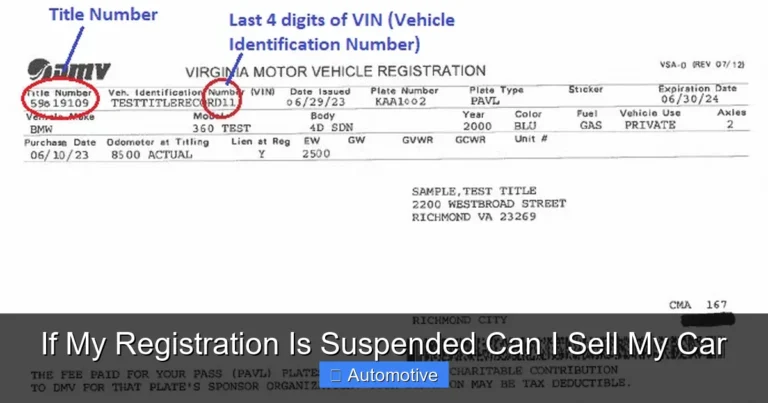
One of the biggest mistakes sellers make is underestimating the importance of paperwork. International sales require a complete set of documents to prove ownership, legality, and compliance. Missing even one can delay shipping or cause your car to be held at customs.
Here’s what you’ll typically need:
- Original title: Must be signed and notarized. Some countries require a “clean” title with no liens.
- Bill of sale: A formal document stating the sale price, date, and buyer/seller information.
- Export certificate: Required by many countries to confirm the car is legally leaving your country. In the U.S., this is often handled by the shipping company.
- Vehicle identification number (VIN) verification: Some countries require a VIN inspection by a certified authority.
- Maintenance records: Proof of regular servicing increases buyer confidence.
- Emissions and safety compliance (if applicable): Some countries require proof that the car meets local standards, though classics are often exempt.
In the U.S., you may also need to notify your state’s Department of Motor Vehicles (DMV) of the export. Some states require a “Notice of Sale” or “Release of Liability” form to be filed before the car leaves the country.
Photography and Listing Tips
High-quality photos are essential for attracting international buyers. Use natural light and shoot from multiple angles: exterior, interior, engine bay, trunk, undercarriage, and close-ups of unique features. Include photos of any flaws—transparency builds trust.
Write a detailed description that highlights the car’s history, restoration work, originality, and performance. Mention any awards, magazine features, or notable previous owners. Use keywords like “numbers-matching,” “fully restored,” or “concours condition” to improve search visibility.
List your car on global platforms like:
- Bring a Trailer (BaT)
- Hemmings
- Classic Driver
- eBay Motors (international shipping option)
- Mobile.de (for European buyers)
These sites attract serious collectors and often facilitate international transactions.
Shipping Your Classic Car Overseas

Visual guide about How to Sell a Classic Car Overseas
Image source: sellaclassiccar.com
Once you’ve found a buyer, it’s time to ship the car. This is one of the most complex parts of the process, but with the right preparation, it can go smoothly.
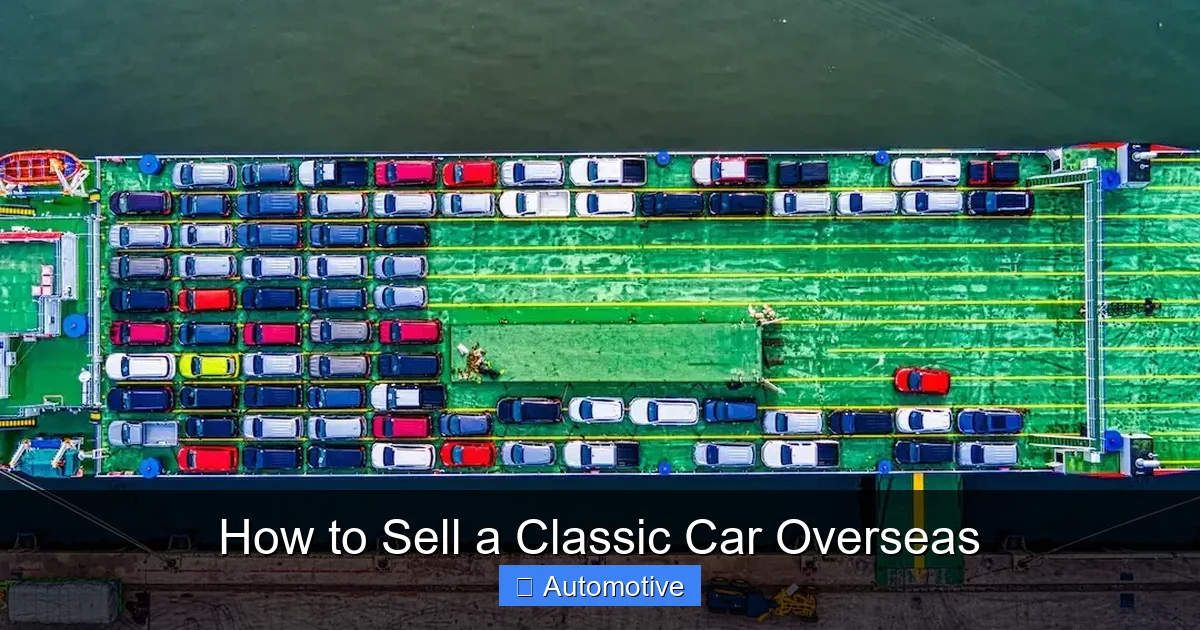
There are two main shipping methods: container shipping and roll-on/roll-off (RoRo).
Container Shipping
This is the safest option for classic cars. Your vehicle is loaded into a sealed 20- or 40-foot container, often with padding and straps to prevent movement. It’s protected from weather, salt spray, and theft. Container shipping is ideal for high-value or fragile classics.
However, it’s more expensive—typically $2,000 to $5,000 depending on distance—and takes longer due to port handling. You’ll also need to arrange inland transport to the port.
Roll-on/Roll-off (RoRo) Shipping
RoRo is faster and cheaper (usually $1,000 to $3,000), but your car is driven onto a ship and exposed to the elements. While most RoRo ships have covered decks, your car is still at risk from salt, rain, and accidental damage.
RoRo is best for sturdy, non-fragile classics or when budget is a concern. Some shippers offer “covered RoRo” for extra protection.
Choosing a Shipping Company
Work with a freight forwarder or shipping company experienced in classic car exports. They’ll handle customs clearance, port fees, and documentation. Look for companies with good reviews and insurance options.
Always get insurance that covers the full market value of the car during transit. Most standard policies don’t cover classics adequately, so you may need a specialized policy.
Port and Customs Procedures
Your shipping company will guide you through the export process, but here’s what to expect:
- Your car will be inspected at the origin port to verify its condition and documentation.
- Customs will review your export paperwork and may require additional forms.
- The car is loaded and sealed (for container) or driven aboard (for RoRo).
- At the destination port, the buyer (or their agent) handles import clearance, pays duties, and arranges inland transport.
Timing varies, but most shipments take 4 to 8 weeks from pickup to delivery.
Handling the Sale and Payment
Once the car is shipped, the final step is completing the sale. This involves secure payment, title transfer, and communication with the buyer.
Secure Payment Methods
Never accept cash or untraceable payments for an international sale. Use secure methods like:
- Wire transfer: Fast and traceable. Most buyers prefer this.
- Escrow service: A third party holds the funds until the car is delivered and inspected. Ideal for high-value sales.
- Bank draft or cashier’s check: Safer than personal checks, but verify authenticity.
Avoid payment apps like PayPal for large transactions—they often freeze funds and have limited buyer/seller protection for vehicles.
Title and Ownership Transfer
After payment clears, sign over the title and send it to the buyer via tracked mail. Include a signed bill of sale and any other required documents. Some countries require the title to be notarized or apostilled (a form of international certification).
In the U.S., you may also need to provide a “Statement of Facts” or “Export Affidavit” to confirm the car is being exported legally.
Post-Sale Support
Stay in touch with the buyer during shipping. Provide tracking information and answer any questions. A smooth handoff builds trust and may lead to referrals.
If the buyer reports damage upon arrival, work with the shipping company and insurer to resolve it. Most reputable shippers have claims processes in place.
Understanding Import Taxes and Duties
One of the biggest surprises for sellers is how much import taxes and duties can affect the final price. These costs are usually paid by the buyer, but they influence how much they’re willing to offer.
Import taxes vary widely:
- Germany: 10% import duty + 19% VAT (on the car’s value plus duty). Classic cars over 30 years old may be exempt from VAT under certain conditions.
- Japan: 0% import duty for cars over 25 years old, but consumption tax (10%) applies. Additional fees for inspection and registration.
- Australia: 5% import duty + 10% GST. Vehicles over 25 years old are exempt from duty if imported under the “Personal Import Scheme.”
- UK: 10% import duty + 20% VAT. Historic vehicles (over 40 years old) may qualify for VAT relief.
These costs can add thousands to the buyer’s total expense. Be transparent about them in your listing. Some buyers factor these into their offer, so a $100,000 car might only net $85,000 after taxes.
Providing guidance on import procedures can make your car more attractive. Share links to official customs websites or connect the buyer with a local agent. This reduces their stress and increases the likelihood of a smooth sale.
Final Tips for a Successful Overseas Sale
Selling a classic car overseas is a rewarding but complex process. Here are a few final tips to ensure success:
- Be patient: International sales take time. Don’t rush the process.
- Stay organized: Keep all documents, emails, and receipts in one place.
- Use professionals: Brokers, shippers, and lawyers can save you time and stress.
- Be honest: Disclose any issues upfront. Buyers appreciate transparency.
- Think long-term: A smooth sale builds your reputation and may lead to future opportunities.
With the right preparation and mindset, selling your classic car overseas can be a profitable and fulfilling experience. You’re not just selling a vehicle—you’re sharing a piece of automotive history with a new generation of enthusiasts around the world.
Frequently Asked Questions
Can I sell my classic car overseas if it’s not running?
Yes, but it will limit your buyer pool and reduce the price. Many international buyers prefer running cars, but some restoration specialists may be interested. Be upfront about the condition in your listing.
Do I need to modify my car to meet foreign standards?
Usually not. Most countries exempt classic cars over 25 or 30 years old from modern emissions and safety standards. However, check the specific rules of the destination country to be sure.
How long does it take to ship a classic car overseas?
Shipping typically takes 4 to 8 weeks, depending on the destination and method. Container shipping may take longer due to port handling, while RoRo is faster but less secure.
Who pays for import taxes and duties?
The buyer usually pays import taxes and duties. However, these costs can affect how much they’re willing to offer, so factor them into your pricing strategy.
Can I sell my classic car to a buyer in a country with left-hand drive?
Yes, but some countries prefer right-hand drive vehicles. If your car is left-hand drive, target markets like the U.S., Germany, or Australia where it’s more common.
What if the buyer backs out after shipping?
This is rare but possible. Using an escrow service can protect both parties. Ensure your contract includes a clear cancellation policy and consider requiring a deposit.