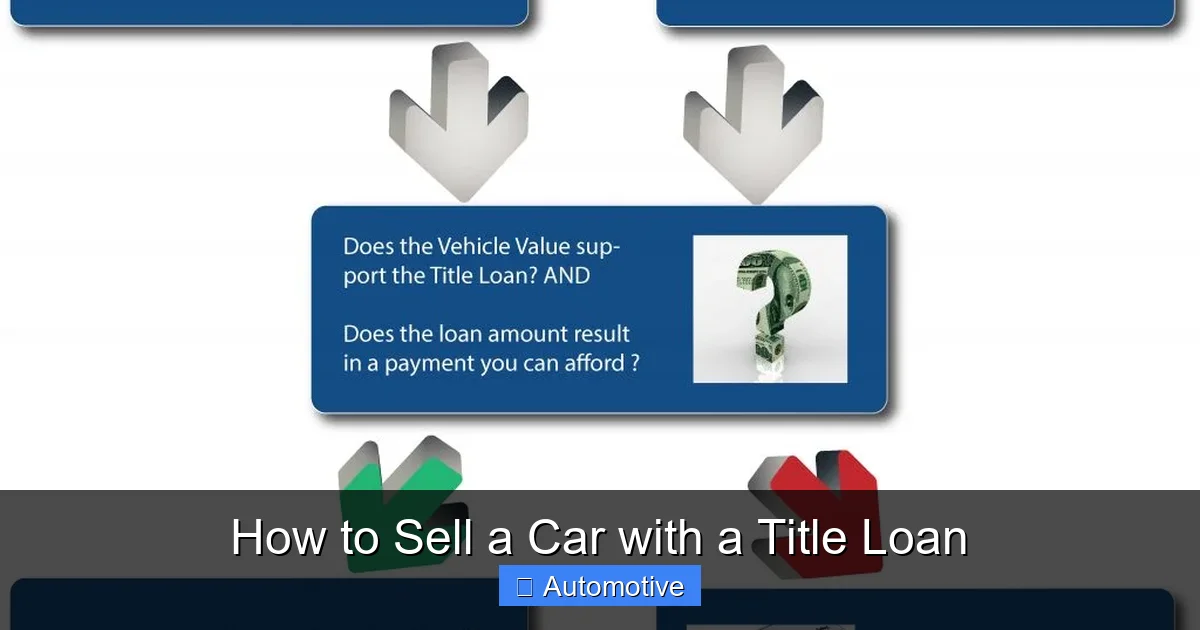
How to Sell a Car with a Title Loan

Contents
- 1 Key Takeaways
- 2 📑 Table of Contents
- 3 Understanding Title Loans and Car Ownership
- 4 Step-by-Step Guide to Selling a Car with a Title Loan
- 5 Selling to a Private Buyer vs. Trading In at a Dealership
- 6 Common Mistakes to Avoid When Selling a Car with a Title Loan
- 7 Tips for a Smooth and Legal Sale
- 8 What to Do If You Can’t Pay Off the Loan Before Selling
- 9 Conclusion
- 10 Frequently Asked Questions


Selling a car with a title loan can be tricky, but it’s completely doable with the right steps. You’ll need to pay off the loan first, get the title released, and ensure a clean transfer to the buyer. This guide walks you through the entire process—from understanding your loan to closing the sale smoothly.
Selling a car is usually straightforward—until you realize there’s still a title loan on it. If you’ve taken out a loan using your car as collateral, the lender holds a lien on the vehicle’s title. That means you don’t fully own the car until the debt is paid off. So, how do you sell it legally and safely? The short answer: you must pay off the loan first. But the full process involves several important steps, clear communication, and sometimes a bit of paperwork wrangling.
Don’t worry—this isn’t as complicated as it sounds. With the right preparation, you can sell your car with a title loan without stress or legal trouble. Whether you’re selling privately or trading in at a dealership, understanding the rules and your options will save you time, money, and headaches. In this guide, we’ll walk you through every step, from checking your loan balance to handing over the keys with a clean title in hand.
Key Takeaways
- Understand your title loan terms: Know your payoff amount, lienholder details, and whether the lender allows early payoff without penalties.
- Pay off the loan before selling: You can’t legally transfer ownership until the loan is cleared and the lien is removed from the title.
- Get the title released: After paying off the loan, request the lien release document and updated title from your lender.
- Use escrow services for safety: Especially with private buyers, an escrow service protects both parties during the transaction.
- Disclose the loan status to buyers: Be transparent about the title loan to build trust and avoid legal issues later.
- Avoid selling “subject to” the loan: This can lead to repossession if payments stop, putting both you and the buyer at risk.
- Consider trading in or selling to a dealer: Dealerships often handle payoff logistics directly with lenders, simplifying the process.
📑 Table of Contents
- Understanding Title Loans and Car Ownership
- Step-by-Step Guide to Selling a Car with a Title Loan
- Selling to a Private Buyer vs. Trading In at a Dealership
- Common Mistakes to Avoid When Selling a Car with a Title Loan
- Tips for a Smooth and Legal Sale
- What to Do If You Can’t Pay Off the Loan Before Selling
- Conclusion
Understanding Title Loans and Car Ownership
Before you can sell your car, it’s crucial to understand what a title loan actually means for ownership. A title loan is a type of secured loan where you use your vehicle’s title as collateral. Unlike a traditional auto loan from a bank or credit union—where the lender finances the purchase of the car—a title loan is typically a short-term, high-interest loan taken out against a car you already own outright.
When you take out a title loan, the lender places a lien on your vehicle’s title. This lien gives them legal claim to the car until the loan is repaid in full. Even though you still drive the car and make monthly payments, you don’t have full ownership rights until the lien is removed. That’s why you can’t simply hand over the title to a buyer while the loan is active—it’s not legally yours to transfer.
Think of it like a house with a mortgage. You live in the home and make payments, but the bank holds the deed until the mortgage is paid off. Only then can you sell the property freely. The same principle applies to your car. The title loan lender must release the lien before you can transfer ownership to someone else.
It’s also important to note that title loans often come with high interest rates and short repayment terms—sometimes as little as 30 days. If you’re struggling to make payments, selling the car might seem like a quick fix. But rushing into a sale without clearing the loan first can lead to serious consequences, including repossession or legal action from the lender.
How Title Loans Differ from Traditional Auto Loans
Many people confuse title loans with traditional auto loans, but they’re very different. With a standard auto loan, the lender finances the purchase of the vehicle, and you make payments over several years until the balance is zero. The car is collateral, but the loan is tied to the purchase.
A title loan, on the other hand, is a cash advance against the equity in a car you already own. You might take one out to cover an emergency expense, pay medical bills, or consolidate debt. The lender doesn’t care what you use the money for—they just want the car as security.
Because title loans are riskier for lenders (they’re often given to borrowers with poor credit), they charge much higher interest rates—sometimes over 100% APR. They also require physical possession of the car’s title and may install a GPS tracker or disable the vehicle remotely if you miss payments.
This distinction matters when selling. With a traditional auto loan, the lender is usually more flexible about payoff and transfer. But title loan companies may have stricter rules, longer processing times, and higher fees. Always check your loan agreement and contact your lender early in the selling process.
Step-by-Step Guide to Selling a Car with a Title Loan
Visual guide about How to Sell a Car with a Title Loan
Image source: blob.ineedcashnow.net
Selling a car with a title loan isn’t impossible—it just requires careful planning. Here’s a clear, step-by-step process to help you navigate the sale smoothly and legally.
Step 1: Check Your Loan Balance and Payoff Amount
The first thing you need to do is contact your title loan lender and request your current payoff amount. This isn’t just the remaining balance—it includes any accrued interest, fees, and penalties up to the date you plan to pay it off.
For example, if you owe $3,000 but have missed a payment, the payoff might be $3,200 due to late fees and interest. The lender will provide a written payoff quote, usually valid for 10 to 30 days. Keep this document safe—you’ll need it for the next steps.
Don’t assume the balance on your last statement is accurate. Interest accrues daily on most title loans, so the amount changes every day. Call your lender or check their online portal to get the most up-to-date figure.
Step 2: Determine How You’ll Pay Off the Loan
Once you know the payoff amount, figure out how you’ll cover it. You have a few options:
– Use the proceeds from the car sale. This is the most common method. You’ll need to coordinate with the buyer and lender to ensure the money goes directly to pay off the loan.
– Pay it yourself with savings or another loan. If you have the funds, paying off the loan before listing the car simplifies the sale.
– Trade in the car at a dealership. Many dealers will pay off your title loan directly as part of the trade-in process.
If you’re selling privately, you’ll likely need to use the sale money to pay off the loan. This means working closely with the buyer and lender to time everything correctly.
Step 3: Contact Your Lender to Initiate Payoff
Once you have a buyer and a sale price, contact your lender to start the payoff process. Ask them:
– What forms are needed to release the lien?
– How long does it take to receive the title after payoff?
– Do they require a notarized letter or specific documentation?
Some lenders release the title within a few days, while others take weeks. If you’re in a hurry, ask if they offer expedited processing for an additional fee.
You’ll typically need to provide:
– A copy of the bill of sale
– The buyer’s information
– Proof of payment (once the loan is paid)
Keep all communication in writing—email or certified mail—so you have a record.
Step 4: Pay Off the Loan and Get the Title Released
When the buyer pays you (or the funds are held in escrow), use that money to pay off the title loan. You can usually do this by:
– Mailing a cashier’s check or money order
– Wire transfer
– In-person payment at a lender branch
Once the payment is processed, the lender will remove the lien from the title and send you the original title with the lien release stamped or signed. This document proves the loan is paid and the car is free to transfer.
Step 5: Transfer the Title to the Buyer
With the lien released, you can now legally transfer ownership. Sign the title over to the buyer, complete a bill of sale, and provide any required state forms (like a release of liability). Make sure all information is accurate—mistakes can delay registration and cause legal issues.
In some states, you may need to get the title notarized. Check your local DMV requirements.
Step 6: Notify the DMV and Cancel Insurance
After the sale, file a release of liability with your state’s DMV to protect yourself from future tickets or accidents involving the car. Cancel your insurance policy once the buyer has their own coverage.
Selling to a Private Buyer vs. Trading In at a Dealership
Visual guide about How to Sell a Car with a Title Loan
Image source: blob.ineedcashnow.net
You have two main options when selling a car with a title loan: sell it privately or trade it in at a dealership. Each has pros and cons, and the best choice depends on your timeline, financial situation, and comfort level.
Selling Privately: More Control, More Work
Selling privately usually gets you a higher price than trading in. You can list the car on platforms like Craigslist, Facebook Marketplace, or Autotrader, set your own price, and negotiate directly with buyers.
But it also requires more effort. You’ll need to:
– Advertise the car
– Respond to inquiries
– Schedule test drives
– Handle paperwork
– Coordinate the payoff with the lender
The biggest challenge is timing. Since you can’t transfer the title until the loan is paid, you’ll need to collect payment from the buyer and immediately send it to the lender. This creates a risk: what if the buyer backs out after you’ve paid off the loan?
To reduce risk, use an escrow service. The buyer deposits the money into a secure account, the lender is paid directly, and once the title is released, the funds are released to you and the car is transferred. This protects both parties.
Trading In: Convenience Over Price
Trading in your car at a dealership is much simpler. The dealer will:
– Appraise your vehicle
– Pay off your title loan directly
– Apply any equity toward a new car purchase
This is ideal if you’re buying another vehicle. The dealer handles all the paperwork, including contacting your lender and getting the title released. You walk away with a new car and no lingering debt.
The downside? You’ll likely get less money than a private sale. Dealers need to make a profit, so they offer trade-in values below market rate. But the convenience and peace of mind often outweigh the lower price.
Which Option Is Right for You?
Ask yourself:
– Do I need the highest possible sale price? → Private sale
– Am I buying another car soon? → Trade-in
– Do I have time to manage the sale? → Private sale
– Am I worried about scams or payment issues? → Trade-in or escrow
If you’re short on time or unsure about handling the payoff process, trading in is the safer bet. If you’re willing to put in the work and want maximum value, go private—but use escrow.
Common Mistakes to Avoid When Selling a Car with a Title Loan
Visual guide about How to Sell a Car with a Title Loan
Image source: recruiting.cdn.greenhouse.io
Even with the best intentions, it’s easy to make mistakes when selling a car with a title loan. Here are the most common pitfalls and how to avoid them.
Mistake #1: Selling Without Paying Off the Loan
This is the biggest mistake. Some sellers try to transfer the car “subject to” the loan, meaning the buyer takes over payments. But this is risky and often illegal. The lender still holds the lien, and if the buyer stops paying, the car can be repossessed—and you could still be liable.
Always pay off the loan before transferring ownership. There’s no legal way around it.
Mistake #2: Not Getting a Lien Release in Writing
After paying off the loan, don’t assume the title is automatically cleared. You must receive a lien release document from the lender. This is a signed statement confirming the debt is paid and the lien is removed.
Without this, the DMV won’t allow the title transfer. Keep the release with your records and give a copy to the buyer.
Mistake #3: Rushing the Process
Title loan payoffs can take time. Some lenders take 10–15 business days to process payments and mail the title. If you rush the sale, you might end up with a buyer waiting weeks for the car.
Plan ahead. Get the payoff quote early, allow time for processing, and communicate clearly with the buyer about the timeline.
Mistake #4: Not Disclosing the Loan to the Buyer
Be honest. Tell the buyer there’s a title loan and explain the payoff process. Transparency builds trust and prevents disputes later.
If a buyer discovers the loan after the sale, they could sue you for fraud. A simple conversation upfront saves everyone trouble.
Mistake #5: Forgetting to Cancel Insurance
Once the car is sold, cancel your insurance policy. You’re no longer responsible for the vehicle, and continuing coverage is a waste of money. Notify your insurer in writing and request a refund for any unused premiums.
Tips for a Smooth and Legal Sale
Selling a car with a title loan doesn’t have to be stressful. Follow these tips to make the process as smooth as possible.
Tip #1: Get Everything in Writing
From the payoff quote to the bill of sale, keep written records of every step. This protects you if there’s a dispute with the lender, buyer, or DMV.
Tip #2: Use a Bill of Sale
A bill of sale is a legal document that proves the transfer of ownership. Include:
– Vehicle details (make, model, VIN, year)
– Sale price
– Date of sale
– Names and addresses of buyer and seller
– Signatures
Many states provide free templates online.
Tip #3: Meet in a Safe, Public Place
If selling privately, meet the buyer in a well-lit, public location like a police station parking lot. Bring a friend and never hand over the car until payment is secure.
Tip #4: Accept Secure Payment Methods
Avoid cash for large amounts. Use a cashier’s check, money order, or wire transfer. Verify the funds before releasing the car.
Tip #5: Double-Check State Requirements
Each state has different rules for title transfers, notarization, and emissions testing. Visit your local DMV website to confirm what’s needed.
What to Do If You Can’t Pay Off the Loan Before Selling
Sometimes, you simply can’t afford to pay off the title loan before selling the car. Maybe the sale price won’t cover the payoff, or you’re short on cash. In these cases, you have limited options—but there are still ways to move forward.
Option 1: Negotiate with the Lender
Contact your lender and explain your situation. Some lenders may agree to a partial payoff or a short-term extension if you’re close to selling. They’d rather get most of their money than risk repossession.
Be honest and provide proof of the sale offer. Lenders are more likely to work with you if they see a real chance of repayment.
Option 2: Sell to a Dealer Who Handles Payoffs
Some dealerships specialize in buying cars with outstanding loans, including title loans. They’ll pay off the lender directly and give you the difference (if any). Even if you owe more than the car is worth (“upside-down”), some dealers may still take it—especially if you’re buying a new car.
This isn’t ideal, but it’s better than defaulting on the loan.
Option 3: Consider a Co-Signer or Loan Refinancing
If you’re close to payoff but short a few hundred dollars, ask a trusted friend or family member to help. Alternatively, look into refinancing the title loan with a lower-interest personal loan. This could reduce your monthly payments and make it easier to pay off before selling.
Option 4: Avoid Scams and “Quick Fix” Schemes
Beware of companies that promise to “transfer the loan” or “sell your car with no payoff.” These are often scams. The only legal way to sell is to clear the lien first.
Never sign over the title or hand over the car without proof the loan is paid. You could lose the car and still owe the debt.
Conclusion
Selling a car with a title loan is entirely possible—it just requires patience, planning, and attention to detail. The key is understanding that you can’t transfer ownership until the loan is paid off and the lien is released. Whether you sell privately or trade in at a dealership, the process starts with contacting your lender, getting a payoff quote, and coordinating the payment.
Transparency with the buyer, secure payment methods, and proper documentation will protect you from legal and financial trouble. Avoid shortcuts like selling “subject to” the loan, and always get a lien release in writing.
While title loans can be risky and expensive, selling your car doesn’t have to be. With the right approach, you can walk away from the sale with a clean title, satisfied buyer, and no lingering debt. Take your time, follow the steps, and don’t hesitate to ask your lender or DMV for help if you’re unsure.
Remember: the goal isn’t just to sell the car—it’s to do it legally, safely, and with peace of mind.
Frequently Asked Questions
Can I sell my car if I still have a title loan?
Yes, but you must pay off the loan first. The lender holds a lien on the title, so you can’t transfer ownership until the debt is cleared and the lien is released.
How long does it take to get the title after paying off a title loan?
It typically takes 7 to 15 business days, depending on the lender. Some offer expedited processing for a fee. Always ask for a timeline when requesting your payoff quote.
Can a buyer take over my title loan payments?
No, not legally. The loan is in your name, and the lender won’t transfer it. If the buyer stops paying, the car can be repossessed, and you may still be responsible for the debt.
What happens if I sell the car without paying off the title loan?
The sale is invalid because you don’t own the car free and clear. The buyer can’t register it, and the lender can repossess the vehicle, leaving you liable for any remaining balance.
Should I use an escrow service when selling privately?
Yes, especially for high-value cars. An escrow service holds the buyer’s payment until the loan is paid and the title is released, protecting both parties from fraud.
Can a dealership buy my car if I have a title loan?
Yes. Many dealerships will pay off your title loan directly as part of the trade-in or purchase process, then give you any remaining equity or apply it to a new vehicle.